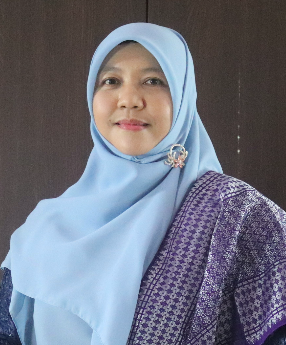
Zulfiani Zulfiani

@uinjkt.ac.id

Biology Education and Faculty of Tarbiyah and Teacher Training
Universitas Islam Negeri Syarif Hidayatullah Jakarta

Zulfiani Zulfiani
I am a Professor of Biology Education. I am a lecturer in Biology Department of Faculty Tarbiyah and Teacher Training, UIN Syarif Hidayatullah Jakarta since 2005.
The focus of my research is on the fields of biology education, inquiry learning, and technology enhanced learning.

EDUCATION

Doctor of Education, Department of Science Education, Universitas Pendidikan Indonesia: Bandung, Jawa Barat, (2003-2005)

RESEARCH, TEACHING, or OTHER INTERESTS

Education, Multidisciplinary, Social Sciences, Research and Theory
12

Scopus Publications

1051

Scholar Citations

16

Scholar h-index

24

Scholar i10-index

Scopus Publications

  • DIGITALWIV-S: ENHANCING STUDENTS’ INQUIRY SKILLS AND DIGITAL LITERACY IN PCR AND ELECTROPHORESIS FOR SUSTAINABLE EDUCATION
    Zulfiani Zulfiani, Iwan Permana Suwarna, Dina Rahma Fadlilah, Indah Juwita Sari, R. Ahmad Zaky El Islami, Lindelani Mnguni
    Jurnal Pendidikan IPA Indonesia, 2025
    Digital-based learning can mediate technical barriers and create a support system that enhances the effectiveness of education. This study aims to develop biology learning media, DigitalWIV-S, to enhance the inquiry skills and digital literacy of prospective science teachers. The development method follows Hannafin & Peck's model, which includes the phases of Needs Assessment, Design, Development, Implementation, and Evaluation. The research findings indicate that DigitalWIV-S, as a biology learning media, is deemed appropriate and received positive feedback from students. The evaluation of digital literacy is excellent across cognitive, affective, and conative aspects. Students' inquiry skills are very good in problem orientation and data collection; however, abilities in problem formulation, hypothesis structuring, data analysis, and summarizing are categorized as moderate among the students. The developed media for the PCR and Electrophoresis concepts help students understand these topics better, thereby enhancing their inquiry skills and digital literacy. Additionally, the media addresses the limitations of equipment and materials in modern biotechnology practicums.
  • Trends in SAMR research in teaching and learning from 2019 to 2024: A systematic review
    , Zulfiani Zulfiani, Iwan Permana Suwarna, , R. Ahmad Zaky El Islami, , Indah Juwita Sari, and
    International Journal of Advanced and Applied Sciences, 2025
    This study reviews research on the use of the SAMR model (Substitution, Augmentation, Modification, and Redefinition) in teaching and learning from 2019 to 2024. A systematic review was carried out by searching the Scopus database. Based on specific selection criteria, 11 journal articles were chosen for analysis. The review identified five main areas discussed in these studies: levels of technology use in teaching, problems and challenges in using technology, effects on student learning, differences in how SAMR is applied in different places, and how SAMR can support meaningful learning. The results show that many teachers are still using technology at the basic levels (substitution and augmentation) because of limited resources, lack of training, and weak support from their institutions. This review suggests that more teacher training and better support are needed to help teachers move to higher levels of technology use (modification and redefinition). The study also gives ideas for future research and practice in the field of educational technology.
  • Teaching chemistry experiments using interactive video via cloud meeting
    Munasprianto Ramli, Media Putri Yohana, Zulfiani, Anggit Refo Kurniawan, Dwi Ahmad Nur Ramadhani
    Aip Conference Proceedings, 2024
  • Development of WIV-S Physics e-Learning to Improve Inquiry Abilities and Digital Literacy of Prospective Science Teacher Students
    and Iwan P. Suwarna
    International Journal of Information and Education Technology, 2024
    Virtual inquiry has emerged as a new trend in science learning by conducting scientific investigations through digital platforms. The context of this study focuses on developing the Science Virtual Inquiry Web (WIV-S) to improve prospective science teacher students’ inquiry abilities and digital literacy. The development method in this study refers to the Hannafin-Peck model with three main phases: needs assessment, design, and development/implementation. Research instruments included interview guidelines, observations, and questionnaires, with a sample size of 58 participants. The research produced a WIV-S physics e-learning prototype, which was declared feasible according to expert judgment of content, media, and learning. Students responded positively to WIV-S, which has provided meaningful, exploration-based learning opportunities and ease of conducting virtual-based scientific investigations.
  • Digital pedagogy in Android learning media for science
    Z. Zulfiani, I. P. Suwarna, N. Juanengsih, S. Miranto, M. P. Ramli
    Aip Conference Proceedings, 2023
  • Developing the MathSci 21st app: Enhancing higher-order thinking skills assessment in mathematics and science education within an Islamic context
    Zulfiani Zulfiani, Iwan Permana Suwarna, Abdul Muin, Tita Mulyati, R. Ahmad Zaky El Islami
    International Journal of Advanced and Applied Sciences, 2023
    The innovation of digital assessment holds profound potential for enhancing educational quality. To measure higher-order thinking skills, intrinsic to effective problem-solving in science and mathematics education, and to cultivate digital literacy, a specialized platform is imperative. This study delineates the developmental trajectory of the MathSci 21st app, designed to assess mathematics and science proficiency within the Islamic context. Emphasizing the pivotal role of higher-level thinking skills in the contemporary landscape, the research method unfolds across distinct phases: Akker (preliminary research), prototype stage (prototyping), summative evaluation, and systematic reflection and documentation. This article confines its focus to preliminary research and prototype stages. The validation of the application prototype engaged a panel of ten experts, while a controlled trial encompassed 32 high school students and one educator. Utilizing observation sheets, questionnaires, and tests as research tools, comprehensive data analysis was executed employing both quantitative and qualitative methods. Research outcomes affirm the feasibility of the Prototype MathSci 21st app, an Android-based competency assessment tool characterized by its integrated and contextual dimensions. Android-based applications not only heighten efficiency and efficacy but also exhibit environmental conscientiousness by reducing paper usage. Additionally, their user familiarity augments acceptability. Significantly, the MathSci 21st app expedites assessment, empowering educators to provide prompt feedback and expedite future learning analysis. This study pioneers a digital assessment paradigm tailored to intricate higher-order thinking skills, thereby addressing critical educational imperatives in mathematics and science within the Islamic milieu.
  • Improving students' academic achievement using the ScEd-ALS android-based
    Z. Zulfiani, , Iwan Permana Suwarna, Sujiyo Miranto, , and
    International Journal of Instruction, 2021
    Ubiquitous learning has recently gained increasing popularity in the education sector, which significantly increased the efficiency of individual and collaborative learning. The aim of this study is to develop an Android version of science education-adaptive learning system (ScEd-ALS) as a science learning medium to accommodate various learning styles. The method used in this research is a mixedmethod consisting of a qualitative method, which is a developmental method that provides illustrations concerning the process of creating the developed media, and a quantitative method, which utilizes quasi-experiments to determine the effectiveness of the developed media application. The study comprised 114 eighthgrade junior high school students and three integrated science teachers in South Tangerang. The final product of the study is an Android-based science learning medium that conforms to the visual, aural, reading/writing, and kinesthetic student learning styles. Hence, this Android-based ScEd-ALS was found to be feasible and useful, as assessed by five experts (two media experts and three science education material experts). Nonetheless, there were significant differences in the learning outcomes between the experimental class using the Android version of ScEd-ALS compared to the control class. The effectiveness of using ScEd-ALS in this study was measured based on the percentage of students' mastery level. ScEd-ALS Android based on visual and kinesthetic learning styles are the most effective media compared to aural and read/write.
  • ScEd-ALS as ubiquitous learning in science
    Zulfiani, I P Suwarna, S Miranto
    Journal of Physics Conference Series, 2021
    The use of technology in education can be carried out through various telematics networks. The use of hypermedia or web (e-learning) and computing on mobile allows the subject matter to be distributed to students quickly, not limited by space and time. Independent learning is possible to occur. This paper aims to inform the framework of curriculum development at the Science Education Adaptive Learning System (ScEd-ALS) version of the smartphone that supports Ubiquitous learning. The research method used is development research. The research instruments included: observation sheets, checklist sheets, and VARK questionnaire. The results of the study: The ScEd-ALS curriculum development framework that accommodates the VARK Flemming learning style preferences of students. This curriculum framework is the foundation for the development of the smartphone version of the ScEd-ALS media prototype. This research was validated by material experts and media experts and was declared worthy of being tested. The curriculum development framework in this media has provided the right teaching materials, and it is easier to create a new environment that adapts to the learning style preferences of students.
  • Science Adaptive Assessment-Tool Accommodating HOTS Assessment Based on Learning Style
    Zulfiani, Iwan Permana Suwarna, Muhamad Arif, Nengsih Juanengsih, Dzikri Rahmat Romadhon
    2020 8th International Conference on Cyber and IT Service Management Citsm 2020, 2020
    This paper aims to design a Science Adaptive Assessment-Tool (SAA-Tool) based on KOLB student learning styles with four learning styles Converger, Assimilator, Diverger, and accommodator to measure high-level skills. The research method uses a qualitative method where the development design research refers to Akker, namely the analysis, design, evaluation, and revision stages. The results of this study obtained the SAA Tool prototype that has been validated by material and assessment experts with a good and very good score range, while the media expert's assessment gave a good score category. The development of this e-assessment application provides an opportunity for students to connect to an automation system, which increases the efficiency of the learning process and system.
  • Science adaptive assessment tool: Kolb’s learning style profile and student’s higher order thinking skill level
    Z. Zulfiani, I. P. Suwarna, M. F. Sumantri
    Jurnal Pendidikan IPA Indonesia, 2020
    This study aims to determine students’ profiles of learning styles, levels of higher-order thinking skills, and the effect of differences in students’ competence to various HOTS instruments using the Science Adaptive Assessment Tool application. In this study, researcher used the descriptive survey approach. The subjects of this study were 251 students of grade 8 (Al-Zahra Indonesia Secondary school and MTsN 1 South Tangerang (Islamic Secondary school) academic year of 2019/2020. The research instrument used was a test to measure 21st century skills (HOTS), which varied on the learning styles of students studying natural science (Biology and Physics). The instrument was validated by expert judgment and empirically tested in order to obtain instrument reliability of learning style with adequate to high category variations. The results shows: (1) the profile of the most popular student learning styles is the assimilator (27,50%), while at least it is converger (20,71%); (2) Females tend to have assimilator learning style pattern, while males tend to have an accommodator learning style; (3) The higher-order thinking skills level in the Biology material was moderate (an average score of 39,69 from a maximum score of 70). The physics subject is in the lower category (an average score of 21,28 from a maximum score of 70); (4) The achievement of the HOTS score was influenced by the type of learning style and had average of a very small correlation, (5) There was significant difference incompetence across the Kolb’s learning styles—divergers, assimilators, convergers, and accommodators with the use of various HOTS instruments.
  • Scientific inquiry perception and ability of pre-service teachers
    Journal of Turkish Science Education, 2018
  • Science education adaptive learning system as a computer-based science learning with learning style variations
    Zulfiani Zulfiani, Iwan Permana Suwarna, Sujiyo Miranto
    Journal of Baltic Science Education, 2018

RECENT SCHOLAR PUBLICATIONS

  • Correlation of Teacher Interpersonal Interaction and Classroom Emotional Climate in Biology Learning, Merdeka Curriculum
    S Nuraini, Zulfiani
    Quagga: Jurnal Pendidikan dan Biologi , 2026
    2026
    Citations: 1
  • The Relationship between Teacher Interpersonal Interaction and the Biology Learning Environment in Senior High Schools
    DK Sanusih, Z Zulfiani
    International Journal of Biology Education Towards Sustainable Development 5 … , 2025
    2025
  • Innovative E-Worksheets for Climate Change Education: Leveraging Guided Inquiry and Google Sites to Enhance Students' Critical Thinking Skills
    AKD Ary, Zulfiani
    Digital Horizons, 1-8 , 2025
    2025
  • Influence of guided inquiry on science literacy in biodiversity with islamic values
    CD Adela, Z Zulfiani, S Solihin
    JPBIO (Jurnal Pendidikan Biologi) 10 (2), 204-219 , 2025
    2025
  • DigitalWIV-S: Enhancing Students’ Inquiry Skills and Digital Literacy in PCR and Electrophoresis for Sustainable Education
    Z Zulfiani, IP Suwarna, DR Fadlilah, IJ Sari, RAZ El Islami, L Mnguni
    Jurnal Pendidikan IPA Indonesia 14 (3), 394-411 , 2025
    2025
    Citations: 3
  • PERSEPSI PESERTA DIDIK TERHADAP IKLIM KELAS DALAM KETERLIBATAN PESERTA DIDIK PADA MATA PELAJARAN IPA
    R Anwar, Z Zulfiani
    Jurnal Pendidikan dan Pembelajaran IPA Indonesia 15 (2), 112-123 , 2025
    2025
    Citations: 2
  • Analysis of Science Process Skills in the Guided Inquiry Learning Model of Biotechnology Materials
    L Sufriyah, Z Zulfiani, DR Fadlilah
    BIOEDUKASI: JURNAL PENDIDIKAN BIOLOGI 18 (2), 144-155 , 2025
    2025
    Citations: 3
  • Integrating local culture into biotechnology education for multicultural character building
    Z Zulfiani, IJ Sari, P Nuangchalerm
    Towards Resilient Societies: The Synergy of Religion, Education, Health … , 2025
    2025
  • Development of Guided Inquiry-Based E-Module on Human Circulatory System Material to Train Scientific Literacy of 11th Grade High School Students.
    D Susanti, Zulfiani
    Quagga: Jurnal Pendidikan dan Biologi 17 (2), 94-104 , 2025
    2025
    Citations: 1
  • Analysis of Remedial Teaching Implementation in Merdeka Curriculum to Achieve High School Biology Learning Objectives
    SG Irsalina, Zulfiani
    Quagga: Jurnal Pendidikan dan Biologi 17 (2), 114-125 , 2025
    2025
  • Ethnoagriculture and Food Sovereignty in Kampung Cireundeu: An Environmental Education Perspective
    S Miranto, M Arif, Z Zulfiani, C Anwar
    Tadris: Jurnal Keguruan dan Ilmu Tarbiyah 10 (1), 63-77 , 2025
    2025
    Citations: 1
  • The Relationship between Classroom Emotional Climate (CEC) and Biology Learning Outcomes in the Independent Curriculum at SMAN Kota Tangerang Selatan
    HG Fadilah, Zulfiani
    Journal of Educational Sciences 9 (3) , 2025
    2025
    Citations: 3
  • Trends in SAMR research in teaching and learning from 2019 to 2024: A systematic review
    Z Zulfiani, IP Suwarna, RAZ El Islami, IJ Sari
    International Journal of Advanced and Applied Sciences 12 (4), 99-106 , 2025
    2025
    Citations: 16
  • Pengaruh Model Inquiry Terhadap Penguasaan Konsep dan Nilai Entrepreneur Pada Materi Inovasi Teknologi Biologi di SMA
    A Putri, Z Zulfiani
    BIOEDUSAINS:Jurnal Pendidikan Biologi dan Sains 8 (2), 282-298 , 2025
    2025
  • Analysis of Teacher-Learner Interpersonal Relationship and Learners' Attitudes Towards Biology
    D Yuliana, Z Zulfiani
    International Journal of Biology EducationTowards Sustainable Development 5 … , 2025
    2025
  • Development of E-Modules Based on Project Based Learning on Virus Material to Improve Students' Creative Thinking
    I Darmastuti, Z Zulfiani, Y Mardiati
    Quagga: Jurnal Pendidikan dan Biologi 17 (1), 16-23 , 2025
    2025
    Citations: 5
  • Ill-structured on respiratory system: How does the contextual problem improve students’ problem-solving skills by developing electronic worksheet?
    MD Tambunan, Z Zulfiani, ES Rosyidatun
    JPBI (Jurnal Pendidikan Biologi Indonesia) 10 (3), 928-938 , 2024
    2024
    Citations: 4
  • Integrating islamic values and ecopreneurship in biology: E-lkpd as a learning tool
    AI Fuadah, Zulfiani, Solihin
    Biosfer: Jurnal Pendidikan Biologi 17 (2), 383-395 , 2024
    2024
  • Kesadaran Metakognitif dan Sikap Inkuiri Ilmiah Sebagai Wujud Kesiapan Guru dan Calon Guru
    Zulfiani, Y Herlanti, R Yunistika
    Penerbit Deepublish 1, 194 , 2024
    2024
  • Development of WIV-S Physics e-Learning to Improve Inquiry Abilities and Digital Literacy of Prospective Science Teacher Students
    IP Suwarna, Zulfiani
    International Journal of Information and Education Technology 14 (9), 1291-1298 , 2024
    2024
    Citations: 7

MOST CITED SCHOLAR PUBLICATIONS

  • Strategi Pembelajaran Sains
    Z Zulfiani, T Feronika, K Suartini
    Jakarta: Lembaga Penelitian UIN Jakarta , 2009
    2009
    Citations: 132
  • Pengembangan Augmented Reality Versi Android sebagai Media Pembelajaran Sistem Eksresi Manusia
    Q Qumillaila, BH Susanti, Z Zulfiani
    Jurnal Cakrawala Pendidikan 36 (1), 57-69 , 2017
    2017
    Citations: 114
  • Penggunaan media pembelajaran di madrasah aliah negeri se-Jakarta Selatan
    R Primasari, Z Zulfiani, Y Herlanti
    EDUSAINS 6 (1), 67-72 , 2014
    2014
    Citations: 89
  • SCIENCE ADAPTIVE ASSESSMENT TOOL: KOLB’S LEARNING STYLE PROFILE AND STUDENT’S HIGHER ORDER THINKING SKILL LEVEL
    Zulfiani, IP Suwarna, MF Sumantri
    Jurnal Pendidikan IPA Indonesia 9 (9 (2)), 194-207 , 2020
    2020
    Citations: 82
  • Science Education Adaptive Learning System as A Computer-Based Science Learning with Learning Style Variations
    Z Zulfiani, IP Suwarna, S Miranto
    Journal of Baltic Science Education (http://oaji.net/articles/2017/987 … , 2018
    2018
    Citations: 63
  • Development of interactive e-LKPD based on creative thinking skills on the concept of environmental change
    R Ardiansyah, Zulfiani
    Jurnal Pendidikan Biologi Indonesia (JPBI) 9 (2) , 2023
    2023
    Citations: 51
  • Identifikasi miskonsepsi siswa dengan menggunakan metode certainty of response index (cri) pada konsep fotosintesis dan respirasi tumbuhan
    TA Mustakim, Z Zulfiani, H Yanti
    EDUSAINS 6 (2), 145–152 , 2014
    2014
    Citations: 47
  • Finding Learning Strategy in Improving Science Literacy
    Y Herlanti, Y Mardiati, R Rahmawati, AMK Putri, N Jamil, ...
    Jurnal Penelitian dan Pembelajaran IPA 5 (1), 59-71 , 2019
    2019
    Citations: 42
  • THE IMPLEMENTATION OF MODEL PROBLEMS BASED WITH MEDIA LEARNING AIDS FOR IMPROVING STUDENT LEARNING OUTCOMES
    J Juriah, Z Zulfiani
    EDUSAINS 11 (1) , 2019
    2019
    Citations: 34
  • Improving Students’ Academic Achievement Using the ScEd-ALS Android-Based
    Z Zulfiani, IP Suwarna, S Miranto
    International Journal of Instruction 14 (2), 735-756 , 2021
    2021
    Citations: 32
  • Keterampilan Berpikir Kritis Siswa Model Pembelajaran Problem Based Learning Dan Sains Teknologi Masyarakat Pada Konsep Virus
    M Noprianda, MF Noor, Z Zulfiani
    EDUSAINS 8 (2), 182-191 , 2016
    2016
    Citations: 29
  • Identifikasi miskonsepsi siswa pada konsep archaebacteria dan eubacteria menggunakan two-tier multiple choice
    D Septiana, Z Zulfiani, MF Noor
    EDUSAINS 6 (2), 191-200 , 2014
    2014
    Citations: 29
  • Kajian Penerapan Pendampingan Penelitian Tindakan Kelas Kolaboratif Antara Perguruan Tinggi Dan Sekolah
    Z Zulfiani, Y Herlanti, A Sofyan
    Jurnal Cakrawala Pendidikan 35 (2) , 2016
    2016
    Citations: 28
  • Developing the MathSci 21st app: Enhancing higher-order thinking skills assessment in mathematics and science education within an Islamic context
    Z Zulfiani, IP Suwarna, A Muin, T Mulyati, RAZ El Islami
    International Journal of ADVANCED AND APPLIED SCIENCES 10 (8), 19-31 , 2023
    2023
    Citations: 20
  • Development of Student Worksheets Based on Science Process Skills on Excretory System Concepts
    Mumtaza, M. F., Zulfiani
    Jurnal Penelitian Pendidikan IPA 9 (1), 265–272. , 2023
    2023
    Citations: 20
  • Scientific Inquiry Perception and Ability of Pre-service Teachers
    Z Zulfiani, Y Herlanti
    Journal of TURKISH SCIENCE EDUCATION (http://www.tused.org/internet/tused … , 2018
    2018
    Citations: 17
  • Trends in SAMR research in teaching and learning from 2019 to 2024: A systematic review
    Z Zulfiani, IP Suwarna, RAZ El Islami, IJ Sari
    International Journal of Advanced and Applied Sciences 12 (4), 99-106 , 2025
    2025
    Citations: 16
  • Higher Order Thinking Skills: Student Profile Using Two-Tier Multiple Choice Instrument
    I Andriyatno, Z Zulfiani, Y Mardiati
    International Journal of STEM Education for Sustainability 3 (1) , 2023
    2023
    Citations: 16
  • Enhancing Students’ Higher-Order Thinking Skills Through Guided and Free Inquiry-Based Learning
    Zulfiani, R Yunistika, N Juanengsih
    Advances in Social Science, Education and Humanities Research, volume 115 … , 2018
    2018
    Citations: 14
  • A Causal-Comparative Study of Inquiry-Based Science Learning Based on Levels of Students' Cognitive Learning Outcomes: Systematic Review.
    Nugroho, B., Z Zulfiani
    Jurnal Pendidikan Sains Indonesia, 9(4), 651-666. 4, 651-666 , 2021
    2021
    Citations: 13