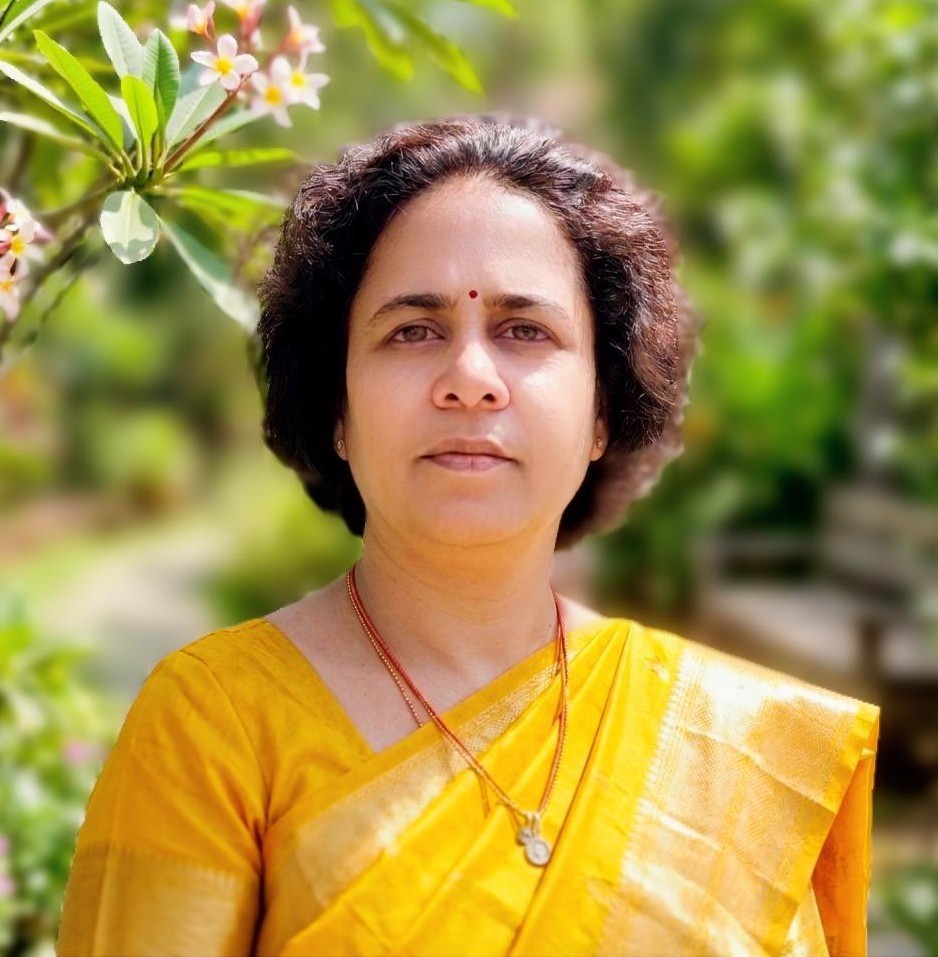
Usharani Rathinam Krishnaswamy

@buscatextual.cnpq.br

PD Researcher, Brazil
Post-Doctoral Researcher

Usharani Rathinam Krishnaswamy
Awards
Best Paper - Int. Conf. Advanced Oxidation Process,2010
Pitch Scientifically Grounded Approach, NBS,EU,2024
Sustainability, Bronze medal,UK,2025-26

Academic Role: Assistant Professor : 6 years,
PG Dept., Department of Environmental Science, Central University of Kerala, India, 2yrs,
PG Dept., Department of Environmental Science, PSG College of Arts & Science, India, 3yrs,
UG Dept., Department of Microbiology, SNMV College, Bharathiar University, TN, India, 1yr,

Research Field: 10 yrs: SRF, RA, PDF
Researcher, BR, 2024-25, CAPES - Post Doc Research Fellow, UN ESP, BR, 2023-24.,
Independent Researcher, Free Lancer: Project work consultancy, 2016-2025,
Research Students Projects, Consultancy Work with Academic, Industry Collaborators,
Research Associate: R & D Biotech Lab Pvt Ltd., TN, India, 2013-2014.
Research Fellow :SRF- Extension, SRF and JRF Fellowship, 2006-2011,
Centre for Life Sciences, Bharathiar University, TN, India
Student Research Project : TNSCST Fellowship, 2001.

EDUCATION

Dr. Usharani K , Bharathiar University,TN, INDIA
MSc., MPhil., PhD., PGDMBT, PGDBI, Bharathiar University, IN
Post-Doctoral Researcher, CAPES Fellow (YT Researcher)
Dept. of Civil and Environmental Engineering, UNESP-FEB, Brazil
Researcher (Laboratory of Thermodynamics and Applied Kinetics), UFRJ, Brazil
Specialization:
Environmental Sciences-Environmental Microbiology,
Bioremediation, Phytoremediation, Wastewater Treatment,
Ozonation Technology, Advanced Oxidation Process,
Bioprocess Optimization, Biocatalysts,
EcoTechnology & Environmental Sustainability, NBS System & Management, etc.

RESEARCH, TEACHING, or OTHER INTERESTS

Environmental Science, Applied Microbiology and Biotechnology, Environmental Engineering, Renewable Energy, Sustainability and the Environment

FUTURE PROJECTS

Nanobiocatalyst Application in Sustainable WWT Nanobiochar Biobased Nanocatalyst from Sugarcane Bagasse in Petrochemical Wastewater treatment Processes_ Nanotechnology

https://pdpetro.com.br/anais/?idpdpetro=12


Applications Invited
collaborators

Sustainable Microbial Eelectro Chemical Processes in WWT, 2025 JUL 23 (NewsRx) -- By a News Reporter-Staff News Editor at Biotech Week -- Investigators publish new report on Sustainability Research.

https://watermanagementinsights.com/2025/09/13/floating-wetlands-and-fuel-cells-a-green-revolution-in-wastewater-treatment/ https://www.greendeal-conference.eu/poster-session/.c/english


Applications Invited
collaborators

Sustainable production of biohydrogen from MAB Technologies

microalgae are positioned as a vital component in advancing a sustainable hydrogen economy. Beyond hydrogen production, algal biomass can assimilate nutrients and yield economic benefits through the generation of value-added products such as biodiesel, pigments, and various secondary metabolites.


Applications Invited
collaborators
12

Scopus Publications

447

Scholar Citations

10

Scholar h-index

10

Scholar i10-index

Scopus Publications

  • Water Pollution: How Human Activities Have Shaped the XXI Century Water Crisis
    Usharani Rathinam Krishnaswamy, Rodrigo Braga Moruzzi, Gustavo Henrique Ribeiro da Silva
    Impact of Anthropogenic Activities on the Natural Environment and Societies During the Contemporary Period, 2026
    Freshwater, being a scarce and valuable resource, is susceptible to contamination, and once polluted, restoration becomes challenging and costly. Consequently, the study of surface water pollution has predominantly focused on streams and lakes. Regulatory agencies, such as the U.S. Environmental Protection Agency, have developed scientific tools primarily for safeguarding water quality in these segments of the Earth's surface waters. Reservoirs, lakes, and perennial stream flows, crucial for various purposes like water supplies, agriculture, industry, and recreation, are under significant stress, making them prone to contamination. This chapter delves into issues related to surface water pollution.
  • Nanobiochar as a Biobased Nanocatalyst from Sugarcane Bagasse for Petrochemical Wastewater Treatment
    Usharani Rathinam Krishnaswamy, Ian Hovell, Rajagopal Krishnaswamy
    Nanotechnology and Emerging Contaminants in Drinking Water Advanced Solutions for Purification, 2026
    The objective of this assessment is to identify knowledge gaps and research needs related to the consumption of biochar and nanobiochar aimed at sustainable ecological remediation. Nanocomposites from biochar offer a promising alternative for handling wastewater pollution, sewage, and industrial effluents by immobilizing or removing pollutants and pathogens. Nanobiochar is a prospective substitute to manage wastewater contamination, in cooperation with the adsorption and photocatalytic processes of degradation. Bioremediation using biochar applications can provide innovative solutions for contaminants removal resulting from petroleum waste products, hydrocarbon oil spills, and other hazardous compounds. Sugarcane bagasse-derived biochar and nanobiochar, treated with activated functional groups, are particularly effective for remediating environmental noxious pollutants. Beyond its use as an alternative fuel, biochar and nanobiochar from bagasse contribute to a cleaner environment by promoting carbon sequestration, enhancing potency, supporting bioremediation, and enabling agro-waste recycling. It can be obtained as a solid carbon-rich substrate through the pyrolysis of sugarcane bagasse by heating at a high temperature above 300°C in an atmosphere with the absence of oxygen. Nanobiochar, an innovative nano-sized composite, is prepared from the best part of biochar using hierarchical and centralized top-down techniques such as the ball milling method, centrifugation process, sonication method, and hydrothermal fabrication. Related to normal bulk biochar, nanobiochar exhibits significant advantages in terms of extensive surface area, size of pores, total dimensions of pores, and different superficial functionalities, high potential properties of porosity, cation exchange capacity, stability, and reusability, as a practical and eco-friendly nano-catalytic substance. In the core, the biocatalytic functions and properties of nanobiochar have wide-ranging applications in petrochemical wastewater treatment and in sensors, enzyme immobilization, and polymer production.
  • Floating treatment wetland with microbial fuel cell for removing pollutants, energy utilization, recovery of nutrients – Review on sustainable technology
    Usharani Rathinam Krishnaswamy, Gustavo Henrique Ribeiro Da Silva
    Desalination and Water Treatment, 2025
    The existing article reviews the state-of-the-art methods for wastewater treatment using Floating Treatment Wetlands (FTW) and Microbial Fuel Cells (MFC). It aims to compile and consolidate current literature while promoting further scientific discussions regarding FTW and MFC. Various concerns are addressed, including building materials, plant species, vegetation, mechanisms, strategies for removing harmful waste, and control schemes. These cohesive technologies are organized effectively for wastewater treatment and natural water purification. However, further research is necessary to enhance their performance, deepen our understanding of the mechanisms involved, and improve overall efficiency. The integrated FTW-MFC approach efficiently converts organic biomass into electricity through a bioelectrochemical process. This method utilizes biochemical reactions and successfully removes pollutants using floating plants in a process known as biosorption. It also involves biological oxidation-reduction facilitated by electroactive biofilms (EABs). Recent advancements in floating treatment wetlands with microbial fuel cells (FTW-MFC) have shown their potential as an alternative for generating ecological and renewable bioelectricity. Currently, this technology is interconnected with various other methods for wastewater remediation and ecosystem restoration, allowing for the simultaneous generation of bioelectricity. This nature-based solution enhances water quality and safety while supporting the circular economy, sustainable development, and effective water management.
  • Microbial biodegradation, bioremediation and ozonation technology for sustainable organophosphate remediation (Methylparathion-insecticide)
    Usharani Rathinam Krishnaswamy, Gustavo Henrique Ribeiro da Silva
    Microbial Biodegradation Bioremediation and Ozonation Technology for Sustainable Organophosphate Remediation Methylparathion Insecticide, 2025
  • Value-added products and biofuels from extremophilic microalgae biomass
    Extremophiles Wastewater and Algal Biorefinery, 2023
  • GCMS and FTIR spectral analysis of aqueous methylparathion biotransformation by the microbial mpd strains of Pseudomonas aeruginosa and Fusarium spp
    Usharani Krishnaswamy
    Archives of Microbiology, 2021
  • Simultaneous Wastewater Treatment and Carbon Capture for Energy Production
    Priyanka Verma, Deepshikha Pandey, Usharani Krishnaswamy, Kasturi Dutta, Achlesh Daverey, Kusum Arunachalam
    Energy Environment and Sustainability, 2021
  • Nitrate bioremoval by phytotechnology using utricularia aurea collected from eutrophic lake of theerthamkara, Kerala, India
    K. Usharani, K. Keerthi
    Pollution, 2020
    The aim of this study was to compare the selected aquatic plants ability to remove nitrate from wastewater. Excess of these nutrients in water can directly affect human health (methemoglobinaemia) or indirectly through the products of secondary pollution include eutrophication. Negative impact of nutrients excess in surface water often causes the destruction of water ecosystems, and therefore, common substances of these elements must be monitored and managed. Spectrophotometric technique was commonly used for quick and simple analyses of nutrients in waste water. There are calibration curves for each nutrient and for the determination of their concentration. Phytotechnology is one of the biological wastewater treatment methods or processes to eliminate nitrate contaminant from aquatic system. So as to avoid the eutrophic formation of fresh water and to determine the efficiency of nitrate utilization by specific aquatic plants which include Utricularia aurea and Salvinia molesta were collected from a eutrophic lake at Theerthamkara, Kerala. The samples were allowed to grow in nitrate solution for about one month at different concentrations. The optical density (OD) of nitrate solution at 410 nm was measured on alternative days of the experiment by using UV spectrophotometer. After 33 days of treatment periods, the maximum amount of nitrate removed in terms of percentage was found to be 95% by Utricularia aurea and 92% by Salvinia molesta at 100 ppm nitrate concentration. The results revealed that the aquatic plant (carnivorous) based system of phytotechnology was productively removed the nitrate load from the synthetic wastewater containing nitrate.
  • Optimization of aqueous methylparathion biodegradation by Fusarium sp in batch scale process using response surface methodology
    K. Usharani, M. Muthukumar
    International Journal of Environmental Science and Technology, 2013
  • OPTIMIZATION OF PHOSPHATE REMOVAL FROM SYNTHETIC WASTEWATER BY BACTERIAL CONSORTIUM USING BOX-BEHNKEN DESIGN
    Krishnaswamy Usharani, Perumalsamy Lakshmanaperumalsamy, Muthusamy Muthukumar
    Environmental Engineering and Management Journal, 2013
    In this work, a four factor three-level Box-Behnken factorial design based on response surface methodology (RSM) was employed to optimize the removal of phosphate from synthetic wastewater (mineral salts medium-MSM) by the bacterial consortium (Bacillus sp.RS-1, Pseudomonas sp.YLW-7, Enterobacter sp.KLW-2).A mathematical model was then developed to show the effect of each medium composition and their interactions on phosphate removal.The effect of the lactose concentration (X 1 ), pH (X 2 ), time (X 3 ), and agitation (X 4 ) and their interactions on the removal of phosphate by the bacterial consortium was investigated for an initial phosphate concentration of 100 mg l -1 as a fixed input parameter for the batch studies.Quadratic models obtained for the response variable predicted optimum phosphate removal (Y 1 ) of 92.2 % in MSM with lactose corresponding to a bacterial consortium growth of 1.1 in terms of optical density (OD) (Y 2 ) and 0.34 g l -1 as dry biomass (Y 3 ), after 72 h.The ANOVA results showed that the coefficient determination value (R 2 ) for Y 1, Y 2 and Y 3 were found to be 0.9 and the experimental values are in good agreement with the predicted ones.The response indicated significant fit of the model to the experimental data, which confirms that RSM could be effectively used to predict the phosphate removal from wastewater by the bacterial consortium used in this work.
  • Effect of pH on the degradation of aqueous organophosphate (methylparathion) in wastewater by ozonation
    International Journal of Environmental Research, 2012
  • Biological removal of phosphate from synthetic wastewater using bacterial consortium
    Iranian Journal of Biotechnology, 2011

RECENT SCHOLAR PUBLICATIONS

  • Transformative Approaches to Elevate Hydrogen Production and Efficiency, Surpassing Microalgae-Bacterial Consortium (MABC) Technologies- A Review
    UR Krishnaswamy.
    WJ Materials Science and Engineering 2 (1), 10 , 2026
    2026
  • Nanobiochar as a Biobased Nanocatalyst from Sugarcane Bagasse for Petrochemical Wastewater Treatment- Book Nanotechnology and Emerging Contaminants in Drinking Water
    UR Krishnaswamy, I Hovell, R Krishnaswamy
    Nanotechnology and Emerging Contaminants in Drinking Water, 272-301 , 2026
    2026
  • Water Pollution: How Human Activities Have Shaped the XXI Century Water Crisis
    UR Krishnaswamy, RB Moruzzi, GHR da Silva
    The Impact of Anthropogenic Activities on the Natural Environment and … , 2026
    2026
    Citations: 1
  • Sustainable Ecotechnological Remediation and Recovery of Chromium from Wastewater using the Floating Aquatic Plant Azolla Pinnata
    RK Usharani, P Nivetha
    Environ. Anal. Eco. Stud. 13 (3), 7 , 2026
    2026
  • Sustainable Biotreatment of Sulphate-rich Wastewater....
    UR Krishnaswamy.
    JBB , 2026
    2026
  • Nanobiochar for Petrochemical Waste Treatment and Sustainable Environmental Remediation – A Review (In Press)
    UR Krishnaswamy
    NSNT , 2026
    2026
  • Floating Treatment Wetland with Microbial Fuel Cell for Removing Pollutants, Energy Utilization, Recovery of Nutrients-Review on Sustainable Technology
    RK Usharani, RDS Gustavo Henrique
    Desalination and Water Treatment, 323 (Green Deal Implementation..., 2025 … , 2025
    2025
    Citations: 10
  • MICROBIAL BIODEGRADATION, BIOREMEDIATION AND OZONATION TECHNOLOGY FOR SUSTAINABLE ORGANOPHOSPHATE REMEDIATION
    Usharani Rathinam Krishnaswamy, Gustavo HRDS
    Nova, US/ Blackwell's, UK 1 (https://www.vitalsource.com/in/products/), 1-170 , 2025
    2025
  • Biochar and Nanobiochar: A Biobased Engineered Nanobiocatalyst from Sugarcane Bagasse in Petrochemical Waste Management
    Usharani RK, I Hovell, K Rajagopal
    Brazilian Congress of Research and Development in Oil and Gas, Brazil … , 2024
    2024
  • Sustainable Removal of Pollutants and Recovery of Nutrients from wastewater by Ecotechnological Approaches using Cohesive processes
    Usharani RK, Gustavo Henrique RDS
    5th International Conference, Strategies toward Green Deal, Poland … , 2024
    2024
  • Antibacterial Activity of Processed and Unprocessed Honey Samples Against the Clinical Bacterial Pathogens from Kanhangad, KL, IN
    Usharani RK, U Mainoor, F Thahira, A Rahida
    Environmental Toxicology 10 (1), 14 , 2024
    2024
  • 12º CONGRESSO BRASILEIRO DE PESQUISA E DESENVOLVIMENTO EM PETRÓLEO E GÁS
    RK Usharani, I Hovell, K Rajagopal
    https://doi.org/10.71190/2024-12pdpetro-1224183 , 2024
    2024
  • Bioremoval and resource recovery of nutrients by phytoremediation using aquatic free floating plants Lemna minor
    RK Usharani, V Arunkumar
    Ukrainian Journal of Ecology 13 (5) , 2023
    2023
    Citations: 2
  • Extremophiles: Wastewater and Algal Biorefinery
    P Dheeran, S Kumar
    CRC Press , 2023
    2023
    Citations: 2
  • Value-Added Products and Biofuels from Extremophilic Microalgae Biomass : Book: Extremophiles Wastewater and Algal Biorefinery : Circular Economy
    RK Usharani, P Lakshmanaperumalsamy, MS Jayesh
    Extremophiles: Wastewater and Algal Biorefinery, 187-218 , 2023
    2023
  • Ecotechnological Cohesive Approaches towards Sustainable Management of Wastewater and its Resource Recovery
    UR Krishnaswamy.
    Technical Report , 2023
    2023
  • Bioremediation Technology by Microbial Remediation and Biodegradation Process
    Usharani Rathinam Krishnaswamy
    https://www.youtube.com/@drusharanirk-e-content5292 , 2023
    2023
  • Biotreatment Process by Activated Sludge Process
    UR Krishnaswamy.
    https://www.youtube.com/@drusharanirk-e-content5292 , 2022
    2022
  • Biotreatment Process by Trickling Filters
    UR Krishnaswamy
    https://www.youtube.com/@drusharanirk-e-content5292 , 2022
    2022
  • Water & Wastewater Treatment Process Overview
    Usharani Rathinam Krishnaswamy
    https://www.youtube.com/@drusharanirk-e-content5292 , 2022
    2022

MOST CITED SCHOLAR PUBLICATIONS

  • Physico-chemical and bacteriological characteristics of Noyyal River and ground water quality of Perur, India
    K Usharani, K Umarani, PM Ayyasamy, K Shanthi, ...
    Journal of Applied Sciences and Environmental Management 14 (2) , 2010
    2010
    Citations: 153
  • Studies on the efficiency of the removal of phosphate using bacterial consortium for the biotreatment of phosphate wastewater
    U Krishnaswamy, M Muthusamy, L Perumalsamy
    European Journal of Applied Sciences 1 (1), 06-15 , 2009
    2009
    Citations: 68
  • Biological removal of phosphate from synthetic wastewater using bacterial consortium
    U Krishnaswamy, M Muthuchamy, L Perumalsamy
    Iranian Journal of Biotechnology 9 (1), 37-49 , 2011
    2011
    Citations: 41
  • Effect of pH on the Degradation of Aqueous Organophosphate (methylparathion) in Wastewater by Ozonation
    K Usharani, M Muthukumar, K Kadirvelu
    International Journal of Environmental Research 6 (2), 557-564 , 2012
    2012
    Citations: 37
  • Advances in the domain of environmental biotechnology
    NR Maddela, LC Garcia, S Chakraborty
    Environmental and microbial biotechnology , 2021
    2021
    Citations: 34
  • Optimization of aqueous methylparathion biodegradation by Fusarium sp in batch scale process using response surface methodology
    K Usharani, M Muthukumar
    International Journal of Environmental Science and Technology 10 (3), 591-606 , 2013
    2013
    Citations: 23
  • Bio-treatment of phosphate from synthetic wastewater using Pseudomonas sp YLW-7
    K Usharani, P Lakshmanaperumalsamy
    World Bank assisted National Agricultural Research Project (NARP)-University … , 2011
    2011
    Citations: 12
  • Nitrate bioremoval by phytotechnology using Utricularia aurea collected from eutrophic lake of Theerthamkara, Kerala, India
    K Usharani, KV Keerthi
    Pollution 6 (1), 149-157 , 2020
    2020
    Citations: 11
  • Floating Treatment Wetland with Microbial Fuel Cell for Removing Pollutants, Energy Utilization, Recovery of Nutrients-Review on Sustainable Technology
    RK Usharani, RDS Gustavo Henrique
    Desalination and Water Treatment, 323 (Green Deal Implementation..., 2025 … , 2025
    2025
    Citations: 10
  • Determination of nitrate utilization efficiency of selective strain of Bacillus sp. isolated from Eutrophic Lake, Theerthamkara, Kasaragod, Kerala
    K Usharani, K Sruthilaya, K Divya
    Pollution 3 (1), 55-67 , 2017
    2017
    Citations: 10
  • Microbial exopolysaccharides as biosurfactants in environmental and industrial applications
    RK Usharani, P Lakshmanaperumalsamy
    Advances in the Domain of Environmental Biotechnology: Microbiological … , 2021
    2021
    Citations: 9
  • BOX-BEHNKEN EXPERIMENTAL DESIGN MEDIATED OPTIMIZATION OF AQUEOUS METHYLPARATHION
    K Usharani, P Lakshmanaperumalsamy
    JMBFs 5 (6), 534-547 , 2016
    2016
    Citations: 9
  • GCMS and FTIR spectral analysis of aqueous methylparathion biotransformation by the microbial mpd strains of Pseudomonas aeruginosa and Fusarium spp
    Usharani, Rathinam Krishnaswamy
    Archives of Microbiology 203 (9), 5763-5782 , 2021
    2021
    Citations: 7
  • Studies on the removal efficiency of phosphate from wastewater using Pseudomonas sp YLW-7 and Enterobacter sp KLW-2
    K Usharani, P Lakshmanaperumalsamy
    Glob. J. Environ. Res 4, 83-89 , 2010
    2010
    Citations: 5
  • Diesel biotreatment competence of indigenous methylparathion degrading bacterial strain of Pseudomonas aeruginosa DOU
    KR Usharani, P Lakshmanaperumalsamy
    The Journal of Microbiology, Biotechnology and Food Sciences 6 (3), 878 , 2016
    2016
    Citations: 4
  • Diesel oil utilization efficiency of selective bacterial isolates from automobile workshop and Thesjaswini river of Kerala
    K Sreejina, T Sruthi, T Vineeth
    Pollution 2 (2), 221-232 , 2016
    2016
    Citations: 3
  • Bioremoval and resource recovery of nutrients by phytoremediation using aquatic free floating plants Lemna minor
    RK Usharani, V Arunkumar
    Ukrainian Journal of Ecology 13 (5) , 2023
    2023
    Citations: 2
  • Extremophiles: Wastewater and Algal Biorefinery
    P Dheeran, S Kumar
    CRC Press , 2023
    2023
    Citations: 2
  • Simultaneous Wastewater Treatment and Carbon Capture for Energy Production
    P Verma, D Pandey, RK Usharani, K Dutta, A Daverey, K Arunachalam
    Advances in Carbon Capture and Utilization, 127-145 , 2021
    2021
    Citations: 2
  • Screening and evaluation of potential bioactive compounds for antibacterial activity in Indian medicinal plants of Bacopa monnieri, Eclipta alba, Aegle marmelos and Centella …
    K Usharani, K Jincy, PT Neeraja
    Int. J. Front. Chem. Pharm. Res 1, 14-23 , 2021
    2021
    Citations: 2

Publications

Floating Treatment Wetland with Microbial Fuel Cell - Sustainable Technology
MICROBIAL BIODEGRADATION, BIOREMEDIATION AND OZONATION TECHNOLOGY - Sustainable Technology
Simultaneous Wastewater Treatment and Carbon Capture for Energy Production
Biochar and Nanobiochar: A Biobased Engineered Nanobiocatalyst for Sustainable Petrochemical Waste and WWT
Sustainable Removal of Pollutants and Recovery of Nutrients from wastewater by Ecotechnological Approaches using Cohesive processes
Bioremoval and resource recovery of nutrients by phytoremediation using aquatic floating plants
Ecotechnological Application of aquatic free floating plants in Phytotechnology
Value-Added Products and Biofuels from Extremophilic Microalgae Biomass : Extremophiles Wastewater and Algal Biorefinery
MICROBIAL BIODEGRADATION, BIOREMEDIATION AND OZONATION TECHNOLOGY FOR SUSTAINABLE ORGANOPHOSPHATE REMEDIATION
Microbial exopolysaccharides as biosurfactants in environmental and industrial applications
Antibacterial Activity of Processed and Unprocessed Honey Samples Against the Clinical Bacterial Pathogens

CONSULTANCY

Independent Researcher, Freelancer, Hybrid mode

Industry, Institute, or Organisation Collaboration

Collaborative Research Publication Works

UNESP, BR
UFRJ, BR
ULaval, CAN
UTM, Ecuador,
NI Bioenergy, IN
Central University, IN
Bharathiar University, IN
Doon University, IN
NIT Rourkela, IN
PSGCAS, IN

INDUSTRY EXPERIENCE

Biotech R&D Pvt Ltd
R&D Labs
Petrochemical Labs

SOCIAL, ECONOMIC, or ACADEMIC BENEFITS

Academic, R & D Labs, Water Networks, Sustainability Awareness Activities, etc...