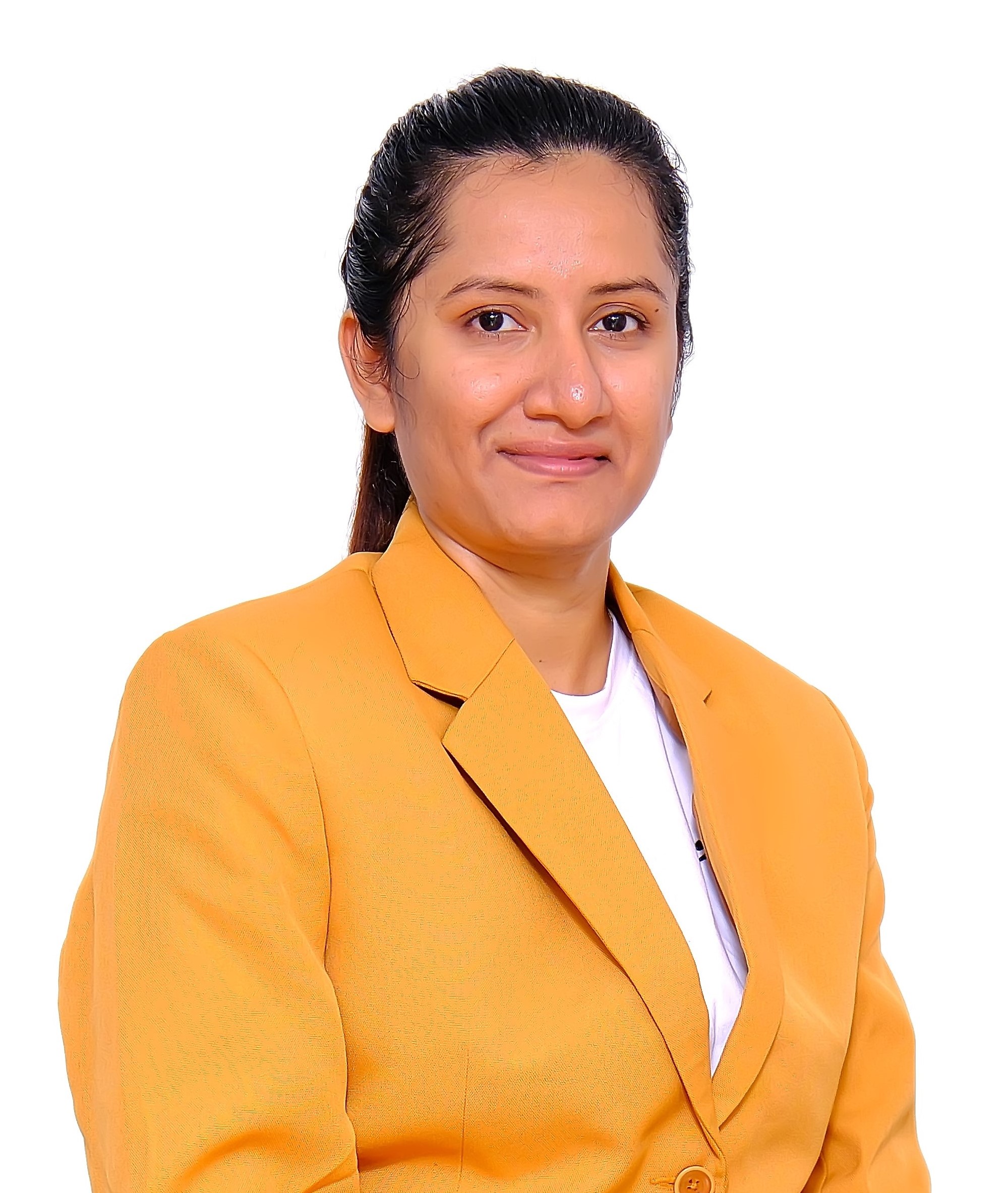
Tahmina Akther Mim

@vit.ac.in

Research Assistant
VIT Business School, Vellore Institute of Technology (VIT)

Tahmina Akther Mim
Tahmina Akther Mim is pursuing a Ph.D. in Business Administration at Vellore Institute of Technology (VIT), India. Her expertise lies in understanding financial markets, investments, and financial analysis, backed by rigorous academic training in economic theories, research methodologies, and statistical analysis. Her research is deeply rooted in sustainability, green finance, globalization, and financial development, particularly at the intersection of energy, finance, and economics. She thrives on exploring innovative solutions that drive sustainable growth and economic resilience in a rapidly evolving global landscape. With a strong analytical mindset and problem-solving abilities, Tahmina has honed her skills in statistical computing using tools like MATLAB, Orange, R, Machine Learning (ML), and Python. She is committed to continuous learning, seeking opportunities to expand her knowledge and contribute meaningfully to the financial research domain.

EDUCATION

1. Doctor of Philosophy (PhD) - Energy Economics

Vellore Institute of Technology (VIT), India | 2022 | Running

2.Master’s of Business Administration (M.B.A)- Finance & Banking

Dhaka Commerce College, National University | 2017

3.Bachelor of Business Administration (B.B.A) – Finance &Banking

Dhaka Commerce College, National University | 2016

4. Higher Secondary Certificate (H.S.C) – Business Studies

Shaheed Police Smrity College, Dhaka | 2012

5. Secondary School Certificate (S.S.C) – Business Studies

Shaheed Police Smrity College, Dhaka | 2010

RESEARCH, TEACHING, or OTHER INTERESTS

General Economics, Econometrics and Finance, Energy, Renewable Energy, Sustainability and the Environment, Analysis
4

Scopus Publications

28

Scholar Citations

3

Scholar h-index

2

Scholar i10-index

Scopus Publications

  • Where and how can Africa and India leverage the blue economy opportunities of the Indian Ocean region as a driver for sustainable development and partnerships?
    Baker Matovu, Tahmina Akther Mim, Bernard Lutalo
    Sustainable Futures, 2025
    • Africa and India will achieve sustainable BE through collaboration, partnership, and sustainable policy development. • Blue economy research is increasing, but the focus on the Indian Ocean in research and policy is low. • The IO could determine global stewardship and sustainable development pathways in the global south. • Recognizing shared vulnerabilities and sustainability needs in the IO is critical. • Five shared BE sustainable leverage points are development that reveal the desirable actions for Africa-India engagements and partnerships in the BE. Through the blue economy (BE), Africa and India can attain sustainable development, transnational partnerships, and continental engagement targets, never been seen before. However, efforts on how this could be done have been pedestrian and less explored. This review and perspective paper utilizes a bibliometric analysis technique to analyze 1712 documents, systematically sourced from Scopus. Thus, this paper situates itself as one of the first scholarly pieces to comprehensively highlight strategic aspects that could advance sustainable Africa-India regional development partnership. Mixed comparative results are found in the literature. Since 2012, research on the BE in Africa and India has increased. The BE is emphasized as a critical topical issue in Africa, albeit this is mostly led by non-African scholars and institutions. In India, most BE research perspectives target regional issues, e.g., in the Indo-Pacific region. African researchers have published more in high-impact journals compared to their Indian counterparts. The annual growth rate of research on the BE in India is comparatively higher than that of Africa (8.69 to 5.49 percent, respectively). However, the average citations of research in all regions are declining. African authors have higher national and international co-authorship collaborations. Collaborations between Africa and India on the BE are few. Most country-level collaborations are with developed nations. Nevertheless, there is recognition of the increasing vulnerability of Africa's and India's coastal communities to megatrends and marine environmental threats. Most documents emphasize that the resource endowments in the Indian Ocean (IO) could mitigate maritime challenges to socioeconomic development and environmental stewardship. Five valuable findings are emphasized: (1) the BE is essential to the prospects of sustainable development, (2) inclusive and sustainable actions are needed to address coastal socioecological shifts, (3) several BE solutions are proposed but not put into practice, and (4) BE partnerships in the IO must include China and other emerging states of the Global South, and (5) the IO is paramount towards sustainable BE between Africa and India. Borrowing from the literature insights, and as a contribution to BE-led sustainable development partnerships between Africa and India, five strategic leverage points are identified and developed: socio-cultural, economic, institutional, environmental, and scientific. As the development of BE engagements and partnership is a new development arena in Africa and India, policymakers and researchers should: (a) initiate the Africa-India BE journal, b) leverage and link Africa's and India's existing BE initiatives, visions, and programs, c) reimagine Africa and India’s development connotations, d) start slowly but consistently, and e) recognize existing shared sustainability or sustainable development visions. To achieve this, the IO must be recognized as a shared natural resource that has the potential to compartmentalize and link the proposed leverage points. Thus, policymakers and researchers must work towards rejuvenating shared ties, histories, vulnerabilities, and BE visions. This can help strengthen regional partnerships, trust, and collaborations for a better and sustainable BE.
  • Effect of Crude Oil Volatility Index (OVX) on the Energy Indices Return: Evidence from Wavelet Analysis
    Tahmina Akther Mim, Chinnadurai Kathiravan, Balasundram Maniam
    International Journal of Economics and Financial Issues, 2025
    This study investigates the co-movement and causal relationships between crude oil volatility (measured by the OVX) and the returns of three Indian energy indices: BSE Oil and Gas, BSE Power, and CNX Energy. Employing statistical techniques such as descriptive statistics, ADF and Phillips-Perron unit root tests, OLS regression, and wavelet analysis, we examine the dynamic linkages between these variables. Our findings reveal a predominantly negative relationship between OVX and the returns of the analyzed energy indices. These insights provide valuable information for investors to make informed investment decisions, particularly considering the impact of weather conditions on energy markets. Furthermore, the findings offer valuable guidance for policymakers, investment analysts, and other market participants.
  • Mobilizing Evidence-based Knowledge for Sustainable Wetlands Co-management and Co-governance amidst increasing Anthropogenic and Environmental Stressors: Key Lessons from Mityana District, Uganda
    Baker Matovu, Ming-An Lee, Mubarak Mammel, Isaac Lukambagire, Bernard Lutalo, Alex Ronald Mwangu, Bridget Mwabvu, Tahmina Akther Mim, Yasin Bbira, Yasin Lubega, Yosia Muhoozi
    Environmental Challenges, 2024
    • Two wetland systems crisscross Mityana district (Lake Wamala and River Mayanja) and form a part of the Lake Victoria basin catchment. • Limited research and knowledge of the critical wetland values among most rural communities. • Complex anthropogenic threats are primary threat drivers and loss of culturally valuable wetlands leads to socio-cultural-ecological grief. • Sedentary communities along wetlands have untapped social science knowledge of wetlands governance and management. • The co-developed Sustainable Wetlands Management Action Pathway (SWeMAP) provides seven (7) critical social science insights for sustainable wetlands governance and management across geographies. Wetlands (covering about 1.5–1.6 billion hectares globally), are critical biodiversity and livelihood hotspots. Wetlands further replenish the global economy with $47.4 trillion/year worth of ecosystem services. By jealously guarding wetlands, progress toward sustainable development goals, and livelihood welfare are possible. Unfortunately, despite the promulgation of wetland governance mechanisms, 35 percent of the global natural wetlands have been lost since the 1970s. This could be worse in undocumented or explored wetland zones situated in remote tropical regions. In this study, we bring to the fore insights from 286 documents sourced from Scopus and engagements from 105 citizens in Mityana, to (i) map wetlands (including the current vulnerabilities and threats), and (ii) co-develop a wetlands management action pathway that could create sustainable co-management possibilities and sustainable livelihood futures. Findings revealed that although research on wetlands has increased for the last 31 years, since 2021, it has plummeted. In Uganda, wetland research and scholarship is predominantly situated around the Lake Victoria region. Most research focuses on natural or biological sciences. Emerging policy themes and trending research topics are shifting from key wetland management paradigms. From a total of 105 sampled wetlands scattered across fourteen (14) sub-counties in the Mityana district, critical wetland issues were unraveled. Mityana is crossed by two wetland systems (Lake Wamala and River Mayanja dominated by permanent papyrus and seasonal swamps respectively. Wetlands offer unique livelihood, cultural assets/capitals, and ecological benefits (including cultural/aesthetics meaning). An unfathomable rate of degradation is evident. Anthropogenic factors are the predominant threat drivers, especially eucalyptus planting. The loss of culturally valuable wetlands has increased socio-cultural-ecological grief, such as around Lake Wamala. Micro-level management actions are increasing, albeit mainly around accessible permanent wetlands. Most riparian wetland sedentary populations expressed willingness and interest in the co-management and governance of community wetlands. More robust actions and pathways are needed to create avenues for community co-management. The co-developed the sustainable wetlands management action pathway (SWeMAP) provides seven (7) coherent steps, including critical social science insights that could aid sustainable wetlands governance and management across geographies. As wetlands in Uganda have been gazetted as critical to sustainable development, the urgent co-development and financing of micro-level wetland action plans, including situational inventories could help create avenues for sustainable wetlands management.
  • The 50-year-old Oil Crisis and its Impact on the Global Economy: A Bibliometric Analysis
    Tahmina Akther Mim, Chinnadurai Kathiravan, Balasundram Maniam
    International Journal of Energy Economics and Policy, 2024
    The world faced different crises, several times, in the last five decades. The COVID-19 pandemic, debt crisis and oil bubble were the most important crises among them. During the crisis, the main financial driving factor was the oil price which transmitted an alarming hit to other economic nexus factors. The objective of this paper was to find out the crisis period, caused by crude oil and its eventuality in different markets’ historical plots. Scopus data represent 605 studies, using the bibliometrix R tool, about crude oil and related crises. Within the context of the contemporary scientific literature, the most significant authors, publications, and research institutions were included in this paper. In the context of the most recent scientific literature, the most significant authors, publications, and research institutions were identified and the relevance of their contributions was established. This research employed disaggregated sectoral analysis and mechanistic analysis on grounded theory, which included moderation analysis. Finally, this bibliometric analysis tried to locate roadblocks in the current literature as well as indicate new directions for investigation.

RECENT SCHOLAR PUBLICATIONS

  • Where and how can Africa and India leverage the blue economy opportunities of the Indian Ocean region as a driver for sustainable development and partnerships?
    B Matovu, TA Mim, B Lutalo
    Sustainable Futures 10, 101218 , 2025
    2025.0
    Citations: 4
  • Effect of Crude Oil Volatility Index (OVX) on the Energy Indices Return: Evidence from Wavelet Analysis
    TA Mim, C Kathiravan, B Maniam
    International Journal of Economics and Financial Issues 15 (2), 327 , 2025
    2025.0
  • Mobilizing evidence-based knowledge for sustainable wetlands co-management and co-governance amidst increasing anthropogenic and environmental stressors: Key lessons from …
    B Matovu, MA Lee, M Mammel, I Lukambagire, B Lutalo, AR Mwangu, ...
    Environmental Challenges 17, 101014 , 2024
    2024.0
    Citations: 11
  • The 50-year-old oil crisis and its impact on the global economy: a bibliometric analysis
    TA Mim, C Kathiravan, B Maniam
    International Journal of Energy Economics and Policy 14 (4), 81-91 , 2024
    2024.0
    Citations: 13
  • Co-Movement between the Crude Oil Volatility Index (Ovx) on the Energy Indices Return: Evidence from Wavelet Analysis
    T Akther Mim, C Kathiravan, B Maniam
    Chinnadurai and Maniam, Balasundram, Co-Movement between the Crude Oil … , 0

MOST CITED SCHOLAR PUBLICATIONS

  • The 50-year-old oil crisis and its impact on the global economy: a bibliometric analysis
    TA Mim, C Kathiravan, B Maniam
    International Journal of Energy Economics and Policy 14 (4), 81-91 , 2024
    2024.0
    Citations: 13
  • Mobilizing evidence-based knowledge for sustainable wetlands co-management and co-governance amidst increasing anthropogenic and environmental stressors: Key lessons from …
    B Matovu, MA Lee, M Mammel, I Lukambagire, B Lutalo, AR Mwangu, ...
    Environmental Challenges 17, 101014 , 2024
    2024.0
    Citations: 11
  • Where and how can Africa and India leverage the blue economy opportunities of the Indian Ocean region as a driver for sustainable development and partnerships?
    B Matovu, TA Mim, B Lutalo
    Sustainable Futures 10, 101218 , 2025
    2025.0
    Citations: 4
  • Effect of Crude Oil Volatility Index (OVX) on the Energy Indices Return: Evidence from Wavelet Analysis
    TA Mim, C Kathiravan, B Maniam
    International Journal of Economics and Financial Issues 15 (2), 327 , 2025
    2025.0
  • Co-Movement between the Crude Oil Volatility Index (Ovx) on the Energy Indices Return: Evidence from Wavelet Analysis
    T Akther Mim, C Kathiravan, B Maniam
    Chinnadurai and Maniam, Balasundram, Co-Movement between the Crude Oil … , 0