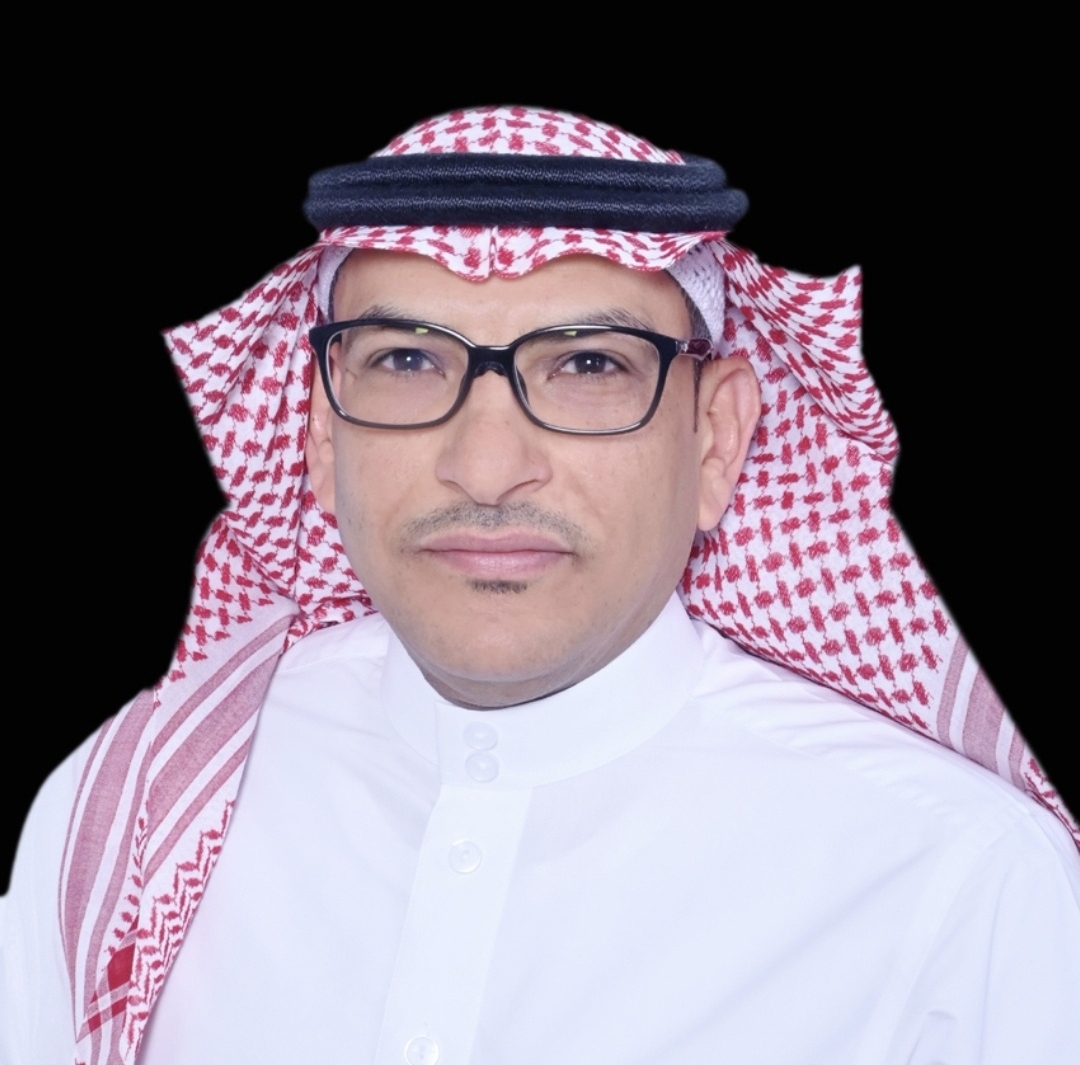
Dr. Sameer Mohammed Sayyd

@taibahu.edu.sa

Assistant Professor, Department of Sports Sciences and Physical Activity, College of Education
Taibahu University

Dr. Sameer Mohammed Sayyd
Dr. Sameer Mohammed Sayyd is an Assistant Professor at the Department of Sports Sciences and Physical Activity, Taibah University. His research focuses on sports management, organizational development, and quality assurance in higher education. He has published extensively in Scopus- and Web of Science-indexed journals and contributed to national sports development projects aligned with Saudi Vision 2030. He has participated in international conferences and received multiple academic excellence awards, including Best Research Presenter at ICPESS 2021. His work integrates sports governance, digital transformation, and strategic management to enhance institutional performance in the sports sector.

EDUCATION

PhD in Sports Sciences, University of Technology Malaysia (UTM).


MSc in Sports Management, Taibah University.

BSc in Physical & Health Education, Taibah University.

RESEARCH, TEACHING, or OTHER INTERESTS

Arts and Humanities, Artificial Intelligence, General Arts and Humanities, Research and Theory

FUTURE PROJECTS

Digital Transformation and Administrative Transparency in Sports Organizations

A study exploring the role of artificial intelligence, digital platforms, and e-governance tools in enhancing transparency and decision-making in sports clubs.


Applications Invited
Collaborators with expertise in AI, e-governance, and sport policy.
7

Scopus Publications

Scopus Publications

  • Endurance of leg muscle strength and endurance of arm muscle strength to the ability of swimming speed 200 meters breaststroke
    Berto Apriyano, Zainal Abidin Zainuddin, Asha Hasnimy Mohd Hashim Hashim, Sameer Mohammed Sayyd, Adjah Naqkiah Mazlan, Febby Apri Wenando, Argantos Argantos, Yovhandra Ockta, Mutia Febri Anisa, Rifqi Festiawan
    Retos, 2025
    The lack of breaststroke swimming ability among athletes has led to a decline in breaststroke swimming performance in the Solok city swimming association. This problem is thought to be related to the low endurance of leg and arm muscles to the swimming speed of 200 meters breaststroke. This correlational study aims to reveal the contribution of leg muscle endurance, arm muscles, and the joint contribution of both to swimming speed 200 meters breaststroke in athletes coaching achievements in the Solok city swimming association. This study involved 25 swimming athletes in Solok city, with total sampling technique. Data on leg muscle strength endurance was measured through the squat jump test, arm muscle strength endurance through the push up test, and swimming speed through the 200 meter breaststroke swimming test. Data were analyzed using simple and multiple correlations with a significant level of α = 0.05, and the contribution was calculated by the formula r² x 100%. The results of data analysis showed that leg muscle strength endurance contributed 74.65%, while arm muscle strength endurance contributed 70.06%. The combination of both contributed 74.99% to the ability of 200 meters breaststroke swimming speed of athletes coaching achievements in swimming associations in Solok city.
  • Cognitive flexibility's role in shaping self-perception of aging, body appreciation, and self-efficacy among community-dwelling older women
    Mona Metwally El-Sayed, Manal Mohammed Hawash, Mahmoud Abdelwahab Khedr, Sarah Ali Hafez, El-Saied Abd El-Hamid Salem, Samir Abdelnaby Essa, Sameer Mohammed Sayyd, Ayman Mohamed El-Ashry
    BMC Nursing, 2024
    Background Cognitive flexibility, the capacity to adjust to new information, affects how aging is perceived. In Egyptian culture, older women’s views on aging are shaped by societal gender roles and expectations. These views influence their body image and belief in their abilities, all melded by cultural standards and values. Aim Investigate the mediating role of cognitive flexibility in the relationship between self-aging perception, body appreciation, and self-efficacy among community-dwelling older women. Methods A correlational analytical design was used on 200 women aged 60 years or older using the Cognitive Flexibility Inventory, Self-Perceptions of Aging, General Self-Efficacy Scale, and Body Appreciation Scales. Structural equation modeling was used in the analysis. Results The study found that cognitive flexibility is positively related to self-perception of aging and body appreciation and is also significantly related to general self-efficacy. However, no significant relationship was found between body appreciation and general self-efficacy. Additionally, the study found that cognitive flexibility partially mediates the relationship between self-perception of aging and body appreciation and fully mediates the relationship between body appreciation and self-efficacy. Conclusion Cognitive flexibility is vital in the relationships between self-perceptions of aging, body appreciation, and self-efficacy among older women. Therefore, nursing interventions targeting cognitive flexibility are recommended to promote positive self-aging perceptions, body appreciation, and self-efficacy in this population.
  • Inviting foreign direct investment for sports development projects in relation to economic development and development challenges
    Samir Abdel Latif Mostafa Mohamed, Sameer Mohammed Khalil Sayyd, Mohamed Soliman Mohamed Ghreeb
    Sport Tk, 2024
    The present study aimed to investigate attracting foreign direct investment for sports development projects in relation to economic developments and challenges. The researchers utilized a descriptive approach, using a questionnaire, due to its appropriateness for the nature of the research. A total of 300 workers from the General Office of the Ministry of Youth and Sports participated in this study. They were selected using a stratified purposeful sampling method from the following categories: undersecretaries, general directors, department directors, department heads, and administrators. The findings of this study showed support for foreign trade exchanges through investment in export industries, especially in contexts where the host country has an advantage over the country of origin and where banking facilities are available in commercial banks. Additionally, it was demonstrated that lower risk and higher returns lead to an influx of investments. Consequently, this increases capital formation, particularly by reducing the state's dependence on external debt and decreasing the volume of foreign aid.
  • Physical fitness levels of junior high school students in different regions: Highlands, lowlands, and islands
    Journal of Physical Education and Sport, 2023
    Physical Education is an integral part of the national education program, aiming to develop aspects of physical fitness and aspects of self-skills through the provision of learning experiences that use selected physical and carried out systematically.One of the goals of physical education is to improve physical fitness.This study aims to find out why the low level of physical fitness of students, whether there is an influence with the geographical location of an area, so the purpose of this study was to determine the difference in the level of physical fitness possessed by highland, lowland and island students with diverse geographical conditions in Indonesia.The highlands were in Kerinci district, Jambi, the lowlands were in Padang, West Sumatra, while the islands were in Meranti Islands district, Riau.These three regions were represented by 2 -3 schools each, which were both located in city and district centers, but differ in terms of geographical categories.This design had a quantitative descriptive research type using comparative analysis.The instrument used was the existing and patented TKJI for ages 13-15 years.The sample used was the students grade VII of Junior High School.The data obtained were then analyzed by using an independent sample t-test with a prerequisite test of normality test and homogeneity test.These findings show that the average value for the highland region was 13.83; lowland areas was 13.20; and islands was 13.26.Meanwhile, based on the test results using ANOVA, the highlands have a better score.Therefore, it can be concluded that the area that has a better level of physical fitness among the three areas is the highlands area (Kerinci Regency, Jambi).
  • Institutional excellence in the egyptian and saudi federations of football in view of european model of excellence efqm "a comparative study"
    Mohamed Soliman Mohamed Ghreeb, Ahmed Mohamed Abdelkader, Sameer Mohammed Sayyd
    International Journal of Human Movement and Sports Sciences, 2021
    Objectives: The research aims to identify the level of institutional excellence in the Egyptian and Saudi football federations in view of the dimensions of the European Excellence Model EFQM. Methods: The researchers used the descriptive approach, following the survey method, to accommodate it with the nature and procedures of the research in order to achieve the goal of the research and answer its questions. Results: The overall score for the average application of the dimensions of the European Excellence Model EFQM in the Egyptian Football Association research sample is 1.84, which is in the intermediate level raise the level of administrative performance of the Egyptian Football Association through the application of the dimensions of the European Excellence Model EFQM. It is clear that the average level of application of the dimensions of the European Excellence Model EFQM in the Saudi Football Association is 2.41. There are statistically significant differences between the averages of the answers about each of the Egyptian Football Association and the Saudi Football Federation in the application of the dimensions of the European Excellence Model EFQM and the overall degree of application of the dimensions of the European Excellence Model EFQM in favor of the Saudi Football Association. It is also evident that there are no statistically significant differences between the average answers about both the Egyptian Football Association and the Saudi Football Association in the application of some partnerships and resources.
  • Influence of sports facilities and programs on sports participation at saudi universities
    Sameer Mohammed Sayyd, Zainal Abidin Zainuddin, Fahad Ghabban, Zayed M. Altowerqi, H Al-Hazzaa, et al.
    Journal of Physical Education and Sport, 2021
    Participation in physical activity without doubt has many benefits especially to students at all levels.It is however worrisome to note that this participation by a number of factors including availability of sport facilities and sport programs.Hence, the purpose of this study was to investigate the role or influence of sport facilities and programme on the participation in physical activity among the students in Saudi Arabia.In order to do this, the study adopted a descriptive approach with data collected with the aid of an adapted questionnaire administered on 643 undergraduate students who were randomly selected from 25 universities in Saudi Arabia.The data collected were analysed using Smart PLS software.It was revealed that there were inadequate sport facilities in the universities and this greatly affected students' sports participation at Saudi Arabia universities.In addition, findings revealed that (non)availability of sports programs had effects on the students' sports participation at Saudi Arabia universities.Therefore, these results showed that sports facilities provided by the universities could positively encourage students to use these facilities and participate in sports activities and that the sports programs provided by the universities had significant effect on students' participation.The study thus concluded that in order to increase the participation level of students, universities should offer them different types of programs, workshops and training, which enable them to discover their skills and participate in the sports that they believe they can enjoy the most with their colleagues.There should also be adequate provision of sport facilities for the use of the students.It is believed that through these, the students and the country will drive the maximum benefits of sports and sport participation.
  • Sports activities for undergraduate students in Saudi Arabia universities: A systematic literature review
    Sameer Mohammed Sayyd, Zainal Abidin Bin Zainuddin, Diyana Zulaika Binti Abdul Ghan, Zayed M Altowerqi
    International Journal of Human Movement and Sports Sciences, 2020
    Objectives: Kingdom of Saudi Arabia (KSA) has experienced tremendous economic growth in the past few years and this in turn has led to undesirable lifestyle behaviors coupled with an associated rise in non-communicable diseases. This has forced the KSA administration to encourage sports related activities for a healthy life style. In this article, a Systematic Literature Review (SLR) is presented to discuss the current state of Physical Activity (PA) and sports activities in KSA and Other Countries in the World (OCW). The article also presents issues that hinder the success of physical and sports activities development in KSA to identify research gap. Methods: SLR search was conducted using ScienceDirect, Springer, Journal of health sciences and Google Scholar databases. The databases electronic search produced 553 articles at the initial stage. Some of these articles were eliminated since they did not conform to inclusion criteria. Finally a total of 58 articles satisfied the condition and was included for the study. Results: The literature highlighted that the studies investigating the male respondents is quite low having 3 in KSA and 0 in OCW, as against 7 in KSA and 0 in OCW for Females. In addition, the empirical analyses of the result based on this SLR concluded that the sports related studies in KSA are very low as compared to OCW. The study revealed that the main factors that hinder the success of physical and sports activities in KSA universities among males are lack of energy, motivation, self-confidence, and time, while among females, they are lack of social support and resources. Conclusion: It is not encouraged to participate in sports activity in Saudi Arabia. Despite the protests to promote sports activities there is very little action in this area as compared to OCW. Therefore, further research is needed to realize the potential in this area KSA to realise the vision 2030 and goal.