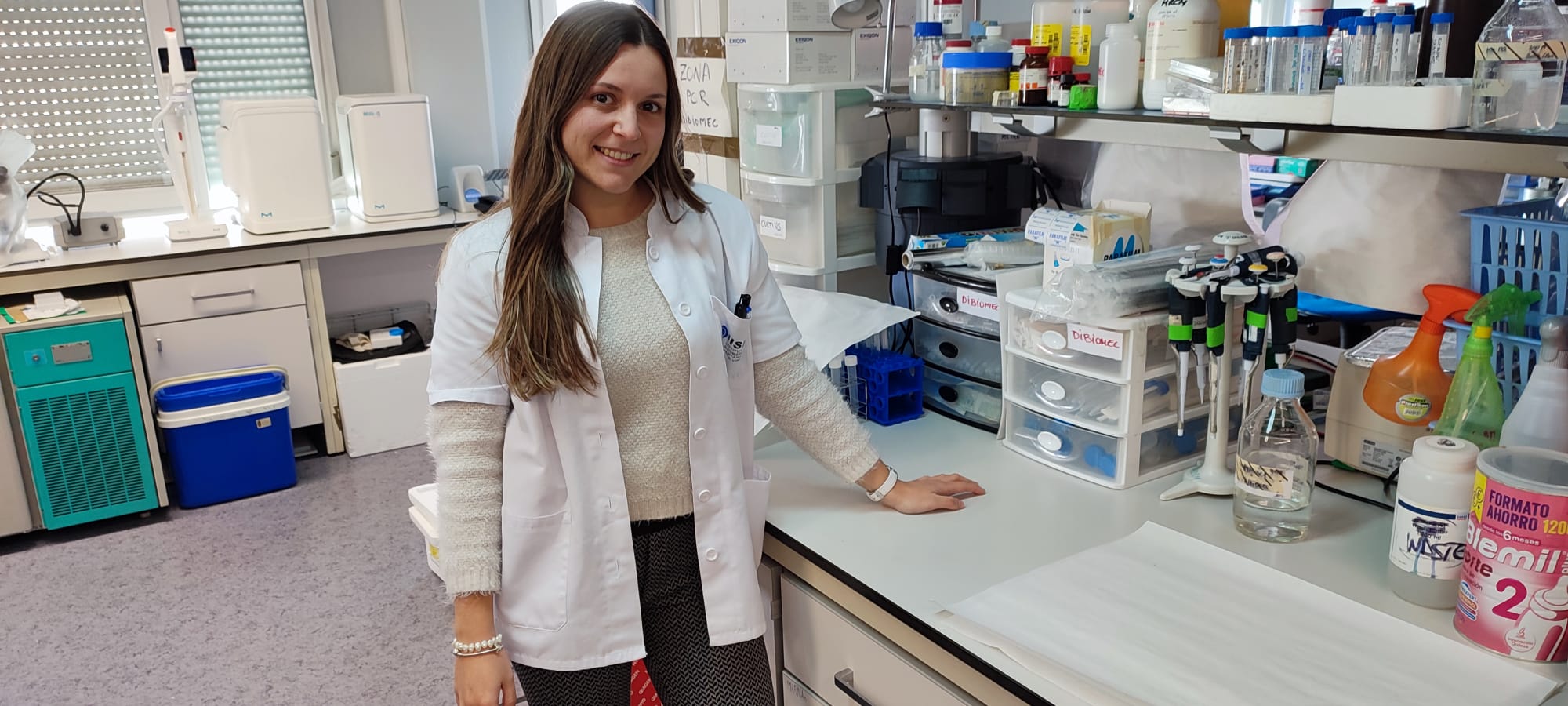
Silvia Sánchez Martín

@iispv.cat

PhD student at Disease Biomarkers and Molecular Mechanisms Group (DIBIOMEC)
Institut d'Investigació Sanitària Pere Virgili (IISPV)

EDUCATION

I specialized in the Health Mention in the fourth year during the Biology Degree. I did an internship in the animal reproduction department of the National Institute for Agricultural and Food Research and Technology (INIA).

I expanded my knowledge in Master's in Health Analysis. I did an internship at the University Hospital 12 de Octubre.

I am currently doing a Biomedicine PhD in the context of prostate cancer at the Institut d'Investigació Sanitària Pere Virgili (IISPV) in DIBIOMEC group (Disease Biomarkers and Molecular Mechanisms), Hospital Joan XXIII.

RESEARCH INTERESTS

Clinical medicine and epidemiology; biomedicine; molecular mechanism of disease; tissue culture; molecular, cellular and genetic biology; cell biology and molecular biology
6

Scopus Publications

Scopus Publications

  • Periprostatic adipose tissue-derived extracellular vesicles modulate prostate cancer cell behaviour in vitro according to tumour grade
    Verónica Arreaza-Gil, Gabriela A. Altamirano, Antonio Altuna-Coy, Alazne Moreno-Lanceta, Silvia Sánchez-Martin, Natalia Diaz-Valdivia, Jordi Alcaraz, Xana Bernal- Escoté, Joan Francesc Garcia-Fontgivell, Helena Ascaso-Til, José Segarra-Tomás, Xavier Ruiz-Plazas, Matilde R. Chacón
    Molecular Medicine, 2026
    BACKGROUND: Periprostatic adipose tissue (PPAT) actively interacts with prostate cancer (PCa) cells, partly through the release of extracellular vesicles (EVs). While the cargo of PPAT-derived EVs has been suggested to influence PCa progression, their direct impact on tumour cell behaviour, and importantly, how these effects differ according to patients’ tumour grade, remains unexplored. This study examined whether EVs derived from PPAT of low-risk (ISUP I-II; Low-PPAT EVs) and high-risk (ISUP III-V; High-PPAT EVs) PCa patients differently modulate tumour cell behaviour, immune modulation, and angiogenesis. METHODS: EVs were isolated from PPAT from low- and high-risk PCa patients and characterized by nanoparticle tracking analysis, electron microscopy and western blot. EVs (2.5 µg/mL) were tested on androgen-sensitive PCa cell lines (LNCaP, 22Rv1), and their functional effects were assessed on cell proliferation, migration, invasion and apoptosis. Activation of AKT and GSK-3β signalling pathways was also evaluated in PCa cells. Macrophage polarization markers were examined in PMA-differentiated THP-1 cells by measuring the expression of CD80, CD86, CD206, CD163, IL-1β, TNF-α, and MCP-1. Angiogenesis was evaluated through tube formation assays and gene expression analysis in HUVEC cells. CONCLUSIONS: These findings reveal, for the first time, that human PPAT-derived EVs exert risk-dependent effects on PCa progression, emphasizing their key role in PCa progression and emerging as new targetable factors.
  • Early Telephone-Based Frailty Screening With the Vulnerable Elders Survey in Adults Aged 75 Years and Older With Lung and Gynecological Cancer
    Sandra Cabrera-Jaime, Anais Hernández-Marfil, Jordi Adamuz-Tomas, Silvia Sánchez-Martín
    Cancer Nursing, 2026
    Background The International Society of Geriatric Oncology recommends that all older people with cancer have a geriatric evaluation before beginning treatment. Objective To determine the prevalence of frailty in people 75 years and older diagnosed with lung or gynecological cancer and evaluate the adaptation of standard therapeutic strategies based on frailty, following the implementation of telephone-based frailty screening with the Vulnerable Elders Survey (VES-13). Interventions/Methods We performed a retrospective observational study in 362 people screened by an advanced practice nurse before their first oncology appointment. We collected secondary data from electronic medical records. The main variables were degree of frailty (according to VES-13 and comprehensive geriatric assessment), type of cancer treatment (standard and prescribed), treatment completion, sociodemographic characteristics, and comorbidities. Results The VES-13 detected 186 people (51.4%) at risk of health deterioration, and the comprehensive geriatric assessment confirmed some degree of frailty in 157 people (43.4%), with a κ coefficient of 0.84. People with more comorbidities, greater frailty, and more geriatric syndromes were more likely to need treatment readjustment (P < .001). Conclusions Telephone-based frailty screening by an advanced practice nurse showed high applicability, with very good agreement between the proportion of people classified as frail before the initial visit and in the subsequent geriatric assessment. Implications for Practice A protocol for establishing frailty risk through telephone screening by an advanced practice nurse facilitates the care process and helps clinicians adapt therapeutic decision-making to the needs of each patient and their family.
  • Reply by Authors
    Marta Alves-Santiago, Antonio Altuna-Coy, Pablo López-Ribelles, Verónica Arreaza-Gil, José Segarra-Tomás, Helena Ascaso-Til, Joan Francesc Garcia-Fontgivell, Silvia Sánchez-Martín, Xana Bernal-Escoté, Xavier Ruiz-Plazas, Matilde R. Chacón
    Journal of Urology, 2026
  • A Semen Panel Signature Comprising sTWEAK Cytokine Levels and Expression of exomiR-221-3p and exomiR-222-3p for Assessing Prostate Cancer Prognosis, Diagnostic Utility, and Detection of Upgrading During Active Surveillance
    Marta Alves-Santiago, Antonio Altuna-Coy, Pablo López-Ribelles, Verónica Arreaza Gil, José Segarra-Tomás, Helena Ascaso-Til, Joan Francesc Garcia Fontgivell, Silvia Sánchez-Martín, Xana Bernal- Escoté, Xavier Ruiz-Plazas, Matilde R. Chacón
    Journal of Urology, 2025
    PURPOSE: We evaluated the seminal biomarker signature (sTWEAK, exomiR-221-3p, and exomiR-222-3p) in several prostate cancer (PCa) settings: diagnosis, tumor aggressiveness prognosis (International Society of Urological Pathology [ISUP] grade in radical prostatectomy specimens and biochemical recurrence [BCR]), and identifying biopsy upgrading in confirmatory biopsies during active surveillance (AS). MATERIALS AND METHODS: Semen samples were collected from 136 PCa patients classified by prostatectomy specimen ISUP grades and classified as low-risk (ISUP I-II, n = 85) and high-risk patients (ISUP ≥III, n = 51), along with 20 healthy controls, 35 patients with negative biopsies, and 51 low-risk PCa patients under AS. The relative expression levels of exomiR-221-3p and exomiR-222-3p in semen exovesicles were measured. ELISA was used to quantify sTWEAK levels. Statistical analyses, including multivariable binary logistic, Cox multivariate regression analysis, Survival classification regression tree models, and ROC, among others, were used to evaluate the predictive value of the biomarkers. RESULTS: A model combining sTWEAK and exomiR-221-3p predicted high-risk PCa (AUC = 0.937), showing a linear biomarker-probability relationship but no clear cutoff. A model comprising PSA density and sTWEAK could be used for predicting BCR. sTWEAK alone distinguished PCa cases (AUC = 0.897). In AS patients, sTWEAK levels plus the percentage of positive biopsy cores best predicted upgrading (AUC = 0.824). CONCLUSIONS: Incorporating sTWEAK and exomiR-221-3p, along with clinical parameters, offers a promising diagnostic panel for PCa and serves as a useful predictive tool for AS upgrading and BCR prognosis.
  • Tumoral periprostatic adipose tissue exovesicles-derived miR-20a-5p regulates prostate cancer cell proliferation and inflammation through the RORA gene
    Silvia Sánchez-Martin, Antonio Altuna-Coy, Verónica Arreaza-Gil, Xana Bernal-Escoté, Joan Francesc Garcia Fontgivell, Helena Ascaso-Til, José Segarra-Tomás, Xavier Ruiz-Plazas, Matilde R. Chacón
    Journal of Translational Medicine, 2024
    Background From the first steps of prostate cancer (PCa) initiation, tumours are in contact with the most-proximal adipose tissue called periprostatic adipose tissue (PPAT). Extracellular vesicles are important carriers of non-coding RNA such as miRNAs that are crucial for cellular communication. The secretion of extracellular vesicles by PPAT may play a key role in the interactions between adipocytes and tumour. Analysing the PPAT exovesicles (EVs) derived-miRNA content can be of great relevance for understanding tumour progression and aggressiveness. Methods A total of 24 samples of human PPAT and 17 samples of perivesical adipose tissue (PVAT) were used. EVs were characterized by western blot and transmission electron microscopy (TEM), and uptake by PCa cells was verified by confocal microscopy. PPAT and PVAT explants were cultured overnight, EVs were isolated, and miRNA content expression profile was analysed. Pathway and functional enrichment analyses were performed seeking potential miRNA targets. In vitro functional studies were evaluated using PCa cells lines, miRNA inhibitors and target gene silencers. Results Western blot and TEM revealed the characteristics of EVs derived from PPAT (PPAT-EVs) samples. The EVs were up taken and found in the cytoplasm of PCa cells. Nine miRNAs were differentially expressed between PPAT and PVAT samples. The RORA gene (RAR Related Orphan Receptor A) was identified as a common target of 9 miRNA-regulated pathways. In vitro functional analysis revealed that the RORA gene was regulated by PPAT-EVs-derived miRNAs and was found to be implicated in cell proliferation and inflammation. Conclusion Tumour periprostatic adipose tissue is linked to PCa tumour aggressiveness and could be envisaged for new therapeutic strategies.
  • The lipidomic profile of the tumoral periprostatic adipose tissue reveals alterations in tumor cell’s metabolic crosstalk
    Antonio Altuna-Coy, Xavier Ruiz-Plazas, Silvia Sánchez-Martin, Helena Ascaso-Til, Manuel Prados-Saavedra, Marta Alves-Santiago, Xana Bernal-Escoté, José Segarra-Tomás, Matilde R. Chacón
    BMC Medicine, 2022
    Background Periprostatic adipose tissue (PPAT) plays a role in prostate cancer (PCa) progression. PPAT lipidomic composition study may allow us to understand the tumor metabolic microenvironment and provide new stratification factors. Methods We used ultra-high-performance liquid chromatography-mass spectrometry-based non-targeted lipidomics to profile lipids in the PPAT of 40 patients with PCa (n = 20 with low-risk and n = 20 high-risk). Partial least squares-discriminant analysis (PLS-DA) and variable importance in projection (VIP) analysis were used to identify the most relevant features of PPAT between low- and high-risk PCa, and metabolite set enrichment analysis was used to detect disrupted metabolic pathways. Metabolic crosstalk between PPAT and PCa cell lines (PC-3 and LNCaP) was studied using ex vivo experiments. Lipid uptake and lipid accumulation were measured. Lipid metabolic-related genes (SREBP1, FASN, ACACA, LIPE, PPARG, CD36, PNPLA2, FABP4, CPT1A, FATP5, ADIPOQ), inflammatory markers (IL-6, IL-1B, TNFα), and tumor-related markers (ESRRA, MMP-9, TWIST1) were measured by RT-qPCR. Results Significant differences in the content of 67 lipid species were identified in PPAT samples between high- and low-risk PCa. PLS-DA and VIP analyses revealed a discriminating lipidomic panel between low- and high-risk PCa, suggesting the occurrence of disordered lipid metabolism in patients related to PCa aggressiveness. Functional analysis revealed that alterations in fatty acid biosynthesis, linoleic acid metabolism, and β-oxidation of very long-chain fatty acids had the greatest impact in the PPAT lipidome. Gene analyses of PPAT samples demonstrated that the expression of genes associated with de novo fatty acid synthesis such as FASN and ACACA were significantly lower in PPAT from high-risk PCa than in low-risk counterparts. This was accompanied by the overexpression of inflammatory markers (IL-6, IL-1B, and TNFα). Co-culture of PPAT explants with PCa cell lines revealed a reduced gene expression of lipid metabolic-related genes (CD36, FASN, PPARG, and CPT1A), contrary to that observed in co-cultured PCa cell lines. This was followed by an increase in lipid uptake and lipid accumulation in PCa cells. Tumor-related genes were increased in co-cultured PCa cell lines. Conclusions Disturbances in PPAT lipid metabolism of patients with high-risk PCa are associated with tumor cell metabolic changes.

Publications

The lipidomic profile of the tumoral periprostatic adipose tissue reveals alterations in tumor cell's metabolic crosstalk.
doi: 10.1186/s12916-022-02457-3.

GRANT DETAILS

- Search for serum diagnostic biomarkers to patients with early rheumatoid arthritis usign a combined multi-omic approach. Societat Catalana de Reumatologia. 6000,00 €
- Identification of exo-oncomiRNAs regulated by the inflammatory cytokine TWEAK in the cross-talk between periprostatic adipose tissue and prostate cancer cell. Utility as biomarkers for diagnosis and prognosis. Instituto de Salud Carlos III. 135520,00 €

RESEARCH OUTPUTS (PATENTS, SOFTWARE, PUBLICATIONS, PRODUCTS)

- Validation of the biomarker panel composed by sTWEAK, exomiR-221-3p and exomiR-222-3p in semen liquid biopsy for prostate cancer prognosis and, assessment its usefulness in prostate cancer diagnosis and active surveillance. 11th CERCA-GINJOL. 10000,00 €

SOCIAL, ECONOMIC, or ACADEMIC BENEFITS

PIF-Salut PERIS for PhD research 91035,00 €