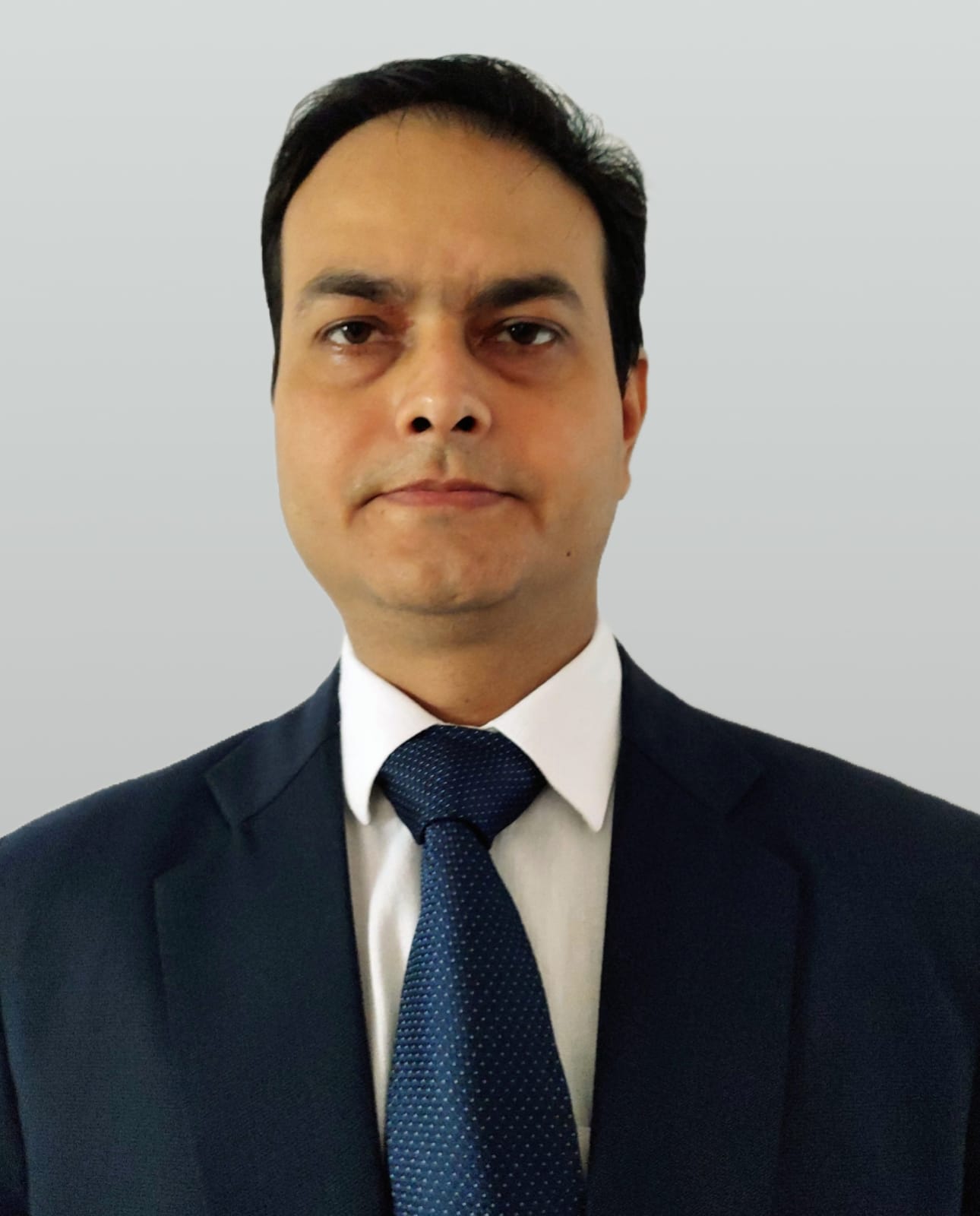
Shashank Chaturvedi is a political anthropologist working in the area of religion and politics. His work addresses the interplay of religion, culture and power in Contemporary North India with a special focus on Eastern Uttar Pradesh. Currently he is teaching at Institute of Law, Nirma University. Before this, he has taught at TISS and University of Delhi of seven years. After his PhD, he was a co-researcher in a project, ‘Democratic Cultures in South Asia,’ funded by the European Research Council (ERC) and Economic and Social Research Council (ESRC) based at the University College London (UCL), UK. Two of his key research articles are, one published in Society and Culture in South Asia, Sage 2017, and the other one is in Contemporary South Asia, Routledge 2019. Also working on the Project “Understanding the 2022 state elections in eastern UP (Uttar Pradesh), India (SRG21‰342)” supported by the British Academy.
EDUCATION
Ph D Jawaharlal Nehru University
RESEARCH INTERESTS
Religion, Culture and Politics, election studies, politics of knowledge
FUTURE PROJECTS
Understanding electoral politics in Gujarat and Uttar Pradesh: A comparative study
Applications Invited funding
Who is a Karyakarta in a political organisation?
Applications Invited funding
4
Scopus Publications
28
Scholar Citations
3
Scholar h-index
1
Scholar i10-index
Scopus Publications
Mandir vs Mandal in 2024: are there limits to the BJP’s social engineering? Shashank Chaturvedi, David N. Gellner, Sanjay Kumar Pandey Contemporary South Asia, 2026 The Bharatiya Janata Party (BJP) has achieved unprecedented success in three successive Indian general elections. However, in 2024, despite winning, in conjunction with its allies, the highest number of seats and staying in power at the center, the party experienced a considerable setback, which was a surprise to almost everyone. This paper explores the difficulties that the BJP experienced in Uttar Pradesh (UP) and contrasts UP with Gujarat, where BJP dominance remains unchallenged. The BJP’s strategy for winning in UP depends on a combination of its core Hindu nationalist (Hindutva) message with ‘social engineering’, i.e., seeking to include formerly subordinate social groups, politically, socially, and economically, within the larger Hindu tent. There are historic tensions in this attempt to combine social justice messages (‘Mandal’) with Hindu nationalist positions (‘Mandir’). We argue that the Samajwadi Party (SP) learned how to counter the BJP’s social engineering strategy. Thanks also to BJP mis-steps, the SP and its allies managed to win more seats in UP than the NDA (the BJP plus small allied parties), even though they received fewer votes.
The 2022 State Elections in Uttar Pradesh and the RSS-isation of the BJP Shashank Chaturvedi, David N. Gellner, Sanjay Kumar Pandey South Asia Journal of South Asia Studies, 2024 Since 2014, the BJP has become increasingly dominant in Uttar Pradesh, India, a state where, as recently as 2012, its vote share had slumped to 15 percent. This paper examines, through ethnographic field research with party workers and others, the reasons for the turnaround in the party’s fortunes. A large part of the answer lies in the increasing strength of BJP party organisation, modelled on an RSS template, as well as the increasing coordination between the RSS and the BJP, with RSS personnel frequently seconded to the BJP. This intense closeness between the RSS and the BJP is a new post-2014 feature, something that did not characterise earlier periods of the BJP in power. A second key factor, building on the BJP’s increased organisational capacity, and one long advocated by the RSS, is the mobilisation of state welfare benefits by the party and the concerted effort to convert welfare recipients, coming from all communities, into supporters. A third key factor, at which the BJP is increasingly adept and where RSS organisational skills provide a significant advantage, is the micromanagement of caste dynamics and religious polarisation as and when required to gain and maintain a political advantage.
Politics in Gorakhpur since the 1920s: the making of a safe ‘Hindu’ constituency Shashank Chaturvedi, David N. Gellner, Sanjay Kumar Pandey Contemporary South Asia, 2019 The city of Gorakhpur presents what may be a unique, and is certainly an unusual, configuration of religion and politics. The sitting MP from 1998 to 2017, Yogi Adityanath, a Hindu monk, had one of the safest seats in India and won five parliamentary elections in a row, a career that culminated in his appointment as the BJP Chief Minister of Uttar Pradesh in 2017. Adityanath was both an effective constituency MP and the head of a thriving Math (Hindu monastic temple). Gorakhpur used to be famous for its lawless image and gang warfare. We seek to explain how politics in Gorakhpur have evolved through three distinct periods: (1) Congress hegemony and Hindu-Muslim harmony at the local level; (2) intensified caste competition and the rise of muscular politics; (3) the impact of new caste politics (with the rise of caste-based parties such as the SP and BSP), with the Math as the focus of Gorakhpur’s ever-stronger Hindu-based political identity. The BJP’s loss of the Gorakhpur seat in 2018, in a by-election consequent on Adityanath’s elevation to Chief Minister of UP, may be interpreted as a (probably temporary) rejection of the BJP, but it does not represent a loss of influence by the Math.
Khichdi Mela in Gorakhnath Math: Symbols, Ideas and Motivations Shashank Chaturvedi Society and Culture in South Asia, 2017 While laying ethnographic focus on the Gorakhnath Math complex located in the North Indian city of Gorakhpur, this article examines the central role that this institution has come to play over the decades in determining the relationships between political and cultural processes in the region. Detailing the event of the Khichdi Mela as observed in the Hindu month of Magha every year, the article looks at the activities of the participating devotees and at the strategic role played by the Mahant of the shrine, Yogi Adityanath, in the organisation of this event. It is argued that Yogi Adityanath’s presence inside the Math, on one of the most sacred days of the Hindu calendar, and its meaning shared by devotees, is very complex and multilayered. The sacredness involved in offering Khichdi on this day is not limited to mere symbolism. In addition, religion as a resource for power is reinforced by shared meanings and collective sentiments.
RECENT SCHOLAR PUBLICATIONS
The 2022 State Elections in Uttar Pradesh and the RSS-isation of the BJP S Chaturvedi, DN Gellner, SK Pandey South Asia: Journal of South Asian Studies 47 (2), 299-318 , 2024 2024.0 Citations: 3
Book review: Koushiki Dasgupta, Sadhus in Indian Politics: Dynamics of Hindutva S Chaturvedi Studies in Indian Politics 10 (2), 300-301 , 2022 2022.0
Politics in Gorakhpur since the 1920s: the making of a safe ‘Hindu’constituency S Chaturvedi, DN Gellner, SK Pandey Contemporary South Asia 27 (1), 40-57 , 2019 2019.0 Citations: 20
Khichdi Mela in Gorakhnath Math : Symbols, Ideas and Motivations S Chaturvedi Society and Culture in South Asia 3 (2), 135-156 , 2017 2017.0 Citations: 4
Book Review: Neera Chandhoke, Democracy and Revolutionary Politics S Chaturvedi Political Studies Review 14 (3), 415-416 , 2016 2016.0
Right Turn in Indian Polity: Modi on BJP’s Chariot by Yogesh Atal and Sunil K. Choudhary S Chaturvedi Strategic Analysis 40 (1), 65-66 , 2016 2016.0
Book Review: General Politics: The Holocaust, Religion and the Politics of Collective Memory: Beyond Sociology S Chaturvedi Political Studies Review 13 (4), 593-593 , 2015 2015.0
Indian youth and electoral politics: an emerging engagement S Chaturvedi Contemporary South Asia 23 (3), 361-362 , 2015 2015.0 Citations: 1
Book Review: Political Theory: A World of Becoming S Chaturvedi Political Studies Review 11 (1), 81-82 , 2013 2013.0
Debating difference: group rights and liberal democracy in India S Chaturvedi CONTEMPORARY SOUTH ASIA 20 (2), 272-273 , 2012 2012.0
Rise of the plebeians? The changing face of the legislative assemblies S Chaturvedi Contemporary South Asia 19 (3), 336-337 , 2011 2011.0
The everyday life of Hindu Nationalism: an ethnographic account S Chaturvedi CONTEMPORARY SOUTH ASIA 18 (4), 464-465 , 2010 2010.0
Religion and Society: Understanding the Complexities in Times of Pandemic S Chaturvedi Migrants on the Move , 0
MOST CITED SCHOLAR PUBLICATIONS
Politics in Gorakhpur since the 1920s: the making of a safe ‘Hindu’constituency S Chaturvedi, DN Gellner, SK Pandey Contemporary South Asia 27 (1), 40-57 , 2019 2019.0 Citations: 20
Khichdi Mela in Gorakhnath Math : Symbols, Ideas and Motivations S Chaturvedi Society and Culture in South Asia 3 (2), 135-156 , 2017 2017.0 Citations: 4
The 2022 State Elections in Uttar Pradesh and the RSS-isation of the BJP S Chaturvedi, DN Gellner, SK Pandey South Asia: Journal of South Asian Studies 47 (2), 299-318 , 2024 2024.0 Citations: 3
Indian youth and electoral politics: an emerging engagement S Chaturvedi Contemporary South Asia 23 (3), 361-362 , 2015 2015.0 Citations: 1
Book review: Koushiki Dasgupta, Sadhus in Indian Politics: Dynamics of Hindutva S Chaturvedi Studies in Indian Politics 10 (2), 300-301 , 2022 2022.0
Book Review: Neera Chandhoke, Democracy and Revolutionary Politics S Chaturvedi Political Studies Review 14 (3), 415-416 , 2016 2016.0
Right Turn in Indian Polity: Modi on BJP’s Chariot by Yogesh Atal and Sunil K. Choudhary S Chaturvedi Strategic Analysis 40 (1), 65-66 , 2016 2016.0
Book Review: General Politics: The Holocaust, Religion and the Politics of Collective Memory: Beyond Sociology S Chaturvedi Political Studies Review 13 (4), 593-593 , 2015 2015.0
Book Review: Political Theory: A World of Becoming S Chaturvedi Political Studies Review 11 (1), 81-82 , 2013 2013.0
Debating difference: group rights and liberal democracy in India S Chaturvedi CONTEMPORARY SOUTH ASIA 20 (2), 272-273 , 2012 2012.0
Rise of the plebeians? The changing face of the legislative assemblies S Chaturvedi Contemporary South Asia 19 (3), 336-337 , 2011 2011.0
The everyday life of Hindu Nationalism: an ethnographic account S Chaturvedi CONTEMPORARY SOUTH ASIA 18 (4), 464-465 , 2010 2010.0
Religion and Society: Understanding the Complexities in Times of Pandemic S Chaturvedi Migrants on the Move , 0