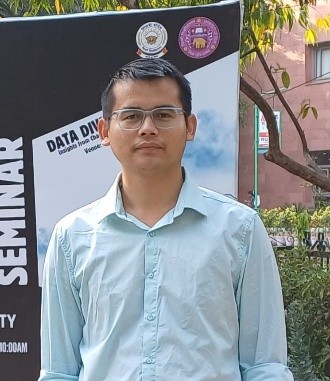
TAYENJAM PRIYOKUMAR SINGH

@shivajicollege.ac.in

Assistant Professor, Department of Political Science
Shivaji College, University of Delhi

RESEARCH, TEACHING, or OTHER INTERESTS

Political Science and International Relations
4

Scopus Publications

5

Scholar Citations

1

Scholar h-index

Scopus Publications

  • Economic Statecraft and Strategic Autonomy: Taiwan's Post-Developmental Realignment in Cross-Strait Relations
    LOUREMBAM JAPAN SINGH, TAYENJAM PRIYOKUMAR SINGH
    Issues and Studies, 2026
    This paper examines Taiwan’s strategic shift from a classic developmental state model toward a post-developmental form of economic statecraft aimed at achieving strategic autonomy under growing cross-strait asymmetry. Drawing on developmental state theory, small-state diplomacy, and geoeconomic analysis, this paper argues that rather than disengagement from globalization, Taiwan’s economic policy since the late 2010s reflects a selective realignment that leverages its technological centrality to resist external coercion. This is particularly evident in the field of semiconductors. This study analyzes Taiwan’s transformation in three phases. These include state-led industrialization, deep economic entanglement with China under the Economic Cooperation Framework Agreement (ECFA), and a diversification strategy shaped by engagement through the New Southbound Policy and Comprehensive and Progressive Agreement for Trans-Pacific Partnership (CPTPP). This paper finds that Taiwan has increasingly deployed trade, innovation policy, and multilateral economic instruments not merely for economic gain but as tools of sovereignty-preserving statecraft. Rather than pursue isolation or hard decoupling, Taiwan is constructing a form of strategic openness by insulating itself where necessary while reinforcing international embeddedness. This approach offers a critical case of how small states with advanced industries can navigate asymmetric interdependence through calibrated economic agency rather than confrontation. The findings underscore the rising salience of geoeconomic strategy in Taiwan’s external policy in a contested Indo-Pacific order.
  • Navigating the Security Nexus: Climate Change, Migration, and Conflict in Assam
    Tayenjam Priyokumar Singh, Ningthoujam Koiremba Singh
    Space and Culture India, 2026
    Climate change poses a significant challenge to human civilisation, and human activities continue in accelerate it. Yet, the traditionalist view of security is not ready to reformulate its military and state-centric approaches, which are confined mainly to the sovereignty, integrity, and cohesion of the nation. However, climate change can lead to multi-dimensional security threats ranging from mass migration, poverty, sectarian conflicts, xenophobia and collateral damage across nations and boundaries. This issue can affect a nation’s welfare and ecology, and even its existence. It is high time for researchers and policymakers to examine a deeper, more comprehensive theory that can comprehend contemporary security challenges beyond the traditional security outlook in International Relations. So, the study seeks to apply the Non-Traditional Security framework to critically analyse the extent to which Bangladeshi migrants and their impacts on climate change and security concerns in India, particularly in the state of Assam.
  • When silence speaks: China, India, and the limits of securitization on the Brahmaputra
    Lourembam Japan Singh, Tayenjam Priyokumar Singh
    Journal of Asian and African Studies, 2026
    The article offers a deep theoretical critique of securitization theory, particularly speech-act, as applied to India–China water disputes over the Brahmaputra river. Despite strategic stakes, neither China nor India has discursively securitized the river. We argue that securitization theory fails to account for the strategic, coercive, and infrastructural dynamics shaping China’s upstream control. Drawing from hydro-hegemony theory (Zeitoun & Warner), deterrence theory (Schelling), and critical infrastructure studies (Larkin, Cowen), we show how China’s dam-building and control of hydrological data serve as tools of power beyond securitization. This framework is contrasted with the now-suspended Indus Waters Treaty between India and Pakistan which underscores the fragility of normative assumptions in securitization theory. We conclude that future transboundary water politics are likely to be governed by silent coercive leverage and deterrence, challenging the existing security paradigms and calling for new frameworks to address these latent conflicts.
  • Environmental Impact of Poppy Cultivation in Manipur: Challenges to National Security
    Ningthoujam Koiremba Singh, Tayenjam Priyokumar Singh, Mayanglambam Ojit Kumar Singh
    Strategic Analysis, 2024
    Security from external threats has always been the preserve of the State in International Relations. In the last few decades, many theories have been propounded to broaden the perception of security, as the traditional outlook of security cannot comprehend the ever-changing perspective and nature of threats in global politics. The problems of security issues as States were also witnessing newer forms of threats that were not only territorial but also social, economic, and transnational in nature. Such developments not only indicate the death knell of the traditional mode of thinking but also call for a rethinking of ‘widening’ or ‘redefining’ the concept of ‘security’. This article is an attempt to critically analyse non-traditional security threats and issues of drug trafficking and the environmental impact of poppy cultivation in Northeast India, particularly in Manipur. Furthermore, it investigates the collateral damage to national security.

RECENT SCHOLAR PUBLICATIONS

  • Statelessness And Insecurity: Revisiting The Rohingya Crisis Through A Human Security Lens
    TP Singh, NK Singh
    The Calcutta Journal of Global Affairs 10 (2), 280-300 , 2026
    2026
  • When silence speaks: China, India, and the limits of securitization on the Brahmaputra
    LJ Singh, TP Singh
    Journal of Asian and African Studies, 1-20 , 2026
    2026
  • Navigating the Security Nexus: Climate Change, Migration, and Conflict in Assam
    TP Singh, NK Singh
    Space and Culture, India 13 (4), 30-47 , 2026
    2026
  • Economic Statecraft and Strategic Autonomy: Taiwan’s Post-Developmental Realignment in Cross-Strait Relations
    LJ SINGH, TP SINGH
    Issues & Studies 62 (1) , 2026
    2026
  • National Human Rights Commission on Institutional Reform and Justice in India: A Critical Analysis
    S Kumar, TP Singh
    Tareek e Adab e Urdu 7 (1), 445-457 , 2025
    2025
  • Illegal Migration in Assam: National Security Issues and Challenges in India
    TP Singh, NK Singh
    Tareek e Adab e Urdu 7 (1), 597-610 , 2025
    2025
  • Illegal Migrants into Manipur: Socio-economic and Security Concerns
    S Kumar, TP Singh
    Bihar Journal of Public Administration, 516-524 , 2025
    2025
  • India and QUAD in the Indo-Pacific Region: A Perspective on Maritime Security
    TP Singh, LJ Singh, NK Singh
    Jadavpur Journal of International Relations 28 (2), 148-165 , 2024
    2024
    Citations: 2
  • Environmental Impact of Poppy Cultivation in Manipur: Challenges to National Security
    NK Singh, TP Singh, MOK Singh
    Strategic Analysis 48 (3), 244-258 , 2024
    2024
    Citations: 1
  • Unraveling India’s Ascendancy on the Global Stage
    TP Singh, NK Singh, R Sharma
    Third Concept 38 (448), 23-26 , 2024
    2024
  • Unravelling the Legal Framework of India’s Anti-Dumping Strategies
    NK Singh, TP Singh
    Liberal Studies 9 (3), 471-486 , 2024
    2024
  • Black Feminism and Breaking Barriers in the Hidden Figures
    TP Singh, NK Singh, A Urooj
    Gauhati University Journal of Philosophy 9, 115-125 , 2024
    2024
  • Revisiting the Economic Implication of the Dumping of Chinese Goods in Indian Market
    NK Singh, TP Singh
    Dialogue Quarterly 25 (1-4), 50-72 , 2024
    2024
  • Diaspora: A Soft Power Stakeholder in India’s Southeast Asian Foreign Policy
    NK Singh, TP Singh
    Indian Studies Review 5 (S-1), 74-93 , 2024
    2024
    Citations: 1
  • A Critical Analysis of Narco-Politics In Manipur
    TP Singh
    International Journal of Multidisciplinary Educational Research 11 (1 (5)) , 2022
    2022
    Citations: 1

MOST CITED SCHOLAR PUBLICATIONS

  • India and QUAD in the Indo-Pacific Region: A Perspective on Maritime Security
    TP Singh, LJ Singh, NK Singh
    Jadavpur Journal of International Relations 28 (2), 148-165 , 2024
    2024
    Citations: 2
  • Environmental Impact of Poppy Cultivation in Manipur: Challenges to National Security
    NK Singh, TP Singh, MOK Singh
    Strategic Analysis 48 (3), 244-258 , 2024
    2024
    Citations: 1
  • Diaspora: A Soft Power Stakeholder in India’s Southeast Asian Foreign Policy
    NK Singh, TP Singh
    Indian Studies Review 5 (S-1), 74-93 , 2024
    2024
    Citations: 1
  • A Critical Analysis of Narco-Politics In Manipur
    TP Singh
    International Journal of Multidisciplinary Educational Research 11 (1 (5)) , 2022
    2022
    Citations: 1
  • Statelessness And Insecurity: Revisiting The Rohingya Crisis Through A Human Security Lens
    TP Singh, NK Singh
    The Calcutta Journal of Global Affairs 10 (2), 280-300 , 2026
    2026
  • When silence speaks: China, India, and the limits of securitization on the Brahmaputra
    LJ Singh, TP Singh
    Journal of Asian and African Studies, 1-20 , 2026
    2026
  • Navigating the Security Nexus: Climate Change, Migration, and Conflict in Assam
    TP Singh, NK Singh
    Space and Culture, India 13 (4), 30-47 , 2026
    2026
  • Economic Statecraft and Strategic Autonomy: Taiwan’s Post-Developmental Realignment in Cross-Strait Relations
    LJ SINGH, TP SINGH
    Issues & Studies 62 (1) , 2026
    2026
  • National Human Rights Commission on Institutional Reform and Justice in India: A Critical Analysis
    S Kumar, TP Singh
    Tareek e Adab e Urdu 7 (1), 445-457 , 2025
    2025
  • Illegal Migration in Assam: National Security Issues and Challenges in India
    TP Singh, NK Singh
    Tareek e Adab e Urdu 7 (1), 597-610 , 2025
    2025
  • Illegal Migrants into Manipur: Socio-economic and Security Concerns
    S Kumar, TP Singh
    Bihar Journal of Public Administration, 516-524 , 2025
    2025
  • Unraveling India’s Ascendancy on the Global Stage
    TP Singh, NK Singh, R Sharma
    Third Concept 38 (448), 23-26 , 2024
    2024
  • Unravelling the Legal Framework of India’s Anti-Dumping Strategies
    NK Singh, TP Singh
    Liberal Studies 9 (3), 471-486 , 2024
    2024
  • Black Feminism and Breaking Barriers in the Hidden Figures
    TP Singh, NK Singh, A Urooj
    Gauhati University Journal of Philosophy 9, 115-125 , 2024
    2024
  • Revisiting the Economic Implication of the Dumping of Chinese Goods in Indian Market
    NK Singh, TP Singh
    Dialogue Quarterly 25 (1-4), 50-72 , 2024
    2024