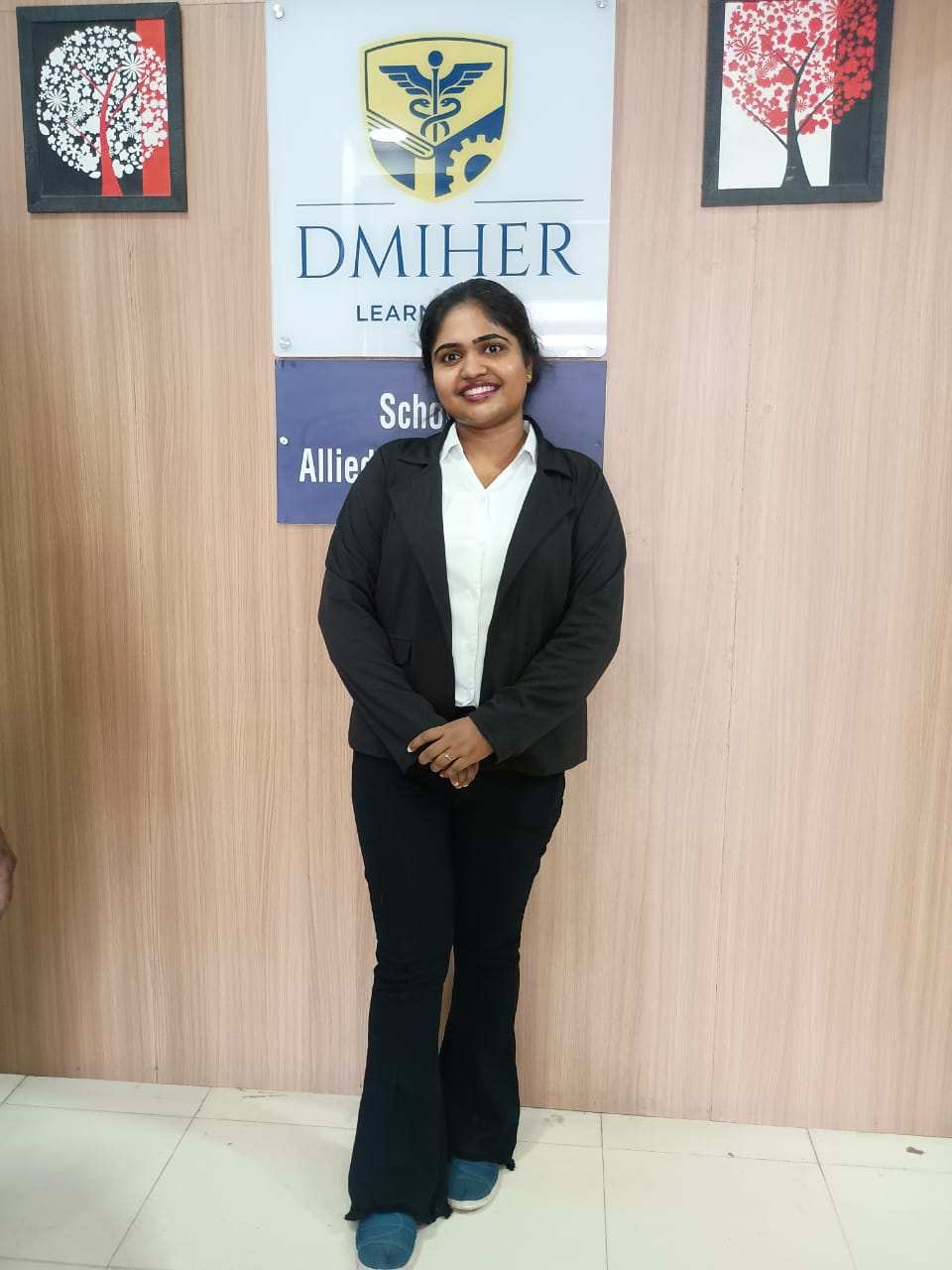
Induni Nayodhara Weerarathna

@dmiher.edu.in

Researcher, Department of Biomedical Sciences
Datta Meghe Institue of Higher Education and Research

Induni Nayodhara Weerarathna

EDUCATION

Bachelor's Science in Biomedical Sciences—Datta Meghe Institute of Higher Education and Research, India
General Certificate of Education (Advanced Level)- Srilanka
General Certificate of Education (Ordinary Level) - Sri Lanka

RESEARCH, TEACHING, or OTHER INTERESTS

Cancer Research, Biochemistry, Genetics and Molecular Biology, Molecular Biology, Cell Biology
24

Scopus Publications

429

Scholar Citations

9

Scholar h-index

9

Scholar i10-index

Scopus Publications

  • A Review on the Applications and Implications of Artificial Intelligence and Machine Learning in Oncology
    Kunal Hiwase, Prateek Verma, Nikita Zade, Praveen Kumar, Induni Nayodhara Weerarathna, Swapnil Gundewar
    International Journal of Computational Intelligence Systems, 2026
    The use of Artificial Intelligence (AI) and Machine Learning (ML) has rapidly gained popularity in the treatment of oncology, bringing about a significant shift in approaches to initial screening, cancer detection, therapy, and control. This study aims to discuss basic developments in AI and ML, specifically Deep Learning (DL), Natural Language Processing, Radiomics, and multi-omics analysis in Oncology. The use of DL in the diagnosis of various medical images and genomic data has greatly improved diagnostic results and treatment planning. Radiomics contains detailed features of the tumor and its response to the treatment. Multi-omics analysis, which encompasses genomics, proteomics, transcriptomics, and metabolomics, provides a comprehensive understanding of cancer biology and facilitates the development of personalized medicine therapies. However, the use of AI in oncology also presents some ethical and societal concerns, including patients’ privacy, biased algorithms, and the implementation of technology. Addressing these problems is imperative to help in better implementation of the use of AI in Healthcare. The current review also foregrounds the ethical, clinical, and societal implications of AI adoption, emphasizing the need for robust governance, representative datasets, and interdisciplinary collaboration. The future research can be addressed towards the explainability of developed AI models and improvement in the quality of data. Overcoming the mentioned challenges, the efficient use of AIML can offer various benefits such as enhanced accuracy, better treatment and timely intervention for the patients worldwide.
  • Transforming Coagulation Testing: The Role of Biosensors in Prothrombin Time (PT) Measurement
    Induni Nayodhara Weerarathna, Praveen Kumar, Siah Kundy, Mayur Suresh Gawande, Matteo Hirushan Jayakody Arachchige, Sanvi Arora
    ACS Omega, 2026
    A key component of blood coagulation evaluation, prothrombin time (PT) measurement is used to diagnose clotting abnormalities, track anticoagulant treatments, and evaluate liver function. Despite their clinical significance, traditional PT testing techniques frequently depend on centralized laboratory setups, which can be costly, time-consuming, and unavailable to many patients. New developments in biosensor technology provide revolutionary ways to overcome these restrictions. This article discusses the cutting-edge field of biosensors for PT monitoring, going over fundamental ideas, current developments, and potential applications. In order to facilitate quick, precise, and least intrusive coagulation monitoring, biosensors have used technologies including microfluidics, nanotechnology, and bio-MEMS (Micro-Electro-Mechanical Systems). Their usefulness in point-of-care (PoC) and home-based settings has been further increased by developments in device portability and integration with digital health platforms, promoting individualized healthcare. Strategies to increase sensitivity, selectivity, and cost-effectiveness are highlighted in the design and construction of PT biosensors. This thorough analysis emphasizes how important biosensors are to advancing PT assessment and enhancing clinical results. Biosensor technologies have the potential to revolutionize the diagnostic landscape by providing adequate and affordable coagulation monitoring solutions in various healthcare settings with sustained research and interdisciplinary cooperation.
  • The role of artificial intelligence in pandemic responses: from epidemiological modeling to vaccine development
    Mayur Suresh Gawande, Nikita Zade, Praveen Kumar, Swapnil Gundewar, Induni Nayodhara Weerarathna, Prateek Verma
    Molecular Biomedicine, 2025
    Integrating Artificial Intelligence (AI) across numerous disciplines has transformed the worldwide landscape of pandemic response. This review investigates the multidimensional role of AI in the pandemic, which arises as a global health crisis, and its role in preparedness and responses, ranging from enhanced epidemiological modelling to the acceleration of vaccine development. The confluence of AI technologies has guided us in a new era of data-driven decision-making, revolutionizing our ability to anticipate, mitigate, and treat infectious illnesses. The review begins by discussing the impact of a pandemic on emerging countries worldwide, elaborating on the critical significance of AI in epidemiological modelling, bringing data-driven decision-making, and enabling forecasting, mitigation and response to the pandemic. In epidemiology, AI-driven epidemiological models like SIR (Susceptible-Infectious-Recovered) and SIS (Susceptible-Infectious-Susceptible) are applied to predict the spread of disease, preventing outbreaks and optimising vaccine distribution. The review also demonstrates how Machine Learning (ML) algorithms and predictive analytics improve our knowledge of disease propagation patterns. The collaborative aspect of AI in vaccine discovery and clinical trials of various vaccines is emphasised, focusing on constructing AI-powered surveillance networks. Conclusively, the review presents a comprehensive assessment of how AI impacts epidemiological modelling, builds AI-enabled dynamic models by collaborating ML and Deep Learning (DL) techniques, and develops and implements vaccines and clinical trials. The review also focuses on screening, forecasting, contact tracing and monitoring the virus-causing pandemic. It advocates for sustained research, real-world implications, ethical application and strategic integration of AI technologies to strengthen our collective ability to face and alleviate the effects of global health issues.
  • Future directions and innovations in AI and imaging
    Induni Nayodhara Weerarathna, Matteo Hirushan Jayakody Arachchige, Austin Jojo Jallah, Mohammad Affan Kareem, Kidus Manaye Mulugeta
    Radiodiagnosis in the Era of AI, 2025
    Radiology has been significantly impacted by artificial intelligence (AI), which has increased imaging capabilities, workflow efficiency, and diagnostic accuracy. With an emphasis on technologies like explainable AI, generative adversarial networks, and deep learning, this book chapter examines developments in AI applications in Imaging. These tools have changed medical Imaging by making automatic segmentation, picture reconstruction, and multimodal data integration possible. AI has also improved theranostic techniques, predictive analytics, and point-of-care diagnostics. Even though these developments mark a new age in radiography, issues including data privacy, moral dilemmas, and integration barriers still exist. This chapter highlights the revolutionary potential of AI-powered Imaging in both clinical and non-clinical applications while speculating about its future paths.
  • The mechanistic aspects of In Vitro toxicity of organic and inorganic nanoparticles
    Emerging Nanomaterials in Biomedical Science, 2025
  • Cloud security and artificial intelligence
    Mansi Sharma, David Raymond, Induni Weerarathna, Praveen Kumar, Abeny Ramadan Chadar
    Handbook of AI Driven Threat Detection and Prevention A Holistic Approach to Security, 2025
    The developing dependence of undertakings on cloud administrations for computing, capacity, and applications highlights the basic need for solid security conventions in cloud situations. In order to strengthen computerized frameworks against ever-evolving cyber threats, this chapter investigates into the interconnected connect between cloud security and artificial intelligence (AI). This chapter lays out the fundamental thoughts of cloud computing and the numerous issues that emerge from security imperfections in cloud situations. It explores the progressive potential of AI-driven strategies for improving cloud security position, counting threat prevention, detection, and response systems, etc. Associations may proactively distinguish abnormalities, diminish risks, and strengthen protections against undesirable interruptions by using AI strategies, such as machine learning and natural language processing. In addition, this chapter clarifies the practical application of AI-driven security solutions across a variety of cloud deployment patterns, such as private, public, and hybrid clouds. It makes its way through case studies and actual situations to demonstrate how AI may be used to improve regulatory compliance in cloud infrastructures, automate incident response, and augment threat intelligence. In a period of increased cyber risks and technology conflict, organizations may strengthen their digital resilience and set them up for sustainable success by collaborating on innovative ideas and making strategic investments in AI-driven security technology.
  • Reinforcement learning model, algorithms, and its application
    Aahash R. Kamble, Moses M. Jiet, Induni N. Weerarathna, Siddhi A. Dhande, Sakshi V. Izankar, Chetan G. Puri
    Aip Conference Proceedings, 2025
  • Advancements in Micro/Nanorobots in Medicine: Design, Actuation, and Transformative Application
    Induni Nayodhara Weerarathna, Praveen Kumar, Hellen Yayra Dzoagbe, Lydia Kiwanuka
    ACS Omega, 2025
    In light of the ongoing technological transformation, embracing advancements that foster shared benefits is essential. Nanorobots, a breakthrough within nanotechnology, have demonstrated significant potential in fields such as medicine, where diagnostic and therapeutic applications are the primary focus areas. This review provides a comprehensive overview of nanotechnology, robots, and their evolving role in medical applications, particularly highlighting the use of nanorobots. Various design strategies and operational principles, including sensors, actuators, and nanocontrollers, are discussed based on prior research. Key nanorobot medical applications include biomedical imaging, biosensing, minimally invasive surgery, and targeted drug delivery, each utilizing advanced actuation technologies to enhance precision. The paper further examines recent progress in micro/nanorobot actuation and addresses important considerations for the future, including biocompatibility, control, navigation, delivery, targeting, safety, and ethical implications. This review offers a holistic perspective on how nanorobots can reshape medical practices, paving the way for precision medicine and improved patient outcomes.
  • Sustainable biomaterials for pharmaceutical and medical applications
    Induni Nayodhara Weerarathna, Praveen Kumar, Anurag Luharia, Gaurav Mishra
    Multidisciplinary Reviews, 2025
    The utilization of sustainable biomaterials in pharmaceutical and medical applications has gained significant momentum in recent years due to their dual ability to address environmental concerns and meet the evolving demands of modern healthcare. As the need for greener alternatives in healthcare intensifies, this review presents a comprehensive overview of recent advancements and innovations in sustainable biomaterials for pharmaceutical and medical fields. The review begins by exploring sustainable sourcing methods and eco-friendly production techniques, which are crucial in reducing the environmental footprint of biomaterial development. Emphasis is placed on adopting renewable resources and processes that minimize waste and energy consumption, ensuring sustainability throughout the lifecycle of these materials. A diverse array of sustainable biomaterials is highlighted, including biopolymers, natural extracts, and biobased nanoparticles, with a focus on their unique properties and biomedical applications. These materials are increasingly utilized in critical areas such as drug delivery systems, tissue engineering, wound healing, and medical device fabrication. Their attributes, including biocompatibility, biodegradability, and therapeutic efficacy, make them valuable assets in advancing healthcare solutions while preserving environmental integrity. Additionally, this review delves into regulatory considerations and the commercialization prospects of sustainable biomaterials, discussing the challenges and opportunities in integrating these materials into mainstream medical and pharmaceutical practices. Issues such as cost-effectiveness, scalability, and adherence to stringent regulatory standards are critically examined to understand their implications for real-world applications. By elucidating the potential, challenges, and future directions of sustainable biomaterials, this article aims to inspire further research and innovation in developing environmentally friendly and effective healthcare solutions. It advocates for a transformative approach to material science that prioritizes sustainability without compromising therapeutic outcomes, paving the way for a greener and healthier future.
  • Case Report: A comprehensive case study on aggressive high-grade urothelial carcinoma of bladder that transforms into enteric-type adenocarcinoma along with an integrated treatment approach
    Neha Rahul, Manishimwe Jules, Induni Nayodhara Weerarathna, Anurag Luharia, Prashik Dube
    Frontiers in Radiology, 2025
    Bladder cancer is a malignant tumour with a high morbidity and mortality rate in the world. Moreover, it is the most prevalent as well as commonly diagnosed in older individuals, with a median age of 73 years, and it has been reported that the most frequently seen histological type of bladder cancer was urothelial carcinoma. We present a unique case of a 44-year-old female with enteric-type adenocarcinoma, a rare and aggressive bladder cancer. Her symptoms included frequent micturition (Urination) and hematuria (blood in urine), at which point she was diagnosed with High-grade urothelial carcinoma. The malignancy worsened despite cycles of treatment requiring extensive surgery. After further tests, it was found that she had urothelial carcinoma with features of intestinal tissue (tissue of the intestine) and that the disease had infiltrated into nearby blood vessels and nerves. Radiation therapy was recommended to decrease the risk of local recurrence after surgery. The challenges in treating such a patient and the positive aspects this approach can give are highlighted in a case report.
  • Artificial Intelligence-Driven Genomic Prediction Models for Early Detection and Risk Stratification of Complex Diseases
    Induni Nayodhara Weerarathna, Praveen Kumar, Matteo Hirushan Jayakody Archchige, Manoj Patil, Gaurav Mishra
    2025 3rd Dmiher International Conference on Artificial Intelligence in Healthcare Education and Industry Idicaihei 2025, 2025
  • Digital twin for personalized medicine development
    Saniya Y. Saratkar, Meher Langote, Praveen Kumar, Pradnyawant Gote, Induni Nayodhara Weerarathna, Gaurav V. Mishra
    Frontiers in Digital Health, 2025
  • Advancements in Nanomaterials for Photothermal Therapy: Innovations, Applications and Future Directions
    16th International Conference on Advances in Computing Control and Telecommunication Technologies Act 2025, 2025
  • Transforming Skin Cancer Diagnosis: A Review of Machine Learning and AI Techniques
    16th International Conference on Advances in Computing Control and Telecommunication Technologies Act 2025, 2025
  • The Artistry of Artificial Intelligence in Healthcare
    Induni N. Weerarathna, Manoj Patil, Anurag Luhariya, Shruthi Shawate
    Aip Conference Proceedings, 2024
  • Prophylactic and therapeutic vaccine development: advancements and challenges
    Induni Nayodhara Weerarathna, Elijah Skarlus Doelakeh, Lydia Kiwanuka, Praveen Kumar, Sanvi Arora
    Molecular Biomedicine, 2024
  • Exploring the nexus of biomedical science and robots for enhanced clinical outcomes—a literature review
    Induni N. Weerarathna, Anurag Luharia
    Aims Bioengineering, 2024
  • Challenges and Innovations in Breast Cancer Screening in India: A Review of Epidemiological Trends and Diagnostic Strategies
    Induni Nayodhara Weerarathna, Anurag Luharia, Ashish Uke, Gaurav Mishra
    International Journal of Breast Cancer, 2024
  • Nanoparticles in biomedical implants: Pioneering progress in healthcare
    David Raymond, Induni Nayodhara Weerarathna, John Kessellie Jallah, Praveen Kumar
    Aims Bioengineering, 2024
  • Engineering with Biomedical Sciences Changing the Horizon of Healthcare-A Review
    Induni N. Weerarathna, Praveen Kumar, Anurag Luharia, Gaurav Mishra
    Bioengineered, 2024
  • Learning, Attitude, Values and Ethics
    Behavioural Sciences in Organizations, 2024
  • Organizational Structure and Design
    Behavioural Sciences in Organizations, 2024
  • The evolving landscape: Role of artificial intelligence in cancer detection
    Praveen Kumar, Sakshi V. Izankar, Induni N. Weerarathna, David Raymond, Prateek Verma
    Aims Bioengineering, 2024
  • Leveraging Digital Twin Technology to Combat Cardiovascular Disease: A Comprehensive Review
    Induni Nayodhara Weerarathna, Praveen Kumar, Prateek Verma, David Raymond, Anurag Luharia, Gaurav Mishra
    2024 2nd Dmiher International Conference on Artificial Intelligence in Healthcare Education and Industry Idicaiei 2024, 2024

RECENT SCHOLAR PUBLICATIONS

  • A Review on the Applications and Implications of Artificial Intelligence and Machine Learning in Oncology
    K Hiwase, P Verma, N Zade, P Kumar, IN Weerarathna, S Gundewar
    International Journal of Computational Intelligence Systems , 2026
    2026
  • Transforming Coagulation Testing: The Role of Biosensors in Prothrombin Time (PT) Measurement
    IN Weerarathna, P Kumar, S Kundy, MS Gawande, ...
    ACS omega , 2026
    2026
  • Future Directions and Innovations in AI and Imaging
    IN Weerarathna, MHJ Arachchige, AJ Jallah, MA Kareem, KM Mulugeta
    Radiodiagnosis in the Era of AI, 225-264 , 2026
    2026
  • Artificial Intelligence-Driven Genomic Prediction Models for Early Detection and Risk Stratification of Complex Diseases
    IN Weerarathna, P Kumar, MHJ Archchige, M Patil, G Mishra
    2025 3rd DMIHER International Conference on Artificial Intelligence in … , 2025
    2025
  • Digital twin for personalized medicine development
    SY Saratkar, M Langote, P Kumar, P Gote, IN Weerarathna, GV Mishra
    Frontiers in Digital Health 7, 1583466 , 2025
    2025
    Citations: 46
  • Future Directions and Innovations in AI and Imaging
    KMM Induni Nayodhara Weerarathna, Matteo Hirushan Jayakody Arachchige ...
    Radiodiagnosis in the Era of AI, 348 , 2025
    2025
  • Cloud Security and Artificial Intelligence
    M Sharma, D Raymond, I Weerarathna, P Kumar, AR Chadar
    Handbook of AI-Driven Threat Detection and Prevention, 144-164 , 2025
    2025
  • Case Report: A comprehensive case study on aggressive high-grade urothelial carcinoma of bladder that transforms into enteric-type adenocarcinoma along with an integrated …
    N Rahul, M Jules, IN Weerarathna, A Luharia, P Dube
    Frontiers in Radiology 5, 1586440 , 2025
    2025
  • Recurrent pineal tumor in a young adult male: Challenges in diagnosis and multimodal treatment management
    L Kiwanuka, IN Weerarathna, N Rahul, M Jules, A Luharia, Z Quazi
    Radiology Case Reports 20 (6), 2988-2994 , 2025
    2025
  • Reinforcement learning model, algorithms, and its application
    AR Kamble, MM Jiet, IN Weerarathna, SA Dhande, SV Izankar, CG Puri
    AIP Conference Proceedings 3227 (1), 050012 , 2025
    2025
    Citations: 3
  • Advancements in micro/nanorobots in medicine: design, actuation, and transformative application
    IN Weerarathna, P Kumar, HY Dzoagbe, L Kiwanuka
    ACS omega 10 (6), 5214-5250 , 2025
    2025
    Citations: 26
  • Blockchain Enabled Secure Data Sharing in Medical Sensors Networks: Concise Review
    D Raymond, P Kumar, P Gourshettiwar, I Werarathna, D Mankar, P Verma
    2024 2nd DMIHER International Conference on Artificial Intelligence in … , 2025
    2025
    Citations: 1
  • The role of artificial intelligence in pandemic responses: from epidemiological modeling to vaccine development
    MS Gawande, N Zade, P Kumar, S Gundewar, IN Weerarathna, P Verma
    Molecular Biomedicine 6 (1), 1 , 2025
    2025
    Citations: 89
  • Advancements in Nanomaterials for Photothermal Therapy: Innovations, Applications and Future Directions
    IN Weerarathna, S Qausain, K Shukla, S Arora, P Kumar, PP Palsodkar
    2025
  • The Mechanistic Aspects of In Vitro Toxicity of Organic and Inorganic Nanoparticles
    IN Weerarathna, HY Dzoagbe, ES Doelakeh, S Arora, K Shukla, P Kumar
    2025
  • Transforming Skin Cancer Diagnosis: A Review of Machine Learning and AI Techniques
    SM Hande, P Kumar, IN Weerarathna, MK Warbhe, A Pawar, SA Gode
    2025
  • Engineering with biomedical sciences changing the horizon of healthcare-a review
    IN Weerarathna, P Kumar, A Luharia, G Mishra
    Bioengineered 15 (1), 2401269 , 2024
    2024
    Citations: 27
  • The artistry of artificial intelligence in healthcare
    IN Weerarathna, M Patil, A Luhariya, S Shawate
    AIP Conference Proceedings 3188 (1), 080009 , 2024
    2024
  • Leveraging digital twin technology to combat cardiovascular disease: A comprehensive review
    IN Weerarathna, P Kumar, P Verma, D Raymond, A Luharia, G Mishra
    2024 2nd DMIHER International Conference on Artificial Intelligence in … , 2024
    2024
    Citations: 4
  • Prophylactic and therapeutic vaccine development: advancements and challenges
    IN Weerarathna, ES Doelakeh, L Kiwanuka, P Kumar, S Arora
    Molecular Biomedicine 5 (1), 57 , 2024
    2024
    Citations: 36

MOST CITED SCHOLAR PUBLICATIONS

  • The role of artificial intelligence in pandemic responses: from epidemiological modeling to vaccine development
    MS Gawande, N Zade, P Kumar, S Gundewar, IN Weerarathna, P Verma
    Molecular Biomedicine 6 (1), 1 , 2025
    2025
    Citations: 89
  • Human-robot collaboration for healthcare: a narrative review
    IN Weerarathna, D Raymond, A Luharia
    Cureus 15 (11), e49210 , 2023
    2023
    Citations: 73
  • Artificial intelligence applications for biomedical cancer research: a review
    IN Weerarathna, AR Kamble, A Luharia
    Cureus 15 (11), e48307 , 2023
    2023
    Citations: 68
  • Digital twin for personalized medicine development
    SY Saratkar, M Langote, P Kumar, P Gote, IN Weerarathna, GV Mishra
    Frontiers in Digital Health 7, 1583466 , 2025
    2025
    Citations: 46
  • Prophylactic and therapeutic vaccine development: advancements and challenges
    IN Weerarathna, ES Doelakeh, L Kiwanuka, P Kumar, S Arora
    Molecular Biomedicine 5 (1), 57 , 2024
    2024
    Citations: 36
  • Engineering with biomedical sciences changing the horizon of healthcare-a review
    IN Weerarathna, P Kumar, A Luharia, G Mishra
    Bioengineered 15 (1), 2401269 , 2024
    2024
    Citations: 27
  • Advancements in micro/nanorobots in medicine: design, actuation, and transformative application
    IN Weerarathna, P Kumar, HY Dzoagbe, L Kiwanuka
    ACS omega 10 (6), 5214-5250 , 2025
    2025
    Citations: 26
  • Challenges and innovations in breast cancer screening in India: A review of epidemiological trends and diagnostic strategies
    IN Weerarathna, A Luharia, A Uke, G Mishra
    International Journal of Breast Cancer 2024 (1), 6845966 , 2024
    2024
    Citations: 12
  • Emerging applications of biomedical science in pandemic prevention and control: a review
    IN Weerarathna, A Luharia, S Tivaskar, FA Nankong, D Raymond
    Cureus 15 (8) , 2023
    2023
    Citations: 11
  • Nanoparticles in biomedical implants: Pioneering progress in healthcare
    PK David Raymond,Induni Nayodhara Weerarathna ,John Jallah
    Bioengineering 11 (3), 391-438 , 2024
    2024
    Citations: 8
  • Sustainable biomaterials for pharmaceutical and medical applications
    IN Weerarathna, P KUMAR, A Luharia, G Mishra
    Preprints , 2024
    2024
    Citations: 7
  • The evolving landscape: Role of artificial intelligence in cancer detection
    P Kumar, SV Izankar, IN Weerarathna, D Raymond, P Verma
    AIMS Bioengineering 11 (2), 147-172 , 2024
    2024
    Citations: 6
  • Human-Robot collaboration for healthcare: A narrative review. Cureus 15 (11), e49210
    IN Weerarathna, D Raymond, A Luharia
    2023
    Citations: 5
  • Leveraging digital twin technology to combat cardiovascular disease: A comprehensive review
    IN Weerarathna, P Kumar, P Verma, D Raymond, A Luharia, G Mishra
    2024 2nd DMIHER International Conference on Artificial Intelligence in … , 2024
    2024
    Citations: 4
  • Reinforcement learning model, algorithms, and its application
    AR Kamble, MM Jiet, IN Weerarathna, SA Dhande, SV Izankar, CG Puri
    AIP Conference Proceedings 3227 (1), 050012 , 2025
    2025
    Citations: 3
  • Exploring the nexus of biomedical science and robots for enhanced clinical outcomes--a literature review.
    IN Weerarathna, A Luharia
    AIMS Bioengineering 11 (1) , 2024
    2024
    Citations: 3
  • Artificial Intelligence in Healthcare
    IN Weerarathna
    Futuristic Trends in Artificial Intelligence 3, 346-362 , 2024
    2024
    Citations: 2
  • Blockchain Enabled Secure Data Sharing in Medical Sensors Networks: Concise Review
    D Raymond, P Kumar, P Gourshettiwar, I Werarathna, D Mankar, P Verma
    2024 2nd DMIHER International Conference on Artificial Intelligence in … , 2025
    2025
    Citations: 1
  • Budd-Chiari Syndrome Associated With Autoimmune Hemolytic Anemia, Immune Thrombocytopenic Purpura, and Lupus Nephritis: A Case Report
    INW Soni K. Sah ,Archana Maurya
    Cureus 16 (7), e65160 , 2024
    2024
    Citations: 1
  • Assessment and impact in quality-of-life post radiotherapy in breast cancer patients treated at Acharya Vinoba Bhave Rural Hospital (AVBRH), Sawangi, 2023 - 2024
    MG Weerarathna IN , Luharia A, Uke A
    F1000 , 2024
    2024
    Citations: 1

RESEARCH OUTPUTS (PATENTS, SOFTWARE, PUBLICATIONS, PRODUCTS)

MEDICON- Young Researcher Gold Medal 2023