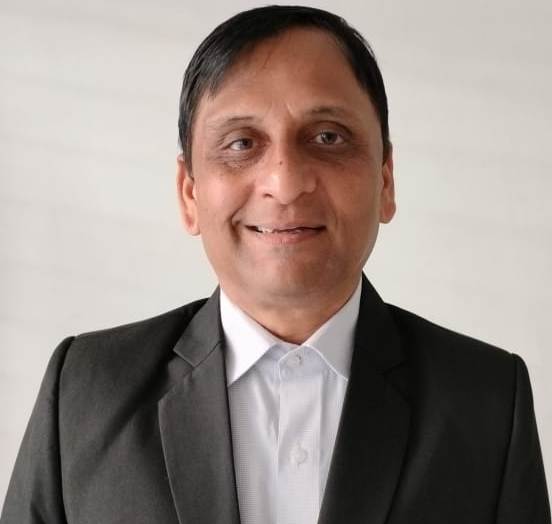
Manoj Gundalia

@utu.ac.in

Professor and Head, Department of Civil Engineering
Uka Tarsadia University

Dr. Manoj J. Gundalia has received his Ph.D. from Gujarat Technological University in Civil Engineering and M. E. from LDCE, Gujarat University, Ahmedabad in Water Resources Management. He has published more than 35 research papers in national and international Journals/ Conferences. Currently He is working as an Associate Professor and Head in Department of Civil Engineering of Chhotubhai Gopalbhai Patel Institute of Technology, Uka Tarsadia University, Bardoli, (Gujarat-India). His research interest includes Rainfall runoff Modeling, Water Harvesting, and Waste Water Treatments.

EDUCATION

Ph. D. in Civil Engineering

RESEARCH, TEACHING, or OTHER INTERESTS

Water Science and Technology, Earth and Planetary Sciences, Civil and Structural Engineering, Environmental Engineering
9

Scopus Publications

157

Scholar Citations

7

Scholar h-index

5

Scholar i10-index

Scopus Publications

  • Identification of the best fit probability distribution for estimating the maximum monthly as well as annual rainfall in the Bharuch region (Gujarat, India)
    Manoj Gundalia
    Disaster Advances, 2026
    Rainfall is a substantial hydrological component of the monsoon and it has regulatory and socio-economic consequences in arid/ semi-arid regions. The strength of water resources of any region depends on the amount of seasonal rainfall received. The non-uniform spatiotemporal distribution of rainfall makes its prediction a challenging task. Therefore, researchers have taken a keen interest in determining the most suitable probability distributions that could accurately predict the rainfall. The Bharuch (Gujarat, India) region is struggling with the unpredictable monsoon rainfall, which has severely harmed many agricultural and water resource management activities. Deficits or excess rainfall badly impact water resource conservation and lead to enormous crop damage. In the present study, eight probability distributions were applied to analyze monthly and annual rainfall data for 123 years (1901–2023) in the Bharuch region for different return periods. The goodness-of-fit was assessed using the Chi-square test and the NashSutcliffe efficiency, a normalized statistic. Based on the test results, it can be concluded that the Gumbel distribution is the most appropriate distribution to predict the maximum monthly and annual rainfall in the Bharuch Region.
  • Influence of recycled aggregate on self-compacting concrete
    Palak V. Trivedi, Manoj J. Gundalia
    Australian Journal of Structural Engineering, 2025
    The incorporation of recycled aggregate (RA) in concrete production has garnered significant attention due to environmental sustainability concerns and the need for resource conservation in construction materials. This study investigates the strength development of Recycled Plastic Aggregate and Recycled Brick Aggregate over time, focusing on the compressive, tensile, and flexural strengths of SCC with varying recycled aggregate (RA) contents at different curing ages. The primary objective is to evaluate the long-term performance of RA-SCC, which is crucial for sustainable construction practices. Concrete mixes (cylinder blocks) with different RA replacement levels (25%, 50%, 75%, and 100%) were prepared and subjected to standard curing conditions. The mechanical properties of the concrete, including compressive strength, tensile strength, and flexural strength, were measured at 7, 28, 56, and 90 days. The compressive strength was determined using a uniaxial compression test, tensile strength through a split-cylinder test, and flexural strength using a four-point bending test. Statistical analysis was performed to compare the results and identify trends in strength development. The result shows that the reduction in flexural strength is more pronounced, with a steady decline from 4.50 MPa at lower replacement levels to 3.60 MPa at full replacement, implemented using Python software. Future research should explore optimising RA-SCC formulations to mitigate strength reductions and address durability concerns. This study underscores the potential of RA to foster sustainable concrete practices while highlighting avenues for further enhancing the mechanical properties of recycled aggregate-based concretes. The effects of partial cement replacement with pozzolanic materials, such as fly ash and volcanic ash, on the mechanical properties of SCC were investigated to further enhance sustainability and long-term strength development.
  • Flood inundation mapping in “Ghed Topography” using hydrodynamic modelling and Google Earth Engine - A case of combined approach for flood assessment
    Nevil Trambadia, Dhruvesh Patel, Vinodkumar M. Patel, Manoj J. Gundalia, Anurag Bhargav
    Ish Journal of Hydraulic Engineering, 2025
    Floodwaters, though a natural phenomenon, can be managed through effective flood assessment. This study employs satellite imagery and two-dimensional (2D) hydrodynamic analysis to evaluate the inundated Ghed region (Gujarat state, India) using HEC-RAS v6 and Google Earth Engine (GEE). HEC-RAS v6 leverages open-source digital elevation models (DEMs) to generate hazard maps, while GEE’s machine-learning algorithms analyze Sentinel 1-C band synthetic-aperture radar (SAR) data from 2017 to 2021 to visualize flooding. The flood mapping algorithm (FMA) in GEE provides data that is compared with 2D model outputs, showing that floodwaters disperse into a large depressed zone. Validation of the 2D model, based on water depth analysis at four sites, yields statistical values of 0.82 for the coefficient of determination (R2), 0.26 for Root Mean Squared Error (RMSE), and 0.76 for Nash-Sutcliffe Efficiency (NSE). Floodwaters annually affect an area of over 170 km2 in the Ghed region, emphasizing the need for effective flood management strategies.
  • Development of a 2D hydrodynamic model for inundation assessment and flood early warning system: a case of depressed Ghed region, India
    Nevil K. Trambadia, Dhruvesh P. Patel, Vinodkumar M. Patel, Manoj J. Gundalia
    Water Practice and Technology, 2023
    Ghed region is located in the deep western part of Gujarat state, having the cup shape geometry. The Ozat River begins near the Gir forest's hilly part and moves towards the river mouth near Navi Bandar. The part before the river mouth is called Ghed, near the coastal line. The inundation in this region occurred due to higher coastal line and cup shape geometry with an area of more than 200 km2. This research emphasized early warning of the local community aside from the region during the peak flow condition. The hydrological engineering centre-river analysis system software developed the hydrodynamic model for FEWS (flood early warning system). The model has been validated with observed water depth data at four locations from the river reach area for more precision. In this regard, various statistics have been performed to compare the observed and modelled data. The result depicts the 19 h of leg time available to evacuate the local community. After that, water takes 115 h more time to reach the river mouth due to cup-shaped region filling. This research helps the administration with the decision-making system and establishes new hydraulic structures.
  • Best fitting of probability distributions for monthly and annual maximum rainfall prediction in Junagadh region (Gujarat-India)
    Manoj Gundalia
    Mausam, 2023
    Rain is a meager and crucial hydrological variable in arid and semi-arid region. Junagadh (Gujarat-India) reels under monsoon rainfall uncertainties and thereby the agriculture and other water resources management activities suffer. Therefore, urgent attention is needed to address water resources conservation and crop damage issues due to deficits or excess rainfall. Water resources development of any locality depends on amount of runoff generated and rainfall received. Appropriate probability distributions need to be selected and fitted to the historical time series of rainfall for better frequency analysis and forecasting of the rainfall. The daily rainfall data was collected for a period of 38 years i.e., from 1984 to 2021. This research attempts to fit eightdifferent theoretical probability distributions to the monthly and annual maximum rainfall for one to five consecutive days to select the best one for the better prediction of maximum rainfall. For determination of goodness of fit Chi-Square and Nash-Sutcliffe Efficiency were carried out by comparing the expected values with the observed values. The results indicated that the Gumbel distribution emerged to be the best fit for the prediction of monthly and annual maximum rainfall of Junagadh Region.
  • Comparison of two open-source digital elevation models for 1D hydrodynamic flow analysis: a case of Ozat River basin, Gujarat, India
    Nevil K. Trambadia, Dhruvesh P. Patel, Vinodkumar M. Patel, Manoj J. Gundalia
    Modeling Earth Systems and Environment, 2022
  • Assessment of Course Outcomes Attainment using Confidence Limits
    Manoj Gundalia
    Journal of Engineering Education Transformations, 2022
    Course Outcomes (CO) assessment is one of the most important components of Outcome Based Education (OBE) to describe the specific type and level of learning students. The programs must have an effective end results in every course and their systematic assessment with proper documentation and should evaluate continuously to establish certain standards leading to program accreditation. In the calculation of CO attainment, the mean values are usually considered as a target values but it may create ambiguity in decision making. The target value in conventional method is unbounded on the upper and lower ends, which undermines interpretations of student's category associated with their performance. In this paper an attempt has been made with a new approach for calculation of CO attainments based on Lower Confidence Limit (LCL) and Upper Confidence Limit (UCL) and compared against conventional method. This comparison has shown that the proposed method showed a nontrivial improvement over existing conventional method and found more flexible, relatively well behaved, and applicable to a wide range of students' categories. Further, proposed method has the advantage of being useful in framing appropriate syllabi of courses and in making effective strategy to improve students' performance. Keywords: Outcome Based Education, Lower Confidence Limit, Upper Confidence Limit, Attainment of Course Outcome
  • Prediction of monsoon rainfall by using holt-winters models for Junagadh (Gujarat-India) region
    Disaster Advances, 2021
  • Modeling daily reference evapotranspiration in middle south saurashtra region of India for monsoon season using most dominant meteorological variables and the FAO-56 penman-monteith method
    MANOJ GUNDALIA, MRUGEN DHOLAKIA
    Mausam, 2017
    Many methods are available to estimate reference evapotranspiration (ETo) from standard meteorological observations. The FAO-56 Penman-Monteith method is considered to be the most physical and reliable method and is often used as a standard to verify other empirical methods. However, it needs a lot of different input parameters. Hence, in the present study, a model based on most dominant meteorological variables influencing ETo is proposed to estimate ETo in the Middle South Saurashtra region of Gujarat (India). The performance of five different alternative methods and proposed model is compared with the standard FAO-56 Penman-Monteith method. The five quantitative standard statistical performance evaluation measures, Nash-Sutcliffe efficiency coefficient (E), coefficient of determination (R2), refined Willmott’s index (dr), root mean square of errors-observations standard deviation ratio (RSR) and mean absolute error (MAE) are employed in evaluating the performance of the selected methods and proposed model. The results show that the developed model and Hargreaves and Samani (1985) method with recalibrated parameters provide the most reliable results in estimation of (ETo) and it can be recommended for estimating (ETo) in the study region.

RECENT SCHOLAR PUBLICATIONS

  • Identification of the best fit probability distribution for estimating the maximum monthly as well as annual rainfall in the Bharuch region (Gujarat, India)
    MJ Gundalia
    Disaster Advances 19 (2), 37-46 , 2026
    2026
  • Influence of recycled aggregate on self-compacting concrete
    DMJG Palak V. Trivedi
    Australian Journal of Structural Engineering 26 (7), 1-19 , 2025
    2025
  • Flood inundation mapping in “Ghed Topography” using hydrodynamic modelling and Google Earth Engine-A case of combined approach for flood assessment
    N Trambadia, D Patel, VM Patel, MJ Gundalia, A Bhargav
    ISH Journal of Hydraulic Engineering 31 (3), 409-426 , 2025
    2025
  • Influence of Bulk Density on Water Infiltration Rates in Layered Soil Profiles: Model-Based Analysis for Junagadh Taluka, Gujarat
    BPK Kalola Amit Chunilal, Parikh Arpit A., Gundalia Manoj J.
    Journal Of Applied Bioanalysis 11 (S2), 1217-1226 , 2025
    2025
  • Development of a 2D hydrodynamic model for inundation assessment and flood early warning system: a case of depressed Ghed region, India
    NK Trambadia, DP Patel, VM Patel, MJ Gundalia
    Water Practice & Technology 18 (10), 2469-2481 , 2023
    2023
    Citations: 6
  • IHACRES Rainfall-Runoff Model: A Review Paper
    M Gundalia
    2023
  • Flood inundation assessment in the data-scarce region using hydrodynamic models and google earth engine-A case of Ghed region, Ozat River basin, Gujarat, India
    NK Trambadia, DP Patel, VM Patel, MJ Gundalia
    2023
    Citations: 3
  • Best Fitting of Probability Distribution for Monthly and Annual Maximum Rainfall Prediction in Junagadh Region (Gujarat-India)
    M Gundalia
    Mausam 74 (3), 861-880 , 2023
    2023
  • Comparison of two open-source digital elevation models for 1D hydrodynamic flow analysis: a case of Ozat River basin, Gujarat, India
    NK Trambadia, DP Patel, VM Patel, MJ Gundalia
    Modeling Earth Systems and Environment 8 (4), 5433-5447 , 2022
    2022
    Citations: 13
  • Annual Rainfall Prediction using Holt-Winters Models for Junagadh (Gujarat-India) Region
    MJ Gundalia
    2022
  • Assessment of Course Outcomes Attainment using Confidence Limits
    M Gundalia
    Journal of Engineering Education Transformations 35 (03), 21-29 , 2022
    2022
    Citations: 3
  • Prediction of Monsoon Rainfall by using Holt-Winters Models for Junagadh (Gujarat-India) Region)
    G Manoj
    Disaster Advances 14 (5), 43-50 , 2021
    2021
  • Linking of Ozat and Madhuvanti Rivers of Junagadh Region for Interbasin Transfer of Flood Water
    M Gundalia
    Journal of Xidian University 15 (4), 273-278 , 2021
    2021
  • Nash IUH Model Parameters Estimation using Method of Moments and C Programming
    M Gundalia
    Journal of Water Resource Research and Development 4 (1), 1-5 , 2021
    2021
  • Comparative Study of Population Forecasting Methods for Surat City (Gujarat-India)
    NPM Gundalia
    Journal of Interdisciplinary Cycle Research 12 (10), 633-636 , 2020
    2020
    Citations: 2
  • Modeling Population Forecasting for Major Cities of Gujarat (India)
    M Gundalia
    GIS SCIENCE JOURNAL 7 (6), 530-539 , 2020
    2020
  • A Review of Treatment of Textile Waste Water Using UV Photo- Fenton Oxidation Process
    HMMG Paresh Luhar
    The International journal of analytical and experimental modal analysis 12 … , 2020
    2020
  • Inter-Basin Transfer of Surplus Flood Water by Linking of Ozat and Madhuvanti Rivers of Junagadh (Gujarat-India) Region
    M GUNDALIA
    Journal of Interdisciplinary Cycle Research 11 (11), 26-34 , 2019
    2019
  • Assessment of Drought using SPI at Weekly and Monthly Time Scales in Junagadh (Gujarat-India) Region
    G Manoj
    Disaster Advances 12 (11), 15-25 , 2019
    2019
  • Feasibility Study of Proposed Interlinking between Ozat and Mahuvanti Rivers: A Review Paper
    NK Trambadia, VM Patel, MJ Gundalia
    The International journal of analytical and experimental modal analysis 11 … , 2019
    2019

MOST CITED SCHOLAR PUBLICATIONS

  • Impact of Monthly Curve Number on Daily Runoff Estimation for Ozat Catchment in India
    MJ Gundalia
    Open Journal of Modern Hydrology 4, 144-155 , 2014
    2014
    Citations: 37
  • Estimation of pan evaporation using mean air temperature and radiation for monsoon season in Junagadh region
    MJ Gundalia, MB Dholakia
    Int. J. Eng. Res. Appl 3, 64-70 , 2013
    2013
    Citations: 28
  • Dependence of evaporation on meteorological variables at daily time-scale and estimation of pan evaporation in Junagadh region
    M Gundalia
    American Journal of Engineering Research 2 (10), 354-362 , 2013
    2013
    Citations: 14
  • Comparison of two open-source digital elevation models for 1D hydrodynamic flow analysis: a case of Ozat River basin, Gujarat, India
    NK Trambadia, DP Patel, VM Patel, MJ Gundalia
    Modeling Earth Systems and Environment 8 (4), 5433-5447 , 2022
    2022
    Citations: 13
  • Prediction of maximum/minimum temperatures using Holt winters method with excel spread sheet for Junagadh region
    MJ Gundalia, MB Dholakia
    Int. J. Eng. Res. Technol 1, 1-8 , 2012
    2012
    Citations: 13
  • Estimation of infiltration rate based on complementary error function peak for Ozat watershed in Gujarat (India)
    M Gundalia
    International Journal of Hydrology 2 (3), 289-294 , 2018
    2018
    Citations: 8
  • Modelling pan evaporation using mean air temperature and mean pan evaporation relationship in middle south Saurashtra Region
    J Gundalia Manoj, B Dholakia Mrugen
    2013
    Citations: 8
  • Development of a 2D hydrodynamic model for inundation assessment and flood early warning system: a case of depressed Ghed region, India
    NK Trambadia, DP Patel, VM Patel, MJ Gundalia
    Water Practice & Technology 18 (10), 2469-2481 , 2023
    2023
    Citations: 6
  • Modeling daily reference evapotranspiration in middle south Saurashtra region of India for monsoon season using most dominant meteorological variables and the FAO-56 Penman …
    MGM DHOLAKIA
    MAUSAM Journal (Indian Meteorological Department) , 2017
    2017
    Citations: 5
  • Modelling daily reference evapotranspiration in Middle South Saurashtra Region of India for monsoon season using dominant meteorological variables and the FAO-56 penman …
    M Gundalia, M Dholakia
    Int. J. of Sustainable Water & Environmental Systems 8 (2), 101-108 , 2016
    2016
    Citations: 5
  • MODELLING RUNOFF USING MODIFIED SCS-CN METHOD FOR MIDDLE SOUTH SAURASHTRA REGION (GUJARAT-INDIA)
    M Gundalia
    GUJARAT TECHNOLOGICAL UNIVERSITY AHMEDABAD , 2016
    2016
    Citations: 4
  • Flood inundation assessment in the data-scarce region using hydrodynamic models and google earth engine-A case of Ghed region, Ozat River basin, Gujarat, India
    NK Trambadia, DP Patel, VM Patel, MJ Gundalia
    2023
    Citations: 3
  • Assessment of Course Outcomes Attainment using Confidence Limits
    M Gundalia
    Journal of Engineering Education Transformations 35 (03), 21-29 , 2022
    2022
    Citations: 3
  • Modelling Runoff Using Modified SCS-CN Method for Middle South Saurashtra Region (Gujarat-India)
    GM Jayantilal
    PQDT-Global , 2016
    2016
    Citations: 3
  • Comparative Study of Population Forecasting Methods for Surat City (Gujarat-India)
    NPM Gundalia
    Journal of Interdisciplinary Cycle Research 12 (10), 633-636 , 2020
    2020
    Citations: 2
  • Estimation of Reference Evapotranspiration in Middle South Saurashtra Region of India Using Dominant Meteorological Variables
    MJ Gundalia, MB Dholakia
    American Journal of Water Science and Engineering 1 (2), 15-22 , 2015
    2015
    Citations: 2
  • Modeling of Reference Evapotranspiration in Middle South Saurashtra Region of India Using Dominant Meteorological Variables
    MJ Gundalia, MB Dholakia
    Boson Journal of Modern Physics 2 (1), 73-83 , 2015
    2015
    Citations: 2
  • IMPACT OF ANTECEDENT RUNOFF CONDITION ON CURVE NUMBER DETERMINATION AND PERFORMANCE OF SCS-CN MODEL FOROZAT CATCHMENT IN INDIA
    M Gundalia
    International Journal of Civil, Structural, Environmental and Infrastructure … , 2014
    2014
    Citations: 1
  • Identification of the best fit probability distribution for estimating the maximum monthly as well as annual rainfall in the Bharuch region (Gujarat, India)
    MJ Gundalia
    Disaster Advances 19 (2), 37-46 , 2026
    2026
  • Influence of recycled aggregate on self-compacting concrete
    DMJG Palak V. Trivedi
    Australian Journal of Structural Engineering 26 (7), 1-19 , 2025
    2025