Mrutyunjay Swain

@buodisha.edu.in

Dr. Mrutyunjay Swain, Associate Professor, Department of Economics; Director, Centre for Social Exclusion and Inclusive Policy (CSEIP) Jt. Director, Centre of Excellence on Climate Change and Disaster Resilience(CCDR) Nodal Officer, AIU-Academic and Administrative Development Centre (AADC), Berhampur University, Bhanja Vihar, Berhampur-760007, Odisha, India
Department of Economics, Berhampur University, Bhanja Vihar, Berhampur-760007
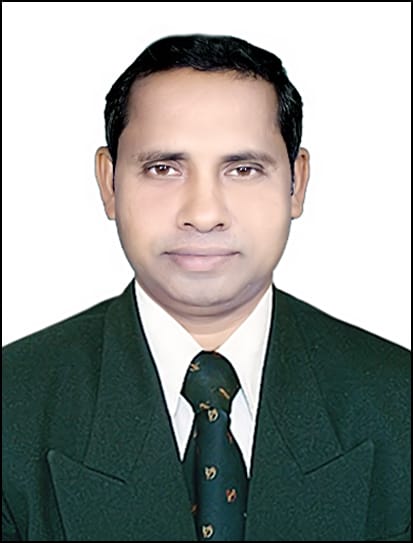
Mrutyunjay Swain
Dr. Swain has obtained his M.A., M.Phil. and Ph.D. from Utkal University, Bhubaneswar. He has qualified UGC (NET) and was awarded ICSSR Doctoral Fellowship at NKC Centre for Development Studies, Bhubaneswar. He has more than 18 years of teaching and research experience at reputed institutions such as IIM Ahmedabad, University of Petroleum and Energy Studies (UPES), Dehradun; Sardar Patel University (SPU), Vallabh Vidyanagar, Gujarat; Khallikote University, Berhampur, ICFAI University; ICAR-Indian Institute of Water Management, Bhubaneswar and NKC Centre for Development Studies, Bhubaneswar (ICSSR). He has completed 23 research projects funded by Ministry of Agriculture and Farmers Welfare, Govt. of India; Planning Commission, GoI; World Bank; ICSSR New Delhi, Gujrat Govt., . Swain was the recipient of Sardar Patel Research Award, 2018 from the Governor of Gujarat ; V. S. Vyas Felicitation Prize three times consecutively (2012-2013, 2014-2015 and 2016-2017).

EDUCATION

MA, M.PHIL, PhD in Economics, UGC (NET)

RESEARCH, TEACHING, or OTHER INTERESTS

Economics and Econometrics, Development, Social Sciences, Renewable Energy, Sustainability and the Environment
11

Scopus Publications

320

Scholar Citations

9

Scholar h-index

9

Scholar i10-index

Scopus Publications

  • Impact of MNREGA on employment of disadvantaged groups, wage rates and migration in Rajasthan
    Indian Journal of Agricultural Economics, 2015
  • Role of institutional support system in drought management: The case of Western Odisha
    Journal of Rural Development, 2015
  • Regional disparity in agricultural development in Orissa in the pre and post-reform period
    Mamata Swain, Mrutyunjay Swain, Deepak Kumar Das
    Social Change, 2009
    A careful analysis of the computed Agricultural Development Indices for different districts of Orissa reveals that the four coastal districts (Balasore, Cuttack, Puri and Ganjam) and two districts of central table land area (Sambalpur and Bolangir) are agriculturally more advanced than other districts in the three reference years over three decades (1980-81 to 1998-99). All the above districts have exchanged the first six ranks among themselves during the reference years. The agricultural success of four coastal districts is due to well-developed irrigation facilities and vast tracts of plain and fertile land comprising alluvial soil. Districts of the northern plateau zone, namely Mayurbhanj, Keonjhar and Sundergarh, and Koraput of eastern ghat area are found to be the most backward districts as they have secured the lowest ranks during the reference years. A significant proportion of gross cropped area in these districts is under rainfed agriculture and, thus, drought prone. Phulbani is the only district having sliding or worsening agricultural development index over the reference time period. Regression analysis of the factors accounting for regional disparity unveils that irrigation is the most important determinant of agricultural productivity in a region. There is a need to extend irrigation facility to hitherto unirrigated areas. Therefore, public investments in irrigation infrastructure in underdeveloped rural regions need to be stepped up. During the post-reform period, regional disparity has declined due to emphasis laid on accelerating the growth of backward areas through various special area development programmes.
  • Analysis of water and food security scenarios for 2025 with the PODIUM model: The case of Agro-Ecological Region 12 of India
    R. B. Singandhupe, P. Nanda, D. K. Panda, M. Swain
    Irrigation and Drainage, 2008
    The Policy Interactive Dialogue Model (PODIUM), developed by the International Water Management Institute (IWMI), has been used to consider data of 1995 as a base to predict water–food security scenarios for 2025 of Agro‐Ecological Region 12 (AER12) of India having a total geographical area of 26.8 million ha. The model has been used to address the food and water security issues simultaneously and generates alternative scenarios highlighting the interlinkages between water and food security. In this study four scenarios: business as usual scenario (BAU); food security scenario (FS); water security scenario (WS); and water and food security scenario (WFS) have been analysed. The BAU scenario projects that the region AER12 of India will face a food deficit of 7.46 million t in 2025. The total annually renewable water resources of the region will be 40.3 billion m3 in 2025, out of which a maximum of 21.7 billion m3 will be available in Agro‐Ecological Sub Region (AESR12.1), followed by 10.2 and 8.3 billion m3 in AESR12.2 and AESR12.3, respectively. The diversion of available water in all sectors (agriculture, domestic, industry) in AER12 was 15.4 billion m3 in 1995, which is expected to increase by 81.7% in 2025, but due to urbanisation and industrial demand, the available water for the agricultural sector is expected to reduce by 64%. In the industry sector it is projected to jump from 10% in 1995 to 28% in 2025.After analysing the BAU scenario of the region, some of the specific alternative options have been explored with the PODIUM model by altering the drivers in order to find feasible ways to make the region secure and sustainable with a comfortable level of food and water by 2025. The outcomes of the alternative options are discussed in this paper. Copyright © 2008 John Wiley & Sons, Ltd.
  • Economic impact of watershed development: Evidence from a high rainfall area in Orissa
    Journal of Rural Development, 2008
  • Sustainable development of rainwater harvesting in drought-prone sub-humid region: Determinants and viable options
    Mrutyunjay Swain
    Social Change, 2006
    The present study analyses viable methods of rainwater harvesting in drought-prone Bolangir and examines different bio-physical and socio-economic factors that influence the performance and sustainability of the water harvesting structures (WHSs). The study reveals that the traditional WHSs have proved to be extremely useful not only in normal years but also in water-scarce years. Most of the factors are favourable for development of WHSs in the sub-humid region like Bolangir. Small size WHSs are advantageous over medium and large irrigation projects in Bolangir because of its uneven and hilly topography. So instead of going for big dams those have already consumed a lot of time and resources but not yet completed, efforts should be made to increase the irrigation coverage through WHSs. The government patronage and convincing stakeholders to increase their participation are urgently required for sustainability of micro level water resources.
  • Agricultural development and interlocked factor markets
    Indian Journal of Agricultural Economics, 2000
  • Serologic and molecular investigations of a chimera
    Immunohematology, 1999
  • Synthesis of some m-(Phthalimidoalkyl)-4-substituted-cinnamoylbenzanilides and Study of their Hypoglycemic Activities
    Journal of the Indian Chemical Society, 1996
  • Predictors of hospital mortality after out-of-hospital cardiopulmonary resuscitation
    ALFRED P. HALLSTROM, LEONARD A. COBB, MARJORIE SWAIN, KAREN MENSINGER
    Critical Care Medicine, 1985
    Hospital mortality was examined in all patients successfully resuscitated from a witnessed out-of-hospital cardiac arrest due to ventricular fibrillation over a 1-yr period. Variables independently predictive of hospital mortality were a history of congestive heart failure before cardiac arrest, the time between collapse and initiation of CPR, and the time between collapse and restoration of circulation. The latter time was not related to either patient age or clinical history. Thus, hospital mortality was predetermined by prehospital factors, some of which can be changed.
  • Ayrshire and other whitework
    undefined, 1982

RECENT SCHOLAR PUBLICATIONS

  • CONSEQUENCES OF SCHOOL DROPOUTS AND MIGRATION IN UNDERDEVELOPED REGIONS OF ODISHA
    S Dash, M Swain
    RESEARCH JOURNAL OF BERHAMPUR UNIVERSITY, 80 , 2024
    2024
  • Role of Non-Timber Forest Products (NTFPs) in Consumption Smoothing during Drought: Evidence from Western Odisha, India
    M Swain
    RESEARCH JOURNAL OF BERHAMPUR UNIVERSITY 5, 96 -105 , 2023
    2023
  • COVID-19, Health and Rural Economy: Indian Experiences
    M Swain, MK Dash, UC Panigrahi
    Kunal Books, New Delhi , 2022
    2022
  • Response and resilience of agricultural value chain to COVID-19 pandemic in India and Thailand
    S Sinha, M Swain
    Pandemic Risk, Response, and Resilience, 363-381 , 2022
    2022
    Citations: 12
  • Role of Pressurized Irrigation Network Systems (PINS) in Enhancing Irrigation Coverage and Water-Use Efficiency: Evidence from Gujarat, India
    M Swain, SS Kalamkar, K Kapadia
    Resource Efficiency, Sustainability, and Globalization, 209-231 , 2021
    2021
  • Adoption of Soil Health Card for Sustainable Agriculture: Evidence from Gujarat, India
    SMSS Kalamkar
    Sustainable Development and Environment, 315-323 , 2021
    2021
  • Role of Pressurized Irrigation Network Systems (PINS) in Enhancing Irrigation Coverage and Water-Use Efficiency: Evidence from Gujarat, India
    KK M Swain, SS Kalamkar
    Resource Efficiency, Sustainability, and Globalization: Exploring India , 2021
    2021
  • Agricultural marketing policies and programmes in Odisha: a critical evaluation.
    S Das, M Swain, M Swain
    2020
  • Farmers’ Perceptions on Drought and Climate Change
    AM M Swain, M Swain
    Drought Risk Management in South and South-East Asia,, 255-282 , 2020
    2020
  • Agricultural insurance as a risk management tool-comparative performance of nais and pmfby in Gujarat.
    K Kapadia, M Swain
    2020
    Citations: 3
  • Crop Insurance for Managing Risk in Agriculture: Special Reference to Gujarat, India
    K Kapadia, M Swain
    Emerging Issues in Agribusiness Management in India, 281 , 2019
    2019
  • Performance of national agricultural insurance scheme (NAIS) in Gujarat
    K Kapadia, M Swain
    SAARJ Journal on Banking & Insurance Research 8 (3), 45-54 , 2019
    2019
  • Farmers' suicides in Gujarat.
    SS Kalamkar, MS Mrutyunjay Swain, TP Thansingh Parihar
    2018
  • Pressurized Irrigation Network Systems in India: Adoption, Efficiency and Institutional Dynamics
    M Swain, SS Kalamkar, H Sharma
    Allied Publishers , 2018
    2018
  • Farm Income Insurance as a Risk Management Tool in India: Lessons from International Experiences.
    M Swain
    IASSI Quarterly 37 , 2018
    2018
    Citations: 1
  • Socio-economic impact analysis of introduction of renewable energy technologies in five tribal villages of Gujarat (India).
    SS Kalamkar, M Swain, S Vahora
    2018
  • Agricultural insurance as a risk management tool in Gujarat, India
    K Kapadia, M Swain
    Indian Journal of Agricultural Marketing 32 (3s), 80-80 , 2018
    2018
  • Working of pressurized irrigation network systems (PINS) in India.
    M Swain, SS Kalamkar, H Sharma
    2018
  • Status of Marine Fisheries Sector in Gujarat'
    H Sharma, M Swain, SS Kalamkar
    Agricultural Situation in India , 2018
    2018
    Citations: 2
  • Performance of Pradhan Mantri Fasal Bima Yojana (PMFBY) in Gujarat: Uptake, Adoption and Willingness to Pay
    M Swain, SS Kalamkar, K Kapadia
    AERC Report , 2018
    2018

MOST CITED SCHOLAR PUBLICATIONS

  • Vulnerability to agricultural drought in Western Orissa: A case study of representative blocks
    M Swain, M Swain
    Agricultural Economics Research Review 24 (1), 47-56 , 2011
    2011
    Citations: 62
  • Regional disparity in agricultural development in Orissa in the pre and post-reform period
    M Swain, M Swain, DK Das
    Social Change 39 (2), 195-215 , 2009
    2009
    Citations: 30
  • State of Gujarat agriculture 2011-12
    M Swain, SS Kalamkar, KM Kapadia
    AERC Report 146, 19 , 2012
    2012
    Citations: 28
  • Sources of growth and instability in agricultural production in Western Odisha, India
    M Swain
    Asian Journal of Agriculture and Development 11 (2), 51-70 , 2014
    2014
    Citations: 25
  • State of Rajasthan Agriculture 2011-12
    M Swain, SS Kalamkar, M Ojha
    Agro-Economic Research Centre, Sardar Patel University , 2012
    2012
    Citations: 15
  • Drought vulnerability, coping capacity and residual risk: evidence from Bolangir district in Odisha, India
    M Swain, M Swain
    Asian Journal of Environment and Disaster Management 3 (4) , 2011
    2011
    Citations: 13
  • Response and resilience of agricultural value chain to COVID-19 pandemic in India and Thailand
    S Sinha, M Swain
    Pandemic Risk, Response, and Resilience, 363-381 , 2022
    2022
    Citations: 12
  • Problems and Prospects of Oilseeds Production in Rajasthan with Special Reference to Rapeseed & Mustard
    M Swain
    New Delhi: AERC Report submitted to Ministry of Agriculture, Government of India , 2013
    2013
    Citations: 10
  • Rural Credit Market Imperfections in Drought Prone Bolangir District in Orissa: Some Critical Issues and Policy Options
    M Swain, M Swain
    Artha Vijnana: Journal of The Gokhale Institute of Politics and Economics 49 … , 2007
    2007
    Citations: 10
  • Sustainable development of rainwater harvesting in drought-prone sub-humid region: Determinants and viable options
    M Swain
    Social Change 36 (4), 84-100 , 2006
    2006
    Citations: 8
  • Disaster and gender: impact of super cyclone on life and livelihood of women
    M Swain, M Swain, RH Sahoo
    Serials Publications , 2006
    2006
    Citations: 8
  • Drought induced changes in household income, expenditure and savings: Evidence from Bolangir district in Western Orissa
    M Swain, M Swain
    The Journal of Income and Wealth 28 (2), 49-73 , 2006
    2006
    Citations: 8
  • Performance of Agriculture in Orissa: Intertemporal and Spatial Variations
    M Swain
    Orissa Development Report, Planning Commission, Government of India, New Delhi , 2002
    2002
    Citations: 8
  • Impact of mnrega on employment of disadvantaged groups, wage rates and migration in rajasthan
    M Swain, S Sharma
    Indian Journal of Agricultural Economics 70 (3), 231-245 , 2015
    2015
    Citations: 7
  • State of Rajasthan Agriculture
    M Swain, SS Kalamkar, M Ojha
    Vallabh Vidyanagar, Anand District, Gujarat: Agro-Economic Research Centre … , 2012
    2012
    Citations: 7
  • Assessing drought risk and vulnerability: the case of Bolangir District in Western Odisha
    M Swain, M Swain
    Water, Agriculture and Sustainable Well-being, Oxford University Press … , 2009
    2009
    Citations: 7
  • Coping with Food and Nutrition Insecurity by Rural Women in Drought-prone Bolangir District of Western Odisha
    M Swain
    Agricultural Economics Research Review 29, 43-52 , 2016
    2016
    Citations: 6
  • Impacts of National Horticulture Mission Scheme in Rajasthan
    M Swain, RH Patel, M Ojha
    Agro-Economic Research Centre Sardar Patel University Vallabh Vidyanagar 142 … , 2011
    2011
    Citations: 6
  • Assessment of economic losses due to inadequate post-harvest infrastructure facilities for marine fisheries in Gujarat
    H Sharma, M Swain, SS Kalamkar
    Economic Affairs 62 (1), 1 , 2017
    2017
    Citations: 5
  • Evaluation and Assessment of Economic Losses on Account of Inadequate PostHarvest Infrastructure Facilities for Fisheries Sector in Gujarat State
    H Sharma, M Swain, SS Kalamkar
    Agro-Economic Research Centre, Sardar Patel University, 283 , 2016
    2016
    Citations: 5