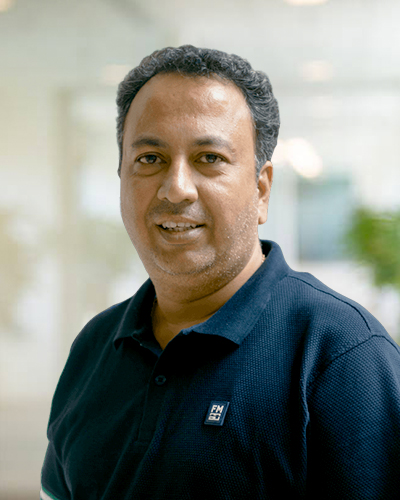
Manash Pratim Goswami

@cutn.ac.in

Associate Professor, Media and Communication
Central University of Tamil Nadu

Manash Pratim Goswami

RESEARCH, TEACHING, or OTHER INTERESTS

Arts and Humanities, General Arts and Humanities, Visual Arts and Performing Arts
15

Scopus Publications

372

Scholar Citations

9

Scholar h-index

9

Scholar i10-index

Scopus Publications

  • Gender discourse and femadvertising in India: A multi-modal discourse analysis
    Shiny Angel, Radha Bathran, Manash Pratim Goswami
    Women S Studies International Forum, 2026
    Growing awareness of gender equality and the shifting definitions of gender roles in society have made gender-sensitive portrayals in mass media increasingly important. Advertising, as a key form of social communication, now places greater focus on gender equality, reflected in the rising presence of campaigns that foreground women's empowerment. Such advertisements that actively contest stereotypical portrayals are collectively referred to as femvertising . Feminist scholars, however, remain critical of the underlying intentions of these campaigns, questioning whether they genuinely align with feminist causes or merely exploit them for commercial gain. The expansion of femvertising in India underscores the need to examine its true role in shaping gender roles and identities. Utilizing the framework developed by Kress and Van Leeuwen, the study investigates how semiotic elements contribute to the construction and communication of gender-sensitive narratives. Focusing on the Hero Pleasure femvertisements from 2014 and 2023, it traces the visible changes in gender discourse over time. Further, it evaluates the strategies used in framing the central narratives and analyzes how the interplay of visual, textual, and auditory modes in these campaigns engages with feminist concerns, thereby contributing to the larger discourse on gender in the Indian context.
  • POLITICAL NARRATIVES ON SOCIAL MEDIA DURING ELECTIONS: A SYSTEMATIC LITERATURE REVIEW
    Journal of Content Community and Communication, 2025
    Narratives can be understood as a story or a description of a series of events or a particular way of explaining or understanding events. Narratives play a significant role in clearly expressing values, ideals, and representative claims, distinguishing one’s identity for political purposes. The concept of political narrative has gained traction in public debates and academia in recent years with the evolution of digital technologies, especially after the advent of Web 2.0. Political actors—parties and leaders—have been using these platforms to engage with the masses. The engagement expands throughout the year including elections. The study in this background attempts a Systematic Literature Review (SLR) employing the PRISMA (Preferred Reporting Items for Systematic Reviews and Meta-Analyses) technique using keywords-political narratives, social media, and election along with sub-keywords like electoral narrative,Facebook, Instagram, Twitter and X, for advanced searches on three databases—Scopus, Web of Science, and Google Scholar. The time frame for study is 2005 to 2024. On the search results, various filters were applied to have a final total of 322 results, which include Scopus (155), Web of Science (48),and Google Scholar (119). The study then performed a screening of titles and abstracts and other steps in the PRISMA technique to select 102 literatures (articles, book chapters, conference papers) for carrying out a quantitative analysis. The study found most of the literature focusing and originating from American and European nations with least or literature from many Asian and African nations including India alongside mostly originating from discipline other than communication. Keywords: Political Narratives, Political Actors, Election, Social Media, Facebook, Instagram, X (formerly Twitter), SLR.
  • Tribal Folklore to Aesthetic and Religious Painting: Transition of Oral Narratives to Visual Art
    Soubhagya Ranjan Padhi, Manash Pratim Goswami
    Journal of Religion and Health, 2024
  • Dark Humour in Moving Frames: A Discourse Analysis of Bollywood Black Comedies
    Manash P. Goswami, K. Shruthi
    Critical Arts, 2024
    The present study delves into the portrayal of dark humour in the Hindi films produced in Mumbai, popularly known as Bollywood films. The dark humour films of Bollywood mainly focus on prevalent social issues such as violence in the underworld, corruption, prostitution, and persistent poverty in India, while socially conscious Bollywood films have often sentimentalised these issues by depicting impoverished individuals as virtuous and hardworking. This study investigates the emerging trend of intermingling serious and comic elements in an attempt to create a more impactful narrative. While employing Critical Discourse Analysis (CDA) as a tool to dissect the dialogues and storylines and aiming to identify instances of humour, irony, satire, and social critique, the current study attempts to analyse two Bollywood films—Dev D (2009) and Lipstick Under My Burkha (2017). The findings highlight how these films utilise dark humour to unveil the double standards and hypocrisy prevalent in Indian society. By challenging established norms, the identity constructed through dark humour in these films seeks to provoke critical reflection and initiate social change. Through this examination, Bollywood’s evolving approach to addressing social issues becomes evident, providing insights into the power of dark humour in shaping the prevailing social context.
  • Selfie Syndrome: A Study of Selfitis and Narcissism Among Young Adults
    Hashim H. Puthiyakath, Anjali R, Shiny Angel, Manash P. Goswami
    Journal of Creative Communications, 2024
    The study explores the selfie-taking behavioural pattern and the relationship between selfitis (obsessive–compulsive desire to take selfies and post them on social media) and narcissism. A cross-sectional survey was conducted among young Indian social media users aged between 18 and 30 years selected through referral sampling technique. The Selfitis Behaviour Scale was used to measure the level of selfitis, and the NPI-16 scale to measure narcissism. The study observed that taking selfies and posting them on social media is common among young social media users. Narcissism was found to be strongly correlated with selfitis and its six dimensions, indicating that people who exhibit narcissistic qualities are more likely to engage in excessive selfie behaviour. As SBS is a newly developed and not widely used scale, the study also assessed the validity and reliability of the scale. The results showed that the scale has excellent internal consistency and satisfactory convergent validity, and discriminant validity.
  • Exploring the correlates of Facebook addiction and its impact on academic performance among youths of Tripura
    Deepak Upadhyaya, Sunil Kalai, Priyanka Deb Barman, Shivjyoti Das Baruah, Ivan Das, Hashim H. Puthiyakath, Manash P. Goswami
    Media Asia, 2024
    Growing incidences of Facebook addiction or problematic Facebook use are fast becoming a matter of concern in the Western countries. The popularity of social networking sites is increasing in India as well, circumventing the barriers of age, gender, and place of residence. The rapid dispersal of Facebook is of particular concern as it has given rise to a new phenomenon termed as Facebook addiction, particularly among the students and youths. Little academic research has been done so far in a far-flung State in the North Eastern part of India. This paper attempts to fill this gap by studying Facebook Addiction among 3356 youth participants from the state of Tripura. Male participants were found to be significantly more at risk for Facebook addiction, as compared to the females. Utilizing the logistic regression model, this study could also bring into light the predictors and correlates of Facebook addiction which include the location of residence, educational qualification of parents, and the overall purpose of internet usage, such as online shopping, cloud storage, attending online classes and others. Dysfunctional or uncontrolled Facebook usage has also been found to be linked with adverse interference in the academic performance of the participants.
  • Awareness, media, and mitigation actions for climate change: a study among the students of higher education in Tripura
    Deepak Upadhyaya, Hashim Hamza Puthiyakath, Sunil Kalai, Manash P Goswami
    Media Asia, 2023
    Scientific research has revealed that global warming is getting irreversible with the passage of time and it is largely a human-induced phenomenon. India is one of the top three emitters of carbon dioxide in the world. However, the general public in India is unaware of what actually causes anthropogenic (human-induced) climate change. This study is undertaken to assess the level of climate change awareness and willingness to adopt mitigation actions by the students (N = 657) of higher education in Tripura, a small state in North East India, bordering Bangladesh on three sides. In addition, the study also attempts to draw whether there exist any correlations between the level of media usage with the level of climate change awareness and the level of climate change awareness with the level of willingness to adopt climate change mitigation actions. The results show that students of higher education in Tripura have a high level of climate change awareness, and the primary sources for climate change-related information are the Internet, TV, and newspapers. The scientists were the most trusted sources of climate change-related information followed by the mass media. The findings also establish that the students are willing to adopt climate change mitigation actions, even if it costs them something extra. The students who are willing (7.6%) and extremely willing (65.4%) to embrace climate change mitigation actions constituted more than 70% of the total respondents of the survey. The paper concludes that the level of willingness to adopt climate change mitigation actions was found to be significantly correlated with the level of awareness of the consequences of climate change when media are key actors in the dissemination of information; however, the level of understanding about solutions for climate change is not correlated with the level of awareness about the causes of climate change.
  • Tamil Songs of Mourning: Understanding the Reflection of Times in Oppari Songs
    Manash Pratim Goswami, A. Deivendra Kumar
    Journal of Religion and Health, 2022
  • Media During Pandemic Crisis in India: An Analysis of People’s Perception During the First Wave of COVID-19
    Manash P. Goswami, R. Anjali, Adharsh Raj, Hashim Hamza Puthiyakath, Jyoti Thanvi
    Journal of Creative Communications, 2022
    In April 2021, India was hit by the second wave of COVID-19 (News18, 2021, Second wave of COVID-19 very similar to first wave: Govt cites data to alleviate fear). People realised that the second wave of COVID-19 is more devastating than the first wave. Different factors might have influenced the perception of people during the first wave of COVID-19. The needful amount of fear among the people was reduced by the end of the first wave and normalcy was gained, which might have triggered the second wave of COVID-19 in India. The research aims to determine the perception of respondents about the COVID-19 crisis and to analyse the influence of media in instilling fear, stress, anxiety, tension, relief and ignorance among them when they read about the pandemic during the first wave of COVID-19. Based on the defined objectives, a questionnaire was prepared and the link to the survey was distributed around the country. According to the study’s findings, people were affected in many ways during the first wave.
  • Is Over the Top Video Platform the Game Changer over Traditional TV Channels in India? A Niche Analysis
    Hashim Hamza Puthiyakath, Manash Pratim Goswami
    Asia Pacific Media Educator, 2021
    Since the outbreak of COVID-19 and the consequent national lockdown, the usage of over the top (OTT) platforms has significantly increased in India. The growing popularity of video streaming has made a substantial impact on the traditional TV channels during pandemic times. The purpose of this study is to examine the competition, coexistence and competitive superiority of OTT and TV in providing consumer satisfaction. The study adopted the niche theory to empirically measure the degree of gratification fulfilled by OTT and TV, the similarity between OTT and TV and the competitive superiority of OTT and TV across seven micro-dimensions of gratification. The data for the study has been gathered from 223 online users across India. The results of the study reflect that OTT provides a higher degree of satisfaction across all seven dimensions of gratification with the greatest difference manifested in the convenience dimension. The niche overlap measures indicated that the highest level of similarity between TV and OTT is in providing gratification in the relaxation dimension, whereas the least similarity was observed in the convenience dimensions. The competitive superiority of OTT surpassed TV in all dimensions with the greatest difference manifested in relaxation.
  • Migrants, miseries, and media: measuring the prominence of the miseries of migrants in the coverage of leading Indian English dailies during COVID-19
    Adharsh Raj, R. Anjali, Manash P. Goswami
    Media Asia, 2021
  • Impact of Online Learning in India: A Survey of University Students during the COVID-19 Crisis
    Manash Pratim Goswami, Jyoti Thanvi, Soubhagya Ranjan Padhi
    Asian Journal for Public Opinion Research, 2021
  • Is fake news spreading more rapidly than COVID-19 in India? A representative study of people's perspective on controlling the spread of fake news on social media
    A. Raj
    Journal of Content Community and Communication, 2020
  • Bollywood film posters: A study of changing trends
    Journal of Content Community and Communication, 2017
  • Media and environmental degradation (a study to understand and evaluate the role of media for developing awareness on the environmental degradation of Amarkantak)
    Journal of Content Community and Communication, 2016

RECENT SCHOLAR PUBLICATIONS

  • Gender Discourse and Femadvertising in India: A Multi-modal Discourse Analysis
    R Bathran, MP Goswami, S Angel
    Women's Studies International Forum 114, 10.1016 , 2026
    2026
  • Gender discourse and femadvertising in India: A multi-modal discourse analysis
    S Angel, R Bathran, MP Goswami
    Women's Studies International Forum 114, 103204 , 2025
    2025
    Citations: 1
  • Innovation in Media Entrepreneurship in the Digital Age: A Case Study of Indian Media Houses
    AK Sinha, KL Donoghue, MP Goswami
    Mass Communicator: International Journal of Communication Studies 19 (2), 17-23 , 2025
    2025
  • Dark Humour in Moving Frames: A Discourse Analysis of Bollywood Black Comedies
    MP Goswami, K Shruthi
    Critical Arts , 2024
    2024
  • Selfie Syndrome: A Study of Selfitis and Narcissism Among Young Adults
    HH Puthiyakath, R Anjali, S Angel, MP Goswami
    Journal of Creative Communications, 1-19 , 2024
    2024
    Citations: 6
  • Exploring the correlates of Facebook addiction and its impact on academic performance among youths of Tripura
    Deepak Upadhyaya, Manash P. Goswami (Corresponding author), Sunil Kalai ...
    Media Asia, 1-19 , 2023
    2023
    Citations: 2
  • Awareness, media, and mitigation actions for climate change: a study among the students of higher education in Tripura
    Goswami, M P. Upadhyaya Deepak , Puthiyakath Hashim H, Kalai Sunil
    Media Asia, 1-24 , 2023
    2023
    Citations: 7
  • Assessing Privacy Concerns in Social Media: A Comprehensive Study of Measurement Scales and Frameworks
    HH Puthiyakath, MP Goswami
    International Journal of Communication Development, 44-57 , 2023
    2023
  • Unmasking the Privacy Paradox: Understanding Moderating Role of Myopic-Self in the Relationship between Privacy Concern and Self-Disclosure
    HH Puthiyakath, MP Goswami
    Mass Communicator: International Journal of Communication Studies 17 (3), 4-12 , 2023
    2023
  • Sustainability Communication in Tamil films: Are popular Tamil films promoting Sustainable Development Goals (SDGs)? An analysis of Jai Bhim
    R B, MP Goswami
    Global Media Journal 14 (2), 1-19 , 2022
    2022
  • Tamil Songs of Mourning: Understanding the Reflection of Times in Oppari Songs
    MP Goswami, AD Kumar
    Journal of religion and health 61 (6), 4959-4977 , 2022
    2022
    Citations: 7
  • Media During Pandemic Crisis in India: An Analysis of People’s Perception During the First Wave of COVID-19
    MP Goswami, R Anjali, A Raj, HH Puthiyakath, J Thanvi
    Journal of Creative Communications, 09732586221090750 , 2022
    2022
    Citations: 8
  • Analysis of the News Coverage of India's Independence in Selected English Newspapers on August 15, 1947
    MP Goswami, R Anjali, HP Hashim
    Communicator 57 (1), 13-25 , 2022
    2022
  • Health Communication and Public Engagement on Social Media: Analysis of the Facebook Page of Ministry of Health and Family Welfare
    MP Goswami, R Anjali, P Hashim H
    2022
  • Sustainability Communication in Tamil films Are popular Tamil films promoting Sustainable Development Goals (SDGs)? An analysis of Jai Bhim (2021)
    R Bathran, MP Goswami
    2022
    Citations: 3
  • Impact of Online Learning in India: A Survey of University Students during the COVID-19 Crisis
    MP Goswami, J Thanvi, SR Padhi
    Asian Journal of Public Opinion Research 9 (4), 331-351 , 2021
    2021
    Citations: 23
  • Towards Inclusive Education in Tribal Areas of Odisha— An 159 Empirical Analysis
    SR Padhi, S D, MP Goswami
    JOURNAL OF INDIAN EDUCATION 47 (3), 159-172 , 2021
    2021
  • Is over the top video platform the game changer over traditional TV channels in India? A niche analysis
    HH Puthiyakath, MP Goswami
    Asia Pacific Media Educator 31 (1), 133-150 , 2021
    2021
    Citations: 57
  • Migrants, miseries, and media: measuring the prominence of the miseries of migrants in the coverage of leading Indian English dailies during COVID-19
    A Raj, R Anjali, MP Goswami
    Media Asia 48 (1), 5-20 , 2021
    2021
    Citations: 11
  • Doyens of Media Education in Punjab Region: A Biographical Perspective
    MP Goswami, A Chahal
    Future of Media Education, 169 , 2021
    2021

MOST CITED SCHOLAR PUBLICATIONS

  • Social Media and Hashtag Activism
    MP Goswami
    Liberty Dignity and Change in Journalism 1, 252-262 , 2018
    2018
    Citations: 85
  • Is over the top video platform the game changer over traditional TV channels in India? A niche analysis
    HH Puthiyakath, MP Goswami
    Asia Pacific Media Educator 31 (1), 133-150 , 2021
    2021
    Citations: 57
  • IS FAKE NEWS SPREADING MORE RAPIDLY THAN COVID-19 IN INDIA? A Representative Study of People’s Perspective on Controlling the Spread of Fake News on Social Media
    A Raj, MP Goswami
    Journal of Content Community and Communication 11, 208-220 , 2020
    2020
    Citations: 49
  • Fake News and Cyber Propaganda: A Study of Manipulation and Abuses on Social Media
    MP Goswami
    Mediascape in 21st Century 2, 535-544 , 2018
    2018
    Citations: 31
  • Impact of Online Learning in India: A Survey of University Students during the COVID-19 Crisis
    MP Goswami, J Thanvi, SR Padhi
    Asian Journal of Public Opinion Research 9 (4), 331-351 , 2021
    2021
    Citations: 23
  • Totemism and Tribes: A Study of the Concept and Practice
    MP Goswami
    Adroitic 3 (4), 72-74 , 2017
    2017
    Citations: 19
  • Bollywood Film Poster: A study of changing trends
    MP Goswami
    Journal of Content, Community and Communication 6 (3), 78-84 , 2017
    2017
    Citations: 14
  • Migrants, miseries, and media: measuring the prominence of the miseries of migrants in the coverage of leading Indian English dailies during COVID-19
    A Raj, R Anjali, MP Goswami
    Media Asia 48 (1), 5-20 , 2021
    2021
    Citations: 11
  • Dots and Lines: Semiotics of the Motifs in Gond Painting
    MP Goswami, P Yadav
    Journal of Media and Communication 3 (2), 35-50 , 2019
    2019
    Citations: 10
  • Media During Pandemic Crisis in India: An Analysis of People’s Perception During the First Wave of COVID-19
    MP Goswami, R Anjali, A Raj, HH Puthiyakath, J Thanvi
    Journal of Creative Communications, 09732586221090750 , 2022
    2022
    Citations: 8
  • Tribal Folklore to Aesthetic and Religious Painting: Transition of Oral Narratives to Visual Art
    MP Goswami, SR Padhi
    Journal of Religion and Health , 2020
    2020
    Citations: 8
  • Awareness, media, and mitigation actions for climate change: a study among the students of higher education in Tripura
    Goswami, M P. Upadhyaya Deepak , Puthiyakath Hashim H, Kalai Sunil
    Media Asia, 1-24 , 2023
    2023
    Citations: 7
  • Tamil Songs of Mourning: Understanding the Reflection of Times in Oppari Songs
    MP Goswami, AD Kumar
    Journal of religion and health 61 (6), 4959-4977 , 2022
    2022
    Citations: 7
  • Selfie Syndrome: A Study of Selfitis and Narcissism Among Young Adults
    HH Puthiyakath, R Anjali, S Angel, MP Goswami
    Journal of Creative Communications, 1-19 , 2024
    2024
    Citations: 6
  • Gond Painting: A Study of Contemporary Scenario
    MP Goswami
    Indian Journal of Communication Review 6 (1), 27-35 , 2018
    2018
    Citations: 6
  • ‘Is Macho the In-thing?’ Effects of the Representation of Masculinity in Bollywood Cinema on Youngsters
    A Raj, MP Goswami
    Global Media Journal- Indian Edition 12 (1), 1-24 , 2020
    2020
    Citations: 5
  • Susceptibility of social media users to fake news: A study among Indian youth in the light of COVID-19
    MP Goswami, SR Padhi, S Bakshi, HH Puthiyakath
    Humanities and Social Science Studies 9 (2), 1-15 , 2020
    2020
    Citations: 5
  • Sustainability Communication in Tamil films Are popular Tamil films promoting Sustainable Development Goals (SDGs)? An analysis of Jai Bhim (2021)
    R Bathran, MP Goswami
    2022
    Citations: 3
  • Tattoo Culture of the Baiga Women
    MP Goswami
    Srotaswini 4 (1), 136-145 , 2019
    2019
    Citations: 3
  • Study of PC Barua's Bengali Celluloid Version of Sarat Chandra Chattopadhyay's Novel Devdas
    MP Goswami
    Mass Communicator 12 (1), 37-40 , 2018
    2018
    Citations: 3