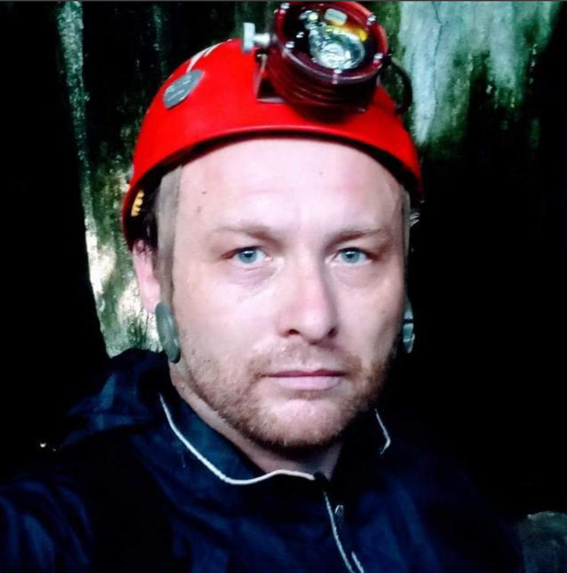
Rogerio Uagoda

@pesquisar.unb.br

Associate Professor, Geography departament
University of Brasilia

Rogerio Uagoda

RESEARCH, TEACHING, or OTHER INTERESTS

Geology, General Agricultural and Biological Sciences
38

Scopus Publications

616

Scholar Citations

14

Scholar h-index

19

Scholar i10-index

Scopus Publications

  • Decoding surface processes from escarpment to watershed: Insights from karst landscapes using cosmogenic nuclides and geochemical data
    Rogerio Uagoda, Lionel L. Siame, Jérémie Garnier, Laëtitia Leanni, Dandara Caldeira, Régis Braucher, Rémi Freydier, Patrick Seyler, ASTER Team
    Geomorphology, 2025
    Tropical karst landscapes are marked by complex sediment dynamics resulting from the interplay between geomorphic processes and sediment transport . In the Vermelho Watershed (Brazilian savanna), we use paired cosmogenic nuclides ( 10 Be and 26 Al) to quantify denudation rates, burial durations, and sediment mixing. The spatial distribution of Al Be ratios reveals rapid erosion and prolonged burial on escarpments , in contrast to the more stable conditions of flatter areas, where erosion is subdued, and sediment residence time is longer. Comparisons with Iraquara and Serra das Mesas emphasize the influence of topography and sediment sources on nuclide inventories. Downstream increases in freshly eroded material point to fluvial mixing, while discrepancies between cosmogenic burial and OSL ages (Tarimba Cave) suggest partial burial and pre-depositional histories. The integration of cosmogenic, geochemical, and geomorphic data underscores the complexity of tropical karst systems, where vertical mixing and uneven erosion are key processes. These results contribute to a broader understanding of landscape evolution and offer a comparative basis for interpreting cosmogenic signals in fluvio-karst environments worldwide. • Cosmogenic nuclides reveal sediment mixing and erosion in tropical karst watersheds. • Flatter terrain erodes slowly with long residence, unlike steep escarpment slopes. • Burial age gaps challenge full burial, stressing pre-depositional process roles.
  • The Pleistocene-Holocene history of a fluviokarst landscape in Central Brazil: An analysis of the river sediments of the Extrema, das Pedras and Ventura dry valleys
    Adivane Morais Nogueira, Dandara Caldeira, Rogério Uagoda, Leonardo Chaves Mendes
    Quaternary International, 2025
  • Use of Fluorescent Dye Tracers in the Identification of Groundwater Flow Pathways in Karst Systems: Overview of Studies in Brazil
    Matheus Santiago Vieira, André Silva Tavares, Rogério Elias Soares Uagoda, Pedro Assunção
    Revista Brasileira De Geografia Fisica, 2024
    O transporte de poluentes por condutos subterrâneos em aquíferos cársticos é uma preocupação crescente, visto que danos ambientais irreversíveis podem ser ocasionados, como a perda da biodiversidade aquática e a contaminação dos recursos hídricos subterrâneos. Para a identificação e avaliação, por exemplo, da origem e destino dos contaminantes e as interações entre fluxos superficiais e subterrâneos (conexões subterrâneas, direção de fluxo), os traçadores corantes fluorescentes, são amplamente usados. Logo, este trabalho teve como objetivo apresentar uma revisão sobre a evolução metodológica do uso de traçadores corantes nos sistemas cársticos e os principais avanços desses estudos no Brasil. Para atingir esse objetivo, foi realizado uma pesquisa bibliográfica sobre a temática contemplando diversos livros, periódicos, teses e dissertações nacionais e internacionais. Para os estudos no Brasil, foram selecionados os periódicos publicados nos últimos 10 anos, disponíveis no Portal Periódicos CAPES, base Web of Science e Google Scholar. Como resultado, foi possível identificar os avanços de novos instrumentos de campo e laboratoriais, softwares de modelagem específicos, e novos traçadores corantes. Para os estudos no Brasil, observou-se um crescimento no número de pesquisas na série histórica explorada, aos quais, possibilitaram uma melhor compreensão do comportamento hidrodinâmico dos sistemas cársticos, como a identificação dos limites cársticos e na identificação e quantificação de contaminantes.Palavras-chave: fluxo subterrâneo, traçadores fluorescentes, contaminação.
  • Editorial: Near-surface geophysics in Latin American contexts: its applications, education, and societal perspectives as a whole
    Yawar Hussain, Susanne Maciel, Cristobal Condori, Rogerio Uagoda, Welitom Borges, Martín Cárdenas-Soto, Omar Hamza, Helena Seivane
    Frontiers in Earth Science, 2024
    Moreover, none of the countries in Latin America are exempt from significant earthquake risks, particularly along the Pacific Ring of Fire. Having experienced some of the most powerful earthquakes globally, Chile has demonstrated the severe impact of earthquake-induced liquefaction, one of the most critical hazards to infrastructure. Therefore, incorporating detailed velocity profiles into seismic hazard assessments is crucial for accurately predicting ground motions and mitigating earthquake risks in Chile and other seismically active regions worldwide.Water resource management also remains a pressing issue, especially in vulnerable karst systems and regions with fluctuating soil moisture. Seasonal variations in rainfall directly impact agriculture and flood risks, highlighting the need for effective monitoring tools to ensure sustainability.Near-surface geophysics (NSGeo) is emerging as a vital tool for addressing these challenges. This special issue, "Near-Surface Geophysics in Latin American Contexts: Its Applications, Education, and Societal Perspectives as a Whole," focuses on how NSGeo techniques can be adapted to local conditions to provide practical, non-invasive solutions for environmental hazards and infrastructure needs.The primary aim of this collection is to showcase how NSGeo methods combined with complementary tools like UAVs, geological surveys, and computational modeling are being applied to tackle natural disasters, pollution, and infrastructure risks. The research highlights both the technical advancements and societal impact of these techniques in addressing Latin America's unique challenges.The papers in this special issue are not simply technical studies; they represent a deeper exploration of how geophysics can be used to address pressing concerns in Latin America. Below is a summary of the contributions (accepted and rejected):This study applies GPR technology to the ecological investigation of tree root systems in Brazil. By imaging root structures non-invasively, the authors contribute to the understanding of root biomass and its role in carbon sequestration, emphasizing GPR's potential in advancing ecological and environmental studies. This manuscript presents advancements in spectral analysis techniques to improve the resolution of electrical resistivity tomography (ERT) data. Enhancing data quality increases the accuracy of subsurface investigations, making it a valuable tool for environmental monitoring and geotechnical projects throughout Latin America.The authors introduce a new approach to smoothing ERT data using adaptive filtering techniques. This method improves the clarity and interpretability of resistivity models, enabling more precise imaging of subsurface features, particularly in geologically complex regions.Examining the effects of spatial variability in shear-wave velocity, this manuscript provides critical insights into how such variability influences liquefaction response during earthquakes. The findings from the 2010 Maule earthquake highlight the importance of incorporating detailed velocity profiles into seismic hazard assessments, offering a valuable tool for mitigating earthquake risks in other regions prone to seismic activity.This research integrates UAV digital photogrammetry with seismic refraction tomography to investigate fractured rock beneath a uranium tailings storage dam. The combination of these methods offers a detailed analysis of subsurface fractures, which is essential for assessing the stability of critical infrastructure, particularly in regions where mining activities are prevalent.This manuscript introduces a computationally efficient method for 3D time-domain electromagnetic modeling in anisotropic media. This innovative approach enables more accurate geophysical surveys, contributing to resource exploration and environmental monitoring across Latin America.Landfill Near the Tongo Bassa and Ngongue River, Douala, Cameroon While based in Cameroon, this study's exploration of subsurface pollution mapping using geoelectrical and seismoelectric techniques resonates with environmental challenges seen across Latin America. The integration of these methods provides a detailed understanding of subsurface contamination, with direct applications to waste management and pollution monitoring in Latin American urban centers.The studies in this special issue highlight the diverse applications of near-surface geophysical methods across Latin America. Each paper addresses a unique challenge, whether related to environmental protection, disaster risk reduction, or resource management, demonstrating the value of NSGeo techniques in improving our understanding of subsurface conditions.The integration of advanced computational tools and field techniques with traditional geophysical methods enhances the effectiveness of NSGeo applications. As Latin America continues to face environmental and infrastructural challenges, these techniques will become even more critical for informed decision-making and sustainable development. We hope this collection inspires further research and innovation, fostering collaborations that will lead to continued advancements in near-surface geophysics across the region.
  • Sedimentary records in dry karstic valleys: The case of Mambaí, central Brazil
    Adivane Morais Nogueira, Dandara Caldeira, Rogério Uagoda, Leonardo Chaves Mendes, Fabiano N. Pupim
    Journal of South American Earth Sciences, 2023
  • On- and off-site erosion impacts of restoration measures in a tropical karst watershed
    Maria Rita S. Fonseca, Henrique M. L. Chaves, Rogério E. S. Uagoda
    Earth Surface Processes and Landforms, 2023
    Abstract Karst areas are vulnerable landscapes which, if unprotected, could be permanently degraded. To bridge the gap existing in the reduction of on‐ and off‐site impact of restored tropical karst areas, this study was carried out in a 3.5 ha karst watershed of the Brazilian savanna (Cerrado). Precipitation, surface runoff, and soil loss were measured in representative runoff plots (22.1 × 1.84 m), used to assess the watershed erosion and sediment yield to a downstream sinkhole. The study was carried out during three hydrologic years, between September 2018 and May 2020. The predominant soils in the watershed were Lithic entisol and Quartzsamment, and the original land covers were natural savanna, seasonal forest, and degraded pastureland ( Andropogon gayanus ). The latter was restored with native savanna species, in the lower part of the watershed, and with a reformed pastureland, in the upper part. The USLE rainfall erosivity ( R ), soil erodibility ( K ), and soil cover ( C ) factors, runoff, soil loss, and the original soil and sediment textures were obtained from the runoff plots. The watershed soil loss and sediment yield were obtained by the USLE and GIS. Precipitation and rainfall erosivity ranged from 936 to 1223 mm, and from 6694 to 7746 MJ mm ha −1 h −1 , in the period, respectively. Although the ecological watershed restoration reduced mean soil loss from 11.6 to 5.8 Mg ha −1 year −1 , and sediment yield from 29.2 to 14.6 Mg year −1 , on‐ and off‐site soil loss tolerances were still exceeded in 29 and 61% of the basin area, respectively. Ecological restoration also reduced the sand and clay content of the sediment entering the underground caves and river downstream, contributing to their hydrologic sustainability.
  • Seismic signatures and site characterization of an intermittent stream in dry and flood conditions: an implication for soil losses and landslide triggering
    Yawar Hussain, Helena Seivane, Qiangshan Gao, Susanne Maciel, Omar Hamza, Rogério Uagoda, Welitom Borges
    Environmental Earth Sciences, 2023
  • Runoff, soil loss, and water balance in a restored Karst area of the Brazilian Savanna
    Maria Rita Souza Fonseca, Rogério Elias Soares Uagoda, Henrique Marinho Leite Chaves
    Catena, 2023
  • UAV-based doline mapping in Brazilian karst: A cave heritage protection reconnaissance
    Cristiano Fernandes Ferreira, Yawar Hussain, Rogério Uagoda, Tiago Castro Silva, Rejane Ennes Cicerelli
    Open Geosciences, 2023
    Dolines are depressions in the soluble ground that indicates the degree of karstification. They may also act as connection points (vulnerability spots) between the surface and underground for the transmission of runoff, sediments, and pollutants. The delineation of these spots (dolines) is a crucial step in environmental management through land use planning to protect the karst underground, which is rich in flora and fauna. This requirement can benefit from a cost-effective, accessible, and non-invasion high-resolution investigation generating digital elevation models (DEMs) from unmanned aerial vehicle (UAV) imagery and automated object detection techniques. This study examines the capabilities of UAV-based DEM in detecting dolines across 50 km2 in the environmentally protected area of river Vermelho (APANRV – Área de Proteção Ambiental das Nascentes do Rio Vermelho). Initially, an automatic objects (doline and no-doline) detection algorithm was applied to the DEM, followed by a visual inspection to differentiate doline from possible dolines in orthomosaic photos, topographic profiles, and shaded UAV-based relief (digital terrain model; DTM and DSM). For the redundancy checking, a cluster analysis with four tests was conducted. The objects generated from the best clusters and morphological analysis were gathered in the same base for visual inspection. Out of a total of 933 objects identified, 41% were obtained from the DSM base, 25% from the perimeter-to-area ratio, and 34% through convergence between the two-analyses. Subsequently, the resulting doline typologies are discussed in reference to their proximity to hydrogeological features and their impacts on underground vulnerability. The findings aligned with the previous research as dolines were highly concentrated near sites where carbonates come in contact with siliciclastic sediments.
  • A SEMI-AUTOMATIC APPROACH FOR DOLINE MAPPING IN BRAZILIAN COVERED KARST: THE WAY FORWARD TO VULNERABILITY ASSESSMENT
    Cristiano Fernandes Ferreira, Yawar Hussain, Rogério Uagoda
    Acta Carsologica, 2022
    Doline mapping is paramount in the vulnerability and risk assessment of the underground karst environment by identifying cave-ground connectivity points at the surface. However, manual mapping is labour-intensive, slow and subjective, especially on a large scale. Therefore, the present study adopted a GIS-based semi-automatic approach for mapping large and medium-sized depressions/dolines in the Corrente river basin in Brazil, with a particular focus on the environmentally preserved areas of river Vermelho (APANRV Portuguese abbreviation) using remote sensing (DEM and Google Earth imagery) and field-based observations. Seven typical dolines forms (e.g., cockpit with drain insertion, collapse, collapse with river capture, suffosion, solution, cover collapse, and buried) are found from extensive field surveys. As an outcome of the proposed approach, two hundred and thirty-two medium to large-sized dolines have been identified and categorised into three main groups based on the cave density and local geology G1, G2, and G3. The high density of identified dolines (164 known caves) in G1 provides reconnaissance for future speleological works in the preserved areas. Additionally, the presence of a considerable number of dolines in the adjoining areas (G2 and G3) stresses the need to revise the existing boundaries of the APANRV. Results correlate well with the dolines sites marked using field surveys and Google Earth images. This doline mapping may help researchers in the groundwater vulnerability assessment and the protection of speleological heritage preserved in the caves.
  • Monitoring of Flow and Suspended Solid Load in Rainfall Events in the Ribeirão do Gama Basin/DF
    Renan Smith Penido Louzada, André Silva Tavares, Rogério Uagoda
    Revista Brasileira De Geomorfologia, 2022
  • Geophysical for granitic joint patern and subsurface hydrology related to slope instability
    Ana Camila da Silva, Isabela Resende, Rodrigo Cintra da Costa, Rogério Elias Soares Uagoda, André de Souza Avelar
    Journal of Applied Geophysics, 2022
  • Hydrogeophysical Characterization of Fractured Aquifers for Groundwater Exploration in the Federal District of Brazil
    Yawar Hussain, José Eloi Guimarães Campos, Welitom Rodrigues Borges, Rogério Elias Soares Uagoda, Omar Hamza, Hans-Balder Havenith
    Applied Sciences Switzerland, 2022
  • Rates, factors, and tolerances of water erosion in the Cerrado biome (Brazil): A meta-analysis of runoff plot data
    Maria Rita Souza Fonseca, Rogério Uagoda, Henrique Marinho Leite Chaves
    Earth Surface Processes and Landforms, 2022
  • Methodology for Drawing Potentiometric Maps in Karstic and Fissure-Karstic Aquifers: Case Study in the Upper Current River Basin, Mambaí, GO
    Olavo Amancio Oliveria, Drielly Souza Rodrigues, José Eloi Guimarães Campos, Rogério Uagoda
    Revista Brasileira De Geografia Fisica, 2022
  • Late Quaternary episodes of clastic sediment deposition in the Tarimba Cave, Central Brazil
    Dandara Caldeira, Rogério Uagoda, Adivane Morais Nogueira, Jeremie Garnier, André Oliveira Sawakuchi, Yawar Hussain
    Quaternary International, 2021
  • Analysis of the erosion potential and sediment yield using the intero model in an experimental watershed dominated by karst in brazil
    Saeed YOUSEFZADEH, Mohsen JANMOHAMMADI, Naser SABAGHNIA
    Agriculture and Forestry, 2021
  • Estimation of total groundwater reserves and delineation of weathered/fault zones for aquifer potential: A case study from the Federal District of Brazil
    Yawar Hussain, Welitom Borges, Rogerio Uagoda, Cristiane Moura, Susanne Maciel, Omar Hamza, Hans-Balder Havenith
    Open Geosciences, 2021
  • Detection of cover collapse doline and other epikarst features by multiple geophysical techniques, case study of tarimba cave, brazil
    Yawar Hussain, Rogerio Uagoda, Welitom Borges, Renato Prado, Omar Hamza, Martín Cárdenas-Soto, Hans-Balder Havenith, Jie Dou
    Water Switzerland, 2020
  • Dolines mapping: Challenges and possibilities of using digital elevation models
    Cristiano Fernandes Ferreira, Rogério Elias Soares Uagoda
    Revista Brasileira De Geomorfologia, 2020
  • The potential use of geophysicalmethods to identify cavities, sinkholes and pathways forwater infiltration
    Yawar Hussain, Rogerio Uagoda, Welitom Borges, José Nunes, Omar Hamza, Cristobal Condori, Khurram Aslam, Jie Dou, Martín Cárdenas-Soto
    Water Switzerland, 2020
  • Seismic signature of mudflow tremor resulted from Brumadinho (Brazil) tailings dam failure
    Yawar Hussain, Omar Hamza, Xinghui Huang, André Carlos Silva, Cristobal Condori, Rogério Uagoda, André Luís Brasil Cavalcante
    Revista Escola De Minas, 2020
  • Soils in tropical karst, pedogenetic development and hydrological behavior: A theoretical review
    José Gustavo Da Silva Nunes, Rogério Uagoda
    Revista Brasileira De Geografia Fisica, 2020
  • Efficiency analysis of indirect methods for soil mapping against direct techniques, and their possible associations: A methodological review
    José Gustavo Da Silva Nunes, Rogério Uagoda
    Revista Brasileira De Geografia Fisica, 2020
  • An overview of doline mappings in brazil, karst's elemental features
    Cristiano Fernandes Ferreira, Rogério Elias Soares Uagoda
    Revista Brasileira De Geografia Fisica, 2020
  • Multiple geophysical techniques for investigation and monitoring of Sobradinho Landslide, Brazil
    Yawar Hussain, Martin Cardenas-Soto, Salvatore Martino, Cesar Moreira, Welitom Borges, Omar Hamza, Renato Prado, Rogerio Uagoda, Juan Rodríguez-Rebolledo, Rafeal Silva, Hernan Martinez-Carvajal
    Sustainability Switzerland, 2019
  • Typological analysis of slidequakes emitted from landslides: Experiments on an expander body pile and sobradinho landslide (Brasilia, Brazil)
    Yawar Hussain, Sehar M. Hussain, Salvatore Martino, Martin Cardenas-Soto, Omar Hamza, Juan F. Rodriguez-Rebolledo, Rogério Uagoda, Hernan Martinez-Carvajal
    Revista Escola De Minas, 2019
  • Application of GPR for the differentiation of alluvial and colluvial materials, based on direct observation in Contagem Valley – Distrito Federal (Brasil)
    José Gustavo da Silva Nunes, Rogério Uagoda, Dandara Caldeira, Ligier Modesto Braga, Yawar Hussain, Hernán Martinez Carvajal
    Revista Brasileira De Geomorfologia, 2019
  • Monitoring of Sobradinho landslide (Brasília, Brazil) and a prototype vertical slope by time-lapse interferometry
    Yawar Hussain, Martin Cardenas-Soto, Rogerio Uagoda, Salvatore Martino, Juan Rodriguez-Rebolledo, Omar Hamza, Hernan Martinez-Carvajal
    Brazilian Journal of Geology, 2019
  • Shear wave velocity estimation by a joint inversion of hvsr and f-k curves under diffuse field assumption: A case study of sobradinho landslide
    Y. HUSSAIN, M. CARDENAS-SOTO, R. UAGODA, S. MARTINO, N. P. SANCHEZ, C. A. MOREIRA, H. MARTINEZ-CARVAJAL
    Anuario do Instituto De Geociencias, 2019
  • Benefits of the successive GPM based Satellite Precipitation Estimates IMERG-V03, -V04, -V05 and GSMaP-V06, -V07 over diverse geomorphic and meteorological regions of Pakistan
    Frédéric Satgé, Yawar Hussain, Marie-Paule Bonnet, Babar Hussain, Hernan Martinez-Carvajal, Gulraiz Akhter, Rogério Uagoda
    Remote Sensing, 2018
  • Analysis of surface waves recorded at a mass movement in Brasilia, Brazil: An implication in hazard mitigation
    Yawar HUSSAIN, Hernan MARTINEZ-CARVAJAL, Martín CÁRDENAS-SOTO, Rogério Elias Soares UAGODA
    Geociencias, 2018
  • Geomorphological description and erosive-depositional dynamics of hillslopes on Ribeirão Contagen Fluvial Valley-DF, Brazil
    L. M. BRAGA, D. CALDEIRA, J. G. S. NUNES, Y. HUSSAIN, H. M. CARVAJAL, R. UAGODA
    Anuario do Instituto De Geociencias, 2018
  • Spatial distribution of depressions in Upper rio Preto basin (GO, DF, MG) and relationship to geological and its pedogeomorphological controls
    Thomas Johannes Schrage, Rogério Elias Soares Uagoda
    Revista Brasileira De Geomorfologia, 2017
  • Spectral analysis of the recorded ambient vibration at a mass movement in Brasilia
    Proceedings of the Symposium on the Application of Geophyics to Engineering and Environmental Problems Sageep, 2017
  • Microtremor response of a mass movement in federal district of Brazil
    Y. HUSSAIN, H. MARTINEZ-CARVAJAL, M. CÁRDENAS-SOTO, R. UAGODA, S. MARTINO, M. B. HUSSAIN
    Anuario do Instituto De Geociencias, 2017
  • Karstic morphology control in non-carbonate rocks: Santana basin, middle Paraiba do sul river valley, Brazil
    Rogério Uagoda, André Avelar, Ana Luiza Coelho Netto
    Zeitschrift Fur Geomorphologie, 2011
  • Closed depressions in karstic-quartzitic relief, Ribeirão Santana basin, mid-valley of the Paraíba do Sul River
    Anuario do Instituto De Geociencias, 2006

RECENT SCHOLAR PUBLICATIONS

  • Estudo e determinação do parâmetro precipitação (fator p) no método COP aplicado ao alto curso da bacia do Rio Corrente, nordeste de Goiás
    OA de Oliveira, RES Uagoda
    Revista de Geografia:(Recife) 43 (1), 1-23 , 2026
    2026
  • DETERMINAÇÃO E REPRESENTAÇÃO CARTOGRÁFICA DAS CAMADAS DE PROTEÇÃO (FATOR O) PELO MÉTODO COP NO ALTO CURSO DA BACIA DO RIO CORRENTE NO NORDESTE GOIANO
    OA de Oliveira, R Uagoda
    Caderno de Geografia 35 (83), 1367-1367 , 2025
    2025
  • DETERMINAÇÃO E REPRESENTAÇÃO CARTOGRÁFICA DA CONCENTRAÇÃO DE FLUXO (FATOR C) PELO MÉTODO COP NO ALTO CURSO DA BACIA DO RIO CORRENTE NO NORDESTE GOIANO
    OA de Oliveira, R Uagoda, JE Campos
    Caderno de Geografia 35 (81), 431-431 , 2025
    2025
  • Decoding surface processes from escarpment to watershed: Insights from karst landscapes using cosmogenic nuclides and geochemical data
    R Uagoda, LL Siame, J Garnier, L Leanni, D Caldeira, R Braucher, ...
    Geomorphology 482, 109794 , 2025
    2025
    Citations: 1
  • Hydro-sedimentological interactions between a tropical fluviokarst system and surface waters in the Brazilian Savannah
    AS Tavares, JEB Ayer, RES Uagoda
    Catena 254, 108966 , 2025
    2025
    Citations: 3
  • The Pleistocene-Holocene history of a fluviokarst landscape in Central Brazil: An analysis of the river sediments of the Extrema, das Pedras and Ventura dry valleys
    AM Nogueira, D Caldeira, R Uagoda, LC Mendes
    Quaternary International 725, 109735 , 2025
    2025
  • Near-surface geophysics in Latin American contexts: its applications, education, and societal perspectives as a whole
    Y Hussain, S Maciel, C Condori, R Uagoda, W Borges, M Cárdenas-Soto, ...
    Frontiers in Earth Science 12, 1495375 , 2024
    2024
  • DINÂMICA DOS SEDIMENTOS CLÁSTICOS CAVERNÍCOLAS: POTENCIALIDADE PARA ESTUDO PALEOAMBIENTAIS NO BRASIL
    DASCDM VITALINA, R UAGODA, NA MORAIS
    ESPAÇO E GEOGRAFIA Учредители: Biblioteca Central da UNB , 2024
    2024
  • Uso de Traçadores Corantes Fluorescentes na Identificação de Rotas de Fluxos em Sistemas Cársticos: Panorama de Estudos no Brasil
    MS Vieira¹, AS Tavares, RES Uagoda, P Assunção
    Revista Brasileira de Geografia Física 17 (3), 1961-1976 , 2024
    2024
  • UAV-based doline mapping in Brazilian karst: A cave heritage protection reconnaissance
    CF Ferreira, Y Hussain, R Uagoda, TC Silva, RE Cicerelli
    Open Geosciences 15 (1), 20220535 , 2023
    2023
    Citations: 7
  • Desafios e Alternativas na Simulação da Dinâmica Hidrológica e Sedimentológica em Sistemas Cársticos
    AS Tavares, MS Vieira, RES Uagoda
    Revista Brasileira de Geografia Física 16 (4), 1714-1731 , 2023
    2023
    Citations: 2
  • Sedimentary records in dry karstic valleys: The case of Mambaí, Central Brazil
    AM Nogueira, D Caldeira, R Uagoda, LC Mendes, FN Pupim
    Journal of South American Earth Sciences 128, 104338 , 2023
    2023
    Citations: 5
  • On‐and off‐site erosion impacts of restoration measures in a tropical karst watershed
    MRS Fonseca, HML Chaves, RES Uagoda
    Earth Surface Processes and Landforms 48 (9), 1701-1711 , 2023
    2023
    Citations: 4
  • Seismic signatures and site characterization of an intermittent stream in dry and flood conditions: an implication for soil losses and landslide triggering
    Y Hussain, H Seivane, Q Gao, S Maciel, O Hamza, R Uagoda, W Borges
    Environmental Earth Sciences 82 (12), 295 , 2023
    2023
    Citations: 3
  • Runoff, soil loss, and water balance in a restored Karst area of the Brazilian Savanna
    MRS Fonseca, RES Uagoda, HML Chaves
    Catena 222, 106878 , 2023
    2023
    Citations: 29
  • A semi-automatic approach for doline mapping in Brazilian covered karst: the way forward to vulnerability assessment
    CF Ferreira, Y Hussain, R Uagoda
    Acta Carsologica 51 (1), 19-31 , 2022
    2022
    Citations: 13
  • The potential use of geophysical methods to identify cavities, sinkholes and pathways for water infiltration: a case study from Mambaí, Brazil
    Y Hussain, R Uagoda, W Borges, JG da Silva Nunes, O Hamza, ...
    Authorea Preprints , 2022
    2022
    Citations: 3
  • An introduction and GIS-based relief compartment mapping of fluvio-karst landscape in central Brazilian highlands
    Y Hussain, R Uagoda
    Authorea Preprints , 2022
    2022
    Citations: 1
  • Metodologia para Confecção de Mapas Potenciométricos em Aquíferos Cársticos e Físsuro-Cársticos: Estudo de Caso na Alta Bacia do Rio Corrente, Mambaí, GO
    OA Oliveria, DS Rodrigues, JEG Campos, R Uagoda
    Revista Brasileira de Geografia Física 15 (5), 2327-2339 , 2022
    2022
    Citations: 3
  • Monitoramento da vazão e carga sólida suspensa em eventos pluviais na Bacia do Ribeirão do Gama/DF
    RSP Louzada, AS Tavares, R Uagoda
    Revista Brasileira de Geomorfologia 23 (3), 1700-1715 , 2022
    2022
    Citations: 2

MOST CITED SCHOLAR PUBLICATIONS

  • The potential use of geophysical methods to identify cavities, sinkholes and pathways for water infiltration
    Y Hussain, R Uagoda, W Borges, J Nunes, O Hamza, C Condori, K Aslam, ...
    Water 12 (8), 2289 , 2020
    2020
    Citations: 88
  • Benefits of the successive GPM based satellite precipitation estimates IMERG–V03,–V04,–V05 and GSMaP–V06,–V07 over diverse geomorphic and meteorological regions of Pakistan
    F Satgé, Y Hussain, MP Bonnet, BM Hussain, H Martinez-Carvajal, ...
    Remote Sensing 10 (9), 1373 , 2018
    2018
    Citations: 40
  • Multiple geophysical techniques for investigation and monitoring of Sobradinho landslide, Brazil
    Y Hussain, M Cardenas-Soto, S Martino, C Moreira, W Borges, O Hamza, ...
    Sustainability 11 (23), 6672 , 2019
    2019
    Citations: 38
  • Runoff, soil loss, and water balance in a restored Karst area of the Brazilian Savanna
    MRS Fonseca, RES Uagoda, HML Chaves
    Catena 222, 106878 , 2023
    2023
    Citations: 29
  • Detection of cover collapse doline and other Epikarst features by multiple geophysical techniques, case study of Tarimba cave, Brazil
    Y Hussain, R Uagoda, W Borges, R Prado, O Hamza, M Cárdenas-Soto, ...
    Water 12 (10), 2835 , 2020
    2020
    Citations: 29
  • Sobre a gênese da arenização no sudoeste do Rio Grande do Sul
    DMA Suertegaray, R Verdum, ET Bellanca, RS Uagoda
    Terra Livre 1 (24), 135-150 , 2005
    2005
    Citations: 24
  • Analysis of the erosion potential and sediment yield using the IntErO model in an experimental watershed dominated by karst in Brazil
    AS Tavares, RES Uagoda, V Spalevic, RL Mincato
    Poljoprivreda i Sumarstvo 67 (2), 153-162 , 2021
    2021
    Citations: 22
  • Late Quaternary episodes of clastic sediment deposition in the Tarimba Cave, Central Brazil
    D Caldeira, R Uagoda, AM Nogueira, J Garnier, AO Sawakuchi, ...
    Quaternary International 580, 22-37 , 2021
    2021
    Citations: 20
  • Rates, factors, and tolerances of water erosion in the Cerrado biome (Brazil): A meta‐analysis of runoff plot data
    MRS Fonseca, R Uagoda, HML Chaves
    Earth Surface Processes and Landforms 47 (2), 582-595 , 2022
    2022
    Citations: 19
  • Ambient seismic noise: A continuous source for the dynamic monitoring of landslides
    Y Hussain, H Martinez-Carvajal, C Condori, R Uagoda, M Cárdenas-Soto, ...
    Terrae Didatica 15, e019012-e019012 , 2019
    2019
    Citations: 17
  • Karstic morphology control in non-carbonate rocks: Santana basin, middle Paraiba do Sul river valley, Brazil
    R Uagoda, A Avelar, ALC Netto
    Zeitschrift fur Geomorphologie 55 (1), 1 , 2011
    2011
    Citations: 17
  • Hydrogeophysical characterization of fractured aquifers for groundwater exploration in the Federal District of Brazil
    Y Hussain, JEG Campos, WR Borges, RES Uagoda, O Hamza, ...
    Applied Sciences 12 (5), 2509 , 2022
    2022
    Citations: 16
  • Shear wave velocity estimation by a joint inversion of HVSR and fk curves under diffuse field assumption: a case study of Sobradinho landslide
    Y Hussain, M Cardenas-Soto, R Uagoda, S Martino, NP Sanchez, ...
    Anuário do Instituto de Geociências 42 (1), 742-750 , 2019
    2019
    Citations: 16
  • Tipologias do carste e classificações de dolinas: uma revisão
    CF Ferreira, RES Uagoda
    Caminhos de Geografia 20 (70), 519-537 , 2019
    2019
    Citations: 15
  • A semi-automatic approach for doline mapping in Brazilian covered karst: the way forward to vulnerability assessment
    CF Ferreira, Y Hussain, R Uagoda
    Acta Carsologica 51 (1), 19-31 , 2022
    2022
    Citations: 13
  • Geophysical for granitic joint patern and subsurface hydrology related to slope instability
    AC da Silva, I Resende, RC da Costa, RES Uagoda, A de Souza Avelar
    Journal of Applied Geophysics 199, 104607 , 2022
    2022
    Citations: 13
  • Microtremor response of a mass movement in Federal District of Brazil
    Y Hussain, H Martinez-Carvajal, M Cárdenas-Soto, R Uagoda, S Martino, ...
    Anuário do Instituto de Geociências 40 (3), 212-221 , 2017
    2017
    Citations: 12
  • Análise da predição do balanço hídrico da bacia do ribeirão do Gama-DF através do modelo SWAT
    RES Uagoda
    Revista Brasileira de Geografia Física 10 (03), 880-893 , 2017
    2017
    Citations: 10
  • Depressões fechadas em relevo cárstico-quartzítico, bacia do ribeirão Santana, médio vale do rio Paraíba do Sul
    R Uagoda, A de Souza Avelar, ALC Netto
    Anuário do Instituto de Geociências 29 (2), 87-100 , 2006
    2006
    Citations: 10
  • GIS-Based Relief Compartment Mapping of Fluvio-Karst Landscape in Central Brazilian Highlands: GIS-Based Relief Compartment Mapping of Fluvio-Karst Landscape in Central …
    Y Hussain, R Uagoda
    Settings International Journal of Economic and Environmental Geology (IJEEG … , 2020
    2020
    Citations: 9