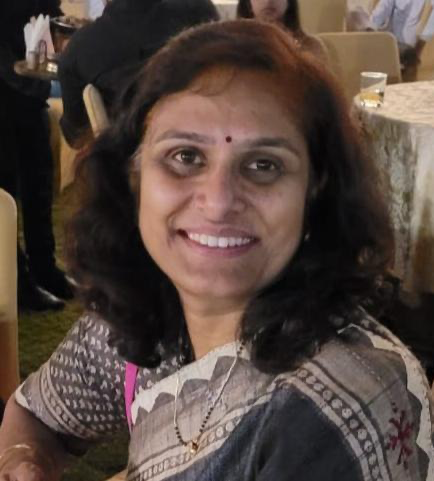
Dr. Kshama Puntambekar is experienced in teaching in Urban and Regional Planning, Geospatial and Big Data Analysis etc at School of Planning and Architecture (SPA), Bhopal, since 2009. She has co-authored the book Reinterpreting Urban Fabric in Cities with Living Heritage: A case of Kolkata and Low Carbon Society, Bhopal -2035.
A qualified architect and urban planner, she specialises in Natural Resource Management and is keenly intereste in ancient texts and planning traditions. Dr. Puntambekar has contributed to national and international collaborative research projects, including Livelihood mapping in tribal areas, Local Biodiversity Strategies and Action Plan etc.
She has guided four doctoral research works in urban planning and transportation. She has been training Architects Planners and professionals in the application of geospatial tools She has taught in various UG, PG and PhD courses.
Building Better Cities: The Ward Competitiveness Index as a Governance Tool: The Case of Indore Building Better Cities the Ward Competitiveness Index as A Governance Tool the Case of Indore, 2026
Redefining the Service Level Benchmarking for Public Transport System in India Rahul Tiwari, Kshama Puntambekar, Purnima Parida International Conference on Transportation and Development 2018 Traffic and Freight Operations and Rail and Public Transit Selected Papers from the International Conference on Transportation and Development 2018, 2018 Flourishing economy and rapid urbanization has made India witness a surge in travel demand and number of private vehicles. National Urban Transport Policy (NUTP) 2006, India adopted a statement “Moving People and not Vehicle,” giving a clear preference to public transport. Thereafter, India witnessed an increase in numbers of cities where organized bus based public transport were available. To evaluate and benchmark the Urban Public Transport Services, an evaluation mechanism has been developed by Ministry of Urban Development (MoUD), Government of India (GoI) based upon common benchmarking parameters, irrespective of the city characteristics, which means all the cities will be benchmarked on the same scale irrespective of its size, characteristics, and requirements. A need for “Re-defining the SLBs for Public Transport System in India” was felt, in light of commuter’s perspective. In this regard, a study was done, where literature review was conducted to find out the performance parameters for evaluating public transport services. A scientific inquiry was made by user interview method to find out relation between the socio economic characteristic of the commuter (independent variable) and the importance score allotted by the commuter to the identified performance parameter (dependent variable). The study concluded that several socio economic characteristics have significant correlation with the parameters for evaluating public transport services. The study has a set of recommendations based upon the study finding and data analysis, so as to make service level benchmarking of public transport in India, more customized to the travel requirements of the Indian cities.
Travel behaviour studies facilitate integration of land use and transport planning K. Puntambekar Wit Transactions on the Built Environment, 2011 This paper describes how travel behavior in any city is guided by its land use distribution and transport network and planning. The response of people to the system is travel behavior. The paper discusses the issues in understanding the travel behavior of people. The behavioral change in the use of the type of transport is a slow process and can be initiated by providing the infrastructure with the monetary and temporal benefits that are accountable by the user. The paper shows how the inclination towards the use of public transport, walking or other non-motorized transport can be created by integrated land use and transport planning. The two different systems need to work in integration for sustainable development of an urban area. The purpose of the paper is to find out how the travel behavior studies will facilitate the integration of land use and transport planning. With an example, the paper explains how much the travel behavior depends upon the land use distribution and available transport network. The conclusion of the study states that there is a substantial amount of dependence of the travel behavior on land use and transport planning. It also puts forward the issues to be addressed to facilitate the integration of land use and transport planning for reduction of use of motorized transport and to promote the use of public transport, walking or other non-motorized transport.
RECENT SCHOLAR PUBLICATIONS
Blue-Green Infrastructure: key to sustainable urban development K Gupta, K Puntambekar, R Bhadouria, D Ighravwe, T Kuzniecow Bacchin Frontiers in Water 8, 1848467 , 2026 2026.0
Impact of Land Use on Streetscape and Mobility Choices: A Case of Pune M Sawarkar, K Puntambekar Urban Sustainable Solutions: Interdisciplinary Reflections for Global … , 2026 2026.0
Light pollution in India: appraisal of artificial night sky brightness of cities: TK Bedi et al. TK Bedi, K Puntambekar, S Singh Environment, Development and Sustainability 23 (12), 18582-18597 , 2021 2021.0 Citations: 14
Assessment of light pollution in Indian scenario: A case of Bangalore TK Bedi, K Puntambekar, S Singh Journal of The Institution of Engineers (India): Series A 102 (3), 657-672 , 2021 2021.0 Citations: 10
Understanding transformation dynamics in old cities GD Mahapatra, K Puntambekar, S Chakraborty Conscious Urbanism 1 (1), 30-41 , 2021 2021.0 Citations: 2
Re-Interpreting Urban Fabric in Cities with Living Heritage: The Case of Central Kolkata GD Mahapatra, K Puntambekar Copal Publishing Group , 2020 2020.0 Citations: 9
Smart environment through smart tools and technologies for urban green spaces: Case study: Chandigarh, India K Gupta, K Puntambekar, A Roy, K Pandey, Mahavir, P Kumar Smart Environment for Smart Cities, 149-194 , 2019 2019.0 Citations: 18
Comparison of Results Between Conventional Techniques and GIS in Old City Surveys GD Mahapatra, K Puntambekar, S Chakraborty International Journal of Town Planning and Management 4 (2), 5-21 , 2018 2018.0
Redefining the service level benchmarking for public transport system in India R Tiwari, K Puntambekar, P Parida International Conference on Transportation and Development 2018, 229-237 , 2018 2018.0 Citations: 2
Bicycle use in Indian cities: understanding the opportunities and threats PD Gupta, K Puntambekar 12th transportation planning and implementation methodologies for developing … , 2016 2016.0 Citations: 11
Evaluating the Urban Green Space benefits and functions at macro, meso and micro level: case of Bhopal City P Rao 2014.0 Citations: 28
Spatial analysis of low carbon development 2050: A case of residential sector, Bhopal, India P Sheolikar, S Yawale, K Puntambekar, M Kapshe IOP Conference Series: Earth and Environmental Science 18 (1), 012153 , 2014 2014.0 Citations: 2
Low carbon society scenario Bhopal 2035 A Deshpande, M Kapshe, S Mitra, K Puntambekar SPA Bhopal Press , 2011 2011.0 Citations: 6
Multi-modal Public Transport System for Urban Areas: A Case of Metropolitan Cities in India K Puntambekar, A Sharma Development of Non-Motorized Transport as a 1 Sustainable Initiative , 2009 2009.0 Citations: 1
Calculating CO2 Emissions due to Private Mode of Transport in Dehradun using Geospatial Techniques M Ahlawat, K Puntambekar, D Shah, VJ Bulusu, K Gupta, H Shankar, ... 2000.0
Mahavir, & Kumar, P.(2020). Smart environment through smart tools and technologies for urban green spaces: Case study: Chandigarh, India K Gupta, K Puntambekar, A Roy, K Pandey Smart Environment for Smart Cities, 149-194 , 0 Citations: 6
Exploratory Analysis for Usability of Green Spaces AP Rao, J Bisaria, K Puntambekar
MOST CITED SCHOLAR PUBLICATIONS
Evaluating the Urban Green Space benefits and functions at macro, meso and micro level: case of Bhopal City P Rao 2014.0 Citations: 28
Smart environment through smart tools and technologies for urban green spaces: Case study: Chandigarh, India K Gupta, K Puntambekar, A Roy, K Pandey, Mahavir, P Kumar Smart Environment for Smart Cities, 149-194 , 2019 2019.0 Citations: 18
Light pollution in India: appraisal of artificial night sky brightness of cities: TK Bedi et al. TK Bedi, K Puntambekar, S Singh Environment, Development and Sustainability 23 (12), 18582-18597 , 2021 2021.0 Citations: 14
Bicycle use in Indian cities: understanding the opportunities and threats PD Gupta, K Puntambekar 12th transportation planning and implementation methodologies for developing … , 2016 2016.0 Citations: 11
Assessment of light pollution in Indian scenario: A case of Bangalore TK Bedi, K Puntambekar, S Singh Journal of The Institution of Engineers (India): Series A 102 (3), 657-672 , 2021 2021.0 Citations: 10
Re-Interpreting Urban Fabric in Cities with Living Heritage: The Case of Central Kolkata GD Mahapatra, K Puntambekar Copal Publishing Group , 2020 2020.0 Citations: 9
Low carbon society scenario Bhopal 2035 A Deshpande, M Kapshe, S Mitra, K Puntambekar SPA Bhopal Press , 2011 2011.0 Citations: 6
Mahavir, & Kumar, P.(2020). Smart environment through smart tools and technologies for urban green spaces: Case study: Chandigarh, India K Gupta, K Puntambekar, A Roy, K Pandey Smart Environment for Smart Cities, 149-194 , 0 Citations: 6
Understanding transformation dynamics in old cities GD Mahapatra, K Puntambekar, S Chakraborty Conscious Urbanism 1 (1), 30-41 , 2021 2021.0 Citations: 2
Redefining the service level benchmarking for public transport system in India R Tiwari, K Puntambekar, P Parida International Conference on Transportation and Development 2018, 229-237 , 2018 2018.0 Citations: 2
Spatial analysis of low carbon development 2050: A case of residential sector, Bhopal, India P Sheolikar, S Yawale, K Puntambekar, M Kapshe IOP Conference Series: Earth and Environmental Science 18 (1), 012153 , 2014 2014.0 Citations: 2
Multi-modal Public Transport System for Urban Areas: A Case of Metropolitan Cities in India K Puntambekar, A Sharma Development of Non-Motorized Transport as a 1 Sustainable Initiative , 2009 2009.0 Citations: 1
Blue-Green Infrastructure: key to sustainable urban development K Gupta, K Puntambekar, R Bhadouria, D Ighravwe, T Kuzniecow Bacchin Frontiers in Water 8, 1848467 , 2026 2026.0
Impact of Land Use on Streetscape and Mobility Choices: A Case of Pune M Sawarkar, K Puntambekar Urban Sustainable Solutions: Interdisciplinary Reflections for Global … , 2026 2026.0
Comparison of Results Between Conventional Techniques and GIS in Old City Surveys GD Mahapatra, K Puntambekar, S Chakraborty International Journal of Town Planning and Management 4 (2), 5-21 , 2018 2018.0
Calculating CO2 Emissions due to Private Mode of Transport in Dehradun using Geospatial Techniques M Ahlawat, K Puntambekar, D Shah, VJ Bulusu, K Gupta, H Shankar, ... 2000.0
Exploratory Analysis for Usability of Green Spaces AP Rao, J Bisaria, K Puntambekar