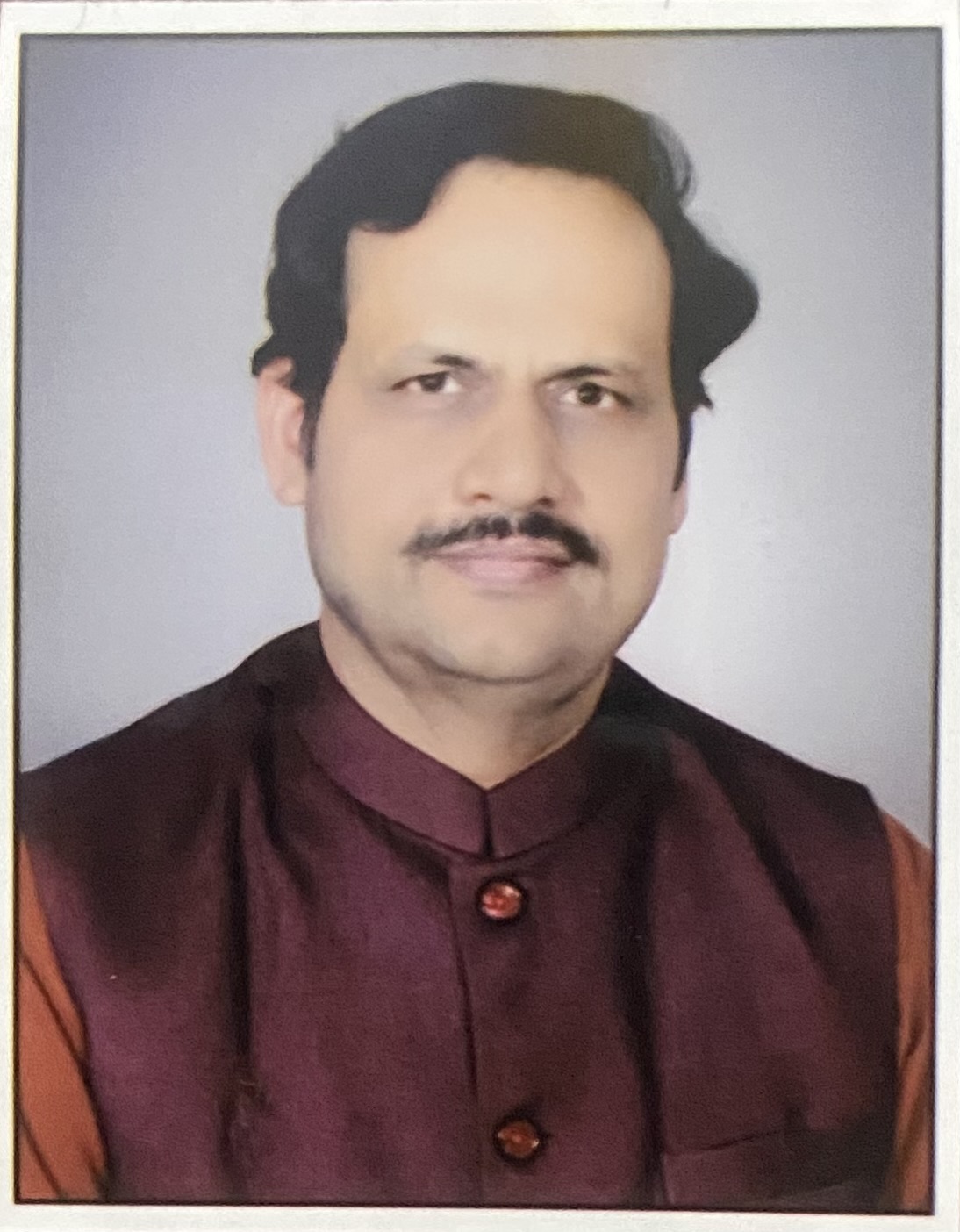
Having teaching experience more than 28 years, presently Dr TP Chaaturvedi is working at Faculty of Dental Sciences, BHU , graduated ( 1993) and post graduated(1996, Orthodontics) from Lucknow University (KG Medical college) and worked approximately 7 years at AMU before joining at BHU. He did PhD from IIT, BHU. He has academic and administrative experiences in AMU and BHU in various capacities such as Hostel Warden, Proctor, Head, Dean, Member of various academic and administrative committee/body etc. He selected for leadership in academic programme (LEAP, 2019) at Ohio State University by Ministry of HRD, government of India. Dr Chaturvedi published 130 publications at various journals which were cited more than 1700 times beside written 3 books and 3 chapters. He is/was editor, editorial members of various journals. Dr Chaturvedi enlisted top 2% world scientist list prepared by Stanford University, USA (2020, 2021) based citations of publications.
Effect of pH cycling on the corrosion behaviour of Fe-doped NiTi alloys: An in-vitro study Vipul kumar Sharma, T.P. Chaturvedi, Sharvari Mairal Journal of Contemporary Orthodontics, 2026 Background: Shape memory alloys have been used in the medical field since past. NiTi wires are predominantly used shape memory alloys in the field of orthodontics. Attempts have been made to modify biomechanical properties of NiTi alloys either by addition of third element such as Fe, Cu, Co, Cr, Mn or replacing Ni content. In the present study, we have investigated the corrosion behaviour of Fe-doped NiTi as compared to conventional NiTi alloys.Materials and Methods: Pre-weighed individual constituents [(Ti50Ni50-xFex (x= 0, 3, 3.2)] were prepared by standard arc melting followed by vacuum annealing. An Energy Dispersive Analysis of X-ray/Scanning Electron Microscope was used for the examination of compositional and surface analysis of these alloys. Artificial saliva having acidic and neutral pH was prepared to observe the effect of corrosion over the period of 6 weeks after pH cycling. The pre- and post-EDAX values were assessed and compared for the conventional NiTi and Fe-doped NiTi alloys.Results: EDAX analysis showed that the actual composition of the ingots was within the acceptable limit of error from the expected composition. After 6 weeks of pH cycling, corrosion was evident in all three samples. Corrosion was more significant at x=3.2. (p
Evaluation of stress and strain distribution in and around orthodontic extra-alveolar mini-implants in the Infrazygomatic Crest region during retraction of teeth: A Finite Element Method Study Diptiman Shukla, T P Chaturvedi, S K Panda National Journal of Maxillofacial Surgery, 2026 Introduction: Precise anchorage control is critical for predictable orthodontic tooth movement. Extra-alveolar mini-implants in the infrazygomatic crest (IZC) region benefit from robust cortical bone; however, the distribution of stress—and thus long-term stability—is heavily influenced by implant design, insertion angle, and force orientation. Finite element analysis (FEA) offers the robust method for simulating these biomechanical interactions. Objective: The study aims to evaluate von Mises stress distribution patterns in mini-implants and surrounding bone at various placement angles and force directions in the IZC region using finite element method (FEM), with the goal of determining the configuration that minimizes peak stress and optimizes load transfer. Material and Methods: Two 3D FEM models were generated to simulate orthodontic force applications on mini-implants with different geometric parameters and insertion angles. A static load of 3 N was applied to the implant head from three directions (horizontal, oblique, vertical) over four defined insertion angles. FE simulations were performed using Ansys Workbench v24 (a software developed and manufactured by ANSYS, Inc., Pennsylvania, USA & distributed in India by INNOVENT Eng. solutions Pvt. Ltd, Bangalore-560038) to analyses stress and strain distributions. Results: Simulations revealed that the highest von Mises stress localizes at the implant neck and adjacent cortical bone. Lower insertion angles (40°–50°) produced a more uniform stress distribution and reduced peak values compared to higher angles (60°–70°). Maximum von Mises stress was observed in the mini-implant of 20.05 MPa, in cortical bone of 10.94 MPa, and in cancellous bone of 0.79 MPa. Conclusion: The data indicate that mini-implant insertion angle between 40° and 50° in the IZC region minimizes critical stress concentrations, likely enhancing implant stability. Furthermore, the VectorTAS system generally exhibits lower screw stress than the Osstem model; however, both designs operate within the safe fatigue limits of titanium. These findings underscore the utility of FEA in optimizing implant design and surgical protocols for clinical success.
Efficacy of turmeric in systemic, topical, and combination formulation in the management of oral submucous fibrosis Adit Srivastava, Naresh Kumar Sharma, Ganiga Channaiah Shivakumar, Sahana Shivakumar, P. G. Naveen Kumar, Thakur Prasad Chaturvedi, Akhilesh Kumar Singh National Journal of Maxillofacial Surgery, 2026 Introduction: Oral submucous fibrosis (OSMF) is among the most common potentially malignant disorders of the oral cavity, closely linked to the habitual chewing of areca nut and tobacco. Management options range from habit cessation counseling and physiotherapy to pharmacological and surgical interventions. This study aimed to assess and compare the effects of turmeric—given orally, applied topically, or in combination—with those of a positive control (antioxidants) in patients with OSMF. Material and Methods: Ninety six clinically diagnosed OSMF patients, aged 18–50 years, were randomly assigned to four equal groups. Group A received turmeric capsules; Group B applied turmeric topically; Group C received both oral and topical turmeric; and Group D was given antioxidant tablets. Active treatment lasted three months, followed by monitoring up to six months. Monthly assessments included burning sensation, interincisal mouth opening, tongue protrusion (TP), and cheek flexibility (CF). Results: Burning sensation was reduced notably in all groups within the first three months. Group A achieved the greatest gain in mouth opening (mean: 33.13 ± 3.56 mm, P < 0.001). Group B showed the highest TP improvement by the sixth month. CF increased steadily in Groups C and D over six months, with statistically significant results. The combined turmeric approach (Group C) demonstrated the most balanced improvement across all measured outcomes. Conclusion: Turmeric, whether oral, topical, or both, is a safe, inexpensive, and effective adjunct for managing OSMF. Combined therapy appears to offer the most comprehensive benefit. Larger, longer term studies are recommended to strengthen the evidence base and guide clinical protocols.
Diagnostic accuracy of artificial intelligence in determining extraction protocol in orthodontic patients: A systematic review Sharvari Mairal, Vipul Kumar Sharma, K J Jakshmi, Ulhaas Kashyap, Mahesh Khairnar, T. P. Chaturvedi, Ankita Jamdade Journal of Orthodontic Science, 2025 OBJECTIVE: To assess the diagnostic accuracy of artificial intelligence-based models in the determination of tooth extraction in orthodontic treatment planning. MATERIALS AND METHODS: A comprehensive literature search was conducted in multiple databases (PubMed, LILACS, Web of Science, Scopus, EBSCO, and Google Scholar) up to June, 2024. Studies that met the inclusion criteria based on the PIRD (Participants, Index test, Reference test, Diagnostic) framework were selected. The risk of bias of included studies was assessed using the QUADAS-2 tool, and their methodological quality was evaluated as well using a standardized checklist. RESULTS: Out of 361 retrieved records, eleven studies were included in this review. Nine of these studies achieved a score of over 50% on the AI quality checklist, indicating acceptable methodological quality. However, a comprehensive assessment using the QUADAS-2 tool revealed that all studies had some level of risk of bias, particularly in patient selection, the conduct of AI-based predictions, and the reference standard used. CONCLUSION: Neural networks and classifier models demonstrated the high level of accuracy ranging from 82% to 94% in determining the optimal tooth extraction protocol. However, to ensure reliable predictions, artificial intelligence-based models should be rigorously trained, incorporating a comprehensive range of factors.
Microbial adherence of titanium surface coated with direct current magnetron sputtered tantalum: An in vitro study Ankita Singh, Thakur Prasad Chaturvedi, Ragini Tilak, Punit Tiwari National Journal of Maxillofacial Surgery, 2025 Objectives: Titanium (Ti) has been used as the main biomaterial for implant devices reason being good physical–chemical properties and favorable biocompatibility with host tissues. However, on exposure to the external environment for example the oral cavity, implants show biofilm formation and microbial adhesion that leads to infection. The objective of this in vitro study was to investigate the influence of tantalum thin-film coating on microbial adherence on CP titanium grade 4 and Ti6Al4V grade 5 alloy against S. aureus and C. albicans. Material and Method: CP titanium Grade 4 and Ti-based alloy Grade 5 (control samples) and tantalum-coated Cp titanium Grade 4 and Ti-based alloy Grade 5 (test samples). Samples were tested for adhesion of S. aureus and C. albicans. The quantity and metabolic activity of biofilm obtained was measured by CV assay and MTT assay. Statistical analysis was performed. Biofilm structure was visualized with a scanning electron microscope. Results: Statistically significant results were obtained for C. albicans and S. aureus biofilm formation evaluated at 48 h for the amount of bacterial and fungal growth on coated (test) samples as compared to uncoated (control) samples for both CPTi grade 4 group as well as grade 5 Ti alloy. SEM images further confirmed these results. Conclusion: This study concluded that surface modification of dental implant material (CPTi grade 4 group and grade 5 Ti alloy) with tantalum can influence the growth of Staphylococcus aureus and Candida albicans. Tantalum coated Titanium surface has shown a significant reduction in growth of these pathogens indicating enhanced antimicrobial activity.
Change in cervical posture after maxillary protraction with facemask therapy: A retrospective study Deepak Singh, Vipul K. Sharma, Mahesh Khairnar, T. P. Chaturvedi, Dipti Shastri National Journal of Maxillofacial Surgery, 2025 Introduction: The aim of this study was to investigate the effects of rapid maxillary expansion (RME) and facemask therapy on cervical vertebral column in growing patients with skeletal class III malocclusion. Material and Methods: The pre- (T1) and post-treatment (T2) cephalometric records of eighteen subjects (10 girls, 8 boys; mean age, 9.47 ± 1.08 years) treated with RME and facemask therapy were included in this study. Angular measurements of three sagittal, one vertical, and eleven cervical parameters were assessed. The Shapiro–Wilk test was used to validate the normality of data and equality of the variances was checked using the Levene’s test. The difference between the mean values of T1 and T2 was verified using a paired t-test. Results: A significant difference existed between pre- and post-treatment SNA (P < 0.05), SNB (P < 0.05), and ANB (P < 0.05) angles, showing a change in maxillomandibular sagittal relationship. Two upper cervical vertebral parameters, SN-OPT (odontoid process tangent) (P < 0.05) and MP-OPT (P < 0.05), also revealed a significant difference. Conclusions: The facemask and RME improves maxillomandibular sagittal skeletal relationship (SNA, SNB, and ANB) in growing class III patients. There was greater forward inclination of craniocervical posture after RME and facemask therapy, and upper cervical vertebral column (SN-OPT) shows highly significant improvement as compared with other cervical parameters.
Transcriptomic analysis reveals distinct molecular signatures and regulatory networks of osteoarthritic chondrocytes versus mesenchymal stem cells during chondrogenesis Tsung-Yu Lin, Viraj Krishna Mishra, Rajni Dubey, Thakur Prasad Chaturvedi, Shankar A Narayan, Hsu-Wei Fang, Lung-Wen Tsai, Navneet Kumar Dubey Biomedical Papers, 2025 BACKGROUND: Recent regenerative studies imply conflicting results on knee osteoarthritic (OA) chondrocytes and mesenchymal stem cells (MSC)-mediated cartilage constructs in terms of compressive properties and tensile strength. This could be attributed to different gene expression patterns between MSC and OA chondrocytes during chondrogenic differentiation. Therefore, we analyzed differentially expressed genes (DEGs) between OA and MSC-derived chondrocytes using bioinformatics tools. METHODS: We downloaded and analyzed the GSE19664 dataset from the Gene Expression Omnibus to identify DEGs. DAVID was used to perform Gene Ontology (GO) and Kyoto Encyclopedia of Genes and Genomes (KEGG) pathway enrichment analyses, while a protein-protein interaction network of DEGs was constructed through the Search Tool for the Retrieval of Interacting Genes (STRING) and identified hub genes by CytoHubba. RESULTS: A total of 43 DEGs identified (15 downregulated and 28 upregulated) were found to be deregulated between OA and MSC-derived chondrocytes. KEGG analysis revealed the enrichment of complement and coagulation cascades and other pathways among the studied chondrocytes. The pathway enrichment identified top KEGG, gene ontology biological process, molecular function, and cellular component. The hub networks identified the top 5 hub genes involved in chondrogenesis, including CLU, PLAT, CP, TIMP3, and SERPINA1. CONCLUSIONS: Our results identified significant genes involved in chondrogenesis. These findings provide new avenues for exploring the genetic mechanism underlying cartilage synthesis and novel targets for preclinical intervention and clinical treatment.
Oropharyngeal Airway: The Orthodontist Perspective International Journal of Orthodontics Milwaukee Wis, 2016
Treatment of Bi-maxillary Protrusion with Impacted Maxillary and Mandibular Canines: Case Report International Journal of Orthodontics Milwaukee Wis, 2016
Orthodontic management of maxillary canine first premolar transposition - a conservative approach. International Journal of Orthodontics Milwaukee Wis, 2013
Root coverage with bridge flap PushpendraKumar Verma, Ruchi Srivastava, TP Chaturvedi, KrishnaKumar Gupta Journal of Indian Society of Periodontology, 2013
Perspectives on Pathological Crosstalk between Malocclusion and Multi-organ Systems: The Hidden Face of an Iceberg TP Chaturvedi, CH Chang, P Somu, NK Dubey, MC Liu Aging and Disease 18 (1), 2 , 2027 2027
Assessment of Inclination and Vertical Changes After En-masse Retraction with Single Versus Double Wire Retraction Protocol: A Randomized Clinical Trial S Mairal, VK Sharma, TP Chaturvedi Journal of Indian Orthodontic Society 60 (2), 101-109 , 2026 2026
Comparison of Treatment Outcome of Forsus Fatigue Resistant Device With Single Versus Double Wires: A Randomized Controlled Trial. S Turkia, S Mairal, V Sharma, U Kashyap, TP Chaturvedi Cureus 18 (2), e103674-e103674 , 2026 2026
Evaluation of stress and strain distribution in and around orthodontic extra-alveolar mini-implants in the Infrazygomatic Crest region during retraction of teeth: A Finite … D Shukla, TP Chaturvedi, SK Panda National Journal of Maxillofacial Surgery 17 (1), 86-93 , 2026 2026
Efficacy of turmeric in systemic, topical, and combination formulation in the management of oral submucous fibrosis A Srivastava, NK Sharma, GC Shivakumar, S Shivakumar, PGN Kumar, ... National Journal of Maxillofacial Surgery 17 (1), 128-137 , 2026 2026
Diagnostic accuracy of artificial intelligence in determining extraction protocol in orthodontic patients: A systematic review S Mairal, VK Sharma, KJ Jakshmi, U Kashyap, M Khairnar, TP Chaturvedi, ... Journal of Orthodontic Science 14 (1), 53 , 2025 2025 Citations: 1
387-Preserving The Limits of The Dentition Through Use of Directional Force Technique Using Tweed Merrifield Treatment Mechanics: A Case Report NB Kedia, A Kedia, V Sehgal, A Pandey, TP Chaturvedi, AK Chandana Journal of the World Federation of Orthodontists 14 (6), 526 , 2025 2025
Comparative Efficacy of Autologous Blood and Dextrose Prolotherapy in the Management of Temporomandibular Joint Hypermobility: A Rabbit Model Study P Tiwari, AND Dwivedi, TP Chaturvedi, R Patel, OP Singh, B Naik, ... Journal of Maxillofacial and Oral Surgery 24 (6), 1969-1975 , 2025 2025
Genes to jaws: A systematic review uncovering the role of genetics in malocclusion TP Chaturvedi, R Mishra, VK Sharma, AV Aparna, S Nagvanshi Gene Reports, 102388 , 2025 2025 Citations: 2
Comparison of Methodologies for the Assessment of Clinical Ability in the Removal of Teeth Among Undergraduate Dental Students in India P Tiwari, TP Chaturvedi, N Chauhan, RN Bera, MS Hirani Journal of Maxillofacial and Oral Surgery, 1-5 , 2025 2025
Beyond the Brackets: A Case Report of Acute Angioedema Associated With Orthodontic Treatment A Pandey, AV Parihar, TP Chaturvedi, D Mahajan, V Singh, A PANDEY, ... Cureus 17 (10) , 2025 2025
Assessing Diagnostic Accuracy in Cephalometry: A Comparative Study of Manual and Digital Tracing Techniques A Pandey, TP Chaturvedi, A Srivastava, S Shukla, S Nagvanshi, A AV Cureus 17 (8), e89412 , 2025 2025 Citations: 1
Microbial adherence of titanium surface coated with direct current magnetron sputtered tantalum: An in vitro study A Singh, TP Chaturvedi, R Tilak, P Tiwari National Journal of Maxillofacial Surgery 16 (1), 118-125 , 2025 2025 Citations: 1
Change in cervical posture after maxillary protraction with facemask therapy: A retrospective study D Singh, VK Sharma, M Khairnar, TP Chaturvedi, D Shastri National Journal of Maxillofacial Surgery 16 (1), 51-55 , 2025 2025
Transcriptomic analysis reveals distinct molecular signatures and regulatory networks of osteoarthritic chondrocytes versus mesenchymal stem cells during chondrogenesis LW Tsai, NK Dubey11 Biomed Pap Med Fac Univ Palacky Olomouc Czech Repub 169 (4), 262-271 , 2025 2025 Citations: 2
Evidence in Reaching Consensus in Usage of Mandibular Advancement Device for Pre-and Post-obstructive Sleep Apnea Treatment with Blood and Salivary Inflammatory Biomarkers Profiles TP Chaturvedi, P Priyadarshani, VK Sharma, I Shrivastava, D Singh, ... Sleep and Vigilance 8 (2), 329-335 , 2024 2024 Citations: 2
Effect of mandibular advancement therapy on inflammatory biomarkers in obstructive sleep apnea: A systematic review P Priyadarshini, D Singh, VK Sharma, TP Chaturvedi, AK Singh National Journal of Maxillofacial Surgery 15 (2), 177-182 , 2024 2024 Citations: 3
A Three-dimensional Finite Element Study of Stress and Strain Distribution around Orthodontic Mini-implants of Varying Geometry D Shukla, MA Wani, TP Chaturvedi, R Koul, M Amir, R Bahri World 15 (3), 192 , 2024 2024 Citations: 2
The Comparative Efficacy of Palmitoylethanolamide (PEA) with the Combination of Pregabalin and Nortriptyline on Post-Extraction Trigeminal Neuropathy by Using Magnetic … A Shekhar, A Srivastava, N Verma, A Verma, TP Chaturvedi Cureus 16 (2) , 2024 2024 Citations: 1
The immediate impact of mandatory helmet law on maxillo-facial trauma: a comparative study in a major trauma center, Uttar Pradesh A Pandey, TP Chaturvedi, NK Sharma, AK Singh, JA Kumar, N Mishra National journal of maxillofacial surgery 15 (1), 116-120 , 2024 2024 Citations: 1
MOST CITED SCHOLAR PUBLICATIONS
An overview of the corrosion aspect of dental implants (titanium and its alloys) TP Chaturvedi Indian Journal of Dental Research 20 (1), 91-98 , 2009 2009 Citations: 381
Uses of turmeric in dentistry: An update TP Chaturvedi Indian Journal of Dental Research 20 (1), 107-109 , 2009 2009 Citations: 265
An overview of orthodontic material degradation in oral cavity TP Chaturvedi, SN Upadhayay Indian Journal of Dental Research 21 (2), 275-284 , 2010 2010 Citations: 151
Allergy related to dental implant and its clinical significance TP Chaturvedi Clinical, Cosmetic and Investigational Dentistry, 57-61 , 2013 2013 Citations: 133
Development of satranidazole mucoadhesive gel for the treatment of periodontitis K Bansal, MK Rawat, A Jain, A Rajput, TP Chaturvedi, S Singh Aaps Pharmscitech 10 (3), 716-723 , 2009 2009 Citations: 132
Pyogenic granuloma-hyperplastic lesion of the gingiva PK Verma, R Srivastava, HC Baranwal, TP Chaturvedi, A Gautam, ... The open dentistry journal 6, 153 , 2012 2012 Citations: 97
Clinical evaluation of the role of tulsi and turmeric in the management of oral submucous fibrosis: A pilot, prospective observational study A Srivastava, R Agarwal, TP Chaturvedi, A Chandra, OP Singh Journal of Ayurveda and integrative medicine 6 (1), 45 , 2015 2015 Citations: 91
Onychophagia (Nail biting), anxiety, and malocclusion A Sachan, TP Chaturvedi Indian Journal of Dental Research 23 (5), 680-682 , 2012 2012 Citations: 83
Doxycycline poly e-caprolactone nanofibers in patients with chronic periodontitis–a clinical evaluation TP Chaturvedi, R Srivastava, AK Srivastava, V Gupta, PK Verma Journal of Clinical and Diagnostic Research: JCDR 7 (10), 2339 , 2013 2013 Citations: 70
Immediate placement of implant in fresh extraction socket with early loading A Singh, A Gupta, A Yadav, TP Chaturvedi, A Bhatnagar, BP Singh Contemporary clinical dentistry 3 (Suppl 2), S219-S222 , 2012 2012 Citations: 54
Evaluation of metronidazole nanofibers in patients with chronic periodontitis: A clinical study TP Chaturvedi, R Srivastava, AK Srivastava, V Gupta, PK Verma International journal of pharmaceutical investigation 2 (4), 213 , 2012 2012 Citations: 52
A SEM evaluation of dentinal adaptation of root canal obturation with GuttaFlow and conventional obturating material V Upadhyay, M Upadhyay, RK Panday, TP Chaturvedi, U Bajpai Indian Journal of Dental Research 22 (6), 881 , 2011 2011 Citations: 39
Orthodontic management of buccally erupted ectopic canine with two case reports A Sachan, TP Chaturvedi Contemporary clinical dentistry 3 (1), 123-128 , 2012 2012 Citations: 38
Mucoadhesive gel containing immunotherapeutic nanoparticulate satranidazole for treatment of periodontitis: development and its clinical implications Y Singh, PR Vuddanda, A Jain, S Parihar, TP Chaturvedi, S Singh RSC Advances 5 (59), 47659-47670 , 2015 2015 Citations: 34
Acanthomatous ameloblastoma of anterior maxilla M Bansal, TP Chaturvedi, R Bansal, M Kumar Journal of indian society of pedodontics and preventive dentistry 28 (3 … , 2010 2010 Citations: 32
Abrasivity of dentrifices: An update SK Rath, V Sharma, CB Pratap, TP Chaturvedi SRM Journal of Research in Dental Sciences 7 (2), 96-100 , 2016 2016 Citations: 26
Management of a large radicular cyst: A non-surgical endodontic approach S Dwivedi, CD Dwivedi, TP Chaturvedi, HC Baranwal Saudi Endodontic Journal 4 (3), 145-148 , 2014 2014 Citations: 25
Soft-tissue cephalometric norms in a north Indian ethnic population A Sachan, A Srivastav, TP Chaturvedi Journal of orthodontic science 1 (4), 92-97 , 2012 2012 Citations: 25
Corrosion Behaviour of Orthodontic Alloys—A Review TP Chaturvedi Banaras Hindu University: Varanasi, India , 2008 2008 Citations: 25
A systematic review on mercury toxicity from dental amalgam fillings and its management strategies R Soni, A Bhatnagar, R Vivek, R Singh, TP Chaturvedi, A Singh Journal of scientific research 2012 (56), 81-92 , 2012 2012 Citations: 20