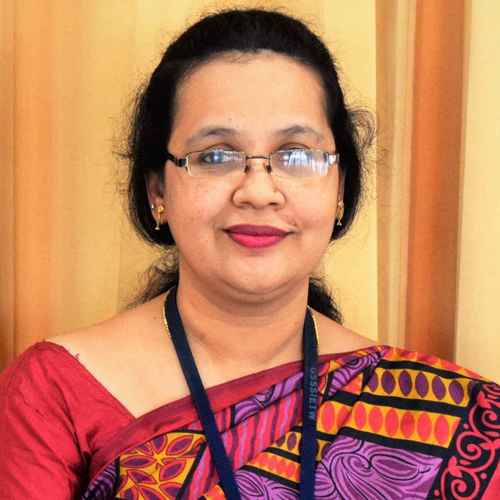
My professionalism and love for the work I do are my biggest strengths. My leadership skills are second to none. I am confident in all aspects and enjoy working under pressure. I have excellent communication skills and look to duly perform my duties in the most effective way possible.
EDUCATION
Ph.D. in Computer Science and Engineering, VTU-RC GSSSIETW, Mysore, 2022
Master of Technology, Software Engineering, Sri Jayachamarajendra College of Engineering, Mysore, 2014.
Bachelor of Engineering, Information Science & Engineering, GSSSIETW, Mysore, 2009.
Diploma in Computer Science & Engineering, Farooqia College, Mysuru, 2000.
RESEARCH INTERESTS
Wireless Network, Internet of Things, Cloud Computing
15
Scopus Publications
Scopus Publications
Image Captioning Made Easy: Leveraging Vision Transformers and GPT-2 to Create Accurate and Coherent Descriptions From Images Ayesha Taranum, Mohammed Ezhan AI Based Data Mobility and Intelligent Modeling for Smart Cities, 2026 Image captioning, which is the generation of descriptive word text summaries from image content, has drawn considerable interest in computer vision and natural language processing (NLP). This research proposes a Python application that combines Vision Transformers (ViT) and GPT-2 for automatic image captioning. The system employs a pre-trained NLP connect/vit-gpt2-image-captioning model from Hugging Face, coupled with a graphical user interface (GUI) designed using Tkinter. The model efficiently extracts features from images and produces coherent, contextually appropriate captions, showing improvement over conventional Convolutional Neural Network-Long Short Term Memory(CNN-LSTM) based models. This study emphasises the architecture, methodology, and comparison of the system, highlighting its applicability in real-world applications such as visually impaired accessibility, content management, and image retrieval. Performance measurement suggests the model's capacity to produce high-quality captions in an efficient manner.
An Integrated Deep Learning Framework for Diabetic Retinopathy: Channel and Spatial Attention U-Net for Lesion Segmentation and CNN-Based Fundus Image Denoising with Ensemble Feature Classification Dr. Anand M, Dr. Chaya P, Dr. Vishwesh J, Dr. Neethi M V, Dr. Ayesha Taranum, Dr. Pradeep Kumar R International Journal of Drug Delivery Technology, 2026 Diabetic retinopathy is thought to be the primary cause of visual loss. It is a microvascular illness that specifically affects the retina, causing vessel obstruction that deprives the retinal tissues of nourishment. Early detection is key to effective treatment, since advanced stages might result in irreversible blindness or loss of vision. Therefore, efforts are made to build automatic detection systems that would both speed up and lower the cost of the identification process. Our study presents a deep learning architecture based on UNet for the segmentation of blood vessels, exudates, and microaneurysms in diabetic retinopathy. However, because to the small number of credible datasets, the accuracy of the current prediction algorithms is not yet good enough for eye specialists to rely on them as trustworthy diagnosis tools. In addition, a variety of noise kinds are included in the recorded data. Eliminating the noise thus becomes a crucial undertaking for this study. For filtering and classification, we thus looked into an approach that coupled denoising with ensemble-based learning. Noise is identified by residual noise mapping, a feature of CNN-based architecture used for filtering. Using an ensemble classifier, we categorize the features acquired in the following stage, which presents a CNN-based feature extraction model.
Real-time IoT data processing pipelines for reliable and secure remote healthcare monitoring: architecture, challenges, and future innovations Bhuvaneswari B, Ayesha Taranum, Sireesha G EPJ Web of Conferences, 2025 The rapid growth of Internet of Things (IoT) technologies is fundamentally transforming real-time data collection, transmission, and analytics across multiple sectors, with healthcare emerging as one of the most significantly impacted domains. In modern smart healthcare environments, a network of interconnected sensors continuously gathers critical patient data, such as vital signs and physiological parameters, which are then transmitted securely over wireless communication channels. This data flows into robust backend systems where it undergoes cleaning, validation, and preprocessing before being analyzed either in the cloud or at the network edge, enabling rapid, actionable insights. The paper also addresses important privacy and ethical considerations related to patient data security, highlighting the need for compliance with regulatory standards. Looking ahead, the study anticipates advances driven by artificial intelligence (AI) and edge computing technologies that will enhance predictive diagnostics and provide ultra-responsive, privacy-preserving analytics. The results underscore that comprehensive, well-architected IoT pipelines form the backbone of effective real-time healthcare monitoring systems, ultimately leading to improved patient outcomes and the advancement of digital healthcare infrastructures.
Enhancing Stroke Diagnosis: A Deep Learning Approach to Analyse Neuroimages Bhavya Dechamma K S, Ayesha Taranum Icrteect 2025 2nd International Conference on Recent Trends in Electrical Electronics and Computing Technologies, 2025 A stroke is a serious neurological emergency that needs to be treated right away for the best possible outcome for the patient. In this work, a novel deep learning technique for automatically classifying strokes from magnetic resonance imaging (MRI) figures is presented. In order to classify brain MRI images into three groups-Ischemic stroke, Haemorrhagic stroke, and normal brain tissue---created a improved VGG16 convolutional neural network (CNN) architecture. For real-time clinical decision support, the suggested system is implemented via a Flask-based web application and integrates transfer learning methodologies. The trials show that this technique works very well, with an accuracy of 99.11%, a precision of 99.13%, a recall of 99.11%, and an Fl-score of 99.11%. The system can process an image in an average of0.7 seconds, which makes it good for use in medical emergencies. This study adds to the growing field of Al-assisted medical diagnosis by giving doctors a useful, quick, and easy-to-use tool for finding strokes that can help them in places where resources are limited.
Barriers to Integrating AI in Curriculum for Enhanced Engineering Education: A Fuzzy ISM Approach , Arun C Dixit, Prakasha K N, , Harshavardhan B, , Anand A, , Ayesha Taranum, and Journal of Engineering Education Transformations, 2025 Recent technological advancements have significantly impacted various sectors, including education. Among these, Artificial Intelligence (AI) stands out as a transformative force, redefining both industry practices and academic disciplines. Incorporating AI into engineering education is essential to equip students with the skills needed to navigate the complexities of the modern, technology-driven job market. This study seeks to uncover and analyze the obstacles to incorporating AI into engineering curricula through a Fuzzy Interpretive Structural Modeling (ISM) method. A thorough review of existing literature, along with open ended surveys and semi-structured interviews with stake holders helped identify eight significant barriers: Curriculum Rigidity, Faculty Expertise, Resource Limitations, Resistance to Change, Interdisciplinary Collaboration, Student Preparedness, Industry Collaboration, and Ethical and Societal Concerns. The Fuzzy ISM method facilitated the creation of a Structural Self- Interaction Matrix (SSIM), an Initial Fuzzy Reachability Matrix (IFRM), and a Final Fuzzy Reachability Matrix (FFRM), which revealed the relationships and hierarchical structures among these barriers. Further exploration with MICMAC categorizes the barriers according to their influence (driving power) and their susceptibility (dependence). The findings indicated that Curriculum Rigidity and Student Preparedness are both highly influential and dependent, whereas Ethical and Societal Concerns are relatively isolated. This study provides a structured framework for identifying and overcoming the challenges of integrating AI into engineering education, offering critical insights for both educators and decision-makers. By strategically prioritizing and tackling these barriers, educational institutions can improve their AI curricula, thus better equipping students for future challenges. The research emphasizes the importance of continually revising and assessing the AI integration process to stay aligned with evolving technological trends.
Non-Invasive Anemia Detection using Fingernail and Tongue Images with Medical Datasets and Image Processing V. Janhavi, Ayesha Taranum, N. Sinchana, Gowda C. Shashank, M. Dore, M Chandana Advances in Mechanical Engineering and Material Sciences, 2025 Anaemia is a prevalent global health issue, often diagnosed through invasive blood tests. This study introduces a non-invasive method for detecting anaemia by leveraging fingernail and tongue image datasets. Utilising advanced image processing techniques, we analyse colour variations, texture patterns, and structural features from high-resolution images. Key algorithms include segmentation for isolating regions of interest, feature extraction for identifying haemoglobinrelated characteristics, and machine learning classifiers for predictive modelling. The dataset comprises diverse samples, ensuring robustness and inclusivity. Our method aims to offer a rapid, cost-effective, and painless diagnostic alternative suitable for resource-limited settings. By integrating convolutional neural networks (CNNs), the proposed framework achieves high accuracy in detecting anaemia, correlating image-derived biomarkers with haemoglobin levels. Comparative analysis with traditional diagnostic methods underscores the efficacy and potential of this approach. Future work focuses on enhancing dataset diversity and refining prediction algorithms to improve generalisability. This innovation promotes early detection and proactive anaemia management, revolutionising healthcare accessibility and patient outcomes.
Privacy-Focused Multi-Modal Chatbot—Local Deployment of Llama 3.2 with Speech Recognition Ayesha Taranum, N Vedavathi, V. Gangadikar Samarth, C. Srusti, M. C. Sonal, S Likitha Advances in Mechanical Engineering and Material Sciences, 2025 This project presents the privacy-preserving Local LLM Multimodal Chat Bot which solves the problems of existing cloud-based conversational AI systems. This system does not depend on the use of some external server as other available chatbots but instead is using a locally hosted large language model using the model Llama3.2:1b with an integration in a Flask web application. Its interaction will be multimodal both through text and voice and can use speech recognition by employing the Web Speech API. It offers enhanced privacy, reduced latency, and regulatory compliance, which makes it an ideal candidate for sensitive domains like healthcare, education, and customer support.
Individual Profile Categorization using AI—Age and Gender Classification for Personalized Insights Sara Saju, M.K. Yashas, Prasad R. Shuchika, V. Janhavi, V. Sneha, Ayesha Taranum Advances in Mechanical Engineering and Material Sciences, 2025 The module for identifying gender and estimating age is really important in biometric recognition systems. It helps to automatically and efficiently recognize people using advanced deep learning methods. In this study, we introduce a method based on Convolutional Neural Networks (CNNs) that works in two steps: first, we figure out the person’s gender, and then we estimate their age. This approach makes the most of the way gender and age features relate to each other, which helps improve accuracy in predictions. Our model has impressive results, scoring 95.8% accuracy in gender classification and an average error of just 3.2 years in age estimation, beating other leading methods out there. We also ran a lot of tests on different facial datasets to ensure that our model is reliable and can adapt to various backgrounds and real-life situations. There are many ways to use this system. It can be very useful in security for identifying people, in healthcare for helping manage patients and providing personalized care, and in businesses for creating tailored experiences for customers. We also tackled some common issues in this area, like dealing with differences in datasets and making sure the system works well for many different groups of people. Through careful testing and tweaking, we aim to make biometric recognition technology even more accurate and useful, setting a solid groundwork for future research and real-world use of gender and age estimation systems.
A cloud based interactive framework for emergency medical data sharing Ayesha Taranum, S. Manishankar, K. Padmaja, C. Balarengadurai Recent Trends in Computational Sciences Proceedings of the 4th Annual International Conference on Data Science Machine Learning and Blockchain Technology Aicdmb 2023, 2024 Pandemic bringing a change in the medical system and medical infrastructure. This requires a complete revamping of medical data collections and storage. In such a scenario there has to be a system which enables the efficient transport of a patient to a distant hospital with minimal human support. In such a remote telehealth service, the inclusion of a system which is capable of sending and receiving medical data like live image of patients, X-Rays and multimedia images would result in better and fast pre-hospitalization. In such an emergency situation, the information has to be exchanged between the ambulance and the doctor in the least time possible. An efficient image compression algorithm will ensure the faster communication. The proposed framework is a combination of mobile application an interactive OpenTok API, cloud based platform Heroku and Firebase. The proposed system ensures a dedicated high speed data sharing environment based on cloud and mobile API to make an interactive framework for Healthcare Industry.
An iot enabled smart health care kit for expedite living Reshma Banu, Ayesha Taranum, D. Kirti, Meghana Jagadeesh, K.S. Nagaranjini, N. Thejaswini 2019 International Conference on Intelligent Computing and Control Systems Iccs 2019, 2019