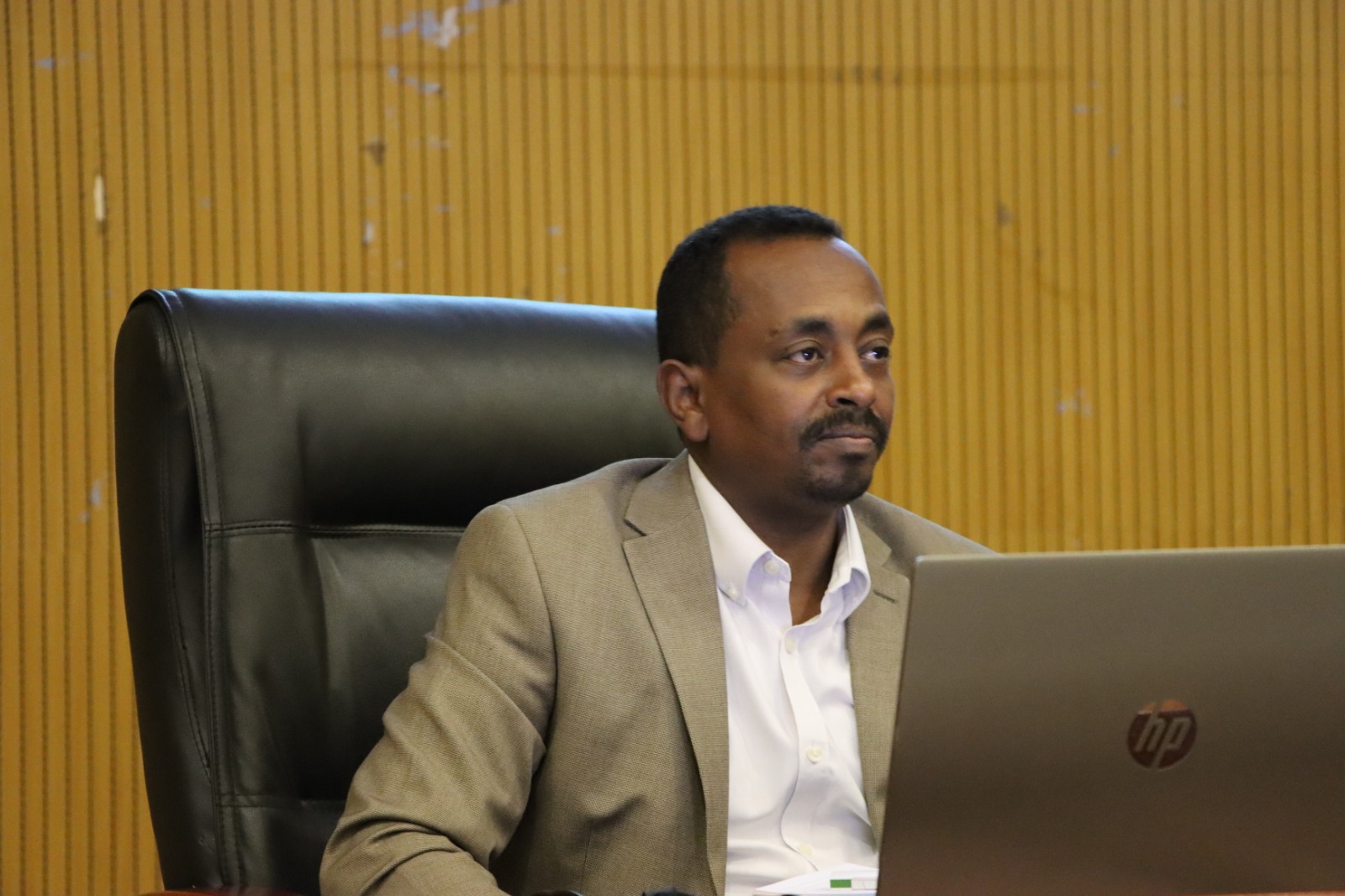
Amged Osman Abdelatif is an Associate Professor at the University of Khartoum, where he had BSc in Civil Engineering (2003), and MSc in Structural Engineering (2008). Amged awarded PhD in Civil Engineering at the University of Nottingham, UK (2013). Also, he is the owner of for construction news, Sudan. Amged’s research focus on numerical modeling of structural problems in addition to the building materials.
EDUCATION
PhD in Civil Engineering, University of Nottingham, UK, 2014
MSc in Structural Engineering, University of Khartoum, Sudan, 2008
MSc in Civil Engineering, University of Khartoum, Sudan, 2003
RESEARCH INTERESTS
Finite Element modelling, Structural Assessment, prestress transfer, Experimental Design, Soil-Structure Interaction, Building Materials
Dataset of 12,161 steel rebar tests from sudanese construction projects (2016-2022) Amged O. Abdelatif, Abdelrahim H. Abdelrahim, Gamar-Aldwla S. Shangray, Mohammed-Alfatih Mustafa, Mustafa M. Abaker, Yahia A. Idris, Abdelrahim M. Yousif Data in Brief, 2026 This data article describes a comprehensive dataset comprising 12,161 individual steel reinforcement bar tensile tests (3,898 test reports) collected from various construction projects across Sudan between 2016 and 2022. The data was systematically extracted from official test reports generated by the University of Khartoum, Faculty of Engineering, Department of Civil Engineering, Material and Structures Testing Laboratory. The purpose of this dataset is to establish a verified, large-scale baseline of material performance for Sudanese reinforcement steel, providing transparent and verifiable raw values of key mechanical and dimensional properties for locally sourced rebars with tested diameters ranging from 8 mm to 32 mm. This data is intended for reuse to conduct rigorous analyses on steel reinforcement quality and characteristic properties in Sudan, offering a unique baseline for regional construction quality and providing a representative performance benchmark applicable to other developing countries.
A novel C1-continuous single-function stress–strain model for concrete in tension: Capturing pre- and post-cracking behavior Amged O. Abdelatif Structural Concrete, 2026 Many models have been introduced to describe the tensile behavior of concrete, yet most of them treat the pre‐cracking and post‐cracking phases separately or rely on multiple functions to capture the full response. This study presents a novel C 1 ‐continuous differentiable single‐function stress–strain model that simultaneously represents both the pre‐cracking regime and the post‐cracking softening phase. The formulation fulfills the fundamental tensile properties of concrete, ensuring a physically consistent description across different concrete types including normal‐weight concrete, lightweight concrete, foamed concrete, and mortar. Results show good agreement with experimental data, with high accuracy achieved for variations in aggregate size, strength grade, and concrete type. In addition, the model can serve as a fitting tool while preserving these fundamental tensile properties, enabling the direct extraction of concrete tensile parameters from experimental data. The proposed approach offers a versatile and physically grounded framework for representing tensile behavior across a wide range of cementitious materials, with practical utility for both experimental interpretation and numerical modeling.
Post-war challenges in Khartoum: Infrastructure, utilities, demolition waste management and sustainable recovery (PWAKIR) Amged O. Abdelatif, Ali H. Bass, Khalid M.A. Al-Haj, Akram A. Elkhalifa, Ala’a S. Alshdiefat Neurosurgery, 2026 Purpose This paper investigates Khartoum’s post-war recovery, focusing on infrastructure damage, urban challenges and waste management. This study aims to inform reconstruction efforts, fostering resilient urban recovery and symbolizing sustainable restoration (PWAKIR) [1]. Design/methodology/approach Staged reinforced concrete building assessments and multi-level bridge inspections are proposed. An emergency transportation plan and phased urban recovery strategy are outlined. A 5Rs demolition waste model (Replace, Reduce, Recover, Rectify and Return) addresses material use. Findings Khartoum sustained extensive infrastructure damage to buildings and critical bridges disrupting transportation. Urban areas are devastated services collapsed informal graveyards emerged intentional urbicide observed. Massive waste complicates reconstruction. Practical implications The findings of this study support safety decisions, rehabilitation and long-term recovery for buildings/bridges. The transportation plan offers strategies for restoring connectivity. Urban recovery addresses utility repairs and graveyard relocation. Waste model aids material recovery. Social implications Conflict displaced 31% of urban households, impacting services and social cohesion. Solutions aim to restore connectivity, mitigate health risks from informal graveyards and rebuild public trust via community engagement. Originality/value Systematic damage assessment for structures and bridges an emergency transportation plan and an urban recovery roadmap are presented. This study proposes an appropriate 5Rs demolition waste management model for sustainable material use.
Concrete compressive strength and concrete core tests data in Sudan between 2009 and 2021 Amged O. Abdelatif, Samah A. Mahgoub, Alhaytham M. Salaheldin, Aljunid M. Aljunid, Lubaba H. Ali, Mohammed H. Alzain, Yahia A. Idris, Abdelrahim M. Yousif Discover Materials, 2025 This data was collected to provide a dataset of concrete compressive strength tests and concrete core tests conducted in Sudan between 2009 and 2021. Currently, no datasets of this kind are available for Sudan. The data has the potential to be used for future research studies on the quality of concrete produced in Sudan. The data was collected from three laboratories in Sudan and organized into two spreadsheets. One spreadsheet contains data on concrete compressive strength tests, including date of test, location, concrete strength of cube samples and average strength. The second spreadsheet contains data on concrete core tests, including date of test, location, concrete strength of core samples, lowest strength, core class, test method used and source of the data. This data may be valuable to other researchers as it can be used to assess the quality of concrete in Sudan and to develop guidelines for the construction industry.
Corrosion Effects on Bond Degradation and Cracking Patterns in Lapped Spliced Joints of Reinforced Concrete Amged O. Abdelatif, Sara E. Onsa, Aya E. Ahmed, Eiman A. Abdelraouf, Razan M. Abdalgader, Mohamed I. Ibrahim, Joško Ožbolt Construction Materials, 2025 This research study aims to enhance the understanding of corrosion behaviour in lapped spliced joints within reinforced concrete structures. Specifically, the effect of corrosion on bond degradation and crack formation is investigated. Accelerated corrosion tests were conducted on two sets of semi-cylindrical samples and half-beam blocks. By applying a constant voltage, the current-time relationship during the corrosion process was obtained. Subsequently, the samples were subjected to pull-out testing to assess their bond strength. Three primary modes of bond failure were observed: pull-out, splitting, or a combination of both. Notably, the results demonstrate that the reduction in bond strength is directly related to the corrosion level, considering factors such as mass loss, section loss, and diameter reduction. Furthermore, a strong correlation exists between corrosion-induced cracks and the weakening of bond strength. These findings align with existing research and enrich the experimental data in the current corrosion database for lap splice joints in reinforced concrete structures.
3D non-linear finite element modeling of one-way RC slab strengthened with concrete overlay Muaaz Sharafaldeen, Amged O. Abdelatif Journal of Engineering and Applied Science, 2024 Reinforced concrete (RC) slabs often require strengthening due to deterioration, increased loads, or design changes. Concrete overlay is a commonly used technique for strengthening, but predicting the behavior of overlays can be challenging. To address this challenge, this study presents a three-dimensional non-linear finite element model using Abaqus/CAE to analyze the structural performance of one-way reinforced concrete (RC) slabs strengthened with concrete overlays. The model considers three different bonding conditions at the interface: friction, epoxy, and shear connectors. The predictions of the model were compared to experimental results, and it was found that the model accurately captures the load–deflection response, cracking behavior, and interfacial slip in the strengthened slabs. Additionally, the model accurately predicts the new structural capacity of the strengthened slabs, showing good agreement with experimental data. These findings offer valuable insights into the effectiveness of concrete overlays as a traditional strengthening technique for RC slabs. Moreover, the developed finite element model provides a useful tool for optimizing the design of these overlays.
Production of Self-Healing Concrete by Bacillus subtilis Spores Immobilized on Sand Using Gum Arabic as an Adhesion Material: Proof of Concept Amged O. Abdelatif, Ahmed A. Ibrahim, Khadija E. Elamin, Adil A. El Hussein, Marmar A. El Siddig Journal of Materials in Civil Engineering, 2022 Production of self-healing concrete involves the immobilization of a bacterium and calcium-based bacterial nutrient on a carrier material before being added to the concrete mixture. The objective of this paper was to test the potential of using gum arabic of Acacia senegal (Hashab) to immobilize Bacillus subtilis on coarse sand for production of self-healing concrete. Dried bacterial spores, gum arabic powder, and calcium lactate were mixed thoroughly in a 1-L flask. The mixture was wetted by adding tap water gradually until spore-coated sand pellets were formed and then left to dry. Three mortar mixtures with different concentrations (2.5%, 5%, and 10%) of spore-coated sand pellets were then prepared and left for 24 h at room temperature. Of these, 12 mortar prisms were cast. Prisms were subjected to three-point load testing under a controlled and careful rate of loading until visible cracks appeared on the surface of the prism. Crack healing was then monitored for 14 days using stereoscopy and a digital image camera under three curing regimes, namely wet, wet–dry cycles, and polyethylene sheets. Results showed that the efficiency of healing increased with an increase in the percentage of spore-coated sand pellets in the mix without causing a significant impact on prisms strength for mixes with 2.5% and 5% of pellets. The results give an evidence to use gum arabic as a novel, abundant, and sustainable material for immobilization of bacteria on sand surface to produce self-healing concrete.
Assessment of wind and solar hybrid energy for agricultural applications in Sudan Zafar A. Khan, Muhammad Imran, Abdullah Altamimi, Ogheneruona E. Diemuodeke, Amged Osman Abdelatif Energies, 2022 In addition to zero-carbon generation, the plummeting cost of renewable energy sources (RES) is enabling the increased use of distributed-generation sources. Although the RES appear to be a cheaper source of energy, without the appropriate design of the RES with a true understanding of the nature of the load, they can be an unreliable and expensive source of energy. Limited research has been aimed at designing small-scale hybrid energy systems for irrigation pumping systems, and these studies did not quantify the water requirement, or in turn the energy required to supply the irrigation water. This paper provides a comprehensive feasibility analysis of an off-grid hybrid renewable energy system for the design of a water-pumping system for irrigation applications in Sudan. A systematic and holistic framework combined with a techno-economic optimization analysis for the planning and design of hybrid renewable energy systems for small-scale irrigation water-pumping systems is presented. Different hybridization cases of solar photovoltaic, wind turbine and battery storage at 12 different sites in Sudan are simulated, evaluated, and compared, considering the crop water requirement for different crops, the borehole depth, and the stochasticity of renewable energy resources. Soil, weather, and climatic data from 12 different sites in Sudan were used for the case studies, with the key aim to find the most robust and reliable solution with the lowest system cost. The results of the case studies suggest that the selection of the system is highly dependent on the cost, the volatility of the wind speed, solar radiation, and the size of the system; at present, hybridization is not the primary option at most of sites, with the exception of two. However, with the reduction in price of wind technology, the possibility of hybrid generation will rise.
Post-war challenges in Khartoum: Infrastructure, utilities, demolition waste management and sustainable recovery (PWAKIR) AO Abdelatif, AH Bass, KMA Al-Haj, AA Elkhalifa, AS Alshdiefat International Journal of Disaster Resilience in the Built Environment 17 (3 … , 2026 2026
A flood vulnerability index and decision tree framework for building resilience in Sudan R Yousif, A SirElkhatim, A Azmi, MK Osman, AO Abdelatif Progress in Disaster Science, 100577 , 2026 2026
A novel C 1 ‐continuous single‐function stress–strain model for concrete in tension: Capturing pre‐ and post‐cracking behavior AO Abdelatif Structural Concrete , 2026 2026
Dataset of 12,161 Steel Rebar Tests from Sudanese Construction Projects (2016-2022) AO Abdelatif, H AbdelrahimAbdelrahim, GAS Shangray, MA Mustafa, ... Data in Brief, 112469 , 2026 2026
Concrete compressive strength and concrete core tests data in Sudan between 2009 and 2021 AO Abdelatif, SA Mahgoub, AM Salaheldin, AM Aljunid, LH Ali, MH Alzain, ... Discover Materials 5 (1), 151 , 2025 2025
Corrosion effects on bond degradation and cracking patterns in lapped spliced joints of reinforced concrete AO Abdelatif, SE Onsa, AE Ahmed, EA Abdelraouf, RM Abdalgader, ... Construction Materials 5 (1), 8 , 2025 2025 Citations: 1
3D non-linear finite element modeling of one-way RC slab strengthened with concrete overlay M Sharafaldeen, AO Abdelatif Journal of Engineering and Applied Science 71 (1), 83 , 2024 2024 Citations: 1
Dynamic response of dancing floor: An example of designing RC floor of a wedding hall AMA Mustafa, AO Abdelatif, WI Hamad Journal of Materials and Engineering Structures «JMES» 10 (4), 513-523 , 2023 2023
Structural Strength Classes of Three Types of Woods in Sudan RA Abdrahman, AO Abdelatif, AMA Abdalla University of Nyala Journal for Applied Sceince 1 (6), 14-18 , 2023 2023
Production of Self-healing Concrete using Gum Arabic for Immobilizing of Bacterial Spores on Sand AO Abdelatif, AA Ibrahim, KE Elamin, AA El Hussein, MA El Siddig Qatar University Press , 2023 2023
Modeling Short-Term Deflection of Reinforced Concrete Slabs using the Layered Approach AA Fageer, SK Abdelgadir, AA Abdelgadir, AM Elbagir, MA Kabosh, ... Qatar University Press , 2023 2023 Citations: 1
Enhancing Peace and Governance through Appropriate Technology: Reimagining Sustainable Community Wellbeing in an Era of Global Climate Change G Kadoda, T Mutanda, AO Abdelatif, M Adam, J Gwamuri, B Stephenson, ... 2022
Production of Self-Healing Concrete by Bacillus subtilis Spores Immobilized on Sand Using Gum Arabic as an Adhesion Material: Proof of Concept AO Abdelatif, AA Ibrahim, KE Elamin, AA El Hussein, MA El Siddig Journal of Materials in Civil Engineering 34 (11), 04022310 , 2022 2022 Citations: 4
Structural characterization of three types of woods in Sudan:(Anogeissus leiocarpus) Sahab,(Balanites aegyptiaca) Heglieg, and (Sclerocarya birrea) Humeid AO Abdelatif, RA Abdrahman, AMA Abdalla Structures 43, 351-357 , 2022 2022 Citations: 4
Production of Self-healing Concrete using Gum Arabic and Bacteria AO University of Khartoum, Adil A. El Hussein, Marmar A. El Siddig, ABDELATIF 2022
Impact of Grand Ethiopian Renaissance Dam (GERD) on manufacturing of the traditional fired clay bricks in Sudan AA Glaladein, AO Abdelatif, RF Digna, GM Abdo University of Khartoum engineering journal 12 (1) , 2022 2022 Citations: 4
Assessment of wind and solar hybrid energy for agricultural applications in Sudan ZA Khan, M Imran, A Altamimi, OE Diemuodeke, AO Abdelatif Energies 15 (1), 5 , 2021 2021 Citations: 48
Assessing Crop Water Requirements and a Case for Renewable-Energy-Powered Pumping System for Wheat, Cotton, and Sorghum Crops in Sudan ZA Khan, M Imran, J Umer, S Ahmed, OE Diemuodeke, AO Abdelatif Energies 14 (23), 8133 , 2021 2021 Citations: 23
Structural response of multistory RC buildings to excavation of a disposal well AO Abdelatif, A Franza Journal of Performance of Constructed Facilities 35 (4), 04021038 , 2021 2021 Citations: 3
Assessment of Wind and Solar Hybrid Energy for Agricultural Applications in Sudan. Energies 2022, 15, 5 ZA Khan, M Imran, A Altamimi, OE Diemuodeke, AO Abdelatif s Note: MDPI stays neutral with regard to jurisdictional claims in published … , 2021 2021 Citations: 2
MOST CITED SCHOLAR PUBLICATIONS
A simplified elastic analysis of tunnel-piled structure interaction A Franza, AM Marshall, T Haji, AO Abdelatif, S Carbonari, M Morici Tunnelling and Underground Space Technology 61, 104-121 , 2017 2017 Citations: 163
Modelling the prestress transfer in pre-tensioned concrete elements AO Abdelatif, JS Owen, MFM Hussein Finite Elements in Analysis and Design 94, 47-63 , 2015 2015 Citations: 115
Assessment of wind and solar hybrid energy for agricultural applications in Sudan ZA Khan, M Imran, A Altamimi, OE Diemuodeke, AO Abdelatif Energies 15 (1), 5 , 2021 2021 Citations: 48
Assessing Crop Water Requirements and a Case for Renewable-Energy-Powered Pumping System for Wheat, Cotton, and Sorghum Crops in Sudan ZA Khan, M Imran, J Umer, S Ahmed, OE Diemuodeke, AO Abdelatif Energies 14 (23), 8133 , 2021 2021 Citations: 23
3D finite element modelling of corrosion of lap splice joints in concrete AO Abdelatif, J Ožbolt, S Gambarelli Construction and Building Materials 169, 124-131 , 2018 2018 Citations: 21
Modeling and parametric study of the reanchorage of ruptured tendons in bonded posttensioned concrete AO Abdelatif, JS Owen, MFM Hussein Journal of Structural Engineering 143 (12), 04017162 , 2017 2017 Citations: 13
Development of a coupled centrifuge-numerical model to study soil-structure interaction problems A Franza, S Idinyang, C Heron, AM Marshall, AO Abdelatif Proc., 3rd European Conf. on Physical Modelling in Geotechnics (Eurofuge … , 2016 2016 Citations: 12
Re-anchorage of a ruptured tendon in bonded post-tensioned concrete beams: Model validation AO Abdelatif, JS Owen, MFM Hussein Key Engineering Materials 569, 302-309 , 2013 2013 Citations: 10
Flexural Strengthening of One-Way Slabs using Concrete Overlay AO Abdelatif, A A. Wahab Sudan Engineering Society Journal 62 (1), 17-21 , 2016 2016 Citations: 9
Foundations, design, and dynamic performance of wind turbines: overview and challenges in Sudan RA Hamza, AO Abdelatif FES Journal of Engineering Sciences 9 (1), 96-103 , 2020 2020 Citations: 8
Modeling the re-anchoring of a ruptured tendon in bonded post-tensioned concrete AO Abdelatif, JS Owen, MFM Hussein Bond in concrete, 233-240 , 2012 2012 Citations: 7
Production of Self-Healing Concrete by Bacillus subtilis Spores Immobilized on Sand Using Gum Arabic as an Adhesion Material: Proof of Concept AO Abdelatif, AA Ibrahim, KE Elamin, AA El Hussein, MA El Siddig Journal of Materials in Civil Engineering 34 (11), 04022310 , 2022 2022 Citations: 4
Structural characterization of three types of woods in Sudan:(Anogeissus leiocarpus) Sahab,(Balanites aegyptiaca) Heglieg, and (Sclerocarya birrea) Humeid AO Abdelatif, RA Abdrahman, AMA Abdalla Structures 43, 351-357 , 2022 2022 Citations: 4
Impact of Grand Ethiopian Renaissance Dam (GERD) on manufacturing of the traditional fired clay bricks in Sudan AA Glaladein, AO Abdelatif, RF Digna, GM Abdo University of Khartoum engineering journal 12 (1) , 2022 2022 Citations: 4
Challenges facing building information modelling in construction industry in sudan A Ibrahim, AO Abdelatif Proceedings of the International Conference on Civil Infrastructure and … , 2020 2020 Citations: 4
Concrete mix design and aggregate tests data between 2009 and 2017 in Sudan AO Abdelatif, AMY Shaddad, MB Fathallah, MS Ibrahim, MH Twfeeq Data in brief 21, 146 , 2018 2018 Citations: 4
Structural response of multistory RC buildings to excavation of a disposal well AO Abdelatif, A Franza Journal of Performance of Constructed Facilities 35 (4), 04021038 , 2021 2021 Citations: 3
Stress distribution in thick‐walled cylinder due to non‐uniform radial pressure on the example of reinforcement corrosion in concrete AO Abdelatif, J Ožbolt, A Omara Materials and Corrosion 71 (10), 1660-1666 , 2020 2020 Citations: 3
A novel test method for tendon re-anchorage in bonded post tensioned concrete using ESPI full field measurement AO Abdelatif, JS Owen, MFM Hussein Materials and Structures 53 (3), 59 , 2020 2020 Citations: 3
Assessment of Wind and Solar Hybrid Energy for Agricultural Applications in Sudan. Energies 2022, 15, 5 ZA Khan, M Imran, A Altamimi, OE Diemuodeke, AO Abdelatif s Note: MDPI stays neutral with regard to jurisdictional claims in published … , 2021 2021 Citations: 2
RESEARCH OUTPUTS (PATENTS, SOFTWARE, PUBLICATIONS, PRODUCTS)
University of Khartoum, Adil A. El Hussein, Marmar A. El Siddig, ABDELATIF, A. O., 2022. Patent No. 4455: Production of Self-healing Concrete using Gum Arabic and Bacteria, Ministry of Justice, Sudan