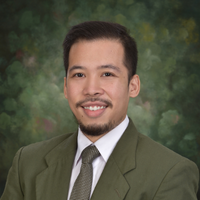
Aron (he/his) is a registered psychometrician, researcher, and currently a PhD Psychology student at the Australian National University. His research passion lies in Critical Health Psychology, Cross-Cultural Psychology, Stigma, HIV/AIDS, LGBTQIA+, and Health Communication.
His dedication aims to reduce health disparities and improve outcomes for marginalized groups. Through his research, Aron seeks to understand the experiences of indigenous students, COVID-19-affected individuals, those with HIV, and LGBTQIA+ community members. By identifying barriers and proposing evidence-based strategies, he works towards equitable healthcare systems and enhanced well-being.
Aron actively collaborates in academia, sharing expertise at conferences and scholarly forums, driven by a commitment to advancing knowledge and advocating for social change.
EDUCATION
Doctor of Philosophy in Psychology, The Australian National University (2023-present)
Master of Arts in Clinical Psychology, University of San Carlos (2021)
Bachelor of Science in Psychology—magna cum laude, University of Southern Philippines Foundation (2016)
RESEARCH INTERESTS
Critical Health Psychology, Cross-Cultural Psychology, Stigma, HIV, Health Communication
11
Scopus Publications
Scopus Publications
The Management of Social Standing: Characterizing the Influence of HIV Stigma on HIV Talk and Testing Behavior in Philippine Key Populations Using a Grounded Theory Approach Gideon Livingstone P. Bendicion, Augil Marie Q. Robles, Moniq Muyargas, Timoteo Balensoy, Bea Izabeaux T. Mendoza, Kiara Angela A. Sarmiento, ML Demaisip Farinas, Aron Harold G. Pamoso, Angelique Pearl Virtue P. Villasanta, Just Lynn D. Panaligan, Joseph Eleut G. Violago, Ver Reyes, Jonathan Fontilla Journal of Health and Social Behavior, 2026 We characterize the way human immunodeficiency virus (HIV) stigma hinders HIV conversations and testing. Using grounded theory principles, we analyzed in-depth interviews of the experiences of select Philippine key populations (groups with high HIV burden) and their families: 19 men who have sex with men (KPM), 16 transgender women (KPW), and 16 parents of KPM/W. Results show how KPM/W protect the state of being respected by others (management of social standing), a task they engage in by strategically modulating behavior in different life domains, including when considering HIV conversations and testing. Our results specify the management of social standing as an object being threatened by stigma and as a process making KPM/W behavior susceptible to the influence of HIV stigma, even for KPM/W who may not possess the mark of positive serostatus. This raises questions about the theorizing of stigma, which traditionally has focused on the susceptibility of marked but not unmarked individuals.
Finding Lighthouse in the Raging Sea of Expulsion: Upstream, Midstream, and Downstream Influence on LGBTQ+ Mental Health in Malaysia Jun Wei Liow, Aron Harold G. Pamoso, Kyle Tan Journal of Lgbtq Issues in Counseling, 2026 Drawing textual survey data from 398 LGBTQ+ people in Malaysia, our social determinants of mental health (SDMH)-centered analysis identified two overarching themes: (1) "I don't belong here nor within myself, " reflecting systemic erasure, identity suppression, and relational alienation; and (2) "They hold space for me to be myself, " highlighting interpersonal affirmation , emotional safety, and indirect forms of recognition-supported healing. The themes illustrate how relational dynamics shape experiences of identity affirmation, intracommunity exclusion, emotion suppression, and indirect forms of affirmation as subtle but crucial mental health resources. Our findings call for culturally attuned, relationship-centered counseling practices for LGBTQ+ individuals in Malaysia.
An exploratory mapping LGBTQ+ research and intervention priorities in Southeast Asia (2025–2035) Kyle Tan, Andrian Liem, Aron Harold G. Pamoso, Viet D. M. Trinh, Muhamad Alif Bin Ibrahim, Nanchatsan Sakunpong Psychology and Sexuality, 2026 Extant literature remains fragmented and does not inclusively represent the lived realities and needs of LGBTQ+ populations in Southeast Asia. This study aimed to identify LGBTQ+ research and intervention priorities in this region through an anonymous survey with researchers, community workers, and advocates conducted from May to August 2025 (N = 142). Participants represented 11 Southeast Asian countries, with the highest proportions from the Philippines (30.3%), Malaysia (28.9%), Thailand (19.7%), Vietnam (16.9%), and Singapore (12.7%). Participants rated 14 issues affecting LGBTQ+ communities using a three-point importance scale and identified their top priority concern. The results revealed that mental health issues and suicidality (81.0%), training health professionals about LGBTQ+ health (78.9%), and HIV/AIDS (70.9%) were most frequently rated as ‘very important’ regional priorities. Community workers were more likely to prioritise mental health, police mistreatment, and employment issues. When prompted to select one issue as the most urgent to address, participants equally prioritised criminalising laws and mental health issues (20.0% respectively) . Country-specific primary priorities varied significantly criminalising laws (Malaysia), mental health (Singapore and Thailand), health professional training (the Philippines), and marriage rights (Vietnam). These findings provide a preliminary framework for developing LGBTQ+ research and intervention agendas across Southeast Asia, both at the regional and country levels.
“It felt like walking in the dark”: A Collaborative Autoethnography on the Challenges of Conducting LGBTQ+ Research in Southeast Asia Muhamad Alif Bin Ibrahim, Aron Harold G. Pamoso, Quynh Truong, Jun Wei Liow, Junix Jerald I. Delos Santos, Rattanakorn Ratanashevorn, Timo T. Ojanen, Nay Lin Htike, Lita Widyo Hastuti, Andrian Liem, Kyle Tan Journal of Homosexuality, 2026 The extant literature has shown that lesbian, gay, bisexual, transgender, and queer (LGBTQ+) communities face considerable barriers in pursuing higher education and achieving their academic aspirations. To date, a critical gap remains in scholarly understandings of the enablers and barriers faced by researchers conducting LGBTQ+ research in Southeast Asia (SEA). This study aims to illuminate the challenges of conducting LGBTQ+ research in Indonesia, Malaysia, Myanmar, the Philippines, Singapore, Thailand, and Vietnam. As researcher-participants in this study, we conducted a Collaborative Autoethnography, critically reflecting on our work and research with LGBTQ+ communities across these SEA countries. Data were analyzed using Reflexive Thematic Analysis. Through four themes, we illustrated the significant barriers encountered as we navigated the social, legal, and political contexts of SEA societies and academia. The neoliberal Western gaze in SEA academia further compounded these challenges. We grappled with how to garner trust from and represent our respective LGBTQ+ communities in our research. We also faced threats that negatively impacted our overall well-being. Our study underscores the urgency of creating safe spaces for LGBTQ+ researchers and their communities to collaborate on meaningful research agendas and interventions. Collaborative, multisectoral partnerships from various stakeholders can nurture an equity and social justice-based LGBTQ+ research agenda in the region.
“Because of HIV, It Opened My Mind”: Intersectional Stigma Experiences Among Filipino Gay and Bisexual Men Living With HIV Aron Harold G. Pamoso, Brett Scholz, Austin Ferolino Qualitative Health Research, 2025 Previous work has demonstrated that gay, bisexual men, and other men who have sex with men (GBM) living with HIV are likely to experience intersectional stigma. However, mainstream systems often fail to recognize how power and privilege shape this experience. Such a complex psychological phenomenon requires an in-depth reflective inquiry that acknowledges individuals as experts in their own experiences. To explicate this matter, this study aimed to develop an understanding of how intersectional stigma impacts the experiences of GBM living with HIV and to illuminate how contexts (un)fuel inequities. The semi-structured interviews with five Filipino GBM living with HIV were analyzed using interpretative phenomenological analysis (IPA). Exploration of their accounts elucidated how cultural elements fueled power dynamics and privilege, which in turn shaped intersectional stigma and their experiences. Narratives accentuated how Filipino GBM living with HIV situate themselves from victims to agents of change who empower and liberate others in the community. Insights from this study underscore the critical role of collective actions in bridging gaps in inequities and guiding the improvement of policies and interventions that are well-suited to the context and culturally appropriate for people living with HIV and other multiply marginalized populations.
“I don’t understand why we have to favor just one ethnicity”: Stigma and coping experience perspectives from ethnicminority students in Indonesia, Malaysia, and the Philippines Aron Harold G Pamoso, Andrian Liem, Rozel Balmores-Paulino, Syurawasti Muhiddin, May Kyi Zay Hta, Faridah Kristi Wetherick, Jeremiah Paul C Silvestre, Indra Y Kiling Culture and Psychology, 2025 Despite the growing movement towards inclusivity, the voices of ethnic minority students (EMS) in Southeast Asia (SEA) remain underrepresented, resulting in marginalization that hinders their academic pursuits, and well-being. However, past research often overlooked experiences of EMS and the role of sociocultural elements that drive oppression. This study seeks to explore the experience of stigma among EMS in Indonesia, Malaysia, and the Philippines. We conducted in-depth, semi-structured interviews with 37 EMS from university-based student organizations and analyzed them using the KJ method. The results indicate that sociocultural elements significantly influence their experiences, ranging from subtle microaggressions to overt acts of harm and violence. Furthermore, these encounters necessitate a variety of strategies, including coping mechanisms, stigma management, and the management of social standing, which characterize our understanding of how they navigate stigmatization. The findings illuminate the intricate interplay between socio-cultural elements and stigma among EMS in SEA, underscoring the urgency for more inclusive policies in higher education, facilitated by community-led initiatives, allyship, and activism.
The whole is greater than the sum of its parts: Integrating syndemics and intersectionality in tackling the HIV and mental health epidemics among Filipino gay and bisexual men Aron Harold G. Pamoso, Mary Lou Rasmussen, I. Nyoman Sutarsa, Brett Scholz Plos Mental Health, 2025 Insufficient attention has been given to the social aspects of HIV and mental health in the Philippines despite their profound impact on Filipinos, particularly gay and bisexual men and other men who have sex with men. Past evidence shows that these health conditions are intertwined, amplified by the combined impact of power and oppression. Yet, scholarly works, programs, and interventions focusing on understanding the social, structural, and political aspects of HIV and mental health are still in the early stages in the Philippines, calling for urgency in tackling the ongoing epidemics these men face. Therefore, we have developed this essay with the following objectives: 1) to provide context for the overlapping of the two health epidemics faced by Filipino gay and bisexual men and men who have sex with men; 2) to illustrate how critical perspectives such as syndemics and intersectionality can deepen our understanding of these conditions; 3) to showcase strategies for integrating syndemics and intersectionality into research and practice. Our aim is to foster the discussion on the use of critical perspectives in addressing health conditions in the Philippines and to advocate for comprehensive, inclusive, and culturally informed research, programs, and interventions for these men in the broader Filipino community.
The importance of going beyond consumer or patient involvement to lived experience leadership Brett Scholz, Stephanie Stewart, Aron Pamoso, Sarah Gordon, Brenda Happell, Bagus Utomo International Journal of Mental Health Nursing, 2024 It has been argued that we have entered a ‘participatory era’ in mental health research and service delivery (e.g. Bromley et al., 2017, p. 295; Siffels et al., 2021). Claims we are experiencing a ‘participatory turn’ are also borne out by more general publication trends. Figure 1 presents a graph of data from Scopus depicting the number of publications about mental health each year that reference common lived experience engagement terms. We celebrate these trends to the extent they reflect a growing interest in how mental health services and systems might beneficially incorporate the input of people who can provide experiential expertise. However, we are also concerned that a growing emphasis on ‘participation’ may lead to exclusion of people with lived experience from higher levels of decision-making, erasure of the history of lived experience advocacy and contribute to the appropriation of lived experience expertise. To suggest that we are just now entering a participatory era ignores (a) the decades of history of lived experience participation that people with experiential expertise fought to initiate (Beresford, 2020). Furthermore, to embrace widespread ‘settling’ for participatory approaches rather than bringing about lived experience leadership in the health sector risks ongoing co-optation of knowledge and tokenistic practices (Scholz, 2022). Indeed, the academic literature has called for lived experience leadership rather than a focus on participation for at least two decades (Gordon, 2005) and advocacy continues today. One of the key findings of our 2016 systematic review of consumer leadership in mental health organisations was that most evidence of lived experience leadership was about organisations run by people with lived experience, with little evidence about lived experience leadership at the higher levels of the health sector or in ‘mainstream’ mental health organisations (Scholz et al., 2017). Participation alone does not go far enough towards redressing epistemic injustice brought about by excluding people with lived experience from control over mental health systems or to realising the benefits of their inclusion (Scholz, 2022). Nonetheless, institutions and organisations continue to talk about participation frameworks and initiatives as ‘novel’. For example, Cochrane recently released what they describe as a ‘bold new framework for consumer (patient, carer, and public) engagement and involvement’ (Cochrane, 2022). Such celebration of a zeitgeist of participation obscures the ongoing undervaluing of lived expertise, and contributes to systems, organisations and projects being stuck in the rhetoric about participation without ever achieving participatory values. Advocates for lived experience leadership argue that people with experiential expertise ought to be ‘involved in, or leading’ agenda-setting or decision-making processes themselves (Roper et al., 2018, p. 2), rather than merely supporting or informing others' agendas or decision-making (as in participatory, engagement or involvement approaches). As instances of policy, services, research and education agendas being set by people with experiential expertise remain scarce, claims that we are in a ‘participatory era’ may overinflate the extent to which people with lived experience are truly partners in or leaders of decision-making, and obscure the fact that experiential expertise is still undervalued (Scholz et al., 2018). Earlier versions of this editorial were presented at the National Cancer Survivorship Conference in Tarntanya/Adelaide in March 2023, at the conference of the International Society of Critical Health Psychology in Rancagua, Wallmapu, in July 2023, and in research seminars to the Victorian Comprehensive Cancer Centre Consumer Engagement in Research Community of Practice in Naarm/Melbourn, the Clinical and Health Sciences Academic Unit in Tarntanya/Adelaide, and the Flinders Health & Medical Research Institute in Tartanya/Adelaide. The authors would like to thank those who organized, attended, and engaged with these presentations. None. The authors have no conflicts of interest to declare. Data sharing is not applicable to this article as no new data were created or analyzed in this study.
The Relationship between Stigma and Social Support to Quality of Life in Indonesia and the Philippines during the COVID-19 Pandemic Rozel S. Balmores-Paulino, Angela Oktavia Suryani, May Kyi Zay Hta, Aron Harold G. Pamoso, Andrian Liem, Rachel Sing-Kiat Ting International Perspectives in Psychology Research Practice Consultation, 2023 The importance of quality of life (QoL) was magnified as countries faced the COVID-19 pandemic. This study aimed to determine the relationship between COVID-19-related stigma and preferred social support to QoL in two Southeast Asian countries. This paper examined (1) the differences in the physical and psychological dimensions of QoL (QoL-PSY, QoL-PHL), COVID-19 perceived stigma (PcS) and public stigma (PS), and preferred social support (PSS) between Indonesia (IDN) and the Philippines (PHP); (2) the associations between PS and PcS with QoL; (3) the associations between PSS and QoL; and (4) the role of the country as a moderator between the relationship of PcS and PSS to QoL. Data were collected from 992 participants (PHP = 564; IDN = 428) through an online survey (April–June 2022) and analyzed through multivariate analysis of covariance (MANCOVA), hierarchical multiple regression, and multiple-group path analysis. After controlling for potential covariates, we found significant country differences in QOL and PSS, where Indonesia's estimated means for these two measures were significantly higher than the Philippines. Both domains of PSS had significant positive associations with both QOL domains in the merged sample; similarly, PcS had significant negative associations with both domains of QOL. Path analysis also showed similar significant predictors (PSS and PcS) associated with QoL for both countries with minor coefficient variations, except PS and PSS-ST. The findings show a similar relationship pattern between perceived stigma and social support (strong ties) to the QoL in Indonesia and the Philippines. Cultural interventions to mitigate perceived stigma were suggested in healthcare settings.
A Multinational Study of Patient Preferences for How Decisions Are Made in Their Care Rachyl Pines, Nicola Sheeran, Liz Jones, Annika Pearson, Aron H. Pamoso, Yin (Blair) Jin, Maria Benedetti Medical Care Research and Review, 2023 Inadequate consideration has been given to patient preferences for patient-centered care (PCC) across countries or cultures in our increasingly global society. We examined what 1,698 participants from the United States, Hong Kong, Philippines, and Australia described as important when making health care decisions. Analysis of frequencies following directed content coding of open-ended questions revealed differences in patients’ preferences for doctor behaviors and decision-making considerations across countries. Being well informed by their doctor emerged as most important in decision-making, especially in Hong Kong. Participants in Australia and the United States wanted their doctor to meet their emotional needs. The safety and efficacy of treatments were the most common consideration, especially for Hong Kong. Findings suggest that doctors should focus on information exchange and identifying patient concerns about efficacy, lifestyle impact, cost, and recovery speed. Rather than assuming patients prefer shared decision-making, doctors must assess patient’s decision control preferences.