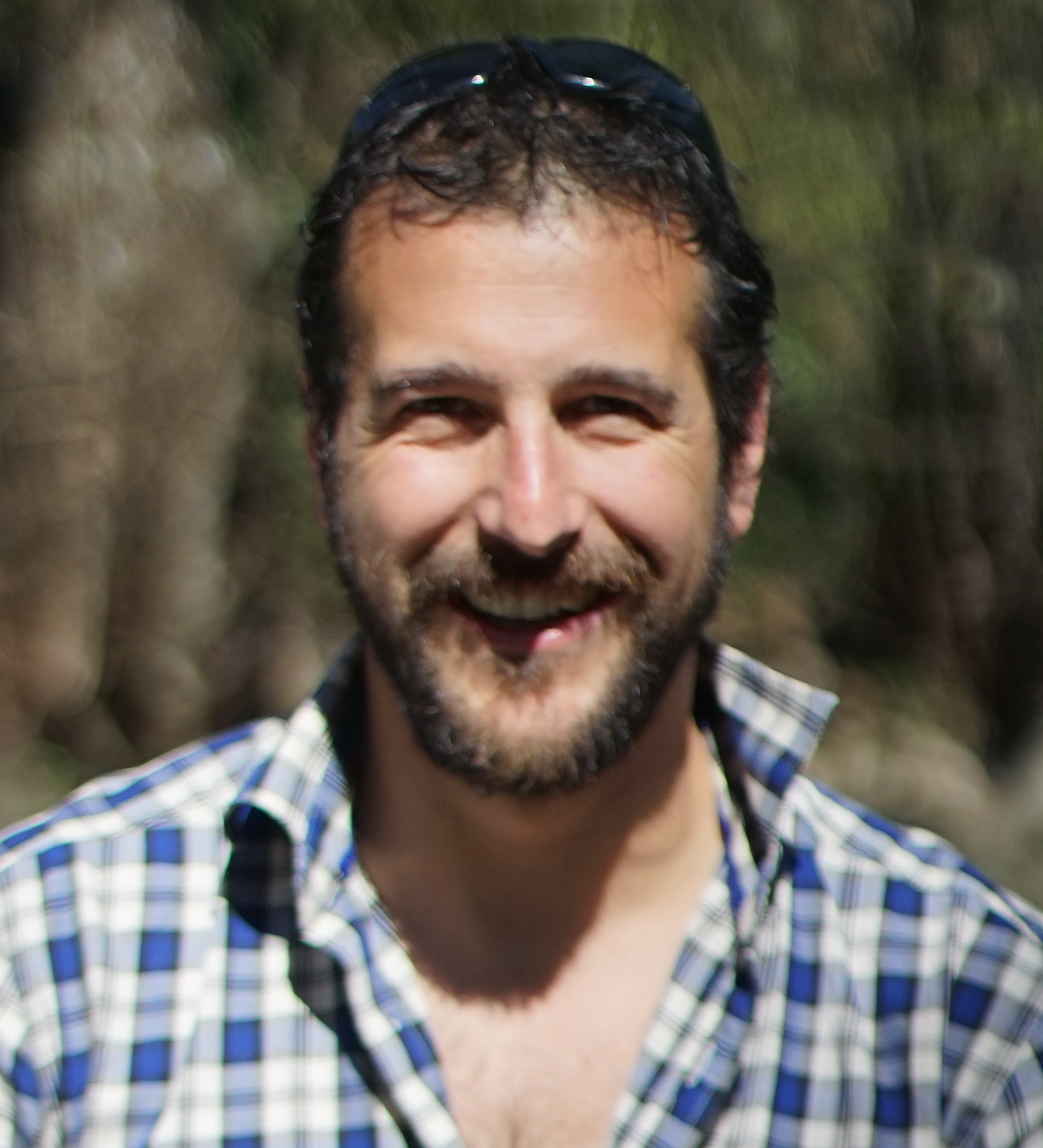
I am a conservation ecologist with broad interests in spatial ecology, macroecology, biodiversity conservation and global change biology. My research is focused on the factors that determine species distributions, abundances and extinctions, with an emphasis on the effect of human influence on species and interactions among them.
My main goal is the conservation of biodiversity through the combination of ecological and social views, both vital to understand the actual biodiversity crisis.
EDUCATION
PhD Biología Integrada - Universidad de Sevilla 2022
MSc Biodiversity and Conservation Biology - Universidad Pablo de Olavide 2011
Expert in Geographic Information Systems - Universidad Internacional de 2010 Andalucía
Graduado en Biología - Universidad de Sevilla 2010
RESEARCH INTERESTS
Biodiversity, Conservation biology, Global Change Biology, Macroecology, Spatial Ecology.
15
Scopus Publications
248
Scholar Citations
9
Scholar h-index
9
Scholar i10-index
Scopus Publications
A comprehensive, multi-method dataset of plant-frugivore interactions in a Mediterranean hotspot Eva Moracho, Juan Miguel Arroyo, Blanca Arroyo-Correa, Gemma Calvo, Pablo Homet, Jorge Isla, Miguel Jácome-Flores, Irene Mendoza, Elena Quintero, Francisco Rodríguez-Sánchez, Pablo Villalva, Pedro Jordano Scientific Data, 2026 Mutualistic plant-animal interactions for seed dispersal are crucial for vegetation dynamics, benefiting over half of the world's plant species. Beyond the tropics, the Mediterranean biome harbors the highest proportion of species adapted to endozoochory, yet major gaps remain in quantifying interaction diversity in these biodiversity-rich areas and their links to ecosystem functioning. High-resolution, quantitative interaction data are essential not only to fill these gaps but also to enable large-scale ecological modeling of species interactions across biomes. Here, we present the FRUGivory INTegration (FRUGINT) dataset - an extensive collection of quantitative frugivory interactions and associated species traits from a Mediterranean biodiversity hotspot in southwestern Spain. By integrating six complementary sampling methods (camera trapping, continuous-monitoring cameras, DNA-barcoding, mist-netting, direct observation and track records) across multiple years, the dataset overcomes limitations of sampling biases, variable effort and spatio-temporal heterogeneity, providing a comprehensive picture of plant-frugivore interactions across the region. Based on a total of 37,923 interaction records and 481 unique pairwise interactions, involving 26 fleshy-fruited plant species present in Doñana and 78 frugivorous vertebrate species, FRUGINT yields estimates of regional-scale plant-frugivore networks based on pairwise interaction probabilities. The dataset encompasses both common and numerous rare interactions, offering a valuable resource for advancing research on plant-animal interactions, network ecology, and biodiversity conservation.
A Machine Learning Application to Camera-Traps: Robust Species Interactions Datasets for Analysis of Mutualistic Networks Pablo Villalva, Pedro Jordano Ecology and Evolution, 2026 Recording and quantifying ecological interactions is vital for understanding biodiversity, ecosystem stability, and resilience. Camera traps have become a key tool for documenting plant–animal interactions, especially when combined with computer vision (CV) technology to handle large datasets. However, creating comprehensive ecological interaction databases remains challenging due to labor‐intensive processes and a lack of standardization. While CV aids in data processing, it has limitations, including information loss, which can impact subsequent analyses. This study presents a detailed methodology to streamline the creation of robust ecological interaction databases using CV‐enhanced tools. It highlights potential pitfalls in applying CV models across different contexts, particularly for specific plant and animal species. The approach aligns with existing camera trap standards and incorporates complex network analysis tools. It also addresses a gap in ecological research by extending the methodology to behavioral studies using video‐based image recognition, as most current studies rely on still images. The study evaluates CV's performance in estimating species interaction frequency (PIE) and its ecological implications. Results show that up to 10% of pairwise interactions may be missed with CV, with information loss varying among focal species and individual plants. The loss of information is minimal compared to the vast data CV enables researchers to gather especially if data is intended to be used in community‐level approaches where only three out of 344 unique pairwise interactions were missed. In community‐level approaches, the overall estimates of both PIEs and interaction strengths remained largely unaffected. The methodology provides a valuable resource for ecologists seeking to document ecological interactions efficiently. It offers guidelines for collecting reliable data while addressing CV's limitations in capturing unbiased species interaction data. Despite its constraints, CV significantly enhances the ability to gather large‐scale interaction data, particularly at the community level, making it an indispensable tool for ecological research.
Native and Alien Ungulates in North America: Potential for Restoring Herbivore Diversity and Functions Ming Ni, Joe Atkinson, Erick Lundgren, Pablo Villalva, Wanben Wu, Jens‐Christian Svenning Global Ecology and Biogeography, 2026 Aim Large herbivores play key roles in ecosystems by promoting plant diversity, dispersing seeds, regulating nutrient cycling, and shaping vegetation structure. Since the Late Pleistocene, their declines have led to profound ecosystem changes. While often viewed as problematic, alien herbivores may partly compensate for these losses; yet their spatial contributions remain poorly understood. We provide the first spatially explicit assessment of native and alien large herbivores in North America (NA), evaluating their potential to restore herbivore diversity and functions relative to a present‐natural baseline. Location North America (United States and Canada). Time Period Late Pleistocene to present. Major Taxa Studied Ungulates ≥ 20 kg. Method We combined species distribution models based on citizen‐science records with functional trait data (body size, grazing, browsing) to estimate current and potential distributions of 12 native and 23 alien ungulate species. We compared four scenarios (current and potential natives, with and without aliens) against a present‐natural baseline. Results Alien ungulates are widespread, especially in southern NA, with Texas showing highest richness. If both native and alien species expanded to their climatic potential ranges, they could offset c. 40% of the deficit in richness and diet composition caused by Late Pleistocene extinctions, with full recovery possible in the Southeast and Arctic. Native species contribute about twice as much as alien species overall, but aliens disproportionately restore grazing intensity. Conclusions Alien ungulates can enhance herbivore diversity and partially restore lost ecosystem functions, though neither natives nor aliens fully compensate for extinct megafauna. Their tropical–subtropical origins limit potential ranges, and expansions must be balanced against ecological risks.
Multiple global-change drivers and cascading effects in Mediterranean ecosystems: Lessons from an iconic national park Maria Paniw, Duarte S. Viana, Cristina Coccia, Virginia Domínguez‐García, Iñigo Donázar‐Aramendía, Sebastiano de Franciscis, Alberto García‐Rodríguez, Simone Guareschi, Pablo Homet, Jose B. Lanuza, Cosme López‐Calderón, Irene Mendoza, Eva Moracho, Laetitia M. Navarro, Javier Puy, José M. Reyes‐González, María José Ruiz‐López, Zulima Tablado, Elena Tena, Estefanía Tobajas, Elena Velado‐Alonso, Pablo Villalva, Nacho Villar, Marcello D'Amico Conservation Science and Practice, 2026 Historically, Mediterranean systems, particularly the Mediterranean Basin, have been substantially impacted by multiple regional‐scale disturbances resulting from complex interactive effects of global‐change drivers. However, such effects are typically studied on isolated groups of organisms, often disregarding how ecological processes such as biotic interactions affect ecosystem responses to global change. We use the Doñana Protected Area, one of the most important wetlands and shrublands in Europe, as a well‐documented case study to highlight how regional anthropogenic pressures simultaneously affect various interacting species, creating cascading impacts across trophic webs on different ecosystems. Using two examples representing the role of key habitat‐structuring species on ecosystem processes, the cork oak ( Quercus suber ) and European rabbit ( Oryctolagus cuniculus ), we show how decreases in abundance of such key species due to interlinked direct and indirect anthropogenic pressures can alter multitrophic communities—but not always negatively, as other species can adapt to the loss of key species. We also use two examples of species that have flourished under human pressures, the native wild boar ( Sus scrofa ) and invasive red swamp crayfish ( Procambarus clarkii ), and how increases in their abundance have had complex impacts on ecosystems. We then discuss, based on the outcomes of actual conservation actions, how management targeted at single species or taxa is ineffective for ecosystem functioning, as it ignores complex interlinks with other components of the system. Instead, the ecosystem‐wide impacts of gains and losses of interacting species serve as an excellent empirical example for the need for conservation management and research agenda that account for the complexity of global change in the Mediterranean.
Effect of uneven tolerance to human disturbance on dominance interactions of top predators Pablo Villalva, Francisco Palomares, Marina Zanin Conservation Biology, 2025 Anthropogenic activities may alter felid assemblage structure, facilitating the persistence of tolerant species (commonly mesopredators), excluding ecologically demanding ones (top predators) and, consequently, changing coexistence rules. We aimed to determine how human activities influence intraguild relationships among top predators and their cascading effects on mesopredators, which remain poorly understood despite evidence of top carnivore decline. We used structural equation modeling at a continental scale to investigate how habitat quality and quantity, livestock density, and other human pressures modified the intraguild relations of the 3 species that are at the top of the food chain in the Neotropics: jaguars (Panthera onca), pumas (Puma concolor), and ocelots (Leopardus pardalis). We included presence–absence data derived from systematic studies compiled in Neocarnivores data set for these felid species at 0.0833° resolution. Human disturbance reduced the probability of jaguar occurrence by −0.35 standard deviations. Unexpectedly, the presence of sheep (Ovis aries) or goats (Capra aegagrus hircus) and jaguars was positively related to the presence of pumas, whereas puma presence was negatively related to the presence of ocelots. Extent of forest cover had more of an effect on jaguar (β = 0.23) and ocelot (β = 0.12) occurrences than the extent of protected area, which did not have a significant effect. The lack of effect of human activities on puma presence and the positive effect of small livestock supports the notion that pumas are more adaptable to habitat disturbance than jaguars. Our findings suggest that human disturbance has the potential to reverse the hierarchical competition dominance among large felids, leading to an unbalanced community structure. This shift disadvantages jaguars and elevates the position of pumas in the assemblage hierarchy, resulting in the exclusion of ocelots, despite their relatively lower susceptibility to anthropogenic disturbance. Our results suggest that conservation efforts should extend beyond protected areas to encompass the surrounding landscape, where complexities and potential conflicts are more pronounced.
FRUGIVORY CAMTRAP: A dataset of plant–animal interactions recorded with camera traps Pablo Villalva, Blanca Arroyo‐Correa, Gemma Calvo, Pablo Homet, Jorge Isla, Irene Mendoza, Eva Moracho, Elena Quintero, Francisco Rodríguez‐Sánchez, Pedro Jordano Ecology, 2024 Ecological interactions are a key component of biodiversity, essential for understanding ecosystem services and functioning. Recording and quantifying ecological interactions is challenging, frequently requiring complex logistics and substantial effort in the field. Camera traps are routinely used in ecology for various applications, and have proven to be an excellent method for passive and non‐invasive sampling of plant–animal interactions. We implemented a standardized camera trap protocol to document vertebrate frugivores‐fleshy fruited plants interactions in Doñana National Park, SW Spain, with the central objective of inventorying the diversity of plant–animal ecological interactions providing seed dispersal services. From 2018 to 2023 we recorded pairwise interactions from which we obtained qualitative (presence‐absence) and quantitative (frequency of visits) information. Each record in the dataset contains information of a visit by an individual animal to an individual plant, resulting in any form of fleshy‐fruit use and provides information on visitation phenology, visit length, and feeding behavior. The dataset presented here includes 10,659 frugivory interaction events for 59 vertebrate species (46 birds, 13 mammals) recorded on 339 plant individuals from 13 different plant species which dominate the fleshy‐fruited plant assemblage in the Doñana National Park. The most recorded animal species consuming fruits and playing a legitimate seed dispersal role was Curruca melanocephala (1678 records) among birds and Vulpes vulpes among mammals (751 records). Cervus elaphus, a fruit consumer with a marginal role as legitimate seed disperser, was the most recorded mammal species (1508 records). Avian frugivores, particularly those from the Sylviidae and Turdidae families, are widespread in the region and play a crucial role in maintaining the dispersal service for the fleshy‐fruited plant populations in the area. The dataset offers highly versatile quantitative information that can be used to investigate frugivory from the highest resolution scale, the interaction event between pairs of individuals. In addition, other information that can be extracted includes the timing of interactions of animals and plants (their phenological couplings), activity periods of the animals, behavior during the events and preferences for individual plants within populations. There are no copyright restrictions on the data. When using the data from this data paper in publications, we kindly request that you cite the paper accordingly. Additionally, we encourage researchers and educators to inform us about how they are using this data, as we value feedback and would like to be aware of its various applications.
Commentary to: An integrated historical study on human–tiger interactions in China Pablo Villalva Integrative Conservation, 2024 The tiger holds a revered position in Chinese culture, symbolizing power and strength, yet its coexistence with human populations has often been marked by tension and conflict. Understanding the historical dynamics of human‐tiger relations is essential for comprehending the current state of tiger populations and shaping future coexistence with the species. The article “An integrated historical study on human‐tiger interactions in China” examines several aspects of human attitudes toward tigers across varying dynasties, revealing striking differences, with some periods marked by intense exploitation and others characterized by greater tolerance. While the article discusses a number of interesting historical and current issues that help the reader to better understand human–tiger relations, it does not mention significant issues such as the practice of tiger farming, which appears to be a major area of human–tiger interaction as the number of captive tigers is now double that of wild populations. It is also important to consider the fundamental role of legislation in shaping human‐tiger interactions in China. This commentary aims to complement the article's vision by addressing these gaps and offering valuable guidance for policymakers and conservationists working toward long‐term human‐tiger coexistence in China.
A continental approach to jaguar extirpation: A tradeoff between anthropic and intrinsic causes Pablo Villalva, Francisco Palomares Journal for Nature Conservation, 2022 Human impacts are blamed for range contraction in several animal species worldwide. Remarkably, carnivores and particularly top predators are threatened by humans despite their key role in maintaining ecosystem balance and functions. Conservation strategies to allow human-carnivore coexistence are urgently needed. These strategies must be built on evidence and driven by knowledge of population risk at a broad scale. However, knowledge on wide distributed species is often based on regional expert opinions in which uncertainty is not quantifiable, making data incomparable across regions. Here we develop a method to assess the endangerment status of a species based on its range contractions and the main threats using the jaguar Panthera onca as model. The use of GLM with the main intrinsic and extrinsic drivers of jaguar extinction allowed us to assess the endangerment status at continental and population scale. We found this method to be a valuable tool to obtain a broad picture of human-induced endangerment in animal species. Intrinsic traits (summarized in the demographic contraction theory) and anthropic traits (based on agriculture, cattle and human densities) explained jaguar extinction highlighting the particular importance of livestock activity. Our results suggest that livestock ranching has a pervasive effect on the species likely due to habitat loss combined with retaliatory hunting. We highlight the need to rethink policies, practice and law enforcement in relation to livestock and suggest the development of action plans based in local evidence in those countries where endangered populations have been detected. We also recommend involving and encouraging land owners and private companies in the conservation of private lands that comprise much of the endangered jaguar range.
The differential genetic signatures related to climatic landscapes for jaguars and pumas on a continental scale Marina ZANIN, Noa GONZALEZ‐BORRAJO, Cuauhtémoc CHÁVEZ, Yamel RUBIO, Bart HARMSEN, Claudia KELLER, Pablo VILLALVA, Ana Carolina SRBEK‐ARAUJO, Leonora Pires COSTA, Francisco PALOMARES Integrative Zoology, 2021 Modern and paleoclimate changes may have altered species dynamics by shifting species' niche suitability over space and time. We analyze whether the current genetic structure and isolation of the two large American felids, jaguar (Panthera onca) and puma (Puma concolor), are mediated by changes in climatic suitability and connection routes over modern and paleoclimatic landscapes. We estimate species distribution under five climatic landscapes (modern, Holocene, last maximum glaciations - LMG, average suitability, and climatic instability) and correlate them with individuals' genetic isolation through causal modeling on a resemblance matrix. Both species exhibit genetic isolation patterns correlated with LMG climatic suitability, suggesting that these areas may have worked as 'allele refuges'. However, the jaguar showed higher vulnerability to climate changes, responding to modern climatic suitability and connection routes, whereas the puma showed a continuous and gradual transition of genetic variation. Despite differential responsiveness to climate change, both species are subjected to the climatic effects on genetic configuration, which may make than susceptible to future climatic changes since these are progressing faster and with higher intensity than changes in the paleoclimate. Thus, the effects of climatic changes should be considered in the design of conservation strategies to ensure evolutionary and demographic processes mediated by gene flow for both species. This article is protected by copyright. All rights reserved.
NEOTROPICAL CARNIVORES: a data set on carnivore distribution in the Neotropics Mariana Nagy‐Reis, Júlia Emi de Faria Oshima, Claudia Zukeran Kanda, Francesca Belem Lopes Palmeira, Fabiano Rodrigues Melo, Ronaldo Gonçalves Morato, Lilian Bonjorne, Marcelo Magioli, Caroline Leuchtenberger, Fabio Rohe, Frederico Gemesio Lemos, Felipe Martello, Milene Alves‐Eigenheer, Rafaela Aparecida Silva, Juliana Silveira dos Santos, Camila Fátima Priante, Rodrigo Bernardo, Patricia Rogeri, Julia Camara Assis, Lucas Pacciullio Gaspar, Vinicius Rodrigues Tonetti, Cristiano Trapé Trinca, Adauto de Souza Ribeiro, Adriana Bocchiglieri, Adriani Hass, Adriano Canteri, Adriano Garcia Chiarello, Adriano Pereira Paglia, Adriele Aparecida Pereira, Agnis Cristiane Souza, Ailin Gatica, Akyllam Zoppi Medeiro, Alan Eriksson, Alan Nilo Costa, Alberto González‐Gallina, Alberto A. Yanosky, Alejandro Jesus de la Cruz, Alessandra Bertassoni, Alex Bager, Alex Augusto Abreu Bovo, Alexandra Cravino Mol, Alexandra Maria Ramos Bezerra, Alexandre Percequillo, Alexandre Vogliotti, Alexandre Martins Costa Lopes, Alexine Keuroghlian, Alfonso Christopher Zúñiga Hartley, Allison L. Devlin, Almir Paula, Alvaro García‐Olaechea, Amadeo Sánchez, Ana Carla Medeiros Morato Aquino, Ana Carolina Srbek‐Araujo, Ana Cecilia Ochoa, Ana Cristina Tomazzoni, Ana Cristyna Reis Lacerda, Ana Elisa de Faria Bacellar, Ana Kellen Nogueira Campelo, Ana María Herrera Victoria, Ana Maria de Oliveira Paschoal, Ana Paula Potrich, Ana Paula Nascimento Gomes, Ana Priscila Medeiros Olímpio, Ana Raissa Cunha Costa, Anah Tereza de Almeida Jácomo, Analice Maria Calaça, Anamélia Souza Jesus, Ananda Barros Barban, Anderson Feijó, Anderson Pagoto, Anderson Claudino Rolim, Andiara Paula Hermann, Andiara Silos Moraes de Castro e Souza, André Chein Alonso, André Monteiro, André Faria Mendonça, André Luís Luza, André Luis Botelho Moura, André Luiz Ferreira Silva, Andre Monnerat Lanna, Andre Pinassi Antunes, André Valle Nunes, Andrea Dechner, Andrea Siqueira Carvalho, Andres Jose Novaro, Andressa Barbara Scabin, Andressa Gatti, Andrezza Bellotto Nobre, Anelise Montanarin, Ângela Camila Deffaci, Anna Carolina Figueiredo Albuquerque, Antonio Marcelo Mangione, Antonio Millas Silva Pinto, Antonio Rossano Mendes Pontes, Ariane Teixeira Bertoldi, Armando Muniz Calouro, Arthur Fernandes, Arystene Nicodemo Ferreira, Atilla Colombo Ferreguetti, Augusto Lisboa Martins Rosa, Aureo Banhos, Beatriz da Silva de Souza Francisco, Beatriz Azevedo Cezila, Beatriz de Mello Beisiegel, Benoit Thoisy, Bianca Ingberman, Bianca dos Santos Neves, Brenda Pereira‐Silva, Bruna Bertagni de Camargo, Bruna da Silva Andrade, Bruna Silva Santos, Bruno Leles, Bruno Augusto Torres Parahyba Campos, Bruno Busnello Kubiak, Bruno Rodrigo de Albuquerque França, Bruno Henrique Saranholi, Calebe Pereira Mendes, Camila Cantagallo Devids, Camila Pianca, Camila Rodrigues, Camila Alvez Islas, Camilla Angélica Lima, Camilo Ribeiro Lima, Carla Cristina Gestich, Carla Denise Tedesco, Carlos De Angelo, Carlos Fonseca, Carlos Hass, Carlos A. Peres, Carlos Benhur Kasper, Carlos Cesar Durigan, Carlos Eduardo Fragoso, Carlos Eduardo Verona, Carlos Frederico Duarte Rocha, Carlos Henrique Salvador, Carlos Leonardo Vieira, Carmen Elena Barragán Ruiz, Carolina Carvalho Cheida, Caroline Charão Sartor, Caroline da Costa Espinosa, Carolline Zatta Fieker, Caryne Braga, Catalina Sánchez‐Lalinde, Cauanne Iglesias Campos Machado, Cecilia Cronemberger, Cecília Licarião Luna, Christine Del Vechio, Christine Steiner S. Bernardo, Cindy Meliza Hurtado, Cíntia M. Lopes, Clarissa Alves Rosa, Claudia Cristina Cinta, Claudia Guimaraes Costa, Claudia Paola Zárate‐Castañeda, Claudio Leite Novaes, Clinton N. Jenkins, Cristiana Simão Seixas, Cristiane Martin, Cristiane Patrícia Zaniratto, Cristina Fabiola López‐Fuerte, Cristina Jaques Cunha, Crizanto Brito De‐Carvalho, Cuauhtémoc Chávez, Cyntia Cavalcante Santos, Daiana Jeronimo Polli, Daiane Buscariol, Daiane Cristina Carreira, Daniel Galiano, Daniel Thornton, Daniel da Silva Ferraz, Daniela Lamattina, Daniele Janina Moreno, Danielle Oliveira Moreira, Danilo Augusto Farias, Darci Moraes Barros‐Battesti, Davi Castro Tavares, David Costa Braga, Denise Alemar Gaspar, Diana Friedeberg, Diego Astúa, Diego Afonso Silva, Diego Carvalho Viana, Diego J. Lizcano, Diego M. Varela, Diogo Loretto, Diogo Maia Gräbin, Donald P. Eaton, Douglas Machado da Silva, Douglas de Matos Dias, Edeltrudes Maria Valadares Calaça Camara, Eder Barbier, Edgar Chávez‐González, Ednaldo Cândido Rocha, Edson de Souza Lima, Eduardo Carrano, Eduardo Eizirik, Eduardo Nakano‐Oliveira, Eduardo Delgado Rigacci, Eduardo Marques Santos, Eduardo Martins Venticinque, Eduardo Roberto Alexandrino, Edvandro Abreu Ribeiro, Eleonore Setz, Eliana César Laranjeira Duarte Rocha, Elildo Alves Ribeiro Carvalho, Elisabete Rechenberg, Elmary da Costa Fraga, Eloisa Neves Mendonça, Elvira D'Bastiani, Emiliana Isasi‐Catalá, Emiliano Guijosa‐Guadarrama, Emiliano Esterci Ramalho, Enrique González, Érica Hasui, Erica Naomi Saito, Erich Fischer, Erick Francisco Aguiar, Erick Sekiama Rocha, Erik Daniel Martínez Nambo, Erika Peña‐Cuéllar, Érika Paula Castro, Evellyn Borges Freitas, Ezequiel Pedó, Fabiana Lopes Rocha, Fabiane Girardi, Fabiane de Aguiar Pereira, Fábio Angelo Melo Soares, Fabio de Oliveira Roque, Fabio Gabriel Díaz‐Santos, Fabio Mello Patiu, Fabio Oliveira Nascimento, Fabíola Keesen Ferreira, Fabricio Diaz‐Santos, Felipe Moreli Fantacini, Felipe Pedrosa, Felipe Pessoa da Silva, Felipe Velez‐Garcia, Felipe Bittioli R. Gomes, Fernanda Guedes da Silva, Fernanda Michalski, Fernanda Cavalcanti Azevedo, Fernanda Cristina Barros, Fernanda da Silva Santos, Fernanda Delborgo Abra, Fernanda do Passo Ramalho, Fernanda Martins Hatano, Fernando Anaguano‐Yancha, Fernando Gonçalves, Fernando Pedroni, Fernando C. Passos, Fernando de Castro Jacinavicius, Fernando César Gonçalves Bonfim, Fernando Henrique Puertas, Fernando M. Contreras‐Moreno, Fernando Rodrigo Tortato, Filipe Martins Santos, Flávia Guimarães Chaves, Flavia Pereira Tirelli, Flávio Eduardo Vilas Boas, Flavio Henrique Guimarães Rodrigues, Flávio Kulaif Ubaid, Francisco Grotta‐Neto, Francisco Palomares, Franco Leandro Souza, Francys Emanuelle Costa, Frederico G. R. França, Fredy Ramírez Pinto, Gabriel Lima Aguiar, Gabriel Selbach Hofmann, Gabriela Heliodoro, Gabriela Teixeira Duarte, Gabrielle Ribeiro de Andrade, Gabrielle Beca, Galo Zapata‐Ríos, Gastón Andrés Fernandez Giné, George V. N. Powell, Geraldo Wilson Fernandes, German Forero‐Medina, Geruza L. Melo, Gindomar Gomes Santana, Giordano Ciocheti, Giselle Bastos Alves, Glauber Henrique Borges de Oliveira Souto, Glenda Jéssica Villarroel, Grasiela Edith de Oliveira Porfirio, Graziele Oliveira Batista, Greici Maia Behling, Guido Marcos Ayala Crespo, Guilherme de Miranda Mourão, Guilherme Zamarian Rezende, Gustavo Alves da Costa Toledo, Heitor Miraglia Herrera, Helena Alves Prado, Helena de Godoy Bergallo, Helio Secco, Henrique Rajão, Henrique Llacer Roig, Henrique Villas Boas Concone, Herbert Duarte, Hiago Ermenegildo, Hipólito Ferreira Paulino Neto, Howard Quigley, Hudson Macedo Lemos, Hugo Cabral, Hugo Fernandes‐Ferreira, Hugo Fernando Castillo, Igor Kintopp Ribeiro, Igor Pfeifer Coelho, Ingridi Camboim Franceschi, Isabel Melo, Isabella Oliveira‐Bevan, Italo Mourthe, Itiberê Bernardi, J. Antonio Torre, Jader Marinho‐Filho, Jaime Martinez, Jaime Xavier Palacios Perez, Jairo Pérez‐Torres, Jamile Bubadué, Jana Rangel Silveira, Jardel Brandão Seibert, Jasmim Felipe Oliveira, Jasmine Resende Assis, Javier De la Maza, Javier Hinojosa, Jean Paul Metzger, Jeffrey James Thompson, Jens‐Christian Svenning, Jéssica Abonizio Gouvea, Jesus Rodrigues Domingos Souza, Jimmy Pincheira‐Ulbrich, Joana Zorzal Nodari, João Miranda, João Carlos Zecchini Gebin, João Gabriel Ribeiro Giovanelli, João Luiz Rossi Junior, João Paulo Pandini Favoretti, João Paulo Villani, João Paulo Gava Just, João Pedro Souza‐Alves, Jociel Ferreira Costa, Joedison Rocha, John Polisar, Jonas Sponchiado, Jorge José Cherem, Jorge Reppold Marinho, Jörn Ziegler, José Cordeiro, José Sousa e Silva Júnior, Jose Ariel Rodriguez‐Pulido, José Carlos Chaves dos Santos, José Clemensou Reis Júnior, Jose Eduardo Mantovani, José Fernando Moreira Ramírez, José Hernán Sarasola, Jose Luis Cartes, José Maurício Barbanti Duarte, Jose Milton Longo, José Oliveira Dantas, José Otávio Venancio, Jose Roberto Matos, José Salatiel Rodrigues Pires, Joseph E. Hawes, Joyce Gonçalves Santos, Juan Ruiz‐Esparza, Juan Andrés Martínez Lanfranco, Juan Carlos Rudolf, Juan Felipe Charre‐Medellin, Juan Ignacio Zanón‐Martínez, Juan L. Peña‐Mondragón, Juan Manuel Campos Krauer, Juan Pablo Arrabal, Julia Beduschi, Júlia Ilha, Julia Carolina Mata, Juliana Bonanomi, Juliana Jordao, Juliana Monteiro Almeida‐Rocha, Juliane Pereira‐Ribeiro, Juliani Bruna Zanoni, Juliano André Bogoni, Julio Javier Chacón Pacheco, Kamila Marianne Contreras Palma, Karen B. Strier, Karen Giselle Rodriguez Castro, Karl Didier, Karl L. Schuchmann, Karla Chávez‐Congrains, Kathrin Burs, Katia M. P. M. B. Ferraz, Keila Macfadem Juarez, Kevin Flesher, Kimberly Danielle Rodrigues Morais, Laís Lautenschlager, Laís Aline Grossel, Lais Camila Dahmer, Lana Resende Almeida, Larissa Fornitano, Larissa de Nazaré Barros Barbosa, Larissa L. Bailey, Larissa Nascimento Barreto, Laura Magnolia Villalba, Laura Martins Magalhães, Laury Cullen, Leandro Marques, Leonardo Marques Costa, Leandro Silveira, Leandro Santana Moreira, Leonardo Sartorello, Leonardo de Carvalho Oliveira, Leonardo de Paula Gomes, Leonardo dos Santos Aguiar, Leonardo Henrique Silva, Leonardo Siqueira Mendonça, Leonor Adriana Valenzuela, Letícia Benavalli, Leticia Coutinho Sangy Dias, Leticia Prado Munhoes, Lilian Catenacci, Lilian Elaine Rampim, Lívia Maria Paula, Lorena Anne Nascimento, Lucas Gonçalves da Silva, Lucas Quintilham, Lucas Ramis Segura, Lucas Neves Perillo, Lucas Rodrigo Rezende, Lucía Martínez Retta, Lucia Nathaly Stefany Rojas, Luiza Neves Guimarães, Luciana Araújo, Luciana Zago da Silva, Luciano Carramaschi de Alagão Querido, Luciano Martins Verdade, Lucy E. Perera‐Romero, Ludimila Juliele Carvalho‐Leite, Ludmila Hufnagel, Luis Renato Rezende Bernardo, Luiz Flamarion Oliveira, Luiz Gustavo Rodrigues Oliveira Santos, Luiz Henrique Lyra, Luiz Henrique Medeiros Borges, Magnus Machado Severo, Maíra Benchimol, Maira Giuliana Quatrocchi, Maísa Ziviani Alves Martins, Manoel Rodrigues, Marcel José Franco Penteado, Marcela Figuerêdo Duarte Moraes, Marcela Alvares Oliveira, Marcela Guimarães Moreira Lima, Marcella do Carmo Pônzio, Marcelo Cervini, Marcelo Silva, Marcelo Passamani, Marcelo Alejandro Villegas, Marcelo Augusto Santos Junior, Marcelo Hideki Yamane, Marcia Maria de Assis Jardim, Márcio Leite de Oliveira, Marcos Silveira, Marcos Adriano Tortato, Marcos de Souza Lima Figueiredo, Marcus Vinícius Vieira, Margareth L. Sekiama, Maria Augusta Andrade da Silva, María Beatriz Nuñez, Maria Brunini Siviero, María Celina Carrizo, Maria Claudene Barros, Marília A. S. Barros, Maria Cristina Ferreira Rosário, María Cristina Peñuela Mora, Maria del Carmen Fleytas Jover, Maria Elisa de Freitas Morandi, Maria Emilia Huerta, Maria Emília Avelar Fernandes, Maria Estela Viscarra Siñani, María Eugenia Iezzi, Maria João Ramos Pereira, Maria Laura Gomez Vinassa, Maria Lucia Lorini, Maria Luisa S. P. Jorge, Maria Santina Morini, Mariana Guenther, Mariana Bueno Landis, Mariana M. Vale, Mariana Sampaio Xavier, Mariana Silva Tavares, Mariane Kaizer, Marianela Velilla, Mariano Maudet Bergel, Marilia Teresinha Hartmann, Marina Lima da Silva, Marina Rivero, Marina Salles Munerato, Marina Xavier da Silva, Marina Zanin, Marinêz Isaac Marques, Mario Haberfeld, Mario S. Di Bitetti, Mark Bowler, Maron Galliez, Martha Lucia Ortiz‐Moreno, Martin Buschiazzo, Martin Alejandro Montes, Martín R. Alvarez, Mateus Melo‐Dias, Matheus Gonçalves Reis, Matheus Rocha Jorge Corrêa, Mathias W. Tobler, Matthew E. Gompper, Mauricio Nunez‐Regueiro, Maurício Brandão Vecchi, Maurício Eduardo Graipel, Mauricio Neves Godoi, Mauricio O. Moura, Maurício Quoos Konzen, Maximiliano Víctor Pardo, Mayara Guimarães Beltrão, Melissa Mongelli, Meyline Oliveira Almeida, Michael P. Gilmore, Michel Schutte, Michel Barros Faria, Micheli Ribeiro Luiz, Milton Paula, Mircea G. Hidalgo‐Mihart, Miriam Lucia Lages Perilli, Mozart Caetano Freitas‐Junior, Murillo Prado Silva, Natalia Mariana Denkiewicz, Natalia Mundim Torres, Natalie Olifiers, Natani Da Silva De Lima, Natasha Moraes Albuquerque, Nathália Fernandes Canassa, Nelson Henrique Almeida Curi, Nêmora Pauletti Prestes, Nereyda Falconi, Newton Mota Gurgel‐Filho, Nielson Pasqualotto, Nilton C. Cáceres, Nivaldo Peroni, Noé U. Sancha, Noeli Zanella, Octavio Monroy‐Vilchis, Olivier Pays, Omolabake Alhambra Arimoro, Otávio Santi Ribeiro, Pablo Villalva, Pablo Rodrigues Gonçalves, Paloma Marques Santos, Pamella Brennand, Patrício Rocha, Paula Akkawi, Paula Cruz, Paula Modenesi Ferreira, Paula Ribeiro Prist, Paula Sanches Martin, Paulina Arroyo‐Gerala, Paulo Auricchio, Paulo Afonso Hartmann, Paulo de Tarso Zuquim Antas, Paulo H. S. A. Camargo, Paulo Henrique Marinho, Paulo Henrique Peira Ruffino, Paulo Inácio Prado, Paulo Wesley Martins, Pedro Cordeiro‐Estrela, Pedro Luna, Pedro Sarmento, Pedro Henrique Faria Peres, Pedro Manoel Galetti, Pedro Volkmer Castilho, Pierre‐Cyril Renaud, Pietro Oliveira Scarascia, Priscilla De Paula Andrade Cobra, Pryscilla Moura Lombardi, Rafael Bessa, Rafael Reyna‐Hurtado, Rafael Cerqueira Castro Souza, Rafael Jan Hoogesteijn, Rafael Souza Cruz Alves, Rafael Spilere Romagna, Ramon Lima Silva, Ramonna Oliveira, Raone Beltrão‐Mendes, Raony de Macêdo Alencar, Raphaella Coutinho, Raquel Costa Silva, Raquel L. S. C. Caribé Grando, Rayanne Gama Matos, Raylenne da Silva Araujo, Rayssa Faria Pedroso, Rayssa Mainette Nantes Durães, Renan Lieto Alves Ribeiro, Renata Chagas, Renata Miotto, Renata Twardowsky Ramalho Bonikowski, Renata Lara Muylaert, Renata Valls Pagotto, Renato Richard Hilário, Rhayssa Terra Faria, Ricardo Bassini‐Silva, Ricardo Sampaio, Ricardo Sartorello, Ricardo Araújo Pires, Richard Hatakeyama, Rita de Cassia Bianchi, Robert Buitenwerf, Robert Wallace, Roberta Montanheiro Paolino, Roberto Fusco‐Costa, Roberto Guilherme Trovati, Roberto Junior Tomasi, Robson Odeli Espíndola Hack, Rodolfo Assis Magalhães, Rodrigo Affonso de Albuquerque Nobrega, Rodrigo de Almeida Nobre, Rodrigo Lima Massara, Rodrigo Medina Fróes, Rodrigo Paulo da Cunha Araújo, Rodrigo Raúl León Pérez, Rodrigo Silva Pinto Jorge, Rogério Cunha Paula, Rogério Martins, Rogério Grassetto Teixeira Cunha, Rômulo Costa, Romulo Romeu Nobrega Alves, Rony Garcia‐Anleu, Rony Peterson Santos Almeida, Rubén Darío Cueva Loachamín, Rúbia Santana Andrade, Rugieri Juárez, Samanta Uchôa Bordallo, Samara Arsego Guaragni, Samia E. Carrillo‐Percastegui, Samile Seber, Samuel Astete, Sandra Maria Hartz, Santiago Espinosa, Sara Álvarez Solas, Saulo Ramos Lima, Saulo Meneses Silvestre, Sávio Augusto de Souza Machado, Sean Keuroghlian‐Eaton, Sebastian Albanesi, Sebastián Andrés Costa, Sergio Bazilio, Sergio Lucena Mendes, Sérgio Luiz Althoff, Shery Duque Pinheiro, Silvio Junior Napiwoski, Sixto Fernández Ramirez, Sonia Aparecida Talamoni, Stefani Gabrieli Age, Taiguã Corrêa Pereira, Tainah Cruz Moreira, Tatiane Campos Trigo, Tayana Mendonça da Silva Gondim, Thamíris Christina Karlovic, Thiago Cavalcante, Thiago Maccarini, Thiago Ferreira Rodrigues, Thiago Philipe Camargo e Timo, Tiberio Cesar Monterrubio, Ubiratan Piovezan, Vagner Cavarzere, Valeria Towns, Valeria Castilho Onofrio, Valeska Buchemi Oliveira, Valquíria Cabral Araújo, Vanessa Lazaro Melo, Vanessa Tavares Kanaan, Victor Iwakami, Victor Vale, Vilmar Picinatto Filho, Vinicius Alberici, Vinicius A. G. Bastazini, Vinícius Santana Orsini, Vivian da Silva Braz, Viviana B. Rojas Bonzi, Viviane Maria Guedes Layme, Viviane Telles Rodrigues Gaboardi, Vlamir José Rocha, Waldney Pereira Martins, Walfrido Moraes Tomas, Wellington Hannibal, Wesley Dáttilo, Wesley R. Silva, Whaldener Endo, William Bercê, Yaribeth Bravata de la Cruz, Yuri Geraldo Gomes Ribeiro, Mauro Galetti, Milton C. Ribeiro Ecology, 2020
A comprehensive, multi-method dataset of plant-frugivore interactions in a Mediterranean hotspot PJ Eva Moracho, Juan Miguel Arroyo, Blanca Arroyo-Correa, Gemma Calvo, Pablo ... Scientific Data , 2026 2026
A comprehensive, multi-method dataset of plant-frugivore interactions in a Mediterranean hotspot E Moracho, JM Arroyo, B Arroyo-Correa, G Calvo, P Homet, J Isla, ... Scientific Data , 2026 2026 Citations: 2
A Machine Learning Application to Camera‐Traps: Robust Species Interactions Datasets for Analysis of Mutualistic Networks P Villalva, P Jordano Ecology and Evolution 16 (1), e72584 , 2026 2026 Citations: 1
Native and Alien Ungulates in North America: Potential for Restoring Herbivore Diversity and Functions M Ni, J Atkinson, E Lundgren, P Villalva, W Wu, JC Svenning Global Ecology and Biogeography 35 (1), e70192 , 2026 2026
A comprehensive, multi-method dataset of plant-frugivore interactions in a Mediterranean hotspot [Dataset] E Moracho, P Jordano, JM Arroyo, B Arroyo-Correa, G Calvo, P Homet, ... Zenodo , 2025 2025
What evidence exists for the impact of restoration of natural processes on biodiversity in temperate ecosystems: a systematic map protocol K Bouma, P Villalva Aguilar, SV Haugum, B Madsen, UA Treier, ... Environmental Evidence 14 (1), 1-6 , 2025 2025
A process-based understanding of ecosystem buffering against stressors: response to Kong et al. P Villalva, JA Kristensen, S Normand Trends in Ecology & Evolution , 2025 2025 Citations: 2
Multiple global-change drivers and cascading effects in Mediterranean ecosystems: Lessons from an iconic national park M Paniw, DS Viana, C Coccia, V Domínguez-García, Í Donázar, ... EcoEvoRxiv , 2025 2025 Citations: 2
A Machine Learning Application to Camera-Traps: Robust Species Interactions Datasets for Analysis of Mutualistic Networks P Villalva, P Jordano bioRxiv , 2025 2025 Citations: 6
Fleshy-Fruit Consumption in Doñana P Villalva, E Quintero, J Isla, P Jordano Bulletin Ecological society of America , 2024 2024 Citations: 3
Asymmetric tolerance to human disturbance affects dominance interactions of top predators PV Aguilar Econovo conference , 2024 2024
Human activities change ecological interaction rules among carnivores PV Aguilar Biology Annual Conference Aarhus University , 2024 2024
FRUGIVORY CAMTRAP: A dataset of plant-animal interactions recorded with camera traps P Villalva, B Arroyo-Correa, G Calvo, P Homet, J Isla, I Mendoza, ... Ecology , 2024 2024 Citations: 15
Commentary to: An integrated historical study on human–tiger interactions in China P Villalva Integrative Conservation , 2024 2024
Effect of uneven tolerance to human disturbance on dominance interactions of top predators P Villalva, F Palomares, M Zanin Conservation Biology , 2024 2024 Citations: 10
FRUGIVORY CAMTRAP: A dataset of plant-animal interactions recorded with camera traps P Villalva, B Arroyo-Correa, G Calvo, P Homet, J Isla, I Mendoza, ... DIGITAL. CSIC , 2023 2023
AI based workflow for recording plant animal interactions data with camera traps P Villalva, P Jordano CSIC-Estación Biológica de Doñana (EBD) , 2023 2023 Citations: 3
Amenazas actuales de los felinos neotropicales: la ganadería en el punto de mira P Villalva Aguilar 2022
A continental approach to jaguar extirpation: A tradeoff between anthropic and intrinsic causes P Villalva, F Palomares Journal for Nature Conservation 66, 126145 , 2022 2022 Citations: 16
MOST CITED SCHOLAR PUBLICATIONS
NEOTROPICAL CARNIVORES: a data set on carnivore distribution in the Neotropics M Nagy‐Reis, JEF Oshima, CZ Kanda, FBL Palmeira, FR de Melo, ... Ecology 101 (11), e03128 , 2020 2020.0 Citations: 80
Do dry ledges reduce the barrier effect of roads? P Villalva, D Reto, M Santos-Reis, E Revilla, C Grilo Ecological Engineering 57, 143-148 , 2013 2013.0 Citations: 42
Perceptions and livestock predation by felids in extensive cattle ranching areas of two Bolivian ecoregions P Villalva, F Palomares European Journal of Wildlife Research 65 (3), 36 , 2019 2019.0 Citations: 21
Tiger trade threatens big cats worldwide P Villalva, E Moracho Science 364 (6442), 743-743 , 2019 2019.0 Citations: 20
A continental approach to jaguar extirpation: A tradeoff between anthropic and intrinsic causes P Villalva, F Palomares Journal for Nature Conservation 66, 126145 , 2022 2022.0 Citations: 16
FRUGIVORY CAMTRAP: A dataset of plant-animal interactions recorded with camera traps P Villalva, B Arroyo-Correa, G Calvo, P Homet, J Isla, I Mendoza, ... Ecology , 2024 2024.0 Citations: 15
The differential genetic signatures related to climatic landscapes for jaguars and pumas on a continental scale M Zanin, N GONZALEZ‐BORRAJO, C Chavez, Y Rubio, B Harmsen, ... Integrative Zoology 16 (1), 2-18 , 2021 2021.0 Citations: 13
Effect of uneven tolerance to human disturbance on dominance interactions of top predators P Villalva, F Palomares, M Zanin Conservation Biology , 2024 2024.0 Citations: 10
Non-invasive genetic identification of two sympatric sister-species: ocelot ( Leopardus pardalis ) and margay ( L. wiedii ) in different biomes B Adrados, M Zanin, L Silveira, P Villalva, C Chavez, C Keller, ... Conservation Genetics Resources 11 (2), 203-217 , 2019 2019.0 Citations: 10
A Machine Learning Application to Camera-Traps: Robust Species Interactions Datasets for Analysis of Mutualistic Networks P Villalva, P Jordano bioRxiv , 2025 2025.0 Citations: 6
Fleshy-Fruit Consumption in Doñana P Villalva, E Quintero, J Isla, P Jordano Bulletin Ecological society of America , 2024 2024.0 Citations: 3
AI based workflow for recording plant animal interactions data with camera traps P Villalva, P Jordano CSIC-Estación Biológica de Doñana (EBD) , 2023 2023.0 Citations: 3
A comprehensive, multi-method dataset of plant-frugivore interactions in a Mediterranean hotspot E Moracho, JM Arroyo, B Arroyo-Correa, G Calvo, P Homet, J Isla, ... Scientific Data , 2026 2026.0 Citations: 2
A process-based understanding of ecosystem buffering against stressors: response to Kong et al. P Villalva, JA Kristensen, S Normand Trends in Ecology & Evolution , 2025 2025.0 Citations: 2
Multiple global-change drivers and cascading effects in Mediterranean ecosystems: Lessons from an iconic national park M Paniw, DS Viana, C Coccia, V Domínguez-García, Í Donázar, ... EcoEvoRxiv , 2025 2025.0 Citations: 2
Plant-animal frugivore interactions and beyond in Doñana's fruiting season: Insights from DNA barcoding E Moracho, G Calvo, P Homet, P Villalva, E Quintero, J Isla, JM Arroyo, ... Citations: 2
A Machine Learning Application to Camera‐Traps: Robust Species Interactions Datasets for Analysis of Mutualistic Networks P Villalva, P Jordano Ecology and Evolution 16 (1), e72584 , 2026 2026.0 Citations: 1
A comprehensive, multi-method dataset of plant-frugivore interactions in a Mediterranean hotspot PJ Eva Moracho, Juan Miguel Arroyo, Blanca Arroyo-Correa, Gemma Calvo, Pablo ... Scientific Data , 2026 2026.0
Native and Alien Ungulates in North America: Potential for Restoring Herbivore Diversity and Functions M Ni, J Atkinson, E Lundgren, P Villalva, W Wu, JC Svenning Global Ecology and Biogeography 35 (1), e70192 , 2026 2026.0
A comprehensive, multi-method dataset of plant-frugivore interactions in a Mediterranean hotspot [Dataset] E Moracho, P Jordano, JM Arroyo, B Arroyo-Correa, G Calvo, P Homet, ... Zenodo , 2025 2025.0