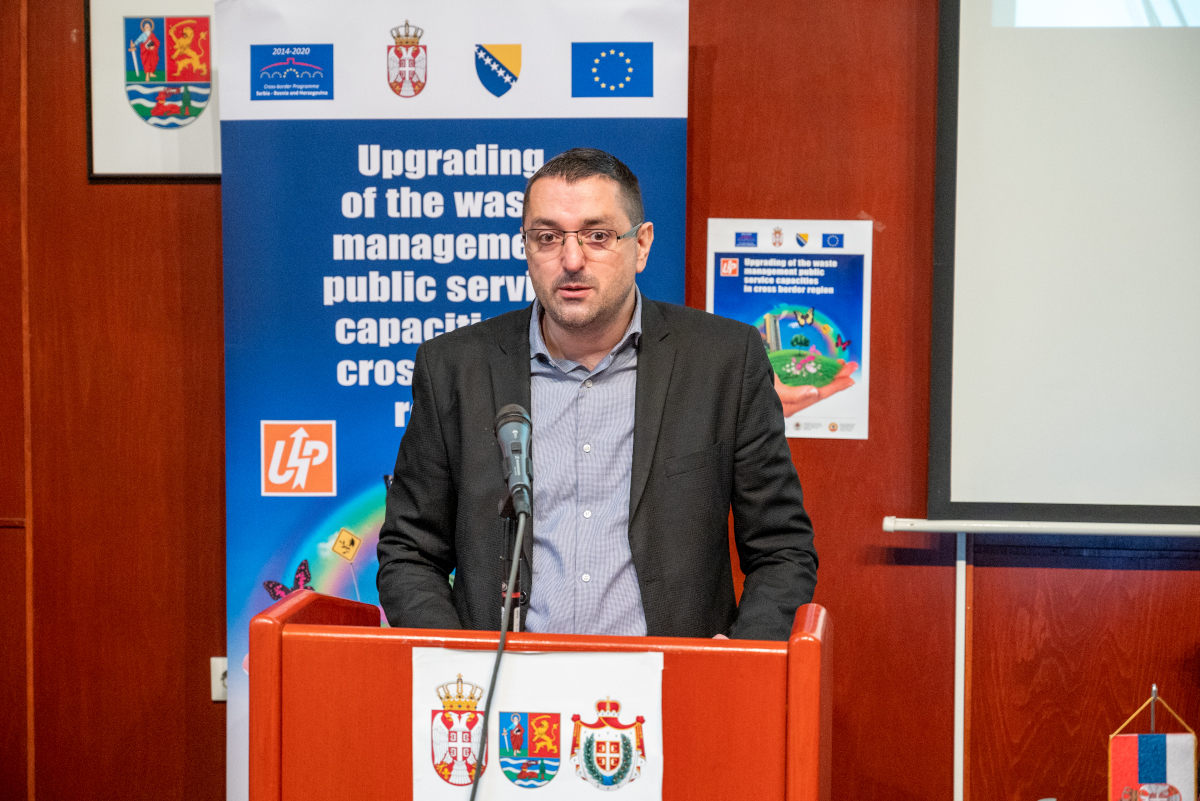
Director and Scientific Advisor of Institute for protection and ecology of the Republic of Srpska, Full Professor
Predrag Ilić currently works at Institute for Protection and Ecology of the Republic of Srpska. Predrag does research in Environmental Engineering and Ecological Engineering. He has a long experience in the fields of environmental protection, wastewater, chemicals, waste management, air protection, soil protection, energy and greenhouse gas, environmental impact assessment. He used to work as an expert in the fields of chemicals, environmental protection and waste management plans.
EDUCATION
Doctor of Environmental Protection Engineering
Master of science of Environmental Protection Engineering
BSc of Ecology and Environmental Protection
University of Novi Sad, Serbia
RESEARCH INTERESTS
Environmental Protection, waste, wastewater, air pollution, noise...
42
Scopus Publications
1730
Scholar Citations
22
Scholar h-index
47
Scholar i10-index
Scopus Publications
Removal of Pb(II), Cd(II) and Zn(II) from landfill soil and leachate using a graphene oxide membrane Dragana Stevic, Suncica Sukur, Radovan Kukobat, Suzana Gotovac-Atlagic, Predrag Ilic, Francesco Fumagalli, Andrea Valsesia, Pascal Colpo, Svetlana Popovic Journal of the Serbian Chemical Society, 2026 Since rainwater extracts toxic metals from landfills, creating harmful leachate, developing methods to remove these metals is necessary. This work presents a method of toxic metal ions removal from a loam-type soil consisting of washing the soil with a mild washing agent to extract toxic metals in a leachate, and a purification of the leachate by filtering it through a synthesized graphene oxide (GO) membrane. As washing agents, the pure water and a mild solution of HCl (0.01 M) were tested. The GO membrane was synthesized using natural Madagascar graphite. The solution of HCl showed a significantly higher washing efficiency of Zn(II), Cd(II), and Pb(II) cations than pure water due to its acidic nature. An intrinsic GO membrane with an interlayer distance of 0.68- 0.74 nm (before and after filtration) and a thickness of ~0.70 ?m yielded rejections of 99.80%, 96.15%, and 44.00% for Pb(II), Cd(II) and Zn(II) ions, respectively. Molecular dynamics simulation showed that ions are retained in the GO interfaces due to the narrow interlayer distance, leading to membrane fouling. Nevertheless, the high rejections of Pb(II) and Cd(II) support the possibility of purifying landfill soil leachate by the GO membrane
Assessment of water handling practices in households and related health impacts: a case study in Deyniile District, Mogadishu, Somalia Mohamed Hassan Mohamed, Hardeep Rai Sharma, Predrag Ilić, Yahye Elmi, Abdikarim Abdi Adam BMC Public Health, 2025 Access to safe drinking water and adequate sanitation is essential for maintaining public health. This study investigates water collection, treatment practices, perceptions of water safety, and their health impacts within a community. Understanding these aspects is crucial for developing interventions to enhance water safety and health outcomes. A cross-sectional survey was conducted among 360 households in the community and the study subjects were selected randomly from these households. Data was collected through a survey conducted in 360 households, focusing on water collection methods, types of containers, water treatment practices, and sanitation and hygiene behaviors, perceptions of water safety, and the health effects of unsafe water. Descriptive statistics was applied to analyze the frequency and percentage distributions of the variables using SPSS version 20.0. The most common containers for water collection were jerricans (44.2%) and plastic containers (38.6%). While 74.7% of the containers were covered, a notable portion remained uncovered (25.3%). Although 72.8% of respondents believed their water was safe to drink, only 58.1% of the respondents treated their water. Boiling was the most common water treatment method (36.3%), followed by filtration (31.1%) and chemical treatment (30.6%). The primary reasons for not treating water (n = 151) included the belief that water was already clean (62 respondents, 41.1%) and lack of knowledge about water treatment (60 respondents, 39.7%). There was a major recognition of the health effects of unsafe water, with 38.3% associating it with diarrhea and 30.3% with cholera. However, 47.5% did not link water quality to health, indicating gaps in knowledge. The majority of households used toilets (76.9%), but open defecation (13.9%) and improper waste disposal practices, such as disposing of wastewater into open drains (37.5%), were prevalent. Most households consumed more than 20 L of water daily (63.6%), with monthly expenditures on water varying widely. While 40.6% of households spent $1–5 per month on water, a small but major portion faced higher costs. The study reveals that the community is aware of the importance of water safety and sanitation, but faces challenges in consistent water treatment and wastewater disposal. There is a need for enhanced awareness and education on the health risks of untreated water and support for affordable treatment methods. Improving sanitation infrastructure and providing equitable access to safe drinking water are critical for better health outcomes. Policy interventions and community engagement are essential to address these issues and ensure sustainable water safety practices.
Future Research Perspectives of Combined Toxicology Tariq Mehmood, Anam Ashraf, Kousar Parveen, Muhammad Azher Hassan, Muhammad Fahad Sardar, Muhammad Faheem, Licheng Peng, Shakeel Ahmad, Tauseef Ahmad, Predrag Ilić Toxicological Assessment of Combined Chemicals in the Environment, 2025 The complex composition and simultaneous presence of multiple substances in the natural environment have transformed the study of toxins and their harmful impacts on organisms. Initially, the focus primarily revolved around individual compounds and their distinct impacts. However, individuals often come across a complex combination of chemicals, which provide unique and complicated challenges that researchers are currently actively investigating. Evaluating mixed compounds, commonly known as “chemical mixtures,” can give a progressively complex assessment procedure. These combinations can exhibit diverse interactions, including additive, synergistic, or antagonistic effects, that cannot be precisely anticipated by isolating the constituent chemicals. An essential aspect of this discipline is employing the procedure of toxicological assessment (TA), a thorough approach to scrutinize the possible dangers and perils posed by chemicals. The novel techniques exhibited promise in efficiently assessing the danger of simultaneous chemical exposure and suggesting strategies for mitigation. However, the overall advantages are reduced as a result of limited data availability, insufficient familiarity with innovative methods, and inadequate legal regulations. An inclusive strategy that considers all available resources and parties involved is essential in tackling rising environmental concerns, such as the integrated toxicological evaluation of chemicals in the environment.
Assessing the Ecological Risks and Spatial Distribution of Heavy Metal Contamination at Solid Waste Dumpsites P. Ilić, S. Ilić, Z. Mushtaq, A. Rashid, Lj. Stojanović Bjelić, D. Nešković Markić, S. Mrazovac Kurilić, Z. U. R. Farooqi, M. Y. Jat Baloch, T. Mehmood, Z. Ullah, S. Riaz Eurasian Soil Science, 2024 Abstract Soil samples from wild solid waste dumpsites were collected in the Bijeljina-Zvornik region (Republic of Srpska, Bosnia and Herzegovina), and the concentrations potentionally toxic metals (Ni, Cr, Mn, Zn, Cu, Pb, Cd, Fe and Al). The disposal of waste at wild dumpsites has emerged as a serious environmental challenge affecting both developed and developing countries. This paper aims to provide an in-depth analysis of the complex issue of wild dumpsites, focusing on the contamination of the environment with toxic metals. The improper disposal of solid waste has become a global concern, with wild dumpsites being a significant component of the problem. In accordance with national legislation, the mean values for Cd and Ni exceeded the limit values. Very strong positive correlations are observed between Zn and Cu, between Cd and Pb and between Ni and Cr. The ecological risk assessments for Mn are extremely high; for Ni and Pb, they are high; for Zn, Cu and Cr, they are appreciable; and for Cd, they are moderate. The Pollution Load Index (PLI) and Contamination Factor were used to evaluate metal pollution in soil samples. PLI values exceeding 1.0 in five samples signify soil pollution, supported by mean values indicating contamination. Research findings reveal different contamination levels, with Pb, Cr, Cu, and Zn at low levels, and Ni and Cd at moderate levels. The visualized results of ecological risk assessments for heavy metals in the soil underscore the critical importance of continuous monitoring and effective management of heavy metals at illegal dumpsites to preserve and protect surrounding ecosystems. The use of Surfer 12 software and the kriging method has proven to be an invaluable tool for exploring the spatial distribution of toxic metals in the study area.
Global insight into national climate mitigation priorities within the framework of climate education Sobia Riaz, Muhammad Sohail, Haroon U. Rashid, Farrakh Nawaz, Vardah Asif, Yasir Majeed, Rashba Sahar, Aamir Khan, Zia Ur Rahman Farooqi, Abdullah Ma'arij, Predrag Ilić, Masih Ullah Jamal Revitalizing the Learning Ecosystem for Modern Students, 2024 Global concerns surrounding climate change, exacerbated by its detrimental impact on ecosystems and societies, underscore the urgency of climate education. This study emphasizes the differing short-term needs for tackling air and water pollution and mitigating climate change across diverse countries. While developed nations integrate climate education seamlessly, challenges faced by developing and underdeveloped countries include limited resources, technology constraints, and a lack of interest. This chapter advocates for collaborative efforts among stakeholders, policymakers, and educators to ensure universal access to effective climate education, fostering a sense of global citizenship. This collective approach is crucial in addressing shared challenges and empowering individuals to contribute meaningfully to climate change solutions.
Nanoclay packaging materials as biodegradable Zain Mushtaq, Maleeha Islam, Salwa Saeed, Korkmaz Bellitürk, Predrag Ilić, Amir Parnian Innovations in Engineering and Food Science, 2024 Nanoclays are nanomaterials consisting of layered silicate clay minerals and have various applications in food packaging. They can improve the mechanical, thermal, and barrier properties of both petroleum-based and bio-based polymers, as well as provide other functions such as antimicrobial activity, colorimetric indication, biodegradability enhancement, additive partitioning, and control and release of active ingredients. This chapter reviews the types, properties, and manufacturing methods of nanoclay-based polymer nanocomposites for food packaging. In addition, the latest achievements and challenges related to the use of nanoclays as food packaging materials are discussed, and an overview of the current state of knowledge and future perspectives for the development of nanoclay technology in the food industry is provided.
Water Purification and Role of Nanobiotechnology Tariq Mehmood, Saira Bibi, Muhammad Shafqat, Beenish Mustafa, Licheng Peng, Predrag Ilić, Muhammad Anwar-ul-Haq, Mariym Sattar, Muhammad Faheem Nanomaterials in Industrial Chemistry, 2024
Ventilation Strategies for Healthy Indoors in Hospitals Predrag Ilić, Dragana Nešković Markić, Ljiljana Stojanović Bjelić, Zia Ur Rahman Farooqi Viruses Bacteria and Fungi in the Built Environment Designing Healthy Indoor Environments, 2021
Ventilation strategies for healthy indoors in hospitals Predrag Ilić, Dragana Nešković Markić, Ljiljana Stojanović Bjelić, Zia Ur Rahman Farooqi Viruses Bacteria and Fungi in the Built Environment Designing Healthy Indoor Environments, 2021
Assessment of Chemical Hazards in Hospital Workplaces during the Summer Period S Šabić, P Ilić Quality of Life 17 (1-2), 46-57 , 2026 2026
Assessment and Modeling of Environmental Noise From Open-Air Concerts in a Student Residential Area D Nešković Markić, P Ilić, Z Popović, L Stojanović Bjelić, S Šabić Quality of Life 17 (1-2), 35-45 , 2026 2026
Fate and Transport of Viruses in the Subsurface Environment: A Systematic Review of Pollution Pathways in Saturated and Unsaturated Porous Media MYJ Baloch, P Baidya, M Aryal, L Yang, J Iqbal, M Ptak, P Ilić, C Liu Environmental Research 288 (1), 123163 , 2026 2026 Citations: 25
Сирак (Sorghum bicolor L.)–биљна врста за ублажавање посљедица климатских промјена и сировина за функционалну храну Н Пржуљ, А Велимировић, П Илић, З Јововић, З Говедар Нутрицеутске гајене биљке 4, 5-37 , 2025 2025
Assessment of water handling practices in households and related health impacts: a case study in Deyniile District, Mogadishu, Somalia MH Mohamed, HR Sharma, P Ilić, Y Elmi, AA Adam BMC Public Health 25 (1), 2368 , 2025 2025 Citations: 7
Soil Acidification: Processes, Effects on Soil and Plants, and Remediation Strategies ZUR Farooqi, AA Qadir, S Riaz, Z Mujdded, WMUD Chaudhary, P Ilić, ... Environmental Protection and Remediation 6, 175-210 , 2025 2025 Citations: 4
Barley in Human Nutrition and Health N Pržulј, A Velimirović, M Mirosavljević, D Brenjo, V Trkulja, P Ilić, ... Food and human nutrition 3, 131-144 , 2025 2025
RISK ASSESSMENT MODEL FOR ENVIRONMENTAL AND HUMAN HEALTH IN INDUSTRIAL ZONES S Mrazovac Kurilić, NB Lj, I Predrag, ZUR Farooqi 3rd INTERNATIONAL EUROSA CONFERENCE, 71 , 2025 2025
Contamination, Risk Assessment and Spatial Distribution of Harmful Metals in Soil Near Stanari (B&H) N Malić, P Ilić, S Mrazovac Kurilić Ecological Chemistry and Engineering S 32 (1), 27-41 , 2025 2025 Citations: 4
Potentially toxic elements in the agricultural soils of northwestern Bosnia and Herzegovina: spatial and vertical distribution, origin and ecological risk D Mihajlović, S Srdić, P Benka, N Čereković, P Ilić, D Radanović, ... Environmental Monitoring and Assessment 197 (3), 295 , 2025 2025 Citations: 4
Future Research Perspectives of Combined Toxicology T Mehmood, A Ashraf, K Parveen, M Azher Hassan, M Fahad Sardar, ... Toxicological Assessment of Combined Chemicals in the Environment, 365-380 , 2025 2025 Citations: 2
Removal of Pb (II), Cd (II), and Zn (II) from landfill soil and leachate using a graphene oxide membrane D Stević, S Sukur, R Kukobat, S Gotovac-Atlagić, P Ilić, FS Fumagalli, ... Journal of the Serbian Chemical Society 49, 79-79 , 2025 2025 Citations: 1
Management of soil degradation: A comprehensive approach for combating soil Degradation, food Insecurity, and climate change ZUR Farooqi, M Sohail, H Alserae, AA Qadir, T Hussain, P Ilic, S Riaz, ... Ecosystem Management: Climate Change and Sustainability, 55-78 , 2024 2024 Citations: 15
Voda za piće, rekreaciju i industriju LS Bjelić, DN Markić, P Ilić 2024
Од камене мотике до кружне пољопривреде Н Пржуљ, А Велимировић, Д Петровић, П Илић, М Миросављевић, ... Кружна економија 60, 119-168 , 2024 2024
Кружна економија и њен утицај на смањење загађења и одрживи развој животне средине П Илић, Н Пржуљ, О Ерић, ДН Маркић Кружна економија 60, 1-30 , 2024 2024
Circular Economy and Sustainable Consumption S Riaz, I Rafiq, P Ilić, G Murtaza, S Hameed, ZUR Farooqi, M Sohail, ... Circular Economy 60, 169-186 , 2024 2024
Exposure levels, health risks, spatially distribution, multivariate statistics and positive matrix factorization model of heavy metals from wild solid waste dumpsites P Ilić, S Ilić, A Rashid, Z Mushtaq, S Mrazovac Kurilić, L Stojanović Bjelić, ... Water, Air, & Soil Pollution 235 (10), 648 , 2024 2024 Citations: 14
Integrated Remediation Strategies for Urban and Industrial Pollution: Insights and Applications in the Incel Project I Predrag, SM Kurilić, Z Mushtaq, A Rashid The Fourth International Conference on Sustainable Environment and … , 2024 2024 Citations: 1
MOST CITED SCHOLAR PUBLICATIONS
Assessment of noise pollution and its effects on human health in industrial hub of Pakistan ZUR Farooqi, M Sabir, J Latif, Z Aslam, HR Ahmad, I Ahmad, M Imran, ... Environmental Science and Pollution Research 27 (3), 2819-2828 , 2020 2020 Citations: 116
Types, sources, socioeconomic impacts, and control strategies of environmental noise: A review ZUR Farooqi, I Ahmad, A Ditta, P Ilic, M Amin, AB Naveed, A Gulzar Environmental Science and Pollution Research 29 (54), 81087-81111 , 2022 2022 Citations: 69
Polycyclic aromatic hydrocarbons in air on small spatial and temporal scales-II. Mass size distributions and gas-particle partitioning G Lammel, J Klánová, P Ilic, J Kohoutek, B Gasic, I Kovacic, L Skrdlíková Atmospheric Environment 44 (38), 5022-5027 , 2010 2010 Citations: 67
Polycyclic aromatic hydrocarbons in air on small spatial and temporal scales-I. Levels and variabilities G Lammel, J Klánová, P Ilic, J Kohoutek, B Gasic, I Kovacic, N Lakic, ... Atmospheric Environment 44 (38), 5015-5021 , 2010 2010 Citations: 67
Indoor Air Quality in the Hospital: The Influence of Heating, Ventilating and Conditioning Systems J Božić, P Ilić, S Ilić Brazilian Archives of Biology and Technology 62 , 2019 2019 Citations: 66
Using material flow analysis for waste management planning DN Markic, HS Carapina, D Bjelic, LS Bjelic, P Ilic, ZS Pesic, O Kikanovic Polish Journal of Environmental Studies 28 (1), 255-265 , 2018 2018 Citations: 63
Hazard modelling of accidental release Chlorine gas using modern tool-Aloha software P Ilić, S Ilić, LJ Stojanović Bjelić QUALITY OF LIFE 9 (1-2), 38-45 , 2018 2018 Citations: 60
Sources of organochlorine pesticides in air in an urban Mediterranean environment: volatilisation from soil G Lammel, J Klánová, L Erić, P Ilić, J Kohoutek, I Kovacić Journal of Environmental Monitoring 13 (12), 3358-3364 , 2011 2011 Citations: 53
Surface water quality assessment of Skardu springs using Water Quality Index WA Ahsan, HR Ahmad, ZUR Farooqi, M Sabir, MA Ayub, M Rizwan, P Ilic Environmental Science and Pollution Research, 1-12 , 2021 2021 Citations: 52
Second national communication of Bosnia and Herzegovina under the United Nations framework convention on climate change S Radusin, S Oprašić, M Cero, I Abdurahmanović, G Vukmir, S Avdić, ... Banja Luka: MVTEO, MPGE, FMOIT, UNDP, GEF , 2013 2013 Citations: 52
Quantification of sources of PCBs to the atmosphere in urban areas: A comparison of cities in North America, Western Europe and former Yugoslavia B Gasic, M MacLeod, J Klanova, M Scheringer, P Ilic, G Lammel, ... Environmental Pollution 158 (10), 3230-3235 , 2010 2010 Citations: 51
Groundwater quality, fluoride health risk and geochemical modelling for drinking and irrigation water suitability assessment in Tundla block, Uttar Pradesh, India A Saraswat, S Ram, S Kouadri, MB Raza, HC Hombegowda, R Kumar, ... Groundwater for Sustainable Development 23, 100991 , 2023 2023 Citations: 40
Potentially toxic elements and phytoremediation: opportunities and challenges ZUR Farooqi, MM Hussain, MA Ayub, AA Qadir, P Ilić Phytoremediation Biotechnological Strategies for Promoting Invigorating … , 2022 2022 Citations: 40
Polycyclic Aromatic Hydrocarbons Contamination of Soil in an Industrial Zone and Evaluation of Pollution Sources P Ilić, T Nišić, ZUR Farooqi Polish Journal of Environmental Studies 30 (1), 155–162 , 2021 2021 Citations: 30
Identifying New ‘Hotspot’ Heavy Metal Contamination in Industrial Zone Soil P Ilić, T Nišić, S Ilić, L Stojanović Bjelić Polish Journal of Environmental Studies 29 (4), 2987-2993 , 2020 2020 Citations: 27
Urban noise assessment and its nonauditory health effects on the residents of Chiniot and Jhang, Punjab, Pakistan ZUR Farooqi, I Ahmad, N Zeeshan, P Ilić, M Imran, MF Saeed Environmental Science and Pollution Research 28 (39), 54909-54921 , 2021 2021 Citations: 26
Source Identification and Ecological Risk of Polycyclic Aromatic Hydrocarbons in Soils and Groundwater P Ilić, S Ilić, DN Markić, LS Bjelić, ZUR Farooqi, B Sole, N Adimalla Ecological Chemistry and Engineering S 28 (3), 355-363 , 2021 2021 Citations: 26
Pollution and control of air quality in the function of environment protection P Ilić Independent University, Banja Luka 1 , 2015 2015 Citations: 26
Fate and Transport of Viruses in the Subsurface Environment: A Systematic Review of Pollution Pathways in Saturated and Unsaturated Porous Media MYJ Baloch, P Baidya, M Aryal, L Yang, J Iqbal, M Ptak, P Ilić, C Liu Environmental Research 288 (1), 123163 , 2026 2026 Citations: 25
Polycyclic Aromatic Hydrocarbons in Different Layers of Soil and Groundwater-Evaluation of Levels of Pollution and Sources of Contamination P Ilić, D Markić Nešković, L Bjelić Stojanović, ZUR Farooqi Polish Journal of Environmental Studies 30 (2), 1191–1201 , 2021 2021 Citations: 24