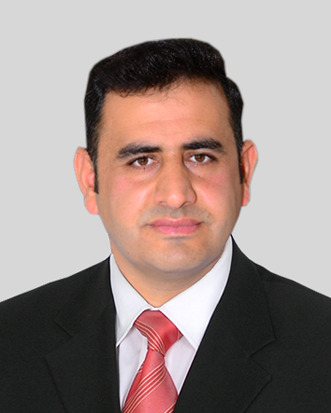
I graduated from the University of Sheffield, UK, in 2016 with a PhD degree in mechanical engineering. Having gained a diverse range of relevant experience at the Advanced Manufacturing Research Centre (AMRC) in the UK and at the Tribology and System Dynamics Laboratory’s (LTDS) in France.
Previous experience includes my position as a lecturer in the Faculty of Engineering at the University of Koya-Iraq and as a demonstrator at the University of Sheffield-UK, during which time, in addition to my role as a lecturer of different modules to students at both undergraduate and postgraduate levels and at different engineering departments, I performed many duties as well, such as administration, supervision, and developing courses.
I am a highly motivated and skilled engineering manager with the ability to build and motivate a high-performing engineering team. Hardworking, ambitious, and highly organised individuals have the ability to work in a team or alone.
RESEARCH, TEACHING, or OTHER INTERESTS
Mechanical Engineering, Metals and Alloys, Surfaces, Coatings and Films, General Materials Science
8
Scopus Publications
113
Scholar Citations
4
Scholar h-index
1
Scholar i10-index
Scopus Publications
Fatigue life of hybrid metal composite materials: A review Yaseen Rashid, Basim M. Fadhil, Dlair O. Ramadan Al Nahrain Journal for Engineering Sciences, 2026 Hybrid metal composite materials, combining diverse metal components, have emerged as promising alternatives in engineering applications, offering a unique synergy of mechanical properties. This review comprehensively examines the fatigue life of hybrid metal composites, delving into the intricate interplay of materials, manufacturing processes, and environmental factors. Drawing from a rich array of literature, the review explores the evolution of hybridization strategies, emphasizing their impact on fatigue resistance. Key factors influencing fatigue behavior, including material selection, manufacturing techniques, and environmental conditions, are systematically analyzed. The article highlights the significance of strategic hybridization in enhancing fatigue characteristics, reducing costs, and optimizing the overall performance of metal composites. The insights presented contribute to advancing the understanding of fatigue mechanisms in hybrid metal composite materials, offering valuable guidance for future research and engineering applications. Hybrid metal composite materials, characterized by the combination of diverse metal components, have garnered significant attention in engineering applications due to their potential to provide a unique synergy of mechanical properties. This comprehensive review delves into the intricate aspects of the fatigue life of hybrid metal composites, offering a thorough analysis of the interplay between materials, manufacturing processes, and environmental factors.
Experimental Characterization of Glass/ Carbon Hybrid Composite Reinforced by Sio2 Nanoparticles Thaker S. Dawood, Basim M. Fadhil, Dlair O. Ramadan Tikrit Journal of Engineering Sciences, 2025 تمت دراسة تسلسل التراص الأمثل المُثبت لمركب هجين من الزجاج/الكربون بعناية في هذا العمل، جنبًا إلى جنب مع تأثيرات اتجاه الألياف ودمج الجسيمات النانوية SiO2. تم أخذ ثلاثة اتجاهات رئيسية للألياف (0°، 45°، و90°) بعين الاعتبار، كما تم استخدام جزيئات SiO2 النانوية كتعزيز في الايبوكسي. تم استخدام إجراء التسريب لتصنيع الشرائح الهجينة. لفهم وتحليل تأثيرات اتجاه الألياف والجسيمات النانوية SiO2، تم تقييم المعلمات الميكانيكية مثل قوة الشد والانثناء في العديد من التجارب. تم إجراء اختبارات الشد والثني باستخدام عينات اختبار ذات حجم قياسي وفقًا لمعايير ASTM. تم عرض النتائج وتحليلها، وأظهرت أن زيادة سماكة اللوحة ووجود الجسيمات النانوية SiO2 عززت قوة الشد والانثناء.
Effects of Different Projectile Nose Shapes on the Impact Performance of the Aluminium 2024 Thin Plate Dlair O. Ramadan Polytechnic Journal, 2024 . In this study, the impact performance of the Al2024 thin plate target was determined through a numerical approach. Two different-nosed hard steel projectiles, including a blunt and a sphere, were used in order to obtain the ballistic impact of the target. ANSYS Autodyn was used to model a three-dimensional (3D) model that corresponds to a previous experimental study. The ballistic resistance of the target was numerically evaluated in terms of ballistic limit velocity, residual velocity, and energy absorption and compared at different incident angles such as 0°, 15°, and 30°. To validate the numerical outcomes, the Recht-Ipson model was used as a reference benchmark. The results of this investigation showed that when the incidence angle of a sphere-nosed projectile increased, the target's ballistic performance decreased. In contrast, the target’s ballistic resistance against a blunt-nosed projectile was little affected by the impact angle. According to the findings, the simulation results are consistent with the published numerical and experimental outcomes.
Finite Element Analysis of Conventional and Composite Materials of Automobile Drive Shaft Dlair O. Ramadan Aip Conference Proceedings, 2022 Propeller shaft also called drive shaft is one of the foremost imperative components used to transmit power from the engine to the wheels and is usually made of steel. Reducing the weight of the automotive components, including the drive shaft, while preserving their functional characteristics has become an even more urgent task in the automobile industry. Therefore, many efforts have been made by the researchers to minimize the weight of the components. Despite all these endeavors, however, the matter still needs more investigation. The aim of this research is to reduce the weight of a drive shaft using different materials. Six different materials were used including a conventional material (steel) and five different composite materials such as carbon/epoxy, E-glass/epoxy, S-glass epoxy, Kevlar epoxy and thermoplastic polyimide with 30% carbon. A three- dimensional (3D) drive shaft was designed, modeled and simulated using ANSYS software. The results show that the unidirectional carbon/epoxy is the favorable fabric instead of structural steel, and the greatest stress is produced with the same dimensions and configuration load. Moreover, the amount of weight is decreasing compared with structural steel.
Influence of mould thickness on microstructure, hardness and wear of Al-Cu cast alloys N. Soliman, Dlair O. Ramadan, J. A. Yagoob International Journal of Engineering Transactions B Applications, 2021 Aluminium-copper alloys have a wide range of industrial applications especially in military vehicles, rocket fins aerospace. Solidification plays a vital role in controlling the mechanical and tribological properties, and influencing the microstructure of metallic alloys in general and aluminium alloys in particular. Therefore, the researchers have made many efforts to figure out the solidification behaviour of Al-Cu alloys. Despite all these endeavors, however, the behavior is not yet fully understood. This research aims to investigate the effect of cooling rate on the microstructure, mechanical and tribological properties of aluminium-copper cast alloys (Al-Cu alloys) under dry sliding conditions. Four cooling rates were achieved by using four various steel moulds made of different thicknesses and one of them was surrounded with green sand, to get a lower cooling rate, with the same respective mould hole geometries. The microstructure results showed that the grain size increases with decreasing the cooling rate. While the hardness increased largely due to the refinement of the microstructure. Finally, it was concluded that the wear rate increases with decreasing the cooling rate, and that is due to the reduction in hardness.
A Hybrid Temporal Feature for Gear Fault Diagnosis Using the Long Short Term Memory Zrar Khald Abdul, Abdulbasit K. Al-Talabani, Dlair O. Ramadan IEEE Sensors Journal, 2020 The vibration of the rotating machinery for condition monitoring in gear fault detection is a popular area of study. Reliable improvements to the rotating machinery can be obtained by enhancing the machine condition monitoring. The automatic detection of a gear fault at an early stage is required to guarantee a reliable and robust rotating machinery system. In this paper, a novel method of gear fault diagnosis is proposed based on extracting a computational cheap hybrid hand-crafted feature set including the Gamma Tone Cepstral Coefficient (GTCC) and the Mel-Frequency Cepstral Coefficient (MFCC), extracted temporally from the vibration signal. The vibration signal faults have a temporal nature, so the Long Short-Term Memory (LSTM) classifier is adopted because it is suitable for time series signals. To evaluate the proposed model, a ten-fold cross validation approach is applied to two different datasets. The results obtained show that the adopted features and the LSTM classifiers are effective for gear fault detection. Additionally, the performance of the fusion of 14 coefficients for both the GTCC and MFCC exceed the state-of-the-art performance for gear fault detection and for those which use learned features using a pre-trained model.
Influence of Oak Tree Ash onthe Microstructure and Mechanical Properties of Medium Carbon Steel Nooruldeen F. Soliman, Bayan. Fayzulla, Dlair O. Ramadan Proceedings of the 6th International Engineering Conference Sustainable Technology and Development Iec 2020, 2020 In industrial society, in order to meet the requirements of most manufacturing industries andto comply with the desired engineering applications, the properties of medium carbon steel have to be modified. Heat treatments, under controlled conditions, are one of the techniques employed to alter the mechanical and physical properties of carbon steel. In this study, detailed investigations were made on the optimization of mechanical and microstructure properties of medium carbon steel by using the heat treatment process under control conditions. The experiments were conducted by employing different heat treatment processes including annealing, hardening and tempering in two different quenching media, namely well water and treated water. The tempering process performed for the hardened at three different temperatures (250, 450 and 650°C). In this work, a novel quenching medium, based on mixing the water with the ash of Oak, was used. Following the heat treatments, microstructure and mechanical properties of the treated carbon were investigated via a tensile test machine, Rockwell hardness and optical microscope. The obtained results showed that the tensile strength and hardness values in the well water media were higher than those of the samples quenched in the treated water while ductility of the samples quenched in treated water was increased when hardening process was done at (900°C) and continue to increase at temper temperatures 250°C and then decreased again at 450°C, and 650°C.
RECENT SCHOLAR PUBLICATIONS
Fatigue life of hybrid metal composite materials: A review Y Rashid, BM Fadhil, DO Ramadan Al-Nahrain Journal for Engineering Sciences 29 (1), 57-66 , 2026 2026
Experimental Characterization of Glass/Carbon Hybrid Composite Reinforced by SiO2 Nanoparticles TS Dawood, BM Fadhil, DO Ramadan Tikrit Journal of Engineering Sciences 32 (2), 1-11 , 2025 2025 Citations: 1
Effects of Different Projectile Nose Shapes on the Impact Performance of the Aluminium 2024 Thin Plate DO Ramadan Polytechnic Journal 14 (1), 3 , 2024 2024
Effects of silica nanoparticles on glass and carbon fiber epoxy composites TS Dawood, BM Fadhil, DO Ramadan Nexo Revista Científica 36 (05), 75-86 , 2023 2023 Citations: 3
IMPROVING THE MECHANICAL PROPERTIES OF CARBON-EPOXY AND GLASS-EPOXY COMPOSITES BY INCORPORATING SILICA NANOPARTICLES TS DAWOOD, BM FADHIL, DO RAMADAN Journal of Duhok University 26 (2), 682-692 , 2023 2023
Experimental Investigation of the Mechanical Properties and Tribological Behaviour of Al6061 Enhanced by TiB2 Particles KH Hassan, DO Ramadan Transactions of the Indian Institute of Metals , 2023 2023 Citations: 6
Investigation of the Mechanical Properties and Wear Resistance of Al6061 Composites Fabricated by Stir Casting Method KH Hassan, DO Ramadan MS Thesis, Erbil Polytechnic University, Erbil , 2023 2023 Citations: 1
Influence of SiC Particles on Microstructure, Hardness, Tensile and Wear of Al6061 KH Hassan, DO Ramadan Computer Integrated Manufacturing Systems 28 (12), 1091-1106 , 2022 2022
Study the Wear Characteristics of 2024 Aluminium Alloy at Different Temperatures KA Ahmed, DO Ramadan Computer Integrated Manufacturing Systems 28 (11), 1494-1506 , 2022 2022
Finite Element Analysis of Conventional and Composite Materials of Automobile Drive Shaft DO Ramadan AIP Conference Proceedings 2660 (1) , 2022 2022 Citations: 8
Numerical and Theoretical Analysis of a Spur Gear Using Composite and Conventional Materials JK Mohammed, DO Ramadan Engineering and Technology Journal 40 (7) , 2022 2022 Citations: 3
EFFECT OF ADDING SIO2 NANOPARTICLES ON TENSILE AND BENDING TESTS OF GLASS/CARBON HYBRID COMPOSITE MATERIALS TS DAWOOD, BM FADHIL, DO RAMADAN Jilin Daxue Xuebao (Gongxueban)/Journal of Jilin University (Engineering and … , 2022 2022
Influence of Mould Thickness on Microstructure, Hardness and Wear of AL-Cu Cast Alloys NF Soliman, DO Ramadan, JA Yagoob International Journal of Engineering 34 (8), 2021-2027 , 2021 2021 Citations: 4
Characterization of Rotary Friction Welded AISI 304 Steel Joints JK Mohammed, RH Gardi, DO Ramadan Anbar Journal of Engineering Sciences 11 (2), 202-210 , 2020 2020
Wear resistance of 304 austenitic stainless-steel friction welded joints JK Mohammed, RH Gardi, DO Ramadan Journal of Duhok University 23 (1), 191-198 , 2020 2020 Citations: 3
A hybrid temporal feature for Gear Fault Diagnosis using the Long Short Term Memory ZK Abdul, AK Al-Talabani, DO Ramadan IEEE Sensors Journal, 1-9 , 2020 2020 Citations: 81
Influence of Oak Tree Ash onthe Microstructure and Mechanical Properties of Medium Carbon Steel NF Soliman, B Fayzulla, DO Ramadan 2020 6th International Engineering Conference “Sustainable Technology and … , 2020 2020
Investigation of the Microstructure and Wear Properties of AISI 304 Steel Friction Weldments JK Mohammed, RH Gardi, DO Ramadan ZANCO Journal of Pure and Applied Sciences 32 (4), 58-65 , 2020 2020
Ultrasonic Reflection Technique for Measuring Contact Conditions at the Tool Chip Interface DO Ramadan University of Sheffield , 2016 2016
Measuring interface conditions in a cutting tool contact with reflected ultrasound DO Ramadan, RS Dwyer-Joyce In Proceedings of the 42th Leeds-Lyon Symposium on Tribology. Lyon, France. , 2015 2015
MOST CITED SCHOLAR PUBLICATIONS
A hybrid temporal feature for Gear Fault Diagnosis using the Long Short Term Memory ZK Abdul, AK Al-Talabani, DO Ramadan IEEE Sensors Journal, 1-9 , 2020 2020 Citations: 81
Finite Element Analysis of Conventional and Composite Materials of Automobile Drive Shaft DO Ramadan AIP Conference Proceedings 2660 (1) , 2022 2022 Citations: 8
Experimental Investigation of the Mechanical Properties and Tribological Behaviour of Al6061 Enhanced by TiB2 Particles KH Hassan, DO Ramadan Transactions of the Indian Institute of Metals , 2023 2023 Citations: 6
Influence of Mould Thickness on Microstructure, Hardness and Wear of AL-Cu Cast Alloys NF Soliman, DO Ramadan, JA Yagoob International Journal of Engineering 34 (8), 2021-2027 , 2021 2021 Citations: 4
Effects of silica nanoparticles on glass and carbon fiber epoxy composites TS Dawood, BM Fadhil, DO Ramadan Nexo Revista Científica 36 (05), 75-86 , 2023 2023 Citations: 3
Numerical and Theoretical Analysis of a Spur Gear Using Composite and Conventional Materials JK Mohammed, DO Ramadan Engineering and Technology Journal 40 (7) , 2022 2022 Citations: 3
Wear resistance of 304 austenitic stainless-steel friction welded joints JK Mohammed, RH Gardi, DO Ramadan Journal of Duhok University 23 (1), 191-198 , 2020 2020 Citations: 3
Comparative Analysis For Link Cross-Section Of Manipulator Arms DO Ramadan, A abdul hussain Ali Journal of Engineering 16, 4930-4953 , 2010 2010 Citations: 3
Experimental Characterization of Glass/Carbon Hybrid Composite Reinforced by SiO2 Nanoparticles TS Dawood, BM Fadhil, DO Ramadan Tikrit Journal of Engineering Sciences 32 (2), 1-11 , 2025 2025 Citations: 1
Investigation of the Mechanical Properties and Wear Resistance of Al6061 Composites Fabricated by Stir Casting Method KH Hassan, DO Ramadan MS Thesis, Erbil Polytechnic University, Erbil , 2023 2023 Citations: 1
Fatigue life of hybrid metal composite materials: A review Y Rashid, BM Fadhil, DO Ramadan Al-Nahrain Journal for Engineering Sciences 29 (1), 57-66 , 2026 2026
Effects of Different Projectile Nose Shapes on the Impact Performance of the Aluminium 2024 Thin Plate DO Ramadan Polytechnic Journal 14 (1), 3 , 2024 2024
IMPROVING THE MECHANICAL PROPERTIES OF CARBON-EPOXY AND GLASS-EPOXY COMPOSITES BY INCORPORATING SILICA NANOPARTICLES TS DAWOOD, BM FADHIL, DO RAMADAN Journal of Duhok University 26 (2), 682-692 , 2023 2023
Influence of SiC Particles on Microstructure, Hardness, Tensile and Wear of Al6061 KH Hassan, DO Ramadan Computer Integrated Manufacturing Systems 28 (12), 1091-1106 , 2022 2022
Study the Wear Characteristics of 2024 Aluminium Alloy at Different Temperatures KA Ahmed, DO Ramadan Computer Integrated Manufacturing Systems 28 (11), 1494-1506 , 2022 2022
EFFECT OF ADDING SIO2 NANOPARTICLES ON TENSILE AND BENDING TESTS OF GLASS/CARBON HYBRID COMPOSITE MATERIALS TS DAWOOD, BM FADHIL, DO RAMADAN Jilin Daxue Xuebao (Gongxueban)/Journal of Jilin University (Engineering and … , 2022 2022
Characterization of Rotary Friction Welded AISI 304 Steel Joints JK Mohammed, RH Gardi, DO Ramadan Anbar Journal of Engineering Sciences 11 (2), 202-210 , 2020 2020
Influence of Oak Tree Ash onthe Microstructure and Mechanical Properties of Medium Carbon Steel NF Soliman, B Fayzulla, DO Ramadan 2020 6th International Engineering Conference “Sustainable Technology and … , 2020 2020
Investigation of the Microstructure and Wear Properties of AISI 304 Steel Friction Weldments JK Mohammed, RH Gardi, DO Ramadan ZANCO Journal of Pure and Applied Sciences 32 (4), 58-65 , 2020 2020
Ultrasonic Reflection Technique for Measuring Contact Conditions at the Tool Chip Interface DO Ramadan University of Sheffield , 2016 2016