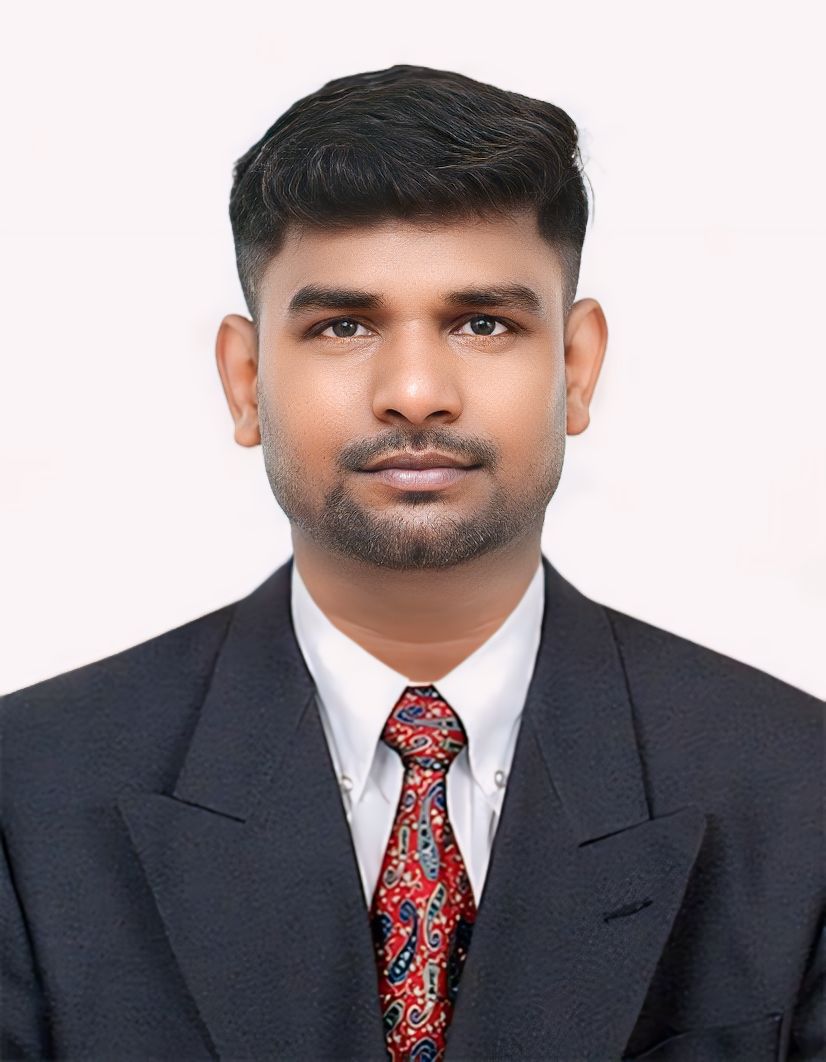
Karuppasamy Govindasamy, is an accomplished researcher and academic with extensive experience in the field of Physical Education Sports Science. Currently, he serves as Assistant Director of Physical Education and Sports at Symbiosis International (Deemed University), Hyderabad Campus, India. Karuppasamy Govindasamy has contributed significantly to the field of sports physiology, training methods, and health and wellness.
A key member of Frontiers in Physiology, Karuppasamy Govindasamy research focuses on , metabolic and hormonal responses to exercise and training, with a particular emphasis on training modalities, gender influences, and aging. His recent work includes ground-breaking studies on obesity and health related disorders, contributing valuable insights to both academia and practical applications.
RESEARCH, TEACHING, or OTHER INTERESTS
Physical Therapy, Sports Therapy and Rehabilitation
133
Scopus Publications
624
Scholar Citations
11
Scholar h-index
16
Scholar i10-index
Scopus Publications
Discrimination Against Women in Sport: A Scopus-Based Bibliometric Analysis (1995–2026) Vinu Wilson, Dilshit Azeezul Kabeer, Josyula Tejaswi, Ashif Ali Narippatta Kappoor, Jayaraman Sundararaja, Jolita Vveinhardt, Karuppasamy Govindasamy Behavioral Sciences, 2026 Background: Gender discrimination in sport remains a persistent global issue, reflected in women’s limited participation, leadership representation, media visibility, salary equity, and personal safety. These forms of discrimination also negatively affect athletes’ psychological well-being, mental health, and overall sports experience. Despite growing scholarly attention over the past three decades, a comprehensive quantitative synthesis of this research area has been lacking. Methodology: A bibliometric analysis of 397 peer-reviewed documents published between 1995 and 2026 was conducted using the Scopus database. Data were analysed through the Bibliometric R package 4.2.1 and Biblioshiny interface. Science-mapping techniques including keyword co-occurrence, thematic clustering, thematic evolution, and collaboration network analysis were combined with performance indicators such as annual publication output, leading sources, author productivity, and citation impact. Results: Scientific production increased markedly after the mid-2010s, involving 187 sources and 1106 authors, with rising collaboration and citation influence. Core research themes included gender inequality, leadership exclusion, media representation, harassment and abuse, and structural discrimination in sports systems. Importantly, many of these themes are directly linked to reduced athlete well-being, including increased stress, anxiety, and decreased participation. Recent thematic developments highlighted intersectionality, safeguarding, inclusion, governance, and athlete welfare. Conclusion: Research on discrimination against women in sport has evolved into a multidisciplinary, policy-relevant field. Addressing gender discrimination is essential not only to achieving equity but also to improving athletes’ subjective well-being and long-term participation in sport. However, significant gaps remain, particularly in Global South contexts and intervention-based studies, indicating the need for stronger evidence-driven strategies to advance gender equity, inclusion, and ethical governance in sport.
Effects of the FIFA 11 + Program on Physical Fitness in Youth and Adult Soccer Players: A Systematic Review and Meta-analysis Ibnu Noufal Kambitta Valappil, Karuppasamy Govindasamy, Gavoutamane Vasanthi, Masilamani Elayaraja, Cain C. T. Clark, Koulla Parpa, Borko Katanic, Hüseyin Şahin Uysal, Hassane Zouhal, Urs Granacher Sports Medicine, 2026 Background Soccer is a high-intensity sport that requires high levels of physical fitness, including balance, change of direction (CoD), speed and power. The FIFA 11 + program has been widely promoted to enhance physical fitness and reduce injury occurrence. Objective This meta-analysis set out to examine how the FIFA 11 + program, implemented as a warm-up versus conventional warm-up (soccer-specific and alternative warm-ups), impacts physical fitness attributes in youth and adult soccer players. Methods After a priori defined inclusion and exclusion criteria, 17 intervention studies with 611 male and female soccer players (Tier 2–4) aged 9–29 years were eligible to be included. The FIFA 11 + program implemented in the warm-up was contrasted with conventional warm-up programs (control) on outcome measures such as dynamic balance, CoD speed, linear sprint and proxies of muscle power (vertical jump height). The influence of potential moderators (e.g., training duration, frequency, session duration, age, sex, training and performance calibre) on study outcome measures was examined using subgroup analyses with the median split method. Results Findings demonstrated small-to-moderate improvements in favour of FIFA 11 + compared with conventional warm-ups on dynamic balance (small standardized mean differences [SMDs] = 0.37, p < 0.001, heterogeneity [ I 2 ] = 7), CoD speed (moderate SMDs = − 0.65, p = 0.005, I 2 = 84), and vertical jump height (small SMDs = 0.56, p < 0.001, I 2 = 71). Results from the sub-analyses showed that, for dynamic balance, shorter training durations (< 9 weeks) produced larger effects than longer durations (≥ 9 weeks) (SMDs = 0.62 versus SMDs = 0.17). For vertical jump height, < 9 weeks also yielded greater improvements (SMDs = 0.79 versus SMDs = 0.26). In terms of weekly training frequency, ≥ 3 sessions/week elicited larger gains in change-of-direction speed (SMDs = − 1.05 versus SMDs = − 0.12) and vertical jump height (SMDs = 0.73 versus SMDs = 0.01) compared with < 3 sessions/week. Regarding participant characteristics, players aged ≥ 18 years showed greater improvements than those < 18 years in change-of-direction speed (SMDs = − 1.45 versus SMDs = − 0.06) and vertical jump height (SMDs = 0.64 versus SMDs = 0.22). For sex differences, males experienced greater benefits than females in change-of-direction speed (SMDs = − 0.79 versus SMDs = − 0.04) and vertical jump height (SMDs = 0.54 versus SMDs = 0.09). Finally, higher-level players (≥ tier 3) demonstrated greater improvements in vertical jump height than lower-tier players (< Tier 3) (SMDs = 0.75 versus SMDs = 0.01). The observed benefits were statistically significant but generally of small-to-moderate magnitude and affected by study heterogeneity and program implementation differences. Most studies included male participants, limiting generalizability to female and underrepresented populations. Several studies also lacked rigorous methodological design, particularly in allocation, concealment and blinding. Reporting of training and demographic variables was often incomplete. These limitations highlight the necessity for rigorously designed, low-bias randomized controlled trials with standardized implementation of the FIFA 11 + program and thorough reporting to enhance the reliability of causal conclusions and improve clinical interpretation. Conclusion The FIFA 11 + program was more effective than conventional soccer warm-up programs to enhance soccer players’ physical fitness (i.e., dynamic balance, CoD speed, vertical jump height). A shorter training duration (< 9 weeks) and more weekly training sessions (≥ 3 sessions/week) induced larger performance effects. FIFA 11 + was more effective in older (≥ 18 years) and male players and in players of higher performance calibre (≥ Tier 3). These findings underscore the versatility of the FIFA 11 + program to improve soccer players’ physical fitness, supporting its integration into the warm-up of regular soccer training sessions. Protocol Registration https://www.crd.york.ac.uk/PROSPERO/view/CRD42025633810 , PROSPERO: CRD42025633810. Graphical Abstract
Effects of a Combined Iyengar Yoga and Yoga Nidra Intervention on Pain, Physiological, and Psychological Outcomes in Older Men with Chronic Low Back Pain: A Randomized Controlled Trial Ajendra Narayan Samal, Shankar Kanagasabapathy, Josyula Tejaswi, Satheeshkumar Palanivel, Jagadeeswari Suresh, Ibnu Noufal Kambitta Valappil, Mou Pramanik, Karuppasamy Govindasamy, Carmen Magdalena Camenidis, Vlad Adrian Geantă Sport Mont, 2026 Chronic low back pain (CLBP) is a leading cause of disability worldwide, particularly affecting older adults. Mind-body interventions show promise for pain management, but evidence for comprehensive yoga programs specifically targeting older men remains limited. The aim of the study was to assess the effects of a 3-month combined Iyengar yoga and Yoga Nidra (IY+YN) intervention on pain and associated outcomes in older men with chronic low back pain (CLBP). In this randomised controlled study (RCT) conducted in Dhenkanal, Odisha, India, we enrolled 60 men aged 55–65 years with CLBP lasting ≥3 months and pain intensity ≥4 on a 10-point Visual Analog Scale (VAS). Between Jan–Mar 2024, 55 participants were randomized (intervention n=28; control n=27) to either a 3-month IY+YN intervention (three 60- min yoga sessions plus 20–30 min YN weekly) or standard care (prescribed pain management and physical therapy). Primary outcome was change in pain intensity (VAS) at 3 months. Secondary outcomes included lumbar ROM, systolic BP, attention (Stroop test), anxiety (Beck Anxiety Inventory), and QoL (SF-36). Assessments were conducted at baseline, 6 weeks, and 3 months by blinded assessors. At 3 months, the intervention group showed significantly greater pain reduction compared with controls (mean diff. -2.6, 95% CI -3.3 to -1.9; p<0.001). Improvements were also seen in lumbar flexion (mean diff. 8.3°, p<0.001), systolic BP (mean diff. -7.5 mmHg, p<0.001), Stroop score (mean diff. -8.3 sec, p<0.001), anxiety (mean diff. -8.7, p<0.001), and SF-36 physical and mental scores. Five minor adverse events were reported, resolving within 48 hours. In conclusion, a 3-month combined IY+YN significantly reduced pain and improved physical, psychological, and quality-of-life outcomes in older men with chronic low back pain. The program was safe and well tolerated, supporting its use as an effective adjunct to standard care.
The Impact of Sports in Promoting Cognitive Growth for Specially Abled Children Debajit Karmakar, Anindita Das, Karuppasamy Govindasamy, Elayaraja Masilamani, Ibnu Noufal Kambitta Valappil Benefits of Play Play Therapy Sports and Recreation for Children of Diverse Backgrounds, 2026 This chapter explores the role of inclusive sports in enhancing cognitive development among specially abled children. Grounded in neurodevelopmental and pedagogical research, it examines how adapted physical activities stimulate key cognitive domains such as executive functioning, attention, memory, problem-solving, and social cognition. Inclusive sports serve as powerful interventions that foster neuroplasticity, motor-cognitive integration, and emotional resilience, especially in children with intellectual disabilities, autism spectrum disorder, ADHD, and other developmental conditions. The chapter highlights evidence-based practices, case studies of successful specially abled athletes, and the integration of assistive technologies to ensure equitable participation. It also addresses implementation challenges and presents strategic recommendations for educators, policymakers, and caregivers. Ultimately, the chapter advocates for inclusive sports as a transformative tool for cognitive empowerment, psychosocial inclusion, and holistic development in children with disabilities.
Neuroplasticity and the Breath: Unpacking the Brain Mechanisms Behind Yogic Pranayama Ibnu noufal Kambitta Valappil, Akshay Korol, Gavoutamane Vasanthi, Masilamani Elayaraja, Karuppasamy Govindasamy Improving Mental Well Being at the Intersection of Mindfulness Meditation and Yoga, 2026 Pranayama, the Yogic discipline of regulated breathing, has evolved from a spiritual practice into a scientifically recognized method for supporting mental and neurological health. This chapter examines its neuroplastic potential by outlining effects on major brain regions and networks, while summarizing key Pranayama techniques and their physiological signatures. Evidence indicates improvements in parasympathetic activation, heart rate variability, cortisol modulation, and emotional–cognitive regulation. Integrating recent advances in contemplative and clinical neuroscience, the chapter highlights technology-supported breathwork, trauma-responsive approaches informed by polyvagal theory, and individualized applications based on autonomic profiling. It also clarifies distinctions between established neural biomarkers and emerging theoretical claims of structural change. Overall, the chapter positions Pranayama as an accessible, non-invasive, and increasingly personalized neuromodulatory tool within the broader “Neuro-Yogic Paradigm.”
Ethics of Using Artificial Intelligence and Digital Tools in Research Debajit Karmakar, Anindita Das, Tashi Ongmu Bhutia, Karuppasamy Govindasamy, Abhishek Kumar Cases on Research Ethics, 2026 The rapid advancement of artificial intelligence and digital technologies has transformed the research landscape, offering powerful tools for data collection, analysis, and interpretation. Alongside these opportunities, new ethical challenges have emerged, extending beyond traditional research ethics. Issues such as algorithmic bias, data privacy, ownership, transparency, and accountability have become central to maintaining integrity in scientific inquiry. This chapter explores key ethical principles, including respect for persons, beneficence, non maleficence, and justice, in the context of AI assisted research. It examines risks of overreliance on automated decision making, threats to authenticity in digital environments, and complexities of intellectual property. Emphasis is placed on responsible innovation, human oversight, global guidelines, and frameworks to balance technological potential with ethical responsibility.
Navigating Ethical Challenges in Sports and Exercise Science Research Debajit Karmakar, Anindita Das, Karuppasamy Govindasamy, Tashi Ongmu Bhutia, Atisha Mandal Cases on Research Ethics, 2026 Sports and exercise science research presents unique ethical challenges extending beyond traditional biomedical frameworks. This chapter examines moral considerations in studying human performance within competitive athletic contexts. Fundamental principles of respect for persons, beneficence, justice, and integrity require careful adaptation for athletic populations facing distinctive pressures and vulnerabilities. Critical issues include informed consent procedures for diverse populations, risk assessment in high intensity protocols, confidentiality protection in elite populations, and data privacy with emerging technologies. Research design challenges encompass participant selection, randomization ethics, and emergency preparedness. Intervention studies raise concerns regarding ergogenic aids, fatigue boundaries, and placebo controls. The chapter emphasizes research integrity through proper data handling, conflict management, and transparent reporting.
Benefits of Sports for Children With Autism Spectrum Disorder Debajit Karmakar, Anindita Das, Karuppasamy Govindasamy, Elayaraja Masilamani, Ibnu Noufal Kambitta Valappil Benefits of Play Play Therapy Sports and Recreation for Children of Diverse Backgrounds, 2026 This chapter explores the multifaceted role of sports and structured physical activity in enhancing the developmental trajectories of children with Autism Spectrum Disorder (ASD). ASD is a complex neurodevelopmental condition marked by deficits in social communication, restricted behaviors, and sensory integration challenges. While traditional interventions focus on behavioral and cognitive therapies, this chapter advocates for the integration of inclusive sports as a therapeutic and educational strategy. Special emphasis is placed on the neurobiological mechanisms, inclusive sports models, and the importance of structured versus unstructured play. The roles of physical educators, therapists, coaches, and families are critically examined, alongside systemic challenges such as accessibility and behavioral management. The chapter concludes with emerging trends in adapted sports, the integration of technology, and the imperative for long-term, outcome-based research.
Integrating Technology in Sports Education: Opportunities and Challenges for Teacher Educators Debajit Karmakar, Anindita Das, Tashi Ongmu Bhutia, Karuppasamy Govindasamy, Abhishek Kumar Preparing Educators for Complexity and Change Resilient Pedagogies Digital Innovation and Ethical Futures, 2026 This chapter explores how digital transformation is reshaping sports education by integrating emerging technologies into teaching and learning practices. It highlights key innovations such as wearable devices, video analysis, artificial intelligence, virtual and augmented reality, and gamified learning platforms that enhance student engagement, personalized feedback, and performance assessment. The chapter emphasizes the evolving role of teacher educators in developing digital literacy, pedagogical innovation, and ethical data management skills. It also addresses challenges related to infrastructure, accessibility, and professional readiness. Ultimately, it advocates for balanced, inclusive, and evidence-based technology integration that enriches learning outcomes and prepares future educators for a digitally connected world.
Reshaping the Brain: Exercise-Induced Neuroplasticity and Psychological Resilience Debajit Karmakar, Anindita Das, Tashi Ongmu Butia, Karuppasamy Govindasamy, Beulah Sebastian Effect of Exercise on Emotion, 2026 This chapter explores how physical exercise acts as a transformative force in reshaping the brain and enhancing psychological resilience. It highlights the mechanisms of exercise-induced neuroplasticity at molecular, cellular, and systemic levels that contribute to improved memory, attention, and executive function. The discussion emphasizes the close relationship between physical activity and mental health, showing how exercise strengthens cognitive performance and emotional stability through the regulation of neurotrophic factors, neurotransmitters, and stress response systems. It also examines the comparative effects of aerobic, resistance, and mind-body exercises, explaining their unique and complementary influences on cognition and resilience. The chapter concludes that regular physical activity is a powerful non-pharmacological strategy for improving brain function, emotional well-being, and lifelong adaptability.
Implementing Physical Education, Sports, and Health Learning in Elementary Schools (Inclusion): Qualitative Analysis on Teachers’ Self-Efficacy Annals of Applied Sport Science, 2025
NOTATIONAL ANALYSIS OF PRO KABADDI LEAGUE IN THE PERSPECTIVE OF THE TEAMS’ ACHIEVEMENT Revista Iberoamericana De Psicologia Del Ejercicio Y El Deporte, 2023
Yoga and Physical Exercises as Immunogenic Fortifiers for Coronavirus Vaccine Responses Karuppasamy Govindasamy, Hassane Zouhal, Dilpreet Kaur, Aakash Dhiman, Vikas Singh, Utsav Chaware, Rajesh Kumar, Prasad Salian, Mantu Baro, Hemantajit Gogoi, Poli Borah, Lakshyajit Gogoi, Koulla Parpa, Abderraouf Ben Abderrahman International Journal of Human Movement and Sports Sciences, 2023
MENTAL HEALTH EFFECTS OF DANCE TO UNDERGRADUATE STUDENTS: A PRELIMINARY SURVEY-COMPARATIVE ANALYSIS Revista Iberoamericana De Psicologia Del Ejercicio Y El Deporte, 2023
Effects of Integrating 3-D Virtual Reality Prior to Small-Sided Games on Intention to Continue Exercising, Teamwork, and Technical Performance in Young Soccer Athletes A Hariono, K Govindasamy, A Tannoubi, N Gazali, A Kurtoğlu, J Lobo, ... Sport Mont 24 (2), Ahead of Print , 2026 2026
Effects of Team Sports on Sleep Quality: A Systematic Review MM Khaleghi, F Ahmadi, A Rabieezadeh, J Tejaswi, K Govindasamy, ... Frontiers in Sports and Active Living 8, 1746309 , 2026 2026
Effects of a Combined Iyengar Yoga and Yoga Nidra Intervention on Pain, Physiological, and Psychological Outcomes in Older Men with Chronic Low Back Pain: A Randomized … VAG Ajendra Narayan Samal, Shankar Kanagasabapathy, Josyula Tejaswi ... Sport Mont 24 (1), 77-86 , 2026 2026
Influence of sleep quality and patterns on different sports events of collegiate athletes in Bangladesh: Insights from the Pittsburgh Sleep Quality Index A Azim, J Hossain, B Katanic, R Çitozi, KH Hanif, L Oliveira, ... Montenegrin Journal of Sports Science and Medicine 15 (1), Ahead of Print , 2026 2026
Effects of the FIFA 11+ Program on physical fitness in youth and adult soccer players: a systematic review and meta-analysis IN Kambitta Valappil, K Govindasamy, G Vasanthi, M Elayaraja, ... Sports Medicine, 1-21 , 2026 2026 Citations: 4
What We Get Wrong About Stress in Sports Psychology: An Opinion D A KABEER, K Govindasamy, L AS, S KK, A MK Frontiers in Psychology 17, 1752653 , 2026 2026
GROWTH PATTERNS IN PRIMARY SCHOOL CHILDREN: THE ROLE OF AGE, GENDER, AND SOCIOECONOMIC FACTORS. F Akter Boby, H Yasin, K Govindasamy, MD Ul Islam, M Elloumi, ... F1000Research 15, 88 , 2026 2026
Gamification and Technology-Mediated Learning: Modern Tools for Active Engagement Among Physical Education Students D Karmakar, A Das, SS Dubey, A Mandal, D Sharma, K Govindasamy Applied, Cultural, and Pedagogical Innovations for Fostering Engagement in … , 2026 2026
The Future of Physical Education in an AI-Driven Post-Pandemic World D Karmakar, A Das, K Govindasamy, A Mandal, D Sharma, SS Dubey Applied, Cultural, and Pedagogical Innovations for Fostering Engagement in … , 2026 2026
Lifelong Physical Activity Habits and Their Roots in Early Engagement D Karmakar, A Das, D Sharma, SS Dubey, A Mandal, K Govindasamy Theoretical and Analytical Perspectives on Interest and Engagement in … , 2026 2026
Discrimination against women in sport: a Scopus-based bibliometric analysis (1995–2026) V Wilson, DA Kabeer, J Tejaswi, J Sundararaja, J Vveinhardt, ... Behavioral sciences. 16 (5), 1-31 , 2026 2026
Neuroplasticity and the Breath: Unpacking the Brain Mechanisms Behind Yogic Pranayama A Korol, G Vasanthi, M Elayaraja, K Govindasamy Improving Mental Well-Being at the Intersection of Mindfulness, Meditation … , 2026 2026
Synchronization Through Yoga: Connecting the Physical and Mental Realms D Karmakar, A Das, TO Bhutia, K Govindasamy, D Sharma, A Mandal Improving Mental Well-Being at the Intersection of Mindfulness, Meditation … , 2026 2026
Ethics of Using Artificial Intelligence and Digital Tools in Research D Karmakar, A Das, TO Bhutia, K Govindasamy, A Kumar Cases on Research Ethics, 283-310 , 2026 2026
Navigating Ethical Challenges in Sports and Exercise Science Research D Karmakar, A Das, K Govindasamy, TO Bhutia, A Mandal Cases on Research Ethics, 123-150 , 2026 2026
Future Trends in Research Ethics: Navigating New Ethical Frontiers D Karmakar, A Das, TO Bhutia, K Govindasamy, A Mandal Cases on Research Ethics, 407-434 , 2026 2026
The Therapeutic Role of Exercise in Schizophrenia: Enhancing Cognitive, Social, and Emotional Health D Karmakar, A Das, TO Bhutia, K Govindasamy, SS Dubey The Effect of Exercise on Emotion, 93-122 , 2026 2026 Citations: 1
Integrating Technology in Sports Education: Opportunities and Challenges for Teacher Educators D Karmakar, A Das, TO Bhutia, K Govindasamy, A Kumar Preparing Educators for Complexity and Change: Resilient Pedagogies, Digital … , 2026 2026 Citations: 1
Reshaping the Brain: Exercise-Induced Neuroplasticity and Psychological Resilience D Karmakar, A Das, TO Butia, K Govindasamy, B Sebastian The Effect of Exercise on Emotion, 171-200 , 2026 2026 Citations: 1
Benefits of Sports for Children With Autism Spectrum Disorder D Karmakar, A Das, K Govindasamy, E Masilamani, INK Valappil Benefits of Play, Play Therapy, Sports, and Recreation for Children of … , 2026 2026
MOST CITED SCHOLAR PUBLICATIONS
A Systematic Review and Meta-analysis of the Association Between ACTN3 R577X Genotypes and Performance in Endurance Versus Power Athletes and Non … EM El Ouali, B Barthelemy, J Del Coso, AC Hackney, I Laher, ... Sports Medicine-Open 10 (1), 37 , 2024 2024 Citations: 33
The effects of exercise training on plasma volume variations: A systematic review H Zouhal, F Rhibi, A Salhi, A Jayavel, AC Hackney, A Saeidi, ... International journal of sports medicine , 2023 2023 Citations: 29
Impact of technical-tactical and physical performance on the match outcome in professional soccer: A case study B Barthelemy, G Ravé, K Govindasamy, A Ali, J Del Coso, J Demeaux, ... Journal of human kinetics 94, 203 , 2024 2024 Citations: 27
The effects of preferred music and its timing on performance, pacing, and psychophysiological responses during the 6-min test N Jebabli, H Zouhal, D Boullosa, K Govindasamy, C Tourny, AC Hackney, ... Journal of human kinetics 82, 123-133 , 2022 2022 Citations: 23
Listening to music during a repeated sprint test improves performance and psychophysiological responses in healthy and physically active male adults N Jebabli, A Ben Aabderrahman, D Boullosa, H Chtourou, N Ouerghi, ... BMC Sports Science, Medicine and Rehabilitation 15 (1), 21 , 2023 2023 Citations: 20
Effects of Endurance Training Intensity on Pulmonary Diffusing Capacity at Rest and after Maximal Aerobic Exercise in Young Athletes HZ Rim Dridi, Nadia Dridi, Karuppasamy Govindasamy, Nabil Gmada, Ridha ... International Journal of Environmental Research and Public Health 18 (23), 12359 , 2021 2021 Citations: 19
Sex-specific effects of small-sided games in basketball on psychometric and physiological markers during Ramadan intermittent fasting: a pilot study S Brini, AB Abderrahman, CCT Clark, S Zouita, AC Hackney, ... BMC Sports Science, Medicine and Rehabilitation 13 (1), 56 , 2021 2021 Citations: 17
Recreational female athletes’ understanding of and perceived impact of the menstrual cycle on physical performance, mood, and sleeping behaviour EA Michelekaki, M Michaelides, K Govindasamy, K Parpa Women 3 (3), 445-456 , 2023 2023 Citations: 16
Effects of resistance training on sarcopenia risk among healthy older adults: A scoping review of physiological mechanisms K Govindasamy, CR Rao, B Chandrasekaran, K Parpa, U Granacher Life 15 (5), 688 , 2025 2025 Citations: 14
Impact of french contrast training on field hockey players’ biomotor and physiological parameters: a pretest-posttest study IN KV, G Vasanthi, M Elayaraja, R Murugesan, K Govindasamy, H Gogoi Retos 58, 1097-1105 , 2024 2024 Citations: 13
Implementing technical training models to enhance basic volleyball skills in students Y Astuti, E Erianti, H Lawanis, BE Orhan, A Ikhlas, K Govindasamy Retos: nuevas tendencias en educación física, deporte y recreación, 1075-1083 , 2025 2025 Citations: 12
A Critical Review on Traditional Medicines, Ayurvedic Herbs and fruits in Treatment of Cardiovascular Diseases NSR P. K. Kumar, K. Govindasamy, G. Kumaresan Research Journal of Pharmacy and Technology 13 (7), 3480-3484 , 2020 2020 Citations: 11
Exploring Motivation and Enjoyment as Key Determinants of Sustained Physical Activity Across Diverse Demographics BE Orhan, W Alkasasbeh, A Karaçam, K Govindasamy Sport Mont 23 (2), 63-69 , 2025 2025 Citations: 10
Effect of local mud application in patients with knee osteoarthritis-A systematic review and meta-analysis D Boopalan, V Vijayakumar, S Kalidas, P Ravi, A Balakrishnan, ... International journal of biometeorology 68 (10), 1923-1934 , 2024 2024 Citations: 10
The effects of kettlebell training versus resistance training using the own body mass on physical fitness and physiological adaptations in obese adults: a randomized controlled … K Govindasamy, H Gogoi, N Jebabli, SM Bediri, M Aljahni, K Parpa, ... BMC Sports Science, Medicine and Rehabilitation 16 (1), 1-15 , 2024 2024 Citations: 10
Thermal dysregulation in patients with multiple sclerosis during SARS-CoV-2 infection. The potential therapeutic role of exercise O Razi, B Tartibian, AM Teixeira, N Zamani, K Govindasamy, K Suzuki, ... Multiple Sclerosis and Related Disorders 59, 103557 , 2022 2022 Citations: 10
Effects of different types of high-intensity interval training (HIIT) on physical performance in female basketball players—A systematic review I Čaprić, M Stanković, I Bojić, B Katanić, I Jelaska, L Pezelj, B Masanovic, ... Life 15 (8), 1180 , 2025 2025 Citations: 9
The Relationship between Physical Activity Enjoyment and Exercise Addiction Y Astuti, BE Orhan, A Karaçam, K Govindasamy International Journal of Human Movement and Sports Sciences 12 (4), 720 - 728 , 2024 2024 Citations: 9
Effectiveness of High-Intensity Circuit Training on Physical Fitness Among Athletes: A Systematic Review of Randomized-Controlled and Non-Controlled Trials M Mahalingam, S Saibya, G Pandey, D Karmakar, YS Rajpoot, ... Fizjoterapia Polska 24 (3), 145-157 , 2024 2024 Citations: 9
Effect of music therapy on sleep quality in elderly: A systematic review and meta-analysis C Li, AP Kumar, D Wankhar, M Kuppusamy, K Govindasamy Plos one 20 (11), e0334356 , 2025 2025 Citations: 8