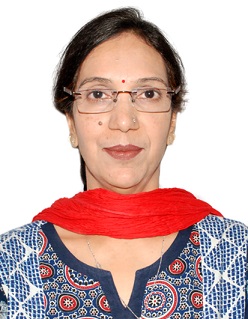
Vaishaly Bharambe

@smcw.edu.in

Professor and Head, Department of Anatomy
Symbiosis Medical College for Women, Pune, India

Vaishaly Bharambe

EDUCATION

MBBS, MD, PhD-Anatomy

RESEARCH INTERESTS

Anatomy
Evolution
Body donation
Organ donation
Embryology
Histology
Heart
16

Scopus Publications

360

Scholar Citations

10

Scholar h-index

11

Scholar i10-index

Scopus Publications

  • The anatomist’s perspective today towards human body donation for procurement of cadavers for study of human anatomy
    Vaishaly Kishore Bharambe, Arun Prasad, Raju Bokan, Sneha Kalthur, Purushottam Manvikar, Vatsalaswamy Puranam
    Electronic Journal of General Medicine, 2023
    Anatomy is the study of structure of human body. Dissection of human cadavers has always been an integral part of study of anatomy as well as research in it. Till now the only source for cadavers for dissection purposes were unclaimed bodies. Today the need for bodies for medical education has increased and most medical schools are experiencing difficulties in procuring the requisite number of cadavers.<b> </b>Body donation programs may help fulfil this need of the medical schools. The present study was an attempt to analyze the attitude of the anatomists towards different aspects of body donation. 24.7% of the participants stated that they have insufficient cadavers, 12.3% claimed surplus cadavers while 62.8% claimed sufficient cadavers. 26% of the anatomists were unaware of the necessity for a death certificate and 35% were unaware of the necessity for a unique identification document for carrying out body donation.
  • A Descriptive Cross-sectional Study to Assess Knowledge Regarding Brain Death among Health Professionals in India
    Vaishaly Kishore Bharambe, K Vijayakumar, V K Arunprasad, Supriya Methepatil, Sunit Jadhav, Mandar Ambike
    Indian Journal of Transplantation, 2023
    Context: Brain-dead donors are one of the largest sources of organs for transplant. However, lack of knowledge about brain death may lead to delayed declaration of brain death. Aims: This study aimed to evaluate the knowledge about brain death among health professionals in Maharashtra state of India. Settings and Design: This was a descriptive, cross-sectional study. Subjects and Methods: The study assessed the knowledge of health professionals in Maharashtra state of India regarding brain death. Statistical Analysis Used: The data obtained were fed into Microsoft Excel 2010 and subsequently analyzed on SPSS. Results: Four hundred health professionals participated in the study between 2015 and 2017. The study found that the knowledge of brain death increased with age while no correlation with gender was observed (Pearson’s “r” = 0.7677). Seventy percent of the participants were found to have knowledge about the brain-dead category of organ donor, the highest knowledge being among the doctor category of participants and lowest among the nurse participants. Twenty-six percent of the respondents were aware of the legality of brain death. A positive correlation was found between medical college as source of knowledge and correctness of knowledge of brain death (Pearson’s “r” = 0.9789, Spearman’s rho “rs ” = 0.94286, P (two-tailed) = 0.0048, statistically significant). Conclusions: Medical curricula should include details of brain death-related organ donation. A health professional aware of brain death will be able to counsel the family of brain-dead donor for organ donation leading to increased availability of organs for transplantation.
  • Organ shortage: Can educating the medical students be the key?
    Vaishaly Bharambe
    Medical Journal of Dr D Y Patil Vidyapeeth, 2021
  • A cadaveric study of thoracic paravertebral spaces from the point of view of paravertebral block
    Moiz Dayer, V. Bharambe
    Sahel Medical Journal, 2021
    Background: Paravertebral block (PVB) is a regional anesthetic technique, in which a local anesthetic is injected into the thoracic PVS, resulting in ipsilateral somatic and sympathetic nerve blockade. Objectives: The present study aimed at observing the extent of thoracic paravertebral space (TPVS) at the levels of T1–2, T6–7, and T11–12 by measuring the horizontal and vertical spread of the dye in the Indian population. Materials and Methods: Methylene blue dye was injected into the TPVS at the levels of T1–2, T6–7, and T11–12 and its spread observed. Results: A total of 25 cadavers were studied. The extent of horizontal the spread was average of 83.0 mm at the level of T1–2, 103.0 mm at the level of T6–7, and 88.2 mm at the T11–12 level. The average vertical spread in the intercostal space at the level of T1–2 was found to 48.1 mm, at the level of T6–7 was found to be 44.6 mm, and at the level of T11–12 was found to be 55.04 mm. The maximum vertical spread of dye was over three intercostal spaces. Sixty-four percent of the cadavers studied showed a spread of dye from TPVS to lumbar paravertebral space. In 20% of the cadavers, a contralateral spread of injected dye was observed. The average depth of the needle to reach the TPVS was observed to be 36.8, 35.7, and 36.1 mm for T1–2, T6–7, and T11–12, respectively. Conclusions: A paravertebral block (PVB) has immense potential in regional anesthetic techniques involving thoracic and lumbar dermatomes. The present study will be helpful for surgeons and anesthesiologists to reduce uncertainties of the spread of anesthetic agents in thoracic PVB and its complications.
  • An analysis of arches of the foot: Grading the severity of pesplanus and pescavus using a newly designed podoscope and parameters
    K Vijayakumar, S Senthilkumar, SohamG Chandratre, Vaishaly Bharambe
    Journal of the Anatomical Society of India, 2021
    Introduction: The aim of this study was to establish a new grading system of pesplanus (PP) and pescavus (PC) based on the severity by a newly proposed parameter plantar surface area (PSA) using a newly designed podoscope device. Material and Methods: A total number of 416 healthy participants; 208 men and 208 women aged 21–50 years were included in this study. Plantar surface images were obtained from the podoscope and measurements were made by using the newly proposed parameter and existing parameter. Statistical analysis was conducted using the SPSS Statistical software (version 16.0) and executed at 95% confidence interval. Mean and standard deviations were observed by using the descriptive analysis. The Chi-square test has been performed to find the association, dependency, and validity. Results: The analysis of the present study encompasses the grading system of “PP and PC” and also developed a classification system with three grades in PP and PC. This grading system will be a substantiate assessment tool for the diagnosis and also to record the prognosis during the treatment of PP and PC. Discussion and Conclusion: The present study has developed a newly designed podoscope and established a newly proposed parameters PSA index and analyzed the prevalence of normal, PP and PC. In this study, gender wise normative value for new parameters PSA index was proposed under the influence of height and foot length. According to our knowledge, this is the first study to grade the PP and PC in a proper scientific morphometric analysis using a newly designed podoscope with a PSA index.
  • Analyzing the effects of exercise prescribed based on health-related fitness assessment among different somatotypes
    Vijayakumar Kathirgamam, Mandar Ambike, Raju Bokan, Vaishaly Bharambe, Arun Prasad
    Journal of Health Sciences, 2020
    Introduction: Human body types (somatotypes) are classified into ectomorph, mesomorph, and endomorph. The ectomorphs are physically weak and usually tall. Mesomorphs were characterized as muscular, thick skinned with good upright posture. Endomorphs characterized as fat, heavy, and usually short.
 Methods: This study is an interventional study, in which a total number of 45 healthy male volunteers between the age group of 22 and 28 years were observed. Written consent was obtained from the patients after a detailed explanation of the study. Exercises were prescribed and executed based on the American College of Sports Medicine (ACSM) guidelines for exercise testing and prescription. Body composition, cardiorespiratory endurance, muscular strength, muscular endurance, and flexibility were assessed.
 Results: The statistical analyses were done using the SPSS software version 16 executed at a 95% confidence interval. Mean and standard deviations were calculated by descriptive statistics. A paired t-test was done to find the effectiveness of the intervention. The level of significance in all tests was set to p < 0.05. Positive changes were observed in health-related fitness among the three groups.
 Conclusion: This study reports about finding the somatotypes, and exercising based on that will provide the best results in health-related fitness components designed by the ACSM.
  • Variations in origin and branching pattern of hepatic arteries and their clinical significance
    European Journal of Anatomy, 2019
  • Knowledge and attitude toward organ donation among health-care professionals in a rural town in India
    VaishalyKishore Bharambe, VasantiU Arole, Vatsalaswamy Puranam, PreetiPrashant Kulkarni, PrashantShashikant Kulkarni
    Saudi Journal of Kidney Diseases and Transplantation an Official Publication of the Saudi Center for Organ Transplantation Saudi Arabia, 2018
    Organ shortage is the greatest challenge facing the field of organ transplantation today. We aimed to study the attitude and knowledge toward organ donation among health-care professionals (HCPs) in rural India. The study was conducted in a rural town in Konkan region of Maharashtra in India. A questionnaire testing knowledge and attitude about various aspects of organ donation was distributed to HCPs. One hundred percent of the respondents were aware about organ donation. Nearly 40.6% and 21.9% believed that a healthy person and a cardiac dead person can be donors, respectively. Fifty percent believed that a brain dead person can be a donor and 3.1% clearly stated as to be having no idea regarding the health status of a donor. Almost 37.5% were ready to believe a heart beating person declared as "brain dead" as dead. Nearly 15.6% were ready to accept a brain dead person as "legally" dead. Highest awareness was observed regarding eye donation, i.e., 87.5%. High awareness was also observed regarding liver, kidney, heart, skin, and body donations, i.e., 78.1%, 65.6%, 37.5%, 31.3%, and 25.0%, respectively. Awareness regarding organ donation of other tissues and organs was poor. Nearly 46.9% HCPs stated that they felt need for an educational session on organ donation. Awareness regarding concept of organ donation among HCPs in rural India is high. Awareness regarding details of organ donation needs further awareness drives. There is a lack of understanding regarding various aspects of brain death and its importance in organ donation.
  • Knowledge and attitude toward organ donation among people in Lanja: A rural town in India
    VaishalyK Bharambe, VasantiU Arole, Vatsalaswamy Puranam, PreetiP Kulkarni, PrashantB Kulkarni
    Saudi Journal of Kidney Diseases and Transplantation an Official Publication of the Saudi Center for Organ Transplantation Saudi Arabia, 2018
    Organ shortage is the greatest challenge facing the field of organ transplantation today. We aimed to study the attitude and knowledge toward body and organ donation among people in rural India. The present study was conducted in a rural town called Lanja, in the Konkan region of Maharashtra in India. A questionnaire covering demographic data, knowledge, and attitude of the participants was distributed to 400 students, middle-aged and senior citizens; 91.5% of the respondents were aware about organ donation. Television (55.2%) and newspaper (45.8%) were the most popular sources of information. About 56.2% and 32.8% believed that a healthy person and a cardiac dead person can be donors, respectively. Nearly 29.4% believed that a brain-dead person can be a donor and 22.4% clearly stated as to be having no idea regarding the health status of a donor. Highest awareness was observed regarding eye donation (92%). High awareness was also observed regarding heart, kidney, and liver donations, that is, 71.1%, 61.2%, and 54.2%, respectively. Awareness regarding donation of other tissues and organs was poor. Only 46.8% believed that the family of the deceased person can give consent for organ donation if the donor had not signed the donor card. Awareness regarding both body and organ donation in rural India is high. However, there is lack of understanding regarding the concept of brain-death. Awareness regarding body and other organ and tissue donations besides eye, kidney, etc., needs further awareness drives.
  • A study of the extensor tendons of the hand from point of view of evolution
    Vaishaly Bharambe, Sapna Shevade, Dinesh Patel, Purushottam Rao Manvikar, Pallavi Gupta Bajpayee
    Journal of the Anatomical Society of India, 2017
    Introduction Both anatomists and the surgeons need to have knowledge of anatomy of extensor muscles and their variations but the analysis of characteristics of each of these muscles can also improve our understanding of evolution of modern human beings. Methods 100 upper limbs preserved in 10% formalin were dissected to study the extensor muscles on the dorsum of forearm and hand. Results 28% incidence of variation was observed. Variant muscles such as extensor carpi radialis tertius (4%), extensor digitorum brevis manus (2%) and extensor medii proprius(4%) were observed. Duplication and triplication of extensor digitorum communis tendons to the 2 nd, 3 rd and 4 th digits was noted. A 28% incidence of absence of extensor digitorum communis tendon to the little finger was observed. Discussion Present study attempted to explain the presence of these extra muscles on the basis of their actions. Increased supination and pronation movements have been associated with more number of muscles/tendons in the extensor carpi radialis muscle and could explain the formation of extensor carpi radialis tertius muscle observed in the present study. The need to extend wrist and throw an object in a precise direction which was the need of the primate evolving to be the human being, could explain the extra extensors seen over the wrist and digits. A very well developed extensor mechanism is needed for precise functioning of the hand. The present study attempts to link together the functioning of individual extensor muscles to the trajectory of events involved in evolution of primates.
  • Organ donation in India: Crucial role of medical care professionals
    Vaishaly Bharambe
    Medical Journal of Dr D Y Patil University, 2017
  • Organ donation: From point of view of students doing medical internship in India
    Vaishaly K. Bharambe, Vasanti U. Arole, Vatsalaswamy Puranam, Purushottam Manvikar, Hetal K. Rathod
    Bantao Journal, 2016
  • Knowledge and attitude regarding organ donation among medical students
    Vaishaly K. Bharambe, Hetal Rathod, Kalpana Angadi
    Bantao Journal, 2016
  • Bilateral brachio-antebrachial arterial variations with ontogenic explanation
    Vasanti Arole, Vaishaly Bharambe
    Medical Journal of Dr D Y Patil University, 2016
  • A study of the distribution of the left coronary artery-clinical importance
    European Journal of Anatomy, 2013
  • A study of variations in coronary ostia
    Vaishaly K Bharambe, Vasanti Arole
    Journal of the Anatomical Society of India, 2012

RECENT SCHOLAR PUBLICATIONS

  • The anatomist's perspective today towards human body donation for procurement of cadavers for study of human anatomy.
    VK Bharambe, A Prasad, R Bokan, S Kalthur, P Manvikar, V Puranam
    Electronic Journal of General Medicine 20 (3) , 2023
    2023
    Citations: 4
  • Susceptible Factors, Awareness And Health Care Management Of Covid-19 Patients Discharged From A Tertiary Hospital In The Pune District.
    SB Palve, S Palve, V Bharambe, R Patel, K Roychowdhury, A Hegde
    Journal of Pharmaceutical Negative Results 14 , 2023
    2023
  • A descriptive cross-sectional study to assess knowledge regarding brain death among health professionals in India
    VK Bharambe, K Vijayakumar, VK Arunprasad, S Methepatil, S Jadhav, ...
    Indian Journal of Transplantation 17 (1), 55-60 , 2023
    2023
    Citations: 1
  • A novel online dissection course on lower limb anatomy during the COVID-19 pandemic
    SV Jadhav, VK Bharambe, VS Pathak, AP Khurjekar, RL Navandar, A VK, ...
    Cureus 14 (3) , 2022
    2022
    Citations: 4
  • Organ donation and gender differences: a qualitative study of female donor experiences
    V Bharambe, V Puranam, MP Rao
    Teikyo Medical Journal 44 (05) , 2021
    2021
    Citations: 3
  • Organ shortage: Can educating the medical students be the key?
    V Bharambe
    Medical Journal of Dr. DY Patil Vidyapeeth 14 (4), 468 , 2021
    2021
  • A cadaveric study of thoracic paravertebral spaces from the point of view of paravertebral block
    MJ Dayer, VK Bharambe
    Sahel Medical Journal 24 (2), 80-89 , 2021
    2021
    Citations: 2
  • An analysis of arches of the foot: Grading the severity of pesplanus and pescavus using a newly designed podoscope and parameters
    K Vijayakumar, S Senthilkumar, SG Chandratre, V Bharambe
    Journal of the Anatomical Society of India 70 (2), 85-92 , 2021
    2021
    Citations: 3
  • Analyzing the effects of exercise prescribed based on health-related fitness assessment among different somatotypes
    V Kathirgamam, M Ambike, R Bokan, V Bharambe, A Prasad
    Journal of Health Sciences 10 (1), 83-89 , 2020
    2020
    Citations: 9
  • Anatomy acts in India: a review
    V Bharambe, V Puranam, PR Manvikar, P Bajpayee
    Eur J Anat 23 (6), 469-77 , 2019
    2019
    Citations: 16
  • Variations in origin and branching pattern of hepatic arteries and their clinical significance
    P Sridhar, A Vasanti, B Vaishaly
    Eur. j. anat 23 (4), 279-287 , 2019
    2019
    Citations: 2
  • Knowledge and attitude toward organ donation among health-care professionals in a rural town in India
    VK Bharambe, VU Arole, V Puranam, PP Kulkarni, PS Kulkarni
    Saudi Journal of Kidney Diseases and Transplantation 29 (3), 671-679 , 2018
    2018
    Citations: 32
  • Dorsal sacral agenesis: A study on dry sacrum bones
    AA Shinde, PR Manvikar, VK Bharambe
    Indian J Clin Anat Phys 5 (2), 157-60 , 2018
    2018
    Citations: 3
  • A study of fissures and lobes of lungs from clinical perspective
    D Mote, P Awari, V Bharambe
    Pulsus J Surg Res 2, 41-3 , 2018
    2018
    Citations: 6
  • A study of anatomy of calot’s triangle and its clinical significance
    P Sridhar, V Arole, V Bharambe, PA Sonje
    Pulsus J Surg Res 5 (2), 45-9 , 2018
    2018
    Citations: 4
  • Knowledge and attitude toward organ donation among people in Lanja: a rural town in India
    VK Bharambe, VU Arole, V Puranam, PP Kulkarni, PB Kulkarni
    Saudi Journal of Kidney Diseases and Transplantation 29 (1), 160-166 , 2018
    2018
    Citations: 23
  • A study of horseshoe kidney. A rare anatomical variant
    D Mote, V Bharambe, PR Manvikar, DK Tom
    Int J Anat Var 10 (4), 103-5 , 2017
    2017
    Citations: 4
  • A study of the extensor tendons of the hand from point of view of evolution
    V Bharambe, S Shevade, D Patel, PR Manvikar, PG Bajpayee
    Journal of the Anatomical Society of India 66 (2), 112-117 , 2017
    2017
    Citations: 6
  • Organ donation in India: Crucial role of medical care professionals
    V Bharambe
    Medical Journal of Dr. DY Patil Vidyapeeth 10 (4), 353-354 , 2017
    2017
  • Anatomical Study of the Ankle Joint in Relation to the Anterior, the Posterior and the (New) Medial Arthroscopic Portals: A Cadaveric Study
    K Bharambe Vaishaly, A Shinde Amol, K Patel Dinesh, C Sumedha
    Int J Cur Res Rev| Vol 9 (8), 21 , 2017
    2017
    Citations: 1

MOST CITED SCHOLAR PUBLICATIONS

  • Knowledge and attitude regarding organ donation among medical students
    VK Bharambe, H Rathod, K Angadi
    BANTAO J 14 (1), 34-40 , 2016
    2016
    Citations: 51
  • Awareness regarding body and organ donation amongst the population of an urban city in India
    VK Bharambe, H Rathod, VM Paranjape, N Kanaskar, S Shevade, ...
    Journal of Health and Allied Sciences NU 5 (04), 051-057 , 2015
    2015
    Citations: 40
  • Knowledge and attitude toward organ donation among health-care professionals in a rural town in India
    VK Bharambe, VU Arole, V Puranam, PP Kulkarni, PS Kulkarni
    Saudi Journal of Kidney Diseases and Transplantation 29 (3), 671-679 , 2018
    2018
    Citations: 32
  • Knowledge and attitude toward organ donation among people in Lanja: a rural town in India
    VK Bharambe, VU Arole, V Puranam, PP Kulkarni, PB Kulkarni
    Saudi Journal of Kidney Diseases and Transplantation 29 (1), 160-166 , 2018
    2018
    Citations: 23
  • of Article
    S Shevade, V Arole, V Bharambe, V Paranjape
    IOSR Journal of Dental and Medical Sciences 14 (4), 11-15 , 2015
    2015
    Citations: 17
  • The study of myocardial bridges
    VK Bharambe, V Arole
    J Anat Soc India 57 (1), 14-21 , 2008
    2008
    Citations: 17
  • Anatomy acts in India: a review
    V Bharambe, V Puranam, PR Manvikar, P Bajpayee
    Eur J Anat 23 (6), 469-77 , 2019
    2019
    Citations: 16
  • The axillary arch muscle (Langer′ s muscle): clinical importance
    VK Bharambe, V Arole
    Medical Journal of Dr. DY Patil Vidyapeeth 6 (3), 327-330 , 2013
    2013
    Citations: 16
  • A study of biceps brachii muscle: Anatomical considerations and clinical implications
    VK Bharambe, NS Kanaskar, V Arole
    Sahel Medical Journal 18 (1), 31-37 , 2015
    2015
    Citations: 15
  • Morphometric study of sacral hiatus and its significance in caudal epidural anesthesia
    AA Shinde, PR Manvikar, VK Bharambe
    Sahel Medical Journal 18 (3), 134-138 , 2015
    2015
    Citations: 11
  • A study of the distribution of the left coronary artery-clinical importance
    VK Bharambe, V Arole
    Eur J Anat 17 (4), 250-256 , 2013
    2013
    Citations: 10
  • Analyzing the effects of exercise prescribed based on health-related fitness assessment among different somatotypes
    V Kathirgamam, M Ambike, R Bokan, V Bharambe, A Prasad
    Journal of Health Sciences 10 (1), 83-89 , 2020
    2020
    Citations: 9
  • A study of foramen of arcuale in atlas vertebra: incidence and clinical correlations
    R Nilanjan, B Vaishaly
    International Journal of Current Research and Review 7 (20), 9 , 2015
    2015
    Citations: 8
  • A study of fissures and lobes of lungs from clinical perspective
    D Mote, P Awari, V Bharambe
    Pulsus J Surg Res 2, 41-3 , 2018
    2018
    Citations: 6
  • A study of the extensor tendons of the hand from point of view of evolution
    V Bharambe, S Shevade, D Patel, PR Manvikar, PG Bajpayee
    Journal of the Anatomical Society of India 66 (2), 112-117 , 2017
    2017
    Citations: 6
  • A study of extensor pollicis longus and brevis and abductor pollicis longus from the perspective of evolution
    V Bharambe, D Patel, PR Manvikar, S Shevade, PG Bajpayee
    J Med Res 3 (3), 146-150 , 2017
    2017
    Citations: 6
  • A study of variations in coronary ostia
    VK Bharambe, V Arole
    Journal of Anatomical Society of India 61 (2), 221-228 , 2012
    2012
    Citations: 6
  • Histochemistry of Placental alkaline Phosphatase in Preeclampsia.
    BV Shevade S,Arole V,Paranjape V
    International Journal of Biomedical and Advance Research 7 (7), 323-328 , 2016
    2016
    Citations: 5
  • The anatomist's perspective today towards human body donation for procurement of cadavers for study of human anatomy.
    VK Bharambe, A Prasad, R Bokan, S Kalthur, P Manvikar, V Puranam
    Electronic Journal of General Medicine 20 (3) , 2023
    2023
    Citations: 4
  • A novel online dissection course on lower limb anatomy during the COVID-19 pandemic
    SV Jadhav, VK Bharambe, VS Pathak, AP Khurjekar, RL Navandar, A VK, ...
    Cureus 14 (3) , 2022
    2022
    Citations: 4