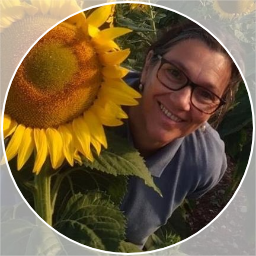
Albertina Raposo is from Setúbal, Portugal. She is a Coordinator Professor at the Polytechnic Institute of Beja (IPBeja) and Researcher at MARE - Center for Marine and Environmental Sciences. She coordinated (2018-2020) at IPBeja the Transforming Schools Project: Contributions to social change based on Education for Development and Global Citizenship at School. She is a member of the Education Network for Global Citizenship (ECG Network) and the Academic Network on Gobal Education and Learning (ANGEL).
EDUCATION
With a degree in Zootechnical Engineering from the University of Évora, she holds a Master's degree in Marine and Coastal Studies from the University of Algarve and a PhD in Environmental Sciences from the University of Évora.
RESEARCH INTERESTS
Among its current themes of scientific interest, with articles already published, we highlight Active Public Participation Processes for Nature Conservation, Nature-Society Relationship, Sustainability and Education for global citizenship.
7
Scopus Publications
Scopus Publications
Global-local Citizenship Strategies to Improve Communities’ Resilience: Inspiring Cases from Different Communities New Perspectives in Science Education International Conference, 2026
Healthy Campus: A Contribution to the Environment, Sustainability, and Social Responsibility Practices at the IPBeja in Portugal Anabela Durão, Teresa Borralho, Albertina Raposo Sustainability Switzerland, 2025 The existing environmental imbalances and the need to promote actions that minimize the impact and promote awareness and behavioral change are now primary needs. As a reflection of this situation, Higher Education Institutions (HEIs) are faced with the need for more sustainable development practices in their environmental, social, and economic aspects both in curricular and non-curricular spaces. This paper aims to show how the activities developed under the International University Sports Federation (FISU)’s Healthy Campus (HC) program can be an asset in promoting the environment, sustainability, and social responsibility in an HEI in Portugal. The methodology reflects a case study at the Polytechnic Institute of Beja (IPBeja) and includes (1) diagnosis, (2) drawing up the action plan, and (3) preparation, development, and monitoring of activities. The methodology approach adopted to analyze the activities uses the following: (1) the Mentimeter tool; (2) a mind map; and (3) a SWOT analysis. The results show that when activities are designed in a collaborative and participatory way, they end up geared towards the aspirations of the participants, allowing for greater involvement of people and growth of the institution in the aspects of the environment, sustainability, and social responsibility. The HC program is an asset program to align HC requirements, Sustainable Development Goals (SDGs), integrated and transdisciplinary approaches, and people’s environmental awareness and sustainable mindset. In political terms, this case study contributes to what is recommended in the institutional strategic plan.
Pandemic and Disruption: Opportunities for Learning and Social Transformation International Conference the Future of Education, 2021
What Futures for Education? An Answer to the Challenge Launched by UNESCO International Conference the Future of Education, 2021
Drifting conversations: expressions of Environmental Communitarian Education for an integral sustainable society Sílvia Franco, Raposo, Maria Albertina, Mário Pedro Santos, Rita Gonçalves, Teresa Morais, et al. Revista Lusofona De Educacao, 2021 A diversidade de saberes e olhares, que as diferentes formações académicas e experiências profissionais fazem convergir, promovem o diálogo, a reflexão e discussão complexa e integrada das temáticas, e enriquecem o conhecimento e a investigação à escala individual, de grupos de trabalho e de organizações. Assim, um grupo de cinco representantes de diferentes organizações e formas de conhecimento, integra o projeto Educação Comunitária Ambiental: ações colaborativas para um desenvolvimento costeiro sustentável integral. O grupo reúne, num formato que promove o colocar “à deriva” ideias resultantes do diálogo sobre colaboração e sustentabilidade, buscando a implementação dessas ideias nas práticas individuais e do coletivo. A metodologia dos encontros, com recurso a dinâmicas participativas promotoras do desenvolvimento holístico, visa a participação de todos, o confronto de ideias, a reflexão, a partilha de conhecimento e a aprendizagem, potenciando a educação que cada um carrega em si. Este artigo pretende dar a conhecer o papel da Educação Comunitária Ambiental para um pensar coletivo, crítico e gerador de ações concretas, bem como a metodologia processual dos encontros. O processo evidencia a relevância do elevado sentido de pertença dos membros do grupo que se traduz em aprendizagens individuais e partilha de diferentes saberes. Palavras-chave: educação comunitária ambiental; desenvolvimento holístico; ações colaborativas; sustentabilidade costeira; ideias “à deriva”.
Technology as a tool to enhance motivation and learning Albertina Raposo, Anabela Durão, Ana Estradas, Ivana Ribeiro E3s Web of Conferences, 2020 The aim of this work is to think about how technologies can have a role in motivation for learning. To respond to the necessary paradigm shift school faces, resulting from a different way of life in very recent past, the use of technology proves to be a powerful ally, ensuring student’s ability to respond to technical and scientific questions as well as creating an environment of trust and security in classroom. Considering that we are at a critical turning point in technological evolution and changes seem irreversible. What new challenges does the teacher also face in this field? To understand what makes the activity and the class remarkable for students, we are using semi-structured interview, focus group and questionnaire. Methods and technics used in the classes were diversified, and according to the intended goal. The use of these methods was not conditioned by technology but by the defined learning goals. Although this work is still beginning and needs to be continued, the results show that technology helps students to feel confident since it doesn’t expose individual (un)knowledge, allows them to learn with pleasure, generates group dynamics and globally, creates happy moments that increase motivation and improve learning. Results show us that it is imperative to realize how much the teacher as an important integrative agent mediating between the real/virtual, technological/scientific, curriculum/skill, cognitive/emotional worlds.