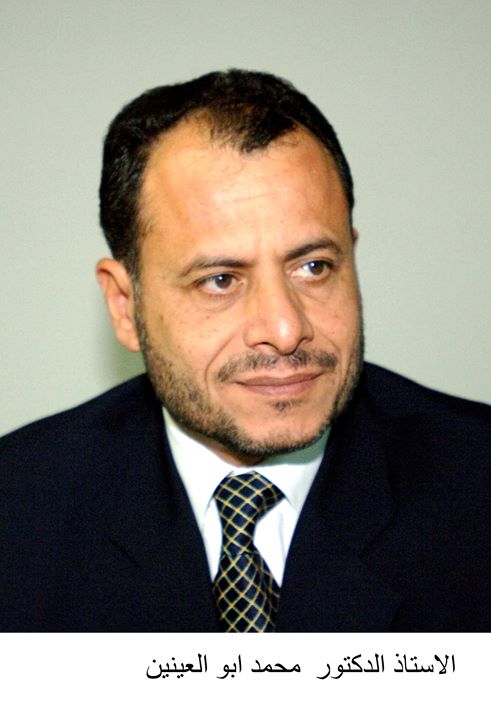
Mohammed Aboelenein

@uaeu.ac.ae

Professor of Sociology, Department of Government and Society
United Arab Emirates University (UAEU)

Born in Cairo, Egypt. Graduated with honor degree in Sociology from Ain-Shams University in 1976. Received MS in Rural Sociology (1983), and PhD in Sociology (1989) from the University of Wisconsin-Madison, USA. Worked as Assistant Professor (1989-1992) at Tanta University, Egypt. Seconded to UAE University, between 1993-1999. Promoted to Associate Professor in 1999, and to Full Professor in 2005. Hired as Associate Professor at UAE University since 2002. Served as Chairman of Sociology Department between 2006-2012, Coordinator of Exchange Student Program (2012-2019), Director of the UAEU General Education Program and and Chair of the General Education Committee (2014-now).

Taught several undergraduate and graduate courses. Supervised Master’s and PhD students, and served as external examiner for Master’s theses and doctoral dissertations. Refereed many papers for publication in peer reviewed journals (including International Journal of Sociology), as well as proposals for research gr

EDUCATION

PhD Sociology, University of Wisconsin-Madison

RESEARCH INTERESTS

Sustainable Development
Sociology of Globalization
Political Sociology
7

Scopus Publications

Scopus Publications

  • New Public Governance as a Mediator Between Health Policies and Social Security in Egypt Under the Outbreak of Covid-19
    Nevine Zakaria Amin, Mohammed Aboelenein
    Advances in Science Technology and Innovation, 2025
  • Preface
    Global Perspectives on Climate Change Social Resilience and Social Inclusion, 2024
  • Global perspectives on climate change, social resilience, and social inclusion
    Galaby, Aly Abdel Razek 1941-, Abo ElEnein, Mohammed, Mohamed, Hassan 1945-
    Global Perspectives on Climate Change Social Resilience and Social Inclusion, 2024
    The objective of this book is to study the important social, cultural, and political factors that affect the living conditions of the people in their societies. This study can provide the decision-makers with solutions to the problems that may face their societies and destabilize their structure.
  • From classroom interaction to academic success: tracing the mediating role of effective communication in faculty-student dynamics
    Nadia Dahmani, Wael Ali, Mohammed Aboelenein, Mohammad A. K. Alsmairat, Mursal Faizi
    Cogent Education, 2024
    This paper aimed to determine the impact of faculty communication style, student proactiveness, and academic discipline on student academic performance and student-faculty relationship quality in the United Arab Emirates (UAE) higher education context. This study also aimed to contribute to the literature by verifying the mediating impact of communication effectiveness between the selected factors. Using a cross-sectional survey design, the study sample comprised 193 university students, and it was analyzed using partial least squares structural equation modeling (PLS-SEM). The results revealed that academic discipline and the professor’s communication style enhanced communication effectiveness, whereas student proactiveness had a minimal effect. The results also show that effective communication significantly influences students’ academic success and the quality of faculty-student interactions. The mediating role of communication effectiveness has also been proven. These findings underscore the importance of robust communication in the faculty-student dynamics and its impact on academic performance in higher education. This research provides valuable strategies for higher education institutes to develop a high-interaction learning environment to ensure a high level of performance for both professors and students.
  • Universities Research Performance in the United Arab Emirates and Oman: Challenges of Higher Education Systems
    Mohammed Aboelenein, Daria Salnikova, Tatiana Karabchuk, Aizhan Shomotova, , , , and
    Journal of Higher Education Policy and Leadership Studies, 2022
    This article analyzes research performance in universities in two member countries of the Gulf Cooperation Council (GCC): the United Arab Emirates (UAE) and the Sultanate of Oman. Both have introduced reforms, innovations, and investments into their educational systems. Many international university branches were established, but their impact on research performance has yet to be closely evaluated. The article includes the following: first, descriptive analysis of research performance through total number of publications, citable documents, and average number of citations per document; second, analysis of priority subject areas and an overview of university rankings; third, challenges for research in higher educational institutions. Among sociocultural predictors of academic performance are historical context, English language proficiency, the modern educational system’s drawbacks, and higher education’s privatization and commercialization. Highlighted are institutional and organizational obstacles related to employment conditions of expatriates, along with the research environment and challenges that hinder internationalization.
  • The impact of climate change on agricultural and livestock production and groundwater characteristics in Abu Dhabi, UAE
    Latifa Saeed Al Blooshi, Taoufik Ksiksi, M. Abo-Elenein, Ali S. Gargoum
    Nature Environment and Pollution Technology, 2020
    Agriculture is located at the crossing point between ecosystems and society, where changes in the global environmental conditions affect agricultural activities. The total agricultural area in Abu Dhabi Emirate in 2017 was 749,868 donums. This study had two main objectives; first, to understand how agricultural and livestock production has changed and how these changes are relevant to socioeconomic statuses; second, to assess climate change's impact on agricultural and livestock production through groundwater characteristics. We distributed and collected 301 surveys throughout the three main regions in the Abu Dhabi Emirate (Abu Dhabi City, Al-Ain City, and Al Dhafrah). The results indicated that approximately 68% of the respondents in Al-Ain agreed that it is currently much easier and more profitable to manage a farm than it was 20 years ago. Further, 39% of the farmers agreed that both product quality and quantity have improved over the past 20 years. About 51% of Emirati nationals agreed that production has changed over time. The farmers aged between 51-60 years also agreed that there has been a change in production over time. Half of the farm owners agreed that production has changed, while a majority of the workers provided neutral responses on this topic. While a number of both owners and workers agreed that both production and income levels changed, more respondents disagreed than agreed that these changes had occurred. Finally, the farmers aged between 51-60 years agreed more that the groundwater levels and quality had changed over the past 20 years.
  • Climate change and environmental awareness: A study of energy consumption among the residents of Abu Dhabi, UAE
    Latifa Saeed Al Blooshi, Taoufik Saleh Ksiksi, Ali Soliman Gargoum, Mohammed Aboelenein
    Perspectives on Global Development and Technology, 2020
    The rising levels of greenhouse gases (GHG) have caused great concern about the impact of climate change on almost every aspect of our lives. Urban expansion and changing lifestyles have led to an increase in energy consumption. The main aim of this empirical study is to explore the environmental and socioeconomic impact of climate change on the energy consumption of a stratified random sample of the residents of three main regions in the Emirate of Abu Dhabi (Abu Dhabi city, Al-Ain city and AlDhafra) and to investigate residents’ awareness of this change. Data was gathered from 321 residents from these three regions. The response rate for the survey was 97 percent. Descriptive statistical methods and nonparametric tests were used to compare quantitative data at different levels of the sociodemographic variables. The findings revealed that more than 50 percent of the participants agreed that climate change is controlling their energy and water consumption. About 94 percent of participants believe that their energy consumption is increasing, while 44 percent of the sample spent 30 percent more money on water and electricity bills in the past 20 years. About 50 percent of participants consider moving to another city if energy prices increased due to energy consumption and the effects of climate change. Respondents over age of 40 tend to be more conscious and aware of climate change. Eighty-eight percent of the Emiratis believe that weather and climate change are affecting their energy and water consumption.