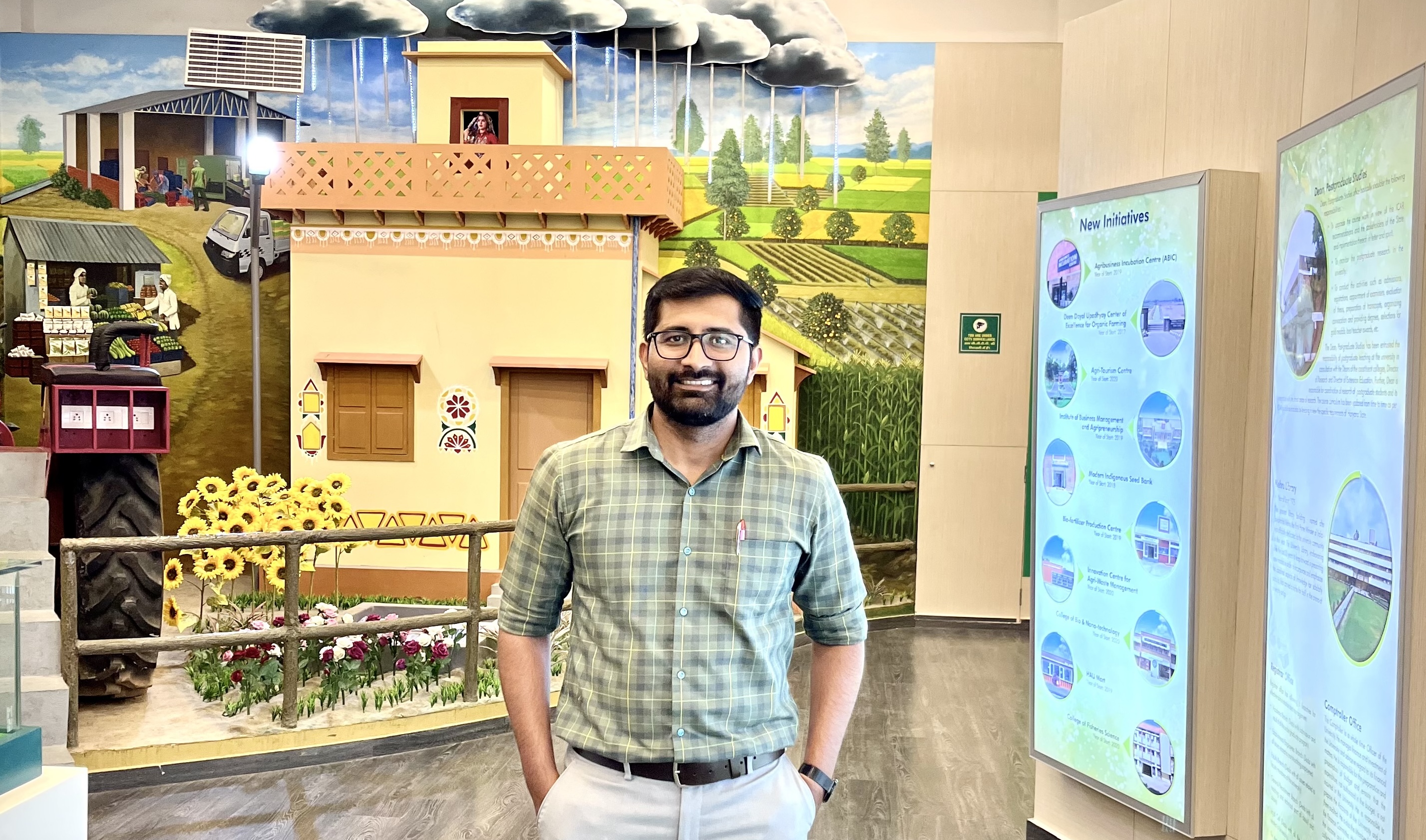
Amoghavarsha Chittaragi

@uasbangalore.edu.in

Assistant Professor, Department of Plant Pathology
University of Agricultural Sciences Bangalore

EDUCATION

MSc. (Agri), Ph.D. (Plant Pathology)

RESEARCH, TEACHING, or OTHER INTERESTS

Agricultural and Biological Sciences, Plant Science
19

Scopus Publications

300

Scholar Citations

10

Scholar h-index

10

Scholar i10-index

Scopus Publications

  • Spatial distribution and identification of potential risk regions of rice sheath blight disease in Karnataka, India
    Raghunandana Adke, Prashanthi S.K, Balangouda Patil, Devanna Pramesh, Amoghavarsha Chittaragi, Arvind Mohanan, Sandip Shil
    Tropical Plant Pathology, 2026
  • Development of an actionable threshold based advisory system for rice blast management using artificial neural network and binomial logistic regression models
    A. Jayashree, M.K. Prasannakumar, Amoghavarsha Chittaragi, Pramesh Devanna, H.B. Mahesh
    Microbial Risk Analysis, 2026
  • Hybrid machine learning framework for predicting bacterial leaf stripe disease in arecanut under complex agroclimatic conditions
    Nandeesha Kunchur Lingananda, Gangadhara B Naik, Amoghavarsha Chittaragi, Balanagouda Patil, Shankarappa Sridhara, Nandeesha Chandrappa Vasanad, Suresh Patil, Manjunath K Naik
    Microbial Risk Analysis, 2026
  • Linking Weather Variability and Genotypic Resistance to Alternaria Blight Progression in Rapeseed-Mustard Using Predictive Analytics
    Diksha Loona, Prabhjodh Singh Sandhu, Amoghavarsha Chittaragi, Pankaj Sharma
    Plant Pathology, 2026
    Alternaria blight caused by Alternaria brassicae is a major constraint to rapeseed‐mustard production in India, with disease development strongly influenced by weather conditions and varietal susceptibility. Disease progression was quantified in three rapeseed‐mustard varieties (Rohini, PBR‐357 and RL‐1359) over two consecutive cropping seasons using field observations, integrated statistical and time‐series modelling approaches. Percent disease index (PDI) increased progressively during the season, reaching peak values up to 68% in susceptible varieties (Rohini and RL‐1359), while the moderately resistant variety PBR‐357 consistently maintained lower severity (< 20%). Disease severity showed strong positive correlations with maximum and minimum temperatures ( r = 0.83–0.92) and moderate negative correlations with relative humidity ( r = −0.57 to −0.69). Cross‐correlation analysis revealed that lagged weather variables (particularly minimum temperature and relative humidity at 1‐week lag) exhibited stronger associations with disease severity than concurrent conditions. Multiple regression models explained a high proportion of variability in disease severity ( R 2 = 0.93–0.97), with minimum temperature emerging as a significant predictor ( p < 0.05). Time‐series forecasting using SARIMAX models incorporating lagged meteorological variables provided robust short‐term predictions, with lower AIC values (1.97) and stable residual diagnostics across all varieties. Genotype × Environment analysis confirmed significant varietal differences, with PBR‐357 exhibiting consistently lower disease severity across weekly environments ( p < 0.001). Overall, the integration of lag‐aware weather predictors, genotype‐specific responses and predictive modelling provides a quantitative framework for forecasting Alternaria blight and supporting a weather‐based disease management in rapeseed‐mustard.
  • SARIMA-Random Forest Framework for Forecasting Anthracnose Severity in Bottle Gourd Under Variable Transplanting Dates
    Amoghavarsha Chittaragi, Balanagouda Patil, M. Manjesh, S. Sridhar, Manjunath S. Hurakadli, R. Praveenakumar, S. Duhan Dharamveer, Anil Kumar, Rakesh Kumar, Man Mohan, Pawan Kumar Kasniya
    Plant Pathology, 2026
    Anthracnose, caused by Colletotrichum lagenarium , is an economically important disease affecting bottle gourd. This study aimed to evaluate the influence of transplanting time and weather parameters on anthracnose progression and to develop a forecasting framework using statistical and machine‐learning models. Field experiments were conducted during the monsoon seasons of 2023 and 2024, with four transplanting dates: 1 June, 15 June, 1 July and 15 July. Disease severity was assessed weekly on leaves and fruits along with concurrent recording of weather data. Correlation and regression analyses revealed minimum temperature as the most influential weather variables, particularly during early transplanting dates. The regression models yielded the highest explanatory power for 1 June fruits ( R 2 = 0.675), while later transplanting dates showed reduced disease pressure and lower model accuracy. To capture seasonal trends and short‐term predictability, Seasonal Autoregressive Integrated Moving Average (SARIMA) models with configuration (1,1,1) (1,1,1) [15] were applied. These models effectively forecasted disease progression, especially for July transplanting with lower mean squared errors (MSE &lt; 200). Time series decomposition showed strong seasonal and trend components in early sowings, while cross‐correlation analysis confirmed a 1–3‐week lag between weather triggers and disease expression. This study emphasises the importance of transplanting time in disease development and demonstrates the potential of combining SARIMA and random forest models for developing weather‐based early warning systems. These findings contribute to climate‐resilient crop protection strategies and can aid in timely decision‐making for anthracnose management in bottle gourd and related cucurbits.
  • Hybrid random forest– artificial neural network model based forecasting of anthracnose in bottle gourd across different transplanting windows
    Amoghavarsha Chittaragi, Balanagouda Patil, M. K. Prasanna Kumar, Pramesh Devanna
    Smart Agricultural Technology, 2025
    • A hybrid Random Forest–Artificial Neural Network model was developed for anthracnose forecasting in bottle gourd. • Plant parts- and transplanting window-specific forecasts achieved high accuracy (R² > 0.88). • Minimum temperature and morning RH were key weather predictors with 2–3 week lags. • Forecast outputs were translated into threshold-based disease risk advisories. • The model supports climate-resilient, site-specific disease management strategies. Anthracnose, caused by Colletotrichum lagenarium , significantly impacts bottle gourd yield, especially under different climate conditions and transplanting times. This study used a hybrid Random Forest–Artificial Neural Network (RF-ANN) framework to forecast disease severity (Percent Disease Index, PDI) across four transplanting dates DOT (T 1 –T 4 ) and plant parts (leaves and fruits) during the 2023 and 2024 Kharif (monsoon) seasons. Weekly data on disease severity and weather (temperature, humidity, and rainfall) were collected and processed using z-score normalization and time-lag features. RF-based importance analysis identified minimum temperature, morning relative humidity, and rainfall as key predictors. These factors were used to train ANN models. Short-term forecasts (1–14 weeks) showed high model accuracy, with the best results at a 2-week lead time (R²: 0.88 for leaves and 0.89 for fruits; NRMSE: 13.21 and 12.64%, respectively). Long-term forecasts (1–5 months) remained stable, with RF-ANN outperforming standalone ANN and RF models (R² up to 0.86; NRMSE down to 14.72%). Predicted versus observed PDI values showed strong agreement across all DOTs and plant parts. Lag analysis indicated meteorological variables lagged by 2–3 weeks exerted the greatest influence on predictions. Risk thresholds were set to convert forecast results into actionable advisory categories: low (<10%), moderate (11–20%), high (21–30%), and very high (>30%) risk. This RF-ANN hybrid framework offers an effective machine learning tool for early anthracnose warning in bottle gourd. It supports climate-resilient agriculture by enabling timely, site-specific, and organ-specific disease risk advisories under variable climate and planting conditions.
  • Weather driven prediction of downy mildew in broccoli deploying machine learning and time-series approaches
    Ranbir Singh, Diksha Loona, Amoghavarsha Chittaragi, Balanagouda Patil
    Journal of Plant Pathology, 2025
  • Weather-Driven Dynamics of Fruit Rot Disease in Arecanut—A Time Series Approach Using ARIMA and SARIMA Models
    Balanagouda Patil, Amoghavarsha Chittaragi, Diksha Loona, G. N. Hosagoudar, V. H. Prathibha, Man Mohan, Manjunath S. Hurakadli, R. Thava Prakasa Pandian, Shivaji H. Thube, Vinayaka Hegde, Manjunath K. Naik
    Plant Pathology, 2025
    Arecanut fruit rot disease (FRD) caused by Phytophthora meadii poses a significant threat to arecanut production in Southeast Asia. This study hypothesised that weather parameters significantly influence the temporal progression of FRD and time‐series models could be effectively used for forecasting. To test this, we analysed the relationship between key weather variables—temperature, relative humidity, rainfall and wind speed—and FRD severity across three agroclimatic regions of Karnataka, India (Malnad, Coastal and Maidan), during 2018 and 2019. Correlation and multiple linear regression analyses identified temperature and rainfall as significant positive predictors of FRD severity, while wind speed showed a negative association. The regression models explained a moderate level of variance with R 2 values of 0.145 (2018) and 0.15 (2019). To model and forecast disease progression, we employed time‐series analyses using ARIMA and SARIMA models. The ARIMA model effectively captured short‐term fluctuations, forecasting FRD severity up to 6 weeks in advance, with predicted ranges of 61.8%–78.4% (Malnad), 44.0%–38.4% (Coastal) and 13.4%–18.5% (Maidan). In contrast, SARIMA better captured seasonal trends and provided longer‐term forecasts, predicting severity values of 12.4%, 59.8% and 45.2% in Maidan, Malnad and Coastal regions, respectively. This is the first study to apply both ARIMA and SARIMA models for forecasting arecanut FRD. The findings highlight the significant influence of climatic factors on disease dynamics and advocate for region‐specific disease management strategies that incorporate predictive modelling tools for timely interventions.
  • Field evaluation of new fungicides in controlling downy mildew of broccoli - A mixed-effects model analysis
    Ranbir Singh, Diksha Loona, Amoghavarsha Chittaragi, Balanagouda Patil
    Crop Protection, 2025
  • Predicting Alternaria blight severity in radish: A comprehensive analysis of meteorological influence and time series modelling
    Diksha Loona, Ranbir Singh, Amoghavarsha Chittaragi, Balanagouda Patil, Gutha Venkata Ramesh
    Plant Pathology, 2025
    Alternaria leaf blight (ALB), caused by Alternaria brassicicola , poses a significant threat to radish cultivation, particularly in the agroclimatic conditions of Jammu and Kashmir, India. This study investigates the epidemiology of ALB during 2019/2020 and 2020/2021 growing seasons, focusing on the impact of meteorological factors on disease progression. Disease severity was monitored across various radish‐growing regions, revealing considerable spatial and temporal variability. The analysis identified maximum temperature (Tmax) as the most critical factor influencing percent disease index (PDI), with a strong positive correlation observed in both seasons, particularly in 2020/2021. Conversely, maximum relative humidity (Max RH) showed a negative correlation with PDI, suggesting complex interactions between temperature and humidity in disease dynamics. Principal component analysis further highlighted the distinct weather patterns between the two seasons, highlighting the role of environmental variability in disease progression. The study employed an advanced time series model, seasonal autoregressive integrated moving average (SARIMA), to forecast disease progression based on historical PDI data and corresponding weather parameters. The SARIMA model, by incorporating seasonal components, was found to be the best fit for predicting disease outbreaks. The findings of this study highlight the importance of integrating meteorological data into disease forecasting models to provide early warnings and guide timely interventions. By enhancing the understanding of ALB epidemiology, this research offers valuable insights for the development of sustainable disease management strategies in radish cultivation, reducing reliance on chemical fungicides and mitigating yield losses.
  • In-vitro and field evaluation of foliar fungicides for the management of Alternaria leaf blight in Radish (Raphanus sativus L.)
    Diksha Loona, Ranbir Singh, Amoghavarsha Chittaragi, Balanagouda Patil
    Crop Protection, 2025
  • Temporal dynamics of sapota pest damage and Phytophthora disease: insights from time series and machine learning models
    Meenakshi Malik, Niranjan Singh, Amoghavarsha Chittaragi, Raghavendra D, Balanagouda Patil, Bachu Lakshmi Manisha
    Frontiers in Plant Science, 2025
  • Assessing the antagonistic effects of biorationals on root-knot nematode (Meloidogyne incognita L.) in tobacco–a field study
    Narasimhamurthy H. B, Sandip Shil, Amoghavarsha Chittaragi, Balanagouda Patil, Diksha Loona, Pruthviraj, Ravindra H
    Archives of Phytopathology and Plant Protection, 2025
  • Biotechnological Approaches for Combatting Tree Diseases to Enhance the Forest Ecosystem Sustainability
    K. Darshan, Aditi Tailor, Komal Rani, Amoghavarsha Chittaragi, Diksha Loona, E. Santhoshinii, Sonali Nigam, S. Shreedevasena
    Tree Biology and Biotechnology, 2025
  • Field-scale efficacy of bioformulations, bioagents, and fungicides for controlling rice false smut disease: an integrated approach
    Saddamhusen Alase, D. Pramesh, M. K. Prasanna Kumar, Shankarappa Sridhara, Hosam O. Elansary, Mohamed A. Rashwan, Ihab Mohamed Moussa, B. S. Chethana, Balanagouda Patil, Amoghavarsha Chittaragi, A. Raghunandana, H. Sharanabasav, A. Nagaraja
    Cogent Food and Agriculture, 2024
  • Moderate disease resistance in rice cultivars enhances the bio-efficacy of fungicides against blast disease
    D. Pramesh, E. Chidanandappa, M. K. Prasanna Kumar, Amoghavarsha Chittaragi, M. K. Yadav, H. D. Pushpa, Buela Parivallal, N. Sumangala, Esac E. Raj, Karthik S. Narayan
    Indian Phytopathology, 2023
  • Morpho-molecular characterization, diversity analysis and antagonistic activity of Trichoderma isolates against predominant soil born pathogens
    N. P. Maheshwary, B. Gangadhara Naik, Amoghavarsha Chittaragi, Manjunath K. Naik, K. M. Satish, M. S. Nandish, T. G. Manu, Balanagouda Patil
    Indian Phytopathology, 2022
  • Spatial Distribution Patterns for Identifying Risk Areas Associated with False Smut Disease of Rice in Southern India
    Sharanabasav Huded, Devanna Pramesh, Amoghavarsha Chittaragi, Shankarappa Sridhara, Eranna Chidanandappa, Muthukapalli K. Prasannakumar, Channappa Manjunatha, Balanagouda Patil, Sandip Shil, Hanumanthappa Deeshappa Pushpa, Adke Raghunandana, Indrajeet Usha, Siva K. Balasundram, Redmond R. Shamshiri
    Agronomy, 2022
  • Multilocus sequence analysis and identification of mating-type idiomorphs distribution in Magnaporthe oryzae population of Karnataka state of India
    Amoghavarsha Chittaragi, Devanna Pramesh, Ganesha R. Naik, Manjunath K. Naik, Manoj K. Yadav, Umakanta Ngangkham, Manjunatha E. Siddepalli, Anusha Nayak, Muthukapalli K. Prasannakumar, Chidanandappa Eranna
    Journal of Applied Microbiology, 2022

RECENT SCHOLAR PUBLICATIONS

  • Spatial distribution and identification of potential risk regions of rice sheath blight disease in Karnataka, India
    R Adke, P SK, B Patil, D Pramesh, A Chittaragi, A Mohanan, S Shil
    Tropical Plant Pathology 51 (1), 24 , 2026
    2026
  • Development of an actionable threshold based advisory system for rice blast management using artificial neural network and binomial logistic regression models
    A Jayashree, MK Prasannakumar, A Chittaragi, P Devanna, HB Mahesh
    Microbial Risk Analysis, 100373 , 2026
    2026
  • Hybrid machine learning framework for predicting bacterial leaf stripe disease in arecanut under complex agroclimatic conditions
    NK Lingananda, GB Naik, A Chittaragi, B Patil, S Shankarappa, ...
    Microbial Risk Analysis, 100371 , 2026
    2026
  • Eco-functional intensification through natural and organic farming of groundnut (Arachis hypogaea)
    HK Veeranna, HD Shilpa, ME Shilpa, SK Adarsha, TG Amrutha
    The Indian Journal of Agricultural Sciences 96 (2) , 2026
    2026
  • SARIMA‐Random Forest Framework for Forecasting Anthracnose Severity in Bottle Gourd Under Variable Transplanting Dates
    A Chittaragi, B Patil, M Manjesh, S Sridhar, MS Hurakadli, ...
    Plant Pathology 75 (1), e70093 , 2026
    2026
    Citations: 2
  • Assessing the antagonistic effects of biorationals on root-knot nematode ( Meloidogyne incognita L.) in tobacco – a field study
    N H. B, S Shil, A Chittaragi, B Patil, D Loona, Pruthviraj
    Archives of Phytopathology and Plant Protection 58 (20), 1095-1113 , 2025
    2025
  • 'Weather-Driven Dynamics of Fruit Rot Disease in Arecanut-A Time Series Approach Using ARIMA and SARIMA Models'(AUG, 10.1111/ppa. 70034, 2025)
    B Patil, A Chittaragi, D Loona
    PLANT PATHOLOGY 74 (9), 2990-2990 , 2025
    2025
  • Weather‐Driven Dynamics of Fruit Rot Disease in Arecanut—A Time Series Approach Using ARIMA and SARIMA Models
    B Patil, A Chittaragi, D Loona, GN Hosagoudar, VH Prathibha, M Mohan, ...
    Plant Pathology 74 (8), 2412-2426 , 2025
    2025
    Citations: 6
  • Hybrid Random Forest–Artificial Neural Network Model Based Forecasting of Anthracnose in Bottle Gourd Across Different Transplanting Windows
    A Chittaragi, B Patil, MKP Kumar, P Devanna
    Smart Agricultural Technology, 101477 , 2025
    2025
    Citations: 4
  • Temporal dynamics of sapota pest damage and Phytophthora disease: insights from time series and machine learning models
    M Malik, N Singh, A Chittaragi, B Patil, BL Manisha
    Frontiers in Plant Science 16, 1659709 , 2025
    2025
    Citations: 2
  • Weather driven prediction of downy mildew in broccoli deploying machine learning and time-series approaches
    R Singh, D Loona, A Chittaragi, B Patil
    Journal of Plant Pathology, 1-11 , 2025
    2025
    Citations: 4
  • Field evaluation of new fungicides in controlling downy mildew of broccoli-A mixed-effects model analysis
    R Singh, D Loona, A Chittaragi, B Patil
    Crop Protection 190, 107107 , 2025
    2025
    Citations: 7
  • Biotechnological approaches for combatting tree diseases to enhance the forest ecosystem sustainability
    K Darshan, A Tailor, K Rani, A Chittaragi, D Loona, E Santhoshinii, ...
    Tree Biology and Biotechnology, 261-285 , 2025
    2025
    Citations: 3
  • In-vitro and field evaluation of foliar fungicides for the management of Alternaria leaf blight in Radish (Raphanus sativus L.)
    D Loona, R Singh, A Chittaragi, B Patil
    Crop Protection 187, 106967 , 2025
    2025
    Citations: 4
  • Field-scale efficacy of bioformulations, bioagents, and fungicides for controlling rice false smut disease: an integrated approach
    S Alase, D Pramesh, MK Prasanna Kumar, S Sridhara, HO Elansary, ...
    Cogent Food & Agriculture 10 (1), 2371934 , 2024
    2024
    Citations: 7
  • Predicting Alternaria blight severity in radish: A comprehensive analysis of meteorological influence and time series modelling
    D Loona, R Singh, A Chittaragi, B Patil, GV Ramesh
    Plant Pathology , 2024
    2024
    Citations: 8
  • Moderate disease resistance in rice cultivars enhances the bio-efficacy of fungicides against blast disease
    D Pramesh, E Chidanandappa, MK Prasanna Kumar, A Chittaragi, ...
    Indian Phytopathology 76 (1), 141-149 , 2023
    2023
    Citations: 6
  • Genetic diversity and pathotype profiling of Xanthomonas oryzae pv. oryzae isolates from diverse rice growing ecosystems of Karnataka state of India.
    A Raghunandana, D Pramesh, S Gururaj, C Amoghavarsha, MK Yadav, ...
    Plant Protection Science 59 (1) , 2023
    2023
    Citations: 13
  • Prevalence and distribution of rice blast disease in different rice ecosystems of Karnataka, India.
    A Chittaragi, GR Naik, D Pramesh, MK Naik, A Raghunandana, ...
    2022
    Citations: 4
  • Morpho-molecular characterization, diversity analysis and antagonistic activity of Trichoderma isolates against predominant soil born pathogens
    NP Maheshwary, BG Naik, A Chittaragi, MK Naik, KM Satish, MS Nandish, ...
    Indian Phytopathology 75 (4), 1009-1020 , 2022
    2022
    Citations: 9

MOST CITED SCHOLAR PUBLICATIONS

  • Compatibility of Trichoderma asperellum with fungicides
    N Maheshwary, B Gangadhara Naik, M Amoghavarsha Chittaragi, ...
    Pharma Innov. J 9, 136-140 , 2020
    2020
    Citations: 34
  • Chemicals for the Management of Paddy Blast Disease
    Amoghavarsha, C., Pramesh, D., Chidanandappa, E., Sharanabasav, H ...
    Blast Disease of Cereal Crops, 59-81 , 2021
    2021
    Citations: 33
  • Morpho‐molecular diversity and avirulence genes distribution among the diverse isolates of Magnaporthe oryzae from Southern India
    C Amoghavarsha, D Pramesh, GR Naik, MK Naik, MK Yadav, ...
    Journal of Applied Microbiology 132 (2), 1275-1290 , 2022
    2022
    Citations: 29
  • Spatial distribution and identification of potential risk regions to rice blast disease in different rice ecosystems of Karnataka
    C Amoghavarsha, D Pramesh, S Sridhara, B Patil, S Shil, GR Naik, ...
    Scientific reports 12 (1), 7403 , 2022
    2022
    Citations: 28
  • Field evaluation of fungicides against false smut disease of rice
    H Sharanabasav, D Pramesh, E Chidanandappa, A Saddamhusen, ...
    J. Pharm. Phytochem 9, 1453-1456 , 2020
    2020
    Citations: 22
  • Spatial distribution patterns for identifying risk areas associated with false smut disease of rice in Southern India
    S Huded, D Pramesh, A Chittaragi, S Sridhara, E Chidanandappa, ...
    Agronomy 12 (12), 2947 , 2022
    2022
    Citations: 16
  • Bio-efficacy of combination fungicide Prochloraz 27%+ tricyclazole 23% SE for the management of blast disease of rice
    D Pramesh, A Chittaragi, T Nagaraj, A Saddamhusen, E Chidanandappa, ...
    Journal of Pharmacognosy and Phytochemistry 9 (4), 3027-3032 , 2020
    2020
    Citations: 14
  • Genetic diversity and pathotype profiling of Xanthomonas oryzae pv. oryzae isolates from diverse rice growing ecosystems of Karnataka state of India.
    A Raghunandana, D Pramesh, S Gururaj, C Amoghavarsha, MK Yadav, ...
    Plant Protection Science 59 (1) , 2023
    2023
    Citations: 13
  • Effect of different media on mycelial growth of Lentinula edodes
    A Chittaragi, A Kumar, S Singh
    Int J Curr Microbiol Appl Sci 7 (4), 2193-8 , 2018
    2018
    Citations: 13
  • Multilocus sequence analysis and identification of mating‐type idiomorphs distribution in Magnaporthe oryzae population of Karnataka state of India
    A Chittaragi, D Pramesh, GR Naik, MK Naik, MK Yadav, U Ngangkham, ...
    Journal of Applied Microbiology 132 (6), 4413-4429 , 2022
    2022
    Citations: 12
  • Morpho-molecular characterization, diversity analysis and antagonistic activity of Trichoderma isolates against predominant soil born pathogens
    NP Maheshwary, BG Naik, A Chittaragi, MK Naik, KM Satish, MS Nandish, ...
    Indian Phytopathology 75 (4), 1009-1020 , 2022
    2022
    Citations: 9
  • Predicting Alternaria blight severity in radish: A comprehensive analysis of meteorological influence and time series modelling
    D Loona, R Singh, A Chittaragi, B Patil, GV Ramesh
    Plant Pathology , 2024
    2024
    Citations: 8
  • Field evaluation of new fungicides in controlling downy mildew of broccoli-A mixed-effects model analysis
    R Singh, D Loona, A Chittaragi, B Patil
    Crop Protection 190, 107107 , 2025
    2025
    Citations: 7
  • Field-scale efficacy of bioformulations, bioagents, and fungicides for controlling rice false smut disease: an integrated approach
    S Alase, D Pramesh, MK Prasanna Kumar, S Sridhara, HO Elansary, ...
    Cogent Food & Agriculture 10 (1), 2371934 , 2024
    2024
    Citations: 7
  • Weather‐Driven Dynamics of Fruit Rot Disease in Arecanut—A Time Series Approach Using ARIMA and SARIMA Models
    B Patil, A Chittaragi, D Loona, GN Hosagoudar, VH Prathibha, M Mohan, ...
    Plant Pathology 74 (8), 2412-2426 , 2025
    2025
    Citations: 6
  • Moderate disease resistance in rice cultivars enhances the bio-efficacy of fungicides against blast disease
    D Pramesh, E Chidanandappa, MK Prasanna Kumar, A Chittaragi, ...
    Indian Phytopathology 76 (1), 141-149 , 2023
    2023
    Citations: 6
  • Blast disease of cereal crops
    C Amoghavarsha, D Pramesh, E Chidanandappa, H Sharanabasav, ...
    Springer , 2021
    2021
    Citations: 6
  • Evaluation of various lignocellulosic products for the cultivation of shiitake mushroom [Lentinula edodes (Berk.) Pegler]
    A Chittaragi, A Kumar, KM Muniraju
    Int. J. Curr. Microbiol. App. Sci 7 (4), 2199-2203 , 2018
    2018
    Citations: 6
  • Hybrid Random Forest–Artificial Neural Network Model Based Forecasting of Anthracnose in Bottle Gourd Across Different Transplanting Windows
    A Chittaragi, B Patil, MKP Kumar, P Devanna
    Smart Agricultural Technology, 101477 , 2025
    2025
    Citations: 4
  • Weather driven prediction of downy mildew in broccoli deploying machine learning and time-series approaches
    R Singh, D Loona, A Chittaragi, B Patil
    Journal of Plant Pathology, 1-11 , 2025
    2025
    Citations: 4