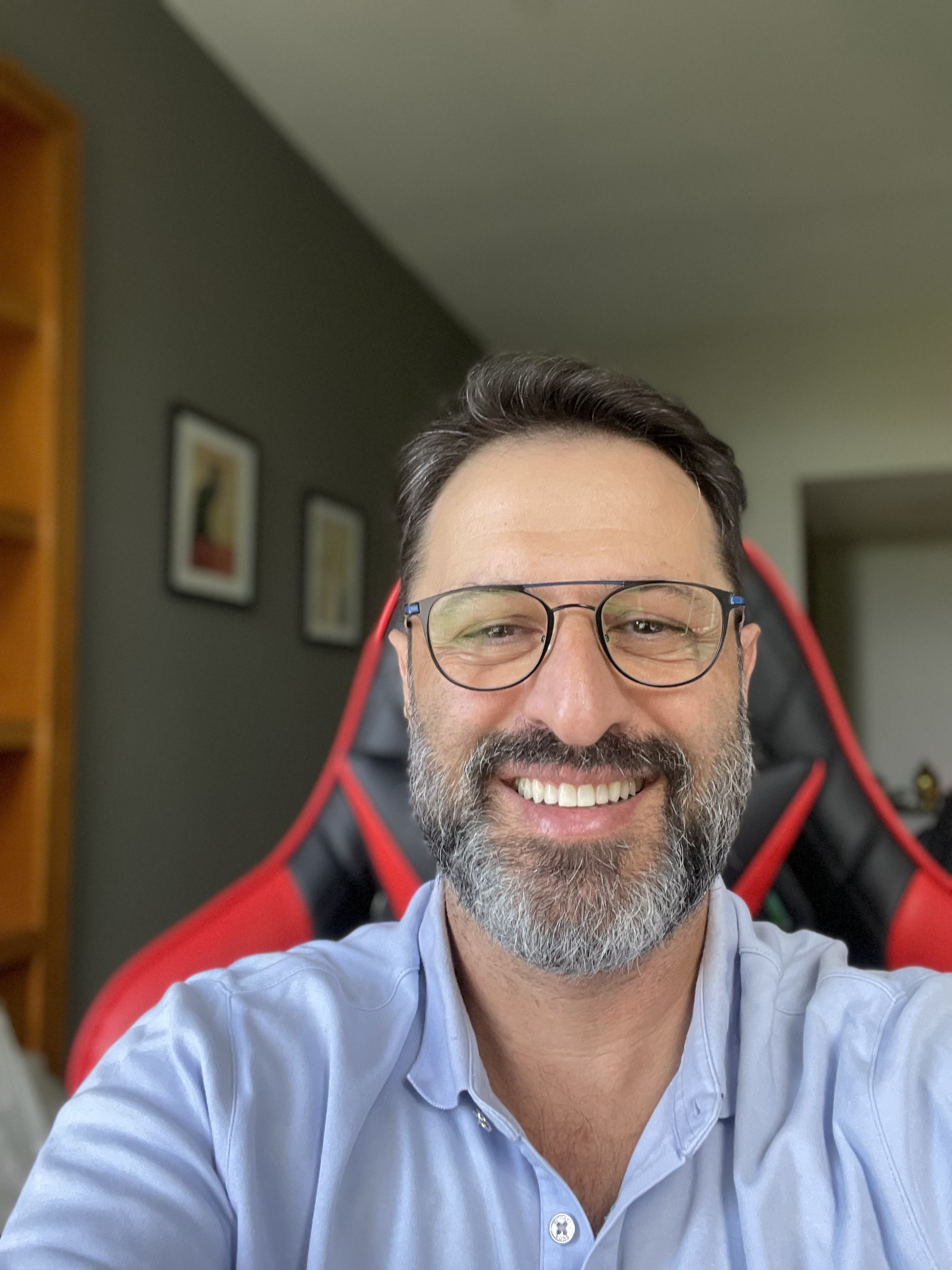
Carlos Alessandre Domingos Lentini holds a bachelor’s degree in Oceanology from the Federal University of Rio Grande (FURG - 1992)), a master’s degree in Physical Oceanography from the Oceanographic Institute of the University of São Paulo (IOUSP - 1997)), and a PhD in Physical Oceanography and Meteorology from the Rosenstiel School of Marine, Atmospheric, and Earth Science at the University of Miami (RSMAS/UM, USA - 2000). Since 2007, he has been a permanent faculty member of the Department of Physics of the Earth and Environmental (DFTMA) at the Institute of Physics of the Federal University of Bahia (UFBA), teaching in the undergraduate programs in Oceanography and Physics, as well as in the graduate programs in Geophysics (PPGEOF), Energy and Environment (PGEnAm), and Petroleum and Environment (POSPETRO), all at UFBA. Since 2013, he's been a Full Professor at UFBA, leader of the Tropical Oceanography Group (GOAT) and SWOT-Oceans Brazil.
RESEARCH, TEACHING, or OTHER INTERESTS
Oceanography, Earth and Planetary Sciences, Environmental Science, Modeling and Simulation
Oil spill analysis and simulations in the Foz do Amazonas sedimentary basin Felipe R. Torres, Syumara Queiroz, Carlos A.D. Lentini, L.F.F. Mendonça, André T. Cunha Lima Continental Shelf Research, 2026 One of Petrobras' main exploration fronts until 2028 is the Brazilian Equatorial Margin, where 16 wells are scheduled to be drilled. Within this area, the Foz do Amazonas Sedimentary Basin (SFZA) stands out, covering the coast of Amapá and part of Pará. In this region, Petrobras is seeking environmental licenses to drill six already acquired blocks, while several others are up for sale by the ANP (National Agency of Petroleum, Natural Gas, and Biofuels). Initially, the company conducted oil spill simulations suggesting that spilled oil would not reach the Brazilian coast due to the strong influence of the North Brazil Current (NBC), which would carry it northwest toward Central America. However, for a more in-depth analysis, we used the MEDSLIK-II model to conduct new simulations, both in Petrobras' area of interest and in other locations proposed for auction. The results obtained with MEDSLIK-II align with Petrobras' previous simulations for the summer and winter periods. However, during the boreal spring, oil reached the coasts of neighboring countries. For other blocks for sale located southeast in the SFZA, the risk of oil reaching the Brazilian coast and neighboring countries is significantly high, especially from boreal autumn to late spring. Given this new evidence, it is essential to conduct more detailed studies before authorizing any drilling in the region. It is also advisable to reassess the sale of new blocks until the risks are better understood. • Oil spill risk evaluated for exploratory blocks in the Amazon margin; • Independent assessment complements Petrobras environmental studies; • Results support improved environmental risk assessment frameworks.
Projected Risks to Biodiversity Conservation Along Brazil's Equatorial Margin Under Expanding Offshore Oil Development Rafael A. Magris, Martinho Marta‐Almeida, Carlos Alessandre Domingos Lentini Conservation Letters, 2026 Brazil's Equatorial Margin is one of the least studied yet most ecologically significant regions of the Atlantic Ocean. Encompassing the Amazon coast, the region is entering a new phase of industrial expansion. In 2025, Brazil issued its first offshore oil exploration license in two decades, opening the door to large‐scale hydrocarbon development. This decision comes amid renewed global commitments to climate following COP30, highlighting persistent policy tensions between energy expansion and sustainability. Here, we present a spatially explicit assessment of cumulative oil spill risk across Brazil's Equatorial Margin. By integrating oceanographic modeling of spill trajectories with habitat distribution and vulnerability scores, we mapped cumulative risk across marine habitats in all sedimentary basins and identified where risk overlaps with conservation priorities. Results indicate that the Potiguar Basin contributes most strongly to cumulative risk for seagrass meadows, rhodolith beds, coral reefs, and seamount ecosystems. In contrast, the Foz do Amazonas Basin presents comparatively lower overall risk, although planned activities there increase projected risk for mesophotic reefs. Building on these insights, we outline policy actions—including strengthened ecological monitoring, improved spill preparedness, and expansion of marine protected areas—to improve governance as offshore oil development is considered along Brazil's Equatorial Margin.
Revealing Unproductive Areas in the Caatinga Biome: A Remote Sensing Approach to Monitoring Land Degradation in Drylands Diêgo P. Costa, Rodrigo N. Vasconcelos, Soltan Galano Duverger, Stefanie M. Herrmann, Washington J. S. Franca Rocha, Nerivaldo Afonso Santos, Deorgia T. M. Souza, André T. Cunha Lima, Carlos A. D. Lentini Earth Switzerland, 2025 Land degradation in drylands represents a critical environmental challenge, with persistent bare soil serving as a key indicator of ecosystem vulnerability, including in the Caatinga biome. This study maps and analyzes the spatial and temporal dynamics of persistent bare soils over three decades using multi-temporal remote sensing data. We applied Spectral Mixture Analysis (SMA), temporal metrics, and machine learning classifiers within Google Earth Engine to process long-term Landsat datasets and to derive the Normalized Difference Fraction Index Adjusted (NDFIa). The results indicate a widespread increase in bare soil, with over 63% of mapped hexagons showing expansion, particularly in the São Francisco Basin. Peaks in soil exposure coincided with severe drought events, highlighting the link between climate variability and land degradation. Moreover, abandoned agricultural lands and pasturelands emerged as the dominant contributors to persistent bare soils. These findings reinforce the need for targeted policies to mitigate land degradation and to promote sustainable land management in semi-arid ecosystems. This research provides a robust framework for long-term environmental monitoring in drylands by integrating satellite data with advanced analytical techniques. These advancements support more effective land management and conservation strategies in semi-arid ecosystems.
Trends in Oil Spill Modeling: A Review of the Literature Rodrigo N. Vasconcelos, André T. Cunha Lima, Carlos A. D. Lentini, José Garcia V. Miranda, Luís F. F. de Mendonça, Diego P. Costa, Soltan G. Duverger, Elaine C. B. Cambui Water Switzerland, 2025 Oil spill simulation models are essential for predicting the oil spill behavior and movement in marine environments. In this study, we comprehensively reviewed a large and diverse body of peer-reviewed literature obtained from Scopus and Web of Science. Our initial analysis phase focused on examining trends in scientific publications, utilizing the complete dataset derived after systematic screening and database integration. In the second phase, we applied elements of a systematic review to identify and evaluate the most influential contributions in the scientific field of oil spill simulations. Our analysis revealed a steady and accelerating growth of research activity over the past five decades, with a particularly notable expansion in the last two. The field has also experienced a marked increase in collaborative practices, including a rise in international co-authorship and multi-authored contributions, reflecting a more global and interdisciplinary research landscape. We cataloged the key modeling frameworks that have shaped the field from established systems such as OSCAR, OIL-MAP/SIMAP, and GNOME to emerging hybrid and Lagrangian approaches. Hydrodynamic models were consistently central, often integrated with biogeochemical, wave, atmospheric, and oil-spill-specific modules. Environmental variables such as wind, ocean currents, and temperature were frequently used to drive model behavior. Geographically, research has concentrated on ecologically and economically sensitive coastal and marine regions. We conclude that future progress will rely on the real-time integration of high-resolution environmental data streams, the development of machine-learning-based surrogate models to accelerate computations, and the incorporation of advanced biodegradation and weathering mechanisms supported by experimental data. These advancements are expected to enhance the accuracy, responsiveness, and operational value of oil spill modeling tools, supporting environmental monitoring and emergency response.
Operational Assessment of Side-Scan Sonar Data Applied to Naval Mine Detection Using an Automatic Target Recognition Algorithm Camilla Caricchio, Luis Felipe Mendonça, André T. C. Lima, Carlos A. D. Lentini IEEE Geoscience and Remote Sensing Letters, 2025 Mine warfare (MW) and mine countermeasures (MCMs) have become strategic options to ensure national sovereignty and the safety of maritime commercial routes, which is the primary logistics system for international trade. As an asymmetric weapon, locating and neutralizing a naval mine poses a significant challenge for the world’s navies. In this context, this work proposes an object detection model based on you only look once, version 11 (YOLOv11) for automatic and real-time detection of naval mines in harbor areas using side-scan sonar (SSS) data. The main objective of this tool is to apply it to unmanned maritime vehicles (UMVs) to enhance the mine detection efficiency during minehunting operations. Second, this study aims to evaluate the effects of operational parameters, oceanographic and meteorological conditions on the SSS data quality for naval mine detection. All the data used to train the neural network were real and obtained in a test area, mimicking a port area, a strategic environment in the context of MW. The model performed with satisfactory statistical results (mAP@0.5: 0.84, P: 0.93, R: 0.83, and F1 score: 0.88). Based on the results provided in this study, the 0.70 confidence level can be safely used in future operational inferences using this customized model. From the operational evaluation of SSS data quality, the ideal condition for data acquisition is using an intermediary range and high-frequency sonars with calm seas and low speeds. Despite the recent advancements in the field of machine learning, it is unlikely that neural networks will fully replace human operators in MCM missions in the short to medium term. However, they serve as a valuable tool for decision support, enabling rapid analysis of large datasets and filtering information to present only the most relevant data to human analysts, such as potential sea mines. When embedded in UMV, this technology mitigates risks to human life and enables operators to focus on verifying real targets, thereby enhancing the effectiveness of MCM operations.
YOLOv8 Neural Network Application for Noncollaborative Vessel Detection Using Sentinel-1 SAR Data: A Case Study Camilla Caricchio, Luis Felipe Mendonça, Carlos A. D. Lentini, André T. C. Lima, David O. Silva, Pedro H. Meirelles e Góes IEEE Geoscience and Remote Sensing Letters, 2025 Noncollaborative vessels are usually involved in illegal activities and actively monitoring these vessels is one of the most challenging task. This study introduces a methodology that combines automatic identification system (AIS) data and SAR images into a YOLOv8+ slicing-aided hyper inference (SAHI)-based approach, as a decision aid tool for noncooperative vessel detection, to improve maritime domain awareness. It was used 1958 augmented images to custom train the YOLOv8 neural network. For the study case, 16 Sentinel high-resolution ground range detected (GRDH)- interferometric wide (IW) SAR images were used. During the training, the custom model achieved excellent performance with satisfactory statistical results (mAP@.5: 94.3%, precision: 92.5%, and recall: 91.9%), especially when compared to similar previous studies. The model was able to correctly distinguish between vessels and nonvessel features, such as islands, rivers, or coastlines. In the study case, the false negative (FN) detection rate was 95.4%, similar to mAp@0.5 results found at the training and validation step and the Recall was 95.6%, considered excellent results. The recall improvement in the study case shows that the model’s performance in real-world scenarios is better than initially expected for application in noncollaborative vessel detection systems. The model presented showed very promising results for the operational detection of darkships using, simultaneous, SAR images and AIS data.
All Deforestation Matters: Deforestation Alert System for the Caatinga Biome in South America’s Tropical Dry Forest Diego Pereira Costa, Carlos A. D. Lentini, André T. Cunha Lima, Soltan Galano Duverger, Rodrigo N. Vasconcelos, Stefanie M. Herrmann, Jefferson Ferreira-Ferreira, Mariana Oliveira, Leonardo da Silva Barbosa, Carlos Leandro Cordeiro, Nerivaldo Afonso Santos, Rafael Oliveira Franca Rocha, Deorgia T. M. Souza, Washington J. S. Franca Rocha Sustainability Switzerland, 2024
Geochemical analysis of SAR backscattering (Sentinel-1) on global ocean oil spill cases José Milton Neves de Souza Júnior, Luís Felipe Ferreira de Mendonça, Heverton da Silva Costa, Juliana Costi, Rodrigo Nogueira Vasconcelos, André Telles da Cunha Lima, Sidnei João Siqueira Sant’anna, José Marques Lopes, Milton José Porsani, de José Vivas Garica Miranda, Carlos Alessandre Domingos Lentini European Journal of Remote Sensing, 2023
Coastal Ocean Observing and Modeling Systems in Brazil: Initiatives and Future Perspectives Guilherme Franz, Carlos A. E. Garcia, Janini Pereira, Luiz Paulo de Freitas Assad, Marcelo Rollnic, Luis Hamilton P. Garbossa, Letícia Cotrim da Cunha, Carlos A. D. Lentini, Paulo Nobre, Alexander Turra, Janice R. Trotte-Duhá, Mauro Cirano, Segen F. Estefen, José Antonio M. Lima, Afonso M. Paiva, Mauricio A. Noernberg, Clemente A. S. Tanajura, José Luiz Moutinho, Francisco Campuzano, Ella S. Pereira, André Cunha Lima, Luís F. F. Mendonça, Helder Nocko, Leandro Machado, João B. R. Alvarenga, Renato P. Martins, Carina Stefoni Böck, Raquel Toste, Luiz Landau, Tiago Miranda, Francisco dos Santos, Júlio Pellegrini, Manuela Juliano, Ramiro Neves, Andrei Polejack Frontiers in Marine Science, 2021
Sar oil spill detection system through random forest classifiers Marcos Reinan Assis Conceição, Luis Felipe Ferreira de Mendonça, Carlos Alessandre Domingos Lentini, André Telles da Cunha Lima, José Marques Lopes, Rodrigo Nogueira de Vasconcelos, Mainara Biazati Gouveia, Milton José Porsani Remote Sensing, 2021
Oil spill detection and mapping: A 50-year bibliometric analysis Rodrigo N. Vasconcelos, André T. Cunha Lima, Carlos A. D. Lentini, Garcia V. Miranda, Luís F. Mendonça, Marcus A. Silva, Elaine C. B. Cambuí, José M. Lopes, Milton J. Porsani Remote Sensing, 2020
Vulnerability of Atlantic Equatorial Margin and Caribbean Sea to oil exploration in Northern Brazil M Marta-Almeida, CAD Lentini, LFF de Mendonça, AL Aguiar, ... Energy Reports 15, 109358 , 2026 2026
Projected Risks to Biodiversity Conservation Along Brazil's Equatorial Margin Under Expanding Offshore Oil Development RA Magris, M Marta‐Almeida, CAD Lentini Conservation Letters 19 (3), e70049 , 2026 2026 Citations: 1
Oil spill analysis and simulations in the Foz do Amazonas sedimentary basin F Torres, S Queiroz, C Lentini, LF Mendonça, AC Lima Continental Shelf Research, 105676 , 2026 2026
Hydrographic–biogeochemical control of surface pCO2 in the Southwestern Atlantic Ocean ML Bulcão, LFF de Mendonça, CAD Lentini, R Gonçalves-Araujo Continental Shelf Research, 105662 , 2026 2026
SipamMar: um sistema autônomo brasileiro de detecção e modelagem de manchas de óleo AAH Gamba, LFF de Mendonça, CAD Lentini, SQ de Paiva, DO Silva, ... REVISTA DE SEGURANÇA, DESENVOLVIMENTO E DEFESA 2 (2), 57-74 , 2025 2025
The effect of wind parametrizations in MEDSLIK-II oil spill simulations: A case study of the FPU P-53 incident in Brazilian waters EJAC Lima, S Queiroz, MEA Ishimaru, ME Kusuky, MC Moura, M Araujo, ... Marine Pollution Bulletin 218, 118118 , 2025 2025 Citations: 4
Revealing Unproductive Areas in the Caatinga Biome: A Remote Sensing Approach to Monitoring Land Degradation in Drylands DP Costa, RN Vasconcelos, SG Duverger, SM Herrmann, ... Earth 6 (3), 96 , 2025 2025 Citations: 1
Operational Assessment of Side Scan Sonar data applied to Naval Mine Detection using an Automatic Target Recognition Algorithm C Caricchio, LF Mendonça, ATC Lima, CAD Lentini IEEE Geoscience and Remote Sensing Letters , 2025 2025 Citations: 1
Trends in oil spill modeling: a review of the literature RN Vasconcelos, ATC Lima, CAD Lentini, JGV Miranda, ... Water 17 (15), 2300 , 2025 2025 Citations: 6
Changes in the organic matter deposition in the Southeastern America mangrove limit occurrence area (Santo Antônio Lagoon, Brazil) I de Deus Gargur-Leal, MC França, J Leonel, M Cancela Lisboa Cohen, ... Bulletin of Marine Science 101 (2), 841-860 , 2025 2025
YOLOv8 Neural Network Application for Noncollaborative Vessel Detection Using Sentinel-1 SAR Data: A Case Study C Caricchio, LF Mendonça, CAD Lentini, ATC Lima, DO Silva, ... IEEE Geoscience and Remote Sensing Letters 22, 1-5 , 2024 2024 Citations: 3
All deforestation matters: Deforestation alert system for the Caatinga Biome in South America’s tropical dry forest DP Costa, CAD Lentini, AT Cunha Lima, SG Duverger, RN Vasconcelos, ... Sustainability 16 (20), 9006 , 2024 2024 Citations: 7
Dispersion analysis of the 2017 Persian Gulf oil spill based on remote sensing data and numerical modelling JMN de Souza Júnior, LFF de Mendonça, H da Silva Costa, ... Marine Pollution Bulletin 205, 116639 , 2024 2024 Citations: 6
Note on volume and distribution of fresh water in the Amazon River plume under low discharge conditions PO Zavialov, AN Drozdova, OO Möller Jr, IN Krylov, CAD Lentini, ... Environmental Research Communications 6 (4), 041002 , 2024 2024 Citations: 1
The Role of the State in Diversifying and Expanding the Brazilian Energy Matrix: an Analysis of Legislation PRR Morais, CM Souza Júnior, JSB Lobão, CAD Lentini Sociedade & Natureza 36, e70415 , 2024 2024
O Papel do Estado na Diversificação e Ampliação da matriz Elétrica Brasileira: uma Análise da Legislação PRR Morais, CM Souza Júnior, JSB Lobão, CAD Lentini Sociedade & Natureza 36, e70415 , 2024 2024
Maximum angular multiscale entropy: Characterization of the angular self-similarity patterns in two types of SAR images: Oil spills and low-wind conditions images JGV Miranda, RN Vasconcelos, CAD Lentini, ATC Lima, LFF Mendonca Physica D: Nonlinear Phenomena 455, 133892 , 2023 2023 Citations: 1
Spatial and temporal variability in mode-1 and mode-2 internal solitary waves from MODIS-Terra sun glint off the Amazon shelf CR De Macedo, A Koch-Larrouy, JCB Da Silva, JM Magalhães, ... Ocean Science 19 (5), 1357-1374 , 2023 2023 Citations: 27
Bibliometric Analysis of Land Degradation Studies in Drylands Using Remote Sensing Data: A 40-Year Review DP Costa, SM Herrmann, RN Vasconcelos, SG Duverger, ... Land 12 (9), 1721 , 2023 2023 Citations: 10
Analysis of a coastal-trapped wave generated by the 2016 extra-tropical cyclonic system in the Southern Brazilian continental shelf with COAWST modeling system LFF de Mendonça, AFH Fetter-Filho, MM Andrade, FSC de Oliveira, ... Journal of South American Earth Sciences 129, 104522 , 2023 2023 Citations: 10
MOST CITED SCHOLAR PUBLICATIONS
Interannual variability of the sea surface temperature in the South Brazil Bight EJD Campos, CAD Lentini, JL Miller, AR Piola Geophysical Research Letters 26 (14), 2061-2064 , 1999 1999 Citations: 155
Sea surface temperature anomalies on the Western South Atlantic from 1982 to 1994 CAD Lentini, GG Podestá, EJD Campos, DB Olson Continental Shelf Research 21 (1), 89-112 , 2001 2001 Citations: 98
Heavy rainfall episodes in the eastern Northeast Brazil linked to large‐Scale Ocean‐atmosphere conditions in the tropical Atlantic YK Kouadio, J Servain, LAT Machado, CAD Lentini Advances in Meteorology 2012 (1), 369567 , 2012 2012 Citations: 88
High-resolution regional ocean dynamics simulation in the southwestern tropical Atlantic M Silva, M Araujo, J Servain, P Penven, CAD Lentini Ocean Modelling 30 (4), 256-269 , 2009 2009 Citations: 81
SAR oil spill detection system through random forest classifiers MRA Conceição, LFF de Mendonça, CAD Lentini, AT da Cunha Lima, ... Remote Sensing 13 (11), 2044 , 2021 2021 Citations: 72
Investigation of Brazil Current rings in the confluence region CAD Lentini, GJ Goni, DB Olson Journal of Geophysical Research: Oceans 111 (C6) , 2006 2006 Citations: 65
Statistics of Brazil Current rings observed from AVHRR: 1993 to 1998 CAD Lentini, DB Olson, GP Podestá Geophysical Research Letters 29 (16), 58-1-58-4 , 2002 2002 Citations: 58
The annual cycle of satellite derived sea surface temperature on the western South Atlantic shelf CAD Lentini, EJD Campos, GG Podestá Revista brasileira de oceanografia 48 (2), 93-105 , 2000 2000 Citations: 49
The inner shelf circulation on the Abrolhos Bank, 18 S, Brazil CEP Teixeira, GC Lessa, M Cirano, CAD Lentini Continental Shelf Research 70, 13-26 , 2013 2013 Citations: 44
Coastal ocean observing and modeling systems in Brazil: initiatives and future perspectives G Franz, CAE Garcia, J Pereira, LP de Freitas Assad, M Rollnic, ... Frontiers in Marine Science 8, 681619 , 2021 2021 Citations: 42
Salinity-induced mixed and barrier layers in the southwestern tropical Atlantic Ocean off the northeast of Brazil M Araújo, C Limongi, J Servain, M Silva, FS Leite, D Veleda, CAD Lentini Ocean science 7 (1), 63-73 , 2011 2011 Citations: 42
Deep learning-based approaches for oil spill detection: A bibliometric review of research trends and challenges RN Vasconcelos, ATC Lima, CAD Lentini, JGV Miranda, ... Journal of Marine Science and Engineering 11 (7), 1406 , 2023 2023 Citations: 37
Physical processes that drive the seasonal evolution of the Southwestern Tropical Atlantic Warm Pool MM Cintra, CAD Lentini, jacques Servain, M Araujo, E Marone Dynamics of Atmospheres and Oceans 72, 1-11 , 2015 2015 Citations: 37
Coastal and shelf circulation in the vicinity of Camamu Bay (14 S), Eastern Brazilian Shelf FN Amorim, M Cirano, ID Soares, CAD Lentini Continental Shelf Research 31 (2), 108-119 , 2011 2011 Citations: 35
Variabilidade de mesoescala e interação oceano-atmosfera no Atlântico Sudoeste LP Pezzi, RB SOUZA, CAD Lentini Tempo e clima no Brasil 1, 385-405 , 2009 2009 Citations: 31
Spatial and temporal variability in mode-1 and mode-2 internal solitary waves from MODIS-Terra sun glint off the Amazon shelf CR De Macedo, A Koch-Larrouy, JCB Da Silva, JM Magalhães, ... Ocean Science 19 (5), 1357-1374 , 2023 2023 Citations: 27
Transcritical flow and generation of internal solitary waves off the Amazon River: Synthetic aperture radar observations and interpretation CAD Lentini, JM Magalhaes, JCB da Silva, JA Lorenzzetti Oceanography 29 (4), 187-195 , 2016 2016 Citations: 25
The use of satellite derived upper ocean heat content to the study of climate variability in the South Atlantic WZ Arruda, CAD Lentini, EJD Campos Revista Brasileirade Cartografia 57 (2), 87-92 , 2005 2005 Citations: 20
Bibliometric analysis of surface water detection and mapping using remote sensing in South America RN Vasconcelos, DP Costa, SG Duverger, JSB Lobão, ECB Cambuí, ... Scientometrics 128 (3), 1667-1688 , 2023 2023 Citations: 15