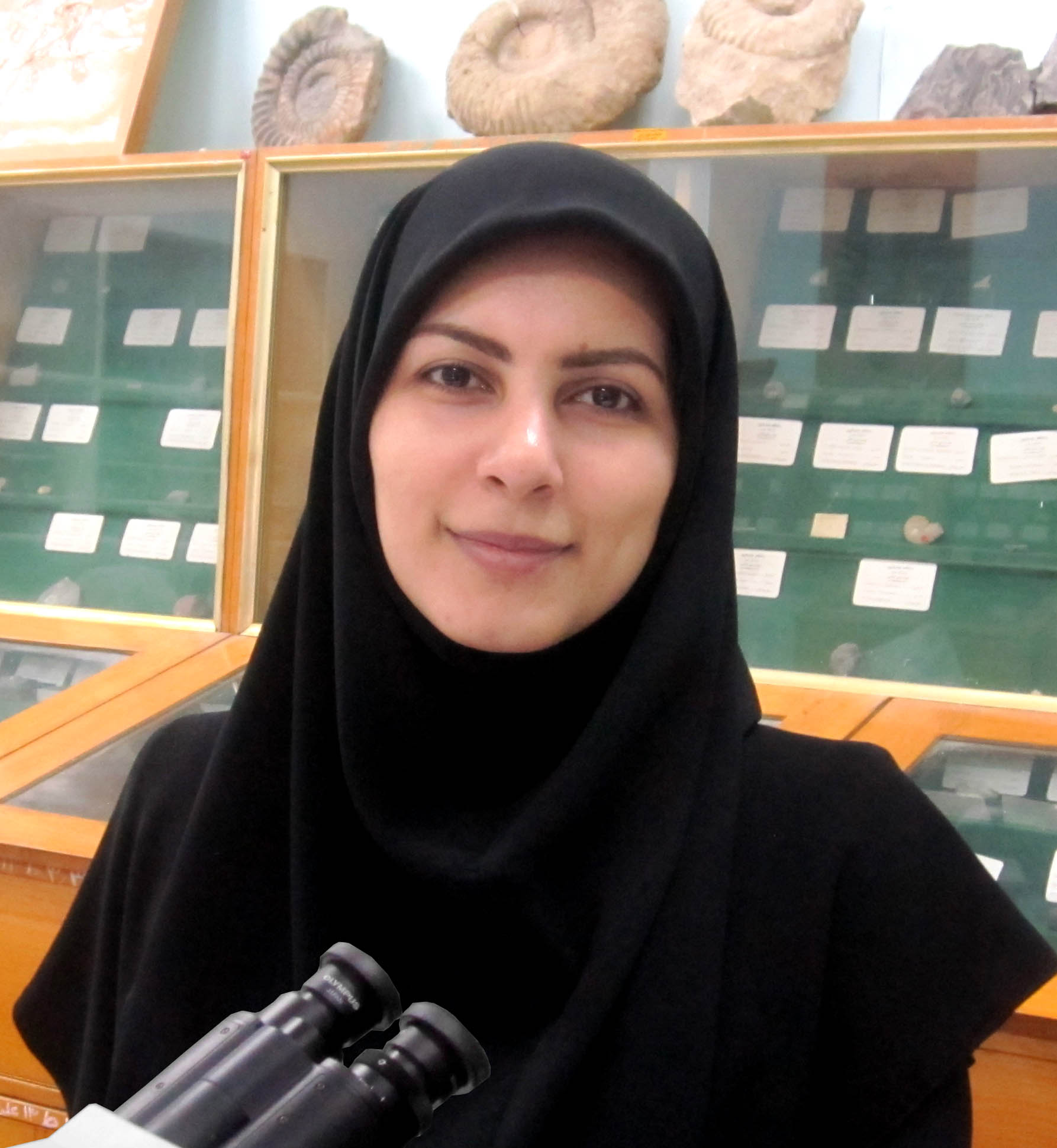
Evaluation of porosity, permeability, and reservoir quality of the Asmari Formation using sedimentary facies and diagenesis data in the Ahvaz oil field Akbar Heidari, Narges Shokri, Milad Faraji Journal of Stratigraphy and Sedimentology Researches, 2024 Abstract The Asmari Formation, the Oligo–Miocene in age, has been deposited in the Dezful Embayment and other parts of the Zagros Basin. In the Ahvaz oil field, this formation is mostly composed of limestones, dolomites, marls, and sandstones. In this study, the data of microfacies, sedimentary environment, and diagenesis of zone 7 from the Asmari Reservoir in the Ahvaz oil field were investigated. Depositional and post-depositional environments have a wide-ranging effect on rock composition and its components, leading to different reservoir properties for each sequence and affecting the rock types. Near-surface burial diagenetic conditions in meteoric and shallow burial diagenetic environments, due to the ease of entry and exit of diagenetic fluids, the initial composition of the sediment undergoes significant changes in a short period, and dissolution of unstable components or extensive cementation occurs. In this study, mixed sandstone and carbonate succession were studied in six wells from the Ahvaz oilfield. This study's results show the evidence from sedimentary environment and diagenesis, but the effect of diagenetic processes was relatively more important. Therefore, the studied succession can be considered a diagenetic reservoir. It is hoped that the results of this study can be useful in the development program of the studied field. Keywords: Carbonate microfacies, Asmari Reservoir, Oil Field Development, Reef, Lucia Classification Introduction Tectonic factors, sea level changes, and climate have always been recognized as some of the most important parameters influencing sedimentation and the characteristics of sedimentary rocks (Cousino et al. 2015; Mazhar et al. 2021; Catuneanu 2022; Bachari et al. 2024). The importance of sedimentary texture and mineralogy in connection with diagenesis has long been recognized in carbonate deposits (e.g. Folk 1959; Moore 1989; Tucker and Bathurst 2009; Abdullah et al. 2023). The primary composition of carbonate rocks reflects the depositional environment conditions as well as the evolution and ecology of organisms with calcareous shells (Pomar 2020). In this study, porosity data and their relationship with depositional and diagenetic environments were examined in the Ahvaz oilfield. The main objective of this study is to determine the effects of depositional and diagenetic processes on the reservoir characteristics, porosity, and permeability of the evaluated succession. Material & Methods The A7 zone, which is studied here is mainly composed of limestones with some interbeds of sandstones and dolomites. A total of 300 thin sections were prepared for study from cores and drill cuttings obtained from six drilled wells. The thicknesses of the investigated succession have a range between 15 and 70 meters in the studied wells with a mean of 50 m. The thin sections prepared from these wells were subjected to detailed microfacies and diagenetic studies. This study identified the various types of porosity in the Asmari Formation carbonate rocks and classified them according to the Choquette and Pray (1970) classification. The role of each pore type in the reservoir quality of the succession was evaluated. In this study, Lucia's petrophysical classification was used for reservoir analysis (Lucia 2007). Additionally, the reservoir quality of the Asmari Formation was described using Ahr's classification (Ahr 2008). Discussion of Results & Conclusions Porosity can generally be divided into two groups: primary and secondary. Choquette and Pray (1970) classified porosities in carbonate rocks into three categories based on their relationship or lack thereof to the rock fabric. Porosity types such as fossil molds, dissolution vugs, moldic porosity formed by fossil dissolution, intergranular porosity in clastic parts, intercrystalline porosity in recrystallized dolomites, and fractures have been identified in the studied succession. Porosity and permeability are two controlling parameters of reservoir quality. In this section, petrophysical logs were utilized for reservoir analysis, and based on Ahr's classification (2008), the reservoir quality of the Asmari Formation was described. Lucia (2007) examined various rock types to analyze the reservoir behavior of sedimentary facies. He defined three petrophysical classes in his diagram, each with a distinct pore size distribution. In this study, his results were used to interpret the porosity of the Asmari Formation. The Asmari reservoir in the studied field was subjected to microfacies and diagenetic studies. Microfacies studies of this formation led to the identification of 14 microfacies in five facies associations. Cementation has often caused data to shift to the left on the plot, leading to microfacies being excluded from the reservoir zone. The reef microfacies is located in Class 2 of Lucia's plot, indicating good reservoir quality, initially due to the porosity of the coral framework. Subsequent diagenetic processes, including fracture development, connected many pores and enhanced permeability in these reef microfacies. Additionally, the early marine cementation in reef microfacies prevented compaction during burial, thus preserving porosity. Some lagoon and open marine microfacies fall within Class 1, with a smaller proportion in sub-Class 1, or Class 2. The relatively poor reservoir properties of lagoon and open marine microfacies may be attributed to the presence of lime mud in the low-energy microfacies. Other lagoon and open marine microfacies are also classified within Class 2 of Lucia's plot, which can be attributed to interconnected porosity systems such as channel, fracture, and intercrystalline porosity, along with dolomitization and reduced cementation. Studies and modeling of the Asmari Formation in the investigated wells have revealed a strong freshwater influx during deposition. Such an influx of freshwater, which led to the formation of sandstone facies and abundant detrital quartz grains within the carbonate sediments of the Asmari Formation in the Ahvaz field, could have caused two significant events. Firstly, this strong freshwater flow could have enhanced the diagenetic process of dissolution in certain microfacies, as evidenced by the extensive vugs and channels observed in many carbonate microfacies. Secondly, dolomitization, resulting from the mixing of freshwater and seawater according to the Badiozamani model (1973), is observed in many microfacies. The significant role of dolomitization in enhancing the reservoir quality of some lagoon and marine microfacies is evident. The lack of detrimental diagenetic processes, especially late cementation and compaction, on reef microfacies, coupled with the energy of the depositional environment (removal of clay-filled pore spaces), are the primary reasons for the excellent reservoir quality of the studied samples from the Asmari Formation in the Ahvaz oil field. In a few studied samples of the Asmari Formation that fall outside the main 3 classes, calcite and sometimes anhydrite cement have reduced the connectivity between the pore throats of these microfacies. Tidal flat microfacies are often found in classes 1 and 2, indicating good porosity and permeability. What is certain in these microfacies is the presence of intercrystalline porosity in dolomite, the development of sedimentary structures such as birdseye and fenestral pores in these microfacies, and an increase in their permeability and reservoir quality. Furthermore, the widespread dolomitization causes changes in the geomechanical behavior of the upper intertidal microfacies and increases the potential for fracture development. Therefore, this fracture development enhances reservoir properties. Among the studied microfacies, Mf6–8, and Mf10 exhibit the highest reservoir quality. These microfacies display an average porosity ranging from 25 to 30 percent and a permeability of 100 to 200 millidarcies. The extensive pore spaces within reef structures, coupled with lower cementation, contribute to these favorable properties in microfacies Mf6 and Mf7. Additionally, dolomitization has enhanced the reservoir quality of certain microfacies, such as Mf8. In contrast, microfacies Mf3 and Mf11 exhibit the lowest porosity and permeability due to severe cementation and compaction. Additionally, the pore size distribution varies among different microfacies, which also influences their permeability. Overall, the results indicate that reef and back-reef microfacies have a high potential for hydrocarbon production. There is a similar trend of decreasing and increasing porosity and permeability in microfacies, which supports the direct relationship between these two parameters in the Lucia plot and also indicates the presence of interconnected pores in these microfacies. Among the sub-environments, the best reservoir quality based on porosity and permeability and according to Ahr’s classification (2008) belongs to the reef, tidal flat, open marine, and lagoon sub-environments, respectively.
Post-depositional history of the lower Palaeocene interval using petrographic, CL and geochemical data in the East Tethys: Kopet-Dagh Basin, northeast Iran Akbar Heidari, Luis A Gonzalez, Reza Moussavi-Harami, Narges Shokri Geological Magazine, 2023 This study investigates the Danian siliciclastic successions in the East Tethys in the Kopet-Dagh Basin, NE Iran, which are composed of conglomerates, sandstones, shales and mudstones. The studied interval includes significant changes in sedimentary environments from alluvial to fluvial systems. The Danian siliciclastic formation is sandwiched between two marine carbonate sequences. The effects of the late Palaeocene sea transgression can be traced back to the precipitation of several types of carbonate cement in the studied siliciclastic formation. Several diagenetic features have been identified in the studied successions. The most observed features comprise physical and chemical compaction, cementation, alteration, dissolution, fractures and fillings. Some of the mentioned diagenetic processes, such as cementation, may be seen in a range of diagenetic environments and phases, such as early meteoric, low depth and deep burial, and late meteoric after the tectonic uplifting. The calcite cements considered in this study have been subdivided into four types. Some of the calcite cements, such as the rim, gravity pendant and meniscus, are classified as type one. They have formed around the rock grains and show no luminescence. The blocky and poikilotopic types have been grouped in type two. They are deposited between grains and exhibit dark luminescence. Type three cement consists of some of the blocky and poikilotopic cements that have formed amid grains and present a bright luminescence. Finally, type four comprises filled fractures which display a dark luminescence (blocky cement). Geochemical data revealed that the categorized cement types were precipitated in three diagenetic environments: early meteoric; burial; and late meteoric after the uplifting. The meteoric diagenetic environment is subdivided into vadose and phreatic meteoric. The burial diagenetic environment is subdivided into shallow burial and deeper burial. The qualitative petrographic method contributed to the initial recognition of the diagenetic features. The semi-quantitative cathodoluminescence method, the quantitative major and trace elements, and oxygen and carbon stable isotope analysis were utilized to evaluate the exact diagenetic processes and environments. Finally, the diagenetic sequence was reconstructed and depicted as diagenetic models and a paragenesis sequence. The data of this study can lay the foundation for future studies on the siliciclastic diagenesis in the studied basin.
Palynofacies and Palaeoenvironment of the Sanganeh Formation, East and the Center of the Kopet-Dagh Basin Narges Shokri, Ebrahim Ghasemi‐Nejad, Ali Reza Ashouri Journal of Stratigraphy and Sedimentology Researches, 2021 Abstract In order to identify the palynofacies and to reconstruct the paleoenvironment of the Lower Cretaceous depositions in the Kopet-Dagh sedimentary basin, the Sanganeh Formation was sampled and studied. The four sections of the Sanganeh Formation were selected for correlation and comparison in the east and the center of the Kopet- Dagh Basin, respectively included Karizak, Mozduran, Sanganeh and Qarah-Su. The study of slides was done with an optical microscope. Marine palynomorphs groups, phytoclasts, amorphous organic matter, transparent to opaque amorphous organic matter ratio, brown to opaque phytoclast ratio, Peridinioid to Gonyaulacoid dinocyst ratio, abundance, and diversity of marine palynomorphs and dinoflagellates were counted and investigated. In this study, a quantitative analysis of the main palynologic elements (AOM, marine palynomorph, phytoclast) led to characterize four palynofacies types that were identified in the Karizak and Mozduran sections. Based on the palynofacies analyses and according to the plotting to Tyson diagram, we have recorded an increase in the number of phytoclasts and a decrease in the number of marine palynomorphs to the east indicating a decrease in the depth and oxygen trend in the Sanganeh Formation in these part of the Kopet-Dagh sedimentary Basin. The sedimentation rate of the Sanganeh Formation was also considered low in the studied sections. Keywords: Palynofacies, Dinoflagellate, Kopet-Dagh, Sanganeh Formation, Lower Cretaceous Introduction According to Tyson (1993, 1995) and Batten (1996b), identification of palynofacies plays an essential role in determining depositional environments as well as studying the petroleum potential in sediments. The components of palynologic slides, which are used to determine palynofacies and paleoenvironmental interpretation, can be grouped into three groups: amorphous organic matter (AOM), marine palynomorphs (MP), and phytoclasts (P). Due to the Sanganeh Formation lithology, paleontologists have been interested in working the shale samples. Several studies have been done to determine the age and identify the paleoenvironment on this formation in the Kopet-Dagh basin based on different fossil groups including foraminifera, calcareous nannofossil, ammonite, and palynomorph. Four stratigraphic sections have been selected from the Sanganeh Formation in the Kopet-Dagh Basin. The studied sections from the east to the center of the Basin are included Karizak, Mozduran, Sanganeh and Qarah-Su, respectively with a thickness of 320, 355, 550, and 580 meters. In the studied sections, the lower and upper boundaries of the Sanganeh Formation are continuance with Sarcheshmeh and Aitamir formations. The aim of this study was to identify the palynofacies and the paleoenvironment of the Sanganeh Formation based on the counting and frequency of palynological content in the studied sections. Material & Methods A total of 370 samples were taken from the Sanganeh Formation in four sections, (Karizak, Mozduran, Sanganeh, and Qarah-Su). Samples were prepared based on the acid treating technique (HCl/HF) (Travers 2007). In this standard method, dry sediment samples were degraded with 30% hydrochloric acid (HCl) and 40% hydrofluoric acid (HF) to extract acid-resistant organic matter. These acids had been added to remove carbonates and silicates materials. In the following steps, after sieving (10 µm mesh), the samples were centrifuged with heavy liquid zinc chloride (ZnCl2), and the residual material was finally transferred to 3–5 lamellas for palynological studies. It should be noted that the samples were not oxidized. Discussion of Results & Conclusions Based on the relative frequency of three palynological matter categories, three types of palynofacies are recognized at the Qarah-Su section,and four types of palynofacies at the Karizak and Mozduran sections. According to these plots, we could subdivide the Sanganeh Formation into two parts in the studied sections. The first part is characterized by abundant phytoclast matter indicating a highly proximal dysoxic-anoxic basin.while the second part of the studied succession shows a change in organic matter in the samples composed of AOM and marine palynomorphs. This part is indicated by the proximal suboxic-anoxic shelf. The depositional depth showed an increase in this part. However, an exception could be observed in the Karizak section so there could be a third part and we could have observed a decrease in the depositional depth again. The relative abundance of marine palynomorphs, phytoclasts, and amorphous organic matter, the ratio of transparent/opaque amorphous organic matter, brown/opaque phytoclast and Peridinioid/Gonyaulacoid dinocyst, and also the density and diversity of marine palynomorphs and dinoflagellates were considered at this study. The ratio of the transparent AOM to opaque AOM indicates low oxygen conditions have fluctuated over time. The absence of dinocysts at the base of succession may be due to the lack of preservation of distributed organic matter at the sediment surface, diagenesis, or the initial lack of production of dinoflagellate cysts in the marine environments (Ogg 1992). The upward trend in the peridinioid group is also considered to be near-coastal or transitional environments (Habib and Miller 1989). The distribution of palynological data on the Tyson diagram indicates the relative high amount of phytoclasts for this formation, especially in the eastern sections of the Kopet-Dagh Basin. According to the diagrams, the shallowing trend to the east can be observed, clearly in the Karizak section. Therefore, the depositional environment of the Sanganeh Formation can be considered as a shallow, coastal, and low oxygen environment in the eastern part of the study area. Towards the center of the Basin, the amount of marine palynomorphs has increased which indicates deeper and distal coast, and a relatively lack of oxygen. The paleoenvironmental and palynological elements analysis of the Sanganeh Formation in the studied area generally show the following results: Comparison of the three main groups of palynological components (phytoclasts, amorphous organic matter, and marine palynomorphs) in the studied sections shows that the amount of phytoclasts in all sections is almost high. The amount of amorphous organic matter and marine palynomorphs are in the next degree of abundance. Due to the relative amount of these three groups, the base of the Sanganeh Formation has shown the shallow marine deposit and proximal setting. In the middle part, the amount of organic matter is increased and the amount of phytoclasts is reduced. The amount of marine palynomorphs also shows a relative increase in this part. Therefore, the increase in amorphous organic matters, the presence of marine palynomorphs, and the relative decrease of phytoclasts, palaeoenvironment of the sequences can be considered mud dominate distal shelf. The upper part of the studied sections, which can be seen just only in the Karizak section, indicates a decrease in depth and near-shore environments, accompanied by an increase in phytoclasts. The Karizak section, which is the most eastern section, has the lowest marine palynomorphs and the highest phytoclasts. The Mozduran section, which is the second section from the east shows an increase in the marine palynomorph and AOM. Finally, marine palynomorphs and AOM are increased in the Sanganeh and Qarah-Su sections,indicating an increase in depth and a decrease in oxygen to the center of the Kopet-Dagh basin.
Facies Analysis, Depositional Environments, and Sequence Stratigraphy of the Asmari Formation in the Chahar Bishe Oil Field, Zagros Basin, Iran A Heidari, M Hosseini-Lagha, N Shokri, A Omidpour Journal of Stratigraphy and Sedimentology Researches , 2026 2026.0
Impact of the Paleocene–Eocene Thermal Maximum (PETM) on organic petrographic characteristics of the basal Pabdeh Formation at Kuh-e-Gurpi Anticline, SW Iran S Bakhtiary Nejad, M Alipour, N Shokri Journal of Stratigraphy and Sedimentology Researches 42 (1), 1-14 , 2026 2026.0
Biostratigraphy of the Lower Pabdeh Formation Based on Calcareous Nannofossil in the Surface Outcrop of Kuh-e-Gurpi Anticline (Tang-e-Hati), Southwestern Iran N Shokri, S Bakhtiary_nejad, M Alipour Advanced Applied Geology 15 (3), 53-70 , 2025 2025.0
Evaluation of porosity, permeability, and reservoir quality of the Asmari Formation using sedimentary facies and diagenesis data in the Ahvaz oil field A Heidari, N Shokri, M Faraji Journal of Stratigraphy and Sedimentology Researches 40 (3), 69-86 , 2024 2024.0
The history of deposition and post-deposition and their effects on the reservoir quality of Asmari Formation in Ahvaz oilfield A Heidari, M Faraji, N Shokri Iranian Journal of Geology 66 (66), 41 , 2023 2023.0
Post-depositional history of the lower Palaeocene interval using petrographic, CL and geochemical data in the East Tethys: Kopet-Dagh Basin, northeast Iran A Heidari, LA Gonzalez, R Moussavi-Harami, N Shokri Geological Magazine 160 (3), 545-560 , 2023 2023.0
Palynofacies and Palaeoenvironment of the Sanganeh Formation, East and the Center of the Kopet-Dagh Basin N Shokri, E Ghasemi-Nejad, AR Ashouri Journal of stratigraphy and sedimentology researches 37 (4), 1-22 , 2021 2021.0 Citations: 3
Calcareous Nannofossils of the Gurpi Formation in Marun Oil Field N Shokri, B Alizadeh Advanced Applied Geology 11 (3), 455-472 , 2021 2021.0
Application of petrography, major and trace elements, carbon and oxygen isotope geochemistry to reconstruction of diagenesis of carbonate rocks of the Sanganeh Formation (Lower … A Heidari, N Shokri, E Ghasemi-Nejad, L Gonzales, G Ludvigson Arabian Journal of Geosciences 8 (7), 4949-4967 , 2015 2015.0 Citations: 7
Palynostratigraphy of the Sanganeh Formation at the East and Central Kopeh-Dagh Basin based on dinoflagellate cysts E Ghasemi-Nejad, N Shokri, AR Ashouri Journal of stratigraphy and sedimentology researches 31 (1), 1-12 , 2015 2015.0 Citations: 4
Palynostratigraphy and palynofacies of the sanganeh formation in Qarah-Su section (NE, Iran) N Shokri, E Ghasemi-Nejad, AR Ashouri Journal of Biodiversity and Environmental Sciences (JBES) 6 (1), 633-641 , 2015 2015.0 Citations: 2
Environmental interpretation of the Sanganeh Formation at Sanganeh village, east of Kopeh-Dagh basin: Using palynological elements N Shokri, E Ghasemi-Nejad, A Ashouri 2014.0 Citations: 1
Nannostratigraphy of Gurpi Formation in south Ilam (Kavar section) F Hadavi, N Shokri SEDIMENTARY FACIES 2 (2), 217-225 , 2010 2010.0 Citations: 6
Journal of Biodiversity and Environmental Sciences (JBES) N Shokri, E Ghasemi-Nejad, AR Ashouri
MOST CITED SCHOLAR PUBLICATIONS
Application of petrography, major and trace elements, carbon and oxygen isotope geochemistry to reconstruction of diagenesis of carbonate rocks of the Sanganeh Formation (Lower … A Heidari, N Shokri, E Ghasemi-Nejad, L Gonzales, G Ludvigson Arabian Journal of Geosciences 8 (7), 4949-4967 , 2015 2015.0 Citations: 7
Nannostratigraphy of Gurpi Formation in south Ilam (Kavar section) F Hadavi, N Shokri SEDIMENTARY FACIES 2 (2), 217-225 , 2010 2010.0 Citations: 6
Palynostratigraphy of the Sanganeh Formation at the East and Central Kopeh-Dagh Basin based on dinoflagellate cysts E Ghasemi-Nejad, N Shokri, AR Ashouri Journal of stratigraphy and sedimentology researches 31 (1), 1-12 , 2015 2015.0 Citations: 4
Palynofacies and Palaeoenvironment of the Sanganeh Formation, East and the Center of the Kopet-Dagh Basin N Shokri, E Ghasemi-Nejad, AR Ashouri Journal of stratigraphy and sedimentology researches 37 (4), 1-22 , 2021 2021.0 Citations: 3
Palynostratigraphy and palynofacies of the sanganeh formation in Qarah-Su section (NE, Iran) N Shokri, E Ghasemi-Nejad, AR Ashouri Journal of Biodiversity and Environmental Sciences (JBES) 6 (1), 633-641 , 2015 2015.0 Citations: 2
Environmental interpretation of the Sanganeh Formation at Sanganeh village, east of Kopeh-Dagh basin: Using palynological elements N Shokri, E Ghasemi-Nejad, A Ashouri 2014.0 Citations: 1
Facies Analysis, Depositional Environments, and Sequence Stratigraphy of the Asmari Formation in the Chahar Bishe Oil Field, Zagros Basin, Iran A Heidari, M Hosseini-Lagha, N Shokri, A Omidpour Journal of Stratigraphy and Sedimentology Researches , 2026 2026.0
Impact of the Paleocene–Eocene Thermal Maximum (PETM) on organic petrographic characteristics of the basal Pabdeh Formation at Kuh-e-Gurpi Anticline, SW Iran S Bakhtiary Nejad, M Alipour, N Shokri Journal of Stratigraphy and Sedimentology Researches 42 (1), 1-14 , 2026 2026.0
Biostratigraphy of the Lower Pabdeh Formation Based on Calcareous Nannofossil in the Surface Outcrop of Kuh-e-Gurpi Anticline (Tang-e-Hati), Southwestern Iran N Shokri, S Bakhtiary_nejad, M Alipour Advanced Applied Geology 15 (3), 53-70 , 2025 2025.0
Evaluation of porosity, permeability, and reservoir quality of the Asmari Formation using sedimentary facies and diagenesis data in the Ahvaz oil field A Heidari, N Shokri, M Faraji Journal of Stratigraphy and Sedimentology Researches 40 (3), 69-86 , 2024 2024.0
The history of deposition and post-deposition and their effects on the reservoir quality of Asmari Formation in Ahvaz oilfield A Heidari, M Faraji, N Shokri Iranian Journal of Geology 66 (66), 41 , 2023 2023.0
Post-depositional history of the lower Palaeocene interval using petrographic, CL and geochemical data in the East Tethys: Kopet-Dagh Basin, northeast Iran A Heidari, LA Gonzalez, R Moussavi-Harami, N Shokri Geological Magazine 160 (3), 545-560 , 2023 2023.0
Calcareous Nannofossils of the Gurpi Formation in Marun Oil Field N Shokri, B Alizadeh Advanced Applied Geology 11 (3), 455-472 , 2021 2021.0
Journal of Biodiversity and Environmental Sciences (JBES) N Shokri, E Ghasemi-Nejad, AR Ashouri