PROGRAMA DE PÓS-GRADUAÇÃO EM CIÊNCIAS DA SAÚDE APLICADAS AO APARELHO LOCOMOTOR FACULDADE DE MEDICINA DE RIBEIRÃO PRETO/USP Instituto de Patologia da Coluna
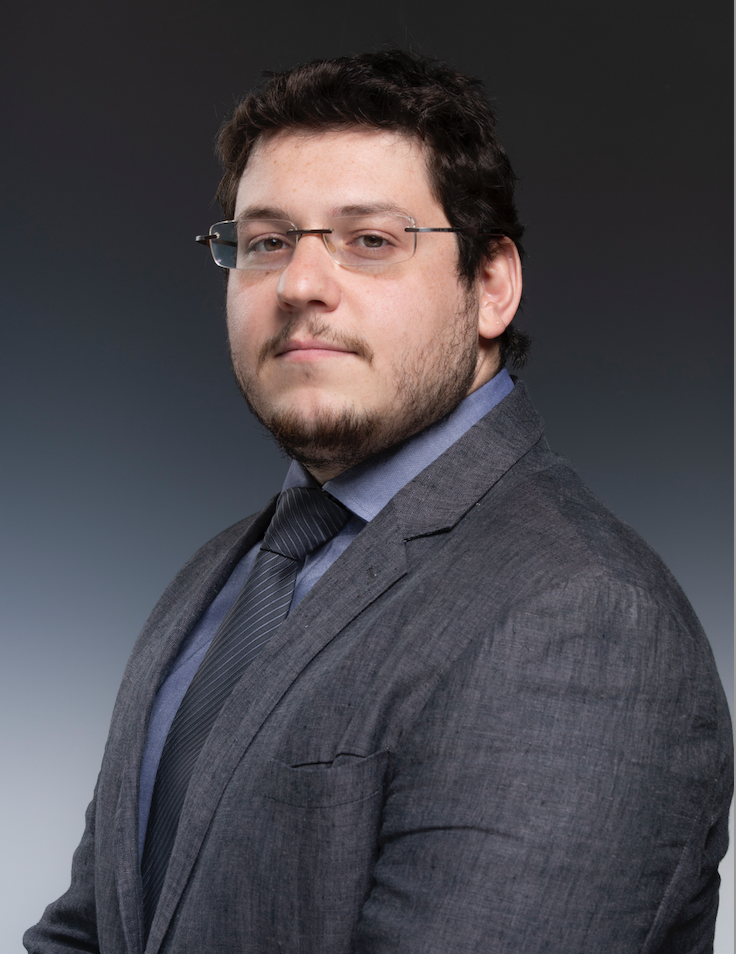
Fernando Marcelino holds a medical degree from the Ribeirão Preto School of Medicine, USP (2006-2011), completed a residency in Orthopedics and Traumatology at the Clinics Hospital of the Ribeirão Preto School of Medicine, USP (2013-2016), and completed a specialization in Spine Surgery at the Institute of Spine Pathology (2016-2018). He has undertaken Visiting Fellowships at the Department of Orthopedic Surgery, Columbia University Vagelos College of Physicians and Surgeons, New York, USA (2018); at the Galeazzi Orthopedic Institute, Milan, Italy (2018); and i at the University Hospital Center, University of Bordeaux, Pellegrin Hospital, Bordeaux, France (2018). He is currently a spine surgeon at the Institute of Spine Pathology, coordinator of the Specialized Training Program in Spine Surgery at the same institute, and a PhD candidate in the Graduate Program in Health Sciences Applied to the Musculoskeletal System at the Ribeirão Preto Medical School - USP.
EDUCATION
Medical degree from the Ribeirão Preto School of Medicine, University of São Paulo (2006-2011); Residency in Orthopedics and Traumatology at the Clinics Hospital of the Ribeirão Preto School of Medicine, University of São Paulo (2013-2016); Specialization in Spine Surgery at the Institute of Spine Pathology (2016-2018) and PhD candidate in the Graduate Program in Health Sciences Applied to the Musculoskeletal System at the Ribeirão Preto Medical School, University of São Paulo.
Minimally invasive versus open surgery for degenerative lumbar pathologies:a systematic review and meta-analysis Gabriel Pokorny, Rodrigo Amaral, Fernando Marcelino, Rafael Moriguchi, Igor Barreira, Marcelo Yozo, Luiz Pimenta European Spine Journal, 2022 INTRODUCTION: With the increase in life expectancy and consequent aging of the population, degenerative lumbar spine diseases tend to increase its number exponentially. Several treatment options are available to treat degenerative spinal diseases, such as laminectomies, posterior fusions, and interbody fusions, depending on their locations, correction necessities, and surgeon philosophy. With the advance in technology and surgical knowledge, minimally invasive techniques (MIS) arose as a solution to reduce surgical morbidity, while maintaining the same benefits as the traditionally/open surgeries. Several studies investigated the possible advantages of MIS techniques against the traditional open procedures. However, those articles are usually focused only on one technique or on one pathology. METHODS: The electronic databases, including PubMed, Google Scholar, Ovid, and BVS, were systematically reviewed. Only original articles in English or Portuguese were added to the review, the revision was performed following the PRISMA guideline. RESULTS: Fifty-three studies were included in the meta-analysis. Of the studied outcomes the Length of Stay Odds of complications, Blood Loss, and Surgery costs presented significantly favored MIS approaches, while the Last FUP ODI score, and Surgery Time did not differ among the groups. CONCLUSION: Minimally invasive techniques are a remarkably interesting option to traditional open surgeries, as these procedures showed a significant reduction in blood loss, hospitalization time, complications, and surgical costs.