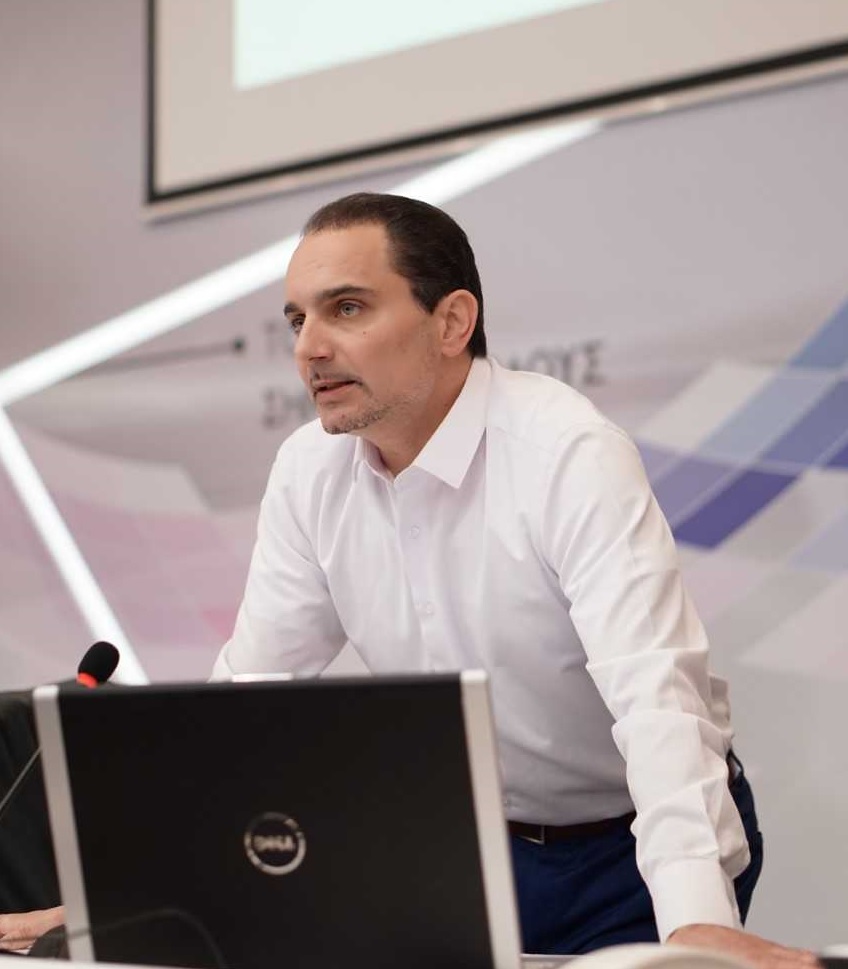
Prof. Anagnostopoulos Christos-Nikolaos received his diploma in the field of Mechanical Engineering, and in 2002 his PhD diploma in the field of Computer Vision and Computational Intelligence from the School of Electrical and Computer Engineering, National Technical is Professor, Director of the Intelligent Systems lab and Intelligent Computer Systems MSc Program in the Cultural Technology and Communication Dpt, University of the Aegean. His research interests include image processing, computer vision, computer graphics and artificial intelligence for the development of intelligent applications and cultural informatics. He has published more than 300 papers in scientific journals and conferences, in the above subjects as well as other related fields in informatics. As of 2020, he is among the 2% of the most influential researchers in the field of Artificial Intelligence and Image Processing (Stanford University, Elsevier), based on the scitations in his work.
EDUCATION
Mechanical Engineering Diploma, National Technical University of Athens, 1998
Electrical and Computer Engineering PhD Diploma, National Technical University of Athens, 2002
RESEARCH, TEACHING, or OTHER INTERESTS
Artificial Intelligence, Computer Vision and Pattern Recognition, Computer Graphics and Computer-Aided Design, Computer Science Applications
204
Scopus Publications
6577
Scholar Citations
33
Scholar h-index
91
Scholar i10-index
Scopus Publications
Closed-Set vs. Open-Vocabulary Object Detectors for Urban Architectural Typology Classification: A Comparative Study on Athenian Heritage Buildings Konstantinos Filippatos, Konstantina Siountri, Christos-Nikolaos Anagnostopoulos Heritage, 2026 Architectural typology classification plays an important role in large-scale documentation and analysis of urban cultural heritage. Recent advances in computer vision enable automated approaches for detecting and categorizing buildings from street-level imagery, yet the suitability of different detection paradigms for architectural typology analysis remains insufficiently explored. Despite recent advances in computer vision for architectural analysis, no systematic comparative study has evaluated closed-set CNN-based detectors against open-vocabulary vision–language grounding models for urban architectural typology classification. This study presents a comparative evaluation of closed-set convolutional object detectors and open-vocabulary vision–language grounding models for the classification of Athenian architectural typologies. A dataset of 3349 street-view images containing 11,111 annotated building instances was compiled and organized into five typological categories: Neoclassical, Neoclassical-Eclectic, Interwar-Eclectic, Interwar, and Postwar. The experiments compare several YOLO-based detection configurations with Grounding DINO under zero-shot inference, parameter-efficient adaptation (e.g., Kiw Rank Adaptation—LoRA), and full fine-tuning. Results show that supervised YOLO-based models achieve robust detection and classification performance with high localization accuracy and consistent typology discrimination in dense urban scenes. In contrast, open-vocabulary grounding models demonstrate limited reliability in zero-shot settings and require substantial adaptation to approach comparable performance levels. Analysis of confusion patterns further reveals that most classification errors originate from intrinsic architectural similarities between transitional styles rather than from model instability. The findings highlight the advantages of supervised object detection frameworks for scalable urban heritage documentation and provide insights into the current limitations of vision–language models for fine-grained architectural typology classification.
Cross-environmental 3D reconstruction: a novel framework for terrestrial and underwater adaptation Alexandros Vrochidis, Asimina Dimara, Stelios Krinidis, Christos-Nikolaos Anagnostopoulos, Dimitrios Tzovaras Multimedia Tools and Applications, 2026 Computer vision and sensor technology advancements have enabled significant progress in 3D reconstruction. However, critical challenges remain when extending these methods to underwater environments. This paper addresses the disparities between terrestrial and underwater 3D reconstruction by presenting a novel comparative framework that evaluates identical objects in these distinct settings under real-world conditions. To mitigate underwater-specific challenges such as light absorption, scattering, and reduced image clarity, a new enhancement methodology combining RGB stretching and Contrast Limited Adaptive Histogram Equalization (CLAHE) is proposed. Experimental results demonstrate that the enhancement increased processing time by 2.99% compared to the underwater model, while improving reconstructed points by 5.05%, detected features by 3.12%, and reconstructed features by 6.58%. Furthermore, structural metrics such as smoothness, genus connectivity, and average skewness showed significant positive improvements. Furthermore, structural metrics showed significant improvements with genus connectivity increasing by 1.29%, smoothness improving by 0.69%, and average skewness increasing by 0.18%, based on the raw underwater model and underwater enhanced model. By providing a direct cross-environment comparison, this study bridges the gap between terrestrial and underwater 3D reconstruction, offering critical insights into methodological adaptations necessary for robust and reliable modeling in diverse environmental conditions. The proposed framework lays the foundation for advancing underwater 3D reconstruction technology to achieve parity with its terrestrial counterpart, with applications spanning cultural heritage preservation, marine exploration, and environmental monitoring.
Systemic Data Bias in Real-World AI Systems: Technical Failures, Legal Gaps, and the Limits of the EU AI Act Theodoros Falelakis, Asimina Dimara, Christos-Nikolaos Anagnostopoulos Information Switzerland, 2026 Systemic data bias constitutes a major source of failure in real-world AI systems and represents a regulatory challenge that remains insufficiently addressed by existing legal frameworks, including the EU Artificial Intelligence Act. Although the AI Act introduces a comprehensive risk-based regulatory regime, it does not adequately capture how bias originates, propagates, and manifests across the AI lifecycle. This paper examines systemic data bias through a legal-technical lifecycle analysis that maps recurring bias mechanisms, from data collection and annotation to model training, evaluation, and deployment, to the regulatory control points established under the EU AI Act. Drawing on cross-sectoral examples from employment screening, credit scoring, healthcare risk prediction, biometric identification, and autonomous systems, the analysis demonstrates how technical bias mechanisms translate into systemic governance and accountability challenges. The findings reveal persistent regulatory gaps, including limited auditability of training datasets, the absence of mandatory fairness metrics, insufficient transparency regarding model behavior, and weak mechanisms for post-deployment monitoring and accountability. These results highlight a structural misalignment between lifecycle-based bias dynamics and the Act’s category-driven compliance framework. The paper argues that addressing systemic bias requires a governance approach that integrates technical bias mitigation with legal oversight across the full AI lifecycle rather than relying primarily on post hoc regulatory controls.
Virtual Reality Interventions for Enhancing Executive Functions in Children and Adolescents with Autism Spectrum Disorder Angeliki Sideraki, Christos-Nikolaos Anagnostopoulos Algorithms, 2026 This study investigates the impact of a Virtual Reality (VR)-based intervention on the enhancement of executive functions—cognitive flexibility, inhibitory control, and working memory—in children diagnosed with Autism Spectrum Disorder (ASD). Employing a single-case experimental design with repeated measures, the research was conducted with two male participants, aged 9 and 10, both formally diagnosed with ASD. The intervention was structured into four phases: Baseline (no training), Intervention (targeted VR training), Generalization (skill transfer testing), and Follow-up (maintenance assessment). Each participant engaged in a total of 18 tasks (six per executive function), delivered through immersive VR environments featuring gamified elements, adaptive feedback, and increasing difficulty. Each task consisted of up to 15 sub-items, scored as correct or incorrect. Results indicate consistent improvements across executive function domains during the intervention phase, with partial maintenance at follow-up and evidence of task generalization. Given the single-case framework and limited sample size, findings should be interpreted as exploratory and hypothesis-generating rather than population-generalizable. The study provides proof-of-concept evidence supporting the feasibility and potential of immersive VR-based executive function training for ASD populations, warranting further validation through larger-scale controlled trials.
HeritageTwin Lite: A GIS-Driven 2D-to-3D Workflow for Digital Twins of Protected Cultural Heritage Building Asimina Dimara, Myrto Stogia, Christoforos Papaioannou, Alexios Papaioannou, Stelios Krinidis, Christos-Nikolaos Anagnostopoulos Heritage, 2026 Digital Twins for cultural heritage buildings commonly depend on high-fidelity 3D scanning, detailed onsite surveys, and unrestricted data acquisition. In many countries, however, legal, regulatory, and conservation constraints render such methods inaccessible or explicitly prohibited, significantly limiting the deployment of digital-heritage technologies in real settings. This paper introduces HeritageTwin Lite, a regulation-compliant workflow for constructing low-detail yet operational Digital Twins of protected cultural heritage buildings using only publicly permissible data sources. The proposed approach relies on a GIS-based 2D application through which users select a site and manually delineate building footprints and structural outlines. These 2D sketches are combined with satellite imagery, publicly available photographs, archival records, and open datasets to generate a massing-level 3D model. Building height and volumetric characteristics are estimated using contextual cues such as surrounding structures, known architectural typologies, and scale references derived from people or urban elements. The resulting Digital Twin prioritizes geometric plausibility over fine architectural detail, enabling simulation, analysis, and decision-support tasks, such as environmental modeling, airflow and CFD approximation, and high-level Heritage BIM integration, while fully respecting cultural heritage restrictions. Three case studies illustrate the proposed workflow and systematically identify which components of conventional smart-building and Digital Twin pipelines remain feasible and which become infeasible under heritage regulations. The results demonstrate a practical and scalable path toward compliant Digital Twins for protected buildings, positioning low-detail modeling not as a limitation but as a regulatory necessity.
RADAR: A Framework for Risk Assessment and Degradation Analysis for Cultural Heritage Buildings Through CFD Modeling Asimina Dimara, Mariya Pantusheva, Nikolaos-Alexios Stefanis, Orfeas Eleftheriou, Radostin Mitkov, Vasilis Naserentin, Dessislava Petrova-Antonova, Anders Logg, Christos-Nikolaos Anagnostopoulos Heritage, 2026 Cultural heritage buildings constitute an irreplaceable record of historical, social, and architectural identity, and their preservation is essential for cultural continuity and sustainable development. However, their conservation is inherently challenging due to material aging, complex construction techniques, limited documentation, and strict intervention constraints that restrict invasive monitoring or retrofitting solutions. Environmental degradation and microclimatic effects further accelerate deterioration, often in ways that are difficult to quantify or predict. This paper presents RADAR, a non-invasive, data-driven framework for assessing environmental and structural risk in cultural heritage buildings. The proposed approach integrates high-resolution geometric acquisition, computational fluid dynamics (CFD) modeling, and environmental monitoring to analyze airflow patterns, temperature distribution, and moisture-related decay mechanisms. By combining measured data with numerical simulations, RADAR enables the identification of high-risk zones and deterioration drivers without altering the building fabric. The framework is demonstrated through a real-world case study, illustrating its applicability as a decision-support tool for preventive conservation and heritage management.
ENACT: Energy-Aware, Actionable Twin Utilizing Prescriptive Techniques in Home Appliances Myrto Stogia, Asimina Dimara, Christoforos Papaioannou, Orfeas Eleftheriou, Alexios Papaioannou, Stelios Krinidis, Christos-Nikolaos Anagnostopoulos Smart Cities, 2025 A significant portion of home energy consumption is due to concealed faults and the inefficient usage of home appliances, usually because of user ignorance and a lack of proactive maintenance strategies. In this paper, ENACT, a digital-twin-based system, is proposed as the solution that facilitates better user understanding, encourages sustainable maintenance practices for appliances, and provides prescriptive maintenance recommendations. With the integration of smart plugs, behavioral analysis, and a 3D spatial interface, ENACT offers real-time device monitoring while providing context-aware suggestions. The system was installed in 20 households over a 12-month period, with users engaging with both 2D and 3D models of their surroundings. The quantitative results, including an average System Usability Scale score of 80.5, and qualitative feedback demonstrated intense user engagement, with strong evidence of mindset shifts towards proactive maintenance behavior. The findings confirm that digital twin technologies, when combined with targeted guidance, can significantly improve appliance lifespans, energy efficiency, and user empowerment within homes.
EnergiQ: A Prescriptive Large Language Model-Driven Intelligent Platform for Interpreting Appliance Energy Consumption Patterns Christoforos Papaioannou, Ioannis Tzitzios, Alexios Papaioannou, Asimina Dimara, Christos-Nikolaos Anagnostopoulos, Stelios Krinidis Sensors, 2025 The increased usage of smart sensors has introduced both opportunities and complexities in managing residential energy consumption. Despite advancements in sensor data analytics and machine learning (ML), existing energy management systems (EMS) remain limited in interpretability, adaptability, and user engagement. This paper presents EnergiQ, an intelligent, end-to-end platform that leverages sensors and Large Language Models (LLMs) to bridge the gap between technical energy analytics and user comprehension. EnergiQ integrates smart plug-based IoT sensing, time-series ML for device profiling and anomaly detection, and an LLM reasoning layer to deliver personalized, natural language feedback. The system employs statistical feature-based XGBoost classifiers for appliance identification and hybrid CNN-LSTM autoencoders for anomaly detection. Through dynamic user feedback loops and instruction-tuned LLMs, EnergiQ generates context-aware, actionable recommendations that enhance energy efficiency and device management. Evaluations demonstrate high appliance classification accuracy (94%) using statistical feature-based XGBoost and effective anomaly detection across varied devices via a CNN-LSTM autoencoder. The LLM layer, instruction-tuned on a domain-specific dataset, achieved over 91% agreement with expert-written energy-saving recommendations in simulated feedback scenarios. By translating complex consumption data into intuitive insights, EnergiQ empowers consumers to engage with energy use more proactively, fostering sustainability and smarter home practices.
Using Smartwatches in Stress Management, Mental Health, and Well-Being: A Systematic Review Nikoletta-Anna Kapogianni, Angeliki Sideraki, Christos-Nikolaos Anagnostopoulos Algorithms, 2025 This systematic review explores the role of smartwatches in stress management, mental health monitoring, and overall well-being. Drawing from 61 peer-reviewed studies published between 2016 and 2025, this review synthesizes empirical findings across diverse methodologies, including biometric data collection, machine learning algorithms, and user-centered design evaluations. Smartwatches, equipped with sensors for physiological signals such as heart rate, heart rate variability, electrodermal activity, and skin temperature, have demonstrated promise in detecting and predicting stress and mood fluctuations in both clinical and everyday contexts. This review emphasizes the need for interdisciplinary collaboration to advance technological precision, ethical data handling, and user experience design. Moreover, it highlights how different algorithms—such as Support Vector Machines (SVMs), Random Forests, Deep Neural Networks, and Boosting methods—perform across various physiological signals (e.g., HRV, EDA, skin temperature). Furthermore, it identifies performance trends and challenges across lab-based vs. real-world deployments, emphasizing the trade-off between generalizability and personalization in model design.
The Role of IoT and 3D Modeling in Shaping Industry 5.0 Myrto Stogia, Asimina Dimara, Alexios Papaioannou, Christos-Nikolaos Anagnostopoulos, Konstantinos Kotis, Stelios Krinidis IFIP Advances in Information and Communication Technology, 2025
Simulation of Malfunctions in Home Appliances’ Power Consumption Alexios Papaioannou, Asimina Dimara, Christoforos Papaioannou, Ioannis Papaioannou, Stelios Krinidis, Christos-Nikolaos Anagnostopoulos, Christos Korkas, Elias Kosmatopoulos, Dimosthenis Ioannidis, Dimitrios Tzovaras Energies, 2024
Avoiding Virtual Characters: The Effects of Proximity and Gesture Michael G. Nelson, Fu-Chia Yang, Alexandros Koilias, Christos-Nikolaos Anagnostopoulos, Christos Mousas Proceedings 2024 IEEE International Symposium on Mixed and Augmented Reality Ismar 2024, 2024
Data Collection and Wrangling Towards Machine Learning in LoD2+ Urban Models Generation Vasilis Naserentin, George Spaias, Anestis Kaimakamidis, Sanjay Somanath, Mariya Pantusheva, Radostin Mitkov, Asimina Dimara, Dessislava Petrova-Antonova, Christos-Nikolaos Anagnostopoulos, Anders Logg, Stelios Krinidis IFIP Advances in Information and Communication Technology, 2024
Is the residential sector ready for prescriptive maintenance? A short analysis Georgia Tzitziou, Asimina Dimara, Alexios Papaioannou, Stelios Krinidis, Christos-Nikolaos Anagnostopoulos, Dimosthenis Ioannidis, Dimitrios Tzovaras 2023 IEEE 13th Annual Computing and Communication Workshop and Conference Ccwc 2023, 2023
Edge-Computing FogFlow Framework For Solar Generation Prediction Exploiting Federated Learning Thodoris Samaras, Asimina Dimara, Petros Tzallas, Alexios Papaioannou, Napoleon Bezas, Stelios Krinidis, Christos-Nikolaos Anagnostopoulos, Dimosthenis Ioannidis, Dimitrios Tzovaras Proceedings Icmeralda 2023 International Conference on Modeling and E Information Research Artificial Learning and Digital Applications, 2023
A Guide to Visual Comfort: An Overview of Indices and Its Applications Christos Tzouvaras, Asimina Dimara, Alexios Papaioannou, Kanela Karatzia, Christos-Nikolaos Anagnostopoulos, Stelios Krinidis, Konstantinos I. Arvanitis, Dimosthenis Ioannidis, Dimitrios Tzovaras IFIP Advances in Information and Communication Technology, 2023
A Novel Social Collaboration Platform for Enhancing Energy Awareness Efstathia Martinopoulou, Asimina Dimara, Anastasia Tsita, Sergio Luis Herrera Gonzalez, Rafael Marin-Perez, Juan Andres Sanchez Segado, Piero Fraternali, Stelios Krinidis, Christos-Nikolaos Anagnostopoulos, Dimosthenis Ioannidis, Dimitrios Tzovaras IFIP Advances in Information and Communication Technology, 2023
The role of deep learning in diagnosing colorectal cancer Dimitrios Bousis, Georgios-Ioannis Verras, Konstantinos Bouchagier, Andreas Antzoulas, Ioannis Panagiotopoulos, Anastasia Katinioti, Dimitrios Kehagias, Charalampos Kaplanis, Konstantinos Kotis, Christos-Nikolaos Anagnostopoulos, Francesk Mulita Przeglad Gastroenterologiczny, 2023
Anomaly Detection in Small-Scale Industrial and Household Appliances Niccolò Zangrando, Sergio Herrera, Paraskevas Koukaras, Asimina Dimara, Piero Fraternali, Stelios Krinidis, Dimosthenis Ioannidis, Christos Tjortjis, Christos-Nikolaos Anagnostopoulos, Dimitrios Tzovaras IFIP Advances in Information and Communication Technology, 2022
Proactive Buildings: A Prescriptive Maintenance Approach Paraskevas Koukaras, Asimina Dimara, Sergio Herrera, Niccolò Zangrando, Stelios Krinidis, Dimosthenis Ioannidis, Piero Fraternali, Christos Tjortjis, Christos-Nikolaos Anagnostopoulos, Dimitrios Tzovaras IFIP Advances in Information and Communication Technology, 2022
Non-intrusive Diagnostics for Legacy Heat-Pump Performance Degradation Iakovos Michailidis, Georgios Vougiatzis, Aliki Stefanopoulou, Asimina Dimara, Christos D. Korkas, Stelios Krinidis, Elias B. Kosmatopoulos, Dimosthenis Ioannidis, Christos-Nikolaos Anagnostopoulos, Dimitrios Tzovaras IFIP Advances in Information and Communication Technology, 2022
BEMS in the Era of Internet of Energy: A Review Asimina Dimara, Christos-Nikolaos Anagnostopoulos, Konstantinos Kotis, Stelios Krinidis, Dimitrios Tzovaras IFIP Advances in Information and Communication Technology, 2021
A semantic mixed reality framework for shared cultural experiences ecosystems Costas Vassilakis, Konstantinos Kotis, Dimitris Spiliotopoulos, Dionisis Margaris, Vlasios Kasapakis, Christos-Nikolaos Anagnostopoulos, Georgios Santipantakis, George A. Vouros, Theodore Kotsilieris, Volha Petukhova, Andrei Malchanau, Ioanna Lykourentzou, Kaj Michael Helin, Artem Revenko, Nenad Gligoric, Boris Pokric Big Data and Cognitive Computing, 2020
Effects of self-avatar and gaze on avoidance movement behavior Christos Mousas, Alexandros Koilias, Dimitris Anastasiou, Banafsheh Rekabdar, Christos-Nikolaos Anagnostopoulos 26th IEEE Conference on Virtual Reality and 3D User Interfaces VR 2019 Proceedings, 2019
Heritage boat specifications extraction from 3D laser scanning Imeko International Conference on Metrology for Archaeology and Cultural Heritage Metroarchaeo 2017, 2019
3D modelling of petrified trees: Laser scanning vs photogrammetry Imeko International Conference on Metrology for Archaeology and Cultural Heritage Metroarchaeo 2017, 2019
The thickness profile method: A new digital 3D approach for reassembling unpainted archaeological ceramic pottery Imeko International Conference on Metrology for Archeology and Cultural Heritage Metroarcheo 2016, 2016
Analyzing and segmenting finger gestures in meaningful phases Christos Mousas, Paul Newbury, Christos-Nikolaos Anagnostopoulos Proceedings 2014 11th International Conference on Computer Graphics Imaging and Visualization New Techniques and Trends Cgiv 2014, 2014
Efficient hand-over motion reconstruction 22nd International Conference in Central Europe on Computer Graphics Visualization and Computer Vision Wscg 2014 Full Papers Proceedings in Co Operation with Eurographics Association, 2014
Query expansion with a little help from twitter Ioannis Anagnostopoulos, Gerasimos Razis, Phivos Mylonas, Christos-Nikolaos Anagnostopoulos Communications in Computer and Information Science, 2013
Classification models for Alzheimer'S Disease detection Christos-Nikolaos Anagnostopoulos, Ioannis Giannoukos, Christian Spenger, Andrew Simmons, Patrizia Mecocci, Hikka Soininen, Iwona Kłoszewska, Bruno Vellas, Simon Lovestone, Magda Tsolaki Communications in Computer and Information Science, 2013
M-SIFT: A new method for vehicle logo recognition Apostolos Psyllos, Christos-Nikolaos Anagnostopoulos, Eleftherios Kayafas 2012 IEEE International Conference on Vehicular Electronics and Safety Icves 2012, 2012
Block operator context scanning for commercial tracking Ioannis Giannoukos, Vassilis Vrachnakis, Christos-Nikolaos Anagnostopoulos, Ioannis Anagnostopoulos, Vassili Loumos Lecture Notes in Computer Science Including Subseries Lecture Notes in Artificial Intelligence and Lecture Notes in Bioinformatics, 2012
Dental measurements using 3D models of plaster imprints 17th Symposium Imeko Tc4 Measurement of Electrical Quantities 15th International Workshop on ADC Modelling and Testing and 3rd Symposium Imeko Tc19 Environmental Measurements, 2010
Towards iTV Accessibility: The MPEG-21 case Evangelos Vlachogiannis, Damianos Gavalas, Christos Anagnostopoulos, George E. Tsekouras 1st International Conference on Pervasive Technologies Related to Assistive Environments Petra 2008, 2008
Vehicle authentication from digital image measurements 16th Imeko Tc4 Int Symp Exploring New Frontiers of Instrum and Methods for Electrical and Electronic Measurements 13th Tc21 Int Workshop on ADC Modelling and Testing Joint Session Proc, 2008
Intelligent content personalisation in internet TV using MPEG-21 Christos Nikolaos Anagnostopoulos, Evangelos Vlachogiannis, Ioannis Psoroulas, Damianos Gavalas, George Tsekouras, George Konstantas International Journal of Internet Protocol Technology, 2008
Modeling browsing behavior and sampling web evolution features through XML instances Webist 2007 3rd International Conference on Web Information Systems and Technologies Proceedings, 2007
A rich internet-based programming method for measuring web freshness rates under the Pollock's sampling scheme 15th Imeko Symposium on Novelties in Electrical Measurements and Instrumentation in Parallel with the 12th Workshop on ADC Modelling and Testing, 2007
A rich internet-based programming method for measuring web freshness rates under the Pollock's sampling scheme 15th Imeko Tc4 Symposium on Novelties in Electrical Measurements and Instrumentation, 2007
Bridging the syntactic and the semantic web search Georgios Kouzas, Ioannis Anagnostopoulos, Ilias Maglogiannis, Christos Anagnostopoulos Lecture Notes in Computer Science Including Subseries Lecture Notes in Artificial Intelligence and Lecture Notes in Bioinformatics, 2006
Tile classification using the CIELAB color model Christos-Nikolaos Anagnostopoulos, Athanassios Koutsonas, Ioannis Anagnostopoulos, Vassily Loumos, Eleftherios Kayafas Lecture Notes in Computer Science, 2005
Time-to-recur measurements in breast cancer microscopic disease instances 14th Symposium on New Technologies in Measurement and Instrumentation and 10th Workshop on ADC Modelling and Testing, 2005
Classification of a large web page collection applying a GRNN architecture Ioannis Anagnostopoulos, Christos Anagnostopoulos, Vergados Dimitrios, Vassili Loumos, Eleftherios Kayafas Lecture Notes in Computer Science Including Subseries Lecture Notes in Artificial Intelligence and Lecture Notes in Bioinformatics, 2003
A man-machine meta-search interface, for handling multiple query submissions in web search services Recent Advances in Computers Computing and Communications, 2002
Call admission control with adaptive allocation of resources in wireless ATM networks Proceedings of the Mediterranean Electrotechnical Conference MELECON, 2002
A probabilistic neural network for face detection on segmented skin areas based on fuzzy rules Proceedings of the Mediterranean Electrotechnical Conference MELECON, 2002
Automatic web site classification in a large repository under information filtering and retrieval techniques Proceedings of the Mediterranean Electrotechnical Conference MELECON, 2002
Route optimization & handoff control in wireless ATM networks Advances in Automation Multimedia and Video Systems and Modern Computer Science, 2001
An evaluation of texture segmentation techniques for real-time computer vision applications Advances in Automation Multimedia and Video Systems and Modern Computer Science, 2001
Network management approaches in 3G tactical wireless communication networks Proceedings IEEE Military Communications Conference MILCOM, 2001
Fuzzy logic rules for turbomachine monitoring instrumentation 11th Imeko Tc4 Symposium on Trends in Electrical Measurements and Instrumentation and 6th Imeko Tc4 Workshop on ADC Modelling and Testing 2001, 2001
Training a learning vector quantization network for biomedical classification Proceedings of the International Joint Conference on Neural Networks, 2001
A review of call admission control schemes in wireless ATM networks Dimitrios D. Vergados, Nikolaos G. Protopsaltis, Christos Anagnostopoulos, John Anagnostopoulos, Michael E. Theologou, Emmanuel N. Protonotarios Lecture Notes in Computer Science Including Subseries Lecture Notes in Artificial Intelligence and Lecture Notes in Bioinformatics, 2001
Web-based telecommunication needs modeling and implementation according to the EOTIP methodology Proceedings of the Mediterranean Electrotechnical Conference MELECON, 2000
New generation features for GSM systems: an overview of DECT technology in 3G mobile communication systems IEEE International Conference on Personal Wireless Communications, 2000
Establishment and Growth of Trichinella Muscle Larvae in Iron Supplemented Mice Acta Veterinaria Scandinavica, 1999
RECENT SCHOLAR PUBLICATIONS
Closed-Set vs. Open-Vocabulary Object Detectors for Urban Architectural Typology Classification: A Comparative Study on Athenian Heritage Buildings K Filippatos, K Siountri, CN Anagnostopoulos Heritage , 2026 2026
Cross-environmental 3D reconstruction: a novel framework for terrestrial and underwater adaptation A Vrochidis, A Dimara, S Krinidis, CN Anagnostopoulos, D Tzovaras Multimedia Tools and Applications 85 (5), 492 , 2026 2026
Systemic Data Bias in Real-World AI Systems: Technical Failures, Legal Gaps, and the Limits of the EU AI Act T Falelakis, A Dimara, CN Anagnostopoulos Information 17 (4), 326 , 2026 2026 Citations: 2
HeritageTwin Lite: A GIS-Driven 2D-to-3D Workflow for Digital Twins of Protected Cultural Heritage Building A Dimara, M Stogia, C Papaioannou, A Papaioannou, S Krinidis, ... Heritage 9 (3), 121 , 2026 2026
RADAR: A Framework for Risk Assessment and Degradation Analysis for Cultural Heritage Buildings Through CFD Modeling A Dimara, M Pantusheva, NA Stefanis, O Eleftheriou, R Mitkov, ... Heritage 9 (3), 112 , 2026 2026
Virtual Reality Interventions for Enhancing Executive Functions in Children and Adolescents with Autism Spectrum Disorder A Sideraki, CN Anagnostopoulos Algorithms 19 (3), 201 , 2026 2026
ASMR and Virtual Reality Relaxation N Kapogianni, Α Sideraki, CN Anagnostopoulos Proc. of 16th International Conference on Information, Intelligence, Systems … , 2026 2026
Classification of Athenian Architectural Typology with YOLO-Based Neural Networks K Filippatos, K Siountri, CN Anagnostopoulos 4th International Conference on Transdisciplinary Multispectral Modelling … , 2026 2026 Citations: 1
Enhancing the executive functions of children and adolescents with Autism Spectrum Disorder using Virtual Reality A Sideraki, A Gena, CN Anagnostopoulos 2025 20th International Workshop on Semantic and Social Media Adaptation and … , 2026 2026
Personalized thermal comfort modeling through genetic algorithm A Dimara, CN Anagnostopoulos, S Krinidis, D Tzovaras Energy Sources, Part A: Recovery, Utilization, and Environmental Effects 47 … , 2025 2025 Citations: 5
It’s a Global Issue: AI, Digital Transformation, and Governance - Mapping the Landscape for the Future of the Higher Education Communities G Roussos, A Agorogianni, I Salmatzidis, T Tsiatsos, P Maltusch, ... EpiC Series in Computing, Proceedings of EUNIS 2025 annual congress in … , 2025 2025 Citations: 2
ENACT: Energy-aware, actionable twin utilizing prescriptive techniques in home appliances M Stogia, A Dimara, C Papaioannou, O Eleftheriou, A Papaioannou, ... Smart Cities 8 (5), 155 , 2025 2025 Citations: 2
EnergiQ: A Prescriptive Large Language Model-Driven Intelligent Platform for Interpreting Appliance Energy Consumption Patterns C Papaioannou, I Tzitzios, A Papaioannou, A Dimara, ... Sensors 25 (16), 4911 , 2025 2025 Citations: 2
Using smartwatches in stress management, mental health, and well-being: A systematic review NA Kapogianni, A Sideraki, CN Anagnostopoulos Algorithms 18 (7), 419 , 2025 2025 Citations: 21
Data Modelling for Multi-level Energy Systems: A Practical Framework from Buildings to Cities I Tzitzios, A Dimara, C Papaioannou, A Papaioannou, ... IFIP International Conference on Artificial Intelligence Applications and … , 2025 2025
Beyond 3D: A Multi-dimensional Approach to BIM for Smart and Sustainable Buildings M Stogia, A Dimara, C Papaioannou, CN Anagnostopoulos, S Krinidis IFIP International Conference on Artificial Intelligence Applications and … , 2025 2025
Interactive 2D Design: A User Friendly Grid-Based Approach for Smart Digital Twins C Papaioannou, A Dimara, I Tzitzios, M Stogia, CN Anagnostopoulos, ... IFIP International Conference on Artificial Intelligence Applications and … , 2025 2025 Citations: 1
The Role of IoT and 3D Modeling in Shaping Industry 5.0 M Stogia, A Dimara, A Papaioannou, CN Anagnostopoulos, K Kotis, ... IFIP International Conference on Artificial Intelligence Applications and … , 2025 2025 Citations: 3
The use of Artificial Intelligence for Intervention and Assessment in Individuals with ASD A Sideraki, CN Anagnostopoulos arXiv preprint arXiv:2505.02747 , 2025 2025 Citations: 4
MAS-DR: An ML-Based Aggregation and Segmentation Framework for Residential Consumption Users to Assist DR Programs P Tzallas, A Papaioannou, A Dimara, N Bezas, I Moschos, ... Sustainability 17 (4), 1551 , 2025 2025 Citations: 5
MOST CITED SCHOLAR PUBLICATIONS
A license plate-recognition algorithm for intelligent transportation system applications CNE Anagnostopoulos, IE Anagnostopoulos, V Loumos, E Kayafas IEEE Transactions on Intelligent transportation systems 7 (3), 377-392 , 2006 2006 Citations: 1122
License plate recognition from still images and video sequences: A survey CNE Anagnostopoulos, IE Anagnostopoulos, ID Psoroulas, V Loumos, ... IEEE Transactions on intelligent transportation systems 9 (3), 377-391 , 2008 2008 Citations: 978
Features and classifiers for emotion recognition from speech: a survey from 2000 to 2011 CN Anagnostopoulos, T Iliou, I Giannoukos Artificial Intelligence Review 43 (2), 155-177 , 2015 2015 Citations: 600
Vehicle logo recognition using a sift-based enhanced matching scheme AP Psyllos, CNE Anagnostopoulos, E Kayafas IEEE transactions on intelligent transportation systems 11 (2), 322-328 , 2010 2010 Citations: 307
Vehicle model recognition from frontal view image measurements A Psyllos, CN Anagnostopoulos, E Kayafas Computer Standards & Interfaces 33 (2), 142-151 , 2011 2011 Citations: 180
A smarter health through the internet of surgical things F Mulita, GI Verras, CN Anagnostopoulos, K Kotis Sensors 22 (12), 4577 , 2022 2022 Citations: 179
Operator context scanning to support high segmentation rates for real time license plate recognition I Giannoukos, CN Anagnostopoulos, V Loumos, E Kayafas Pattern Recognition 43 (11), 3866-3878 , 2010 2010 Citations: 124
A mobile agent platform for distributed network and systems management D Gavalas, GE Tsekouras, C Anagnostopoulos Journal of Systems and Software 82 (2), 355-371 , 2009 2009 Citations: 100
The role of deep learning in diagnosing colorectal cancer D Bousis, GI Verras, K Bouchagier, A Antzoulas, I Panagiotopoulos, ... Gastroenterology Review, DOI: https://doi.org/10.5114/pg.2023.129494 , 2023 2023 Citations: 92
Comparison of different classifiers for emotion recognition T Iliou, CN Anagnostopoulos 2009 13th Panhellenic Conference on Informatics, 102-106 , 2009 2009 Citations: 82
A computer vision approach for textile quality control C Anagnostopoulos, D Vergados, E Kayafas, V Loumos, ... The Journal of Visualization and Computer Animation 12 (1), 31-44 , 2001 2001 Citations: 76
Statistical evaluation of speech features for emotion recognition T Iliou, CN Anagnostopoulos 2009 fourth international conference on digital telecommunications, 121-126 , 2009 2009 Citations: 74
Tissue classification and diagnosis of colorectal cancer histopathology images using deep learning algorithms. Is the time ripe for clinical practice implementation? DD Chlorogiannis, GI Verras, V Tzelepi, A Chlorogiannis, A Apostolos, ... Gastroenterology Review , 2023 2023 Citations: 71
A novel machine learning data preprocessing method for enhancing classification algorithms performance T Iliou, CN Anagnostopoulos, M Nerantzaki, G Anastassopoulos Proceedings of the 16th International Conference on Engineering Applications … , 2015 2015 Citations: 71
Osteoporosis detection using machine learning techniques and feature selection T Iliou, CN Anagnostopoulos, G Anastassopoulos international journal on artificial intelligence tools 23 (05), 1450014 , 2014 2014 Citations: 65
Classifying Web pages employing a probabilistic neural network I Anagnostopoulos, C Anagnostopoulos, V Loumos, E Kayafas IEE Proceedings-Software 151 (3), 139-150 , 2004 2004 Citations: 60
A novel data preprocessing method for boosting neural network performance: a case study in osteoporosis prediction T Iliou, CN Anagnostopoulos, IM Stephanakis, G Anastassopoulos Information Sciences 380, 92-100 , 2017 2017 Citations: 59
Intelligent modification for the daltonization process of digitized paintings CN Anagnostopoulos, G Tsekouras, I Anagnostopoulos, C Kalloniatis International Conference on Computer Vision Systems: Proceedings , 2007 2007 Citations: 55
The classification of cultural heritage buildings in athens using deep learning techniques K Siountri, CN Anagnostopoulos Heritage 6 (4), 3673-3705 , 2023 2023 Citations: 51