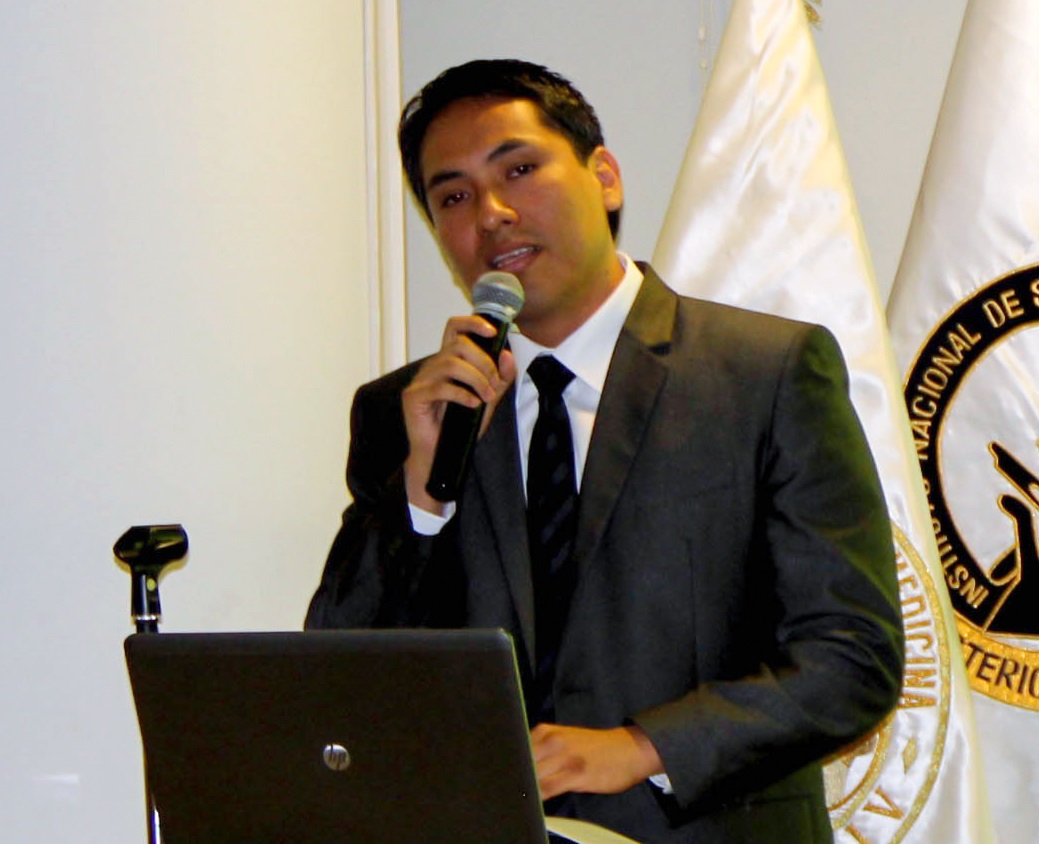
Médico cirujano con estudios de maestría en investigación epidemiológica y docencia e investigación en salud. Mi trayectoria incluye labores en centros de investigación y de salud pública, asi como actividades de gestión y difusión de la investigación científica en salud.
RESEARCH, TEACHING, or OTHER INTERESTS
Public Health, Environmental and Occupational Health, Public Health, Environmental and Occupational Health
48
Scopus Publications
889
Scholar Citations
17
Scholar h-index
23
Scholar i10-index
Scopus Publications
Factors associated with publication in scientific journals in medical residency applicants in Peru Hugo Arroyo-Hernández Investigacion En Educacion Medica, 2026 Introducción: La capacidad de publicar en revistas científicas puede ser un factor determinante para identificar a los candidatos más competitivos durante el proceso de selección para el residentado médico.Objetivo: Identificar los factores asociados a la publicación en revistas científicas en los postulantes al residentado médico en Perú.Métodos: Se realizó un estudio de tipo observacional, transversal y analítico, se seleccionó una muestra aleatoria de postulantes al Concurso Nacional de Admisión al Residentado Médico del 2020 y sus características socioeducativas, se realizó una búsqueda en Google Académico para identificar a los postulantes con publicaciones en revistas científicas, se calcularon las razones de prevalencia crudos (RP) y ajustados (RPa) con intervalos de confianza al 95% por medio de modelos lineales generalizados (GLM).Resultados: El 11.4% de un total de 639 postulantes al residentado médico publicó al menos un artículo en una revista científica, los factores asociados en el análisis ajustado fueron tener un puntaje más alto en el Examen Nacional de Medicina (ENAM) (RPa 1.22, IC 95%: 1.08 a 1.38, p = 0.002), tener tres a más años de egresado de la universidad (RPa 0.94: 0.90 a 0.99, p = 0.016) y postular a una especialidad en el área de la salud pública (RPa 1.38, IC 95%: 1.03 a 1.85, p = 0.029).Conclusión: Diez de cada cien postulantes al residentado en Perú publicaron en revistas científicas y los factores asociados que incrementaron la probabilidad de publicación fueron un mayor puntaje en el ENAN y escoger una especialidad en el área de la salud pública. Por otro lado, los postulantes con tres o más años de egreso de la universidad presentaron una menor probabilidad de publicar en revistas científicas.
FACTORS ASSOCIATED WITH UNSUCCESSFUL TREATMENT OF DRUG-SUSCEPTIBLE TUBERCULOSIS IN PATIENTS FROM HUÁNUCO, PERÚ Hugo Arroyo-Hernández, Mely Ruiz-Aquino, V Cristián Bravo Revista De La Facultad De Medicina Humana, 2025 Introducción: El tratamiento no exitoso de tuberculosis en Huánuco representa un desafío clave para la salud pública regional. Objetivo: Determinar los factores asociados al tratamiento no exitoso para tuberculosis sensible en pacientes de una región del Perú. Métodos: Estudio transversal analítico basado en datos del programa de control de tuberculosis en la región Huánuco durante 2021. Se incluyeron pacientes nuevos que iniciaron tratamiento con fármacos de primera línea y contaban con condición de egreso. Se consideró egreso no exitoso en casos de fracaso terapéutico, abandono o fallecimiento. Se calcularon razones de prevalencia crudas y ajustadas (RPa), con intervalos de confianza del 95% (IC95%). Resultados: Se incluyeron 244 pacientes con una mediana de edad de 37 años; el 60,2% fueron hombres y el 6,1% presentó coinfección con VIH (TB-VIH). El 13,5% tuvo un egreso no exitoso. Los pacientes del tertil de 52 a 89 años (RPa:5,00; IC95%:1,69–14,82; p=0,004) y aquellos con TB-VIH en tratamiento antirretroviral de gran actividad (TARGA) (RPa:3,11; IC95%:1,13–8,57; p=0,028) mostraron mayor prevalencia de egreso no exitoso. Conclusión: Los pacientes que ingresaron al programa de control para la tuberculosis sensible en la región de Huánuco en Perú, con una edad mayor de 53 a más años y que recibieron TARGA por coinfección con el VIH tuvieron mayor prevalencia de un tratamiento no exitoso. Es recomendable plantear estrategias efectivas de prevención y control centradas en el seguimiento del tratamiento para los pacientes con tuberculosis. Palabras clave: Terapia antirretroviral altamente activa; coinfección, tuberculosis, infecciones por VIH, establecimientos de salud, índice de desarrollo humano. (Fuente: DeCS BIREME).
Mid- and long-term mortality risk factors after COVID-19 hospitalization: A retrospective observational study in Peru Max Carlos Ramírez-Soto, Hugo Arroyo-Hernández Vaccine X, 2025 Recent studies have demonstrated the long-term mortality risk in COVID-19 survivors. However, the risk factors for mid- and long-term mortality after COVID-19 hospitalization in the Peruvian population are unknown. We evaluated risk factors associated with mid- and long-term mortality after COVID-19 hospitalization. We conducted a retrospective observational study in survivors of SARS-Co-V-2 infection discharged from hospital during 2020–2023, using open data from the Ministerio de Salud, Peru. The main outcome measures were mortality among all survivors of SARS-CoV-2 infection at mid-term (61 to 364 days after hospital discharge) and long-term (≥1 year after hospital discharge). Of the 97,249 COVID-19 survivors who were discharged from hospital, 523 patients died within 61 to 364 days of discharge and 219 patients died after 1 year or more since they were discharged. The older age (adjusted ratio hazards [aHR], 3.46; 95 % CI, 2.87–4.17; p < 0.001 to mid-term; and aHR, 3.48; 95 % CI, 2.63–4.61; p < 0.001 to long-term), oxygen support (aHR, 1.64; 95 % CI, 1.30–2.07; p < 0.001 to mid-term), and the hospitalization stay of 4 to 9 days (aHR, 1.54; 95 % CI, 1.18–2.00; p = 0.001 to mid-term; and aHR, 1.64; 95 % CI, 1.04–2.58; p = 0.034 to long-term) and ≥ 10 days (aHR, 2.44; 95 % CI, 1.89–3.17; p < 0.001 to mid-term; and aHR, 2.98; 95 % CI, 1.89–4.68; p < 0.001 to long-term) were associated with increased mortality risk. Compared with the unvaccinated, administration of 1 to 2 or 3 to 4 doses of the SARS-CoV-2 vaccine before or after hospitalization was associated with a reduced risk of death in the mid- and/or long-term. Although older age and longer hospital stay were associated with an increased risk of death after COVID-19 hospitalization in the mid- and long-term, and oxygen support increased the risk of death in the mid-term, vaccination against SARS-CoV-2 reduced the risk of death.
Changes in HIV incidence during the COVID-19 pandemic (2020-22) compared with the pre-pandemic period (2015-19) in Peru: An observational study Max Carlos Ramírez-Soto, Hugo Arroyo-Hernández Plos One, 2025 Introduction During the COVID-19 pandemic, non-pharmaceutical interventions affected the screening of sexually transmitted infections. We investigated the incidence of HIV infection during the COVID-19 pandemic compared with incidence in the pre-pandemic period. Methods In this observational study, we analyzed HIV surveillance data for all age-groups from 25 geographically diverse regions in Peru from Jan 1, 2015 to Dec 31, 2022. HIV incidence during the COVID-19 pandemic (2020, 2021, and 2022) was compared with pre-pandemic rates (2015–19). Results Overall, there were 65,166 new cases of HIV infection from January 1, 2015 to December 31, 2022. HIV incidence risk ratio (IRR) was 26% lower in 2020 (IRR = 0.74; 95% CI, 0.71–0.76), 5% higher in 2021 (IRR = 1.05; 95% CI, 1.02–1.08) and 16% higher in 2022 (IRR = 1.16; CI, 1.13–1.20), compared with the pre-pandemic period. Furthermore, compared with the pre-pandemic period, the annual incidence of HIV among men was 29% lower in 2020 (IRR = 0.71; 95% CI, 0.68–0.73), 4% higher in 2021 (IRR = 1.04, 95% CI, 1.01–1.08) and 10% higher in 2022 (IRR = 1.10; 95% CI, 1.06–1.14). In the age-stratified analysis, the annual HIV incidence in 2020 was 21 and 33% lower for those aged 18–29 (IRR = 0.79; 95% CI, 0.75–0.83) and 30–59 (IRR = 0.67; 95% CI, 0.64–0.70), respectively, compared with the pre-pandemic period. Finally, annual HIV incidence has decreased in 11 out of 25 regions in 2020, compared with the pre-pandemic period. Conclusions Our study showed that during the COVID-19 pandemic in 2020, the incidence of HIV infection in the population of Peru decreased. However, this incidence began to return to pre-pandemic rates in 2021, coinciding with the easing or elimination of non-pharmaceutical interventions. By 2022, the incidence of HIV infection was higher than in the pre-pandemic period, especially in regions of the Peruvian Amazon.
Epidemiological and clinical characteristics of monkeypox among people with and without HIV in Peru: a national observational study Max Carlos Ramírez-Soto, Hugo Arroyo-Hernández Journal of Infection and Public Health, 2024 BACKGROUND: In Latin America, Peru has the second highest number of cases of monkeypox (Mpox), of which more than 50 % are Human Immunodeficiency Virus (HIV)-positive. Here, we compared the epidemiological and clinical characteristics of Mpox between people with and without HIV in Peru. METHODS: We conducted a national retrospective study using data on confirmed cases of Mpox reported by the Peruvian National Surveillance System from 15 June 2022 to 31 December 2023. RESULTS: A total of 3561 confirmed cases of Mpox were included. Of these, 2123 (60 %) patients were people living with HIV (PLWH), with increased odds for those aged 30 years or older, homosexual (adjusted odds ratio [aOR] 8.58 [6.95-10.59], p<0.0001), bisexual (aOR=4.44 [3.46-5.69], p<0.0001), sex workers (aOR=2.24 [1.07-4.68], p=0.032), people with a history of syphilis (aOR=2.07 [1.66-2.58], p<0.001), and hospitalized (aOR=3.08 [2.03-4.68], p<0.001). PLWH were more likely to have proctitis (aOR=1.73 [1.26-2.37], p=0.001). The overall mortality was 20 of 3561 (0.56 %). Among PLWH and Mpox, more deaths occurred in hospitalized (p<0.001) and non-ART (p<0.001) individuals. CONCLUSION: Our findings highlight that HIV infection among Mpox cases in Peru is associated with high-risk sexual behaviour and a high likelihood of hospitalization.
High Global Health Security Index is a determinant of early detection and response to monkeypox: A cross-sectional study Max Carlos Ramírez-Soto, Hugo Arroyo-Hernández Plos One, 2024 IntroductionRecent outbreaks of monkeypox (Mpox) have occurred in countries outside of Africa, with large numbers of cases spreading rapidly to almost every continent. We aimed to analyze the correlation between the Global Health Security (GHS) Index (categories and indicators) and the Mpox case rate in different regions and globally.MethodsIn this cross-sectional study, we used data from Mpox cases from the WHO, and the GHS categories and indicators for detection, prevention, reporting, health system, rapid response, international norms compliance, and risk environment. Outcome measures were the relationship between GHS index (categories and indicators) and Mpox case rate using crude and adjusted non-linear regression models.ResultsAfter performing adjusted analyses, only risk environment and detection and reporting index were associated with Mpox case rates in the 99 countries and the Region of the Americas, respectively. Antimicrobial resistance (AMR) indicators of the prevention category, risk communication of the rapid response category, the joint external evaluation and performance veterinary services of the norms category, and the infrastructure adequacy of the risk environment category were associated with Mpox case rates in the 99 countries (p<0.05). Laboratory systems strength and quality indicator of the detection and reporting category, and emergency response operation indicator of the response rapid category were associated with Mpox case rates in the countries of the region of the Americas (p<0.05). AMR indicator of the prevention of the emergence category, and the infrastructure adequacy of the risk environment category were associated with Mpox case rates in the countries of the European Region (p<0.05). In the countries of the other regions, only the trade and travel restrictions indicator of the rapid response category was associated with Mpox case rates (p<0.05).ConclusionsCountries, particularly in the Americas region, with high levels of infrastructure adequacy and laboratory system strength and quality as measured by the GHS index are better equipped to detect more Mpox cases. Therefore, they have higher Mpox case detection rates and can successfully respond to Mpox outbreaks.
Factors associated with left ventricular diastolic dysfunction in adults from a region of the Andes in Peru Aníbal V. Díaz-Lazo, Mely Ruiz-Aquino, Hugo Arroyo-Hernández Archivos De Cardiologia De Mexico, 2024 Objective: To determine the factors associated with left ventricular diastolic dysfunction (LVDD) in adults residing in a region of the Andes in Peru. Method: A case-control study was conducted on adults living at an altitude of more than 3000 meters in Peru. Cases consisted of patients diagnosed with LVDD through echocardiography, whereas controls were adults without LVDD, as confirmed by echocardiography. Results: A total of 50 cases and 100 controls were included in the study. Among them, 38.7% had high blood pressure, and 41.3% were overweight. Upon adjusted analysis, age 60 or older (aOR: 4.06; 95%CI: 1.29-12.8), female sex (aOR: 2.24; 95%CI: 1.01-4.96) and left ventricular hypertrophy (aOR: 3.17; 95%CI: 1.41-7.17) were identified as statistically significant factors associated with LVDD. Conclusions: The risk of LVDD is associated with older adults, female gender, and left ventricular hypertrophy among individuals residing above 3000 meters altitude in a region of the Andes, in Peru.
Monkeypox virus infections in low-risk groups during the 2022-23 global outbreak: An analysis of the WHO global report Max Carlos Ramírez-Soto, Hugo Arroyo-Hernández Infezioni in Medicina, 2024 Introduction: In the 2022-23 Mpox outbreak, cases also occurred in children, adolescents, and adults aged 50 years and older, for whom the risk of transmission is low and whose epidemiological characteristics are less known, compared to high-risk groups such as young adults. Here we describe the epidemiological characteristics of Mpox in children, adolescents and adults aged 50 years and older in the global Mpox outbreak. Methods: A retrospective study on laboratory-confirmed surveillance data of Mpox cases reported to World Health Organization (WHO) was conducted. Case data from WHO's 2022-23 Mpox Outbreak: Global Trends from 1 January 2022 to 1 September 2023 was used for our analysis. We included cases reported by WHO with data on age (children [range, 0 to 9 years], adolescents [range, 10 to 17 years], adults 50 to 59 years, and adults 60 years and older), gender, WHO region, hospital admission, and intensive care unit admission. Results: Until September 01, 2023, data from 89,752 cases of Mpox have been reported to WHO. Of all the reported cases, 1124 (1.3%), 6296 (7.0%) and 1501 (1.6%) were children and adolescents, adults aged 50-59 years, and adults aged 60 years or older, respectively, and the proportion varied among WHO regions. There was a high proportion of cases among population aged 0-17 years, adolescents (256 [66.3%]) from the region of the Americas and girls aged 0-9 years [127 (46.7%)] from the African region. Men aged 50-59 years (3495 [57.2%] vs. 2553 [41.8%] cases from the region of the Americas and the European region, respectively) and men aged 60-69 years (639 [60.0%] vs. 607 [48.4%] from the region of the Americas and the European region) were most affected, compared to other age groups and women. Among children, adolescents, and adults aged 50 years or older, a low proportion of cases developed some complications and required hospital admission, and some cases were admitted to the intensive care unit. Conclusions: Epidemiological evidence of Mpox in these low-risk groups highlights the risk of wider community transmission. Therefore, while efforts continue to control the global outbreak of Mpox in high-risk groups, it is also necessary to ensure that these low-risk groups have access to timely health care and vaccination.
Are articles on COVID-19 more cited? Bibliometric analysis in a Latin American biomedical journal Hugo Arroyo-Hernández Revista Facultad De Medicina, 2023 Desde el inicio de la pandemia por la COVID-19 los editores de revistas científicas han implementado estrategias para agilizar sus procesos mediante la rápida gestión de los artículos sobre COVID-19 con la finalidad de divulgar los conocimientos de forma oportuna y generar evidencias para la toma de decisiones en salud, pero sin alterar el rigor del proceso de revisión por pares. 1,2 El impacto que alcanzan los artículos publicados en revistas científicas es medible por diversos parámetros. Sin embargo, son las citas que se reciben en otras publicaciones, como revistas, preprints, tesis, documentos técnicos, entre otros, uno de sus principales indicadores.
The fate of the original rejected articles. Analysis in a public health journal in Latin America Hugo Arroyo-Hernández, J. Jhonnel Alarco Revista Del Cuerpo Medico Hospital Nacional Almanzor Aguinaga Asenjo, 2022 Introducción: Las investigaciones publicadas en revistas científicas permiten generar evidencias para la toma de decisiones. Sin embargo, el destino de las investigaciones que se reciben en una revista científica no siempre es su publicación. Objetivo: Determinar el destino de los artículos originales que fueron rechazados en la Revista Peruana de Medicina Experimental y Salud Pública (RPMESP) durante 2014 y 2015 y los factores asociados a su publicación. Materiales y métodos: Durante junio y julio del 2019 se realizó una búsqueda en Google Académico de los artículos originales que fueron rechazados en la RPMESP, se evaluaron como variables independientes el género, la procedencia y el grado académico del autor corresponsal, además si el rechazó fue realizado por el comité editor o luego de ser revisado por pares. Para determinar los factores asociados se calcularon riesgos relativos bivariados (RR) y multivariados (RRa) con intervalos de confianza al 95% (IC 95%) utilizando un modelo de regresión de Poisson simple y múltiple. Resultados: De 285 artículos originales rechazados el 45,6% tuvo como destino su publicación en otras revistas científicas de las cuales el 61,5% fueron revistas del extranjero, los autores corresponsales con filiación extranjera (RRa 1,34, IC 95%: 1,02-1,77) y estudiantes de pregrado (RRa 1,56, IC 95%: 1,12-2,17) incrementaron la probabilidad de publicación, pero disminuyó si el rechazo fue luego de la revisión por pares (RRa 0,71, IC 95%: 0,52-0,97). Conclusiones: Menos de la mitad de los artículos originales que fueron rechazados tuvo como destino su publicación en otra revista científica. Los autores deben analizar los motivos del rechazo y continuar con el proceso de publicación.
Authorship inconsistencies in the publication of papers presented at medical students' national scientific conferences Revista Cubana De Informacion En Ciencias De La Salud, 2022
Geographic distribution and gender gap in the peer review of a Latin American biomedical scientific journal Revista Cubana De Informacion En Ciencias De La Salud, 2021
Sex and its relation to the academic impact on researchers in Latin America Revista Cubana De Informacion En Ciencias De La Salud, 2021
Characteristics and associated factors with mistreatment perception in medical interns in Peru Jennifer Steffany Vilchez Cornejo, Ronald D. Viera-Morón, Ruth C. Taminche-Canayo, Carlos Andrés Carrasco-Farfán, Luccio Romani, Cynthia R. Mendoza-Flores, Gabriel Larico-Calla, Sandra Paola Álvarez-Soto, Magaly Lizana-Medrano, Eliseo Flores-Naquiche, Juan J. Saenz, Hugo Arroyo-Hernández Acta Medica Peruana, 2021
The gender gap in the editorial committees of Peruvian scientific journals Revista De Gastroenterologia Del Peru Organo Oficial De La Sociedad De Gastroenterologia Del Peru, 2019
Alcohol consumption and suicide risk in medical internship: A Peruvian multicentric study Carlos A. Carrasco‐Farfan, Daniela Alvarez‐Cutipa, Jennifer Vilchez‐Cornejo, Magaly Lizana‐Medrano, Paula A. Durand‐Anahua, Jorge A. Rengifo‐Sanchez, Alexis Rebatta‐Acuña, Wildor S. Cubas, Hugo Arroyo‐Hernandez, Carlos J. Toro‐Huamanchumo Drug and Alcohol Review, 2019
Duplicate publication of a case report Franco Romani, J. Jhonnel Alarco, Hugo Arroyo-Hernández Revista Peruana De Medicina Experimental Y Salud Publica, 2018
Ethic faults in scientific publications: Report of a new case Revista Peruana De Medicina Experimental Y Salud Publica, 2009
Student publications about medical propierties of plants in Peru Revista Peruana De Medicina Experimental Y Salud Publica, 2009
Characteristics of biomedical scientific production in ica, peru 1998-2007 Revista Peruana De Medicina Experimental Y Salud Publica, 2009
RECENT SCHOLAR PUBLICATIONS
Factores asociados a la publicación en revistas científicas en postulantes al residentado médico en Perú H Arroyo-Hernandez Revista Investigación en Educación Médica 15 (57), 91-100 , 2026 2026
Factores asociados al tratamiento no exitoso para tuberculosis sensible en pacientes de Huánuco, Perú: Factors associated with unsuccessful treatment of drug-susceptible … H Arroyo-Hernández, M Ruiz-Aquino, VR Bravo Revista de la Facultad de Medicina Humana 25 (4), 58-65 , 2025 2025 Citations: 1
Changes in HIV incidence during the COVID-19 pandemic (2020–22) compared with the pre-pandemic period (2015–19) in Peru: An observational study MC Ramírez-Soto, H Arroyo-Hernández Plos one 20 (6), e0324784 , 2025 2025 Citations: 1
Mid-and long-term mortality risk factors after COVID-19 hospitalization: A retrospective observational study in Peru MC Ramírez-Soto, H Arroyo-Hernández Vaccine: X 24, 100631 , 2025 2025 Citations: 1
Los encuentros de editores de Revistas Científicas Biomédicas en Perú como estrategia de fortalecimiento de la calidad editorial y visibilidad científica H Arroyo-Hernández, M Ruiz-Aquino Revista Peruana de Ciencias de la Salud 6 (4), 229-231 , 2024 2024
Epidemiological and clinical characteristics of monkeypox among people with and without HIV in Peru: a national observational study MC Ramirez-Soto, H Arroyo-Hernandez Journal of Infection and Public Health 17 (8), 102494 , 2024 2024 Citations: 23
High Global Health Security Index is a determinant of early detection and response to monkeypox: A cross-sectional study MC Ramírez-Soto, H Arroyo-Hernández Plos one 19 (7), e0307503 , 2024 2024 Citations: 4
Factors associated with left ventricular diastolic dysfunction in adults from a region of the Andes in Peru AV Díaz-Lazo, M Ruiz-Aquino, H Arroyo-Hernández Archivos de Cardiologia de Mexico 94 (4), 444 , 2024 2024
Monkeypox virus infections in low-risk groups during the 2022–23 global outbreak: An analysis of the WHO global report MC Ramírez-Soto, H Arroyo-Hernández Le Infezioni in Medicina 32 (1), 12 , 2024 2024 Citations: 13
XVII Congreso Científico Internacional del Instituto Nacional de Salud-pobreza e inequidad en salud H Arroyo Hernández, SP Suguimoto Watanabe Rev. peru. med. exp. salud publica, [34]-[34] , 2024 2024
Are articles on COVID-19 more cited? Bibliometric analysis in a Latin American biomedical journal H Arroyo-Hernández Revista de la Facultad de Medicina 71 (1) , 2023 2023
Factores asociados al ingreso a la escuela de medicina en una universidad pública de Lima, Perú HLG Peceros, CHA Hernandez Ciencia e Investigación Medico Estudiantil Latinoamericana 27 (2) , 2022 2022
Participación femenina en los comités editoriales de revistas médicas en Latinoamérica CR Aquino-Canchari, SG Chávez-Bustamante, CA Benites-Ibarra, ... Biomédica 42 (2), 355-363 , 2022 2022 Citations: 28
Gender equality in the editorial process of public health journals from the American continent H Arroyo-Hernández, MC Ramírez-Soto Gaceta Sanitaria 36, 85-86 , 2022 2022 Citations: 5
Excess all-cause deaths stratified by sex and age in Peru: a time series analysis during the COVID-19 pandemic MC Ramírez-Soto, G Ortega-Cáceres, H Arroyo-Hernández BMJ open 12 (3), e057056 , 2022 2022 Citations: 27
Correlation between cases of acute diarrhea and Google searches in Peru H Arroyo-Hernández Andes pediatrica: revista Chilena de pediatria 93 (1), 134-135 , 2022 2022
Las brechas de género en la investigación científica del Perú H Arroyo-Hernández Revista Peruana de Ciencias de la Salud 4 (3) , 2022 2022 Citations: 1
El destino de los artículos originales rechazados. Análisis en una revista de salud pública en Latinoamérica H Arroyo-Hernández, JJ Alarco Revista del Cuerpo Médico Hospital Nacional Almanzor Aguinaga Asenjo 15 (4 … , 2022 2022 Citations: 3
Correlación entre casos de varicela y búsquedas en Google en Perú H Arroyo-Hernández, MA Clavo, A Vicuña-Roca Revista chilena de infectología 39 (4), 492-494 , 2022 2022 Citations: 1
Distribución geográfica y brecha de género en la revisión por pares de una revista científica biomédica en Latinoamérica H Arroyo-Hernández, M Ramírez-Soto, JJ Alarco, B Huarez Revista Cubana de Información en Ciencias de la Salud 32 (4) , 2021 2021 Citations: 5
MOST CITED SCHOLAR PUBLICATIONS
Características del maltrato hacia estudiantes de medicina de una universidad pública del Perú F Munayco-Guillén, A Cámara-Reyes, LJ Muñoz-Tafur, ... Revista Peruana de Medicina Experimental y Salud Pública 33, 58-66 , 2016 2016 Citations: 118
Dificultades para el desarrollo de investigaciones en pregrado en una universidad pública de provincia, Perú. CH Arroyo-Hernández, W De la Cruz, UE Miranda-Soberon Revista Peruana de Medicina Experimental y Salud Pública , 2008 2008 Citations: 113
Sex differences in the incidence, mortality, and fatality of COVID-19 in Peru MC Ramírez-Soto, H Arroyo-Hernández, G Ortega-Cáceres PLoS One 16 (6), e0253193 , 2021 2021 Citations: 66
Acceso a servicios de salud dental en menores de doce años en Perú, 2014 A Hernández-Vásquez, D Azañedo, D Díaz-Seijas, G Bendezú-Quispe, ... Salud colectiva 12, 429-441 , 2016 2016 Citations: 56
Sex differences in COVID-19 fatality rate and risk of death: an analysis in 73 countries, 2020–2021 MC Ramírez-Soto, G Ortega-Cáceres, H Arroyo-Hernández Le infezioni in medicina 29 (3), 402 , 2021 2021 Citations: 43
Factores asociados a la supervivencia al año de vida en neonatos con cardiopatía congénita severa en un Hospital Nacional de Perú CE Torres-Romucho, VG Uriondo-Ore, AJ Ramirez-Palomino, ... Revista Peruana de Medicina Experimental y Salud Publica 36, 433-441 , 2019 2019 Citations: 35
Situación actual y perspectivas profesionales de los estudiantes de medicina de nueve países de Latinoamérica, 2008: estudio preliminar G Codas, B Deras, L Escalante-Romero, R Farfan, J Maquera-Afaray, ... CIMEL Ciencia e Investigación Médica Estudiantil Latinoamericana 15 (1), 3-8 , 2010 2010 Citations: 31
Participación femenina en los comités editoriales de revistas médicas en Latinoamérica CR Aquino-Canchari, SG Chávez-Bustamante, CA Benites-Ibarra, ... Biomédica 42 (2), 355-363 , 2022 2022 Citations: 28
Excess all-cause deaths stratified by sex and age in Peru: a time series analysis during the COVID-19 pandemic MC Ramírez-Soto, G Ortega-Cáceres, H Arroyo-Hernández BMJ open 12 (3), e057056 , 2022 2022 Citations: 27
Características de la producción científica biomédica en Ica, Perú 1998-2007 CH Arroyo-Hernández, EB Zukerán-Medina, UE Miranda-Soberón Revista Peruana de Medicina Experimental y Salud Pública , 2009 2009 Citations: 27
Epidemiological and clinical characteristics of monkeypox among people with and without HIV in Peru: a national observational study MC Ramirez-Soto, H Arroyo-Hernandez Journal of Infection and Public Health 17 (8), 102494 , 2024 2024 Citations: 23
Alcohol consumption and suicide risk in medical internship: A Peruvian multicentric study CA Carrasco‐Farfan, D Alvarez‐Cutipa, J Vilchez‐Cornejo, ... Drug and alcohol review 38 (2), 201-208 , 2019 2019 Citations: 22
Características y factores asociados al maltrato percibido en internos de medicina en Perú JV Cornejo, RDV Morón, RCT Canayo, CAC Farfán, L Romani, ... Acta médica peruana 38 (1), 17-26 , 2021 2021 Citations: 19
La brecha de género en los comités editoriales de revistas científicas peruanas H Arroyo-Hernández, B Huarez Revista de Gastroenterología del Perú 39 (2), 197-8 , 2019 2019 Citations: 18
Access to oral health services in children under twelve years of age in Peru, 2014 A Hernández-Vásquez, D Azañedo, D Díaz-Seijas, G Bendezú-Quispe, ... Salud colectiva 12 (3), 429-441 , 2016 2016 Citations: 18
Runa soncco: Manuel Núñez Butron y su proyecto de educación sanitaria CH Arroyo-Hernández Revista Peruana de Medicina Experimental y Salud Pública 30, 336-339 , 2013 2013 Citations: 18
Análisis bibliométrico de la producción científica biomédica en la Región de Ica, Perú. 1998-2010 CH Arroyo-Hernández, B Zukerán-Medina, UE Miranda-Soberón Revista Médica Panacea 1 (1) , 2011 2011 Citations: 18
Prevalencia y factores asociados a sintomatología depresiva en estudiantes de medicina de la provincia de Ica, Perú M Legua-Flores, CH Arroyo-Hernández Revista Médica Panacea 1 (2) , 2011 2011 Citations: 17
Necesidad de compartir y difundir las publicaciones científicas en salud con la población general H Arroyo-Hernández, JJ Alarco, C Cabezas Revista Peruana de Medicina Experimental y Salud Pública 33, 202-204 , 2016 2016 Citations: 14
Monkeypox virus infections in low-risk groups during the 2022–23 global outbreak: An analysis of the WHO global report MC Ramírez-Soto, H Arroyo-Hernández Le Infezioni in Medicina 32 (1), 12 , 2024 2024 Citations: 13