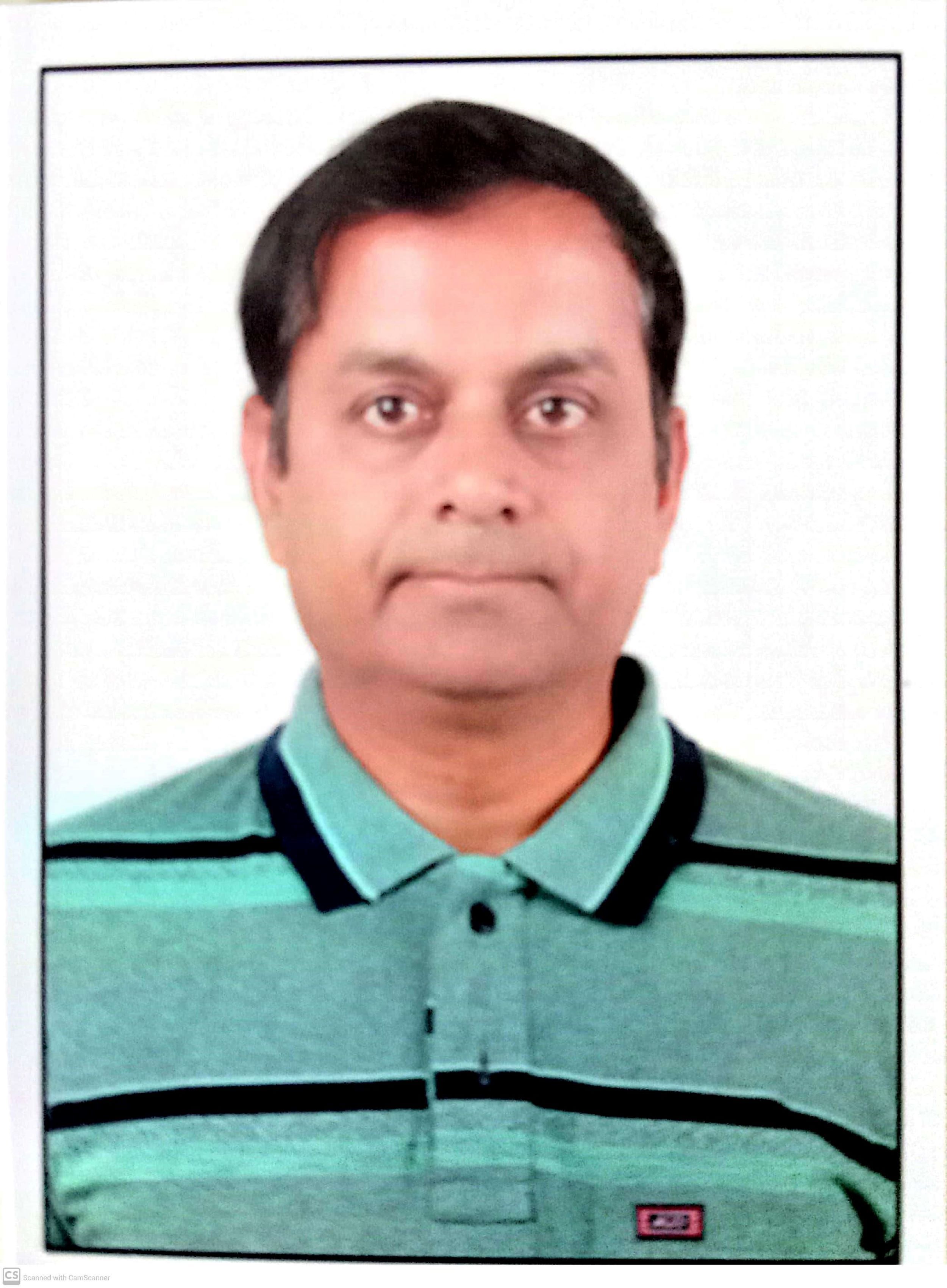
Dr Om Prakash

@nlujodhpur.ac.in

Dean ODL, Associate Professor, Huamnities and Social Sciences
National Law University Jodhpur

Dr Om Prakash
Dr. Om Prakash, Associate Professor in the faculty of Social Sciences and Humanities of National Law University Jodhpur teaches since 2001. He is also Dean, Open Distance Learning Programme(ODLP) and Director, Mahatma Gandhi Centre for Peace and Civilizational Studies of the university. He teaches Legal and Constitutional History, Contemporary India, Internationalism and World System at the University. He received prestigious 2019 Social Science Research National Award of Cinnnamara College of, University of Dibrugarh Assam in January 2020. He completed a major research project on Naxalism financed by Indian Council of Social Science Research (ICSSR) during 2015-17. He received an international grant from Eurasian Foundation Tokyo, Japan to run a course on Peace Building 2022. He is working on a project from Ministry of Education, Government of India and IIT Kanpur for creation of several hours of video lectures on historical events. He has published more than 50 research papers.

EDUCATION

Dr. Om Prakash has his graduation and masters from Banaras Hindu University (BHU) and M Phil and Ph. D from Jawaharlal Nehru University (JNU) and NLUJ respectively. He is fellow and life member of UNESCO Association, Indian History Congress, Indian Social Science Congress, Dadhi Mahanta Research Centre, University of Dibrugarh and Comparative Education Society of India. He is also visiting professor of number of Universities and institutions in India. He has lectured for the audience in India, Thailand and United States. His area of interest is environmental history, contemporary India and South has also published approximately 20 articles for academic and strategic think tanks, research centres and for UGC etc. He has also published a book titled ‘Legacy of Partition in South Asia: Nation Building and Governance’

RESEARCH, TEACHING, or OTHER INTERESTS

History, Political Science and International Relations, Social Sciences, Arts and Humanities
5

Scopus Publications

46

Scholar Citations

3

Scholar h-index

1

Scholar i10-index

Scopus Publications

  • History, Policy Making, and Sustainability
    Om Prakash
    Interdisciplinary Approaches to Public Policy and Sustainability, 2019
    Public policy and policy making is an inherent task of the institutions and state for the purpose of well-knit and sustainable governance in the society and organisation as well as in the state. The quality of governance is based upon how visionary the public policy is and how far it has been implemented. The aspect of sustainability thrives on the perspective that policy making should be inclusive having inter-generational justice. The chapter attempts to look into how far history has played its role in policymaking of the state and civil society. It also looked into how history had a role in the foreign policy making of the state. Analogies can be drawn from the past experience into the present decision making which can have a reflection in the future as well. Lyndon Johnson's administration prepared internal histories to key policy issues, in hopes of better informing the initial efforts of its successor. The illustrations and examples in the chapter are not confined to the geographical boundaries of any particular nation but rather have a global dimension.
  • Integrated and corporate learning in higher education: Challenges and strategies
    Om Prakash, Archie Mathur
    Evolving Corporate Education Strategies for Developing Countries the Role of Universities, 2013
    Since the advent of globalization, interdisciplinary learning has gained wide currency against the orthodox systems of mono-discipline or specialized learning and research. The emergence of the knowledge society demands a person to be able to integrate the various disciplines of knowledge for innovation and effectiveness in learning, application and research. The real integrated learning would be achieved only when educational institutions such as universities are not confined to the walls of their campuses but maintain an interface with the society and social groups. One of the objectives of the chapter is to highlight that integrated approach is not merely a methodology and process but is a concept, a way of knowing and understanding and a philosophy. There are misnomers about Interdisciplinary approach. It has been generally misunderstood as rejection of the disciplines. On the contrary it is not only firmly rooted in the disciplines but also offers a corrective to the dominance of disciplinary ways of knowing and specialization. This chapter is an attempt to address these problems. Integrated and corporate approach can have several dimensions and purposes including to serve societal or employment needs, facilitate innovation, new thinking and ideas, and to create humane entrepreneurs. The chapter looks into various approaches and dimensions of integrated learning as also various outcomes and situations of integration and learning. There are various challenges in the teaching learning process in an interdisciplinary environment which the faculty and students face but there are ways to tackle these challenges. The quality of higher education in India would greatly benefit from a symbiotic link amongst the society, university, and industry.
  • Anti-Ahmadiya sectarian riots and challenges of nation building during the early years of Pakistan
    Iup Journal of History and Culture, 2011
  • Refugee crisis in Eastern India during the early decades in the post-partition South Asia
    Iup Journal of History and Culture, 2010
  • Green imperialism and deforestation in the 19 th century British Northern India
    Iup Journal of History and Culture, 2009

RECENT SCHOLAR PUBLICATIONS

  • Neutralising Nuclear Deterrence in South Asia: India's Forward Policy
    O Prakash
    Nrs blog , 2026
    2026
  • Environmental Awareness and Green initiatives in South East Asia in the Aftermath of Covid 19 Pandemic, ISBN: 9784755613425
    O Prakash
    Hope for the Future: Towards Education and Peace in the Post Covid Era, 365-376 , 2025
    2025
  • The Nature and Trends of Land Reforms in Contemporary India
    O Prakash
    The Proceedings of Indian History Congress, 2024 85, 1314-1322 , 2024
    2024
  • Two Nation Theory and Secular Nationalism Debate in Pakistan
    O Prakash
    Swaraj 4, 29-37 , 2023
    2023
  • Post Covid 19 World: Environmental Awareness and Green Initiatives in South East Asia
    O Prakash
    Proceedings of Eurasian Convention, Bangkok, 127-135 , 2023
    2023
  • Geo-political legacy of partition of India: Indus water treaty and the recent Controversies
    O Prakash
    The Mirror 10 (1), 113-120 , 2023
    2023
  • Kriya Yoga
    O Prakash
    Hinduism and Tribal Religions, 802-807 , 2022
    2022
  • Social Legislations and Reforms in Modern India
    O Prakash
    The Mirror 9, 105-113 , 2022
    2022
  • White Revolution in Contemporary India
    O Prakash
    The Mirror 8 (1), 98-107 , 2021
    2021
  • Mahatma Gandhi, Vegetarianism and Non Violence
    O Prakash
    Mahatma Gandhi: From Holy Deeds to Unholy Death, 13-19 , 2020
    2020
  • History, Policy Making and Sustainability
    O Prakash
    Interdisciplinary approach to Public Policy and Sustainability, 1-17 , 2020
    2020
    Citations: 2
  • Tablighi Jamaat and Islamic Revivalism: A Historical and Contemporary Perspective
    O Prakash
    The Mirror 7, 133-141 , 2020
    2020
    Citations: 4
  • Colonial Despotism and British Judicial Intervention in the Bengal Presidency, 1772-1798
    O Prakash
    Journal of Indian History and Culture 25, 133-156 , 2019
    2019
    Citations: 2
  • Perception of Mahatma Gandhi and his ideas in Occident
    O Prakash
    The Mirror 6, 30-40 , 2019
    2019
  • P V Kane
    O Prakash
    Hinduism and Tribal Religions: Encyclopedia of Indian Religions, ISBN: 978 … , 2018
    2018
  • Kriya Yoga
    O Prakash
    Hinduism and Tribal Religions: Encyclopedia of Indian Religions , 2018
    2018
  • Jajmani System
    O Prakash
    Hinduism and Tribal Religions: Encyclopedia of Indian Religions , 2018
    2018
  • Maoist Movement in India: Early Leadership and Ideology
    O Prakash
    Third Concept 31 (371), 31-35 , 2018
    2018
  • Environmentalism in Contemporary India
    O Prakash
    The Mirror 5 (1), 107-113 , 2018
    2018
  • Decoding the Historical Authenticity of Science Education and Policy in India
    PM Om Prakash
    Handbook of Research on Science Education and University Outreach as tool … , 2017
    2017

MOST CITED SCHOLAR PUBLICATIONS

  • Wild Life Destruction: A Legacy of the Colonial State in India
    O Prakash
    Proceeding of Indian History Congress, 692-702 , 2007
    2007
    Citations: 13
  • Freedom Movement and Emergence of Secular Politics in Kashmir (1932-40)
    O Prakash
    Proceedings of the Indian History Congress 62, 486-494 , 2001
    2001
    Citations: 6
  • Tablighi Jamaat and Islamic Revivalism: A Historical and Contemporary Perspective
    O Prakash
    The Mirror 7, 133-141 , 2020
    2020
    Citations: 4
  • Funding pattern in the naxal movement in contemporary India
    O Prakash
    Proceedings of the Indian History Congress 76, 900-907 , 2015
    2015
    Citations: 3
  • Religious Fundamentalism, Public Apathy and Destruction of Heritage Structures in India: Need for a Public Policy
    O Prakash
    South Asian Journal of Tourism and Heritage (SAJTH) 4 (2), 204-214 , 2011
    2011
    Citations: 3
  • Challenges of state building in pakistan in early years: Executive—Judiciary Nexus
    O Prakash
    Proceedings of the Indian History Congress 72, 1064-1073 , 2011
    2011
    Citations: 3
  • History, Policy Making and Sustainability
    O Prakash
    Interdisciplinary approach to Public Policy and Sustainability, 1-17 , 2020
    2020
    Citations: 2
  • Colonial Despotism and British Judicial Intervention in the Bengal Presidency, 1772-1798
    O Prakash
    Journal of Indian History and Culture 25, 133-156 , 2019
    2019
    Citations: 2
  • The Use of Technology by the Maoists in the Conflict Against the State In India
    O Prakash
    Proceedings of the Indian History Congress 75, 1277-1284 , 2014
    2014
    Citations: 2
  • Siachen: Turning an Ecological Graveyard
    O Prakash
    Centre for Land and Warfare Studies, New Delhi, http://www.claws.in , 2009
    2009
    Citations: 2
  • Roots of Islamic separatism in Indian subcontinent
    O Prakash
    Proceedings of the Indian History Congress 64, 1049-1065 , 2003
    2003
    Citations: 2
  • Constitutionalism and Political Stalemate in British India after Quit India Movement
    O Prakash
    The Mirror 2, 61-68 , 2015
    2015
    Citations: 1
  • TRENDS IN AGRARIAN MOVEMENTS IN PAKISTAN DURING ITS EARLY YEARS
    O Prakash
    Proceedings of the Indian History Congress 73, 1078-1088 , 2012
    2012
    Citations: 1
  • Undermined Syncretism: Origin and Consciousness of Muslim Separatism in Colonial South Asia
    O Prakash
    American Journal of Islam and Society 28 (2), 63-85 , 2011
    2011
    Citations: 1
  • A Critique on the Issues and State Policy on Naxal Menace in Contemporary India
    O Prakash
    Journal of National Human Rights Commission of India 8, 65-78 , 2009
    2009
    Citations: 1
  • Neutralising Nuclear Deterrence in South Asia: India's Forward Policy
    O Prakash
    Nrs blog , 2026
    2026
  • Environmental Awareness and Green initiatives in South East Asia in the Aftermath of Covid 19 Pandemic, ISBN: 9784755613425
    O Prakash
    Hope for the Future: Towards Education and Peace in the Post Covid Era, 365-376 , 2025
    2025
  • The Nature and Trends of Land Reforms in Contemporary India
    O Prakash
    The Proceedings of Indian History Congress, 2024 85, 1314-1322 , 2024
    2024
  • Two Nation Theory and Secular Nationalism Debate in Pakistan
    O Prakash
    Swaraj 4, 29-37 , 2023
    2023
  • Post Covid 19 World: Environmental Awareness and Green Initiatives in South East Asia
    O Prakash
    Proceedings of Eurasian Convention, Bangkok, 127-135 , 2023
    2023

Industry, Institute, or Organisation Collaboration

Indian Institute of Social Science Research, MHRD, Government of India
Eurasian Foundation, Tokyo