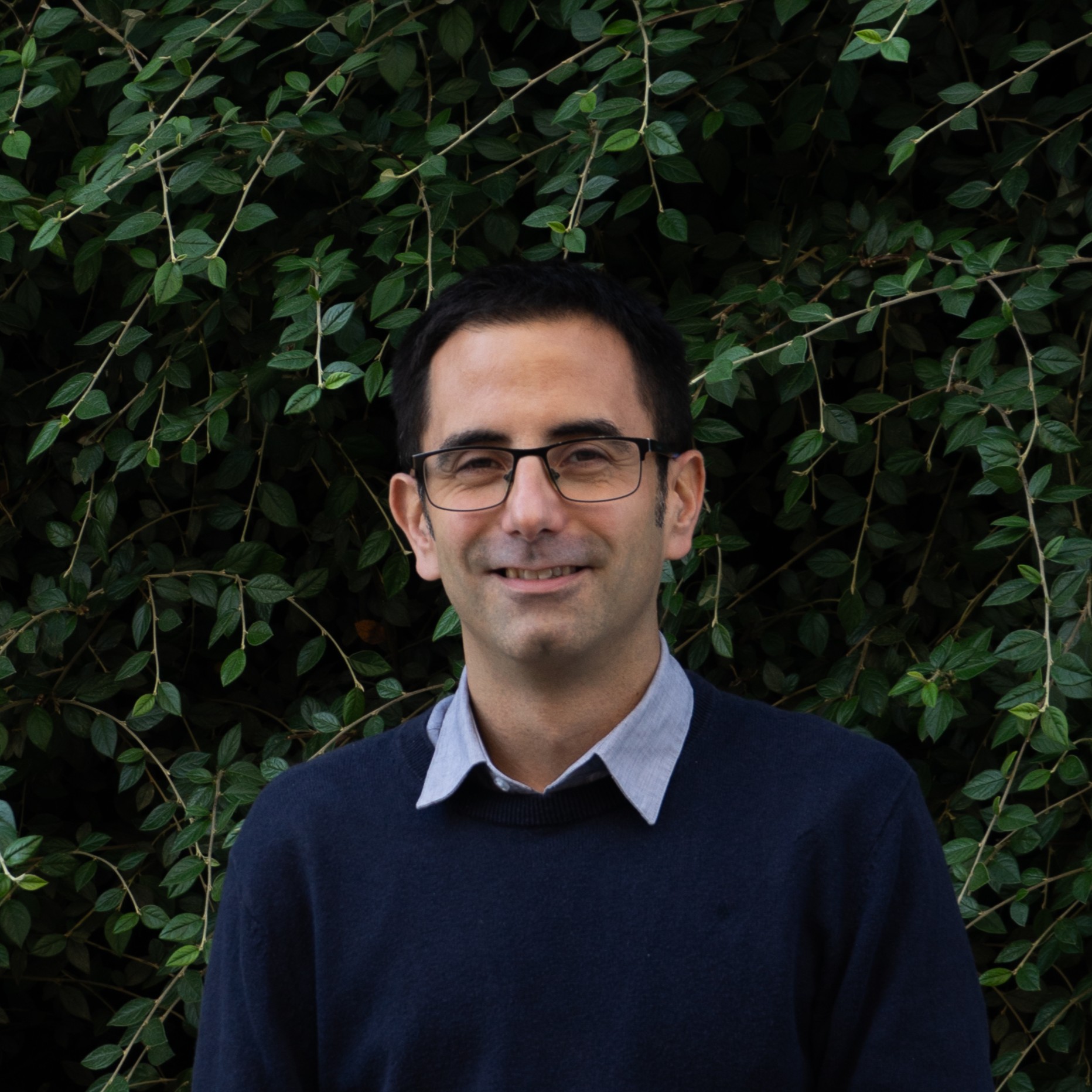
Francesco Grussu

@vhio.net

Senior Investigator, Radiomics Group
Vall d'Hebron Institute of Oncology

Francesco Grussu
I graduated from the University of Cagliari (BEng Biomedical engineering, 2009) and University of Genoa (MEng Bioengineering, 2012), Italy. I then obtained a PhD from University College London (UCL, UK) in Magnetic Resonance Physics (2016). I worked as a post-doc at UCL from 2016 to 2020, where I investigated new ways of acquiring and analysing spinal cord diffusion MRI scans in multiple sclerosis. During my post-doc, I visited New York University (NY, USA) in 2017 (Sept-Nov), and I was elected Trainee representative (2018-2020) of the International Society for Magnetic Resonance in Medicine (ISMRM) White Matter Study Group. From October 2020 I have been a post-doctoral researcher at the Vall d’Hebron Institute of Oncology, where I work on MRI for precision medicine in oncology. In September 2021 he was awarded a Beatriu de Pinós Fellowship, and from September 2022 I am a “la Caixa” Foundation Junior Leader Fellow. From January 1st 2025, I am Senior Investigator at VHIO.

EDUCATION

- BEng Biomedical Engineering, University of Cagliari, Italy (2006)
- MEng Bioengineering, University of Genova, Italy (2012)
- PhD MRI Physics, University College London (UCL), UK (2016)

RESEARCH, TEACHING, or OTHER INTERESTS

Radiology, Nuclear Medicine and imaging, Biomedical Engineering, Oncology, Computational Theory and Mathematics
70

Scopus Publications

2711

Scholar Citations

26

Scholar h-index

45

Scholar i10-index

Scopus Publications

  • Simulation-Informed Evaluation of Microvascular Parameter Mapping for Diffusion MR Imaging of Solid Tumours
    Anna Kira Voronova, Olivia Prior, Athanasios Grigoriou, Francesc Salvà, Elena Elez, Luz M. Atlagich, Roser Sala‐Llonch, Marco Palombo, Els Fieremans, Dmitry S. Novikov, Raquel Perez‐Lopez, Francesco Grussu
    Magnetic Resonance in Medicine, 2026
    Purpose We aim to inform the design of new diffusion MRI (dMRI) approaches for microvasculature quantification that enhance the biological specificity of imaging towards cancer. Methods We adopted simulation‐informed modelling of the vascular dMRI signal. We synthesised signals from 1500 synthetic vascular networks, for a variety of protocols (flow‐compensated [FC], non‐compensated [NC], hybrid), featuring different samplings and diffusion times. We estimated the number of independent, recoverable signal degrees of freedom in presence of noise (signal‐to‐noise ratio of 5), and ranked 12 microvascular metrics depending on the quality of their estimation. Lastly, we demonstrated the feasibility of estimating the top‐ranking metrics on 3T dMRI of a healthy volunteer and of a metastatic colorectal cancer (CRC) patient. Results Both NC and FC synthetic vascular signals exhibited complex behaviour as, for example, non‐zero kurtosis and diffusion time dependence. Two independent degrees of freedom appeared recoverable from directionally‐averaged vascular signals (SNR of 5). Mean volumetric flow rate and an Apparent Network Branching (ANB) index maximised correlations between ground truth and estimated values in silico. In the patient, both and detected re‐vascularisation after 3 months of targeted therapy against liver metastases, consistently with Intra‐Voxel Incoherent Motion (IVIM) metrics. Conclusions Simulation‐based modelling of the vascular dMRI signal suggests and as the most promising metrics for tissue microvasculature characterisation. Their estimation in vivo appears feasible to capture general trends, and demonstrates contrasts that are biologically plausible, encouraging their usage in future studies.
  • ESR Essentials: diffusion-weighted MRI—practice recommendations by the European Society for Magnetic Resonance in Medicine and Biology
    Marco Palombo, Benedetta Bodini, Francesco Grussu, Denis Le Bihan, Markus Nilsson, Raquel Perez-Lopez, Edwin H. G. Oei, Ivo G. Schoots, Marion Smits, Ileana O. Jelescu
    European Radiology, 2026
    Diffusion-weighted imaging (DWI) offers critical insights into tissue microstructure through the assessment of water molecule random displacements and plays a central role in the assessment of neoplastic and non-neoplastic diseases. To successfully implement and use DWI in clinical practice, guidelines for acquisition, interpretation of image contrast and of artefacts should be followed, taking the disease process and body part into account. We recommend covering a b-value range of 0–1000 s/mm2 in the brain (along at least six directions for white matter), and 50–800 s/mm2 in the body. Available acquisition acceleration options should be used to reduce repetition time (TR), echo time (TE), and echo-planar imaging (EPI) distortions, while considering the penalty in signal-to-noise ratio (SNR) and image sharpness. DW images and the apparent diffusion coefficient (ADC) map should be read jointly for the clinical interpretation. Areas of slower diffusion are hyperintense on DW images and hypointense on the ADC map, and vice versa. Magnetic susceptibility distortions and signal drop-outs or pile-ups are particularly pronounced at air-tissue or metal-tissue interfaces and may obscure areas of interest or hinder the co-localisation with structural scans. By following these guidelines and recommendations, radiologists and imaging professionals can enhance diagnostic accuracy, reduce variability, and maximise the clinical value of DWI across diverse applications. Key Points This article provides an overview of DWI principles, clinical applications, potential pitfalls, and emerging advances, alongside expert recommendations for optimal implementation. We provide key considerations tailored to specific applications (neuro and whole-body imaging), including protocol optimisation, adherence to established guidelines, and quality assurance measures to minimise artefacts and ensure reproducibility. By following the guidelines and recommendations summarised in this work, radiologists and imaging professionals can enhance diagnostic accuracy, reduce variability, and maximise the clinical value of DWI across diverse applications.
  • The Sense of Smell (SoS) Atlas: Its Creation and First Application to Investigate COVID-19 Related Anosmia With a Comprehensive Quantitative MRI Protocol
    Marta Gaviraghi, Eleonora Lupi, Elena Grosso, Andrea Fusari, Mattia Baiguera, Anita Monteverdi, Marco Battiston, Francesco Grussu, Baris Kanber, Ferran Prados Carrasco, Rebecca S. Samson, Janine Makaronidis, Marios C. Yiannakas, Michael S. Zandi, Rachel L. Batterham, Egidio D'Angelo, Fulvia Palesi, Claudia A. M. Gandini Wheeler‐Kingshott
    Journal of Magnetic Resonance Imaging, 2026
    BackgroundThe loss of smell (anosmia) has been noted in numerous diseases, including COVID‐19. Inflammatory and microstructural alterations are possible underlying mechanisms of anosmia in COVID‐19. However, no atlas exists to study olfaction and the associated tissue property changes.PurposeTo develop the sense of smell (SoS) atlas, including gray matter regions and white matter tracts of the olfactory circuit, to investigate the underpinnings of COVID‐19 related anosmia.Study TypeRetrospective.SubjectsFor the SoS atlas, high‐resolution tractograms of 10 healthy controls (HC) of the Human Connectome Project (7 females, 22–35 years) were used. The SoS atlas was applied to 8 subjects with persistent anosmia following COVID‐19 (COVID‐P, 7 females, 52 ± 12 years), 19 subjects that recovered from COVID‐19 anosmia (COVID‐R, 14 females, 38 ± 13 years), and 17 HC (8 females, 39 ± 12 years).Field Strength/Sequence3 T, 3D inversion recovery, 3D fast field echo, and spin‐echo echo‐planar imaging sequences.AssessmentTo create the SoS atlas, regions were identified and tracts were extracted via tractography following biological constraints. MRI metrics sensitive to alterations in neuroinflammation, axonal degeneration, myelin and macromolecular density, and iron were analyzed.Statistical TestsRegion‐based analysis (p‐value < 0.05, false discovery rate (FDR) corrected) and voxel‐based analysis (p‐value < 0.001 uncorrected, FDR‐corrected cluster extent = 5 voxels) were performed on 15 multisequence‐MRI metrics between the three groups.ResultsThe SoS atlas consisted of 35 regions and, after anatomical curation, the initial 506 tracts were refined to 78. Compared to HC, COVID‐P presented alterations in neuroinflammation‐related (mean: 41% of total alterations) and axonal degeneration‐related (31%) MRI metrics, while COVID‐R presented alterations of myelin‐related metrics (68%). COVID‐P alterations mainly affected the hindbrain (56%), while COVID‐R the hindbrain (39%).Data ConclusionA novel tool, the SoS atlas, was developed to study the olfactory system and applied in combination with multisequence‐MRI metrics to investigate the mechanisms of COVID‐19 related anosmia.Evidence Level3.Technical EfficacyStage 1.
  • Broad Utility of Ultrasensitive Analysis of ctDNA Dynamics across Solid Tumors Treated with Immunotherapy
    Elena Garralda, Charles Abbott, Alma Calahorro, Oriol Mirallas, Jason Pugh, Ana Belén Moreno-Cárdenas, Kathleen Keough, Vladimir Galvao, Guzman Alonso, Armando Mel Olano, María Vieito Villar, Arjun Oberoi, Julia Lostes Bardaji, Alberto Hernando-Calvo, Irene Braña, Giulia Pretelli, Belen Ortega, Carlota Arenillas, Natalia Czerniak, Fábio C.P. Navarro, Bailiang Li, Rachel Marty Pyke, Neeraja Ravi, Christina Zatse, Francesco Grussu, Marta Sanz, Cristina Viaplana, Kira Raskina, Jose Jimenez, Roberta Fasani, Patricia Casbas-Hernandez, Ezoglin Oflazoglu, Darren Hodgson, Jorge Reis-Filho, Enriqueta Felip, Elena Élez, Eva Muñoz, Rodrigo Dienstmann, Josep Tabernero, Raquel Lopez-Perez, Paolo Nuciforo, Richard O. Chen, Sean M. Boyle, Rodrigo A. Toledo
    Clinical Cancer Research, 2026
    Purpose: Prior studies have suggested the biomarker potential of plasma-derived ctDNA in patients with cancer treated with immune checkpoint inhibitors. This study investigated the ability of ctDNA to predict progression-free and overall survival in a cohort of patients with advanced cancer treated with immunotherapies. Experimental Design: In order to characterize the potential role of ultrasensitive ctDNA detection in the management of these patients, we have performed tumor whole-genome sequencing–informed, ultrasensitive ctDNA analysis—tracking approximately 1,800 tumor-specific mutations per patient—in a retrospective cohort (n = 136) and a prospective validation cohort (n = 66) across 24 cancer types treated with immune checkpoint inhibitors alone or in combination with bispecific antibodies or immune cell engagers. Results: Analyzing 1,455 longitudinal samples, we found that ctDNA molecular response measured as early as 3 weeks after treatment initiation correlated with improved progression-free and overall survival, whereas ctDNA clearance at any time strongly correlated with radiologic response and prolonged survival. Additionally, ctDNA dynamics distinguished true progression from pseudoprogression and predicted outcomes in patients receiving continued immunotherapy beyond initial progression. Conclusions: This study highlights the broader applicability of ultrasensitive ctDNA as a biomarker across cancer types and immunotherapy modalities.
  • Integrating C-reactive protein flare and early MRI dynamics for enhanced prediction of immunotherapy response
    Daniel Navarro-Garcia, Francesco Grussu, Christina Zatse, Niklas Klümper, Carlos Macarro, Alberto Hernando-Calvo, Marta Sanz, Maria Vieito, Irene Braña, Oriol Mirallas, Guzmán Alonso, Vladimir Galvao, Giulia Pretelli, Julia Lostes, Arjun Oberoi, Rodrigo Toledo, Paolo Nuciforo, Elena Garralda, Raquel Perez-Lopez
    Journal for Immunotherapy of Cancer, 2025
    Background The C-reactive protein (CRP) flare response, an indicator of early immune activation, has emerged as a promising and cost-effective biomarker for predicting response to immune checkpoint inhibitors (ICIs) across various tumor types. This study evaluates the utility of CRP dynamics as a tumor-agnostic biomarker and integrates systemic inflammatory markers with advanced multiparametric MRI metrics to uncover the biological mechanisms underlying the CRP flare phenomenon and its relationship with treatment response. Methods Patients were stratified into three groups based on CRP kinetics: (1) flare-responders, characterized by an initial doubling of baseline CRP followed by a decrease below baseline; (2) CRP responders, defined as patients with no flare increase but a CRP reduction of at least 30% below baseline and (3) CRP non-responders. Multiparametric MRI was performed at baseline, early (1–3 weeks), and intermediate (6–8 weeks) time points to assess tumor size and microstructural features, including cell density and vascularization. Clinical benefit and survival outcomes, including progression-free survival (PFS) and overall survival (OS), were analyzed using Kaplan-Meier curves and log-rank tests. Cox regression analyses were performed to identify independent predictors of clinical outcomes, while intergroup differences in MRI metrics were assessed using Wilcoxon rank-sum and Kruskal-Wallis tests. Results Among the 121 evaluable patients with solid tumors enrolled in the PREDICT trial, CRP flare-responders demonstrated significantly longer PFS (5.6 months) and OS (12.1 months) compared with responders (PFS: 3.4 months, OS: 8.0 months) and non-responders (PFS: 3.2 months, OS: 6.7 months; p=0.01 and p<0.01, respectively). Additionally, clinical benefit was achieved in 50% of flare-responders, compared with 13% of responders (p=0.05) and 23% of non-responders (p<0.01). Tumor growth was interrupted early after treatment initiation in CRP flare-responders, whereas non-responders exhibited marked increases in tumor size. In the pilot subset of 33 patients with MRI data, diffusion MRI revealed stable or increased apparent diffusion coefficient values in CRP flare-responders, indicative of reduced tumor cellularity just after 1–3 weeks of treatment. Conclusions This study highlights the potential of combining early CRP dynamics with non-invasive imaging metrics to identify ICI responders as early as 2 weeks after treatment initiation. By integrating systemic inflammatory biomarkers with MRI-derived insights into tumor size and microstructural changes, these findings optimize therapeutic strategies and advance understanding of immunotherapy-driven tumor dynamics.
  • Evaluation of magnetic resonance spectroscopy total sodium concentration measures, and associations with microstructure and physical impairment in cervical myelopathy
    Bhavana S. Solanky, Ferran Prados, Carmen Tur, Francesco Grussu, Selma Al-Ahmad, Xixi Yang, Alessia Bianchi, Baris Kanber, Antonino Russo, Vittorio Russo, David Choi, Jalesh N. Panicker, Claudia A. M. Gandini Wheeler-Kingshott
    Scientific Reports, 2025
    Spinal cord injury causes a cascade of physiological responses, which may trigger a subsequent neurotoxic increase in intracellular sodium. This can lead to neurodegeneration, both at and beyond the site of injury, causing clinical symptoms and loss of function. However, in vivo measurements of tissue sodium remain challenging. Here we utilise sodium magnetic resonance spectroscopy (23Na-MRS) at 3T to measure tissue sodium concentration (TSC) and its association with microstructural measures and macromolecular MRI metrics in the cervical spinal cord, distal to the site of injury. Twenty people with cervical myelopathy and twenty healthy controls, were studied. Associations with motor and sensory impairments were explored using ASIA and jOAMEQ scores. No significant difference in TSC in the cervical myelopathy group (39 ± 10 mM) relative to healthy controls (35 ± 13 mM) was found. However, patients had a significantly lower cord-cross-sectional area than controls (70 ± 9 mm2 vs. 82 ± 9 mm2, p < 0.001). Lower-extremity function positively correlated with intracellular volume fraction (p = 0.031). In conclusion, using 23Na-MRS, TSC in cervical myelopathy patients was successfully measured. Differences in TSC relative to healthy controls did not reach significance, despite a significant reduction in cord-cross-sectional area. However, lower intracellular volume fraction, indicating reduced neurite density distal to the site of injury, was associated with physical impairment.
  • Histology-informed microstructural diffusion simulations for MRI cancer characterisation—the Histo-μSim framework
    Athanasios Grigoriou, Carlos Macarro, Marco Palombo, Daniel Navarro-Garcia, Anna Kira Voronova, Kinga Bernatowicz, Ignasi Barba, Alba Escriche, Emanuela Greco, María Abad, Sara Simonetti, Garazi Serna, Richard Mast, Xavier Merino, Núria Roson, Manuel Escobar, Maria Vieito, Paolo Nuciforo, Rodrigo Toledo, Elena Garralda, Roser Sala-Llonch, Els Fieremans, Dmitry S. Novikov, Raquel Perez-Lopez, Francesco Grussu
    Communications Biology, 2025
    Diffusion Magnetic Resonance Imaging (dMRI) simulations in geometries mimicking the microscopic complexity of human tissues enable the development of innovative biomarkers with unprecedented fidelity to histology. Simulation-informed dMRI has traditionally focussed on brain imaging, and it has neglected other applications, as for example body cancer imaging, where new non-invasive biomarkers are still sought. This article fills this gap by introducing a Monte Carlo diffusion simulation framework informed by histology, for enhanced body dMR microstructural imaging: the Histo-μSim approach. We generate dictionaries of synthetic dMRI signals with coupled tissue properties from virtual cancer environments, reconstructed from hematoxylin-eosin stains of human liver biopsies. These enable the data-driven estimation of properties such as the intrinsic extra-cellular diffusivity, cell size or cell membrane permeability. We compare Histo-μSim to metrics from well-established analytical multi-compartment models in silico, on fixed mouse tissues scanned ex vivo (kidneys, spleens, and breast tumours) and in cancer patients in vivo. Results suggest that Histo-μSim is feasible in clinical settings, and that it delivers metrics that more accurately reflect histology as compared to analytical models. In conclusion, Histo-μSim offers histologically-meaningful tissue descriptors that may increase the specificity of dMRI towards cancer, and thus play a crucial role in precision oncology.
  • Clinically feasible liver tumour cell size measurement through histology-informed in vivo diffusion MRI
    Francesco Grussu, Athanasios Grigoriou, Kinga Bernatowicz, Marco Palombo, Irene Casanova-Salas, Daniel Navarro-Garcia, Ignasi Barba, Sara Simonetti, Garazi Serna, Carlos Macarro, Anna Kira Voronova, Valezka Garay, Juan Francisco Corral, Marta Vidorreta, Pablo García-Polo García, Xavier Merino, Richard Mast, Núria Rosón, Manuel Escobar, Maria Vieito, Rodrigo Toledo, Paolo Nuciforo, Joaquin Mateo, Elena Garralda, Raquel Perez-Lopez
    Communications Medicine, 2025
    Innovative diffusion Magnetic Resonance Imaging (MRI) models enable the non-invasive measurement of cancer biological properties in vivo. However, while cancers frequently spread to the liver, models tailored for liver application and easy to deploy in the clinic are still sought. We fill this gap by delivering a practical, clinically-viable framework for liver tumour diffusion imaging, informing its design through histology. We compare MRI and histological data from mice and cancer patients, namely: MRI and hemaotxylin-eosin (HE) stains from N = 7 fixed mouse livers; MRI of N = 38 patients suffering from liver solid tumours, N = 18 of whom with HE biopsies. We study five diffusion models, ranking them according to a total MRI-histology correlation score. Afterwards, we test metrics from the top-ranking model on our cohort, assessing their sensitivity to cell proliferation (Ki-67 staining, N = 10), evaluating their association with tumour volume (N = 140 tumours), and comparing them across primary cancer types. We select a dMRI signal model of restricted intra-cellular diffusion with negligible extra-cellular contributions, which maximises radiological-histological correlations (total score: 0.625). The model provides cell size and density estimates that i) correlate with histology (e.g., for cell size: r = 0.44, p = 0.029), ii) are associated to Ki-67 cell proliferation (for MRI cell density: r = 0.80, p = 0.006) and tumour volume (r = 0.40, p < 10–5 for tumour volume regression), and iii) that distinguish melanoma (N = 8) from colorectal cancer (N = 13) (p = 0.011 for intra-cellular fraction). Our biologically meaningful approach may complement standard-of-care radiology, and become a new tool for enhanced cancer characterisation in precision oncology. Magnetic Resonance Imaging (MRI) is an imaging tool used frequently to detect and monitor malignant tumours. Notably, the latest MRI technology enables physicians to measure not only the size of a tumour, but even properties related to the cells it contains. This information, like number or size of cells can help oncologists to choose the best treatment. Obtaining this information using this imaging tool in tumors that have spread to the liver, remained challenging. Here we present an MRI method developed specifically to capture the biology of liver tumour cells. We base it on mathematical models that use information gathered from microscopy images – known as histology, where individual cells are visible – to guide the analysis of the scan. We show that the method quantifies tumour cell size and density from a simple, clinically feasible MRI scan and propose this technique for oncological applications. Grussu et al. use co-localised MRI and histology data to design a practical MRI technique for cell size and density measurement in liver tumours in vivo. The method provides non-invasive proxies of histological properties that are associated to cell proliferation, that explain tumour volume and that distinguish liver tumour types.
  • Considerations and recommendations from the ISMRM Diffusion Study Group for preclinical diffusion MRI: Part 3—Ex vivo imaging: Data processing, comparisons with microscopy, and tractography
    Kurt G. Schilling, Amy F. D. Howard, Francesco Grussu, Andrada Ianus, Brian Hansen, Rachel L. C. Barrett, Manisha Aggarwal, Stijn Michielse, Fatima Nasrallah, Warda Syeda, Nian Wang, Jelle Veraart, Alard Roebroeck, Andrew F. Bagdasarian, Cornelius Eichner, Farshid Sepehrband, Jan Zimmermann, Lucas Soustelle, Christien Bowman, Benjamin C. Tendler, Andreea Hertanu, Ben Jeurissen, Marleen Verhoye, Lucio Frydman, Yohan van de Looij, David Hike, Jeff F. Dunn, Karla Miller, Bennett A. Landman, Noam Shemesh, Adam Anderson, Emilie McKinnon, Shawna Farquharson, Flavio Dell'Acqua, Carlo Pierpaoli, Ivana Drobnjak, Alexander Leemans, Kevin D. Harkins, Maxime Descoteaux, Duan Xu, Hao Huang, Mathieu D. Santin, Samuel C. Grant, Andre Obenaus, Gene S. Kim, Dan Wu, Denis Le Bihan, Stephen J. Blackband, Luisa Ciobanu, Els Fieremans, Ruiliang Bai, Trygve B. Leergaard, Jiangyang Zhang, Tim B. Dyrby, G. Allan Johnson, Julien Cohen‐Adad, Matthew D. Budde, Ileana O. Jelescu
    Magnetic Resonance in Medicine, 2025
    Preclinical diffusion MRI (dMRI) has proven value in methods development and validation, characterizing the biological basis of diffusion phenomena, and comparative anatomy. While dMRI enables in vivo non‐invasive characterization of tissue, ex vivo dMRI is increasingly being used to probe tissue microstructure and brain connectivity. Ex vivo dMRI has several experimental advantages that facilitate high spatial resolution and high SNR images, cutting‐edge diffusion contrasts, and direct comparison with histological data as a methodological validation. However, there are a number of considerations that must be made when performing ex vivo experiments. The steps from tissue preparation, image acquisition and processing, and interpretation of results are complex, with many decisions that not only differ dramatically from in vivo imaging of small animals, but ultimately affect what questions can be answered using the data. This work concludes a three‐part series of recommendations and considerations for preclinical dMRI. Herein, we describe best practices for dMRI of ex vivo tissue, with a focus on image pre‐processing, data processing, and comparisons with microscopy. In each section, we attempt to provide guidelines and recommendations but also highlight areas for which no guidelines exist (and why), and where future work should lie. We end by providing guidelines on code sharing and data sharing and point toward open‐source software and databases specific to small animal and ex vivo imaging.
  • Considerations and recommendations from the ISMRM diffusion study group for preclinical diffusion MRI: Part 1: In vivo small-animal imaging
    Ileana O. Jelescu, Francesco Grussu, Andrada Ianus, Brian Hansen, Rachel L. C. Barrett, Manisha Aggarwal, Stijn Michielse, Fatima Nasrallah, Warda Syeda, Nian Wang, Jelle Veraart, Alard Roebroeck, Andrew F. Bagdasarian, Cornelius Eichner, Farshid Sepehrband, Jan Zimmermann, Lucas Soustelle, Christien Bowman, Benjamin C. Tendler, Andreea Hertanu, Ben Jeurissen, Marleen Verhoye, Lucio Frydman, Yohan van de Looij, David Hike, Jeff F. Dunn, Karla Miller, Bennett A. Landman, Noam Shemesh, Adam Anderson, Emilie McKinnon, Shawna Farquharson, Flavio Dell'Acqua, Carlo Pierpaoli, Ivana Drobnjak, Alexander Leemans, Kevin D. Harkins, Maxime Descoteaux, Duan Xu, Hao Huang, Mathieu D. Santin, Samuel C. Grant, Andre Obenaus, Gene S. Kim, Dan Wu, Denis Le Bihan, Stephen J. Blackband, Luisa Ciobanu, Els Fieremans, Ruiliang Bai, Trygve B. Leergaard, Jiangyang Zhang, Tim B. Dyrby, G. Allan Johnson, Julien Cohen‐Adad, Matthew D. Budde, Kurt G. Schilling
    Magnetic Resonance in Medicine, 2025
    Small‐animal diffusion MRI (dMRI) has been used for methodological development and validation, characterizing the biological basis of diffusion phenomena, and comparative anatomy. The steps from animal setup and monitoring, to acquisition, analysis, and interpretation are complex, with many decisions that may ultimately affect what questions can be answered using the resultant data. This work aims to present selected considerations and recommendations from the diffusion community on best practices for preclinical dMRI of in vivo animals. We describe the general considerations and foundational knowledge that must be considered when designing experiments. We briefly describe differences in animal species and disease models and discuss why some may be more or less appropriate for different studies. We, then, give recommendations for in vivo acquisition protocols, including decisions on hardware, animal preparation, and imaging sequences, followed by advice for data processing including preprocessing, model‐fitting, and tractography. Finally, we provide an online resource that lists publicly available preclinical dMRI datasets and software packages to promote responsible and reproducible research. In each section, we attempt to provide guides and recommendations, but also highlight areas for which no guidelines exist (and why), and where future work should focus. Although we mainly cover the central nervous system (on which most preclinical dMRI studies are focused), we also provide, where possible and applicable, recommendations for other organs of interest. An overarching goal is to enhance the rigor and reproducibility of small animal dMRI acquisitions and analyses, and thereby advance biomedical knowledge.
  • Considerations and recommendations from the ISMRM diffusion study group for preclinical diffusion MRI: Part 2—Ex vivo imaging: Added value and acquisition
    Kurt G. Schilling, Francesco Grussu, Andrada Ianus, Brian Hansen, Amy F. D. Howard, Rachel L. C. Barrett, Manisha Aggarwal, Stijn Michielse, Fatima Nasrallah, Warda Syeda, Nian Wang, Jelle Veraart, Alard Roebroeck, Andrew F. Bagdasarian, Cornelius Eichner, Farshid Sepehrband, Jan Zimmermann, Lucas Soustelle, Christien Bowman, Benjamin C. Tendler, Andreea Hertanu, Ben Jeurissen, Marleen Verhoye, Lucio Frydman, Yohan van de Looij, David Hike, Jeff F. Dunn, Karla Miller, Bennett A. Landman, Noam Shemesh, Adam Anderson, Emilie McKinnon, Shawna Farquharson, Flavio Dell'Acqua, Carlo Pierpaoli, Ivana Drobnjak, Alexander Leemans, Kevin D. Harkins, Maxime Descoteaux, Duan Xu, Hao Huang, Mathieu D. Santin, Samuel C. Grant, Andre Obenaus, Gene S. Kim, Dan Wu, Denis Le Bihan, Stephen J. Blackband, Luisa Ciobanu, Els Fieremans, Ruiliang Bai, Trygve B. Leergaard, Jiangyang Zhang, Tim B. Dyrby, G. Allan Johnson, Julien Cohen‐Adad, Matthew D. Budde, Ileana O. Jelescu
    Magnetic Resonance in Medicine, 2025
  • Body size and intracranial volume interact with the structure of the central nervous system: A multi-center in vivo neuroimaging study
    René Labounek, Monica T. Bondy, Amy L. Paulson, Sandrine Bédard, Mihael Abramovic, Eva Alonso-Ortiz, Nicole T. Atcheson, Laura R. Barlow, Robert L. Barry, Markus Barth, Marco Battiston, Christian Büchel, Matthew D. Budde, Virginie Callot, Anna Combes, Benjamin De Leener, Maxime Descoteaux, Paulo Loureiro de Sousa, Marek Dostál, Julien Doyon, Adam V. Dvorak, Falk Eippert, Karla R. Epperson, Kevin S. Epperson, Patrick Freund, Jürgen Finsterbusch, Alexandru Foias, Michela Fratini, Issei Fukunaga, Claudia A.M. Gandini Wheeler-Kingshott, GianCarlo Germani, Guillaume Gilbert, Federico Giove, Francesco Grussu, Akifumi Hagiwara, Pierre-Gilles Henry, Tomáš Horák, Masaaki Hori, James M. Joers, Kouhei Kamiya, Haleh Karbasforoushan, Miloš Keřkovský, Ali Khatibi, Joo-won Kim, Nawal Kinany, Hagen Kitzler, Shannon Kolind, Yazhuo Kong, Petr Kudlička, Paul Kuntke, Nyoman D. Kurniawan, Slawomir Kusmia, Maria Marcella Laganà, Cornelia Laule, Christine S.W. Law, Tobias Leutritz, Yaou Liu, Sara Llufriu, Sean Mackey, Allan R. Martin, Eloy Martinez-Heras, Loan Mattera, Kristin P. O’Grady, Nico Papinutto, Daniel Papp, Deborah Pareto, Todd B. Parrish, Anna Pichiecchio, Ferran Prados, Àlex Rovira, Marc J. Ruitenberg, Rebecca S. Samson, Giovanni Savini, Maryam Seif, Alan C. Seifert, Alex K. Smith, Seth A. Smith, Zachary A. Smith, Elisabeth Solana, Yuichi Suzuki, George W Tackley, Alexandra Tinnermann, Jan Valošek, Dimitri Van De Ville, Marios C. Yiannakas, Kenneth A. Weber II, Nikolaus Weiskopf, Richard G. Wise, Patrik O. Wyss, Junqian Xu, Julien Cohen-Adad, Christophe Lenglet, Igor Nestrašil
    Imaging Neuroscience, 2025
  • SpinFlowSim: A blood flow simulation framework for histology-informed diffusion MRI microvasculature mapping in cancer
    Anna Kira Voronova, Athanasios Grigoriou, Kinga Bernatowicz, Sara Simonetti, Garazi Serna, Núria Roson, Manuel Escobar, Maria Vieito, Paolo Nuciforo, Rodrigo Toledo, Elena Garralda, Els Fieremans, Dmitry S. Novikov, Marco Palombo, Raquel Perez-Lopez, Francesco Grussu
    Medical Image Analysis, 2025
  • Enhancing Tumor Microstructural Quantification With Machine Learning and Diffusion-Relaxation MRI
    Carlos Macarro, Kinga Bernatowicz, Alonso Garcia‐Ruiz, Garazi Serna, Camilo Monreal‐Agüero, Sara Simonetti, Matteo Figini, Juan Francisco Corral, Valezka Garay, Marta Vidorreta, Pablo García‐Polo García, Xavier Merino, Richard Mast, Núria Roson, Maria Vieito, Manuel Escobar, Daniel C. Alexander, Rodrigo Toledo, Paolo Nuciforo, Elena Garralda, Raquel Perez‐Lopez, Francesco Grussu
    Journal of Magnetic Resonance Imaging, 2025
  • Radiomics signature for dynamic monitoring of tumor inflamed microenvironment and immunotherapy response prediction
    Kinga Bernatowicz, Ramon Amat, Olivia Prior, Joan Frigola, Marta Ligero, Francesco Grussu, Christina Zatse, Garazi Serna, Paolo Nuciforo, Rodrigo Toledo, Manel Escobar, Elena Garralda, Enriqueta Felip, Raquel Perez-Lopez
    Journal for Immunotherapy of Cancer, 2025
  • Advanced Diffusion-Weighted MRI for Cancer Microstructure Assessment in Body Imaging, and Its Relationship With Histology
    Ella Fokkinga, Juan A. Hernandez‐Tamames, Andrada Ianus, Markus Nilsson, Chantal M. W. Tax, Raquel Perez‐Lopez, Francesco Grussu
    Journal of Magnetic Resonance Imaging, 2024
  • Whole-body Magnetic Resonance Imaging as a Treatment Response Biomarker in Castration-resistant Prostate Cancer with Bone Metastases: The iPROMET Clinical Trial
    Alonso Garcia-Ruiz, Carlos Macarro, Francesca Zacchi, Rafael Morales-Barrera, Francesco Grussu, Irene Casanova-Salas, Francesco Sanguedolce, Macarena Gonzalez, Pablo Cresta-Morgado, Matias de Albert, Josep Garcia-Bennett, David Marmolejo, Jacques Planas, Sarai Roche, Richard Mast, Christina Zatse, Josep M Piulats, Bernardo Herrera-Imbroda, Lucas Regis, Laura Agundez, David Olmos, Nahum Calvo, Manuel Escobar, Joan Carles, Joaquin Mateo, Raquel Perez-Lopez
    European Urology, 2024
  • Investigating the relationship between thalamic iron concentration and disease severity in secondary progressive multiple sclerosis using quantitative susceptibility mapping: Cross-sectional analysis from the MS-STAT2 randomised controlled trial
    Thomas Williams, Nevin John, Alberto Calvi, Alessia Bianchi, Floriana De Angelis, Anisha Doshi, Sarah Wright, Madiha Shatila, Marios C. Yiannakas, Fatima Chowdhury, Jon Stutters, Antonio Ricciardi, Ferran Prados, David MacManus, Francesco Grussu, Anita Karsa, Becky Samson, Marco Battiston, Claudia A.M. Gandini Wheeler-Kingshott, Karin Shmueli, Olga Ciccarelli, Frederik Barkhof, Jeremy Chataway, Jeremy Chataway, Thomas Williams, Nevin John, Floriana De Angelis, Alberto Calvi, Alessia Bianchi, Sarah Wright, Madiha Shatila, Anisha Doshi, Wallace Brownlee, Claudia AM. Gandini Wheeler-Kingshott, Frederik Barkhof, Olga Ciccarelli, Jonathan Stutters, Ferran Prados Carrasco, Antonio Ricciardi, Marios Yiannakas, David MacManus, Megan Wynne, Marie Braisher, James Blackstone, Leanne Hockey, Josephine Parker, Jennifer Flight, Chris Frost, Jennifer Nicholas, Stuart Nixon, Judy Beveridge
    Neuroimage Reports, 2024
  • Erratum for: Identification of Precise 3D CT Radiomics for Habitat Computation by Machine Learning in Cancer (Radiology: Artificial Intelligence 2024;6(2) https://doi.org/10.1148/ryai.230118)
    Olivia Prior, Carlos Macarro, Víctor Navarro, Camilo Monreal, Marta Ligero, Alonso Garcia-Ruiz, Garazi Serna, Sara Simonetti, Irene Braña, Maria Vieito, Manuel Escobar, Jaume Capdevila, Annette T. Byrne, Rodrigo Dienstmann, Rodrigo Toledo, Paolo Nuciforo, Elena Garralda, Francesco Grussu, Kinga Bernatowicz, Raquel Perez-Lopez
    Radiology Artificial Intelligence, 2024
  • What contributes to disability in progressive MS? A brain and cervical cord–matched quantitative MRI study
    Carmen Tur, Marco Battiston, Marios C Yiannakas, Sara Collorone, Alberto Calvi, Ferran Prados, Baris Kanber, Francesco Grussu, Antonio Ricciardi, Patrizia Pajak, Daniele Martinelli, Torben Schneider, Olga Ciccarelli, Rebecca S Samson, Claudia AM Gandini Wheeler-Kingshott
    Multiple Sclerosis Journal, 2024
  • An accessible deep learning tool for voxel-wise classification of brain malignancies from perfusion MRI
    Alonso Garcia-Ruiz, Albert Pons-Escoda, Francesco Grussu, Pablo Naval-Baudin, Camilo Monreal-Aguero, Gretchen Hermann, Roshan Karunamuni, Marta Ligero, Antonio Lopez-Rueda, Laura Oleaga, M. Álvaro Berbís, Alberto Cabrera-Zubizarreta, Teodoro Martin-Noguerol, Antonio Luna, Tyler M. Seibert, Carlos Majos, Raquel Perez-Lopez
    Cell Reports Medicine, 2024
  • Identification of Precise 3D CT Radiomics for Habitat Computation by Machine Learning in Cancer
    Olivia Prior, Carlos Macarro, Víctor Navarro, Camilo Monreal, Marta Ligero, Alonso Garcia-Ruiz, Garazi Serna, Sara Simonetti, Irene Braña, Maria Vieito, Manuel Escobar, Jaume Capdevila, Annette T. Byrne, Rodrigo Dienstmann, Rodrigo Toledo, Paolo Nuciforo, Elena Garralda, Francesco Grussu, Kinga Bernatowicz, Raquel Perez-Lopez
    Radiology Artificial Intelligence, 2024
  • Feasibility of in vivo multi-parametric quantitative magnetic resonance imaging of the healthy sciatic nerve with a unified signal readout protocol
    Ratthaporn Boonsuth, Marco Battiston, Francesco Grussu, Christina Maria Samlidou, Alberto Calvi, Rebecca S. Samson, Claudia A. M. Gandini Wheeler-Kingshott, Marios C. Yiannakas
    Scientific Reports, 2023
  • Multimodal Analysis of the Visual Pathways in Friedreich's Ataxia Reveals Novel Biomarkers
    Gilbert Thomas‐Black, Daniel R. Altmann, Harry Crook, Nita Solanky, Ferran Prados Carrasco, Marco Battiston, Francesco Grussu, Marios C. Yiannakas, Baris Kanber, Jasleen K. Jolly, Jon Brett, Susan M. Downes, Marni Moran, Ping K. Chan, Emmanuel Adewunmi, Claudia A.M. Gandini Wheeler‐Kingshott, Andrea H. Németh, Richard Festenstein, Fion Bremner, Paola Giunti
    Movement Disorders, 2023
  • Differentiating Multiple Sclerosis From AQP4-Neuromyelitis Optica Spectrum Disorder and MOG-Antibody Disease With Imaging
    Rosa Cortese, Ferran Prados Carrasco, Carmen Tur, Alessia Bianchi, Wallace Brownlee, Floriana De Angelis, Isabel De La Paz, Francesco Grussu, Lukas Haider, Anu Jacob, Baris Kanber, Lise Magnollay, Richard S. Nicholas, Anand Trip, Marios Yiannakas, Ahmed T. Toosy, Yael Hacohen, Frederik Barkhof, Olga Ciccarelli
    Neurology, 2023
  • A deep learning network from downsampled diffusion-weighted MRI k-space to image-space
    Convegno Nazionale Di Bioingegneria, 2023
  • Patterns of inflammation, microstructural alterations, and sodium accumulation define multiple sclerosis subtypes after 15 years from onset
    Antonio Ricciardi, Francesco Grussu, Baris Kanber, Ferran Prados, Marios C. Yiannakas, Bhavana S. Solanky, Frank Riemer, Xavier Golay, Wallace Brownlee, Olga Ciccarelli, Daniel C. Alexander, Claudia A. M. Gandini Wheeler-Kingshott
    Frontiers in Neuroinformatics, 2023
  • Myelin quantification in Magnetic Resonance Imaging
    Convegno Nazionale Di Bioingegneria, 2023
  • Multi-echo quantitative susceptibility mapping: how to combine echoes for accuracy and precision at 3 Tesla
    Emma Biondetti, Anita Karsa, Francesco Grussu, Marco Battiston, Marios C. Yiannakas, David L. Thomas, Karin Shmueli
    Magnetic Resonance in Medicine, 2022
  • SENSE EPI reconstruction with 2D phase error correction and channel-wise noise removal
    Elizabeth Powell, Torben Schneider, Marco Battiston, Francesco Grussu, Ahmed Toosy, Jonathan D. Clayden, Claudia A. M. Gandini Wheeler‐Kingshott
    Magnetic Resonance in Medicine, 2022
  • Diffuse Large B-Cell Epstein-Barr Virus-Positive Primary CNS Lymphoma in Non-AIDS Patients: High Diagnostic Accuracy of DSC Perfusion Metrics
    A. Pons-Escoda, A. García-Ruíz, P. Naval-Baudin, F. Grussu, M. Viveros, N. Vidal, J. Bruna, G. Plans, M. Cos, R. Perez-Lopez, C. Majós
    American Journal of Neuroradiology, 2022
  • Non-invasive biomarkers for response and survival prediction in patients with advanced solid tumours treated with immune checkpoint inhibitors (ICIs)
    K. Bernatowicz, M. Vieito, R. Berche, G. Alonso, V. Galvao, H.K. Oberoi, I. Braña, O. Saavedra, E. Muñoz-Couselo, F. Grussu, A. Belen, G. Serna, M. Rotxes, M. Sanz, J. Tabernero, R. Toledo, P. Nuciforo, E. Garralda, R. Perez-Lopez
    European Journal of Cancer, 2022
  • Comparison of multicenter MRI protocols for visualizing the spinal cord gray matter
    Julien Cohen‐Adad, Eva Alonso‐Ortiz, Stephanie Alley, Maria Marcella Lagana, Francesca Baglio, Signe Johanna Vannesjo, Haleh Karbasforoushan, Maryam Seif, Alan C. Seifert, Junqian Xu, Joo‐Won Kim, René Labounek, Lubomír Vojtíšek, Marek Dostál, Jan Valošek, Rebecca S. Samson, Francesco Grussu, Marco Battiston, Claudia A. M. Gandini Wheeler‐Kingshott, Marios C. Yiannakas, Guillaume Gilbert, Torben Schneider, Brian Johnson, Ferran Prados
    Magnetic Resonance in Medicine, 2022
  • Diffusion MRI signal cumulants and hepatocyte microstructure at fixed diffusion time: Insights from simulations, 9.4T imaging, and histology
    Francesco Grussu, Kinga Bernatowicz, Irene Casanova‐Salas, Natalia Castro, Paolo Nuciforo, Joaquin Mateo, Ignasi Barba, Raquel Perez‐Lopez
    Magnetic Resonance in Medicine, 2022
  • Voxel-level analysis of normalized DSC-PWI time-intensity curves: a potential generalizable approach and its proof of concept in discriminating glioblastoma and metastasis
    Albert Pons-Escoda, Alonso Garcia-Ruiz, Pablo Naval-Baudin, Francesco Grussu, Juan Jose Sanchez Fernandez, Angels Camins Simo, Noemi Vidal Sarro, Alejandro Fernandez-Coello, Jordi Bruna, Monica Cos, Raquel Perez-Lopez, Carles Majos
    European Radiology, 2022
  • Histo-MRI map study protocol: a prospective cohort study mapping MRI to histology for biomarker validation and prediction of prostate cancer
    Saurabh Singh, Manju Mathew, Thomy Mertzanidou, Shipra Suman, Joey Clemente, Adam Retter, Marianthi-Vasiliki Papoutsaki, Lorna Smith, Francesco Grussu, Veeru Kasivisvanathan, Alistair Grey, Eoin Dinneen, Greg Shaw, Martyn Carter, Dominic Patel, Caroline M Moore, David Atkinson, Eleftheria Panagiotaki, Aiman Haider, Alex Freeman, Daniel Alexander, Shonit Punwani
    BMJ Open, 2022
  • Progressive Subsampling for Oversampled Data - Application to Quantitative MRI
    Stefano B. Blumberg, Hongxiang Lin, Francesco Grussu, Yukun Zhou, Matteo Figini, Daniel C. Alexander
    Lecture Notes in Computer Science Including Subseries Lecture Notes in Artificial Intelligence and Lecture Notes in Bioinformatics, 2022
  • Spatial patterns of brain lesions assessed through covariance estimations of lesional voxels in multiple Sclerosis: The SPACE-MS technique
    Carmen Tur, Francesco Grussu, Floriana De Angelis, Ferran Prados, Baris Kanber, Alberto Calvi, Arman Eshaghi, Thalis Charalambous, Rosa Cortese, Declan T. Chard, Jeremy Chataway, Alan J. Thompson, Olga Ciccarelli, Claudia A.M. Gandini Wheeler-Kingshott
    Neuroimage Clinical, 2022
  • Robust imaging habitat computation using voxel-wise radiomics features
    Kinga Bernatowicz, Francesco Grussu, Marta Ligero, Alonso Garcia, Eric Delgado, Raquel Perez-Lopez
    Scientific Reports, 2021
  • Author Correction: Open-access quantitative MRI data of the spinal cord and reproducibility across participants, sites and manufacturers (Scientific Data, (2021), 8, 1, (219), 10.1038/s41597-021-00941-8)
    Julien Cohen-Adad, Eva Alonso-Ortiz, Mihael Abramovic, Carina Arneitz, Nicole Atcheson, Laura Barlow, Robert L. Barry, Markus Barth, Marco Battiston, Christian Büchel, Matthew Budde, Virginie Callot, Anna J. E. Combes, Benjamin De Leener, Maxime Descoteaux, Paulo Loureiro de Sousa, Marek Dostál, Julien Doyon, Adam Dvorak, Falk Eippert, Karla R. Epperson, Kevin S. Epperson, Patrick Freund, Jürgen Finsterbusch, Alexandru Foias, Michela Fratini, Issei Fukunaga, Claudia A. M. Gandini Wheeler-Kingshott, Giancarlo Germani, Guillaume Gilbert, Federico Giove, Charley Gros, Francesco Grussu, Akifumi Hagiwara, Pierre-Gilles Henry, Tomáš Horák, Masaaki Hori, James Joers, Kouhei Kamiya, Haleh Karbasforoushan, Miloš Keřkovský, Ali Khatibi, Joo-Won Kim, Nawal Kinany, Hagen H. Kitzler, Shannon Kolind, Yazhuo Kong, Petr Kudlička, Paul Kuntke, Nyoman D. Kurniawan, Slawomir Kusmia, René Labounek, Maria Marcella Laganà, Cornelia Laule, Christine S. Law, Christophe Lenglet, Tobias Leutritz, Yaou Liu, Sara Llufriu, Sean Mackey, Eloy Martinez-Heras, Loan Mattera, Igor Nestrasil, Kristin P. O’Grady, Nico Papinutto, Daniel Papp, Deborah Pareto, Todd B. Parrish, Anna Pichiecchio, Ferran Prados, Àlex Rovira, Marc J. Ruitenberg, Rebecca S. Samson, Giovanni Savini, Maryam Seif, Alan C. Seifert, Alex K. Smith, Seth A. Smith, Zachary A. Smith, Elisabeth Solana, Y. Suzuki, George Tackley, Alexandra Tinnermann, Jan Valošek, Dimitri Van De Ville, Marios C. Yiannakas, Kenneth A. Weber II, Nikolaus Weiskopf, Richard G. Wise, Patrik O. Wyss, Junqian Xu
    Scientific Data, 2021
  • Open-access quantitative MRI data of the spinal cord and reproducibility across participants, sites and manufacturers
    Julien Cohen-Adad, Eva Alonso-Ortiz, Mihael Abramovic, Carina Arneitz, Nicole Atcheson, Laura Barlow, Robert L. Barry, Markus Barth, Marco Battiston, Christian Büchel, Matthew Budde, Virginie Callot, Anna J. E. Combes, Benjamin De Leener, Maxime Descoteaux, Paulo Loureiro de Sousa, Marek Dostál, Julien Doyon, Adam Dvorak, Falk Eippert, Karla R. Epperson, Kevin S. Epperson, Patrick Freund, Jürgen Finsterbusch, Alexandru Foias, Michela Fratini, Issei Fukunaga, Claudia A. M. Gandini Wheeler-Kingshott, Giancarlo Germani, Guillaume Gilbert, Federico Giove, Charley Gros, Francesco Grussu, Akifumi Hagiwara, Pierre-Gilles Henry, Tomáš Horák, Masaaki Hori, James Joers, Kouhei Kamiya, Haleh Karbasforoushan, Miloš Keřkovský, Ali Khatibi, Joo-Won Kim, Nawal Kinany, Hagen H. Kitzler, Shannon Kolind, Yazhuo Kong, Petr Kudlička, Paul Kuntke, Nyoman D. Kurniawan, Slawomir Kusmia, René Labounek, Maria Marcella Laganà, Cornelia Laule, Christine S. Law, Christophe Lenglet, Tobias Leutritz, Yaou Liu, Sara Llufriu, Sean Mackey, Eloy Martinez-Heras, Loan Mattera, Igor Nestrasil, Kristin P. O’Grady, Nico Papinutto, Daniel Papp, Deborah Pareto, Todd B. Parrish, Anna Pichiecchio, Ferran Prados, Àlex Rovira, Marc J. Ruitenberg, Rebecca S. Samson, Giovanni Savini, Maryam Seif, Alan C. Seifert, Alex K. Smith, Seth A. Smith, Zachary A. Smith, Elisabeth Solana, Y. Suzuki, George Tackley, Alexandra Tinnermann, Jan Valošek, Dimitri Van De Ville, Marios C. Yiannakas, Kenneth A. Weber II, Nikolaus Weiskopf, Richard G. Wise, Patrik O. Wyss, Junqian Xu
    Scientific Data, 2021
  • Author Correction: Open-access quantitative MRI data of the spinal cord and reproducibility across participants, sites and manufacturers (Scientific Data, (2021), 8, 1, (219), 10.1038/s41597-021-00941-8)
    Julien Cohen-Adad, Eva Alonso-Ortiz, Mihael Abramovic, Carina Arneitz, Nicole Atcheson, Laura Barlow, Robert L. Barry, Markus Barth, Marco Battiston, Christian Büchel, Matthew Budde, Virginie Callot, Anna J. E. Combes, Benjamin De Leener, Maxime Descoteaux, Paulo Loureiro de Sousa, Marek Dostál, Julien Doyon, Adam Dvorak, Falk Eippert, Karla R. Epperson, Kevin S. Epperson, Patrick Freund, Jürgen Finsterbusch, Alexandru Foias, Michela Fratini, Issei Fukunaga, Claudia A. M. Gandini Wheeler-Kingshott, Giancarlo Germani, Guillaume Gilbert, Federico Giove, Charley Gros, Francesco Grussu, Akifumi Hagiwara, Pierre-Gilles Henry, Tomáš Horák, Masaaki Hori, James Joers, Kouhei Kamiya, Haleh Karbasforoushan, Miloš Keřkovský, Ali Khatibi, Joo-Won Kim, Nawal Kinany, Hagen H. Kitzler, Shannon Kolind, Yazhuo Kong, Petr Kudlička, Paul Kuntke, Nyoman D. Kurniawan, Slawomir Kusmia, René Labounek, Maria Marcella Laganà, Cornelia Laule, Christine S. Law, Christophe Lenglet, Tobias Leutritz, Yaou Liu, Sara Llufriu, Sean Mackey, Eloy Martinez-Heras, Loan Mattera, Igor Nestrasil, Kristin P. O’Grady, Nico Papinutto, Daniel Papp, Deborah Pareto, Todd B. Parrish, Anna Pichiecchio, Ferran Prados, Àlex Rovira, Marc J. Ruitenberg, Rebecca S. Samson, Giovanni Savini, Maryam Seif, Alan C. Seifert, Alex K. Smith, Seth A. Smith, Zachary A. Smith, Elisabeth Solana, Y. Suzuki, George Tackley, Alexandra Tinnermann, Jan Valošek, Dimitri Van De Ville, Marios C. Yiannakas, Kenneth A. Weber II, Nikolaus Weiskopf, Richard G. Wise, Patrik O. Wyss, Junqian Xu
    Scientific Data, 2021
  • Assessing Lumbar Plexus and Sciatic Nerve Damage in Relapsing-Remitting Multiple Sclerosis Using Magnetisation Transfer Ratio
    Ratthaporn Boonsuth, Rebecca S. Samson, Carmen Tur, Marco Battiston, Francesco Grussu, Torben Schneider, Masami Yoneyama, Ferran Prados, Antrea Ttofalla, Sara Collorone, Rosa Cortese, Olga Ciccarelli, Claudia A. M. Gandini Wheeler-Kingshott, Marios C. Yiannakas
    Frontiers in Neurology, 2021
  • Feasibility of Data-Driven, Model-Free Quantitative MRI Protocol Design: Application to Brain and Prostate Diffusion-Relaxation Imaging
    Francesco Grussu, Stefano B. Blumberg, Marco Battiston, Lebina S. Kakkar, Hongxiang Lin, Andrada Ianuş, Torben Schneider, Saurabh Singh, Roger Bourne, Shonit Punwani, David Atkinson, Claudia A. M. Gandini Wheeler-Kingshott, Eleftheria Panagiotaki, Thomy Mertzanidou, Daniel C. Alexander
    Frontiers in Physics, 2021
  • Diffusion-Weighted Imaging: Recent Advances and Applications
    Eloy Martinez-Heras, Francesco Grussu, Ferran Prados, Elisabeth Solana, Sara Llufriu
    Seminars in Ultrasound CT and MRI, 2021
  • Generic acquisition protocol for quantitative MRI of the spinal cord
    Julien Cohen-Adad, Eva Alonso-Ortiz, Mihael Abramovic, Carina Arneitz, Nicole Atcheson, Laura Barlow, Robert L. Barry, Markus Barth, Marco Battiston, Christian Büchel, Matthew Budde, Virginie Callot, Anna J. E. Combes, Benjamin De Leener, Maxime Descoteaux, Paulo Loureiro de Sousa, Marek Dostál, Julien Doyon, Adam Dvorak, Falk Eippert, Karla R. Epperson, Kevin S. Epperson, Patrick Freund, Jürgen Finsterbusch, Alexandru Foias, Michela Fratini, Issei Fukunaga, Claudia A. M. Gandini Wheeler-Kingshott, Giancarlo Germani, Guillaume Gilbert, Federico Giove, Charley Gros, Francesco Grussu, Akifumi Hagiwara, Pierre-Gilles Henry, Tomáš Horák, Masaaki Hori, James Joers, Kouhei Kamiya, Haleh Karbasforoushan, Miloš Keřkovský, Ali Khatibi, Joo-Won Kim, Nawal Kinany, Hagen Kitzler, Shannon Kolind, Yazhuo Kong, Petr Kudlička, Paul Kuntke, Nyoman D. Kurniawan, Slawomir Kusmia, René Labounek, Maria Marcella Laganà, Cornelia Laule, Christine S. Law, Christophe Lenglet, Tobias Leutritz, Yaou Liu, Sara Llufriu, Sean Mackey, Eloy Martinez-Heras, Loan Mattera, Igor Nestrasil, Kristin P. O’Grady, Nico Papinutto, Daniel Papp, Deborah Pareto, Todd B. Parrish, Anna Pichiecchio, Ferran Prados, Àlex Rovira, Marc J. Ruitenberg, Rebecca S. Samson, Giovanni Savini, Maryam Seif, Alan C. Seifert, Alex K. Smith, Seth A. Smith, Zachary A. Smith, Elisabeth Solana, Yuichi Suzuki, George Tackley, Alexandra Tinnermann, Jan Valošek, Dimitri Van De Ville, Marios C. Yiannakas, Kenneth A. Weber, Nikolaus Weiskopf, Richard G. Wise, Patrik O. Wyss, Junqian Xu
    Nature Protocols, 2021
  • Comparison of Neurite Orientation Dispersion and Density Imaging and Two-Compartment Spherical Mean Technique Parameter Maps in Multiple Sclerosis
    Daniel Johnson, Antonio Ricciardi, Wallace Brownlee, Baris Kanber, Ferran Prados, Sara Collorone, Enrico Kaden, Ahmed Toosy, Daniel C. Alexander, Claudia A. M. Gandini Wheeler-Kingshott, Olga Ciccarelli, Francesco Grussu
    Frontiers in Neurology, 2021
  • Brain microstructural and metabolic alterations detected in vivo at onset of the first demyelinating event
    Sara Collorone, Ferran Prados, Baris Kanber, Niamh M Cawley, Carmen Tur, Francesco Grussu, Bhavana S Solanky, Marios Yiannakas, Indran Davagnanam, Claudia A M Gandini Wheeler-Kingshott, Frederik Barkhof, Olga Ciccarelli, Ahmed T Toosy
    Brain, 2021
  • Uncertainty modelling in deep learning for safer neuroimage enhancement: Demonstration in diffusion MRI
    Ryutaro Tanno, Daniel E. Worrall, Enrico Kaden, Aurobrata Ghosh, Francesco Grussu, Alberto Bizzi, Stamatios N. Sotiropoulos, Antonio Criminisi, Daniel C. Alexander
    Neuroimage, 2021
  • Deep Learning Model Fitting for Diffusion-Relaxometry: A Comparative Study
    Francesco Grussu, Marco Battiston, Marco Palombo, Torben Schneider, Claudia A. M. Gandini Wheeler-Kingshott, Daniel C. Alexander
    Mathematics and Visualization, 2021
  • Reduced neurite density in the brain and cervical spinal cord in relapsing–remitting multiple sclerosis: A NODDI study
    Sara Collorone, Niamh Cawley, Francesco Grussu, Ferran Prados, Francesca Tona, Alberto Calvi, Baris Kanber, Torben Schneider, Lucas Kipp, Hui Zhang, Daniel C Alexander, Alan J Thompson, Ahmed Toosy, Claudia AM Gandini Wheeler-Kingshott, Olga Ciccarelli
    Multiple Sclerosis Journal, 2020
  • Cross-scanner and cross-protocol multi-shell diffusion MRI data harmonization: Algorithms and results
    Lipeng Ning, Elisenda Bonet-Carne, Francesco Grussu, Farshid Sepehrband, Enrico Kaden, Jelle Veraart, Stefano B. Blumberg, Can Son Khoo, Marco Palombo, Iasonas Kokkinos, Daniel C. Alexander, Jaume Coll-Font, Benoit Scherrer, Simon K. Warfield, Suheyla Cetin Karayumak, Yogesh Rathi, Simon Koppers, Leon Weninger, Julia Ebert, Dorit Merhof, Daniel Moyer, Maximilian Pietsch, Daan Christiaens, Rui Azeredo Gomes Teixeira, Jacques-Donald Tournier, Kurt G. Schilling, Yuankai Huo, Vishwesh Nath, Colin Hansen, Justin Blaber, Bennett A. Landman, Andrey Zhylka, Josien P.W. Pluim, Greg Parker, Umesh Rudrapatna, John Evans, Cyril Charron, Derek K. Jones, Chantal M.W. Tax
    Neuroimage, 2020
  • Multi-parametric quantitative in vivo spinal cord MRI with unified signal readout and image denoising
    Francesco Grussu, Marco Battiston, Jelle Veraart, Torben Schneider, Julien Cohen-Adad, Timothy M. Shepherd, Daniel C. Alexander, Els Fieremans, Dmitry S. Novikov, Claudia A.M. Gandini Wheeler-Kingshott
    Neuroimage, 2020
  • A multi-shell multi-tissue diffusion study of brain connectivity in early multiple sclerosis
    Carmen Tur, Francesco Grussu, Ferran Prados, Thalis Charalambous, Sara Collorone, Baris Kanber, Niamh Cawley, Daniel R Altmann, Sébastien Ourselin, Frederik Barkhof, Jonathan D Clayden, Ahmed T Toosy, Claudia AM Gandini Wheeler-Kingshott, Olga Ciccarelli
    Multiple Sclerosis Journal, 2020
  • Generalised boundary shift integral for longitudinal assessment of spinal cord atrophy
    Ferran Prados, Marcello Moccia, Aubrey Johnson, Marios Yiannakas, Francesco Grussu, Manuel Jorge Cardoso, Olga Ciccarelli, Sebastien Ourselin, Frederik Barkhof, Claudia Wheeler-Kingshott
    Neuroimage, 2020
  • Acquiring and Predicting Multidimensional Diffusion (MUDI) Data: An Open Challenge
    Marco Pizzolato, Marco Palombo, Elisenda Bonet-Carne, Chantal M. W. Tax, Francesco Grussu, Andrada Ianus, Fabian Bogusz, Tomasz Pieciak, Lipeng Ning, Hugo Larochelle, Maxime Descoteaux, Maxime Chamberland, Stefano B. Blumberg, Thomy Mertzanidou, Daniel C. Alexander, Maryam Afzali, Santiago Aja-Fernández, Derek K. Jones, Carl-Fredrik Westin, Yogesh Rathi, Steven H. Baete, Lucilio Cordero-Grande, Thilo Ladner, Paddy J. Slator, Joseph V Hajnal, Jean-Philippe Thiran, Anthony N. Price, Farshid Sepehrband, Fan Zhang, Jana Hutter
    Mathematics and Visualization, 2020
  • Fast bound pool fraction mapping via steady-state magnetization transfer saturation using single-shot EPI
    Marco Battiston, Torben Schneider, Francesco Grussu, Marios C. Yiannakas, Ferran Prados, Floriana De Angelis, Claudia A. M. Gandini Wheeler‐Kingshott, Rebecca S. Samson
    Magnetic Resonance in Medicine, 2019
  • Cross-scanner and cross-protocol diffusion MRI data harmonisation: A benchmark database and evaluation of algorithms
    Chantal MW. Tax, Francesco Grussu, Enrico Kaden, Lipeng Ning, Umesh Rudrapatna, C. John Evans, Samuel St-Jean, Alexander Leemans, Simon Koppers, Dorit Merhof, Aurobrata Ghosh, Ryutaro Tanno, Daniel C. Alexander, Stefano Zappalà, Cyril Charron, Slawomir Kusmia, David EJ. Linden, Derek K. Jones, Jelle Veraart
    Neuroimage, 2019
  • Relevance of time-dependence for clinically viable diffusion imaging of the spinal cord
    Francesco Grussu, Andrada Ianuş, Carmen Tur, Ferran Prados, Torben Schneider, Enrico Kaden, Sébastien Ourselin, Ivana Drobnjak, Hui Zhang, Daniel C. Alexander, Claudia A. M. Gandini Wheeler‐Kingshott
    Magnetic Resonance in Medicine, 2019
  • Spatial Characterisation of Fibre Response Functions for Spherical Deconvolution in Multiple Sclerosis
    Carmen Tur, Francesco Grussu, Ferran Prados, Sara Collorone, Claudia A. M. Gandini Wheeler-Kingshott, Olga Ciccarelli
    Mathematics and Visualization, 2019
  • Muti-shell Diffusion MRI Harmonisation and Enhancement Challenge (MUSHAC): Progress and Results
    Lipeng Ning, Elisenda Bonet-Carne, Francesco Grussu, Farshid Sepehrband, Enrico Kaden, Jelle Veraart, Stefano B. Blumberg, Can Son Khoo, Marco Palombo, Jaume Coll-Font, Benoit Scherrer, Simon K. Warfield, Suheyla Cetin Karayumak, Yogesh Rathi, Simon Koppers, Leon Weninger, Julia Ebert, Dorit Merhof, Daniel Moyer, Maximilian Pietsch, Daan Christiaens, Rui Teixeira, Jacques-Donald Tournier, Andrey Zhylka, Josien Pluim, Greg Parker, Umesh Rudrapatna, John Evans, Cyril Charron, Derek K. Jones, Chantal W. M. Tax
    Mathematics and Visualization, 2019
  • Structural cortical network reorganization associated with early conversion to multiple sclerosis
    C. Tur, A. Eshaghi, D. R. Altmann, T. M. Jenkins, F. Prados, F. Grussu, T. Charalambous, A. Schmidt, S. Ourselin, J. D. Clayden, C. A. M. G. Wheeler-Kingshott, A. J. Thompson, O. Ciccarelli, A. T. Toosy
    Scientific Reports, 2018
  • An optimized framework for quantitative magnetization transfer imaging of the cervical spinal cord in vivo
    Marco Battiston, Francesco Grussu, Andrada Ianus, Torben Schneider, Ferran Prados, James Fairney, Sebastien Ourselin, Daniel C. Alexander, Mara Cercignani, Claudia A.M. Gandini Wheeler‐Kingshott, Rebecca S. Samson
    Magnetic Resonance in Medicine, 2018
  • Fast and reproducible in vivo T1 mapping of the human cervical spinal cord
    Marco Battiston, Torben Schneider, Ferran Prados, Francesco Grussu, Marios C. Yiannakas, Sebastien Ourselin, Claudia A. M. Gandini Wheeler‐Kingshott, Rebecca S. Samson
    Magnetic Resonance in Medicine, 2018
  • Neurite dispersion: a new marker of multiple sclerosis spinal cord pathology?
    Francesco Grussu, Torben Schneider, Carmen Tur, Richard L. Yates, Mohamed Tachrount, Andrada Ianuş, Marios C. Yiannakas, Jia Newcombe, Hui Zhang, Daniel C. Alexander, Gabriele C. DeLuca, Claudia A. M. Gandini Wheeler‐Kingshott
    Annals of Clinical and Translational Neurology, 2017
  • Spinal cord grey matter segmentation challenge
    Ferran Prados, John Ashburner, Claudia Blaiotta, Tom Brosch, Julio Carballido-Gamio, Manuel Jorge Cardoso, Benjamin N. Conrad, Esha Datta, Gergely Dávid, Benjamin De Leener, Sara M. Dupont, Patrick Freund, Claudia A.M. Gandini Wheeler-Kingshott, Francesco Grussu, Roland Henry, Bennett A. Landman, Emil Ljungberg, Bailey Lyttle, Sebastien Ourselin, Nico Papinutto, Salvatore Saporito, Regina Schlaeger, Seth A. Smith, Paul Summers, Roger Tam, Marios C. Yiannakas, Alyssa Zhu, Julien Cohen-Adad
    Neuroimage, 2017
  • A framework for optimal whole-sample histological quantification of neurite orientation dispersion in the human spinal cord
    Francesco Grussu, Torben Schneider, Richard L. Yates, Hui Zhang, Claudia A.M. Gandini Wheeler-Kingshott, Gabriele C. DeLuca, Daniel C. Alexander
    Journal of Neuroscience Methods, 2016
  • Reduced field-of-view diffusion-weighted imaging of the lumbosacral enlargement: A pilot in vivo study of the healthy spinal cord at 3t
    Marios C. Yiannakas, Francesco Grussu, Polymnia Louka, Ferran Prados, Rebecca S. Samson, Marco Battiston, Daniel R. Altmann, Sebastien Ourselin, David H. Miller, Claudia A. M. Gandini Wheeler-Kingshott
    Plos One, 2016
  • Bayesian image quality transfer
    Ryutaro Tanno, Aurobrata Ghosh, Francesco Grussu, Enrico Kaden, Antonio Criminisi, Daniel C. Alexander
    Lecture Notes in Computer Science Including Subseries Lecture Notes in Artificial Intelligence and Lecture Notes in Bioinformatics, 2016
  • Neurite orientation dispersion and density imaging of the healthy cervical spinal cord in vivo
    Francesco Grussu, Torben Schneider, Hui Zhang, Daniel C. Alexander, Claudia A.M. Wheeler–Kingshott
    Neuroimage, 2015

RECENT SCHOLAR PUBLICATIONS

  • Simulation‐informed evaluation of microvascular parameter mapping for diffusion MR imaging of solid tumours
    AK Voronova, O Prior, A Grigoriou, F Salvà, E Elez, LM Atlagich, ...
    Magnetic Resonance in Medicine 96 (1), 387-402 , 2026
    2026
  • ESR Essentials: diffusion-weighted MRI—practice recommendations by the European Society for Magnetic Resonance in Medicine and Biology
    M Palombo, B Bodini, F Grussu, D Le Bihan, M Nilsson, R Perez-Lopez, ...
    European Radiology 36, 2198–2208 , 2026
    2026
    Citations: 2
  • The Sense of Smell (SoS) atlas: its creation and first application to investigate COVID‐19 related anosmia with a comprehensive quantitative MRI protocol
    M Gaviraghi, E Lupi, E Grosso, A Fusari, M Baiguera, A Monteverdi, ...
    Journal of Magnetic Resonance Imaging 63 (2), 574-593 , 2026
    2026
    Citations: 2
  • Broad utility of ultrasensitive analysis of ctDNA dynamics across solid tumors treated with immunotherapy
    E Garralda, C Abbott, A Calahorro, O Mirallas, J Pugh, ...
    Clinical Cancer Research 32 (2), 333–349 , 2026
    2026
    Citations: 2
  • Integrating C-reactive protein flare and early MRI dynamics for enhanced prediction of immunotherapy response
    D Navarro-Garcia*, F Grussu*, C Zatse, N Klümper, C Macarro, ...
    Journal for Immunotherapy of Cancer 13, e012143 , 2025
    2025
  • Histology-informed microstructural diffusion simulations for MRI cancer characterisation—the Histo-μSim framework
    A Grigoriou, C Macarro, M Palombo, D Navarro-Garcia, AK Voronova, ...
    Communications Biology 8, 1695 , 2025
    2025
  • Clinically feasible liver tumour cell size measurement through histology-informed in vivo diffusion MRI
    F Grussu, A Grigoriou, K Bernatowicz, M Palombo, I Casanova-Salas, ...
    Communications Medicine 5, 535 , 2025
    2025
    Citations: 1
  • Considerations and recommendations from the ISMRM Diffusion Study Group for preclinical diffusion MRI: Part 3—Ex vivo imaging: Data processing, comparisons with microscopy …
    KG Schilling, AFD Howard, F Grussu, A Ianus, B Hansen, RLC Barrett, ...
    Magnetic Resonance in Medicine 93 (6), 2561-2582 , 2025
    2025
    Citations: 8
  • Considerations and recommendations from the ISMRM diffusion study group for preclinical diffusion MRI: Part 1: In vivo small‐animal imaging
    IO Jelescu, F Grussu, A Ianus, B Hansen, RLC Barrett, M Aggarwal, ...
    Magnetic Resonance in Medicine 93 (6), 2507-2534 , 2025
    2025
    Citations: 13
  • Considerations and recommendations from the ISMRM diffusion study group for preclinical diffusion MRI: Part 2—Ex vivo imaging: Added value and acquisition
    KG Schilling, F Grussu, A Ianus, B Hansen, AFD Howard, RLC Barrett, ...
    Magnetic Resonance in Medicine 93 (6), 2535-2560 , 2025
    2025
    Citations: 9
  • Body size and intracranial volume interact with the structure of the central nervous system: A multi-center in vivo neuroimaging study
    R Labounek, MT Bondy, AL Paulson, S Bédard, M Abramovic, ...
    Imaging Neuroscience 3, 00559 , 2025
    2025
    Citations: 6
  • SpinFlowSim: a blood flow simulation framework for histology-informed diffusion MRI microvasculature mapping in cancer
    AK Voronova, A Grigoriou, K Bernatowicz, S Simonetti, G Serna, N Roson, ...
    Medical Image Analysis 102, 103531 , 2025
    2025
    Citations: 6
  • Evaluation of magnetic resonance spectroscopy total sodium concentration measures, and associations with microstructure and physical impairment in cervical myelopathy
    BS Solanky, F Prados, C Tur, F Grussu, S Al-Ahmad, X Yang, A Bianchi, ...
    Scientific Reports 15 (1), 7014 , 2025
    2025
  • Enhancing tumor microstructural quantification with machine learning and diffusion-relaxation MRI
    C Macarro, K Bernatowicz, A Garcia-Ruiz, G Serna, C Monreal-Agüero, ...
    Journal of Magnetic Resonance Imaging 61 (2), 1018-1021 , 2025
    2025
    Citations: 1
  • Radiomics signature for dynamic monitoring of tumor inflamed microenvironment and immunotherapy response prediction
    K Bernatowicz, R Amat, O Prior, J Frigola, M Ligero, F Grussu, C Zatse, ...
    Journal for ImmunoTherapy of Cancer 13 (1), e009140 , 2025
    2025
    Citations: 28
  • Advanced diffusion‐weighted MRI for cancer microstructure assessment in body imaging, and its relationship with histology
    E Fokkinga, JA Hernandez‐Tamames, A Ianus, M Nilsson, CMW Tax, ...
    Journal of Magnetic Resonance Imaging 60 (4), 1278-1304 , 2024
    2024
    Citations: 40
  • Whole-body Magnetic Resonance Imaging as a treatment response biomarker in castration-resistant prostate cancer with bone metastases: the iPROMET clinical trial
    A Garcia-Ruiz, C Macarro, F Zacchi, R Morales-Barrera, F Grussu, ...
    European urology 86 (3), 272-274 , 2024
    2024
    Citations: 15
  • Investigating the relationship between thalamic iron concentration and disease severity in secondary progressive multiple sclerosis using quantitative susceptibility mapping …
    T Williams, N John, A Calvi, A Bianchi, F De Angelis, A Doshi, S Wright, ...
    NeuroImage: Reports 4 (3), 100216 , 2024
    2024
    Citations: 3
  • What contributes to disability in progressive MS? A brain and cervical cord–matched quantitative MRI study
    C Tur, M Battiston, MC Yiannakas, S Collorone, A Calvi, F Prados, ...
    Multiple Sclerosis Journal 30 (4-5), 516-534 , 2024
    2024
    Citations: 9
  • An accessible deep learning tool for voxel-wise classification of brain malignancies from perfusion MRI
    A Garcia-Ruiz*, A Pons-Escoda*, F Grussu*, P Naval-Baudin, ...
    Cell Reports Medicine 5 (3), 101464 , 2024
    2024
    Citations: 18

MOST CITED SCHOLAR PUBLICATIONS

  • Neurite dispersion: a new marker of multiple sclerosis spinal cord pathology?
    F Grussu, T Schneider, C Tur, RL Yates, M Tachrount, A Ianuş, ...
    Annals of clinical and translational neurology 4 (9), 663-679 , 2017
    2017
    Citations: 377
  • Spinal cord grey matter segmentation challenge
    F Prados, J Ashburner, C Blaiotta, T Brosch, J Carballido-Gamio, ...
    NeuroImage 152, 312-329 , 2017
    2017
    Citations: 199
  • Neurite orientation dispersion and density imaging of the healthy cervical spinal cord in vivo
    F Grussu, T Schneider, H Zhang, DC Alexander, CAM Wheeler–Kingshott
    NeuroImage 111, 590-601 , 2015
    2015
    Citations: 168
  • Generic acquisition protocol for quantitative MRI of the spinal cord
    J Cohen-Adad, E Alonso-Ortiz, M Abramovic, C Arneitz, N Atcheson, ...
    Nature protocols 16, 4611–4632 , 2021
    2021
    Citations: 167
  • Uncertainty modelling in deep learning for safer neuroimage enhancement: Demonstration in diffusion MRI
    R Tanno, DE Worrall, E Kaden, A Ghosh, F Grussu, A Bizzi, ...
    NeuroImage 225, 117366 , 2021
    2021
    Citations: 145
  • Cross-scanner and cross-protocol diffusion MRI data harmonisation: A benchmark database and evaluation of algorithms
    CMW Tax, F Grussu, E Kaden, L Ning, U Rudrapatna, CJ Evans, ...
    NeuroImage 195, 285-299 , 2019
    2019
    Citations: 141
  • Differentiating multiple sclerosis from AQP4-neuromyelitis optica spectrum disorder and MOG-antibody disease with imaging
    R Cortese, FP Carrasco, C Tur, A Bianchi, W Brownlee, F De Angelis, ...
    Neurology 100 (3), e308-e323 , 2023
    2023
    Citations: 140
  • Diffusion-Weighted Imaging: recent advances and applications
    E Martinez-Heras, F Grussu, F Prados, E Solana, S Llufriu
    Seminars in Ultrasound, CT and MRI 42 (5), 490-506 , 2021
    2021
    Citations: 125
  • Open-access quantitative MRI data of the spinal cord and reproducibility across participants, sites and manufacturers
    J Cohen-Adad, E Alonso-Ortiz, M Abramovic, C Arneitz, N Atcheson, ...
    Scientific data 8, 219 , 2021
    2021
    Citations: 109
  • Cross-scanner and cross-protocol multi-shell diffusion MRI data harmonization: Algorithms and results
    L Ning, E Bonet-Carne, F Grussu, F Sepehrband, E Kaden, J Veraart, ...
    NeuroImage 221, 117128 , 2020
    2020
    Citations: 96
  • Reduced neurite density in the brain and cervical spinal cord in relapsing–remitting multiple sclerosis: A NODDI study
    S Collorone, N Cawley, F Grussu, F Prados, F Tona, A Calvi, B Kanber, ...
    Multiple Sclerosis Journal 26 (13), 1647-1657 , 2020
    2020
    Citations: 83
  • Multi-parametric quantitative in vivo spinal cord MRI with unified signal readout and image denoising
    F Grussu, M Battiston, J Veraart, T Schneider, J Cohen-Adad, ...
    NeuroImage 217, 116884 , 2020
    2020
    Citations: 58
  • Brain microstructural and metabolic alterations detected in vivo at onset of the first demyelinating event
    S Collorone, F Prados, B Kanber, NM Cawley, C Tur, F Grussu, ...
    Brain 144 (5), 1409-1421 , 2021
    2021
    Citations: 49
  • Identification of precise 3D CT radiomics for habitat computation by machine learning in cancer
    O Prior, C Macarro, V Navarro, C Monreal, M Ligero, A Garcia-Ruiz, ...
    Radiology: Artificial Intelligence 6 (2), e230118 , 2024
    2024
    Citations: 44
  • Relevance of time‐dependence for clinically viable diffusion imaging of the spinal cord
    F Grussu, A Ianuş, C Tur, F Prados, T Schneider, E Kaden, S Ourselin, ...
    Magnetic resonance in medicine 81 (2), 1247-1264 , 2019
    2019
    Citations: 44
  • Robust imaging habitat computation using voxel-wise radiomics features
    K Bernatowicz, F Grussu, M Ligero, A Garcia, E Delgado, R Perez-Lopez
    Scientific Reports 11, 20133 , 2021
    2021
    Citations: 43
  • Advanced diffusion‐weighted MRI for cancer microstructure assessment in body imaging, and its relationship with histology
    E Fokkinga, JA Hernandez‐Tamames, A Ianus, M Nilsson, CMW Tax, ...
    Journal of Magnetic Resonance Imaging 60 (4), 1278-1304 , 2024
    2024
    Citations: 40
  • A framework for optimal whole-sample histological quantification of neurite orientation dispersion in the human spinal cord
    F Grussu, T Schneider, RL Yates, H Zhang, CAMG Wheeler-Kingshott, ...
    Journal of neuroscience methods 273, 20-32 , 2016
    2016
    Citations: 40
  • Deep learning model fitting for diffusion-relaxometry: a comparative study
    F Grussu, M Battiston, M Palombo, T Schneider, CAM Wheeler-Kingshott, ...
    Proceedings of Computational Diffusion MRI 2020 (MICCAI workshop), 159-172 , 2021
    2021
    Citations: 37
  • Fast and reproducible in vivo T 1 mapping of the human cervical spinal cord
    M Battiston, T Schneider, F Prados, F Grussu, MC Yiannakas, S Ourselin, ...
    Magnetic resonance in medicine 79 (4), 2142-2148 , 2018
    2018
    Citations: 34