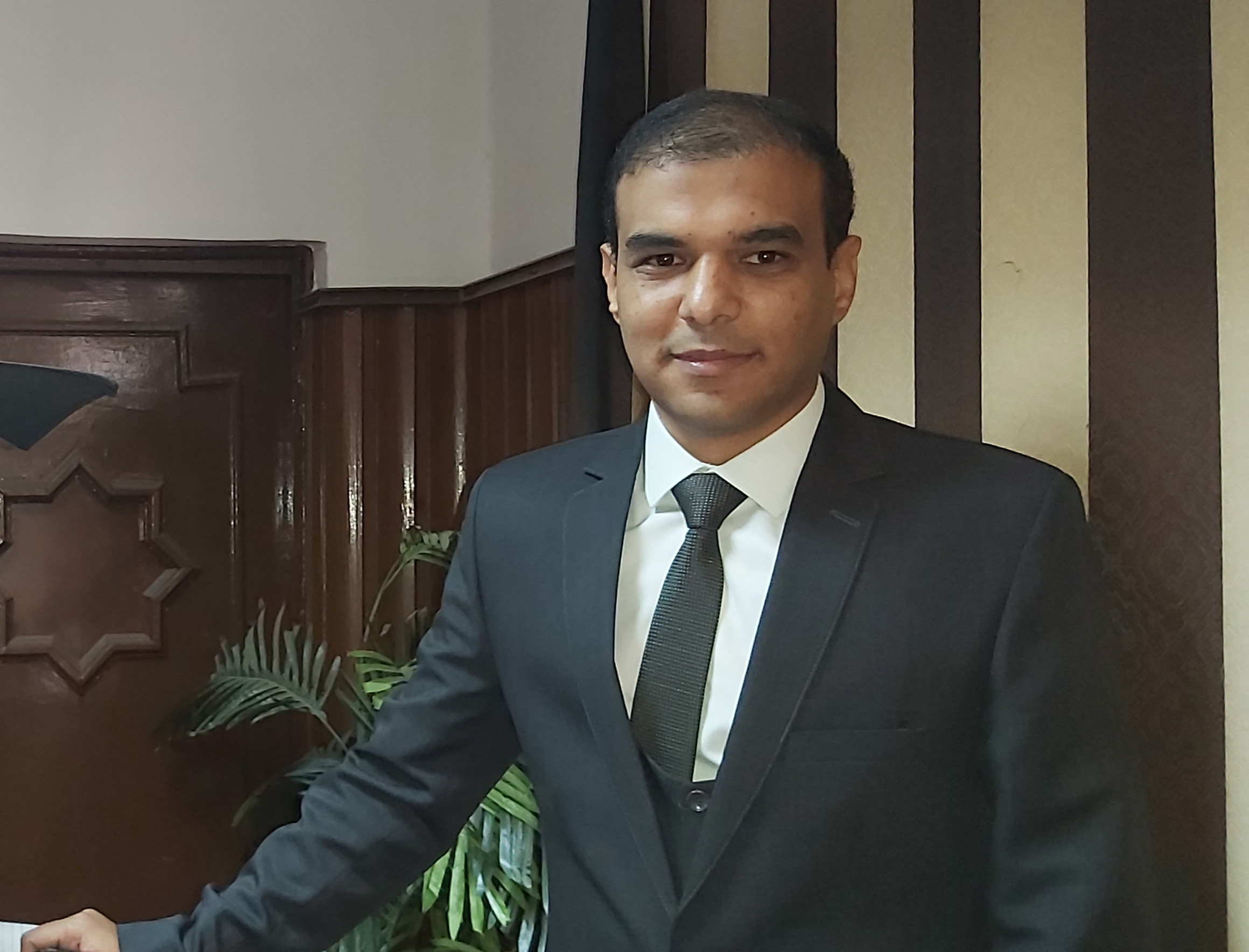
- Environmental Consultant
- Assistant Professor of fish biology & Ecology at Al- Azhar University
- Fish farming consultant
- Water Quality Management:
EDUCATION
1- Ph.D. of Fish biology & Ecology- Faculty of Science, Al-Azhar University.
2- Master of Fish biology & Ecology- Faculty of Science, Al-Azhar University.
3- Diploma of Biochemistry &Physiology- Suez Canal University
4- B.Sc. Marine biology Zoology Department faculty of science- Al-Azhar University.
RESEARCH, TEACHING, or OTHER INTERESTS
Aquatic Science, Environmental Science, Animal Science and Zoology, Molecular Biology
Morphological, Histological and Histochemical Adaptations in Digestive Tubular Part, Concerning the Feeding Strategy of Skipjack Tuna (Katsuwonus pelamis) Inhabiting Abu Galum, Aqaba Gulf, Red Sea, Egypt Moharam A. M. Afifi et al. Egyptian Journal of Aquatic Biology and Fisheries, 2024 This work aimed to describe the morphological, histological, and histochemical adaptations in the tubular part of the digestive tube of skipjack tuna (Katsuwonus pelamis) according to its feeding and dietary preferences. Fish samples were gathered from Abu Galum, Aqaba Gulf, the Red Sea, Egypt, in May 2022. The morphological, histological, and histochemical structure of the oesophagus, stomach, and intestine of fish were photographed and described. The results showed that the esophagus of K. pelamis was described as a flexible tube with irregular mucosal folds, comprising multiple layers of mucus cells containing strong acid mucopolysaccharides (MPS) and weak sulphomucins. Submucosa consisted of fibrous connective tissue with variations in mesh size, and the muscularis layer was dense with circular muscle fibers. The stomach has a bag shape. It is separated into three regions cardiac, fundic, and pyloric. The cardiac region exhibited broad folds with dense stomach glands containing weakly acid MPS and sulphomucins. Its submucosa contained blood vessels dispersed in fibrous connective tissue, while the muscular layer comprised of inner circular and outer longitudinal muscle fibers. In the fundic region, numerous primary rugae were observed with abundant gastric glands. The pyloric region showed irregular mucosa without gastric glands. Its submucosa consisted of thicker areolar connective tissue. The intestine appeared as a small tube with folded duodenal mucosa containing deep crypts. Its epithelial mucosa consisted of columnar and mucus cells containing strong acid MPS and sulphomucins. The submucosa was thinner compared to other parts and contained fibrous connective tissue with lymphatic vessels and blood vessels. The muscular layer was dense, especially in ilial regions with long folds and abundant mucus glands. It was concluded that the tubular parts of digestive tube skipjack tuna were adapted to diet and food behaviors, as evidenced from the related functional mechanisms of fish digestive physiology.
Physiological Responses and Histopathological Indices against Acrylamide Toxicity Treated with Metformin and Propolis in Clarias gariepinus Bassem E. Elaraby et al. Egyptian Journal of Aquatic Biology and Fisheries, 2024 Acrylamide (AA), a substance extensively used in business, medical research, and waste management facilities, is thought to cause cancer in people. The Clarias gariepinus vertebrate fish model was used in the current investigation to assess the stress biomarkers, hematologic, and histopathological indices following exposure to (AA). Two hundred healthy fish of C. gariepinus of both sexes wereclassified into four groups: the first is the negative control (CO) (without acrylamide); the second is the positive control (CA) (treated with acrylamide only) using 15mg/ l concentrations of (AA); the third is (AM) which contains (AA) plus metformin (MeFo) applied to treatment with (AA) at (15mg/ l) and (MeFo) at 3g/ l, and the fourth is (AP) which contains (AA) plus propolis (PPo) applied to the treatment with (AA) at (15mg/ l) and (PPo) at 3g/ l. The hematological parameters, cortisol, glucose, and lactate dehydrogenase (LDH) were analyzed. The current data showed a significant increase in white blood cells, hemoglobin, hematocrit, cortisol, glucose, and LDH in (CA) groups when compared with (CO) group. A histopathological analysis of the kidney, spleen, and liver was performed. The groups (CA), (AM), and (AP) had noticeable structural changes in the kidney, spleen, and liver in the form of congestion, apoptosis, and vacuolations compared to the (CO) group. Administration of (AA) resulted in serious liver, spleen, and kidney damage for C. gariepinus catfish. However, (PPo) and (MeFo) exhibited anti-toxicity and improved kidney, spleen, and liver functions. The findings of the current study demonstrated that extensive and regular usage of (AA) could endanger the existence and welfare of organisms, particularly fish, in aquatic environments.
Parasitological indicators, haemato-biochemical alternations, and environmental risks of heavy metals in cultivated and wild freshwater catfish, Egypt Mahmoud Mahrous M. Abbas et al. Egyptian Journal of Aquatic Biology and Fisheries, 2023 This study aims to monitor physico-chemical parameters and heavy metal (HM) levels in the water, HM levels, and haemato-biochemical changes in parasite-infected and non-infected catfish, Clarias gariepinus, in wild and cultivated origins. The outcomes of physico-chemical properties and heavy metal (HM) levels in water revealed significant variations between the two selected sites, except for cadmium metal (p < 0.05). HM concentrations in both water and organs of the two catfish origins decreased as the following decreased: Fe < Zn < Pb < Cu < As < Cd. Furthermore, the concentration of vital HM was significantly lower in wild catfish as compared to cultivated catfish, whereas non-vital HM was significantly higher in wild catfish. However, the HM accumulation in the different organs of catfish is ranked in ascending order: liver > gills > intestine > muscles. The hematological and biochemical investigations revealed a significant decline in the hemoglobin value, packed cell volume, number of red blood cells, albumin, total protein, and globulin while total aspartate aminotransferase activity, white blood cell count, alanine aminotransferase activity, glucose, and urea levels were all significantly higher in parasitic-infected catfish from two origins compared to uninfected catfish. Human health hazards, as evaluated by non-carcinogenic risk (hazard index and target hazard quotient), estimated daily intake, and carcinogenic risk, were all below the benchmark's allowable range. Nonetheless, the outcome of the health risk assessment suggests that consumption of the muscles of catfish from wild and cultivated origins cannot pose considerable health risks for children and adult consumers. Additionally, the prevalence of parasites can be used as a surrogate indicator to predict the possible impact of metal pollution and bioaccumulation. Consequently, this study suggests that Egypt's environmental management conducts routine HM monitoring in the studied sites to reduce potential health risks.
Bioaccumulation, Biosedimentation, and Health Hazards of Elements in Crayfish, Procambarus clarkii from El-Rahawi Drain and El-Qanatir in the River Nile, Egypt Mahmoud Mahrous M. Abbas, Mohamed A.E. Abd El-Aziz, Mohamed M.Y. Kaddah, Abdel-Kader Hassan, Hussein A. El-Naggar, Mahmoud Radwan, Mohamed A.M. El-Tabakh, Moharam A. Afifi, Mansour A.E. Bashar Biological Trace Element Research, 2023 Elements accumulation in crayfish is proportional to the increase in bioavailability (direct contact) with the surrounding water, sediment, and feeding. Five heavy metals (Cu, Cr, Mn, Ni, and Ag) and lithium (Li) were analyzed in the sediment, water, and crayfish tissues. Elements (heavy metals and lithium) concentrations in sediment, water, and crayfish tissues showed significant differences between the two sampling stations (El-Qanatir and El-Rahawi drain). However, the levels of elements in crayfish tissues were arranged in declining order as hepatopancreas > gills > exoskeleton > muscles for Cu and Cr; hepatopancreas > exoskeleton > gills > muscles for Ni and Ag; and exoskeleton > gills > hepatopancreas > muscles for Li and Mn. The human health hazard evaluation of heavy metals and lithium exposure via edible tissue consumption was assessed for both children and adult consumers. The target hazard quotient THQ values of crayfish edible tissues (less than 1) will not impose any health implications for consumers who ingest edible tissues in sufficient quantities. Furthermore, the hazard index (HI) values reported for children and adult consumers were lower than one, indicating non-carcinogenic and carcinogenic hazards, suggesting that crayfish edible tissues are safe for human ingestion. This evidence also found that Procambarus clarkii could be a good bio-indicator organism for monitoring potentially metals in aquatic systems.
Morphological adaptations of digestive tract according to food and feeding habits of the lizardfish, Synodus variegatus, inhabiting Red Sea waters, Hurghada, Egypt Hassan M. M. Khalaf-Allah et al. Egyptian Journal of Aquatic Biology and Fisheries, 2023 This study is concerned with the morphological adaptations of the digestive tract with respect to food and feeding habits of lizardfish Synodus variegatus. 75 fish specimens were seasonally collected from Hurghada, the Red Sea, Egypt. Results showed that the greatest value of feeding activity of S. variegatus was recorded in summer (82.26%) and the lowest value (24.14%) occurred in winter. While in autumn and spring, the feeding activity was moderate, with 44.50% and 47.26%, respectively. This species was proved to be a piscivorous and crepuscular feed, consuming a large variety of small fishes. Atherinomorus lacunosus, Herklotsichthys quadrimaculatus, Cephalopholis hemistiktos, Lethrinus mahsena, Parupeneus forsskali and Siganus rivulatus formed the major food items consumed. S. variegatus has a reptile-like head to facilitate capturing the prey. Jaw's teeth are canine and slightly curved towards the inner part of the mouth. Buccal teeth are canine shaped and arranged in a line on vomerine and palatine in addition to five rows on ectopterygoid of both sides in the roof of the buccal cavity. They specialized in capturing and holding the prey and preventing its escape from the mouth cavity. The pharyngeal teeth are placed in rows and bent in shape. They are specialized in food cutting and masticating. Gill arch is V-shaped; it may be attributed to help in swallowing large prey. The front row gill rakers of the first-gill arch is short, straight, and ended by thin pointed spines adapted for food gathering and binding prey to the entry esophagus. Esophagus in S. variegatus is a short muscular narrow and distensible tube suitable for conducting food. Its stomach has a great distensibility giving a bag shape to allow catching relatively enormous prey. The intestine is a short, simple tube. In conclusion, the morphological features of the mouth, teeth, gill rakers, esophagus, stomach and intestine of lizardfish S. variegatus were subjected to various and significant modifications according to food and feeding habits to enrich the available data on the species.
Fish Parasites and Heavy Metals Relationship in Wild and Cultivated Fish as Potential Health Risk Assessment in Egypt Mahmoud Radwan, Mahmoud Mahrous M. Abbas, Moharam Adel Mohamed Afifi, Amaal Mohammadein, Jamila S. Al Malki Frontiers in Environmental Science, 2022 Despite wide studies of biomonitoring aquatic environment through dynamics of host–parasite interaction, bio-indicators to track the influence and accumulation of heavy metals on fish are still few. The present study sheds light on the relation between fish parasites and heavy metals as it threatens fish’s health and, as a consequence, that of humans after fish consumption. Samples of Nile tilapia (Oreochromis niloticus) were collected in Burullus Lake, a wild fish source, and from a private fish farm in Kafr El-Sheikh Governorate, in Egypt. They were exposed to various pollutants associated with anthropogenic activities to determine the levels of accumulation of Fe, Zn, and Cu, along with the top three most toxic metals (As, Cd, and Pb) in water and fish tissues of gills, intestine, liver, and muscles in both wild and farmedO. niloticus. The results showed the order of abundance: Fe &lt; Zn &lt; Pb &lt; Cu &lt; As &lt; Cd. In waters of both farmed and wild fish, there was a significant negative relation between parasite prevalence and heavy metals, including Zn, Pb, and As. Also, there was a significant positive relation between parasite prevalence with Cu while no significant relation was found with Fe and Cd. Heavy metal content was significantly higher (p&gt; 0.05) in non-infected than infected farmed and wildO. niloticus. In addition, a significantly decreased concentration (p&gt; 0.05) of essential heavy metal was recorded in wild fish compared to farmed specimens, while non-essential heavy metal was significantly higher (p&gt; 0.05) in wild compared to farmed fish. Bioaccumulation factors (BAF) of different organs ofO. niloticuswere ranked in ascending order: Liver &gt; Gills &gt; Intestine &gt; Muscles. In general, the risk assessment showed safe human consumption of farmed and wild fish under the reported environmental conditions in this study. Moreover, the parasite's presence can be adopted as a surrogate indicator to estimate the potential impact of heavy metal pollution and accumulation.
Cellular Structural and Functional Comparison of the Esophageal and Gastric Adaptations in Two Fishes, Herklotsichthys quadrimaculatus and Halichoeres scapularis in Relation to … AAAAWAAS Hassan M. M. Khalaf-Allah, Moharam A. M. Afifi*, Walaa Shalaby Egyptian Journal of Veterinary Sciences, 1-17 , 2026 2026
Comparative Study in Morphometric, Histology and Histochemistry of the Intestine in Two Coral Reef Fishes, Inhabiting Ain Sokhna, Gulf of Suez, Red Sea, Egypt WAM Abusheir, H Khalf-Allah, MA Afifi Egyptian Journal of Aquatic Biology and Fisheries 30 (2), 961-983 , 2026 2026
Health and Ecotoxicological Risk Assessment of Heavy Metals in Scomberomorus commerson and Penaeus vannamei, El-Max, Alexandria, Egypt MAM Afifi, AMM Ragab Egyptian Journal of Aquatic Biology and Fisheries 30 (1), 3341-3364 , 2026 2026
Comparative Description on Cellular and Histological Features of Lips and Bucco-Pharyngeal Cavity in Two Types of Fishes Inhabiting Suez Gulf, Red Sea, Egypt According to Type … WAM Abusheir, MAM Afifi, SEA samei, AA Khalf-Allah, Hassan Mashhout Egyptian Journal of Aquatic Biology & Fisheries 29 (6), 3159 – 3179 , 2025 2025
Quantitative morphometric analysis of dorsal fin for species identification in sharks (Family: Carcharhinidae) from the Suez Gulf, Red Sea,Egypt ZIM Al-Khatib, AM Azab, MAM El-tabakh, MAM Afifi Mediterranean Aquaculture Journal 12 (1), 13-27 , 2025 2025 Citations: 4
Morphological, Histological and Histochemical Adaptations in Digestive Tubular Part, Concerning the Feeding Strategy of Skipjack Tuna (Katsuwonus pelamis) Inhabiting Abu Galum … HMMKA Moharam A. M. Afifi, Mohamed Fares, Walaa Shalaby, Walid A. Abu-Shaeir Egyptian Journal of Aquatic Biology & Fisheries 28 (3), 19-35 , 2024 2024 Citations: 7
DNA barcoding, phylogeography and evolutionary dynamics of Chrysichthys auratus MAM Afifi, AM Azab, E Ali, A Ghazy, MAM El-Tabakh Gene 917, 148448 , 2024 2024 Citations: 2
Threat of heavy metal pollutants and parasites to freshwater fish with special reference to their risk of cancer to humans in Egypt MAM Afifi, M Radwan, MMM Abbas, HM Hwihy, AN Alabssawy, ... Aquaculture, 740833 , 2024 2024 Citations: 33
Physiological Responses and Histopathological Indices against Acrylamide Toxicity Treated with Metformin and Propolis in Clarias gariepinus ANA Bassem E. Elaraby, Salah M. EL-Sharkawy, Khaled S. Elfeky, Moharam A. M ... Egyptian Journal of Aquatic Biology & Fisheries 28 (1), 105 – 130 , 2024 2024 Citations: 6
Parasitological indicators, haemato-biochemical alternations, and environmental risks of heavy metals in cultivated and wild freshwater catfish, Egypt DMGFMR Mahmoud Mahrous M. Abbas, Moharam A. M. Afifi, Kareem F. Darweesh ... Egyptian Journal of Aquatic Biology & Fisheries 27 (4), 1085-1205 , 2023 2023 Citations: 16
DNA barcoding supports life stages of wrasse fish, Novaculichthys taeniourus (Family Labridae) in the Hurghada Red Sea, Egypt MAMET Moharam Adel Mohamed Afifi, Moustafa Sarhan, Hassan M.M. Khalaf-Allah ... Zoologischer Anzeiger 304, 84-93 , 2023 2023 Citations: 3
Morphological adaptations of digestive tract according to food and feeding habits of the lizardfish, Synodus variegatus, inhabiting Red Sea waters, Hurghada, Egypt DMGFANA Hassan M. M. Khalaf-Allah, Moharam A. M. Afifi Egyptian Journal of Aquatic Biology & Fisheries 27 ((1)), 293 – 304 , 2023 2023 Citations: 6
Bioaccumulation, Biosedimentation, and Health Hazards of Elements in Crayfish, Procambarus clarkii from El-Rahawi Drain and El-Qanatir in the River Nile, Egypt MAAMAEB Mahmoud Mahrous M. Abbas, Mohamed A.E. Abd El-Aziz, Mohamed M.Y ... Biological Trace Element Research , 2022 2022 Citations: 28
Fish Parasites and Heavy Metals Relationship in Wild and Cultivated fish as Potential health risk assessment in Egypt. M Radwan, M Abbas, M Afifi, A Mohammadein Frontiers in Environmental Science 10, 727 , 2022 2022 Citations: 48
First record of skipjack tuna (Katsuwonus pelamis) from Dahab in the Gulf of Aqaba, Red Sea, Egypt KMEH Moharam A.M. Afifi, Ahmed El-Sadek Egyptian Journal of Aquatic Biology & Fisheries 26 ((3)), 699 –710 , 2022 2022 Citations: 5
DNA barcoding supports sexual dimorphism in two labrid species; Cheilinus lunulatus and Halichoeres hortulanus (family Labridae) in Red Sea, Egypt M Sarhan, AM Azab, HMM Khalaf-Allah, MAM Afifi Egyptian Journal of Aquatic Research 45 (4), 395-401 , 2019 2019 Citations: 15
Identification key by scales differentiation for some labrid fishes, Red Sea, Egypt A M Azab, H MM Khalaf-Allah, M AM Afifi Egyptian Journal of Aquatic Biology and Fisheries 23 (3), 207-223 , 2019 2019 Citations: 1
Morphological differences of scales and gill rakers used as a taxonomic character in some thick-lip fish species (Family: Labridae), Red Sea, Egypt. A M Azab, H MM Khalaf-Allah Egyptian Journal of Aquatic Biology and Fisheries 23 (1), 77-91 , 2019 2019 Citations: 7
Structure and mechanism of open-close brood pouch in male pipefish, Trachyramphus bicoarctatus at Lake Qarun, Egypt HMM Khalaf-Allah, AM Azab, MAM Afifi 2016
Ecological and biological studies on pipe fish in Lake Qarun MAM Afifi M. Sc. Thesis, Zool. Dept., Fac. Sci., Al-Azhar Univ., Cairo , 2015 2015 Citations: 5
MOST CITED SCHOLAR PUBLICATIONS
Fish Parasites and Heavy Metals Relationship in Wild and Cultivated fish as Potential health risk assessment in Egypt. M Radwan, M Abbas, M Afifi, A Mohammadein Frontiers in Environmental Science 10, 727 , 2022 2022 Citations: 48
Threat of heavy metal pollutants and parasites to freshwater fish with special reference to their risk of cancer to humans in Egypt MAM Afifi, M Radwan, MMM Abbas, HM Hwihy, AN Alabssawy, ... Aquaculture, 740833 , 2024 2024 Citations: 33
Bioaccumulation, Biosedimentation, and Health Hazards of Elements in Crayfish, Procambarus clarkii from El-Rahawi Drain and El-Qanatir in the River Nile, Egypt MAAMAEB Mahmoud Mahrous M. Abbas, Mohamed A.E. Abd El-Aziz, Mohamed M.Y ... Biological Trace Element Research , 2022 2022 Citations: 28
Parasitological indicators, haemato-biochemical alternations, and environmental risks of heavy metals in cultivated and wild freshwater catfish, Egypt DMGFMR Mahmoud Mahrous M. Abbas, Moharam A. M. Afifi, Kareem F. Darweesh ... Egyptian Journal of Aquatic Biology & Fisheries 27 (4), 1085-1205 , 2023 2023 Citations: 16
DNA barcoding supports sexual dimorphism in two labrid species; Cheilinus lunulatus and Halichoeres hortulanus (family Labridae) in Red Sea, Egypt M Sarhan, AM Azab, HMM Khalaf-Allah, MAM Afifi Egyptian Journal of Aquatic Research 45 (4), 395-401 , 2019 2019 Citations: 15
Morphological, Histological and Histochemical Adaptations in Digestive Tubular Part, Concerning the Feeding Strategy of Skipjack Tuna (Katsuwonus pelamis) Inhabiting Abu Galum … HMMKA Moharam A. M. Afifi, Mohamed Fares, Walaa Shalaby, Walid A. Abu-Shaeir Egyptian Journal of Aquatic Biology & Fisheries 28 (3), 19-35 , 2024 2024 Citations: 7
Morphological differences of scales and gill rakers used as a taxonomic character in some thick-lip fish species (Family: Labridae), Red Sea, Egypt. A M Azab, H MM Khalaf-Allah Egyptian Journal of Aquatic Biology and Fisheries 23 (1), 77-91 , 2019 2019 Citations: 7
Physiological Responses and Histopathological Indices against Acrylamide Toxicity Treated with Metformin and Propolis in Clarias gariepinus ANA Bassem E. Elaraby, Salah M. EL-Sharkawy, Khaled S. Elfeky, Moharam A. M ... Egyptian Journal of Aquatic Biology & Fisheries 28 (1), 105 – 130 , 2024 2024 Citations: 6
Morphological adaptations of digestive tract according to food and feeding habits of the lizardfish, Synodus variegatus, inhabiting Red Sea waters, Hurghada, Egypt DMGFANA Hassan M. M. Khalaf-Allah, Moharam A. M. Afifi Egyptian Journal of Aquatic Biology & Fisheries 27 ((1)), 293 – 304 , 2023 2023 Citations: 6
Integrated pest control of certain citrus eriophyid and tenuipalpid mites in Egypt. FS Ali, SM Abo-Taka, MA Afifi, MM El-Sayed 2005 Citations: 6
First record of skipjack tuna (Katsuwonus pelamis) from Dahab in the Gulf of Aqaba, Red Sea, Egypt KMEH Moharam A.M. Afifi, Ahmed El-Sadek Egyptian Journal of Aquatic Biology & Fisheries 26 ((3)), 699 –710 , 2022 2022 Citations: 5
Ecological and biological studies on pipe fish in Lake Qarun MAM Afifi M. Sc. Thesis, Zool. Dept., Fac. Sci., Al-Azhar Univ., Cairo , 2015 2015 Citations: 5
Quantitative morphometric analysis of dorsal fin for species identification in sharks (Family: Carcharhinidae) from the Suez Gulf, Red Sea,Egypt ZIM Al-Khatib, AM Azab, MAM El-tabakh, MAM Afifi Mediterranean Aquaculture Journal 12 (1), 13-27 , 2025 2025 Citations: 4
DNA barcoding supports life stages of wrasse fish, Novaculichthys taeniourus (Family Labridae) in the Hurghada Red Sea, Egypt MAMET Moharam Adel Mohamed Afifi, Moustafa Sarhan, Hassan M.M. Khalaf-Allah ... Zoologischer Anzeiger 304, 84-93 , 2023 2023 Citations: 3
DNA barcoding, phylogeography and evolutionary dynamics of Chrysichthys auratus MAM Afifi, AM Azab, E Ali, A Ghazy, MAM El-Tabakh Gene 917, 148448 , 2024 2024 Citations: 2
Reproductive biology of males pipefish, Trachyramphus bicoarctatus (Teleostei: Syngnathidae) at Lake Qarun, Egypt AM Azab, HMM Khalaf-Allah, MAM Afifi Intl. J. Develop 4 (1), 61-76 , 2015 2015 Citations: 2
Identification key by scales differentiation for some labrid fishes, Red Sea, Egypt A M Azab, H MM Khalaf-Allah, M AM Afifi Egyptian Journal of Aquatic Biology and Fisheries 23 (3), 207-223 , 2019 2019 Citations: 1
Cellular Structural and Functional Comparison of the Esophageal and Gastric Adaptations in Two Fishes, Herklotsichthys quadrimaculatus and Halichoeres scapularis in Relation to … AAAAWAAS Hassan M. M. Khalaf-Allah, Moharam A. M. Afifi*, Walaa Shalaby Egyptian Journal of Veterinary Sciences, 1-17 , 2026 2026
Comparative Study in Morphometric, Histology and Histochemistry of the Intestine in Two Coral Reef Fishes, Inhabiting Ain Sokhna, Gulf of Suez, Red Sea, Egypt WAM Abusheir, H Khalf-Allah, MA Afifi Egyptian Journal of Aquatic Biology and Fisheries 30 (2), 961-983 , 2026 2026
Health and Ecotoxicological Risk Assessment of Heavy Metals in Scomberomorus commerson and Penaeus vannamei, El-Max, Alexandria, Egypt MAM Afifi, AMM Ragab Egyptian Journal of Aquatic Biology and Fisheries 30 (1), 3341-3364 , 2026 2026