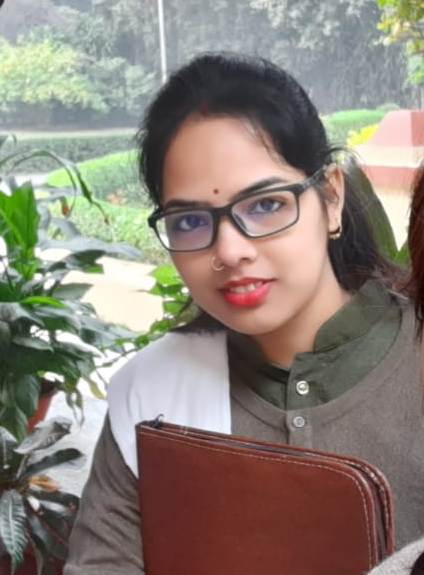
Rashmi Rai

@gmuniversity.ac.in

Assistant Professor in School of Geography
Gangadhar Meher University

Rashmi Rai
9

Scopus Publications

166

Scholar Citations

6

Scholar h-index

4

Scholar i10-index

Scopus Publications

  • Navigating Fear: Women’s Perceptions of Safety and Vulnerability in the Urban Landscape of Sambalpur, India
    Rashmi Rai, Ambarish Kumar Rai
    Violence and Victims, 2025
    Vulnerability is the perception of being exposed and susceptible to potential harm or adversity. This study underscores the critical role of individual women’s perceived vulnerability in shaping their sense of safety and risk of victimization within the urban landscape. Focusing on women aged 15–49 years in Sambalpur city and its surrounding areas, the research draws on in-depth interviews and focus group discussions, analyzed through a phenomenological lens. Findings reveal that women’s perceptions of physical vulnerability, sociopsychological harm associated with sexual crimes, apprehension about demands for sexual favors, and direct or vicarious experiences of victimization profoundly shape their fears and perceived risk of crime in the city. Recognizing and addressing these dimensions is vital to fostering urban spaces where women can move freely and confidently, without the shadow of fear or anxiety.
  • Exploring the Perceptions of Vulnerability to Victimization Among Women: A Case Study of Sambalpur City, India
    Rashmi Rai, Ambarish Kumar Rai
    International Journal of Community Well Being, 2025
  • The Geography of Women’s Fear of Crime: Spatial Confidence and Constraints
    Rashmi Rai, Ambarish Kumar Rai, Animesh Bhakta
    International Journal of Community Well Being, 2023
  • Determinants of infant mortality in Pakistan: evidence from Pakistan Demographic and Health Survey 2017–18
    Kamalesh Kumar Patel, Rashmi Rai, Ambarish Kumar Rai
    Journal of Public Health Germany, 2021
    Background The infant mortality rate was very high in Pakistan until the early 1990s, at 86 deaths/1000 live births. It has decreased 24 points and declined to 62 deaths/1000 in the last 3 decades, but Pakistan is still in the group of countries with highest infant mortality rate. The present study aimed to assess the magnitude of infant mortality in Pakistan and its causes and associated risk factors. Methods For this study, data from the 2018 Pakistan Demographic and Health Survey were used. Risk factors for infant mortality were first examined in bivariate analyses. Chi-square test was employed to understand the significance level of the categorical difference of independent variables. The Cox proportional hazard model was used to account for potential confounders that function as risk factors for infant deaths. Results Large differentials in infant survival by socioeconomic and demographic factors indicate poor coverage of social and health schemes for the public. Mothers who did not use the ANC services experienced about 1.5 times higher infant mortality than those who did (52 vs. 36/1000 LB; p = 0.007). The hazard model shows that rich households experienced about 30% (HR = 0.735; 95% CI = 0.614–0.878) less infant mortality than poor ones. The rural-urban differential in public health services and gender inequities are the underlying causes of the stagnation of infant mortality in Pakistan. Conclusion The low status of women’s education, poor economic conditions and low level of using public health care services are closely tied to higher infant death rates in Pakistan. Health interventions in Pakistan should be designed to reach the most under-served—women and children—especially in rural areas.
  • Nature of sex trafficking in India: A geographical perspective
    Rashmi Rai, Ambarish Kumar Rai
    Children and Youth Services Review, 2021
    Female trafficking for sexual exploitation (SE) is one of the major problems in India. Young females are particularly vulnerable to this crime. Existing state machinery is somewhat deficient in its tactical and technical doctrines to combat the challenges posed in this regard. The current study attempted to understand the spatiality of female trafficking in India, which can inform combat strategies. We considered a systematic review of published quantitative and qualitative kinds of literature. Potentially relevant articles for systematic review were identified by searching bibliographical databases. A mixed-method was deployed to analyze deemed necessary for inclusion of female trafficking for sexual exploitations. Data were analyzed qualitatively by using thematic analysis and using Arc-GIS to appreciate the data geographically. The results were collated and analyzed concerning fulfilling the key objectives of the review. A large number of children and women trafficked for SE in India. Trafficking for commercial sexual exploitation occurs particularly in poverty-stricken regions and vulnerable populations. Tribal people have mainly been pushed into such activities. Additionally, it has given an opportunity for the enormous potential profits for those syndicates that were set up for organized crimes and independent traffickers. It is the fundamental right of women and children to be protected from any forms of trafficking and to be treated with dignity. Therefore, it requires a comprehensive anti-human trafficking strategy that embedded in a human rights approach since the violation of human rights is both the cause as well as the consequence of human trafficking.
  • Exploring the sexual coercion and mental health among young female psychiatric patients in India
    Rashmi Rai, Ambarish Kumar Rai
    Children and Youth Services Review, 2020
    Globally, the research has consistently found that at least one-third and as many as three-quarters of women report a history of sexual coercion and associated cause for mental-health problem. The majority of the research on sexual coercion comes from developed countries. Women in India are 'taught' to be inferior to men, are expected to serve, obey and satisfy their husband’s sexual needs. Research exploring the subjective experience of coercion, the context in which it occurs and its consequences among women living in Indian society with a psychiatric disorder are urgently needed. Therefore, the current study uses a qualitative research design and phenomenological approach to explore the issues related to sexual coercion among Indian women living with a psychiatric disorder. Results illustrated psychiatric women (n=168) reported that their husbands were the prime (50%) perpetrator. Further, teachers (25%), blood relatives (19%) and their friends (6.5%) followed the numbers of perpetrators. About 40% of respondents reported a history of sexual abuse before the age of 18, and 62% of women experienced marital rape. The childlessness of women also causes for sexual coercion. About three-fifth women never report such incidence of sexual coercion. Many women in India, with mental disorders, have been and continue to be exposed to sexual coercion. Interestingly, all women were facing this because they were women in a patriarchal society. In summary, concerted efforts at social, emotional and legal levels can bring change in the lives of Indian women and contribute to the improvement of the mental health of these women. The findings can be used in structuring culturally appropriate, but valid programs aimed at reducing both sexual coercion and the respective mental disorders. Further mixed method research is recommended to enrich and quantify our understanding.
  • Is sexual assault breaking women's spatial confidence in cities of India? Some explorations from Varanasi city
    Rashmi Rai, Ambarish Kumar Rai
    Children and Youth Services Review, 2020
    Confidence (fearlessness) of women in the city is associated with freedom, equality, and a sense of control over, and possession of social space. Rapid urbanisation in Indian cities caused a transition in the societies and tended to uproot and challenge traditional values to provide equal opportunity to use spaces irrespective of gender. Adversely, it can be seen in women’s lives as ‘breakings’ that is continuously trying to break the courage of women in the process of socialisation. Therefore, it becomes essential to explore how and why the fear of being victimised and real victimisation of sexual assault undermines some women’s confidence, restricting their access to, and activity within, social space. The study is based on primary data of Varanasi City. It is further corroborated by the phenomenological approach for exploring the harsh victimisation experience of respondents in their own words. The study revealed that majority of the survivors received ‘negative reactions’ and ‘lack of support’ for the assault. These survivors were blamed for bringing themselves in vulnerable positions and were frequently told that they should have known better. Some survivors discussed a ‘lack of options’ as a reason for not continuing to disclose the assault. The study suggests that combating sexual assault myths, educating about the assault to avoid adverse reactions may help to reduce the trauma and increase the likelihood that victims receive the support.
  • Sexual violence and poor mental health of women: An exploratory study of Uttar Pradesh, India
    Rashmi Rai, Ambarish Kumar Rai
    Clinical Epidemiology and Global Health, 2020
    Introduction Sexual violence has severe and manifold consequences for the health issues of women. It affects more than 50% of women across the globe and has a significant impact on their health and wellbeing. Psychologically, it leads to radical changes in the victim as she draws the images of herself, in her relationships with her immediate social circle and beyond in the community as a whole. Therefore, it has a lasting negative impact on the victim's perception of herself, of events, and others. The objective of the study is to explore the mental health status of the women who faced any type sexual violence. Method and materials This hospital-based study used criterion sampling in selecting women with mental disorders due to sexual violence for the understanding of the issue. Qualitative method was used to explore the impact of sexual violence on the poor mental health of women. We used a phenomenological approach and conducted in-depth interviews. Results Findings show that the women who experienced sexual violence were facing mental disorder like anxiety, sleeping disorder, obsession, acute stress disorder etc. More surprisingly, the women who were facing mental disorders due to sexual violence have been and continue to be exposed to further sexual violence. Conclusion Women who faced sexual violence have been and continue to be in the situation of mental disorders. The roles of sexual violence varied; sometimes it predisposed the disorder, while other times it precipitated or maintained the disorder. The findings can be used for further mixed method research to enrich and quantify our understanding.
  • Women’s experiences with intimate partner violence and their mental health status in india: A qualitative study of sambalpur city
    Rashmi Rai, Ambarish Kumar Rai
    International Journal of Mental Health Promotion, 2020
    The intimate partner violence (IPV) against women has been identified as a violation of human rights and a serious public health concern. There is not only the immediate consequence of partner violence, such as injury or death but also the other long-term health consequences. IPV can be associated with psychological effects such as depressive disorder, posttraumatic stress disorder, and substance abuse. The study aims to explore the nature and causes of IPV on women’s life and their personal experiences to deal with. This is an NGO-based study. For better understanding of the issues, Purposive sampling was used in selecting women with clinically diagnosed mental illness who experienced IPV. The qualitative research methodology was employed to explore the experiences and impact of IPV on the mental health status of women. For analysis, we used a phenomenological approach and conducted in-depth interviews. Findings show the participating women were suffering from IPV in physical, psychological, and sexual forms. Majority of respondents felt that wife-beating and abusing was fairly common. Most of the women had to face violence on a frequent and occasional basis. IPV experienced women were facing a mental illness like anxiety, depression and sleeping-disorder. The women, who were facing mental illness due to IPV, have been and continue to be exposed to such violence. Despite being employed and suffering from IPV deeply, women choose to stay with their abusive partner because of their children future, lack of support, and social security. The mental health of victims’ was clinically diagnosed, including self-assessed symptoms. It means participants were aware that they are mentally ill because of IPV. The healthy and quick recovery treatment should be given according to the need of women, rather than providing comprehensive standardised treatment for all.

RECENT SCHOLAR PUBLICATIONS

  • Navigating Fear: Women's Perceptions of Safety and Vulnerability in the Urban Landscape of Sambalpur, India.
    R Rai, AK Rai
    Violence & Victims 4 (5) , 2025
    2025
    Citations: 3
  • Exploring the Perceptions of Vulnerability to Victimization Among Women: A Case Study of Sambalpur City, India: R. Rai and AK Rai
    R Rai, AK Rai
    International Journal of Community Well-Being 8 (1), 181-197 , 2025
    2025
  • The geography of women’s fear of crime: spatial confidence and constraints
    R Rai, AK Rai, A Bhakta
    International Journal of Community Well-Being 6 (4), 369-387 , 2023
    2023
    Citations: 6
  • Determinants of infant mortality in Pakistan: evidence from Pakistan Demographic and Health Survey 2017–18
    KK Patel, R Rai, AK Rai
    Journal of Public Health 29 (3), 693-701 , 2021
    2021
    Citations: 76
  • Nature of sex trafficking in India: A geographical perspective
    R Rai, AK Rai
    Children and Youth Services Review 120, 105739 , 2021
    2021
    Citations: 23
  • Exploring the sexual coercion and mental health among young female psychiatric patients in India
    R Rai, AK Rai
    Children and Youth Services Review 119, 105606 , 2020
    2020
    Citations: 7
  • Is sexual assault breaking women’s spatial confidence in cities of India? Some explorations from Varanasi city
    R Rai, AK Rai
    Children and Youth Services Review 118, 105422 , 2020
    2020
    Citations: 8
  • Sexual violence and poor mental health of women: An exploratory study of Uttar Pradesh, India
    R Rai, AK Rai
    Clinical epidemiology and global health 8 (1), 194-198 , 2020
    2020
    Citations: 32
  • Fear of victimization and women fearscapes: An exploratory study of Varanasi city, India
    DR Rai, AK Rai
    Rashmi, Rai, Ambarish K.(2019). Fear of Victimization and Women Fearscapes … , 2019
    2019
    Citations: 11

MOST CITED SCHOLAR PUBLICATIONS

  • Determinants of infant mortality in Pakistan: evidence from Pakistan Demographic and Health Survey 2017–18
    KK Patel, R Rai, AK Rai
    Journal of Public Health 29 (3), 693-701 , 2021
    2021
    Citations: 76
  • Sexual violence and poor mental health of women: An exploratory study of Uttar Pradesh, India
    R Rai, AK Rai
    Clinical epidemiology and global health 8 (1), 194-198 , 2020
    2020
    Citations: 32
  • Nature of sex trafficking in India: A geographical perspective
    R Rai, AK Rai
    Children and Youth Services Review 120, 105739 , 2021
    2021
    Citations: 23
  • Fear of victimization and women fearscapes: An exploratory study of Varanasi city, India
    DR Rai, AK Rai
    Rashmi, Rai, Ambarish K.(2019). Fear of Victimization and Women Fearscapes … , 2019
    2019
    Citations: 11
  • Is sexual assault breaking women’s spatial confidence in cities of India? Some explorations from Varanasi city
    R Rai, AK Rai
    Children and Youth Services Review 118, 105422 , 2020
    2020
    Citations: 8
  • Exploring the sexual coercion and mental health among young female psychiatric patients in India
    R Rai, AK Rai
    Children and Youth Services Review 119, 105606 , 2020
    2020
    Citations: 7
  • The geography of women’s fear of crime: spatial confidence and constraints
    R Rai, AK Rai, A Bhakta
    International Journal of Community Well-Being 6 (4), 369-387 , 2023
    2023
    Citations: 6
  • Navigating Fear: Women's Perceptions of Safety and Vulnerability in the Urban Landscape of Sambalpur, India.
    R Rai, AK Rai
    Violence & Victims 4 (5) , 2025
    2025
    Citations: 3
  • Exploring the Perceptions of Vulnerability to Victimization Among Women: A Case Study of Sambalpur City, India: R. Rai and AK Rai
    R Rai, AK Rai
    International Journal of Community Well-Being 8 (1), 181-197 , 2025
    2025