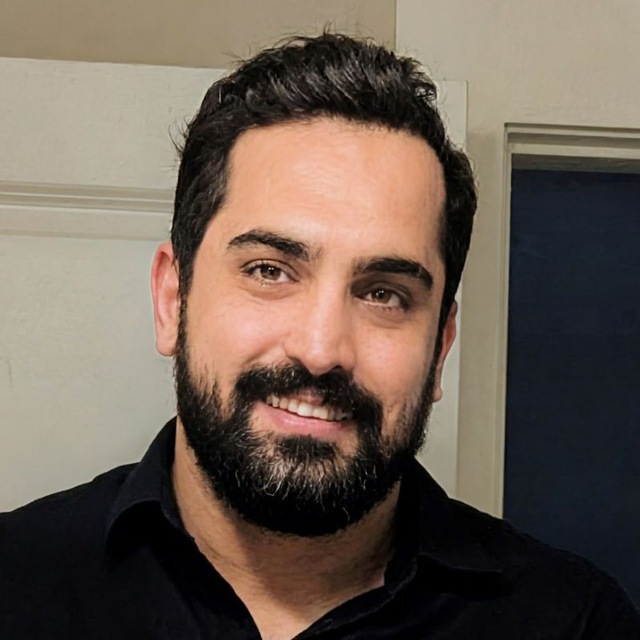
Omid Oshriyeh

@sc.edu

School of Hospitality, Retail and Sports Management
University of South Carolina

Omid Oshriyeh
Omid Oshriyeh is a Ph.D. candidate, researcher and adjunct teacher at the University of South Carolina.
An award-winning researcher and educator specializing in the intersection of consumer behavior, data privacy, and digital platforms within the service, tourism, and hospitality sectors, he uses his background in quantitative data analytics and machine learning to better understand and improve technology-driven service environments and cybersecurity while championing sustainability and ethical data use.

EDUCATION

Doctor of Philosophy, University of South Carolina

RESEARCH, TEACHING, or OTHER INTERESTS

Tourism, Leisure and Hospitality Management, Business, Management and Accounting, Human-Computer Interaction, Marketing
7

Scopus Publications

240

Scholar Citations

8

Scholar h-index

7

Scholar i10-index

Scopus Publications

  • Faith on the Vegas strip: Measuring Islamic religiosity via ARC
    Omid Oshriyeh, Ercan Sirakaya-Turk, Dawood Sulaiman Al Jahwari, Canan Tanrisever
    International Journal of Contemporary Hospitality Management, 2026
    Purpose The purpose of this study is to develop and validate Actions, Restrictions and Core Beliefs (ARC), a multidimensional Islamic religiosity scale, establish validity and demonstrate its efficacy in destination–hospitality choice models in gaming destinations. Design/methodology/approach The ARC scale was developed through item generation, pretesting, exploratory factor analysis and confirmatory factor analysis. A Web-based survey collected data from 678 Muslim subjects in the USA. Guided by the Theory of Planned Behavior (TPB), structural equation modeling was used to test the relationships between religiosity, attitudes, subjective norms and travel intentions. Findings The Islamic religiosity scale consists of three domains: Aamal (actions), Haram (restrictions) and Iman (core beliefs). When tested in a regression model, higher religiosity was associated with more negative attitudes toward gambling-related travel and hospitality services and stronger perceptions of social disapproval, which in turn influenced behavioral intentions. Although religiosity did not directly affect travel intentions, it showed significant indirect effects via attitudes and norms. Originality/value ARC provides a validated measure of Islamic religiosity tailored to hospitality and destination contexts, incorporating faith-based obligations and prohibitions directly relevant to service environments. The results of this study clarify how religiosity shapes attitudes and social norms in morally contested service environments and provide implications for hospitality managers seeking to accommodate Muslim guests.
  • Music films and videos as recolonizing media in tourism
    Rich Harrill, Leonardo (Don) A.N. Dioko, Omid Oshriyeh
    Annals of Tourism Research, 2025
    There is growing awareness within social science that colonization is neither permanent nor complete, with the forces of colonization, decolonization, and recolonization spatially and temporally overlapping. Selective recolonization is evidenced in cultural appropriations and colonial nostalgia as described by diasporic authors such as V.S. Naipaul. However, examples of oppositional gaze are also evident in music films and videos ranging from Billie Holliday's “Strange Fruit” to Childish Gambino's “This Is America.” Artificial intelligence, streaming technologies, and destination images offer a potent synthesis that can undermine decolonization. We assert that the critical pragmatism of Habermas and Dewey can be used to identify and evaluate manifestations of selective recolonization, the oppositional gaze they engender, and how both infuse contemporary travel and tourism discourses.
  • The double-edged sword of user reviews: how customer feedback can build and break hotel brands
    Omid Oshriyeh, Roman Egger
    Journal of Hospitality Marketing and Management, 2025
    International audience
  • Towards Sustainability: Exploring Community Involvement in Tourism Development
    Farhad Tabatabaei, Omid Oshriyeh, Srikanth Beldona
    Tourism Planning and Development, 2025
    This study examines the relationship between community involvement and sustainable tourism outcomes in Kelardasht, Iran, through the lens of empowerment theory and canonical correlation analysis. Using Pretty's Participation Typology, the research assessed residents' perceptions of seven constructs: self-mobilization, interactive, functional, material incentives, consultation, passive, and manipulative. It also evaluated sustainable tourism indicators across economic, political, social, environmental, cultural, and technological dimensions. Findings reveal that self-mobilization positively influences economic, political, and social sustainability, while interactive participation negatively affects economic, environmental, and cultural sustainability. Participation by consultation was found to reduce technological sustainability. The results indicate that greater participation empowers communities to shape tourism development, fostering economic and social-political cohesion. However, limited interactive engagement or superficial consultation may threaten sustainable development in the community. This study offers important insights into the complex dynamics of community participation and sustainable tourism, guiding efforts to maximize benefits and minimize negative impacts.
  • The theory of sustainability values and travel behavior
    Ercan Sirakaya-Turk, Omid Oshriyeh, Ali Iskender, Haywantee Ramkissoon, Haylee Uecker Mercado
    International Journal of Contemporary Hospitality Management, 2024
    Purpose This paper reports the results of research that examines the interrelationships between efficacy of sustainability values (SV) and pro-sustainable behaviors of potential tourists. A partially mediated model is postulated and tested to help explain additional error variance in predicting consumers’ destination choice decisions in tourism, hence voiding a critical research gap. Coined as the “environmentally intellectualist behavior,” a new mediator variable is tested to explain additional error variance in human-value models. Design/methodology/approach The study is based on data collected from two representative samples of potential tourists from the USA and Canada. Data analyses include exploratory and confirmatory factor analyses that were used to examine the underlying domain structures of SV, followed by a predictive model using structural equation modeling. Findings The study findings suggest that values are salient factors that underlie pro-sustainable tourism and travel behavior. Moreover, the results confirm the existence of a higher-order sustainability construct. The study contributes original insights to the field by demonstrating that there are direct and indirect positive relationships between SV, environmental behaviors and decisions of consumers who take a pro-sustainable stance when traveling. Originality/value By modeling values as antecedents to attitudes and testing interrelationships between SV and the mediator variables coined as the environmentally intellectual behavior, the authors developed and tested a predictive model to explain destination- and product choice decisions. The model tested herein advances the value theory in two fundamental ways: first, this study demonstrates that SV can be modeled as higher-order factors. Second, values are antecedents to attitude and other variables, therefore must be included in consumer behavior models. Finally, the culture or origin of tourists matters when examining the impact of values on tourists’ choice decisions. Political actions and environmental attitudes can be modeled as mediators to explain additional error variance.
  • Behind the invisible walls: Understanding constraints on Muslim solo female travel
    Mohammad Nematpour, Omid Oshriyeh, Mohammad Ghaffari
    Tourism Management Perspectives, 2024
  • Lines in the sand: the perceived risks of traveling to a destination and its influence on tourist information seeking behavior
    Omid Oshriyeh, Mohammad Ghaffari, Mohammad Nematpour
    International Journal of Tourism Cities, 2022
    Purpose This study is aims to identify and categorize the perceived risks of Chinese tourists (from mainland China) traveling to Tehran. In addition, this study investigates the relationship between these risks tourists’ information seeking behavior. Design/methodology/approach This study investigates the relationship between these risks tourists’ information seeking behavior. The research also tries to model the relationship between the explored perceived risks and tourists’ information-seeking behavior. To collect data, a researcher-developed questionnaire containing 24 questions was designed based on a literature review. Before collecting the data, the validity and reliability of the questionnaire were reviewed and confirmed. To do study procedure, one essential question and two hypotheses, including exploratory factor analysis, stepwise regression and independent samples T -test, are used. Findings The results showed that Chinese tourists perceived health, physical, political, cultural, social and economic risks before their trip (with political risk being the most prominent). Also, the results indicate that the tourists have used different ways to collect information about Iran in general and Tehran in particular. Those travelers who perceived a higher risk were more likely to use the information sources that provide them with detailed and accurate information before traveling to Tehran. Research limitations/implications This study provides valuable insights for destination managers and tourism marketers to attract Chinese tourists by considering their perceived risks and information-seeking behavior. It should be noted that this study is not without its own limitations. These limitations include (but are not limited to) the timeframe in which the data was collected (prior to the outbreak of COVID-19) and the destination (Tehran, Iran). Therefore, it is advised that future researchers study the perceived risks and information sources in other parts of the world. Originality/value The concept of perceived risk was used in Chinese tourists’ behavioral seeking to predict their future behavior following their perceptions. Thus, the findings of this study will be necessary to local governments and other destination organizations when building successful strategies.

RECENT SCHOLAR PUBLICATIONS

  • Faith on the Vegas strip: Measuring Islamic religiosity via ARC
    O Oshriyeh, E Sirakaya-Turk, DS Al Jahwari, C Tanrisever
    International Journal of Contemporary Hospitality Management 38 (5), 1499-1523 , 2026
    2026
  • Cybersecurity and privacy in tourism social media: Prioritizing ethical risks with SWARA
    O Oshriyeh, M Shafiee, M Rezaei, A Azimi, R Egger
    Journal of Vacation Marketing , 2026
    2026
  • The double-edged sword of user reviews: how customer feedback can build and break hotel brands
    O Oshriyeh, R Egger
    Journal of Hospitality Marketing & Management 34 (7), 925-963 , 2025
    2025
    Citations: 6
  • Music films and videos as recolonizing media in tourism
    R Harrill, LDAN Dioko, O Oshriyeh
    Annals of Tourism Research 114, 104010 , 2025
    2025
    Citations: 2
  • Towards sustainability: exploring community involvement in tourism development
    F Tabatabaei, O Oshriyeh, S Beldona
    Tourism Planning & Development 22 (4), 498-528 , 2025
    2025
    Citations: 33
  • The theory of sustainability values and travel behavior
    ES Turk, O Oshriyeh, A Iskender, H Ramkissoon, HU Mercado
    International Journal of Contemporary Hospitality Management , 2024
    2024
    Citations: 36
  • Towards sustainability: Exploring community involvement in tourism development. Tourism Planning & Development, 1-31
    F Tabatabaei, O Oshriyeh, S Beldona
    2024
    Citations: 4
  • Behind the invisible walls: Understanding constraints on Muslim solo female travel
    M Nematpour, O Oshriyeh, M Ghaffari
    Tourism Management Perspectives 50, 101213 , 2024
    2024
    Citations: 31
  • Applied data science in tourism (Interdisciplinary approaches, methodologies, and applications: Roman Egger ISBN 978-3-030-88388-1, Springer Nature …
    O Oshriyeh
    Information Technology & Tourism 25 (1), 133-136 , 2023
    2023
    Citations: 4
  • Chapter 11 in Contemporary approaches studying customer experience in tourism research
    O Oshriyeh, A Capriello, D Jaziri, RA Rather
    Emerald Publishing Limited , 2022
    2022
    Citations: 29
  • Film-Induced Tourism: A Consumer Perspective
    O Oshriyeh, A Capriello
    Contemporary Approaches Studying Customer Experience in Tourism Research , 2022
    2022
    Citations: 28
  • Lines in the sand: The perceived risks of traveling to a destination and its influence on tourist information seeking behavior
    O Oshriyeh, M Nematpour, M Ghaffari
    International Journal of Tourism Cities , 2022
    2022
    Citations: 42
  • Studying the Role of Tourism Destination Brand Personality on the Tourist Self-concept Congruence and emerging of Revisit Intention (Case Study: Inbound Tourists who visited …
    M Ghaffari, M Nematpour, O Oshriyeh
    Quarterly of Geography (Regional Planning) 33 (1), 491-506 , 2019
    2019
    Citations: 2
  • A Systematic Analysis of Positive and Negative Effects of IRAN Tourism Development Using a Future Study Approach
    A Faraji, Nematpour, Mohammad., & Oshriyeh, Omid.
    Social Studies in Tourism 9 (9), 0 , 2018
    2018
    Citations: 15
  • Traveling Motive and Its Application in Tourism Market Segmentation: Evidences from Isfahan
    B Ranjbarian, M Ghafari, O Oshriyeh
    Journal of Tourism and Hospitality Management 5 (1), 73-80 , 2017
    2017
    Citations: 8

MOST CITED SCHOLAR PUBLICATIONS

  • Lines in the sand: The perceived risks of traveling to a destination and its influence on tourist information seeking behavior
    O Oshriyeh, M Nematpour, M Ghaffari
    International Journal of Tourism Cities , 2022
    2022
    Citations: 42
  • The theory of sustainability values and travel behavior
    ES Turk, O Oshriyeh, A Iskender, H Ramkissoon, HU Mercado
    International Journal of Contemporary Hospitality Management , 2024
    2024
    Citations: 36
  • Towards sustainability: exploring community involvement in tourism development
    F Tabatabaei, O Oshriyeh, S Beldona
    Tourism Planning & Development 22 (4), 498-528 , 2025
    2025
    Citations: 33
  • Behind the invisible walls: Understanding constraints on Muslim solo female travel
    M Nematpour, O Oshriyeh, M Ghaffari
    Tourism Management Perspectives 50, 101213 , 2024
    2024
    Citations: 31
  • Chapter 11 in Contemporary approaches studying customer experience in tourism research
    O Oshriyeh, A Capriello, D Jaziri, RA Rather
    Emerald Publishing Limited , 2022
    2022
    Citations: 29
  • Film-Induced Tourism: A Consumer Perspective
    O Oshriyeh, A Capriello
    Contemporary Approaches Studying Customer Experience in Tourism Research , 2022
    2022
    Citations: 28
  • A Systematic Analysis of Positive and Negative Effects of IRAN Tourism Development Using a Future Study Approach
    A Faraji, Nematpour, Mohammad., & Oshriyeh, Omid.
    Social Studies in Tourism 9 (9), 0 , 2018
    2018
    Citations: 15
  • Traveling Motive and Its Application in Tourism Market Segmentation: Evidences from Isfahan
    B Ranjbarian, M Ghafari, O Oshriyeh
    Journal of Tourism and Hospitality Management 5 (1), 73-80 , 2017
    2017
    Citations: 8
  • The double-edged sword of user reviews: how customer feedback can build and break hotel brands
    O Oshriyeh, R Egger
    Journal of Hospitality Marketing & Management 34 (7), 925-963 , 2025
    2025
    Citations: 6
  • Towards sustainability: Exploring community involvement in tourism development. Tourism Planning & Development, 1-31
    F Tabatabaei, O Oshriyeh, S Beldona
    2024
    Citations: 4
  • Applied data science in tourism (Interdisciplinary approaches, methodologies, and applications: Roman Egger ISBN 978-3-030-88388-1, Springer Nature …
    O Oshriyeh
    Information Technology & Tourism 25 (1), 133-136 , 2023
    2023
    Citations: 4
  • Music films and videos as recolonizing media in tourism
    R Harrill, LDAN Dioko, O Oshriyeh
    Annals of Tourism Research 114, 104010 , 2025
    2025
    Citations: 2
  • Studying the Role of Tourism Destination Brand Personality on the Tourist Self-concept Congruence and emerging of Revisit Intention (Case Study: Inbound Tourists who visited …
    M Ghaffari, M Nematpour, O Oshriyeh
    Quarterly of Geography (Regional Planning) 33 (1), 491-506 , 2019
    2019
    Citations: 2
  • Faith on the Vegas strip: Measuring Islamic religiosity via ARC
    O Oshriyeh, E Sirakaya-Turk, DS Al Jahwari, C Tanrisever
    International Journal of Contemporary Hospitality Management 38 (5), 1499-1523 , 2026
    2026
  • Cybersecurity and privacy in tourism social media: Prioritizing ethical risks with SWARA
    O Oshriyeh, M Shafiee, M Rezaei, A Azimi, R Egger
    Journal of Vacation Marketing , 2026
    2026