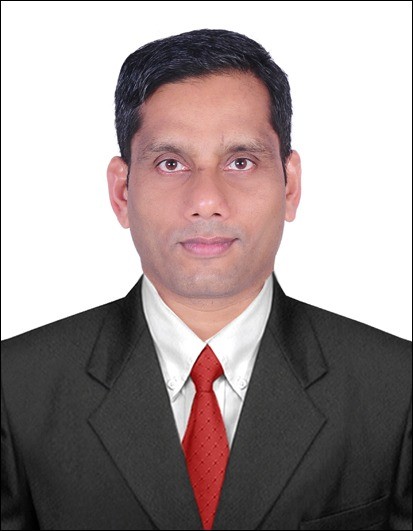
Panda is a Senior Assistant Professor in Computer Science & Engineering at Garden City University, Bangalore, with 17 years of teaching and research experience in India and abroad. He holds a Ph.D. from GIET University, Odisha, and an M.Tech from Berhampur University, and is currently pursuing Postdoctoral research at Lincoln University, Malaysia. His research areas include Image Processing, Pattern Recognition, Natural Language Processing, Artificial Intelligence, Machine Learning, and Cloud Computing. He has published 8 Scopus-indexed (Q1/Q2) journals, 12 international conference papers, and holds 7 patents. He has strong expertise in curriculum design and modern teaching methodologies and is an active member of IEEE and I2OR India.
Numerical modeling of CZTS based heterostructured solar cell for high efficiency PV performance Pratap Kumar Dakua, Rohit Vikram Singh Bhadauria, Dontabhaktuni Jayakumar, Rabinarayan Panda, Sukanta Kumar Swain, Vullanki Rajesh, Suman Maloji, Siddharth Kumar Scientific Reports, 2026 This paper deals with the numerical performance evaluation of solar cells based on ZnMgO/CZTS with and without a back-surface field (BSF) layer. ZnMgO is used as a buffer layer due to its non-toxicity and strain-balancing properties at i-ZnO/ZnMgO and ZnMgO/CZTS interfaces. A multilayer structure of ZnO: Al/i-ZnO/ZnMgO/CZTS is considered for the initial analysis. Subsequently, a BSF layer of CZTS material with different optical and electronic properties, called CZTS2, is inserted between the back-contact layer and the existing CZTS layer, called CZTS1, to form a new structure as ZnO: Al/i-ZnO/ZnMgO/CZTS1/CZTS2 to enhance the performance. The performance of the structure with and without the BSF layer was evaluated in terms of various layer parameters such as thickness, band gap, carrier concentration, defect densities, and work function. Then, the effects of operating temperature and the combination of shunt and series resistance on the overall performance were investigated. The simulated results were calibrated with existing experimental data from the literature to validate the work. In the optimized structure with the BSF layer, a maximum efficiency of 23.67% is achieved, which is 4% higher than that of without the BSF layer. The generation and recombination rates of the structures with and without the BSF layer were investigated to understand the reason for the improved efficiency. The results of this work are very promising for the development of high-efficiency, low-cost, and non-toxic CZTS solar cells.
Comparative Analysis of CNN and Transfer Learning for Handwritten Odia Character Recognition Rabinrayan Panda, Sachikanta Dash, Sasmita Padhy, ShazidWahid Khandakhani Proceedings 2025 IEEE 3rd International Symposium on Sustainable Energy Signal Processing and Cybersecurity Isssc 2025, 2025 There are several models in the field of Generative AI that have been used to train and test the system to do tasks like pattern recognition. This paper shows the use of deep learning and transfer learning to the categorization of images in the Odia handwritten character dataset. Transfer learning allows to handle cross domain difficulty in the sense that knowledge gained over the tasks in a related domain is used in training models in a base domain and the task of interest is performed better with limited data. To fix this, we built and published two benchmarks of datasets called OHCD_GIETV1 and OHCD_GIETV2. We have used pre-trained models like VGG16 and Resnet. We utilized the VGG16 model as a feature extractor, added custom dense layers to it, then trained it with the Adam optimizer for 20 epochs. ImageDataGenerator was used to add more data by using methods including shearing, zooming, and flipping the image horizontally to improve generalization. Even though InceptionV3 did better than other models, the accuracy was not good enough. To gain better results, a custom CNN with a maximum number of convolutional layer, max-pooling, flatten, and thick layers, as well as maximum training epochs, was constructed. We utilize the VGG16 model to get features and then make little changes to it so that it can identify the characters well. We use accuracy and loss metrics to see how well the model performs. After using transfer learning we found Voiceless character dataset with VGG16 layer as a base layer and obtained an accuracy value more than 90%.
An Interpretable Hybrid CNN Framework for Severity Classification of Cardiovascular Diseases Using ECG Data Aparna Baboo, Sachikanta Dash, Rabinarayan Panda, Ramarao Nayapamu, Athinti Anusha Proceedings of the 2025 International Conference on Artificial Intelligence and Emerging Technology Global AI Summit 2025, 2025 Cardiovascular diseases (CVD) are a foremost reason of death due to blocked arteries that impact blood circulation. Early medical detection can identify CVD, but predicting future risks remains a challenge, often resulting from irregular heart rhythms and poor blood circulation. Early and precise detection is essential to avert life-threatening complications. This work examines the utilization of deep learning (DL) methodologies to automate and enhance CVD prediction utilising electrocardiogram (ECG) images. Using a Kaggle-based arrhythmia ECG dataset (split 80% for training and 20% for testing), For enhance diagnostic performance, the study proposes a hybrid model combining ResNet101 and VGG19 with an attention mechanism and dual-stream feature extraction. Focal Loss and the AdamW optimisers are utilized to improve the model's capability to hold class imbalance. Grad-CAM and SHAP are examples of interpretability technologies that are used to make important ECG areas stand out, which makes things more clear. This approach shows strong potential for real-time CVD detection and IoT-based healthcare integration, proposing a capable tool for initial diagnosis and better patient outcomes.
Evaluating CNN and Transfer Learning Models for Handwritten Odia Character Recognition Rabinarayan Panda, Sachikanta Dash, Sasmita Padhy, ShazidWahid Khandakhani, Ramarao Nayapamu Proceedings of the 2025 International Conference on Artificial Intelligence and Emerging Technology Global AI Summit 2025, 2025 The most recent breakthroughs in Generative AI made it possible to create models that can do more complicated things like pattern recognition and classifying images. The application of the deep learning and transfer learning methods to the Odia Handwritten Character Dataset (OHCD) is discussed in this paper. Transfer learning is important in that it can help resolve cross-domain problems, such as knowledge acquired with models trained on large-scale datasets can be transferred to the Odia script domain, thus enhancing performance with small annotated datasets. Two benchmark datasets were created and released to help this study: OHCD_GIETV1 and OHCD_GIETV2. The standard, pre-trained models VGG16 and ResNet were utilized, and the VGG16 was first utilized as a feature extractor. Custom dense layers were introduced on top and the model was finally optimized with Adam optimizer in 20 epochs. The ImageDataGenerator was used to extend the data augmentation with shearing, zooming, and horizontal flipping. InceptionV3 could show competitive results, but it is not accurate enough to implement it. To address this shortcoming, a custom CNN was developed adding several convolutional layers, max-pooling, flattening, and dense layers, and longer training periods to learn more deeply. Besides, VGG16 as the base layer in transfer learning was further optimized to increase the features extraction and the accuracy of classification. The evaluation included the accuracy and loss measures and the results obtained indicated that the Voiceless character dataset combined with VGG16 obtained accuracy measures, which were near to 96%, and this proves that transfer learning works in Odia handwritten character recognition.
Comparative Analysis and the performance with Transfer Learning Model for Handwritten Marathi characters recognition ShazidWahid Khandakhani, Sachikanta Dash, Sasmita Padhy, Rabinarayan Panda, Ramarao Nayapamu Proceedings of the 2025 International Conference on Artificial Intelligence and Emerging Technology Global AI Summit 2025, 2025 there are several models in the field of Generative AI that have been used to train and test the system to do tasks like pattern recognition. This investigation displays how to use transfer learning(TL) and deep learning(DL) to classify images in the Bara Khadi dataset. Transfer learning solves these kinds of cross-fiels learning experiments by taking important information from data in a related field and moving it to base models so that it can be used in target tasks. To fix this, we built and published two benchmarks of datasets called MHCD_GIETV1 and MHCD_GIETV2.We used pre-trained models like VGG16, InceptionV3, and ResNet. We utilized the VGG16 model extracting features, added custom dense layers to it, then trained it with the Adam optimizer for 20 epochs. ImageDataGenerator was used to add more data by using methods including shearing, zooming, and flipping the image horizontally to improve generalization. Even though InceptionV3 did better than previous transfer learning models, the accuracy was not good enough. To gain better results, a custom CNN with a lot of convolutional, max-pooling, flatten, and thick layers, as well as longer training epochs, was constructed. We utilise the VGG16 model to get features and then make little changes to it so that it can identify photographs well. We use accuracy and loss metrics to see how well the model performs. The findings demonstrate that it works much better than old methods.
An Adaptive Queue Partitioning Approach for Load Balancing to Improve QoS in Cloud Computing Systems Rabinarayan Panda, Sasmita Padhy, Preetam Suman, Sachikanta Dash, Masood H Siddiqui, Naween Kumar Proceedings of the 2025 International Conference on Artificial Intelligence and Emerging Technology Global AI Summit 2025, 2025 The current digital era's ambitious nature necessitates that IT firms enhance their return on investment and attain superior outcomes. Technologies have been created and implemented. An emerging technology that is significantly influencing various sectors is cloud computing. Utilising cloud technology benefits organisations and the IT sector by conserving resources, time, capital, and maintenance expenses. This has resulted in the widespread use of cloud services by organisations, and the need for cloud computing technologies has significantly increased over time. The increased use of cloud services has resulted in a heightened burden, causing an uneven distribution of tasks among servers, which in turn leads to server overload and diminished performance. The current problem is to provide Quality of Service (QoS) to clients through equitable workload distribution among servers. This study addresses the issue by proposing a way to equilibrate the load among cloud servers, hence enhancing the QoS. This work proposes an algorithm called the "Queue Partitioning Technique," which partitions the inward task queue and allocates tasks to virtual machines based on the principles of the rapid sort method. The proposed algorithm employs waiting period and load spreading as a Quality of Service metric and is compared with two established techniques. The proposed technique has been built and assessed utilising the Cloud Sim simulator.
Implementation of Customized Convolutional Neural Networks for Handwritten Marathi Character Recognition Shazid Wahid Khandakhani, Sachikanta Dash, Sasmita Padhy, Rabinarayan Panda 2nd International Conference on Signal Processing Communication Power and Embedded Systems Scopes 2024, 2024 In the field of Generative AI there are different models that have been applied to train and test the systems to perform the task such as pattern recognition, computer vision, and speech recognition out of which recognizing character is one of the major areas. In this research we have collected our own dataset and published at Mendely Data like MHCD_GIETV1 and MHCD_GIETV2. Initially we have collected samples of Bara-kadhi and implemented deep learning approach like InceptionV3 and Resnet. Comparing both the methods we found InceptionV3 is better among them. Further, we have implemented Customized Convolutional neural networks model with Convolutional Layers. which combines the operations of customizing the model. We have increased the number of hidden layer and extended our epochs and obtained accuracy of 96%. Our research contribution was to provides the valuable resources for future research on other languages, sentiments analysis as well as image recognition.
CNN Based Handwritten Odia Character Recognition Rabinrayan Panda, Sachikanta Dash, Sasmita Padhy, Mamata Nayak Proceedings 2022 International Conference on Machine Learning Computer Systems and Security Mlcss 2022, 2022
Dimensional Engineering of Perovskite Absorbers: Bridging 2D/3D Material for Enriching Efficiency of 30% PKDSBNBLDAKASRPB Tanti Journal of Physics and Chemistry of Solids 210, 113630 , 2026 2026
Streamlining Colorectal Cancer Classification using Synergistic SVM-InceptionV3 Approach AB Dash, S Dash, S Padhy, R Panda, AM Krishna, N Kumar 2026 Second International Conference on Emerging Computational Intelligence … , 2026 2026
Numerical modeling of CZTS based heterostructured solar cell for high efficiency PV performance SMSK Pratap Kumar Dakua, Rohit Vikram Singh Bhadauria, Dontabhaktuni ... Scientific reports , 2026 2026
Evaluating CNN and Transfer Learning Models for Handwritten Odia Character Recognition R Panda, S Dash, S Padhy, SW Khandakhani, R Nayapamu IEEE, 992-996 , 2026 2026
Comparative Analysis and the performance with Transfer Learning Model for Handwritten Marathi characters recognition SW Khandakhani, S Dash, S Padhy, R Panda, R Nayapamu IEEE, 1261-1266 , 2026 2026
An Interpretable Hybrid CNN Framework for Severity Classification of Cardiovascular Diseases Using ECG Data A Baboo, S Dash, R Panda, R Nayapamu, A Anusha Conference, 1255-1260 , 2026 2026 Citations: 1
An Adaptive Queue Partitioning Approach for Load Balancing to Improve QoS in Cloud Computing Systems R Panda, S Padhy, P Suman, S Dash, MH Siddiqui, N Kumar IEEE, 154-159 , 2026 2026
Comparative Analysis of CNN and Transfer learning for Handwritten Odia Character Recognition SWK Rabinarayan panda,Sachikanta Dash, Sasmita Padhy IEEE, 1-5 , 2026 2026
DEEP LEARNING DRIVEN SYSTEM AND METHOD FOR AUTOMATIC RECOGNITION OF MARATHI SCRIPT CHARACTERS ON MHCD_GIETV2 DATASET ABD Shazid Wahid Khandakhani,Dr. Sachikanta Dash,Dr. Sasmita Padhy ... IN Patent App. 202,631,004,453 , 2026 2026
Development and validation of the CRCCD-v1 Dataset for multiclass Colorectal Disease Classification diseases by using deep learning M Artatrana Biswaprasanna Dash, Sachikanta Dash,Dr. Sasmita Padhy ... IN Patent App. 202,531,126,545 , 2026 2026
AI-Powered Real-Time Collision Avoidance in Autonomous Vehicles Using Random GAN-X SW Khandakhani, S Chatterjee, S Dash, R Panda, AB Dash 2026
An In-Depth Exploration of Object Detection: Techniques, Applications, and Advancements S Chatterjee, SW Khandakhani, S Dash, R Panda, AM Krishna Technology 5 (01), 178-185 , 2026 2026
Comparative Analysis of CNN and Transfer Learning for Handwritten Odia Character Recognition R Panda, S Dash, S Padhy, SW Khandakhani 2025 IEEE 3rd International Symposium on Sustainable Energy, Signal … , 2025 2025
HYBRID CNN-RNN ARCHITECTURE FOR OFFLINE HANDWRITTEN ODIA CHARACTER RECOGNITION IN NOISY DOCUMENT Rabinarayan Panda ,Sachikanta Dash, Sasmita Padhy IN Patent App. 202,531,059,168 , 2025 2025
Implementation of Customized Convolutional Neural Networks for Handwritten Marathi Character Recognition RP Shazid Wahid Khandakhani ,Sachikanta Dash,Sasmita Padhy IEEE 1, 1-6 , 2025 2025
Implementation of Customized Convolutional Neural Networks for Handwritten Marathi Character Recognition RP Shazid Wahid Khandakhani ,Sachikanta Dash,Sasmita Padhy IEEE (Signal Processing Communication Power and Embedded System) , 2025 2025
A secure healthcare monitoring system for disease diagnosis in the IoT environment A Verma, AK Gupta, V Kumar, A Rajak, S Kumar, RN Panda Multimedia Tools and Applications 84 (7), 3767-3792 , 2025 2025 Citations: 7
A Deep Learning Based Marathi Handwritten Character Dataset Creation and Recognition RP Shazid Wahid Khandakhani ,Sachikanta Dash,Sasmita Padhy IN Patent 202,431,076,486 , 2025 2025
A Deep Learning Based Marathi Handwritten Characters Dataset Creation and its recognition RP Shazid Wahid Khandakhani ,Sachikanta Dash,Sasmita Padhy IN Patent 202,431,076,486 , 2025 2025
Creation of Handwritten Odia Character Dataset and its recognition through Deep Learning Technique SWK Rabinarayan Panda,Sachikanta Dash,Sasmita Padhy IN Patent 202,431,076,800 , 2025 2025
MOST CITED SCHOLAR PUBLICATIONS
Feature extraction for classification of microcalcifications and mass lesions in mammograms RN Panda, BK Panigrahi, MR Patro International Journal of Computer Science and Network Security 9 (5), 255-265 , 2009 2009 Citations: 37
Diabetes mellitus prediction through interactive machine learning approaches R Panda, S Dash, S Padhy, RK Das Next Generation of Internet of Things: Proceedings of ICNGIoT 2022, 143-152 , 2022 2022 Citations: 14
Complex odia handwritten character recognition using deep learning model R Panda, S Dash, S Padhy, S Palo, P Suman 2022 IEEE International Conference of Electron Devices Society Kolkata … , 2022 2022 Citations: 13
Blockchain-based intelligent medical IoT healthcare system S Dash, R Panda, S Padhy SGS-Engineering & Sciences 1 (01) , 2021 2021 Citations: 10
CNN based handwritten Odia character recognition R Panda, S Dash, S Padhy, M Nayak 2022 International Conference on Machine Learning, Computer Systems and … , 2022 2022 Citations: 9
Surveillance of microbial flora for infertility couples in an indian tertiary care teaching hospital SP Mishra, R Panda, T Patnaik, MC Sahu Asian J Pharm Clin Res 10 (4), 405-408 , 2017 2017 Citations: 8
A secure healthcare monitoring system for disease diagnosis in the IoT environment A Verma, AK Gupta, V Kumar, A Rajak, S Kumar, RN Panda Multimedia Tools and Applications 84 (7), 3767-3792 , 2025 2025 Citations: 7
Scenario of self medication for medical abortion in a tertiary care centre R Panda, T Pattanaik, P Panigrahy, MC Sahu Int J Pharm Sci Rev Res 39 (1), 63e5 , 2016 2016 Citations: 7
Chronological Evolution: Development and Identification of an Odia Handwritten Character Dataset Using Deep Learning R panda Nanotechnology Perceptions 20 (S5(2024)), 17 , 2024 2024 Citations: 6
Efficient CAD system based on GLCM & derived feature for diagnosing breast cancer RN Panda, MA Baig, BK Panigrahi, MR Patro International Journal of Computer Science and Information Technologies 6 … , 2015 2015 Citations: 6
Implementation of Customized Convolutional Neural Networks for Handwritten Marathi Character Recognition SW Khandakhani, S Dash, S Padhy, R Panda 2024 2nd International Conference on Signal Processing, Communication, Power … , 2024 2024 Citations: 5
Implementation of Deep learning Methods to Marathi Hand Written Characters and its Pattern Recognition by Using Generative AI. S Dash, S Padhy, R Panda Journal of Computational Analysis & Applications 33 (7) , 2024 2024 Citations: 4
Prediction of heart disease from the multiple features available in the database by applying classification models of machine learning A Rajak, RN Panda 2023 3rd International conference on Artificial Intelligence and Signal … , 2023 2023 Citations: 4
Visualizing and Understanding the Customized Convolutional Neural Networks to Identify Hand Written Odia Characters and its Pattern Using Generative AI SWK Rabinarayan Panda,Sachikanta Dash,Sasmita Padhy International Journal of Communication Networks and Information Security … , 2022 2022 Citations: 4
Reduced complexity dynamic systems using approximate control moments RN Panda, SK Padhy, S Prasad, SP Panigrahi Circuits, Systems, and Signal Processing 31 (5), 1731-1744 , 2012 2012 Citations: 3
A Benchmark Dataset for Complex Odia Handwritten Characters and its Recognition R Panda, S Dash, S Padhy, SW Khandakhani Available at SSRN 4920687 , 2024 2024 Citations: 2
An Interpretable Hybrid CNN Framework for Severity Classification of Cardiovascular Diseases Using ECG Data A Baboo, S Dash, R Panda, R Nayapamu, A Anusha Conference, 1255-1260 , 2026 2026 Citations: 1
Machine Learning Techniques to Detect Heart Disease in Early Stage using Feature-Based Classification A Rajak, A Kumar, RN Panda, S Kumar International Conference on Communication and Computational Technologies … , 2023 2023 Citations: 1
Odia handwritten character recognition based on convolutional neural network R Panda, S Dash, S Padhy tech. rep., EasyChair , 2022 2022 Citations: 1
Dimensional Engineering of Perovskite Absorbers: Bridging 2D/3D Material for Enriching Efficiency of 30% PKDSBNBLDAKASRPB Tanti Journal of Physics and Chemistry of Solids 210, 113630 , 2026 2026