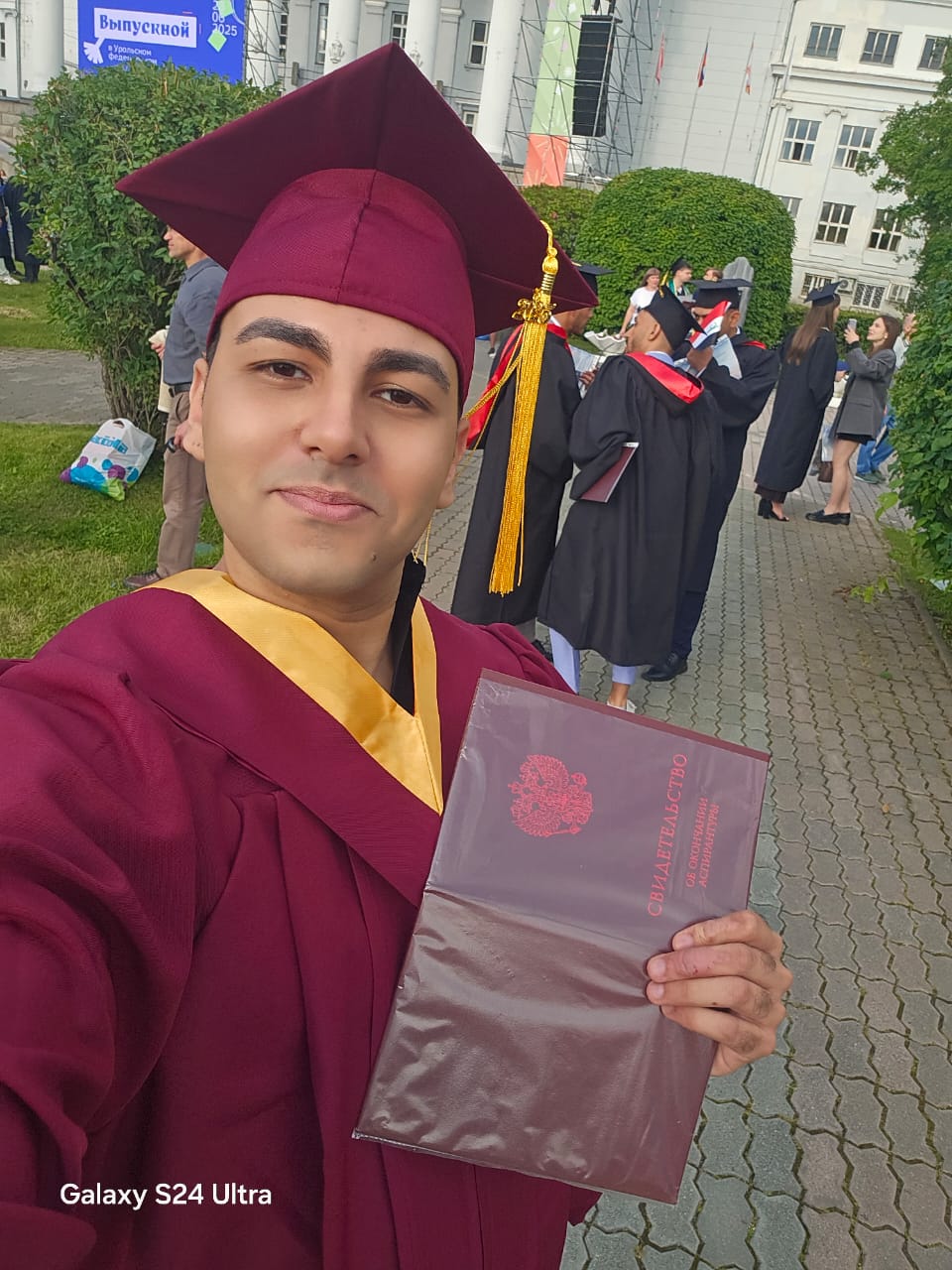
PhD in History of International Relations and Foreign Policy, Research Fellow, Research Institute of the Russian Culture, Ural Institute of Humanities Ural Federal University
Researcher on the history of Egyptian-Russian relations
EDUCATION
PhD in History of International Relations and Foreign Policy, Ural Federal University
RESEARCH, TEACHING, or OTHER INTERESTS
History, History, Political Science and International Relations, Political Science and International Relations
2
Scopus Publications
Scopus Publications
Soviet-Egyptian Relations (1970-1973) Moataz Mohamed Eldawoodi Abdalla Novaya I Novejshaya Istoriya, 2024 In this article, the author examines the history of political relations between the USSR and Egypt after the death of Egyptian President Gamal Abdel Nasser in 1970 and the beginning of the era of President Mohammed Anwar el-Sadat, as well as the difficulties and turmoil that directly arose in relations between the two countries. The aim of the study is to analyse the approach of Egyptian policymakers towards the Soviet Union in the early seventies. On the other hand, to highlight the position of Soviet leaders towards Sadat’s rise to power and his attempts at a peaceful settlement of the Arab-Israeli conflict. In addition, the author examines the most significant factors, ups and downs of relations between the two countries during this period, i.e. from the signing stage of the Soviet-Egyptian Treaty of Friendship and Cooperation, military assistance to Egypt with arms to the crisis related to the termination of the mission of Soviet military advisors and experts in Egypt. This study focused on a combined analysis of sources and studies in Arabic and Russian in order to objectively highlight the point of view of each of the participants in the relationship, as well as some Western views according to English-language sources. The study as a whole explains the crucial motives behind the crises that had an obvious impact on the Soviet-Egyptian relations and how, through joint efforts, the leadership of both countries managed to eliminate these crises before the October War of 1973.
Soviet Military Assistance to Egypt During Early Presidency of Anwar Sadat (September 1970 — October 1973) V. A. Kuzmin, M. M. E. Abdalla Nauchnyi Dialog, 2024 This article analyzes the military-technical cooperation between the USSR and Egypt in the early 1970s. Central to this study is the political interaction between the two nations, as well as the challenges faced by Cairo and Moscow following Anwar Sadat’s rise to power. Particular attention is given to the factors that hindered the maintenance of a high level of Soviet military aid to Egypt during the period from 1971 to 1973. The research focuses on the political intentions of the leadership in both countries, with special emphasis on the bilateral relationship crisis in 1972. The study examines the impact of this crisis on the rearmament process of the Egyptian army and analyzes the strategies employed to secure necessary armaments for Egypt, culminating in President Sadat’s decision to initiate war with Israel in October 1973. The novelty of this research lies in its analysis of materials from Russian archives and memoirs of Egyptian political and military figures in Arabic. The relevance of this study is underscored by its demonstration of the complexities of the political processes occurring in Egypt that influenced the nature and level of SovietEgyptian relations, particularly in the realm of military-technical cooperation during 1970–1973.