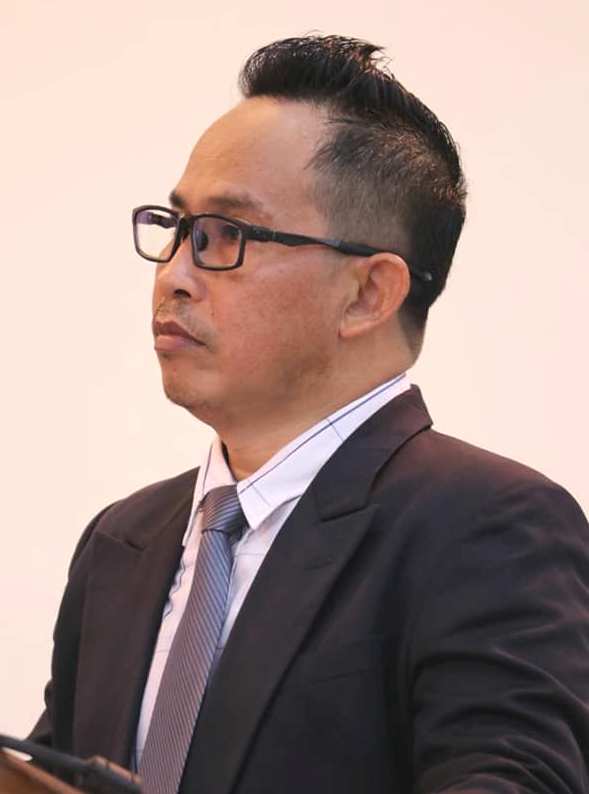
Dr. Moh Rusnoto Susanto, S.Pd, M.Sn
@ustjogja.ac.id
Art Education Departement
UST Yogyakarta
@ustjogja.ac.id
Art Education Departement
UST Yogyakarta
The purpose of this study was to determine the benefits and skills of students from internships during the COVID 19 pandemic from students' and supervisors' perspectives. The survey was conducted through a set of structured questionnaires were given to accounting students majoring in Indonesia's apprentices and supervisors. This research found that the skills developed during the Internship was willing to learn, the ability to work together, and enthusiasm. In contrast, the less developed skills are accuracy, ability to work independently, absorb new things, analytical skills, discipline, and on time. This research was conducted on interns in accounting, and because research on perceptions will allow subjective explanations. This study provides feedback to students, departments, and supervisors to improve internship activities in accounting majors. This research was conducted in the accounting department during the COVID 19 pandemic and from students and supervisors
More than 90,000 people are suffering from the Coronavirus Disease 2019 (COVID-19) resulting in the world-ranking cases. The outbreak was a catastrophe by the end of 2019 in Wuhan, China. COVID-19 pandemic has killed more than 2663 lives with 77,658 cases and is currently the biggest health threat to the global community. The Chinese government has established special hospitals and travel restrictions to reduce the spread of this disease, and its wide-ranging effects on Indonesia have caused 10,118 cases, 7,804 people treated, 792 people died, 1,522 people cured until the end of April 2020, and the number will rise exponentially. The objectives of this research are (1) to outline the phenomenon of the Coronavirus Disease 2019 (COVID-19) that potentially brings forth socio-political changes, and (2) to describe how the government's strategic policies set to solve the Coronavirus Disease 2019 (COVID-19) cases. Using a qualitative research method, researchers took the data from several e
Shortly after the outbreak of the Covid-19 pandemic in mid-February 2020, the Indonesian government called for solutions toward its spread, including the Ministry of Education and Culture that ordered the educational authorities or providers to carries online learning from home so that the online learning system has become a policy in Indonesia. The objectives of this research are to (1) outline the phenomenon of the Covid-19 pandemic that has shifted the paradigm of the e-learning system in Indonesia, (2) describe how to implement an independent learning system based on e-learning as a strategic government policy in handling the Coronavirus cases, and (3) highlight the results of a problematic analysis of e-learning system during the Covid-19 times through a phenomenological perspective. As qualitative research using a phenomenological approach, the data were collected from various events, participants, in-field findings, literacy, coding processes, analysis and representation, criter
Scopus Publications
Scholar Citations
Scholar h-index
Scholar i10-index