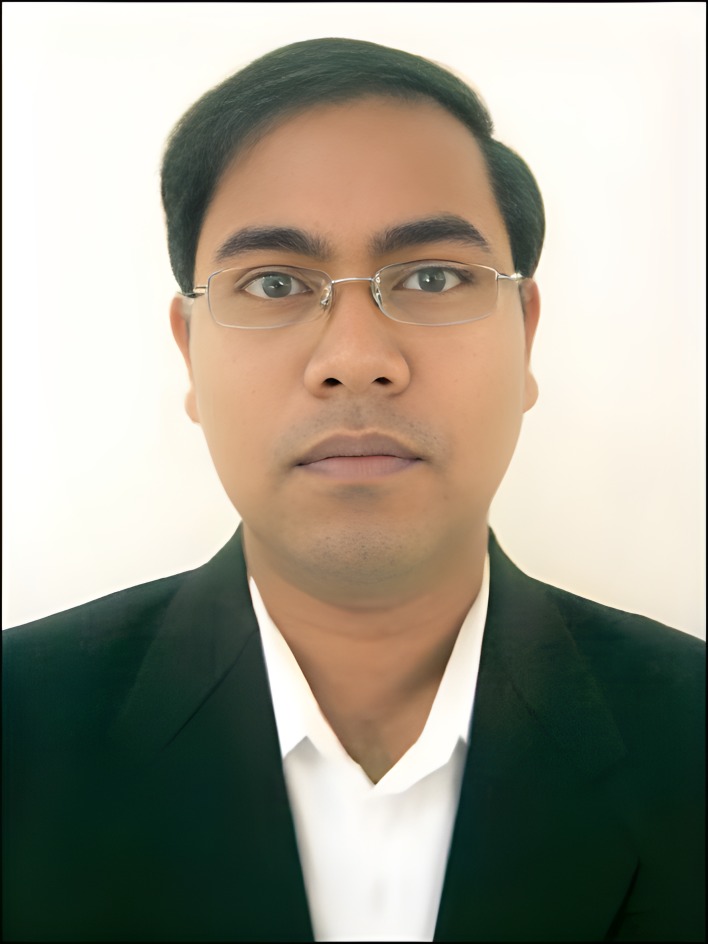
Dr. Mihir Kumar Purkait is a Professor in the Department of Chemical Engineering at Indian Institute of Technology Guwahati (IITG). Presently he is holding Professor Chair of National Jal Jeevan Mission (NJJM), Min. of Jal Shakti (Govt. of India). He is energetically involved in frontier areas of Chemical Engineering with his major research interest in the field of advanced separation processes and material science.
EDUCATION
Post PhD Research: Massachusetts Institute of Technology (MIT) USA, 2010-2011
Indian Institute of Technology, Kharagpur, 2004.
M.Tech.: Chemical Engineering, Indian Institute of Technology, Kharagpur, 2001.
B. Tech.: Chemical Engineering, University of Calcutta, 1999.
B Sc (Honours in Chemistry): University of Calcutta, 1996
RESEARCH, TEACHING, or OTHER INTERESTS
Chemical Engineering, Renewable Energy, Sustainability and the Environment, Water Science and Technology, Multidisciplinary
Triple differential cross sections for ionization of polyatomic molecules by electron impact B Mandal, M Mondal, M Purkait Journal of Physics B Atomic Molecular and Optical Physics, 2026 We present a theoretical investigation for electron impact ionization of NH 3 , CH 4 and CO 2 molecules by using three-body formalism of the two-Coulomb wave (2CW) and three-Coulomb wave (3CW) models, respectively. In these models, the final state contains two-Coulomb and three-Coulomb distortions due to pairwise Coulombic interactions. We account for continuum–continuum correlations by adopting 3CW and 2CW final states. In the 2CW model, the interaction between the scattered electron and the residual target ion in the final state is represented by a plane wave. This work assesses the validity of our models and the role of projectile–residual–ion interactions. In the case of 1 π g state of CO 2 molecule, the Triple differential cross sections (TDCS) exhibits oscillatory pattern with the variation of the electron emission angle. The valence states of the molecules show distinct angular distributions of electron emission due to their s and p -like characters of the orbital. The binary peak positions predicted by our theoretical models align well with the experimental and available theoretical results, but discrepancy is observed in the recoil peak region. At the same time, a comparison is made regarding the structure of angular profile of the TDCS from iso-electronic 2 a 1 state of NH 3 and CH 4 molecules in coplanar asymmetry geometry.
Arsenic Removal Technologies: A Critical Review of Environmental Impacts, Economic Viability, and Scale-Up Challenges Mukesh Bharti, Pranjal P. Das, Mihir K. Purkait ACS Es and T Water, 2026 Arsenic-contaminated groundwater requires efficient, economically viable, and environmentally sustainable removal technologies. This review critically evaluates conventional treatment methods, including chemical coagulation/precipitation, adsorption, ion exchange, electrocoagulation (EC), and membrane filtration, alongside emerging approaches such as photocatalysis, magnetic nanomaterials, ozonation, bioremediation, and membrane distillation. A quantitative benchmarking of reported studies shows that membrane filtration, EC, and adsorption typically achieve 85–99% arsenic removal under optimized conditions, with energy consumption generally ranging from 0.2 to 4 kWh m –3, depending on process configuration. However, large-scale implementation is constrained by sludge and brine management, membrane fouling, electrode passivation, chemical demand, and associated operational costs. Emerging technologies demonstrate comparable removal efficiencies in laboratory-scale studies but face uncertainties regarding process stability, reaction kinetics, long-term performance, and techno-economic feasibility. Moreover, hybrid treatment systems have the potential to overcome the limitations of standalone processes, improve removal efficiency, and reduce environmental impacts, but require further lifecycle and cost assessments. By integrating performance metrics with environmental and economic trade-offs, this review identifies key scale-up challenges and outlines research priorities for sustainable arsenic mitigation.
Faradaic and Nonfaradaic Electrode Innovations on Brackish Water Reduction by Capacitive Deionization: A Critical Review Satish Kumar, Piyal Mondal, Joy Thomas, Chang-Tang Chang, Mihir Kumar Purkait ACS Materials Letters, 2026 Capacitive Deionization (CDI) has become a viable and energy-efficient desalination process nowadays. Conventional electrodes for CDI application possessed low ion adsorption capability. Recent advancements focus on faradaic electrodes, which exploit redox reactions to produce improved ion storage through pseudocapacitive and intercalation effects. Advanced materials offer improved desalination efficiency, operating adaptability, and charge storage properties. Advanced CDI electrode efficiency improved due to faradaic ion storage, such as cathodic oxygen reduction and intercalation reactions which resulted through the development of electrode functionality and design. This review thoroughly examines recent developments in capacitive and faradaic materials-based electrodes for CDI, focusing on material synthesis and performance optimization. The review outlines limitations such as parameter optimization, electrode deterioration, and integration into scalable CDI systems. Emerging materials offer effective desalination efficacy by tackling these limitations. This review critically analyzes the drawbacks of traditional carbon-based CDI electrodes and their physiochemical advancements, and assesses their economic viability.
Comparative Analysis of Phytochemical Profile, In Vitro Bioaccessibility, Cytotoxicity, and Life Cycle Analysis of Polyphenols Extracted from Tea Factory Waste Using Conventional, Microwave, and Ultrasound Techniques Prangan Duarah, Tridip Phukan, Anil Kumar, Het Paraskumar Bhadania, Udeshna Changmai, Mihir Kumar Purkait ACS Food Science and Technology, 2025 The sustainable valorization of tea factory waste offers a low-cost source of bioactive compounds, particularly polyphenols. This study comparatively evaluated conventional solvent extraction (CSE), microwave-assisted extraction (MAE), and ultrasound-assisted extraction (UAE) for polyphenol recovery. Extraction conditions were optimized, and the resulting extracts were characterized by LC-MS/MS, assessed for in vitro bioaccessibility and cytotoxicity, and evaluated through life cycle assessment (LCA). MAE yielded the highest total polyphenol content (7539.43 ± 85.46 mg GAE/L), outperforming CSE (6530.83 ± 59.25 mg GAE/L) and UAE (4719.52 ± 89.08 mg GAE/L). LC-MS/MS revealed that MAE extracts contained elevated levels of gallated catechins and glycosylated flavonoids. In vitro digestion, however, reduced polyphenol retention, particularly in MAE samples. Elemental analysis confirmed safe levels of essential microelements, supporting their nutraceutical relevance. Importantly, LCA results demonstrated that MAE minimized environmental burdens compared to CSE and UAE. Overall, MAE emerges as an efficient, rapid, and ecofriendly approach for industrial-scale valorization of tea waste into nutraceuticals and functional food applications.
Electron capture and excitation in He+ + He collisions at intermediate and high energies B. Mandal, T. Mistry, M. Mondal, M. Purkait Physical Review A, 2025 We present theoretical results on state-selective total and angular-differential cross sections for single-electron-capture and excitation occurring in the ${\mathrm{He}}^{+}+\mathrm{He}$ collisions using the four-body boundary-corrected continuum intermediate state approximation in both prior and post forms. The theoretical cross sections are reported in the energy range of 50--2500 keV/amu. The purpose of the present study is to investigate the relative importance of the intermediate ionization continuum of the two electrons in the projectile and target. In the prior form, the effect of the dynamic electron-electron correlation is taken into account through the complete perturbation potentials. In this form, the final channel is described by the Coulomb continuum states of the electrons and projectile in the field of the target. Similarly, in the post form, the interaction of the electrons with the target and projectile is represented by the Coulomb continuum functions. The initial state of the two electrons in helium is considered to be a one-active-electron target. Therefore, the initial state of the active electron is described by the Roothaan-Hartree-Fock wave function, which is a more sophisticated single-electron wave function for the target. State-selective total and angular-differential cross sections are presented and compared with experimental and previous theoretical data where available. The differential cross sections exhibit minima and maxima in the projectile scattering angles, which are more pronounced in the region of high impact energy. The position of such minima moves towards smaller scattering angles. This structure demonstrates quantum matter wave scattering in atomic collision physics. We also investigated the projectile excitation for the same collision and compared it with other theoretical models.
Performance of anammox process for wastewater treatment Niladri Shekhar Samanta, Pranjal P. Das, Mihir Kumar Purkait Anammox Process Technological Advancement and Application in Industrial Wastewater Treatment Plant, 2024
Microbial fuel cell for wastewater treatment and energy recovery Pranjal P. Das, Simons Dhara, Niladri Shekhar Samanta, Mihir K. Purkait Development in Waste Water Treatment Research and Processes Role of Environmental Microbiology in Industrial Wastewater Research, 2024
Biological nitrogen removal and recovery from wastewater Simons Dhara, Niladri Shekhar Samanta, Pranjal P. Das, Mihir K. Purkait Development in Waste Water Treatment Research and Processes Role of Environmental Microbiology in Industrial Wastewater Research, 2024
Nanotechnology in microbial electrochemical cells Niladri Shekhar Samanta, Pranjal P. Das, Simons Dhara, Mihir K. Purkait Development in Waste Water Treatment Research and Processes Role of Environmental Microbiology in Industrial Wastewater Research, 2024
Rice straw for biofuel production Pranjal P. Das, Ankush D. Sontakke, Mihir Kumar Purkait Green Approach to Alternative Fuel for A Sustainable Future, 2023
Biofuel production from algal biomass Pranjal P. Das, Niladri S. Samanta, Simons Dhara, Mihir Kumar Purkait Green Approach to Alternative Fuel for A Sustainable Future, 2023
Phosphorus recovery from municipal wastewater treatment plants Simons Dhara, Pranjal P. Das, R. Uppaluri, Mihir Kumar Purkait Development in Wastewater Treatment Research and Processes Advances in Industrial Wastewater Treatment Technologies Removal of Contaminants and Recovery of Resources, 2023
Smart nanomaterials in the medical industry Ankush D. Sontakke, Deepti, Niladri Shekhar Samanta, Mihir K. Purkait Advances in Smart Nanomaterials and their Applications, 2023
Fundamentals of food roasting process Pranjal P. Das, Prangan Duarah, Mihir K. Purkait High Temperature Processing of Food Products Unit Operations and Processing Equipment in the Food Industry, 2022
Microfiltration membranes Randeep Singh, Mihir Kumar Purkait Membrane Separation Principles and Applications from Material Selection to Mechanisms and Industrial Uses, 2018
Experimental realization of photo-induced degradation of diclofenac using sulfur-embedded carbon-nitride layered on ultrathin Bi-oxychloride nanosheet: Mechanistic and … L Kumar, B Gupta, MK Purkait Applied Surface Science, 166943 , 2026 2026
Arsenic Removal Technologies: A Critical Review of Environmental Impacts, Economic Viability, and Scale-Up Challenges M Bharti, PP Das, MK Purkait ACS ES&T Water 6 (3), 1403-1422 , 2026 2026 Citations: 1
Potential and Sustainable Utilization of Tea Processing Waste: A Review P Duarah, MK Purkait Plantation Crop Wastes: Valorization for Economic Sustainability, 171-189 , 2026 2026
Processing Waste: A Review P Duarah, MK Purkait Plantation Crop Wastes: Valorization for Economic Sustainability, 171 , 2026 2026
Advanced Surfactant Based Technologies for Environmental Remediation Applications PP Das, P Mondal, P Duarah, MK Purkait Advances in Surfactants Technologies, 189-213 , 2026 2026
Process intensification applied to microalgae based processes and products S Sarkar, MK Purkait, K Gayen, TK Bhowmick Handbook of Microalgae-Based Processes and Products, 843-872 , 2026 2026
Emerging pre-treatment technologies for lignocellulosic biomass valorization: advances, challenges, and future perspectives TN Baite, S Dhara, MK Purkait Bioproducts From Lignocellulosic Biomass, 139-169 , 2026 2026
Biochemistry of polyphenolic compounds derived from lignocellulosic wastes P Duarah, B Debnath, MK Purkait Bioproducts From Lignocellulosic Biomass, 249-276 , 2026 2026
Microbial conversion of lignocellulosic biomass into valued bioproducts and their chemistry S Dhara, TN Baite, MK Purkait Bioproducts From Lignocellulosic Biomass, 197-221 , 2026 2026
Ozonation-Based Treatment of Water and Wastewater: Advancements and Environmental Applications MK Purkait, PP Das Elsevier , 2025 2025
Faradaic and Nonfaradaic Electrode Innovations on Brackish Water Reduction by Capacitive Deionization: A Critical Review S Kumar, P Mondal, J Thomas, CT Chang, MK Purkait ACS Materials Letters 8 (1), 55-75 , 2025 2025 Citations: 2
Comparative Analysis of Phytochemical Profile, In Vitro Bioaccessibility, Cytotoxicity, and Life Cycle Analysis of Polyphenols Extracted from Tea Factory Waste … P Duarah, T Phukan, A Kumar, HP Bhadania, U Changmai, MK Purkait ACS Food Science & Technology 5 (12), 4591-4603 , 2025 2025
Metagenomic and Metatranscriptomic Insights into the Structure and Function of the Gut Microbial Community of Antheraea assamensis Helfer D Saikia, P Basumatary, A Nath, JJ Kalita, K Neog, MK Purkait, U Bora Indian Journal of Microbiology, 1-20 , 2025 2025
Faradic charged modified wrinkled layered graphene oxide as a capacitive deionization electrode for brackish water desalination S Kumar, M Sharma, J Thomas, CT Chang, MK Purkait Electrochimica Acta 538, 146831 , 2025 2025 Citations: 7
Preparation of zeolite by green synthesis from steel industry by-product LD-slag and its application for photodegradation NS Samanta, MK Purkait Materials Research Bulletin 190, 113492 , 2025 2025 Citations: 6
Photocatalytic Degradation of Pharmaceutical Wastewater Part A: Advanced Nanomaterials, Synthesis Routes and Spectral Characteristics MK Purkait, B Gupta, PP Das Academic Press , 2025 2025
Design of an advanced electrocoagulation system with a rotating anode for treating synthetic water containing arsenate M Bharti, MK Purkait Separation and Purification Technology, 135034 , 2025 2025 Citations: 3
Effect of Underpotentially Deposited Copper on Electrochemical Carbon Dioxide Reduction R Yadav, MK Purkait, JR Bellare, A Sarkar Journal of The Electrochemical Society 172 (9), 096504 , 2025 2025 Citations: 1
A Sustainable Approach to Wastewater Remediation Using Nano-adsorbents M Bharti, S Kumar, MK Purkait Nanomaterials in Wastewater Research: Progress and Challenges, 259-283 , 2025 2025 Citations: 9
Harnessing Nanomembrane Technology for Advanced Wastewater Remediation S Kumar, M Bharti, MK Purkait Nanomaterials in Wastewater Research: Progress and Challenges, 211-234 , 2025 2025 Citations: 4
MOST CITED SCHOLAR PUBLICATIONS
Adsorption characteristics of brilliant green dye on kaolin BK Nandi, A Goswami, MK Purkait Journal of hazardous materials 161 (1), 387-395 , 2009 2009 Citations: 884
Removal of congo red using activated carbon and its regeneration MK Purkait, A Maiti, S Dasgupta, S De Journal of hazardous materials 145 (1-2), 287-295 , 2007 2007 Citations: 775
Ultrafiltration of stable oil-in-water emulsion by polysulfone membrane B Chakrabarty, AK Ghoshal, MK Purkait Journal of membrane Science 325 (1), 427-437 , 2008 2008 Citations: 676
Removal of cationic dyes from aqueous solutions by kaolin: kinetic and equilibrium studies BK Nandi, A Goswami, MK Purkait Applied Clay Science 42 (3-4), 583-590 , 2009 2009 Citations: 650
Effect of molecular weight of PEG on membrane morphology and transport properties B Chakrabarty, AK Ghoshal, MK Purkait Journal of membrane science 309 (1-2), 209-221 , 2008 2008 Citations: 606
Preparation, characterization and performance studies of polysulfone membranes using PVP as an additive B Chakrabarty, AK Ghoshal, MK Purkait Journal of Membrane Science 315 (1-2), 36-47 , 2008 2008 Citations: 500
Nanofiltration of textile plant effluent for color removal and reduction in COD S Chakraborty, MK Purkait, S DasGupta, S De, JK Basu Separation and purification Technology 31 (2), 141-151 , 2003 2003 Citations: 438
A review on the environment-friendly emerging techniques for pretreatment of lignocellulosic biomass: Mechanistic insight and advancements D Haldar, MK Purkait Chemosphere 264, 128523 , 2021 2021 Citations: 398
Arsenic adsorption using copper (II) oxide nanoparticles A Goswami, PK Raul, MK Purkait Chemical engineering research and design 90 (9), 1387-1396 , 2012 2012 Citations: 371
Preparation and characterization of low cost ceramic membranes for micro-filtration applications BK Nandi, R Uppaluri, MK Purkait Applied Clay Science 42 (1-2), 102-110 , 2008 2008 Citations: 367
Green synthesis and environmental application of iron-based nanomaterials and nanocomposite: A review P Mondal, A Anweshan, MK Purkait Chemosphere 259, 127509 , 2020 2020 Citations: 360
Removal of Fe (II) from tap water by electrocoagulation technique D Ghosh, H Solanki, MK Purkait Journal of hazardous materials 155 (1-2), 135-143 , 2008 2008 Citations: 343
Treatment of fluoride containing drinking water by electrocoagulation using monopolar and bipolar electrode connections D Ghosh, CR Medhi, MK Purkait Chemosphere 73 (9), 1393-1400 , 2008 2008 Citations: 330
Removal of dye from wastewater using micellar-enhanced ultrafiltration and recovery of surfactant MK Purkait, S DasGupta, S De Separation and purification Technology 37 (1), 81-92 , 2004 2004 Citations: 318
Recent progress on electrocoagulation process for wastewater treatment: A review PP Das, M Sharma, MK Purkait Separation and Purification Technology 292, 121058 , 2022 2022 Citations: 317
A review on global perspectives of sustainable development in bioenergy generation P Duarah, D Haldar, AK Patel, CD Dong, RR Singhania, MK Purkait Bioresource Technology 348, 126791 , 2022 2022 Citations: 267
A novel acorn based adsorbent for the removal of brilliant green M Ghaedi, H Hossainian, M Montazerozohori, A Shokrollahi, F Shojaipour, ... Desalination 281, 226-233 , 2011 2011 Citations: 261
Potential and sustainable utilization of tea waste: A review on present status and future trends B Debnath, D Haldar, MK Purkait Journal of Environmental Chemical Engineering 9 (5), 106179 , 2021 2021 Citations: 248
Cross-flow ultrafiltration of stable oil-in-water emulsion using polysulfone membranes B Chakrabarty, AK Ghoshal, MK Purkait Chemical Engineering Journal 165 (2), 447-456 , 2010 2010 Citations: 242
Micro and nanocrystalline cellulose derivatives of lignocellulosic biomass: A review on synthesis, applications and advancements D Haldar, MK Purkait Carbohydrate polymers 250, 116937 , 2020 2020 Citations: 234
RESEARCH OUTPUTS (PATENTS, SOFTWARE, PUBLICATIONS, PRODUCTS)
He has more than 24 years of experience in research & academics. With his research team he has published more than 350 high quality International journal papers with h-index of 84 (citation > 22,000), 16 granted patents and made 3 technology transfer. He has authored 22 books, completed 42 sponsored projects/consultancies funded by various Govt agencies and industries. Prof. Purkait has supervised 26 PhD students and >50 M Tech students on fundamental and applied research.
Industry, Institute, or Organisation Collaboration
He is also actively involved in different capacity like ECC / EC / PAC / selection committee member / advisor / consultant etc in various Govt (state & central) bodies including DST, SERB, DBT, AICTE, IITs, NITs, Universities, Waste to Wealth (W2W) mission and National Jal Jeevan Mission (JJM) of Principal Scientific Advisor (PSA) to the Govt of India and public sector companies.
SOCIAL, ECONOMIC, or ACADEMIC BENEFITS
For his scientific and societal contribution, he has been awarded several national level prestigious award from INAE, NASI, INSA, DST etc. He has worked as visiting professor of 3 foreign universities and involved in various international scientific/funding organizations as ECC/PAC expert member like European Science Foundation (ESF, France), Fund for Scientific Research; FWO Flanders, Brussel (Belgium) etc.