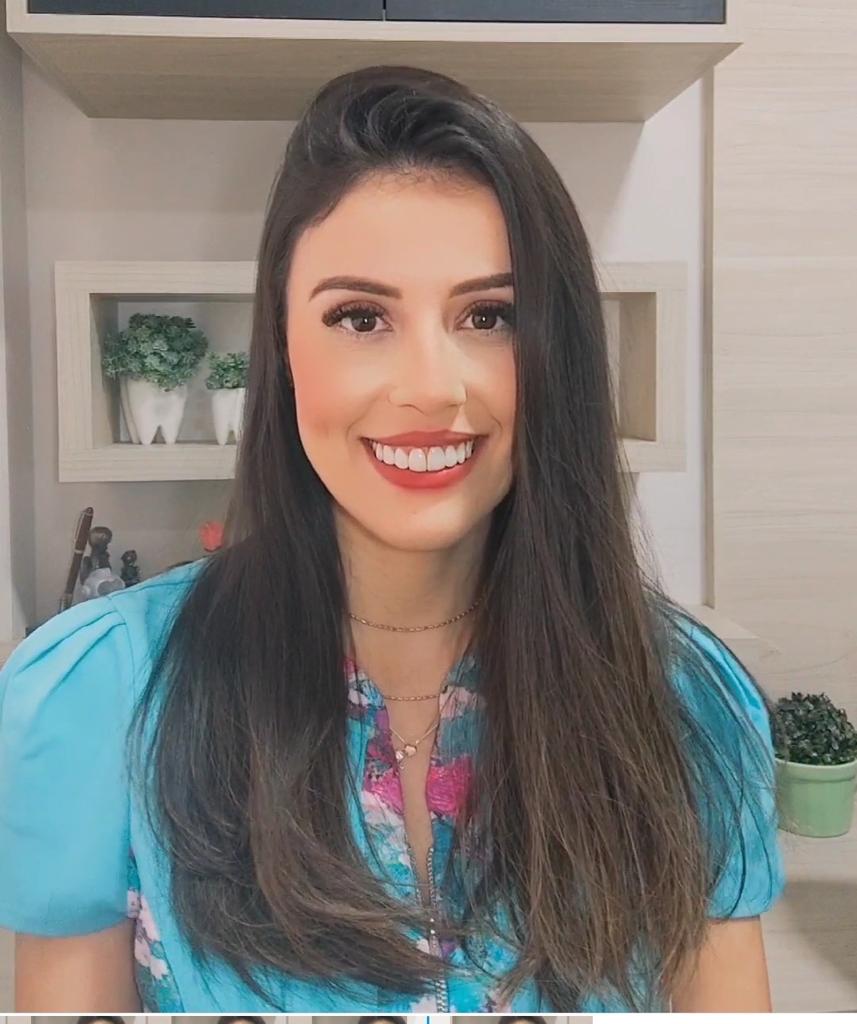
Professor in the Graduate Program in Integrated Dental Sciences (Stricto-Sensu). Professor of Undergraduate Dentistry at Faipe Faculty in Cuiabá - MT. Specialist in Innovative Teaching Methodologies - Faipe, Cuiabá - MT (2023). Post-Doctoral Internship, through the Legal Amazon Graduate Program / Graduate Program in Integrated Dental Sciences (2021-2022). PhD in Integrated Dental Sciences, area of concentration in pediatric dentistry, from the University of Cuiabá - UNIC-MT/ UFPel (2020). CAPES doctoral scholarship recipient (2017-2020). Master's degree in Dental Science, area of concentration in Children's Oral Health, from the Faculty of Dentistry of Araçatuba - UNESP (2016). CAPES master's scholarship recipient (2014-2016). Specialist in Pediatric Dentistry from EAPE-MT (2019). Graduated in Dentistry from the University of Cuiabá - UNIC-MT (2013). Areas of expertise include pediatric dentistry, dental caries, early childhood caries, oral biofilm, and hospital-acquired infections
RESEARCH, TEACHING, or OTHER INTERESTS
Microbiology (medical), Dental Assisting
5
Scopus Publications
Scopus Publications
Encapsulation and delivery strategies for enhanced viability and efficiency of probiotic microorganisms Luana Backes, Thayn?????? Alves-Ferreira, Fabiane Cruz-Vieira, Rafael Caetano, Lucas de Oliveira Pereira, Priscila Vieira da Silva, Vit??????ria Marina Abrantes, Edja Maria Melo de Brito Costa, Andr??????a Cristina Barbosa da Silva, Diego Rom??????rio-Silva Probiotics Against Antimicrobial Resistance Opportunities and Challenges, 2025 Probiotics have garnered significant attention due to their potential benefits for the digestive system and overall health. However, many probiotic products may be ineffective because the microorganisms often do not survive processing, storage, and the harsh conditions of human body microenvironments such as the gastrointestinal tract, which includes variations in pH, temperature changes, and exposure to digestive enzymes and bile acids. The body’s chemical and pharmacokinetic barriers present additional challenges to the viability of these microorganisms. While encapsulation has been explored to enhance probiotic resistance, the encapsulation and delivery process itself can compromise their stability. Various encapsulating materials, such as whey protein isolate, dextran conjugates, polysaccharide–protein matrices, and combinations of cocoa powder with sodium alginate and fructooligosaccharides, have been proposed to address these challenges. Ultimately, the appropriate choice of materials and techniques is crucial for preserving probiotic functionality and improving their delivery.
Role of antimicrobial peptide on cariogenic biofilm and dental enamel demineralization Priscila Vieira da SILVA, Tatiana PEREIRA-CENCI, Juliana Lays Stolfo UEHARA, Aurélio Rosa da SILVA JÚNIOR, Maximiliano Sérgio CENCI, Andreza Maria Fábio ARANHA Brazilian Dental Science, 2024 Objective: To investigate the effect of antimicrobial peptide (AMP) D1-23 on antibiofilm activity and enamel demineralization by using a microcosm biofilm model. Material and Methods: Human saliva biofilm was grown on bovine enamel discs, which were divided into 4 groups according to the 24-hour growth treatment: 0.2 mM AMP D1-23; 1 mM AMP D1-23; Defined Medium with Mucin (DMM; negative control); and 2% chlorhexidine (CHX; positive control). The biomass and number of cultivable cells of a 4-day-old biofilm were evaluated for antibiofilm activity. For analysis of enamel mineral loss by the 7-day-old biofilm and investigated treatments, the Knoop surface microhardness method was performed. ANOVA and Tukey tests were used to analyze data from biomass and enamel surface microhardness. Culturable cells data were analyzed by a pairwise Kruskal-Wallis test. A significance level of 5% was considered for all tests. Results: Although the two concentrations of AMP D1-23 had similar effects on the amount of biofilm biomass (p>0.05), a reduction in biomass was observed when compared to the control group (p < 0.05). The antimicrobial activity of 1 mM AMP D1-23 was similar to that of 2% CHX against Streptococcus mutans, whereas against Streptococci sp and Candida sp it was lower (p <0.05). Also, the 1 mM AMP D1-23 significantly reduced enamel demineralization (p < 0.05). Conclusion: Under the limitations of this study, the 1 mM AMP D1-23 appears to have positive effect on controlling dental enamel demineralization and may be considered a potential treatment for non-cavitated carious lesions. KEYWORDS Antimicrobial cationic peptides; Dental caries, Dental plaque; Public health; Tooth remineralization.
Diacetylcurcumin: a novel strategy against Enterococcus faecalis biofilm in root canal disinfection Vanessa de Souza, Carlos Roberto Polaquini, Graciele Ribeiro de Moraes, Arthur Rodrigues Oliveira Braga, Priscila Vieira da Silva, Diego Romário da Silva, Francisco Ricardo Ribeiro Lima, Luís Octávio Regasini, Janaina de Cássia Orlandi Sardi Future Microbiology, 2024 Aim: We evaluated Diacetylcurcumin (DAC), a derivative of curcumin, for its antibacterial and antibiofilm properties against Enterococcus faecalis. Methods: Minimum inhibitory concentration (MIC) and minimum bactericidal concentration were determined, along with antibiofilm potential and toxicity in Galleria mellonella. Additionally, in silico computational analysis was performed to understand its mechanisms of action. Results & conclusion: DAC demonstrated significant antibacterial effects, with MIC and MBC values of 15.6 and 31.25 μg/ml, respectively, and reduced biofilm formation. A synergistic effect, reducing biofilm by 77%, was observed when combined with calcium hydroxide. G. mellonella toxicity tests confirmed DAC's safety at tested concentrations, suggesting its potential for use in root canal disinfection products.