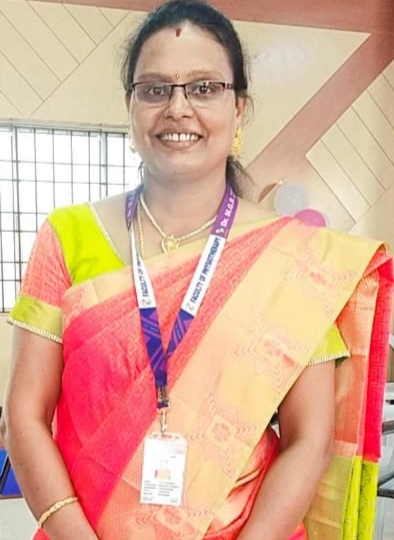
K.Kamatchi

@drmgrdu.ac.in

Assistant professor,Faculty of physiotherapy
Dr MGR Educational and Research Institute

EDUCATION

BPT,MPT,DBDT,MD(ACU),MIAP,MRCI,(PhD)

RESEARCH INTERESTS

Physiotherapy, neurology,pediatrics,Hemiplegia,downs syndrome,
27

Scopus Publications

257

Scholar Citations

8

Scholar h-index

7

Scholar i10-index

Scopus Publications

  • Managing Forward Head Posture: Role of VR Gaming and Proprioceptive Training in Neck Pain and Proprioception
    Vaishnavi Giridharan, Majitha Parveen, Kamatchi Kaviraja, Eliza giftson Titus Elumalai, Elakkiya Rajaram, Ijaj Rahman, Elavarasan kumar
    Biomedical and Pharmacology Journal, 2025
    The goal of this study is to assess the effectiveness of Virtual Reality Game-Based Exercise and Proprioceptive Training in addressing neck pain and enhancing neck proprioception in students with forward head posture. Forward head posture is a prevalent position adopted by many individuals due to their frequent use of computers or smartphones. This condition involves the forward positioning of the head, which contributes to an increase in cervical lordosis and thoracic kyphosis. Proprioceptive input from the neck muscles is crucial for maintaining postural control. This forward head posture affects proprioceptive feedback from the neck muscles and results in deficits in postural control as well as neck pain. An experimental study was carried out on individuals with forward head posture. A total of 30 participants were chosen based on specific selection criteria, with a pre-test conducted using the Joint Position Error Test to assess neck proprioception and the visual analogue scale to measure neck pain. Treatment was administered over a period of 8 weeks, five days a week. The 30 participants were split into two groups, each consisting of 15 individuals. Group A participated in Virtual Reality Training, which included interventions for neck pain lasting 25 minutes and neck proprioception lasting 20 minutes, while Group B engaged in Proprioceptive Training for both neck pain and neck proprioception, consisting of CJPS for 10 minutes, cervical motion sense for 10 minutes, gaze stability for 10 minutes, and a swiss ball stabilization exercise for 15 minutes. When analyzing the data between Group A and Group B, both groups showed significant differences between the pre-test and post-test results. However, Group A exhibited a more pronounced significance than Group B. Hence Virtual Reality Game Based Exercise was more effective than Proprioceptive Training on treating neck pain and neck proprioception among patients with forward head posture.
  • Comparing Progressive Muscle Relaxation and Neural Mobilization for Tension-Type Headaches: A Randomized Comparative Study on Pain and Stress Reduction
    Kamatchi Kaviraja, Bhuvana Kumar, Kaviraja Natarajan, Tanya Bernadite Arokiaraj
    Biomedical and Pharmacology Journal, 2025
    The aim of the study is to compare the effectiveness of the progressive muscle relaxation (PMR) exercise versus neural mobilization on tension-type headaches. Tension-type headache (TTH) is the most prevalent kind of primary headache. These headaches occur in 35-78% of populations. About 44 percent of patients suffering from TTH have demonstrated restricted ability to function, resulting in disability and a lower quality of life, according to the worldwide categorization. Therefore, this research aimed to compare the impact of neural mobilization with PMR for patients suffering from TTH. This study is a pre-post comparative experimental study, and Study duration is about 6 months; the treatment duration is about 6 sessions per week for 8 weeks. The study setting was the ACS Medical College and Hospital campus. For study size, there were 40 subjects recruited; the study sampling is random. Sampling method: Subjects were assessed for inclusion criteria of age group between 19 and 25 years; both males and females were included; clinical diagnosis of tension headache; and exclusion criteria of other type/cause of headache, stroke, brain tumor, and meningitis. The Lakaev Academic Stress Response Scale-2 (LASRS-2) and Headache Impact Test-6 (HIT-6) were taken as outcome measures. 40 patients who fulfilled the criteria were selected based on the simple random sampling method. Of the 40 patients, 20 individuals will be allotted to group A, and the remaining 20 individuals will be allotted to group B. Interventions were given for 6 sessions per week for 8 weeks. Group A received progressive muscle relaxation exercises, while Group B received neural mobilization. When comparing the LASRS-2 along with HIT-6 scores of Groups A and B before and after the test, there is a significant variance in mean values at P≤0.05. The Lakaev Academic Stress Response Scale-2 (LASRS-2) is a 26-item self-rated questionnaire used to measure academic stress response across four domains: affective, behavioral, cognitive, and physiological, with higher scores indicating greater academic stress. The Headache Impact Test-6 (HIT-6) assesses the impact of headaches on daily life, with a total score ranging from 36 to 78, where higher scores indicate greater impact. The HIT-6 score is categorized into four levels: little or no impact (≤49), some impact (50-55), substantial impact (56-59), and severe impact (60-78). The research’s conclusion is that PMR technique has a great role in reducing pain intensity and stress levels and improving quality of life for tension headaches when compared to neural mobilization.
  • A comparative study to analyze the effect of tap water Faradism and tapwater Galvanism in treating palmar hyperhidrosis
    Journal of Integrated Science and Technology, 2023
  • Comparison of laser therapy and galvanic stimulation on facial appearance and function in Bell’s palsy among south Indian population
    Tharani G., Kamatchi K., Sharmila S., Yuvarani G., Vaishnavi G., Pothuraju Pravalika
    Biomedicine India, 2022
    Introduction and Aim: Bell’s palsy is an instantaneous lower motor neurons injury of 7th cranial nerve associated with infection and swelling. It produces unexpected unilateral weakness of facial muscles, progresses rapidly and attains peak symptoms within a week. The most common age of incidence is between 20 to 40 years. Although facial paralysis in Bell’s palsy is self-limited, only 80% of the patients make a full recovery. There are studies stating that both galvanic electrical stimulation and laser therapy speed up the recovery of facial paralysis, but the extent of complete recovery is unknown. Hence, this study is an attempt to understand and compare how laser therapy and galvanic electrical stimulation affect facial appearance and facial muscle functions in Bell's palsy. Materials and Methods: This study included thirty subjects with acute onset of Bell’s palsy aged between 20-40 years. They were randomly grouped into A and B. Galvanic electrical stimulation and low-level laser therapy were given to group A and group B respectively for 6 weeks (3 sessions/week) along with facial exercises. Facial disability index scale was used to measure facial muscle function and Sunny brook scale was used to measure facial symmetry in pre- and post-treatment periods. Results: When comparing the pre- and post-mean values of groups A and B on the Sunny Brook facial grading and the facial disability index (physical, social), group B (with low level laser therapy) showed a highly significant difference in mean values at p 0.001. Conclusion: Low-level laser therapy can be used as an adjective in treating the patients with Bell’s palsy.
  • Efficacy of antigravity and Pilates exercise to improve balance in T2DM
    Kamatchi K., Saranya S., Tharani G., Gayathri K.C., Deepa I., Kaviraja N., Meenakshi S.K.
    Biomedicine India, 2022
    Introduction and Aim: Increased risk of fall and injury, disturbance in gait and balance is always associated with type 2 diabetes. The more common risk factor in diabetes is the fear of fall. Exercise provides stability, improves the dynamic balance and has a great influence to maintain the equilibrium of the body. The aim of the study was to analyse the effect of antigravity and Pilates exercise to improve balance in diabetes mellitus patients. Materials and Methods: This is an experimental study and a comparative type. The study was done in the Faculty of Physiotherapy OP department, A.C.S. Medical College and Hospital with a study sample of 30 patients with male and female in the age group of 45 -65 years. Based on the inclusion and exclusion criteria the subjects were segregated into two groups. Group A- were implemented with antigravity exercise for half an hour for three days per week for 12 weeks and Group B -were implemented with Pilates for forty-five minutes for three days per week for 12 weeks. Results: The study revealed that anti-gravity exercise was better than Pilates exercise and which helps in increasing the balance, muscle strength and prevent falls Risks and provides a great significant difference in post- test mean value (P 0.001). Conclusion: At the end of the study, it indicates that anti-gravity exercise was found to be more effective in improving the balance among diabetes mellitus patients.
  • Effect of exercise, relaxation, and ergonomics on physiological stress indicators-An experimental study on teachers
    Vaishnavi G., Parveen M. Majitha, C.V. Senthil Nathan, Tharani G., Kamatchi K., Rajalakshmi G., Yuvarani G., Aruna D.
    Biomedicine India, 2022
    Introduction and Aim: Stress is a reaction of the body to substantial or unusual demands. It, a complex reaction of the neurologic and endocrinologic system which can initiate the ‘Fight or Flight’ response. This may lead to headache, tense muscles, insomnia. Stress can alter the memory function, immune function, metabolism, and susceptibility to the disease. The effect of stress and relationship in making teachers quite inefficient in their profession is a growing concern. The present study objective is to investigate the effective significance of exercise, relaxation, and ergonomics on physiological stress in teachers. Materials and Methods: A total of 30 teachers, both male and female were randomly selected. They supported the inclusion and exclusion criteria and were between 30 to 60 years, separated into 2 groups. They were asked to fill necessary information in the stress profile for teachers. The subjects with moderate to high stress were taken for the study and were divided into two groups. Group ‘A’ were given aerobic stepper exercise and relaxation techniques. Group ‘B’ were given aerobic stepper exercise and suggestions given on ergonomic correction for an intervention period of about 8 weeks, 5 days per week 45 minutes per session. Pre- and post-test values were taken on blood pressure and blood glucose level using sphygmomanometer and glucometer. Results: The pre- and post-test between group A and group B show a highly significant difference. However, group A showed higher significance than group B. Conclusion: According to the findings, aerobic stepper exercise with relaxation techniques shows highly significant difference and aerobic stepper exercise with ergonomic correction shows significance but aerobic exercise with relaxation technique is highly effective in reducing stress and maintaining blood pressure and glucose level in teachers.
  • To Compare the Effectivness of Balance and Proprioception with Conventional Exercise in Non Specific Neck Pain
    Rajalaxmi V., Sushmitha Anandhan, Kirupa K., Kamatchi K., Radhakrishnan Unnikrishnan, Shady Abdullah Alshewaier
    Research Journal of Pharmacy and Technology, 2022
    Objective: The objective of the study was to determine the efficacy of proprioception and balance exercise along with conventional exercise in patients with neck pain. Methodology: This was an experimental study design 60 samples were selected based on the inclusion criteria, Group A received balance and Proprioception exercise and Group B conventional exercise. Pre and posttest measurement were taken and compared by using outcome measures of VAS, Four-Square Step Test and Modified Clinical Tests of Sensory Interaction in Balance. Results: On comparing the mean value of Group A and Group B, shows significant difference between group A and group B. Group A Balance and proprioception exercise seems to be more effective than Group B conventional exercises.
  • Impact of Alexander technique, mirror therapy versus conventional therapy on musician’s cramp in guitarists
    Nadar NewtonJayakumar, Mohan Kumar G., Rajalaxmi V., Veena Kirthika S., Priya C., Tharani G., Kamatchi K., Rajavel R.
    Biomedicine India, 2022
    Introduction and Aim: Musicians may perceive the early symptoms of dystonia because of faulty technique or lack of sufficient preparation. Hand dystonia affecting musicians is often called musician’s dystonia or musician’s cramp. Guitarists are typically affected in their left hand and the spasms may cause the fingers to contract and curl under when attempting to play. The condition called focal dystonia (musician’s cramp), can afflict typist or anyone else who makes repetitive, forceful, precise movements. The objective of the study is to observe the impact of alexander technique versus mirror therapy on musician’s cramp. Methodology: A total of 150 subjects were randomly selected based on the inclusion criteria. The selected subjects were divided in three groups namely group A, B and C respectively. The evaluation parameters were performed using the Likert scale and was framed based on pain, mobility, and grip. Results: Likert scale for pain, mobility and grip was used to analyse data. The results of this study show that the Alexander Technique is more effective than mirror therapy and conventional therapy to reduce pain and improve mobility and grip for guitarists. Conclusion: These results suggest that playing guitar by adapting Alexander technique is advantageous for building speed.
  • Effectiveness of Pilates exercises on non-specific low back pain to determine pain and disability
    P. Manikandan, G. Mohan Kumar, V. Rajalaxmi, C. Priya, G. Yuvarani, G. Tharani, K. Kamatchi, . Vaishnavi, G. Muthu Raj
    Biomedicine India, 2021
    Introduction and Aim: Low back discomfort is one of the commonest musculoskeletal problems. The Pilates exercises are an approach to stretching and strengthening techniques and specifically train all the core muscles. The intend of the current study was to verify the influences of the Pilates exercises among pain and disability among patients with Non-specific Low Back Pain (NSLBP). Materials and Methods: A 100 non-specific low back pain subjects were randomly selected for this experimental study. The study includes of non-specific LBP age group between 25 to 40 years, both male and female patients with pain and disability and this study excludes spinal fractures and Pregnant Women. The estimations were taken utilizing Visual Analogue scale (VAS), Patient Specific Functional Scale (PSFS) and Modified Oswestry Low Back Pain Disability Questionnaire (MODQ). Subjects are allotted in two groups, Group A (Pilates group) receives Pilate’s exercise and Group B (conventional group) receives conventional exercise. Exercises were given for 3 times a week for 12 weeks and a regular follow up was done for every 4 weeks. Results: Group A (Pilates group) were found to be more effective than Group B (conventional group). It shows a highly significant difference in mean values at P ? 0.001. This implies that Pilates exercise is more beneficial in decreasing pain and functional disability. Conclusion: On comparing the mean values, Group A (Pilates group) showed significant improvement at the end of the study when compared with Group B (conventional group).
  • A study to analyze the effectiveness of swiss ball exercise versus resistance training in type 2 diabetes mellitus
    Kamatchi Kaviraja, Arimbit K. Sangma, Priya Kumara, N. Kaviraja, S.Jennifer Agustina
    Biomedicine India, 2021
    Introduction and Aim: Diabetes is a disease rising all over the world affecting larger number of populations. In India largest number of diabetic patients are reported. Lack of physical activity, dietary pattern change, and sedentary life style are the major causes for concern. Aneffective lifestyle intervention including changes in dietary pattern, regular exercises would enhance in preventing or postponing the onset of diabetes. The aim of the study is to analyse the effectiveness of Swiss ball exercise and resistance training in type 2 diabetes mellitus patients.
 
 Materials and Methods:The study design is comparative type. The study was conducted in Faculty of Physiotherapy, Dr. MGR Educational and Research Institute, Chennai. The study sample of 30 subjects both male and female were selected based on the inclusion and exclusion criteria. The subjects were sorted into two groups.Inclusion criteria were patients with clear history of Type 2 diabetes, clinically diagnosed, an inactive lifestyle, age between 30-60 years. Exclusion criteria were uncontrolled hypertension, coronary artery disease, advanced retinopathy, neuropathy, severe orthopedic conditions. 30 subjects between the age group of 30-60 years were divided into two groups, group A and group B. Individuals in the group A (n=15) received the Swiss ball exercise and group B (n=15) received resistance training exercise for 5 session/ week for 12 weeks for 30 minutes.
 
 Results: On comparing pre-test and post-test within group A andgroup B on fasting, post prandial blood sugar level and diabetes distress screening scale show highly significant difference in mean values at P ? 0.001.
 
 Conclusion:The study concluded that both the groupshad substantial effect. On comparing Swiss ball exercise and resistance training, both the exercise programs were found to be equally effective.
  • Prevalence of forward neck posture and influence of smartphones in physiotherapy students
    G. Kanimozhi, Priyathersini Nagarajan, Sri Gayathri, M. Arthi
    Biomedicine India, 2021
  • To compare the effectiveness of balance training and conventional exercises for elderly individuals
    G. Vaishnavi, S. Chandralekha, G. Tharani, K. Kamatchi, K. Kirupa, R. Kamali, R. Rajasri, R. Rajavel
    Research Journal of Pharmacy and Technology, 2021
  • Effects of mirror therapy vs modified constraint induced movement therapy on upper extremity in subacute stroke patients
    Kamatchi Kaviraja, G Tharani, G Yuvarani, N Kaviraja, Jenifer Augustina S, C Aarthi
    Bangladesh Journal of Medical Science, 2021
  • A 60-year-old man with isaacs mertens-syndrome a rare entity
    G Tharani, K Kamatchi, G Yuvarani
    Bangladesh Journal of Medical Science, 2021
  • A study to compare the effects of aerobic exercises and yoga on depression and maternal anxiety orienting among primiparous women
    G Yuvarani, R Manoranjitham, G Tharani, K. Kamatchi, G Vaishnavi
    Biomedicine India, 2020
  • Effects of swiss ball exercise and pilates exercise on core muscle strengthening in college cricketers
    K. Kamatchi, B. Arun, G. Tharani, G. Yuvarani, G. Vaishnavi, S Srilakshmi, N. Kaviraja
    Biomedicine India, 2020
  • To compare the effectiveness of laser, EMG biofeedback assisted core stability exercise versus laser and core stability exercise alone on pain and disability in patients with non-specific low back pain
    G. Yuvarani, Chengi Kousalya, K. Kamatchi, G. Tharani, G. Vaishnavi
    Research Journal of Pharmacy and Technology, 2020
  • A study to analyse the effect of exercise in individuals with alcohol withdrawal syndrome (Aws)
    G. Yuvarani, V. Vijaya Priya, K. Kamatchi, G. Tharani, G. Vaishnavi
    Indian Journal of Public Health Research and Development, 2019
  • A comparative study to analyse the effectiveness of PNF versus balance exercises in Parkinsonism
    K. Kamatchi, S. Priya, C. V. Senthilnathan, G. Mohan Kumar, G. Tharani, G. Yuvarani
    Indian Journal of Public Health Research and Development, 2019
  • Efficacy of pelvic floor muscle training, yoga and cognitive behavioural therapy for urinary incontinence in diabetic women – a randomized controlled double blinded study
    V. Rajalaxmi, S. Varalakshmi, V. Hema Suresh, G. Mohan Kumar, K. Kamatchi, G. Vaishnavi, N. Muthukumaran
    Research Journal of Pharmacy and Technology, 2019
  • Combination of otago exercises and pelvic floor muscle strengthening exercise AID in avoiding urinary incontinence and fall risk among women
    G Yuvarani, V Rajalaxmi, K. Kamatchi, G. Tharani, K. Muthulakshmi, I. Sumaiya Banu
    Research Journal of Pharmacy and Technology, 2019
  • Correlation between body weight and postural Control in healthy individuals using sway meter
    Tharani G, Vedha Varshini M G, Senthil Nathan C V, Mohan Kumar G, Kamatchi K
    Obesity and Metabolism, 2019
  • Impact of trunk muscle endurance on static balance and gender difference among physiotherapy students in Chennai-A double blinded study
    Biomedicine India, 2019
  • Correlation between high heel vs flat footwear with balance and foot pain in physiotherapy students
    V. Rajalaxmi, S Lakshmi, K. Kamatchi, C. J. Jayson, Devika E
    Journal of the Liaquat University of Medical and Health Sciences, 2018
  • A comparison of the effectiveness of standard shrug exercise and modified shrug exercise in patients with functional shoulder impingement syndrome
    Biomedicine India, 2018
  • Comparison of forward head posture correction program versus jaw exercises in temporomandibular joint dysfunction
    Biomedicine India, 2018
  • Effectiveness of exercise in treating rectus abdominis diastasis
    Biomedicine India, 2018

RECENT SCHOLAR PUBLICATIONS

  • A Comparative Study Between Neural Mobilization Techniques Versus Mckenzie Exercises In Patients With Acute Sciatica
    NK K. Kamatchi, Manigandan. S, Siva. R, K.Elavarasan
    International Journal of Medical and Exercise Science 11 (1), 2329-2339 , 2025
    2025
  • Myoelectric Controlled Lower Limb Prosthesis With Active Ankle-Foot Joint
    MN Harish, S Sathish, KHS Kamatchi, S Prasanthi, K Anushiya
    2025 Eleventh International Conference on Bio Signals, Images, and … , 2025
    2025
    Citations: 1
  • Cascading effects of VA cues and TVP stimulation on gross motor development in early-term babies with developmental delay.
    SS Subramanian, KC Gayathri, K Kamatchi, HY Alyahyawi, A Mazi, ...
    Fizjoterapia Polska , 2025
    2025
  • Efficacy of Plyometric and TheraBand FlexBar Exercises in Tennis Elbow Patients: A Comparative Study
    S Nishanthi, K Kamatchi, S Ramachandran, S Sudhakar, V Rajalaxmi, ...
    Cureus 16 (6) , 2024
    2024
    Citations: 1
  • A comparative study to analyze the effect of tap water faradism and tapwater galvanism in treating palmar hyperhidrosis
    G Vaishnavi, S Yuvashree, CVS Nathan, G Tharani, K Kamatchi, R Navin, ...
    Journal of Integrated Science and Technology 11 (4), 565-565 , 2023
    2023
  • Effective of Hippotherapy and Balance-Based Torso-Weighting to Improve Standing Stability and Postural Balance in Children with Down Syndrome
    N Kamatchi, K. ., Shalini, V., Tharani, G., Vaishnavi, G. ., Yuvarani, G ...
    International Journal of Life science and Pharma Research 13 (1), 253-260 , 2023
    2023
  • Comparison of laser therapy and galvanic stimulation on facial appearance and function in Bell’s palsy among south Indian population
    G Tharani, K Kamatchi, S Sharmila, G Yuvarani, G Vaishnavi
    Biomedicine 42 (6), 1264-1267 , 2022
    2022
    Citations: 5
  • Effect of exercise, relaxation, and ergonomics on physiological stress indicators-An experimental study on teachers
    G Vaishnavi, PM Majitha, CVS Nathan, G Tharani, K Kamatchi, ...
    Biomedicine 42 (6), 1259-1263 , 2022
    2022
    Citations: 2
  • Efficacy of antigravity and Pilates exercise to improve balance in T2DM
    K Kamatchi, S Saranya, G Tharani, KC Gayathri, I Deepa, SK Meenakshi
    Biomedicine 42 (6), 1254-1258 , 2022
    2022
  • To Compare the Effectivness of Balance and Proprioception with Conventional Exercise in Non Specific Neck Pain
    V Rajalaxmi, S Anandhan, K Kirupa, K Kamatchi, R Unnikrishnan, ...
    Research Journal of Pharmacy and Technology 15 (11), 5192-5195 , 2022
    2022
  • KNOWLEDGE OF EARLY INTERVENTION IN DEVELOPMENTAL DELAY AMONG PARENTS (KEIDDAP)-QUESTIONNAIRE DEVELOPMENT AND CONTENT VALIDATION.
    KC Gayathri, SS Subramanian, K Kamatchi, MB Subramanian, IS Angel, ...
    Journal of Pharmaceutical Negative Results 13 , 2022
    2022
  • Impact of Alexander technique, mirror therapy versus conventional therapy on musician’s cramp in guitarists
    N NewtonJayakumar, V Rajalaxmi, C Priya, G Tharani, K Kamatchi, ...
    Biomedicine 42 (1), 185-189 , 2022
    2022
    Citations: 3
  • Effectiveness of Pilates exercises on non-specific low back pain to determine pain and disability
    P Manikandan, GM Kumar, V Rajalaxmi, C Priya, G Yuvarani, G Tharani, ...
    Biomedicine 41 (4), 825-829 , 2021
    2021
    Citations: 4
  • Prevalence of forward neck posture and influence of smartphones in physiotherapy students
    A Janet, V Rajalaxmi, S Ramachandran, C Priya, G Yuvarani, G Tharani, ...
    Biomedicine 41 (3), 660-664 , 2021
    2021
    Citations: 12
  • A study to analyze the effectiveness of Swiss ball exercise versus resistance training in type 2 diabetes mellitus
    K Kaviraja, AK Sangma, P Kumara, N Kaviraja, SJ Agustina
    Biomedicine 41 (2), 493-497 , 2021
    2021
  • Proprioception Impairment and Treatment Approaches
    K Kaviraja
    Proprioception, 77 , 2021
    2021
    Citations: 2
  • A 60-year-old man with isaacs mertens-syndrome a rare entity
    G Tharani, K Kamatchi, G Yuvarani
    Bangladesh Journal of Medical Science 20 (3), 691-693 , 2021
    2021
    Citations: 1
  • To compare the effectiveness of balance training and conventional exercises for elderly individuals
    G Vaishnavi, S Chandralekha, G Tharani, K Kamatchi, K Kirupa, R Kamali, ...
    Research Journal of Pharmacy and Technology 14 (3), 1274-1278 , 2021
    2021
    Citations: 4
  • Effects of mirror therapy vs modified constraint induced movement therapy on upper extremity in subacute stroke patients
    G Tharani, G Yuvarani, N Kaviraja, C Aarthi
    Bangladesh Journal of Medical Science 20 (2), 323-329 , 2021
    2021
    Citations: 15
  • Impact of Aerobic Exercise and Yoga Asanas along with Diet Supplements on Haemoglobin Level among Female Collegiate.(2021)
    G Tharani, G Preethi, K Kamatchi, G Yuvarani, G Vaishnavi, SJ Augustina
    Int. J. Life Sci. Pharma Res 11 (1), L233-237 , 2021
    2021
    Citations: 1

MOST CITED SCHOLAR PUBLICATIONS

  • Comparative studies of anticancer and antimicrobial potential of bioinspired silver and silver-selenium nanoparticles
    AK Mittal, K Thanki, S Jain, UC Banerjee
    J. Mater. Nanosci 3 (2), 2016 , 2016
    2016
    Citations: 55
  • To compare the effects of stretching exercise versus aerobic dance in primary dysmenorrhea among collegiates
    G Tharani, E Dharshini, V Rajalaxmi, K Kamatchi, G Vaishnavi
    Drug Invention Today 10 (1), 2844-2848 , 2018
    2018
    Citations: 47
  • Effects of swiss ball exercise and pilates exercise on core muscle strengthening in college cricketers
    K Kamatchi, B Arun, G Tharani, G Yuvarani, G Vaishnavi, N Kaviraja
    Biomedicine 40 (3), 377-380 , 2020
    2020
    Citations: 21
  • Effects of mirror therapy vs modified constraint induced movement therapy on upper extremity in subacute stroke patients
    G Tharani, G Yuvarani, N Kaviraja, C Aarthi
    Bangladesh Journal of Medical Science 20 (2), 323-329 , 2021
    2021
    Citations: 15
  • A study to compare the effects of aerobic exercises and yoga on depression and maternal anxiety orienting among primiparous women
    G Yuvarani, R Manoranjitham, G Tharani, K Kamatchi, G Vaishnavi
    Biomedicine 40 (3), 395-398 , 2020
    2020
    Citations: 14
  • Prevalence of forward neck posture and influence of smartphones in physiotherapy students
    A Janet, V Rajalaxmi, S Ramachandran, C Priya, G Yuvarani, G Tharani, ...
    Biomedicine 41 (3), 660-664 , 2021
    2021
    Citations: 12
  • COMPARISION OF PNF VERSUS CONVENTIONAL EXERCISES FOR FACIAL SYMMETRY AND FACIAL FUNCTION IN BELL’S PALSY
    RV Yuvarani G and Kamatchi.K Tharani.G
    International Journal of Current Advanced Research 7 (1), 9347-9350 , 2018
    2018
    Citations: 11
  • Effectiveness of Exercise in Treating Rectus Abdominis Diastasis
    B G.Vaishnavi,Mohan kumar.g, jayson.cf,kirupa k, tharani g,Kamatchi k
    BIOMEDICINE 38 (3) , 2018
    2018
    Citations: 9
  • To compare the effectiveness of Laser, EMG biofeedback assisted core stability exercise versus Laser and Core stability exercise alone on pain and disability in patients with …
    G Yuvarani, C Kousalya, K Kamatchi, G Tharani, G Vaishnavi
    Research Journal of Pharmacy and Technology 13 (6), 2563-2566 , 2020
    2020
    Citations: 6
  • Correlation between body weight and postural control in healthy individuals using sway meter
    G Tharani, VV MG, SN CV, K Kamatchi
    Obesity and metabolism 16 (2), 36-41 , 2019
    2019
    Citations: 6
  • Comparison of laser therapy and galvanic stimulation on facial appearance and function in Bell’s palsy among south Indian population
    G Tharani, K Kamatchi, S Sharmila, G Yuvarani, G Vaishnavi
    Biomedicine 42 (6), 1264-1267 , 2022
    2022
    Citations: 5
  • Effect of proprioception training and backward walking training among diabetic neuropathy patients
    K Kamatchi, M Divya, V Rajalaxmi, G Yuvarani, G Tharani
    The American Journal of Drug and Alcohol Abuse 10 (1), 2820-4 , 2018
    2018
    Citations: 5
  • Prevalence of dysmenorrhea among school & college girls and postpartum women
    V Rajalaxmi, J Paul, V Vijayapriya, RH Gracy, K Kamatchi
    Drug Invent Today 10 (5), 769-772 , 2018
    2018
    Citations: 5
  • Effectiveness of Pilates exercises on non-specific low back pain to determine pain and disability
    P Manikandan, GM Kumar, V Rajalaxmi, C Priya, G Yuvarani, G Tharani, ...
    Biomedicine 41 (4), 825-829 , 2021
    2021
    Citations: 4
  • To compare the effectiveness of balance training and conventional exercises for elderly individuals
    G Vaishnavi, S Chandralekha, G Tharani, K Kamatchi, K Kirupa, R Kamali, ...
    Research Journal of Pharmacy and Technology 14 (3), 1274-1278 , 2021
    2021
    Citations: 4
  • Study to Analyse the Effect of Exercise in Individuals With Alcohol Withdrawal Syndrome (Aws).
    G Yuvarani, VV Priya, K Kamatchi, G Tharani, G Vaishnavi
    Indian Journal of Public Health Research & Development 10 (12) , 2019
    2019
    Citations: 4
  • Comparative evaluation of weight bearing exercise and vestibular stimulation on balance in children with Down syndrome
    K Kamatchi, V Balachandar, N Kaviraja
    Int J Pharma Bio Sci 9 (2), 227 , 2018
    2018
    Citations: 4
  • TO COMPARE THE EFFECTS OF ACAPELLA AND DIAPHRAGMATIC BREATHING EXERCISE IN COPD PATIENTS
    Kamatchi kaviraja, C.j Jayson, Vaishnavi
    International Journal of Current Research 10 (1) , 2018
    2018
    Citations: 4
  • Impact of Alexander technique, mirror therapy versus conventional therapy on musician’s cramp in guitarists
    N NewtonJayakumar, V Rajalaxmi, C Priya, G Tharani, K Kamatchi, ...
    Biomedicine 42 (1), 185-189 , 2022
    2022
    Citations: 3
  • Efficacy of pelvic floor muscle training, yoga and cognitive behavioural therapy for urinary incontinence in diabetic women–a randomized controlled double blinded study
    V Rajalaxmi, S Varalakshmi, VH Suresh, GM Kumar, K Kamatchi, ...
    Research Journal of Pharmacy and Technology 12 (10), 4618-4622 , 2019
    2019
    Citations: 3