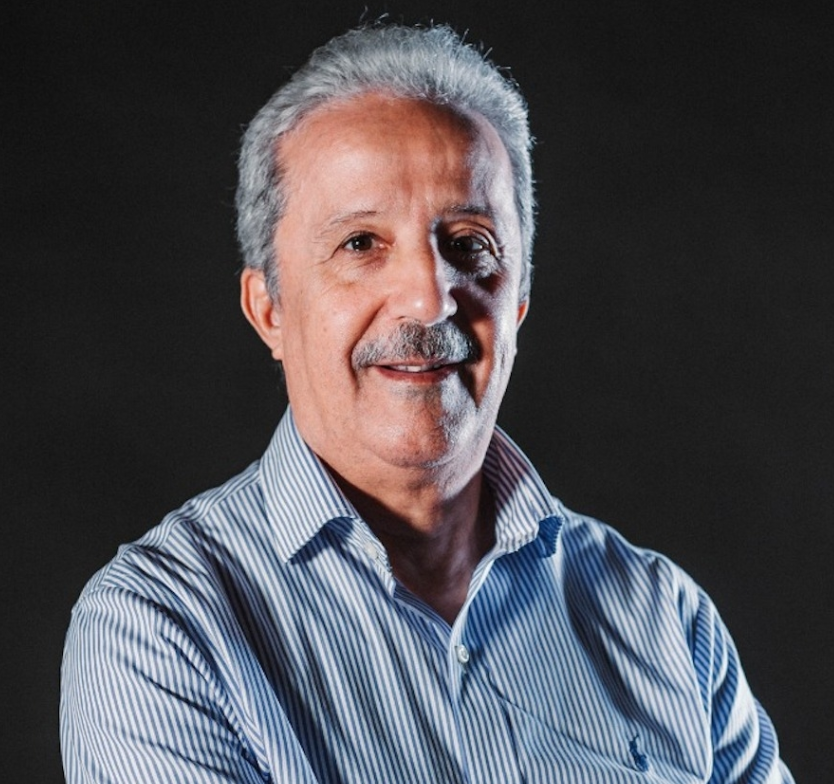
Prof. Dr. Hassan El Bari has been a professor at Ibn Tofail University-Morocco since 1988. He obtained his PhD in Material Sciences from INPL (France) in 1987 and also a "Doctorat d’Etat" in Mechanical Engineering, University Mohamed V-Morocco, 1998. He is the president of the Moroccan Association of Solid Waste. He was Master Degree Coordinator: Waste Management and Recovery, 2010–2014. He has been involved in many funded projects as a coordinator and partner. He has a long experience in teaching waste management, biomass and bioenergy, and biogas technology. He is an Associate Editor in the Cleaner Waste Systems Journal (Elsevier) and a Guest Lecturer at the University of KwaZulu-Natal, South Africa. He is a co-editor of the book "Ecological Sustainable Waste Management–Energetic Utilization of Organic Waste", Mensch und Buch Verlag, Berlin, 2018, ISBN 978-3-86387-935-8, and editor of the book "Waste Management in Developing Countries", ISBN-13: 978-3031280009, Springer, 2023
EDUCATION
Prof. Dr. Hassan El Bari has been a professor at Ibn Tofail University-Morocco since 1988.
He obtained his PhD in Material Sciences from INPL (France) in 1987
and also
"Doctorat d’Etat" in Mechanical Engineering, University Mohamed V-Morocco, 1998
RESEARCH, TEACHING, or OTHER INTERESTS
Renewable Energy, Sustainability and the Environment, Renewable Energy, Sustainability and the Environment, Waste Management and Disposal, Bioengineering
FUTURE PROJECTS
Advanced Biogas technology
Applications Invited Partners
Digestate Management
Applications Invited Partners
Appropriate Waste Management technology for developing countries
Experimental Study of Biogas Flame Stability in Laboratory Coaxial Burners and Domestic Gas Stoves M. Hassene, Y. Jery, C. Berrue, B. Sarh, A. Yontar, H. El Bari, T. Boushaki Combustion Science and Technology, 2026 The current energy context raises the awareness to search for renewable energy sources to lower the dependence on the fossil fuels in our energy mixes and go toward a more sustainable future. Biogas, a renewable fuel obtained from the biological breakdown of biomass, has gained a significant interest lately due to its similarity with CH4. However, because of its high CO2 content, the combustion of this renewable fuel faces a variety of instabilities such as blow-off and liftoff. In this study, the effect of CO2 addition and burner geometry on the laminar combustion of biogas is investigated. For this purpose, the range of CO2 in the fuel was varied from 0% to 70% while maintaining the flame power at 1 kW. an ICCD camera coupled with OH* filter was used to study the chemiluminescence and the effect of the mentioned parameters on the flame front and the combustion characteristics. Four different type of burners (laboratory burners, propane/butane stove, natural gas stove, and biogas stove) are used to assess the geometry effects on the biogas combustion and to determine the range of operating conditions, CO2 in particular, of every gas stove. A gas analyzer is used to measure the NOx and CO emissions. The experiments using the laboratory burners show that the increase in CO2 in the blend enhanced flame instability and increased the liftoff height while the increase in the burner’s diameter helped stabilize the flame and delayed the liftoff. It was also found that the addition of CO2 increased CO and decreased NOx emissions in exhaust gases. The results of biogas combustion in different gas stoves demonstrated that they are not compatible for sustaining a stable flame of the biogas with a high content of CO2 as the blow-off started at 20% CO2 for propane/butane, at 40% for natural gas stove and at 70% CO2 for the biogas stove. The OH* chemiluminescence images show how the CO2 content changed the flame front and altered the combustion chemistry. These findings highlighted the effect CO2 proportion in the biogas mixture on flame behavior for different burners, it is challenging to use the commercial stoves the biogas.
A literature review of slaughterhouse waste valorisation: Techniques, environmental, and economic implications Dennis Ashilenje, Fatma Ashour, Mirko Barz, Veronica Belandria, Alberto Borello, Stéphane Bostyn, Toufik Boushaki, Raffaella Branciari, Joseph K. Bwapwa, Elisa Cerza, Andrea Dell'Orto, Hassan El Bari, Mayuren Govender, Sanae Habchi, Fadoua Karouach, Nourhan H. Khashaba, Lamfeddal Kouisni, Ombretta Marconi, Assunta Marrocchi, Meryem Saber, Brahim Sarh, Cristina Trois, Martina Willenbacher, Volker Wohlgemuth Resources Conservation and Recycling, 2026 • Detailed exploration of diverse methods for valorising slaughterhouse waste. • Examination of innovative valorisation strategies tailored to African contexts. • Conversion of waste through biochemical and advanced energy methods. • Recovery of minerals from waste improves soil fertility and boosts productivity. • Slaughterhouse waste plays a crucial role in fostering circular economy practices. Managing slaughterhouse waste (SHW) is a critical global challenge. Over the past two decades, the focus on sustainable waste management has intensified, with valorisation emerging as a key solution. This review examines the most significant outcomes of recent advancements in SHW valorisation, particularly from 2010 onward, with an emphasis on African contexts, which remain underrepresented in the literature. Notable results include the successful integration of biochemical processes, advanced waste-to-energy technologies, and nutrient recovery techniques. These approaches have demonstrated measurable outcomes such as significant reductions in environmental impact, enhanced energy recovery, and economic benefits for local communities. Case studies from African countries showcase the effectiveness of specific valorisation strategies, including high-efficiency biogas production and resource recovery, offering practical insights for wider adoption and scalability. Organized into 11 sections, the review identifies key research gaps, such as the need for region-specific technologies and policy frameworks and proposes concrete recommendations for advancing circular economy practices. The ultimate aim is to provide a roadmap for researchers, policymakers, and industry professionals to drive the sustainable development of SHW management, contributing to global efforts for waste reduction and resource maximization.
Innovative biogas digester technology Fadoua Karouach, Sanae Habchi, Ihssane Mnaouer, Soumaya Boukrouh, Hassan El Bari Biogas in the Circular Economy Technology Production and Applications, 2025
Kinetic Study Of The Modified Gompertz Model On The Production Of Methane From Coffee Waste Through Anaerobic Digestion Indian Journal of Environmental Protection, 2021
Modified gompertz kinetic study of methane production from anaerobic digestion of recycled paper mill sludge European Biomass Conference and Exhibition Proceedings, 2018