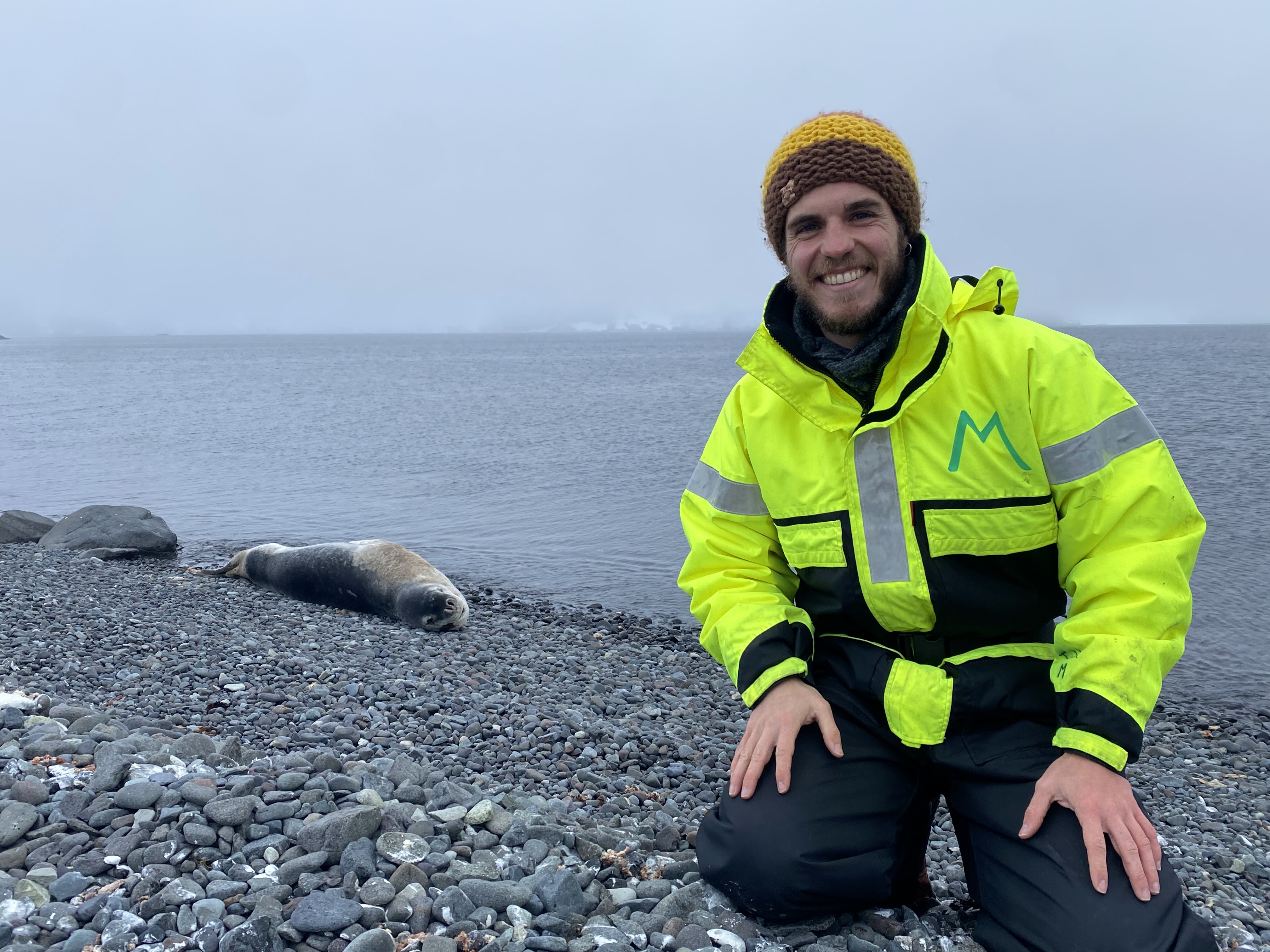
My career began at the university of Alicante focusing on the ecological impacts of desalination plants on benthic assemblages. However, seagrasses caught my attention (and passion) and my research has focused mostly on them since then, from gene expression to long-term meadow-scale variation. My interest is to unravel the effects of human (and natural) environmental stressors on marine plants, with the aim of using this knowledge to better preserve this unique marine ecosystems.
I am currently working with Dr. Procaccini group on the effects of marine heat waves on Posidonia oceanica rhizosphere.
EDUCATION
- Doctor of Philosophy (PhD) in Marine Sciences and Applied Biology (Universidad de Alicante, Spain) and in Interdisciplinary Environmental Sciences (Universidad de Playa Ancha, Chile) (2020-2024). Project entitled “Desalination discharge effects on seagrasses: unravelling mechanisms and novel biomonitoring tools” (Cum Laude), supervised by Prof. Jose Luis Sánchez Lizaso (UA) and Dr. Claudio A. Sáez (UPLA) and developed in collaboration with the Spanish Institute of Oceanography (thesis in .
- Specialist course in Geoinformation Analyses. University of Basque country (UPV) (2020).
- Master’s Degree in Analyses and Management of Mediterranean ecosystems (graduated with distinction), UA (2018-2019).
- Degree and Bachelor in Marine Sciences (graduated with distinction), UA (2014-2018).
Male-biased sensitivity to wastewater effluent exposure in Harpagifer antarcticus from Fildes Bay, King George Island Karen Fabres, Elvira Vergara, Ivan Sola, María José Díaz, Fabio Blanco-Murillo, Fernando Valenzuela, Diana M. Cárdenas, Mark R. Servos, Mario Sanhueza, Gustavo Chiang, Paulina Bahamonde Environmental Chemistry and Ecotoxicology, 2026 Antarctica has experienced a growing human presence in recent decades, with year-round scientific and military stations concentrated along the coast. Wastewater effluents from these settlements represent a growing concern, as they contain pharmaceuticals and personal care products (PPCPs) capable of disrupt endocrine functions in aquatic organisms at environmentally relevant concentrations. This study evaluated the impact of wastewater exposure on the gonadal transcriptome of the Antarctic fish Harpagifer antarcticus , collected nearby human settlements and research stations in Fildes Bay, King George Island. Chemical analysis revealed bioaccumulation of diclofenac, carbamazepine, and fluoxetine in fish muscle. Morphological endpoints indicate significant decreases in male gonadosomatic index (GSI) at impacted sites. Molecular analysis suggested disruption of genes related to reproduction. Females displayed significant overexpression of zp at impacted sites, while males from contaminated areas showed increased expression of both zp and esr1 .Transcriptomic analysis revealed a male-biased response, with enriched GO terms associated to sperm motility, nervous system function, and immune and inflammatory regulation, as well as chemical homeostasis and lipid metabolism. Females were less impacted, exhibiting transcriptomic alterations mainly linked to metabolic homeostasis. Together, these findings suggest that male H. antarcticus are particularly sensitive to wastewater-derived contaminants, with transcriptional shifts serving as early warning signals of impaired reproduction, physiology, and population resilience. This study highlights the vulnerability of Antarctic coastal ecosystems to anthropogenic pressures and underscores the urgent need for improved wastewater management in this fragile environment.
Evaluating physico-chemical and biological impacts of brine discharges for a sustainable desalination development on South America's Pacific coast Iván Sola, Constanza Santana-Anticoy, Roderick Silva-García, Gabriela Pérez-Hernández, Jeniffer Pereira-Rojas, Fabio Blanco-Murillo, María José Díaz, Claudio A. Sáez, Fernanda Rodríguez-Rojas Journal of Hazardous Materials, 2025 The expansion of seawater desalination is presented as a new way to supply fresh water for many coastal regions as an effort to counteract the increasing water scarcity. However, brine discharges also pose significant environmental challenges regarding their potential environmental impacts of marine ecosystems. The main objective of this study was to assess the physico-chemical impact of the brine discharges from Seawater Reverse Osmosis (SWRO) desalination plants on South America pacific coastal ecosystems, assessing its potential physical-chemical impact (temperature, salinity, density and dissolved oxygen) on the receiving marine environment, and evaluating the oxidative and osmotic stress responses of the red macroalgae Rhodymenia corallina through diagnostic biomarkers in field-transplantation experiments. Our results showed that the increase over natural salinity in the affected area was less than 3.5 % in a radius of 50 m from the discharge point. Also, we demonstrated that the brine discharges increase the density but not significant affect the temperature and dissolved oxygen of the marine environment. In addition, diagnostic biomarkers showed a negative effect on oxidative, osmotic and antioxidant stress responses in R. corallina after two days of brine exposure, particularly at the nearest brine diffuser transplantation site. However, after five days, antioxidant and osmotic parameters exhibited full recovery, indicating the cessation of the redox imbalance. Based on the results obtained, we demonstrated that the use of appropriate mitigation measures combined with an appropriate oceanographic location of the submarine outfall, would ensure a sustainable desalination operation without generating significant environmental impacts on the coastal ecosystems. • Maximum brine salinity increase was less than 3.5 % below 50 m from discharge point. • Brine discharge increased density but did not alter temperature or dissolved oxygen. • Brine discharge induced short-term (2 days) stress responses in R. corallina. • R. corallina transplants showed no cellular damage after 5 days of brine exposure. • Specific regulations to limit brine discharges salinity are highly recommended.
The evolutive role of shoot apical meristems in the adaptation of angiosperms to life at sea and the jump to potential environmental biotechnology applications Fabio Blanco-Murillo, Lázaro Marín-Guirao, Fernanda Rodríguez-Rojas, Iván Sola, Estela Carbonell-Garzón, José Luis Sánchez-Lizaso, Claudio A. Sáez Science of the Total Environment, 2024 Seagrasses have adapted to a submerged lifestyle in seawater through a complex set of evolutionary processes. However, they show sensitivity to increases in natural salinity levels such as those commonly found in discharges of desalination plants, which have exponentially grown due to water scarcity in highly populated temperate areas, such as the Mediterranean basin. This study assessed the effects of brine-derived hypersalinity on the Mediterranean seagrass Posidonia oceanica , focusing on the metabolic responses of shoot apical meristems (SAMs). Although most physiological and genetic studies have used leaves, SAMs are more directly correlated with plant survival and might be more responsive to salinity stress. The experiments were: a controlled mesocosm of more than six practical salinity units (psu) over natural levels using either artificial salts or desalination brine and field transplantation experiments comparing two sites following the dilution plume of the brine (+5 and + 2 psu) with control. Hydrogen peroxide (H 2 O 2 ), thiobarbituric acid reactive substances (TBARS), and ascorbate were measured to determine oxidative stress and damage, as well as relative expression of genes related to osmotic regulation and oxidative responses. Overall, relative expression of genes related to osmotic regulation ( SOS1, SOS3, AKT 2/3 ) and oxidative stress ( STRK1, CAT, MnSOD, FeSOD, APX, GR ) was higher in SAMs at higher brine exposures, indicating a more active metabolic response in this organ. Similarly, reactive oxygen species (ROS) production and lipid peroxidation were higher closer to brine discharge and total ascorbate lower, indicating a correlative response with stressor intensity. These findings confirm that SAMs play an essential role in P. oceanica hypersalinity responses and its adaptation to life in the marine environment. Finally, the use of P. oceanica SAMs in this study is highly recommended for an early detection of threats caused by desalination brines that may cause physiological damage and meadow regression. • SAMs physiological/metabolic responses are reliable biomonitoring tools. • SAMs responses to hypersalinity confirm their key role for plants to adapt to the sea. • Laboratory/field approach rises as the future for R&D for biodiagnosis.
Transcriptomic profiles and diagnostic biomarkers in the Mediterranean seagrasses Posidonia oceanica and Cymodocea nodosa reveal mechanistic insights of adaptative strategies upon desalination brine stress Fernanda Rodríguez-Rojas, Camilo Navarrete, Consuelo Rámila, Patricio Tapia-Reyes, Paula S.M. Celis-Plá, Christian González, Jeniffer Pereira-Rojas, Fabio Blanco-Murillo, Pablo Moreno, Catalina Gutiérrez-Campos, José Luis Sánchez-Lizaso, Claudio A. Sáez Science of the Total Environment, 2024 Seawater desalination by reverse osmosis is growing exponentially due to water scarcity. Byproducts of this process (e.g. brines), are generally discharged directly into the coastal ecosystem, causing detrimental effects, on benthic organisms. Understanding the cellular stress response of these organisms (biomarkers), could be crucial for establishing appropriate salinity thresholds for discharged brines. Early stress biomarkers can serve as valuable tools for monitoring the health status of brine-impacted organisms, enabling the prediction of long-term irreversible damage caused by the desalination industry. In this study, we conducted laboratory-controlled experiments to assess cellular and molecular biomarkers against brine exposure in two salinity-sensitive Mediterranean seagrasses: Posidonia oceanica and Cymodocea nodosa. Treatments involved exposure to 39, 41, and 43 psu, for 6 h and 7 days. Results indicated that photosynthetic performance remained unaffected across all treatments. However, under 43 psu, P. oceanica and C. nodosa exhibited lipid oxidative damage, which occurred earlier in P. oceanica. Additionally, P. oceanica displayed an antioxidant response at higher salinities by accumulating phenolic compounds within 6 h and ascorbate within 7 d; whereas for C. nodosa the predominant antioxidant mechanisms were phenolic compounds accumulation and total radical scavenging activity, which was evident after 7 d of brines exposure. Finally, transcriptomic analyses in P. oceanica exposed to 43 psu for 7 days revealed a poor up-regulation of genes associated with brassinosteroid response and abiotic stress response, while a high down-regulation of genes related to primary metabolism was detected. In C. nodosa, up-regulated genes were involved in DNA repair, cell cycle regulation, and reproduction, while down-regulated genes were mainly associated with photosynthesis and ribosome assembly. Overall, these findings suggest that 43 psu is a critical salinity-damage threshold for both seagrasses; and despite the moderate overexpression of several transcripts that could confer salt tolerance, genes involved in essential biological processes were severely downregulated.
Evaluating the extent and impact of the extreme Storm Gloria on Posidonia oceanica seagrass meadows Candela Marco-Méndez, Núria Marbà, Ángel Amores, Javier Romero, Mario Minguito-Frutos, María García, Jordi F. Pagès, Patricia Prado, Jordi Boada, José Luis Sánchez-Lizaso, Juan Manuel Ruiz, Gregori Muñoz-Ramos, Neus Sanmartí, Elvira Mayol, Xavier Buñuel, Jaime Bernardeau-Esteller, Pedro Clemente Navarro-Martinez, Lázaro Marín-Guirao, Carlos Morell, Marlene Wesselmann, Rita Font, Iris E. Hendriks, Xavier Seglar, Judith Camps-Castella, Eli Bonfill, Aurora Requena-Gutiérrez, Fabio Blanco-Murillo, Javier Aguilar-Escribano, Santiago Jimenez-Gutierrez, Joaquín Martínez-Vidal, Juan Eduardo Guillén, Maria Elena Cefalì, Marta Pérez, Marta Marcos, Teresa Alcoverro Science of the Total Environment, 2024 Extreme storms can trigger abrupt and often lasting changes in ecosystems by affecting foundational (habitat-forming) species. While the frequency and intensity of extreme events are projected to increase under climate change, its impacts on seagrass ecosystems remain poorly documented. In January 2020, the Spanish Mediterranean coast was hit by Storm Gloria, one of the most devastating recent climate events in terms of intensity and duration. We conducted rapid surveys of 42 Posidonia oceanica meadows across the region to evaluate the extent and type of impact (burial, unburial and uprooting). We investigated the significance of oceanographic (wave impact model), geomorphological (latitude, depth, exposure), and structural (patchiness) factors in predicting impact extent and intensity. The predominant impact of Storm Gloria was shoot unburial. More than half of the surveyed sites revealed recent unburial, with up to 40 cm of sediment removed, affecting over 50 % of the meadow. Burial, although less extensive, was still significant, with 10-80 % of meadow cover being buried under 7 cm of sediment, which is considered a survival threshold for P. oceanica. In addition, we observed evident signs of recently dead matte in some meadows and large amounts of detached drifting shoots on the sea bottom or accumulated as debris on the beaches. Crucially, exposed and patchy meadows were much more vulnerable to the overall impact than sheltered or continuous meadows. Given how slow P. oceanica is able to recover after disturbances, we state that it could take from decades to centuries for it to recoup its losses. Seagrass ecosystems play a vital role as coastal ecological infrastructure. Protecting vulnerable meadows from anthropogenic fragmentation is crucial for ensuring the resilience of these ecosystems in the face of the climate crisis.
Desalination brine effects beyond excess salinity: Unravelling specific stress signaling and tolerance responses in the seagrass Posidonia oceanica. Fabio Blanco-Murillo, Lázaro Marín-Guirao, Iván Sola, Fernanda Rodríguez-Rojas, Juan M. Ruiz, José Luis Sánchez-Lizaso, Claudio A. Sáez Chemosphere, 2023 Desalination has been proposed as a global strategy for tackling freshwater shortage in the climate change era. However, there is a concern regarding the environmental effects of high salinity brines discharged from desalination plants on benthic communities. In this context, seagrasses such as the Mediterranean endemic and ecologically important Posidonia oceanica have shown high vulnerability to elevated salinities. Most ecotoxicological studies regarding desalination effects are based on salinity increments using artificial sea salts, although it has been postulated that certain additives within the industrial process of desalination may exacerbate a negative impact beyond just the increased salinities of the brine. To assess the potential effect of whole effluent brines on P. oceanica, mesocosm experiments were conducted within 10 days, simulating salinity increment with either artificial sea salts or brines from a desalination plant (at 43 psμ, 6 psμ over the natural 37 psμ). Morphometrical (growth and necrosis), photochemical (PSII chlorophyll a fluorometry), metabolic, such as hydrogen peroxide (H2O2), thiobarbituric reactive substances (TBARS) and ascorbate/dehydroascorbate (ASC/DHA), and molecular (expression of key tolerance genes) responses were analyzed in each different treatment. Although with a still positive leaf growth, associated parameters decreased similarly for both artificial sea salt and brine treatments. Photochemical parameters did not show general patterns, although only P. oceanica under brines demonstrated greater energy release through heat (NPQ). Lipid peroxidation and upregulation of genes related to oxidative stress (GR, MnSOD, and FeSOD) or ion exclusion (SOS3 and AKT2/3) were similarly incremented on both hypersalinity treatments. Conversely, the ASC/DHA ratio was significantly lower, and the expression of SOS1, CAT, and STRK1 was increased under brine influence. This study revealed that although metabolic and photochemical differences occurred under both hypersalinity treatments, growth (the last sign of physiological detriment) was similarly compromised, suggesting that the potential effects of desalination are mainly caused by brine-associated salinities and are not particularly related to other industrial additives.
A risk assessment on Zostera chilensis, the last relict of marine angiosperms in the South-East Pacific Ocean, due to the development of the desalination industry in Chile Fabio Blanco-Murillo, María José Díaz, Fernanda Rodríguez-Rojas, Camilo Navarrete, Paula S.M. Celis-Plá, José Luis Sánchez-Lizaso, Claudio A. Sáez Science of the Total Environment, 2023 Seagrasses, which are considered among the most ecologically valuable and endangered coastal ecosystems, have a narrowly limited distribution in the south-east Pacific, where Zostera chilensis is the only remaining relict. Due to water scarcity, desalination industry has grown in the last decades in the central-north coasts of Chile, which may be relevant to address in terms of potential impacts on benthic communities due to their associated high-salinity brine discharges to subtidal ecosystems. In this work, we assessed ecophysiological and cellular responses to desalination-extrapolable hypersalinity conditions on Z. chilensis. Mesocosms experiments were performed for 10 days, where plants were exposed to 3 different salinity treatments: 34 psu (control), 37 psu and 40 psu. Photosynthetic performance, H2O2 accumulation, and ascorbate content (reduced and oxidized) were measured, as well as relative gene expression of enzymes related to osmotic regulation and oxidative stress; these, at 1, 3, 6 and 10 days. Z. chilensis showed a decrease in photosynthetic parameters such as electron transport rate (ETRmax) and saturation irradiance (EkETR) under hypersalinity treatments, while non-photochemical quenching (NPQmax) presented an initial increment and a subsequent decline at 40 psu. H2O2 levels increased with hypersalinity, while ascorbate and dehydroascorbate only increased under 37 psu, although decreased along the experimental period. Increased salinities also triggered the expression of genes related to ion transport and osmolyte syntheses, but salinity-dependent up-regulated genes were mostly those related to the reactive oxygen species metabolism. The relict seagrass Z. chilensis has shown to withstand increased salinities that may be extrapolable to desalination effects in the short-term. As the latter is not fully clear in the long-term, and considering the restricted distribution and ecological importance, direct brine discharges to Z. chilensis meadows may not be recommended.
Male-biased sensitivity to wastewater effluent exposure in Harpagifer antarcticus from Fildes Bay, King George Island K Fabres, E Vergara, I Sola, MJ Díaz, F Blanco-Murillo, F Valenzuela, ... Environmental Chemistry and Ecotoxicology , 2025 2025
Evaluating physico-chemical and biological impacts of brine discharges for a sustainable desalination development on South America’s Pacific coast I Sola, C Santana-Anticoy, R Silva-García, G Pérez-Hernández, ... Journal of Hazardous Materials 489, 137464 , 2025 2025 Citations: 13
The evolutive role of shoot apical meristems in the adaptation of angiosperms to life at sea and the jump to potential environmental biotechnology applications F Blanco-Murillo, L Marín-Guirao, F Rodríguez-Rojas, I Sola, ... Science of the Total Environment 955, 176917 , 2024 2024
The halotolerant white sea anemone Anthothoe chilensis, highly abundant in brine discharges zones, as a promising biomonitoring species for evaluating the impacts of … G Pérez-Hernández, D Morales, J Pereira-Rojas, MJ Díaz, ... Desalination 581, 117612 , 2024 2024 Citations: 10
Metabolic responses to desalination brine discharges in field-transplanted Posidonia oceanica: Advances for the development of specific early warning biomarkers F Blanco-Murillo, L Marín-Guirao, I Sola, E Carbonell-Garzón, ... Desalination 576, 117395 , 2024 2024 Citations: 8
Transcriptomic profiles and diagnostic biomarkers in the Mediterranean seagrasses Posidonia oceanica and Cymodocea nodosa reveal mechanistic insights of adaptative strategies … F Rodríguez-Rojas, C Navarrete, C Rámila, P Tapia-Reyes, ... Science of the Total Environment 916, 170326 , 2024 2024 Citations: 9
Evaluating the extent and impact of the extreme Storm Gloria on Posidonia oceanica seagrass meadows C Marco-Méndez, N Marbà, Á Amores, J Romero, M Minguito-Frutos, ... Science of The Total Environment 908, 168404 , 2024 2024 Citations: 19
Desalination discharge effects on seagrasses: unraveling mechanisms and novel biomonitoring tools F Blanco Murillo Desalination discharge effects on seagrasses: unraveling mechanisms and … , 2024 2024
Desalination brine effects beyond excess salinity: Unravelling specific stress signaling and tolerance responses in the seagrass Posidonia oceanica. F Blanco-Murillo, L Marín-Guirao, I Sola, F Rodríguez-Rojas, JM Ruiz, ... Chemosphere 341, 140061 , 2023 2023 Citations: 26
An outbreak of the invasive macroalgae Rugulopteryx okamurae in Alicante Bay and its colonization on dead Posidonia oceanica matte M Terradas-Fernández, C Pena-Martín, M Valverde-Urrea, A Gran, ... Aquatic Botany 189, 103706 , 2023 2023 Citations: 22
A risk assessment on Zostera chilensis, the last relict of marine angiosperms in the South-East Pacific Ocean, due to the development of the desalination industry in Chile F Blanco-Murillo, MJ Díaz, F Rodríguez-Rojas, C Navarrete, ... Science of the Total Environment 883, 163538 , 2023 2023 Citations: 22
Desalination effects on macroalgae (part b): Transplantation experiments at brine-impacted sites with Dictyota spp. from the Pacific Ocean and Mediterranean Sea PT Muñoz, F Rodríguez-Rojas, PSM Celis-Plá, A López-Marras, ... Frontiers in Marine Science 10, 1042799 , 2023 2023 Citations: 17
Desalination effects on macroalgae (part A): Laboratory-controlled experiments with Dictyota spp. from the Pacific Ocean and Mediterranean Sea PT Muñoz, F Rodríguez-Rojas, PSM Celis-Pla, A Lopez-Marras, ... Frontiers in Marine Science 10, 1042782 , 2023 2023 Citations: 9
An outbreak of the invasive macroalgae Rugulopteryx okamurae in Alicante Bay and its colonization on dead Posidonia oceanica matte M Terradas, C Pena-Martín, M Valverde Urrea, A Gran García, ... 2023
Posidonia oceanica L.(Delile) meadows regression: Long-term affection may be induced by multiple impacts F Blanco-Murillo, Y Fernández-Torquemada, A Garrote-Moreno, CA Sáez, ... Marine environmental research 174, 105557 , 2022 2022 Citations: 38
Spatiotemporal Trends Observed in 20 Years of Posidonia oceanica Monitoring along the Alicante Coast, Spain F Blanco-Murillo, S Jimenez-Gutierrez, J Martínez-Vidal, JE Guillén, ... Water 14 (3), 274 , 2022 2022 Citations: 15
Application of salinity thresholds in Spanish brine discharge regulations: Energetic and environmental implications RN Barrio, I Sola, F Blanco-Murillo, Y del-Pilar-Ruso, ... Desalination 501, 114901 , 2021 2021 Citations: 24
Red para la Planificación, Seguimiento, Mejora de una actividad docente interuniversitaria en el Grado de Ciencias del Mar: Prácticas UA-Vigo Y Del-Pilar-Ruso, M Terradas, AA Ramos-Esplá, F Gimenez-Casalduero, ... Universitat d’Alacant. Institut de Ciències de l’Educació , 2020 2020
Influence of the change of trawling otter boards on demersal species’ catches F Blanco Murillo, JL Sánchez Lizaso Front. Mar. Sci. Conference Abstract: XX Iberian Symposium on Marine Biology … , 2019 2019
Evolución y estado actual de las praderas de Posidonia oceanica (L.) Delile en la provincia de Alicante (Mediterráneo occidental) F Blanco Murillo 2018 Citations: 2
MOST CITED SCHOLAR PUBLICATIONS
Posidonia oceanica L.(Delile) meadows regression: Long-term affection may be induced by multiple impacts F Blanco-Murillo, Y Fernández-Torquemada, A Garrote-Moreno, CA Sáez, ... Marine environmental research 174, 105557 , 2022 2022 Citations: 38
Desalination brine effects beyond excess salinity: Unravelling specific stress signaling and tolerance responses in the seagrass Posidonia oceanica. F Blanco-Murillo, L Marín-Guirao, I Sola, F Rodríguez-Rojas, JM Ruiz, ... Chemosphere 341, 140061 , 2023 2023 Citations: 26
Application of salinity thresholds in Spanish brine discharge regulations: Energetic and environmental implications RN Barrio, I Sola, F Blanco-Murillo, Y del-Pilar-Ruso, ... Desalination 501, 114901 , 2021 2021 Citations: 24
An outbreak of the invasive macroalgae Rugulopteryx okamurae in Alicante Bay and its colonization on dead Posidonia oceanica matte M Terradas-Fernández, C Pena-Martín, M Valverde-Urrea, A Gran, ... Aquatic Botany 189, 103706 , 2023 2023 Citations: 22
A risk assessment on Zostera chilensis, the last relict of marine angiosperms in the South-East Pacific Ocean, due to the development of the desalination industry in Chile F Blanco-Murillo, MJ Díaz, F Rodríguez-Rojas, C Navarrete, ... Science of the Total Environment 883, 163538 , 2023 2023 Citations: 22
Evaluating the extent and impact of the extreme Storm Gloria on Posidonia oceanica seagrass meadows C Marco-Méndez, N Marbà, Á Amores, J Romero, M Minguito-Frutos, ... Science of The Total Environment 908, 168404 , 2024 2024 Citations: 19
Desalination effects on macroalgae (part b): Transplantation experiments at brine-impacted sites with Dictyota spp. from the Pacific Ocean and Mediterranean Sea PT Muñoz, F Rodríguez-Rojas, PSM Celis-Plá, A López-Marras, ... Frontiers in Marine Science 10, 1042799 , 2023 2023 Citations: 17
Spatiotemporal Trends Observed in 20 Years of Posidonia oceanica Monitoring along the Alicante Coast, Spain F Blanco-Murillo, S Jimenez-Gutierrez, J Martínez-Vidal, JE Guillén, ... Water 14 (3), 274 , 2022 2022 Citations: 15
Evaluating physico-chemical and biological impacts of brine discharges for a sustainable desalination development on South America’s Pacific coast I Sola, C Santana-Anticoy, R Silva-García, G Pérez-Hernández, ... Journal of Hazardous Materials 489, 137464 , 2025 2025 Citations: 13
The halotolerant white sea anemone Anthothoe chilensis, highly abundant in brine discharges zones, as a promising biomonitoring species for evaluating the impacts of … G Pérez-Hernández, D Morales, J Pereira-Rojas, MJ Díaz, ... Desalination 581, 117612 , 2024 2024 Citations: 10
Transcriptomic profiles and diagnostic biomarkers in the Mediterranean seagrasses Posidonia oceanica and Cymodocea nodosa reveal mechanistic insights of adaptative strategies … F Rodríguez-Rojas, C Navarrete, C Rámila, P Tapia-Reyes, ... Science of the Total Environment 916, 170326 , 2024 2024 Citations: 9
Desalination effects on macroalgae (part A): Laboratory-controlled experiments with Dictyota spp. from the Pacific Ocean and Mediterranean Sea PT Muñoz, F Rodríguez-Rojas, PSM Celis-Pla, A Lopez-Marras, ... Frontiers in Marine Science 10, 1042782 , 2023 2023 Citations: 9
Metabolic responses to desalination brine discharges in field-transplanted Posidonia oceanica: Advances for the development of specific early warning biomarkers F Blanco-Murillo, L Marín-Guirao, I Sola, E Carbonell-Garzón, ... Desalination 576, 117395 , 2024 2024 Citations: 8
Evolución y estado actual de las praderas de Posidonia oceanica (L.) Delile en la provincia de Alicante (Mediterráneo occidental) F Blanco Murillo 2018 Citations: 2
Male-biased sensitivity to wastewater effluent exposure in Harpagifer antarcticus from Fildes Bay, King George Island K Fabres, E Vergara, I Sola, MJ Díaz, F Blanco-Murillo, F Valenzuela, ... Environmental Chemistry and Ecotoxicology , 2025 2025
The evolutive role of shoot apical meristems in the adaptation of angiosperms to life at sea and the jump to potential environmental biotechnology applications F Blanco-Murillo, L Marín-Guirao, F Rodríguez-Rojas, I Sola, ... Science of the Total Environment 955, 176917 , 2024 2024
Desalination discharge effects on seagrasses: unraveling mechanisms and novel biomonitoring tools F Blanco Murillo Desalination discharge effects on seagrasses: unraveling mechanisms and … , 2024 2024
An outbreak of the invasive macroalgae Rugulopteryx okamurae in Alicante Bay and its colonization on dead Posidonia oceanica matte M Terradas, C Pena-Martín, M Valverde Urrea, A Gran García, ... 2023
Red para la Planificación, Seguimiento, Mejora de una actividad docente interuniversitaria en el Grado de Ciencias del Mar: Prácticas UA-Vigo Y Del-Pilar-Ruso, M Terradas, AA Ramos-Esplá, F Gimenez-Casalduero, ... Universitat d’Alacant. Institut de Ciències de l’Educació , 2020 2020
Influence of the change of trawling otter boards on demersal species’ catches F Blanco Murillo, JL Sánchez Lizaso Front. Mar. Sci. Conference Abstract: XX Iberian Symposium on Marine Biology … , 2019 2019