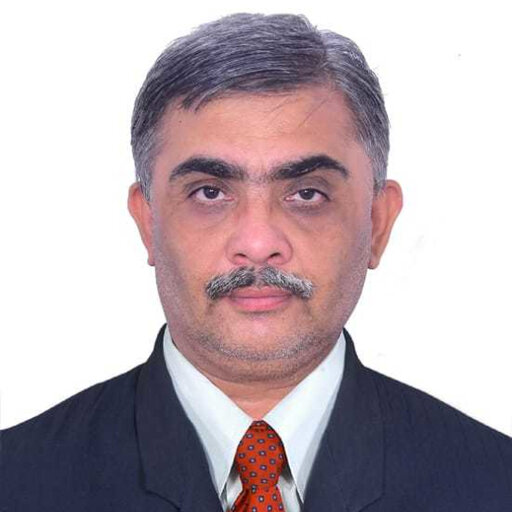
I am having 30 years of Teaching Experience out of which 8 years as Principal and 7 years as Dean. I am a M.Tech Graduate from IIT Madras in Microelectronics and VLSI Design, and PhD from JNTU Hyderabad in Nanotechnology with Gold Medal. I have Executed 14 Funded Projects with 18 patents granted. I have guided 13 PhD students under Anna University and VISTAS. I have 70 Scopus indexed International Journals and 60 WOS journals with a total 320 Publications to my credits. I have executed 17 Consultancy Projects for the cost of 60 Lakhs. I have more than 60 International Conference Publications. Forty best Conference paper awards with Distinguished Faculty, Researcher and Excellence in teaching awards, reviewer and editor for 16 International Journals with nine books Published. I have more than a decade of Academic, Research and administrative experience. Also Three times NAAC and NBA Committee External member and also Interview Panel Member for DRDO and ISRO.
EDUCATION
PhD in Nanoelectronics
M.Tech in Microelectronics
B.E in ECE
D.Tech in biomedical engg
RESEARCH, TEACHING, or OTHER INTERESTS
Biomedical Engineering, Artificial Intelligence, Electrical and Electronic Engineering, Materials Science
80
Scopus Publications
8367
Scholar Citations
55
Scholar h-index
95
Scholar i10-index
Scopus Publications
Real-Time Speed Detection in Sports Events Using Cloud-Sensor Fusion with Support Vector Machines E. N. Ganesh, Mothiram Rajasekaran, K. Sangeethalakshmi, S. Murugan, S. Karthikeyan, Senthil P 2024 International Conference on Smart Technologies for Sustainable Development Goals Icstsdg 2024, 2025 This research presents an innovative approach to monitoring sports events for real-time speed detection using Support Vector Machines (SVM) and cloud-sensor fusion technologies. The suggested solution takes use of cloud computing to efficiently process and analyze data by combining feeds from many sensors placed strategically around the sports stadium. The effectiveness of this method is shown by practical studies carried out in real-life sporting contexts, particularly in relation to the monitoring of athletes' speeds. In comparison to more traditional methods, the results show our approach significantly improves calculation speed and accuracy. A strong option can reliably identify speeds in the dynamic and fast-paced environment of athletic events is the combination of sensor data in the cloud with SVM -based classification algorithms. This development shows potential for several uses, such as optimizing training, real-time event streaming, and performance assessment. It provides a complex but realistic framework for detecting sports speeds in real-time, which improves viewers' understanding of athletes' performances and the quality of the games they watch.
Multi-class segmentation skin diseases using improved tuna swarm-based U-EfficientNet Manikandan Rajagopal, Shubhangi N. Ghate, Rajeswari P, E. N. Ganesh Journal of Engineering and Applied Science, 2024 Early location of melanoma, a dangerous shape of skin cancer, is basic for patients. Indeed, for master dermatologists, separating between threatening and generous melanoma could be a troublesome errand. Surgical extraction taken after early determination of melanoma is at its way to dispense with the malady that will result in passing. Extraction of generous injuries, on the other hand, will result in expanded dismalness and superfluous wellbeing care costs. Given the complexity and likeness of skin injuries, it can be troublesome to create an accurate determination. The proposed EfficientNet and UNet are combined and arrange to extend division exactness. Also, to decrease data misfortune amid the learning stage, adjusted fish swarm advancement (IMSO) is utilized to fine-tune the U-EfficientNet’s movable parameters. In this paper, a ViT-based design able to classify melanoma versus noncancerous injuries is displayed. On the HAM1000 and ISIC-2018 datasets, the proposed ViT demonstrated accomplished the normal precision of 99.78% and 10.43% FNR with computation time of 134.4632s of ISIC-2018 datasets. The proposed ViT show accomplished the normal exactness of 99.16% and 9.38% FNR in with computation time of 133.4782s of HAM1000 dataset.
Enhancing 5G network performance through effective resource management with network slicing Nagarajan Suganthi, Enthrakandi Narasimhan Ganesh, Elangovan Guruva Reddy, Vijayaraman Balakumar, Thangam Ilakkiya, Mageshkumar Naarayanasamy Varadarajan, Venkatachalam Ramesh Babu International Journal of Electrical and Computer Engineering, 2024 The immense growth of mobile networks leads to versatile applications and new demands. The improved concert, transferability, flexibility, and performance of innovative network services are applied in diversified fields. More unique networking concepts are incorporated into state-of-the-art mobile technologies to expand these dynamic features further. This paper presents a novel system architecture of slicing and pairing networks with intra-layer and inter-layer functionalities in 5th generation (5G) mobile networks. The radio access network layer slices and the core network layer slices are paired up using the network slicing pairing functionalities. The physical network elements of such network slices will be logically assigned entities called softwarization of the network. Such a novel system architecture called network sliced softwarization of 5G mobile networks (NSS-5G) has shown better performances in terms of end-to-end delay, total throughput, and resource utilization when compared to traditional mobile networks. Thus, effective resource management is achieved using NSS-5G. This study will pave the way for future softwarization of heterogeneous mobile applications.
Network intrusion detection system by applying ensemble model for smart home Malothu Amru, Raju Jagadeesh Kannan, Enthrakandi Narasimhan Ganesh, Surulivelu Muthumarilakshmi, Kuppan Padmanaban, Jeyaprakash Jeyapriya, Subbiah Murugan International Journal of Electrical and Computer Engineering, 2024 The exponential advancements in recent technologies for surveillance become an important part of life. Though the internet of things (IoT) has gained more attention to develop smart infrastructure, it also provides a large attack surface for intruders. Therefore, it requires identifying the attacks as soon as possible to provide a secure environment. In this work, the network intrusion detection system, by applying the ensemble model (NIDSE) for Smart Homes is designed to identify the attacks in the smart home devices. The problem of classifying attacks is considered a classification predictive modeling using eXtreme gradient boosting (XGBoosting). It is an ensemble approach where the models are added sequentially to correct the errors until no further improvements or high performance can be made. The performance of the NIDSE is tested on the IoT network intrusion (IoT-NI) dataset. It has various types of network attacks, including host discovery, synchronized sequence number (SYN), acknowledgment (ACK), and hypertext transfer protocol (HTTP) flooding. Results from the cross-validation approach show that the XGBoosting classifier classifies the nine attacks with micro average precision of 94% and macro average precision of 85%.
A novel breast cancer diagnostic using convolutional squared deviation neural network classifier with Al-Biruni Earth Radius optimization in medical IoT system G. Mohan, Muhammadu Sathik Raja, S. Swathi, E.N. Ganesh E Prime Advances in Electrical Engineering Electronics and Energy, 2024 Accurate and effective breast cancer diagnosis is crucial for breast cancer early rehabilitation and treatment in the IoT medical environment. Life has changed dramatically for the Internet of Things over the past few years as a result of the development of artificial intelligence and data mining technologies, which offer methods for analyzing both current and past data. In this study, we present an IoT-based medical diagnosis system that can successfully discriminate malignant individuals from positive individuals in an IoT environment to address the challenge of early breast cancer detection. An innovative optimization technique built on the Advanced Al-Biruni Earth Radius (ABER) optimization algorithm improved the classification of breast cancer cases. We suggest semantic picture segmentation of breast cancer histology in this article. The enhanced U-Net architecture for map partitioning is partitioned concurrently. Then, regions of interest are extracted using segmentation, and morphological and texture features are computed. A Convolutional Squared Deviation Neural Network Classifier (CSDNN) classifies tumors into six groups based on specific criteria. Using the Wisconsin Breast Cancer Diagnosis (WDBC) dataset, we evaluated the suggested methodology. A series of simulations was run to show the ABER-CSDNN method's superior performance, and the results reveal promising performance when compared to the most recent state-of-the-art techniques. Accuracy of proposed method achieves 99.12%.
IoT Applications in Wildlife Conservation: Tracking and Protecting Endangered Species R.Reena Roy, Ramakrishnan Raman, M. Amanullah, Vijay Kumar Pandey, E.N. Ganesh 7th International Conference on Electronics Communication and Aerospace Technology Iceca 2023 Proceedings, 2024 Human activity degrades natural environments, and wildlife protection is crucial. Recent technological advances have improved animal monitoring and preservation activities. This research provides a real-time wildlife monitoring and analysis system using the IoT (IoT) and machine learning, specifically the Random Forest algorithm. The proposed method uses a network of IoT devices, including motion sensors and cameras. In real-time, these sensors generate massive volumes of diverse data regarding animal movement, behavior, and environmental variables. The Random Forest technique manages this data flow and gets significant insights since it can handle high-dimensional datasets and missing values. A large dataset of animal activity, environmental, and habitat characteristics is used to train the machine learning model. The Random Forest model outperforms existing classification algorithms in a rigorous assessment procedure, allowing exact species identification. Wildlife conservationists and academics may utilize the system's user-friendly interface to engage with data and see real-time analytics. This interface helps animal population protection by supporting decision-making. It shows the usefulness of the suggested IoT-based wildlife monitoring system and Random Forest algorithm in real-time species recognition and behavior analysis. Technology and advanced machine learning may boost conservation efforts and ensure a sustainable coexistence between people and animals in their natural environments.
Remote Monitoring and Analytics For Cloud-Based Drip Saline Fluid Management System J. Gnanasoundharam, G. Sudha, J. Alphas Jeba Singh, M. Birunda, E. N. Ganesh Proceedings of the 5th International Conference on Smart Electronics and Communication Icosec 2024, 2024 Drip saline fluid administration in hospitals can be better monitored and managed with the help of cloud-based technology. Intravenous treatment and postoperative recovery are two instances when drip saline fluid therapy is essential. The proposed system uses the Internet of Things (IoT) to remotely monitor vital metrics, including fluid flow rate, infused volume, and patient vital signs while delivering saline fluids. Using Raspberry Pi, the system gathers sensor data, processes it, sends it to the cloud, integrates it with the cloud, and triggers abnormal notification alerts. Accurate and timely fluid delivery can significantly improve patient health and reduce the risk of complications when monitored manually. When the system detects any abnormal condition, such as a drop in the predicted flow rate or an unexpected and concerning shift in patient vital signs, it sends a message to the relevant medical personnel. Healthcare providers can better manage their patients’ fluid treatment with accurate and up-to-date information through cloud-based analytics. Insights and suggestions for action are gathered from the data by smart systems. Doctors can detect patterns, predict difficulties, and optimize their patients’ fluid management plans by analyzing data. The system’s remote access features allow doctors to check patients and track their fluid treatment from anywhere. Improved patient outcomes and more efficiency in healthcare settings are the ultimate objectives of this system.
IoT-Embedded Smart Clothing with CNN for Improved Spatial Awareness in the Visually Impaired Aarthy. S.T, Raveendra N Amarnath, B. Gopi, R. Selvakumar, E.N. Ganesh, S. Sujatha 2nd International Conference on Intelligent Cyber Physical Systems and Internet of Things Icoici 2024 Proceedings, 2024 Smart clothes that include the Internet of Things (IoT) and convolutional neural network (CNN) technologies provide a fresh approach to helping the vision impaired with spatial awareness. This work presents a system that uses IoT sensors built into the fabric to get real-time location, orientation, and other environmental data. Using a CNN architecture, this data is processed to provide user feedback through tactile or auditory signals, allowing visually impaired individuals to navigate their environments more effectively. The efficacy of this technology was assessed by comprehensive user trials, which revealed significant improvements in movement and spatial awareness. IoT smart clothes with CNN help visually impaired people feel more confident and independent by giving them real-time input about their environment. A new possibility for assistive technology is demonstrated by how wearable technology may help the visually impaired. This technique improves spatial awareness and encourages accessibility in the design of assistive devices by seamlessly integrating IoT and CNN technologies into ordinary clothing.
Cloud-Based Predictive Modeling of Energy Expenditure from Wearable Data using Random Forests M. Vadivel, Rajeshkumar Sampathrajan, Balaji Madhavan, G. Suresh, E. N. Ganesh, S. Srinivasan 2024 1st International Conference on Innovations in Communications Electrical and Computer Engineering Icicec 2024, 2024 Energy expenditure (EE) estimation using physiological signs is becoming more important as wearable devices proliferate. To estimating EE from wearable data, this research proposes a cloud-based predictive modeling strategy based on Random Forests. In the approach, it gathers a variety of physiological signals, as well as accelerometer and heart rate data, from several wearable devices. A Random Forest model, hosted on the cloud, is then given this pre-processed data. To test the method, it uses a large dataset including information on people's physical activity levels across a wide range of activities. When tested against more conventional approaches, the findings show that the proposed cloud-based prediction model outperforms them in terms of EE estimation accuracy. The use of cloud computing also makes real-time EE estimate application more accessible and scalable. Implications for individualized fitness monitoring and healthcare treatments stem from this paper contribution to the area of predictive modeling for wellness and health monitoring via wearable devices.
Dijkstra's Algorithm with Bellman-Ford for Shortest Path Discovery in Big Data M. Karthikeyan, Satheeshkumar Sekar, H. A. Basha, P. Epsiba, E. N. Ganesh, B. Meenakshi 2nd International Conference on Self Sustainable Artificial Intelligence Systems Icssas 2024 Proceedings, 2024 Many applications, from logistics to social networks, rely on quickly navigating the shortest pathways inside large-scale graphs. For shortest route finding in huge data settings, this study aims to compare Dijkstra’s method with the Bellman-Ford algorithm. Applying these methods to large datasets will allow us to compare their speed, accuracy, and scalability. Graph density and negative weight cycles are two of the intrinsic properties of big data settings that will be used to determine which method is most suited to each. Optimal algorithm selection for given data situations is guided by insights into each algorithm’s operational strengths and shortcomings, which are revealed via rigorous testing and performance metrics analysis. This comparison helps real-world applications of each method and provides valuable information for future advancements in large data processing shortest route calculation algorithms. In a study comparing Dijkstra’s Algorithm and Bellman-Ford using the RandomGraph1 dataset, the results showed that for nodes $100-500$, the former’s ms value ranged from 5.2 to 52.3 and the latter’s ms value ranged from 6.8 to 68.9. Similarly, for nodes 100-500, the MB value range for Dijkstra’s Algorithm was 10.2-46.7 and for Bellman-Ford, it was 14.8-71.9. Data from a different SparseGraph1 dataset reveals that, for values between 100 and 500, Dijkstra’s Algorithm has a percentage range of 98.5 to 99.8, while for Bellman-Ford, it varies from 97.2 to 99.3.
A Novel Blockchain-Based Lightweight Encryption Technique in Fog Based IoT for Personal Healthcare Data Application International Journal of Intelligent Systems and Applications in Engineering, 2023
Fuzzy Logic Controlled Photovoltaic system with IoT Technology L. M. Merlin Livingston, Elangovan Guruva Reddy, K S Rajesh, M. Muthulekshmi, E. N. Ganesh 2023 2nd International Conference on Smart Technologies for Smart Nation Smarttechcon 2023, 2023
Blockchain Based Future Banking by Decentralized Exchanges Ramakrishnan Raman, Arul Mary Rexy V, C. Viswanathan, Ankit Shrirvastava, E. N. Ganesh 3rd International Mobile Intelligent and Ubiquitous Computing Conference Miucc 2023, 2023
Implications of Brewer's Rule in Data Warehouse Design Ramakrishnan Raman, John Benito Jesudasan Peter, Atul A Gokhale, J. Manikandan, E. N. Ganesh, C. Srinivasan 7th International Conference on I Smac Iot in Social Mobile Analytics and Cloud I Smac 2023 Proceedings, 2023
Energy efficient and interference-aware spectrum sensing technique for improving the throughput in cognitive radio networks Journal of Green Engineering, 2020
Energy optimized joint channel assignment and routing using cat swarm optimization (Cso) algorithm in crahn Journal of Green Engineering, 2020
A review on big data with machine learning and fuzzy logic for better decision making International Journal of Scientific and Technology Research, 2019
Churn rate prediction in telecommunication systems Global Network, Technology, Verizon India, Chennai, India., Sudharsan R*, Dr. E.N Ganesh, Dean, School of Engineering,VELs University, Chennai, India. International Journal of Engineering and Advanced Technology, 2019
Lung nodule volume growth analysis and visualization through auto-cluster k-means segmentation and centroid/shape variance based false nodule elimination Biomedical Research India, 2017
Measurement of power radiation in Base Transceiver Station using Quad Phone and quadcopter Prem Kumar N, Final year B.E. (ECE), Rajalakshmi Institute of Technology, Tamil Nadu, India, Raj Kumar A, Final year B.E. (ECE), Rajalakshmi Institute of Technology, Tamil Nadu, India, Sundra Anand, Final year B.E. (ECE), Rajalakshmi Institute of Technology, Tamil Nadu, India, E. N. Ganesh, Dean R&I, Rajalakshmi Institute of Technology, Tamil Nadu, India, V. Prithiviraj, Professor, Dept. of Electronics, Communication Engg (ECE), Rajalakshmi Institute of Technology, Tamil Nadu, India Journal of Green Engineering, 2016
A comparative view of micron ceramic – drinking water technology with a actual implemented case study International Journal of Applied Engineering Research, 2015
Arc length and residual energy based multi path secure routing protocol (ALRMSR) for wireless sensor networks International Journal of Applied Engineering Research, 2015
Comparative Study Between Static Dynamic and Hybrid Channel Assignment Techniques in Multi Channel and Multi Radio in Wireless Mesh Network International Journal of Applied Engineering Research, 2015
A review of medical image classification and evaluation methodology for breast cancer diagnosis with computer aided mammography International Journal of Applied Engineering Research, 2015
Quad band signal strength monitoring system using quadcopter and quad phone Prem Kumar N, Final year B.E. (ECE), Rajalakshmi Institute of Technology, Tamil Nadu, India, Raj Kumar A, Dean R, I, Rajalakshmi Institute of Technology, Tamil Nadu, India, Sundra Anand, Dean R, I, Rajalakshmi Institute of Technology, Tamil Nadu, India, Dr. E. N. Ganesh, Professor, Dept. of Electronics, Communication Engg (ECE), Rajalakshmi Institute of Technology, Tamil Nadu, India, Dr. V. Prithiviraj, Professor, Dept. of Electronics, et al. Journal of Green Engineering, 2015
Study of nano-devices and its properties for bio chemical applications: Review Research Journal of Pharmaceutical Biological and Chemical Sciences, 2014
Texture pattern based lung nodule detection (TPLND) technique in CT images International Review on Computers and Software, 2014
Nanotechnology education and research activities in Indian universities IETE Technical Review Institution of Electronics and Telecommunication Engineers India, 2007
M 6 A reader protein YTHDF3 regulates cardiomyocyte death and atrophy by modulating the alternative splicing program A Gaur, S Chaudhary, RK Sharma, S Kundu, E Ganesh, R Kumari, ... bioRxiv, 2025.04. 15.648887 , 2025 2025
Ai-Powered Predictive Analytics In General Surgery: Improving Patient Safety And Surgical Outcomes EN Ganesh Journal of Neonatal Surgery 14 (12), 937-945 , 2025 2025 Citations: 2
IoT Unleashed: Pioneering the Next Digital Revolution Blockchain Technology DEN Ganesh 2025
Real-Time Speed Detection in Sports Events Using Cloud-Sensor Fusion with Support Vector Machines EN Ganesh, M Rajasekaran, K Sangeethalakshmi, S Murugan, ... 2024 International Conference on Smart Technologies for Sustainable … , 2024 2024 Citations: 3
Cloud-Based Predictive Modeling of Energy Expenditure from Wearable Data using Random Forests M Vadivel, R Sampathrajan, B Madhavan, G Suresh, EN Ganesh, ... 2024 First International Conference on Innovations in Communications … , 2024 2024 Citations: 2
Dijkstra’s algorithm with Bellman-Ford for shortest path discovery in big data M Karthikeyan, S Sekar, HA Basha, P Epsiba, EN Ganesh, B Meenakshi 2024 2nd International Conference on Self Sustainable Artificial … , 2024 2024 Citations: 2
Naive Bayes-based Autonomous Illumination System for Urban Green Spaces with Cloud Assistance M Tamilselvi, A Neelima, JJ Amarnath, K Lalitha, EN Ganesh 2024 4th International Conference on Sustainable Expert Systems (ICSES), 988-993 , 2024 2024 Citations: 9
Remote Monitoring and Analytics For Cloud-Based Drip Saline Fluid Management System J Gnanasoundharam, G Sudha, JAJ Singh, M Birunda, EN Ganesh 2024 5th International Conference on Smart Electronics and Communication … , 2024 2024 Citations: 1
IoT-enabled exoskeletons for firefighters using reinforcement learning for adaptive support in emergency situations D Anitha, S Kolangiammal, K Lalitha, KVN Valli, EN Ganesh, ... 2024 Second International Conference on Intelligent Cyber Physical Systems … , 2024 2024 Citations: 2
IoT-embedded smart clothing with CNN for improved spatial awareness in the visually impaired A ST, RN Amarnath, B Gopi, R Selvakumar, EN Ganesh, S Sujatha 2024 Second International Conference on Intelligent Cyber Physical Systems … , 2024 2024 Citations: 4
Fault Detection in Building Infrastructure Using IoT Sensors and Bayesian Network CS Ranganathan, R Sampathrajan, M Venkatesh, N Mishra, EN Ganesh, ... 2024 Second International Conference on Intelligent Cyber Physical Systems … , 2024 2024 Citations: 47
Enhancing 5G network performance through effective resource management with network slicing. N Suganthi, EN Ganesh, EG Reddy, V Balakumar, T Ilakkiya, ... International Journal of Electrical & Computer Engineering (2088-8708) 14 (4) , 2024 2024 Citations: 2
A novel breast cancer diagnostic using convolutional squared deviation neural network classifier with Al-Biruni Earth Radius optimization in medical IoT system G Mohan, MS Raja, S Swathi, EN Ganesh e-Prime-Advances in Electrical Engineering, Electronics and Energy 7, 100440 , 2024 2024 Citations: 6
Air Pollution control system DEN Ganesh IN Patent 411314-001 , 2024 2024
Automated Detection of Infection in Diabetic Foot Ulcer Using Pre‑trained Fast Convolutional Neural Network with U++net EN Ganesh spinger nature 5 (7), 705 , 2024 2024 Citations: 2
Hydraulic operated apparatus for physiotherapy DEN Ganesh IN Patent 415898-001 , 2024 2024
SENSOR BASED FOOD DETECTOR DEN Ganesh IN Patent 411313-001 , 2024 2024
Wind Mill Design DEN Ganesh IN Patent 404439-001 , 2024 2024
Integrating Psychological Components IntoHuman Resource Management: Strategies For Modern Organizations DEN Ganesh Migration letters 21 (9), 1209-1219 , 2024 2024
Implementation of Smart Wheelchair using Ultrasonic Sensors and Labview DEN Ganesh Intelligent technologies for automated electric system 1, 64-67 , 2024 2024
MOST CITED SCHOLAR PUBLICATIONS
Single walled and multi walled carbon nanotube structure, synthesis and applications DEN Ganesh. International Journal of Innovative Technology and Exploring Engineering 2 … , 2013 2013.0 Citations: 284
Genetic algorithm-based road network design for optimising the vehicle travel distance N Shanmugasundaram, K Sushita, SP Kumar, DEN Ganesh International Journal of Vehicle Information and Communication Systems 4 (4 … , 2019 2019.0 Citations: 179
A Swish RNN based customer churn prediction for the telecom industry with a novel feature selection strategy R Sudharsan, EN Ganesh Connection Science 34 (1), 1855-1876 , 2022 2022.0 Citations: 173
A Review On Big Data With Machine Learning And Fuzzy Logic For Better Decision Making JB Jane, DEN Ganesh International Journal of Scientific & Technology Research 8 (10), 1121-1125 , 2019 2019.0 Citations: 167
Big data and internet of things for smart data analytics using machine learning techniques J Betty Jane, DEN Ganesh International conference on computer networks, big data and IoT, 213-223 , 2019 2019.0 Citations: 161
Three-dimensional lung nodule segmentation and shape variance analysis to detect lung cancer with reduced false positives ENGTK Senthilkumar Proc IMechE Part H: J Engineering in Medicine 230 (1), 58-74 , 0 Citations: 161
Carbon Nano Tubes-Overview, Simulation of Single and Multilayer CNTs With it's synthesis and energy storage applications EN Ganesh, VV Kumar, EM Huzefa 2006 IEEE Conference on Emerging Technologies-Nanoelectronics, 159-168 , 2006 2006.0 Citations: 160
Simulation of quantum cellular automata circuits using neural networks EN Ganesh, L Kishore, MJS Rangachar International Conference on Computational Intelligence and Multimedia … , 2007 2007.0 Citations: 159
Study of complex gate structures in quantum cellular automata technology for FPGA applications EN Ganesh, L Kishore, MJS Rangachar 2007 IET-UK International Conference on Information and Communication … , 2007 2007.0 Citations: 156
Fauna inspired Probabilistic and random computed channel assignment of Multipath routing for MRM Mesh networks B Sathyasri, DEN Ganesh Asian Journal of Information Technology 15 (19), 3883-3898 , 2016 2016.0 Citations: 149
Design and implementation of bio signal platform using Internet of Things K Sasikala, C Sharanya, GR Jothilakshmi, A Vijayalakshmi, MB Sahaai, ... AIP Conference Proceedings 2463 (1), 020017 , 2022 2022.0 Citations: 133
Detection and sensing of cognitive radio spectrum using minimum eigen value and TW distribution method V Devi, M Monisha, M Meena, ENG Ganesh, R Ramya, T Thirukkumaran AIP Conference Proceedings 2463 (1), 020018 , 2022 2022.0 Citations: 132
Priority-based reserved spectrum allocation by multi-agent through reinforcement learning in cognitive radio network B Jaishanthi, DEN Ganesh, D Sheela Automatika 60 (5), 564-569 , 2019 2019.0 Citations: 131
Artificial intelligence-based detection system for hazardous liquid metal fire DEN Ganesh Proceedings of the 2021 8th International Conference on Computing for … , 2021 2021.0 Citations: 130
IoT Based Prediction for Industrial Ecosystem P Sankarasubramanian, EN Ganesh International Journal of Engineering and Advanced Technology (IJEAT) ISSN … , 2019 2019.0 Citations: 130
Modelling and analysis of space vector pulse width modulated inverter drives system using MatLab/Simulink N Shanmugasundaram, SP Kumar, DEN Ganesh International Journal of Advanced Intelligence Paradigms 22 (1-2), 200-213 , 2022 2022.0 Citations: 129
Proposed technique for accurate detection/segmentation of lung nodules using spline wavelet techniques TKS Kumar, DEN Ganesh International journal of biomedical science: IJBS 9 (1), 9 , 2013 2013.0 Citations: 127
MBSO Algorithm For Handling Energy-Throughput Trade-Off In Cognitive Radio Networks M Ramchandran, EN Ganesh The Computer Journal 65 (7), 1717-1725 , 2022 2022.0 Citations: 126
A Robust medical data sharing application with a collaborative hypothesis and Elastic net regression model JJ Naidu, DEN Ganesh, ND Reddy, M Sankaran 2021 5th International Conference on Electronics, Communication and … , 2021 2021.0 Citations: 126
Estimation of power analysis in WLAN infrastructure N Shanmugasundaram, DEN Ganesh, N Kumar International Journal of Engineering and Technology (UAE) 7 (2), 198-200 , 2018 2018.0 Citations: 125