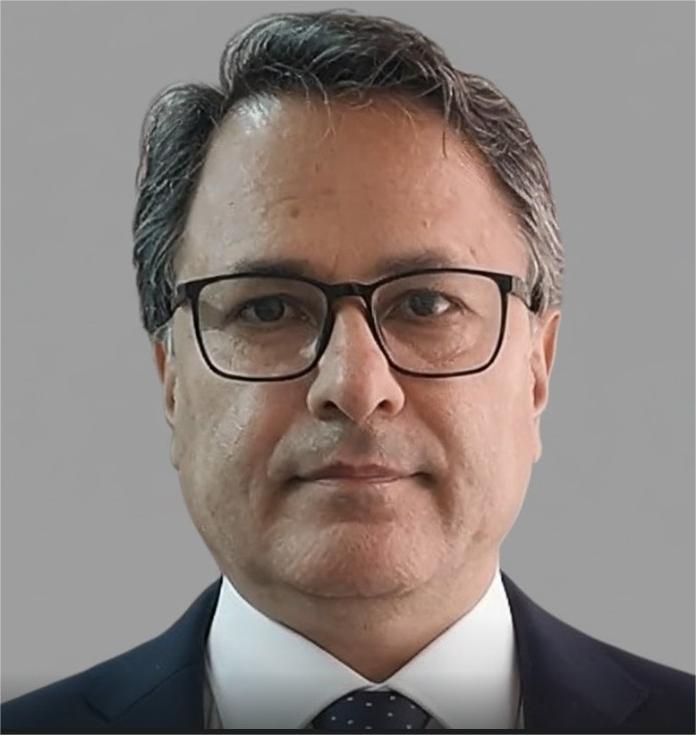
Ebrahim Badakhshan

@uok.ac.ir

Associate Professor, Department of English language and linguistics
University of Kurdistan

Ebrahim Badakhshan

EDUCATION

Ph.D in linguistics

RESEARCH, TEACHING, or OTHER INTERESTS

Language and Linguistics, Multidisciplinary
8

Scopus Publications

87

Scholar Citations

4

Scholar h-index

2

Scholar i10-index

Scopus Publications

  • Possessive construction in the Kurdish language: A cognitive perspective
    Masoud Dehghan, Hossein Davari, Ebrahim Badakhshan
    Review of Cognitive Linguistics, 2026
    The present study investigates Possessive Constructions and domains of possession in Kalhori Kurdish (KK) from a Cognitive Linguistics perspective to reveal the arrangement of constituents and relationships between the head (possessee) and dependent (possessor). This qualitative descriptive-analytical study collected data by interviewing KK speakers in Iran. The results indicate that KK speakers employ both the B-construction (­hin-e­) and Be-construction (ha) at the clause level to denote predicative possession characterized by [−whole-part, −kinship] relationships and [+alienable] ownership. Additionally, KK speakers were found to utilize the H-construction (/dire/) at the clause level associated with [+whole-part, +kinship] relationships and [±alienable] ownership. KK speakers also employ possession splits in nominal/attributive possession by attaching the possessor, marked by the [+human] feature, to the possessee, marked by the [±human] feature, as an affix.
  • Introducing the versions of the commentary on the Masnavi, a poetic work by Kurdish poets and scholars
    Journal of Codicology and Manuscript Research, 2025
  • The Semantic and Syntactic Aspects of Tense, Aspect, and Modality in the Kurdish Imperative Paradigm
    Language Related Research, 2025
  • Exploring Teacher Reflection in the English as a Foreign Language Context: Testing Factor Structure and Measurement Invariance
    Xing Xiaojing, Ebrahim Badakhshan, Jalil Fathi
    Frontiers in Psychology, 2022
    The current study aimed to verify the multidimensional factor structure of teacher reflection and to examine the psychometric properties of a widely used teacher reflection scale using a large-scale representative dataset of 1,611 practicing Iranian English as a Foreign Language (EFL) teachers. Furthermore, the measurement invariance of the hypothesized,a priorisix-factor model of teacher reflection as measured by the adapted scale was assessed across gender and educational degree in Mplusprogram. In addition, the differences in latent factor means of the same groups were examined. The result of confirmatory factor analysis revealed that teacher reflection was a multidimensional construct, encompassing six underlying factors. Overall, the adapted teacher reflection scale based on the 6-factor model showed an overall good fit. The results also indicated metric and scalar invariance which manifests that the factors underlying the adapted scale had an identical theoretical structure across educational degree/gender groups. Finally, there were significant factor mean differences in reflection components across gender and educational degree groups. A discussion of the results and their implications ensue.
  • Semantic frames of tašxis (“identification”) in Persian
    Zolfa Imani, Ebrahim Badakhshan
    Kervan, 2021
    One of the lexical conceptual relations in language is the polysemy relation by which Finch (2000) and Saeed (2009) mean that a word or lexeme has more than one meaning. In polysemy, out of the polysemous word, multiple meanings are interpreted which are closely related to each other. According to what Richards and Schmidt (1985) define, the semantic units composed of a sequence of events or affairs which are relevant to specific situations evoke their own semantic frames. In fact, a frame is a representation of the context including the sentence in which linguistic items are presented (Matthews, 1997). The concept of Frame was primarily proposed by Fillmore (1977; 1982; 1985) in 1970s. The present research has been done in two phases with the goal of comparing the semantic frames of the word tašxis (Identification) by determining the relationship among them in a way that first the sentences containing it were looked up in the Persian Corpus of Bijankhan. Then, the sentences including tašxis (Identification) were separated from the sentences comprising different inflectional forms of the verb tašxis dādan (to identify). Afterwards, each sentence was converted into its equivalent noun/adjective phrase. In the second phase, the English equivalents of Identification in each phrase were obtained from three different Persian to English dictionaries to be able to extract the semantic frames for them. After extracting the frames, each English counterpart called Lexical Unit in the FrameNet alongside its semantic frame was compared to other frames and ultimately the following conclusions were drawn: the contexts where Identification is used are classified into 5 categories as linguistics, medical science, law, security checking and politics. Regarding the same usage of some words in two categories, four semantic frames are evoked out of five contexts all of which share the concept of the capability of making distinction and that of making decision.
  • Investigating and analyzing the application of image schemas in the blinds from cognitive perspective
    Language Related Research, 2020
  • Metaphorical integrations in kurdish riddles
    , Rahman Veisi Hasar, Ebrahim Badakhshan, and
    Folklore Estonia, 2018
    This paper aims at investigating the metaphorical integrations of riddles in the Kurdish language. For this purpose, 100 Kurdish riddles are analyzed according to the blending theory of metaphor (BT). Accordingly, the riddles are classified into three groups. The first one, which we call a contingent metaphor, involves those riddles shaped by metaphorical mapping between the precedent and the sequent as input spaces, which are then combined and compressed into the blend space. The linguistic structure of a contingent riddle includes the precedent space and some of the conceptual correspondences without any explicit reference to the sequent space. The possible candidates of the hidden sequent space are conditioned by the image-conceptual structure of the precedent space. The second group, which we call a discordant metaphor, includes those riddles that are based on a complicated metaphorical integration between the precedent and the sequent as input spaces: elements and relations of input spaces are cross-mapped, and then they are mixed and compressed into the blend space; and ultimately, a kind of disanalogy between spaces is brought about by backward projection. The linguistic structure of a discordant riddle includes two contradicting parts. The first part indicates the metaphorical integration, and the second shows the disanalogy. The candidacy of a possible sequent space is conditioned by the structure of the precedent space and by the differences highlighted by the backward projection. The metaphorical riddle in both groups is a specific kind of deliberate metaphor which invites the riddlee (addressee) to view (guess) the sequent in terms of the precedent. The deliberateness of the metaphorical riddle leads the riddlee to construct numerous metaphorical mappings between the precedent space and many possible candidates for the sequent space. The third group includes the non-metaphorical riddles not applying any kind of metaphor.
  • A linguistic analysis of euphemism in Persian
    Language Related Research, 2014

RECENT SCHOLAR PUBLICATIONS

  • Introducing the versions of the commentary on the Masnavi, a poetic work by Kurdish poets and scholars
    K Othman Ali, T Malmir, E Badakhshan
    Journal of Codicology and Manuscript Research (In persian: Pizhūhish/hā-yi … , 2026
    2026
  • Handbook of Persian Discourse Studies
    Z Ghane, R Falahati
    Springer Nature , 2026
    2026
  • تاوتوێکردنی جەستەتەوەری ڕێژەی بەکارهێنانی وشە لە کوردیی ناوەڕاستدا بۆ داڕشتنی کەرەستە فێرکارییەکان ‎
    H Fayeghy, E Badakhshan
    Nubihar Akademi, 249-278 , 2025
    2025
  • Ardalāni Kurdish Diphthongs: Phonology-Phonetics Interaction to Resolve Disputed Issues
    A Mohammadi, E Badakhshan
    Handbook of Phonetics and Phonology of Modern Iranian Languages, 247-270 , 2025
    2025
    Citations: 1
  • The Linguistic Game: Metaphorical Expressions of Euro 2020
    E Badakhshan, K Khaledian
    Handbook of Persian Discourse Studies, 191-208 , 2025
    2025
  • مفهوم‌سازی و ساختار صرفی واژگان مرکب کُردی کلهری از منظر صرف ساختی: مطالعۀ موردی واژۀ «دست» ‎
    افشاری, بهناز, دهقان, بدخشان ‎
    مطالعات زبان‌ها و گویش‌های غرب ایران , 2025 ‎
    2025
  • Conceptualization and Morphological Structure of Compound Words in Kalhori Kurdish with a Construction Morphology Approach: A Case Study of the Word" Dast"(Hand)
    B Afshari, M Dehghan, E Badakhshan
    Research in Western Iranian Languages and Dialects , 2025
    2025
  • تحلیل انتقادی گفتمان زیست‌محیطیِ طرح پتروشیمی میانکاله در روزنامۀ ایران ‎
    بساطی, نوشین, بدخشان, کرانی ‎
    زبان‌شناخت 16 (1), e10608 , 2025 ‎
    2025
  • The fate of man in Bahman Nameh
    T Malmir, E Badakhshan, Z Aghighi
    Research of Literary Text in Iraqi Career , 2025
    2025
  • A mixed methods study of the effect of multilingualism on learning English as a third language: Focus on foreign language anxiety and enjoyment
    E Badakhshan
    Language Related Research, 309 , 2025
    2025
  • Investigating and Analyzing The Application of Image Schemas in The Blinds From Cognitive Perspective
    M Dehghan, E Esmailpour, E Badakhshan
    Language Related Research 11 (3), 313-346 , 2025
    2025
  • تأثیر ساخت اطلاعی، نقش دستوری، ساخت نحوی بر پسایندسازی در زبان کردی سورانی ‎
    اکبری, صادقی, سیده ساره, بدخشان ‎
    مطالعات زبان‌ها و گویش‌های غرب ایران 13 (2), 19-34 , 2025 ‎
    2025
  • بررسی و نقد واژه‌نامه‌های دوزبانۀ زبان‌شناسی ‎
    بدخشان ‎
    زبان پژوهی 17 (55), 249-278 , 2025 ‎
    2025
  • The Effect of Informative Structure, Grammatical Role and Syntactic Structure on the Postposing in the Sorani Language
    L Akbari, SS Sadeghi, E Badakhshan
    Research in Western Iranian Languages and Dialects 13 (2), 19-34 , 2025
    2025
  • The Representation of Social Actors and Its Connection to Discursive and Ideological Components in the Novel My Homeland’s Secrets: An Analysis Based on van Leeuwen’s Framework
    V Vaisi, T Malmir, E Badakhshan, F Hosseinpanahi
    Linguistic Studies: Theory and Practice 4 (1), 27-57 , 2025
    2025
  • تأثیر ساخت اطلاعی نقش دستوری ساخت نحوی بر پسایندسازی در زبان کردی سورانی. ‎
    لیلا اکبری, سیده ساره صادقی, ابراهیم بدخشان ‎
    Research in Western Iranian Languages & Dialects 13 (2) , 2025
    2025
  • Handbook of Phonetics and Phonology of Modern Iranian Languages
    R Falahati, Z Ghane
    Springer , 2025
    2025
  • Examination and critique of bilingual dictionaries of linguistics
    E Badakhshan
    Language Research 17 (55), 249-278 , 2025
    2025
  • ابعاد معنایی و نحوی زمان نمود و وجهیت در صیغگان امری مطالعه موردی کردی. ‎
    رحمان ویسی حصار, ابراهیم بدخشا, محمد احمد نژاد ‎
    Language Related Research 15 (6) , 2025
    2025
  • Possessive construction in the Kurdish language: A cognitive perspective
    M Dehghan, H Davari, E Badakhshan
    Review of Cognitive Linguistics , 2024
    2024

MOST CITED SCHOLAR PUBLICATIONS

  • Exploring Teacher Reflection in the English as a Foreign Language Context: Testing Factor Structure and Measurement Invariance
    EB Jalil Fathi, Xing Xiaojing
    Frontiers in Psychology 12 , 2022
    2022.0
    Citations: 19
  • A linguistic analysis of euphemism in Persian
    E Badakhshan, S Mousavi
    Language Related Research 5 (1), 1-26 , 2014
    2014.0
    Citations: 10
  • Classifying compound words
    M Assi, E Badakhshan
    Literary Text Research 46, 71-94 , 2000
    2000.0
    Citations: 9
  • Analysis and description of deletion in Kurdish (Kalhori dialect)
    E Badakhshan, M Zamani
    Linguistic researchers 5 (1), 19-30 , 2012
    2012.0
    Citations: 5
  • Text Worlds of the Story of
    B Vahabian, M Dehghan, E Badakhshan, A Korani
    Journal of the Stylistic of Persian Poem and Prose 14 (866), 105-129 , 2021
    2021.0
    Citations: 4
  • Rethinking Linguistic Relativity with a Cognative Approach Based on Persian Data
    I Badakhshan, H Azmoude
    PERSIAN LANGUAGE AND LITERATURE 4 (11), 1-28 , 2012
    2012.0
    Citations: 4
  • METAPHORICAL INTEGRATIONS IN KURDISH RIDDLES
    RV Ebrahim Badakhshan
    Folklore 73, 161-188 , 2018
    2018.0
    Citations: 3
  • Analysis and Description of Compensatory Lenghening in Kalhori Kurdish
    E Badakhshan, M Zamani
    Language and Linguistics 9 (17), 135-149 , 2015
    2015.0
    Citations: 3
  • Glide formation in Kalhori dialect
    E Badakhshan, M Zamani
    Language Science Studies 2 (2), 97-116 , 2014
    2014.0
    Citations: 3
  • The Ugly Euphemisms
    S Mousavi, E Badakhshan
    Journal of Foreign Language Research 2 (2), 171-187 , 2012
    2012.0
    Citations: 3
  • Representation of discourse features of lawyers on judge persuasion from forensic linguistics perspective: A case study of the discourse of criminal cases
    J Mehrabani, K Sabri, E Badakhshan
    Language Related Research 13 (2), 529-562 , 2022
    2022.0
    Citations: 2
  • A Study of Polysemy in Qur'anic Vocabulary Based on the Cognitive Lexical Semantics Approach
    AA Emadi, E Badakhshan, M Dehghan
    Comparative Linguistic Research 11 (21), 199-223 , 2021
    2021.0
    Citations: 2
  • The Inflection of Verb and its Categories in Kalhori Kurdish from Bauer's Generative Morphology Perspective
    M Dehghan, E Badakhshan
    Journal of Kurdish Literature 5 (2), 107-124 , 2020
    2020.0
    Citations: 2
  • Sonority sequance effect on phonological processes in Kurdish (Kalhori)
    M Zamani, E Badakhshan
    Comparative Linguistic Research 4 (8), 35-45 , 2015
    2015.0
    Citations: 2
  • A Linguistic Study of Politeness in the Persian Language
    S Mousavi, E Badakhshan
    Linguistic Inquiries 5 (1), 1-26 , 2014
    2014.0
    Citations: 2
  • Causativization as a process of valency changing operation in Kurdish
    E Badakhshan, K Ghadami
    Language and Linguistics 9 (18), 15-38 , 2013
    2013.0
    Citations: 2
  • Barresiye zabanshenakhtiye behgui dar zabane farsi
    E Badakhshan, S Mousavi
    The Linguistic Analysis of Euphemism in Persian Language], gastarhaye zabani … , 0
    Citations: 2
  • Hālat namāyi dar kordiye sorāni (sanandaji va bānei)
    E Badakhshan, Y Karimi, R Ranjbar
    Zabānshenāsi va guyeshhāye xorāsān 11, 1-28 , 0
    Citations: 2
  • Ardalāni Kurdish Diphthongs: Phonology-Phonetics Interaction to Resolve Disputed Issues
    A Mohammadi, E Badakhshan
    Handbook of Phonetics and Phonology of Modern Iranian Languages, 247-270 , 2025
    2025.0
    Citations: 1
  • The Study of Social Factors' Role in Phonological and Lexical Variations in Hawrami (Paveh Dialect) based on Variationist Sociolinguistics
    AK Nadya Safiee1, Ebrahim Badakhshan2, Masoud Dehghan3
    Research in Western Iranian Languages and Dialects , 2022
    2022.0
    Citations: 1