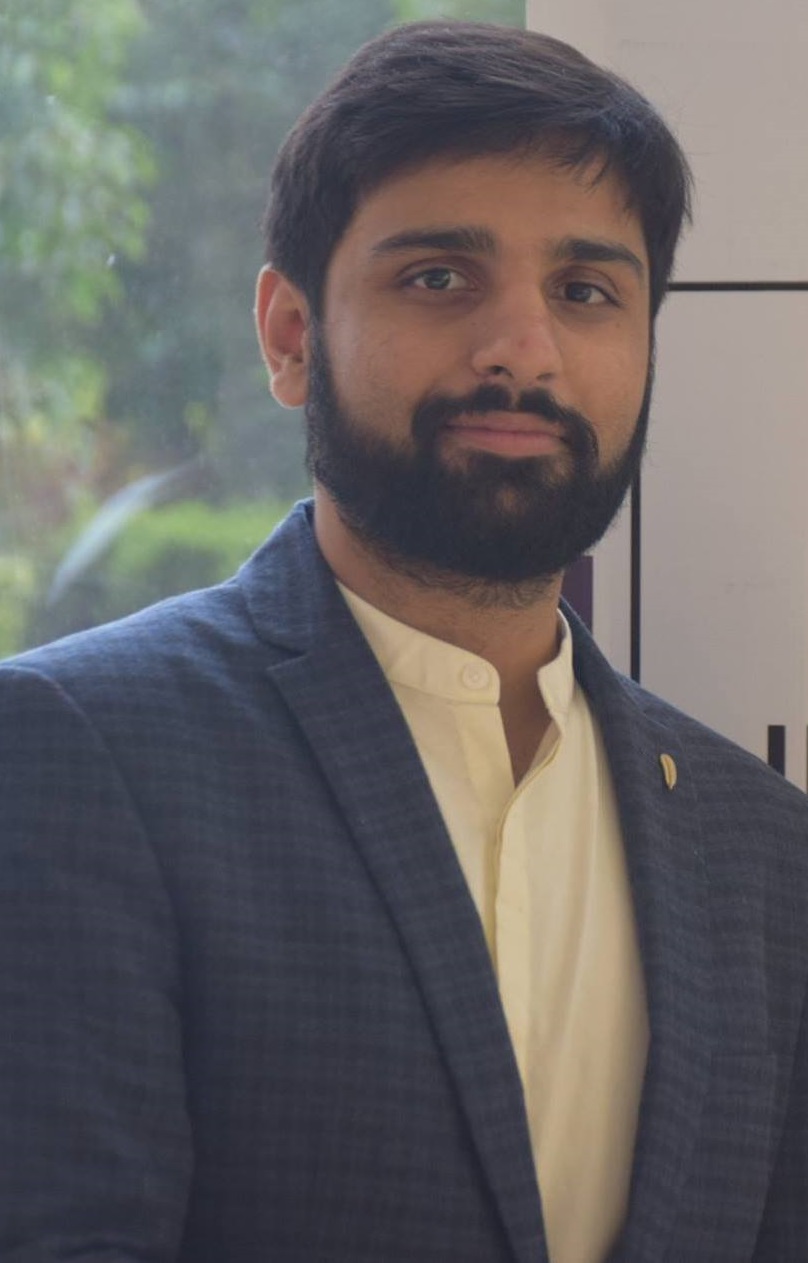
Dr. Abhay Singh Thakur is the Assistant Professor at the Gujarat Maritime University with over eight years of experience, which includes teaching and industry experiences. He specialises in the domains of Shipping Laws and Regulations, Marine Environmental Law, and Law of International Carriage. He is also the Center Head of the Centre for Maritime Environmental Law at Gujarat Maritime University.
Dr. Abhay Singh has presented papers on Maritime Law and other maritime subjects at various International Conferences, most notably at the International Conference on Advanced Intelligent Maritime Safety and Technology in Malaysia and the International Association of Maritime Economists Conference held at Rotterdam. He has published multiple research papers in SCOPUS/WOS/UGC-indexed International Journals on Marine Environment and related subjects.
Dr. Abhay is regularly invited as a resource person by reputed universities and organizations like Gujarat National Law University, IFIM Law Sch
EDUCATION
PhD in Law
RESEARCH, TEACHING, or OTHER INTERESTS
Law, Social Sciences, Energy, Multidisciplinary
4
Scopus Publications
Scopus Publications
Green Shipping and Trade: Allocating Costs of the IMO Sulphur Regulation 2020 Global Trade and Customs Journal, 2023
ANALYSING THE ENVIRONMENTAL IMPACT OF IMO SULPHUR REGULATION 2020, ANNEX VI, MARPOL Abhay Singh, Sanjeevi Shanthakumar Actualidad Juridica Ambiental, 2023 The IMO has set different SOx limits over the years, including different limits for SECA and areas outside SECA. The EU has formulated stricter limits for its member states. The EU port and SECA areas have reduced SOx emissions vastly. Ocean acidification, degradation of the environment, and human health has been improved in the EU ports and SECA areas. However, the improvement at the global level is limited. SOx emission causes a cooling effect on temperature and decreases the warming effect of GHG emissions. The lowering of SOx can impact global warming. Further, the Black Carbon emission from alternate fuels can lead to increased GHG emissions. The acidic wash water from EGCS contains toxic metals and PAHs which when discharged at sea cause severe damage. The SOx reduction, Black Carbon emission and wash water discharge adversely impact oceans and violates the UNCLOS, UNFCCC, Paris Agreement, CBD, and even the UNDRIP. An IPCC report will help analyse the SOx, Black Carbon emission, and wash water impact, which can be taken up in COP 28. The 2022 MEPC Guidelines for Environmental Risk Assessment and reception of wash water, with Port authorities are based on the submissions by nations and environmental organizations to the PPR 9, which have highlighted the environmental problems and challenges in the use of EGCS and the discharge of its wash water. The guidelines are non-binding and may not have the desired impact. Much stricter regulation is required to ensure the protection of the marine environment.
Economic and Legal Impact of 2020 Sulphur Limit Under Annex VI, MARPOL Abhay Singh, Sanjeevi Shanthakumar European Energy and Environmental Law Review, 2022 Effective from 1 January 2020, the International Maritime Organisation (IMO) has brought down the permissible sulphur emission from vessels to 0.50% m/m from the earlier set 3.5% m/m Sulphur emission limit. The maritime stakeholders stepping away from Heavy Sulphur Fuel Oil (HSFO) and looking towards Very Low Sulphur Fuel Oil, Liquefied Natural Gas, Marine Gas Oil, (VLSFO, LNG, MGO), for compliance or use of Exhaust Gas Cleaning Systems (EGCS) with HSFO. These modes of compliance however are not completely failsafe as they present economical and regulatory challenges. The article presents a study of IMO and Marine Environment Protection Committee (MEPC) regulations, guidance, and guidelines for the implementation of low Sulphur limit. The nations member to International Convention for the Prevention of Pollution from Ships (MARPOL) are subject to new Sulphur limit and they have devices their own set of policies for compliance causing a lack of uniformity. MARPOL has left the decision of sanctions on the Member State thus the set standards also vary and there exist certain nations with sanction policies in case of violation. The research has addressed the national policies of major maritime contributing nations having varied geographical proximity. Greece, UK, Panama, USA, Australia, China, India, and Nigeria are considered for the study. The study has shown that open-loop EGCS have been prohibited in various nations due to environmental concerns. Further, many states have not formed sanction policies reflecting the allocation of responsibility in case of non-compliance consequently have established a threat of criminal action against the captain and the crew of the ship. The article concludes that the IMO can issue reservations for national implementation or formulate modal law for national policy-making so that uniformity is achieved. Furthermore, the economic challenges prevalent have occurred due to the high cost of alternative fuel and installation of EGCS which has consequently impacted the opting of compliance mechanism by the shipping industry. The newly built ships preinstalled with EGCS are preferred. The study has suggested that for old vessels EGCS might be the adequate option as the cost of fuel is expected to increase in the post COVID-19 era. IMO Sulphur Regulation, Shipowner, Charterer, EGCS, Low Sulphur Fuel
OPERATIONAL CONCERNS FROM COMPLIANCE OF IMO2020 SULPHUR LIMIT THROUGH VLSFO Abhay Singh, Sanjeevi Shanthakumar Paliva, 2022 From Jan 01, 2020, International Maritime Organisation (IMO) reduced the permissible sulphur content from bunker fuel used on ships from 3.5 % m/m in 2012 to 0.50 % m/m. The maritime industry is consequently abandoning High Sulphur Fuel Oil (HSFO) and employing Very Low Sulphur Fuel Oil (VLSFO) blends or using the Exhaust Gas Cleaning System (EGCS) that allows the combustion of HSFO by removing access sulphur from the exhaust gas of a ship. However, these compliance mechanisms present their own Technical and operational challenges. The concern that the specifications of VLSFO are hidden is groundless, as they must comply with ISO 8217. Thus, the problems with VLSFO blends are not their specs but the difficulty attached to their handling and use. Major problems with VLSFO blends are the breakdown of the main engine, poor liner conditions, collapsed piston rings, and consequential scuffing caused by mismanagement of cylinder oil and feed rate, improper maintenance of Piston Rings and Cylinder liner. Some other concerns with VLSFO blends are low shelf life, high sensitivity, admissibility of onboard testing, the readiness of seafarers, and other compliance difficulties. Training seafarers, technological awareness, and constant care can only achieve adequate compliance.